Fullerton T

RELIGION LITURGY AND LIFE

Trinity Sunday

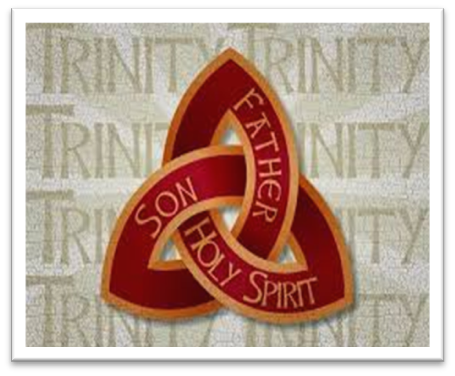
This weekend we celebrate Trinity Sunday which is about the triune god Father, son and Holy Spirit the Father is equal to the Son, and the Son is equal to the Spirit three in one and one in three we hear this in the breastplate of St. Patrick. The feast of the Trinity goes back to 12th century England and St Thomas a Becket, Archbishop of Canterbury. Historians say the great Thomas celebrated a Liturgy in honor of the Trinity in his cathedral. So was born the observance. In the 14th century, the feast came to be observed by the universal Church.  The belief in the Trinity goes back to the New Testament. There it is mentioned about forty times.

in the First reading God appears to Moses and speaks about His character. He is kind, patient, full of love, and ready to forgive, but He also brings justice. Moses bows down and worships Him. In the Second reading Saint Paul encourages the people to live in peace and unity. He blesses them with the grace of Jesus, the love of God, and the friendship of the Holy Spirit.In the Gospel we hear about Nicodemus who was the disciple who came to Jesus secretly. He was a member of the Sanhedrin, possibly the Nicodemus ben Gurion mentioned in the Talmud as a wealthy man reputed to have miraculous powers. Our reading today is only part of the discourse recounted by John, but it is worth looking at the whole passage 3:1–21 Nicodemus acknowledges Jesus as the one who has come from God and, in return, Jesus puts before him the whole purpose of God’s plan. Jesus’ existence in the world is proof of God’s love for his creation which extends to the whole world. Only the one who consciously rejects the name – the reality and truth – of God’s only Son is beyond redemption.

Trinity Sunday is the day when we stand back from the events that we’ve been celebrating for the previous six months Advent, Christmas, Lent, Holy Week, Easter, Ascension and Pentecost. This is the day when we are asked to discover what the word ‘god’ might actually mean. How do we understand Trinity? The Christian belief that God is a trinity helps underscore how rich the mystery of God is. We profess that God could not be God without the “other” (the Son) and the eternal bond of their relationship (the Spirit). While some may think that the doctrine of the Trinity is negotiable, it is actually central to our faith. Moses’ personal God, “merciful and gracious, slow to anger, rich in kindness and fidelity,” emerges in St. Paul as the interpersonal Trinity that models true human relationship. Thus, Paul prays: “The grace of the Lord Jesus Christ, the love of God and the fellowship of the Spirit be with you all.” When the Church celebrates the Feast of the Most Holy Trinity, it is an attempt to summarize the whole mystery of our God into one day. This is not just a “theological feast” ` but a feast which should speak to us of this simple fact of faith: the Father loves us, has revealed that love in his Son, and has called into a relationship sustained by the Spirit.

It is our joy that, as baptized members of the Church, we can share in that divine life and love which is the Trinity becoming children of God. God has chosen us, and we are his people, just as he chose the people of Israel long ago. On Trinity Sunday, we only scratch the surface of this great mystery of our faith. In gratitude and faith, let us begin and end every prayer with renewed faith and reverence “In the name of the Father, and of the Son, and of the Holy Spirit. Amen.”

PENTECOST

The Ascension

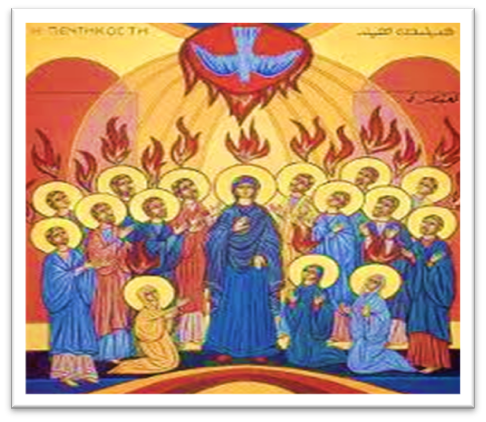
This Sunday we celebrate the Ascension: this is the day when Jesus returns to the Father in heaven. There seems to be a contradiction in Jesus leaving as he assures us that he is staying with us when he said know that I am with you to the end of time. Jesus is going to heaven, but it is not a farewell because he is with us today right where we are through all the ups and downs we have in 2026. He is with us in a particular way through the Holy Spirit and through the signs of bread and wine and the sacramental life of the church. We celebrate the Risen Lord Jesus as he returns to the Father the same Riesen Jesus who belongs to everyone who accepts him as the beloved son of God.

In the First Reading from  the Acts of the Apostles we are reminded about the death of Jesus, his resurrection and how the risen Lord met with the disciples, Jesus told them, you will receive power when the Holy Spirit has come upon on you, and you will be my witnesses in Jerusalem and… to the ends of the earth. And when he had said these things, as they were looking on, he was lifted up, and a cloud took him out of their sight.’ In the second Reading Paul prays that God, the Father of glory, ‘give you the Spirit of wisdom and of revelation in the knowledge of him, having the eyes of your hearts enlightened, that you may know what is the hope to which he has called you.’ For Paul, the resurrection of Jesus is the foundation of his faith and of all his missionary endeavors, and it is the risen Christ ascended into glory who is ‘the head over all things to the Church, which is his body, the fullness of him who fills all in all.’ This Gospel reading is all about the future it is also about us in the here and now of today, and what we are doing to make disciples of all the nations in 2026. Simply put where do we fit in when we hear Jesus telling us to make disciples of the nations and do we recognize him as being with us now in May 2026. In today’s gospel, Jesus has little to say, but he is definite about what he has to say. This is in sharp contrast to the fact that, even at this last minute, some of his disciples still doubted.

The disciples did what he told them to do. He asked them to meet him on the mountain, and they did that. Like any gathering of people, their feelings were varied. Some of them worshipped him, while some of them still doubted him. Jesus didn’t seem to have any great problem with that, because he knew that, when the Spirit came, all of those doubts would be ended. It would seem, indeed, that he was in a hurry to take his leave of them, maybe he was so that the second part of his plan of salvation could get underway. The mission of the apostles was simple to understand; difficult to carry out. It was to teach others all that Jesus had taught them. Just as he asked his disciples to obey him, they were to ask that others should obey his directions and instructions also, which is so hard in the world of today.  The programme of redemption and salvation that began at Pentecost must continue from generation to generation, until the end of time and here we are in 2026 talking about the ascension. With all the changes in the church and in society, the two things that have not changed are Jesus the Son of God, and every word of his message. Again, we ask ourselves what we are doing to make disciples of all the nations realizing that Jesus and his message is always new for each generation. May the Lord give us faith when we struggle, courage when we hesitate, and hearts open to the power of the Holy Spirit. so that salvation will reach the ends of the earth.

6Th Sunday of Easter

This Sunday is the 6th Sunday of Easter time, and it doesn’t seem that long since we celebrated Easter Sunday as we head towards Ascension and Pentecost which take place over the next 2 weekends. in the First Reading Philip goes to Samaria and preaches the word of God to the people, performing many miraculous signs and healings, which resulted in many people believing and being baptized. Peter and John arrive in Samaria and prayed for the new believers, laying their hands on them, and they received the Holy Spirit. The second reading is one that I always love to hear as it speaks of us having reverence for Jesus and that we should always be ready to give an explanation to anyone who asks about the reason for our hope, the reading goes on to tell us to give our answers with gentleness and reverence. What is the answer for our hope simply put the reason for our hope is Jesus Christ the Son of God the Father.

If we live for Christ, we will be criticized and many people over the centuries lost their lives for their defence of the faith. Would we be able to stand up and tell those around us the reason that we have for the hope that is within us today? Would we be prepared to stand up for the faith that so many have turned their backs on and point towards Jesus Christ the reason for the hope that we have within us both these questions are hard to answer for us in the world we find ourselves these days that does not seem to have a lot of good within it.  In The Gospel for this Sunday Jesus promises to ask the Father to send us the “Paraclete,” or “Advocate.” The Paraclete, or advocate, is the Spirit of Truth, the Holy Spirit. Jesus is preparing his disciples for his Ascension, his going back to the Father. He doesn’t leave his followers a detailed plan for when he leaves them.  Instead, he promised them and he also promises us the Holy Spirit, who as the advocate will never leave our side. This is why he says, “I will not leave you orphans.”  The Spirit is with us to open our hearts and minds to the fullness of the truth of Jesus’ words.  The one thing that will remain as it has up to now is the reason for our hope who is Jesus Christ who is with us in all our troubles whatever they are.

As we look around us, we may come across people who are the least likely to join us in prayer.  But here they are and they are part of us! We cannot ignore them, especially if they, like the Samaritans, show signs of the Spirit’s life that is the life of faith in what they are saying or doing. We welcome and respect one another whether we are in Church every week or not; No one is less in God’s eyes, nor should anyone be in ours. Peter calls us today to “good conduct in Christ.” What better conduct can we do as a Christians, than be a community of Christ’s disciples as we move forward together in faith. God the Father is merciful and full of compassion. He is our source of life and of the longings of our hearts and our hearts are restless till they rest in him It is through the Holy Spirit that we are drawn into the life of Faith so we can rest in him. May we always be open to the transforming power of the Holy Spirit in our lives, and may we be bold witnesses to Christ in the world where we are.

k

5TH SUNDAY OF EASTER

5TH SUNDAY OF EASTER

In this weekend’s first reading, we see how human the first Christians were. Some were Palestinian Jews, while others were gentiles of Greek origin. When food was distributed to the widows, those of Greek origin complained that they were often passed over. Tensions were bound to arise since each group had different ways of thinking and acting.  The second reading, from the First Letter of St. Peter, uses the image of “stone” or “rock.” Peter, referring to Isaiah’s prophecy, tells us that God the Father long ago had established His Son, Jesus, as the “cornerstone, chosen and precious in his sight.” Peter, with warm and welcoming tone, urges us to come with hope and trust to the living stone of salvation, and there to become ourselves a holy temple. Of course, there’s a price to pay. Through our own sufferings, we offer sacrifice and praise to the Father along with the Son. All of this happens through our Baptism and the power of the Holy Spirit. Then comes a warning. Just as many have rejected this rock of salvation to their own condemnation, so too, if we attempt to bypass Christ, then we will ourselves stumble and fall. Peter quotes Isaiah as his authority for referring to Christ as a stumbling block to those who reject Him.

This Gospel Reading is about Jesus and the disciples. He is helping them get ready for his suffering and death. For the apostles this was a huge reversal from the adulation of the entrance into Jerusalem on Palm Sunday to the despair of the Cross on Good Friday. Remember when he asked them whether they would leave him, along with the rest of the crowd? Now it is he who is leaving. They are stunned. Peter’s reply at that time might even be appropriate now. “Where will we go? You have the words of eternal life” Jesus tells them as he tells us now. “Do not let your hearts be troubled or afraid. You have faith in God, have faith also in me.” The straightforward meaning of this directive is, you know how to trust, you do it with God. Use that same trust with me. This trust in Jesus and in God is also what we are called to these days.  There is much division within the world community and there is also a lot of division within the lives we lead as people who follow along the way the truth and the life that we are called to by Jesus. Jesus speaks to us not at us.  His presence is in the word proclaimed in the Assembly of the people of God gathered together.  His word is proclaimed to us in the readings from scripture as well as in lived example of others in the community where we live.  We come to Church week in week out to hear the Word.  We come to share the joys and sufferings of all the community gathered together.   We make a spiritual communion with Jesus; risen from the Tomb We don’t stay in Church all the time as the hard pew might well become the soft bed.  

All of us have duties and obligations to family, work and the communities where we live.   When we’re confused about the decisions we should make, Jesus Himself will show us the Way. When we don’t know what is true and what is right and what is wrong, the Holy Spirit through the Church and the faith of its members will enlighten us. And when we are drawn into false pleasures that promise us life, Jesus will bring us back to real life and the joy of that life through the power of His love.  As we walk along the roads of life let us take up the call of Jesus in the gospel to trust in him and he will not let us down as we follow him.

4Th Sunday of Easter

This weekend we celebrate Good Shepherd Sunday and the annual Day of Prayer for Vocations. We remember our call to follow Christ and the beauty of vocations to the ordained ministry and the consecrated life. As members of His flock, we are entrusted with fostering and supporting new vocations. Let us pray to the Lord of the harvest to send holy and generous laborers into His vineyard shepherds after the heart of the Risen Christ, who gave His life for the sheep. In the 1st reading continuing his address to the crowd near the Upper Room, Peter boldly proclaims that Jesus is both Lord and Messiah, and that salvation comes only through conversion and baptism. in the 2nd Reading Peter describes Jesus’ heroic love as the Good Shepherd, who endured great suffering and even gave His life so that His flock could come to eternal salvation and peace.

In this weekend’s Gospel we hear about Jesus the “Good Shepherd” who tends his sheep and the “Gate” through which they enter eternal life. The idea of Jesus as the Good Shepherd is a lovely thought because it is a well-known fact that the shepherd never leaves his sheep outside the sheepfold. If any are outside the sheepfold the shepherd will seek the lost sheep until they are found.  The wandering figure of the shepherd, anxiously tending his sheep to the point where he is willing to surrender his life for them, is the image Jesus uses about himself in this Gospel Reading. The good shepherd is not an image of religious authority that is involved with its own importance. The authority of the shepherd costs the shepherd, not the sheep. The image of the shepherd cannot be separated from how the shepherd cares for his own sheep. When we see how Jesus behaves as a leader, we see his tenderness and courage.   The parable of the Good Shepherd has many consoling truths and promises for people of every century, including ourselves in 2026.  All of us know people who have wandered away from the Church, who have lost their sense of belonging, who feel they have no faith community to belong to. How will they know they are welcome back if no one tells them? How will they be helped back if no one offers to make the journey with them? 

The good shepherd asks us to make the journey with them as people who have listened to his voice calling us to follow him. Jesus the Good Shepherd is for all of us, and we should listen to his voice amidst the trials of our daily lives. Many of the voices we listen to in so many places in the world claim to speak for the good of everyone, but they lead us astray and disappoint us but our Faith and Hope in Jesus does not disappoint. With Jesus’ life becomes richer and that with him it is easier to find meaning in everything. The Gospel of the Good shepherd is a hope filled call for us to follow Jesus the loving shepherd who seeks out the lost sheep and rejoices when they are found.

3Rd Sunday of Easter

e

Third Sunday of Easter

Third Sunday of Easter

We gather this weekend after the solemn celebration of Easter and Divine Mercy Sundays, we also remember that the celebration of Easter continues until Pentecost Sunday and then Easter Time ends and the paschal candle is placed near the baptismal font.  In the first Reading we are told that Peter’s preaching on Pentecost centered on the firm belief that Jesus was the promised Messiah and had been raised from the dead by God the Father. In this reading, he proclaims these truths as the fulfillment of ancient prophecies. In the second reading from the 1st letter of st Peter the apostle reminds believers of the great price Jesus Christ paid for their redemption, helping us to remember and never forget the depth of the Lord’s love for all of us all the time.

This Sunday’s gospel recounts the Jesus appearance on the evening of Easter to two disciples who were going from Jerusalem to Emmaus, their life with Jesus had ended abruptly as all seemed to be lost after the events of Good Friday.  Jesus, their beloved Leader, friend and Teacher, had been arrested, tried, sentenced, tortured and killed. Now they are feeling that without his presence, his inspiration, his support and encouragement, they simply cannot go on.  They are so disappointed and disillusioned about what has happened that they have even decided to leave the Church, the community of his followers. Slowly but surely, they are walking away from it all. They are putting Jerusalem and the other disciples behind them. They are heading for the village of Emmaus, to start a new and different way of life. And there Jesus was walking along with them they were talking about what had happened in Jerusalem and how they had put Jesus to death. Jesus explained all the passages of scripture that were about himself, but it was only at the breaking of the bread that they recognized him. They then went back to tell the others that they had seen the Lord and told their story and how they recognized him at the breaking of the bread.

The Emmaus story is the story of you and me as the two disciples represent all of us who claim that we are Christians with all our doubts and disagreements our joys and sorrows. We come together in faith each Sunday in answer to a call, often a quiet murmur from the recesses of our hearts which calls out to us saying come to me you who are weary and overburdened and I will give you rest.  All of us are searching just as the companions on the road to Emmaus were and they were weary as a result of all that had happened to them. As we are often weary of the things that happen to us as well as the things we see going on in the world at the present time. The people of God come together for a great and good purpose and that is to seek God and what he wants us to do. All of us work together for God’s kingdom since the kingdom provides meaning and purpose. In the scripture readings we find explanations and understanding of events and relationships which have shaped the faith from the beginning. Our faith is lived out in the real world, the world of family, work, and recreation. We don’t live in two separate worlds, one spiritual and the other secular.  

Those who would have us believe that we can separate our lives into two compartments are mistaken as faith and life go together.  The fellowship we share helps us ask questions of faith.  It is the application of scriptures to the events of our own times that reveal that God is walking with us and maybe even working through us.  But it is in the breaking of bread that we recognize Jesus who is with us on our journey.  The journey on the road to Emmaus is the journey we make as gods people.  We are on this journey in fellowship with one another being led by Jesus who calls out to us to follow him from the Cross of Good Friday as well as from the empty tomb of Easter Sunday. As we grow in faith, we are led to understand those past events as we experience them in our time and place and they are as relevant today as they were when they first took place.   The Risen Lord uses so much gentleness with us! He doesn’t oblige us to ‘believe’ but He offers us the things that enable us to judge based on the measure of our own hearts. As St Augustine extraordinarily wrote in the opening of his Confessions ‘our heart is restless until it rests in you’ May our encounter with the Risen Jesus make us compassionate fellow travelers attentive to the struggles of others, ready to listen, and eager to share our faith in His Resurrection as we move forward in faith.

Second Sunday of Easter

Post Navigation