Fullerton T

RELIGION LITURGY AND LIFE

Archive for the month “April, 2021”

4TH Sunday of Easter
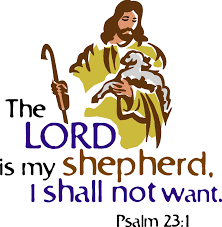
This weekend we celebrate the 4th Sunday of Easter which is also known as Good Shepherd Sunday. It is also the Sunday by tradition  when we pray in a special way for vocations to the priesthood, diaconate and religious life.

The idea of Jesus as the Shepherd of the flock is good thing because it is well-known fact that the shepherd never leaves his sheep outside the sheepfold. If any are outside the sheepfold the shepherd will seek the lost sheep at all costs until they are found. In the same way Jesus the Shepherd will seek us out and help us to find our way back into the sheepfold of faith. In the Old Testament, the shepherd was a metaphor for the leaders of the  people of God. Most often those leaders failed in their responsibilities and many were corrupt. God excoriates the incompetent and sinful leaders who were appointed to shepherd the people which they did not do.

With the failure of the leaders of the people, God decided to take on the shepherding role. “For thus says the Lord: I myself will look after and tend my sheep. (Ezekiel 34:11). In this Sundays  gospel Jesus likens Israel’s corrupt shepherds to the “hired man” who leaves the sheep to fend for themselves when danger approaches. The hired shepherd may leave the sheep behind but Jesus the Good shepherd who is the Son of the Father does not leave his sheep.  A good shepherd has to be willing to take risks to protect the sheep. A good shepherd has to care for the sheep entrusted to him. As our shepherd Jesus cares He values each of us. He goes the extra mile in order to bring us back into his flock. He died on the cross for each and every one of us. His care for us gives us value: we are important to the Eternal Son of God and his father in heaven. St. Damien of Molokai wrote about a leper who was given a blanket someone had sent in answer to one of Damien’s appeals for help. The man held the blanket close to himself and cried. He asked Fr. Damien if he could be buried with it. You see, to this man, this wasn’t just a blanket.

It was proof that there were people in the world who cared for him as God cares for all of us. One of the most comforting of the Psalms which is also a hymn begins with the line: “The Lord is my shepherd.” It ends with this line: “Goodness and mercy shall follow me all the days of my life.” Goodness and mercy, in the person of Jesus the good Shepherd are with us even now. The Gospel of the Good Shepherd teaches us how to embrace the gift of faith by listening to the voice of the Good Shepherd. There are so many voices calling us to believe and to practice things that might seem good and wholesome, but those voices are not of or from the Lord and what they are saying is not good. We need to tune ourselves into the voice of truth that comes from the Good Shepherd. We are his people the sheep of his flock and that means that we are people who are able to recognize the voice of the Lord and to faithfully follow what he is asking us to do in his name .
3rd Sunday of Easter

peace be with you 3rd sunday of easter (2) – St. Mary – St. Paul Parish

This weekend we celebrate the third Sunday of Easter. We continue our journey through the Easter Season as well as our journey out of the COVID19 restrictions as we remain mindful of all those who need our prayers at this time.

Our gospel reading for this Sunday tell us about the two disciples who were on the road. They were leaving Jerusalem, their hopes shattered after Jesus’ death or at least that’s what they felt. Then they met the risen Lord. They didn’t recognize him at first, but they did after he opened the Scriptures and broke bread with them. After their encounter they returned to the community in Jerusalem with the news of what had happened. While they were still speaking to the community, Jesus stood in their midst and said to them peace be with you. He is encouraging them and not to be afraid. It’s still not enough. Then he invites them to touch him. Still more, he asks for food and eats in their presence. The resurrected Christ is present, in the same way he was when they traveled and ate together. He is not just someone who somehow survived what was done to him and escaped. He didn’t experience a near death on the cross – he died and rose again as he said.

Jesus reminds all of us that he is the same, yet there is something very different about him. They knew that he was with them; Yet, the disciples need more in order to accept his new presence with them. What he did for the disciples on the road to Emmaus he does again and again for us in the person of our priests. He expounds what the Scriptures had said about him in the same way our priests do for us today. Do we see that? Can we understand what God can do and has done  for us – bring new life after death? Jesus doesn’t choose just certain Scriptures as proof texts. He tells us as he told the disciples “everything written about me in the law of Moses, and in the prophets and psalms must be fulfilled.” What would we be like if Jesus came and stood among us in real flesh and blood, I think that our reaction would be exactly the same as the apostles disbelief. But if we stop and think for a moment Jesus does come amongst us each time  we go to the Eucharistic liturgy, Jesus is there with us on the Altar in the elements of Bread and wine and in the person of the Priest offering these gifts to the Father on our behalf. We remember the last supper when Jesus gave us himself as an everlasting memorial and we remember that each time we hear the prayers of consecration at Mass that we do this in memory of him. 

let us place ourselves in the company of those who evangelize others by word and deed. Let us walk with those who serve the poor and needy in the name of Christ. Let us walk with the outsiders who seek Christ. In the process of being A witness, the context comes alive. For Christ walks with us  the Easter people may we not be afraid to get up and bring the light of Jesus into the world were we are .

SECOND SUNDAY OF EASTER DIVINE MERCY SUNDAY

This Sunday  we celebrate the feast of Divine Mercy and the mercy of God is very much alive in our world today over this past year we have certainly seen that as we have gone through the COVID19 pandemic. Now that we are beginning to come out the other side it might be a good time to reflect on the mercy of god in our lives during the Pandemic. The mercy and love of god has been shown through so many people especially through the doctors, nurses and caring staff in our health services where ever we are. Through our families and friends, through those who have journeyed with us in our time of need and there are many unsung heroes out there who quietly got on with what needed to be done. We remember the mercy of god shown to us through our clergy and our spiritual guides especially in our times of loss helping us to cope and generally get through what has been a tough time. There are so many people who have shown the mercy and love of god to others over this year and any list that I would make would not do justice to them as there are so many. We thank God this weekend for all of them and the mercy and love they have shown to people around them where they are.

Over the 40 days of Lent we prepared for the Holy Week celebration, now after Lent and Holy Week we celebrate the season of Easter for 50 days.  The Easter season takes us from the empty tomb of Easter Sunday all the way to the coming of the Holy Spirit at Pentecost. The gospel tells us that Apostles are huddled together in fear in the empty room. They weren’t so sure that the women’s report that Jesus had risen was believable. They weren’t singing for joy! Now, a whole week has gone by. They still felt “rocky” about their future as many feel rocky about their futures today as we face up to life after COVID. Thomas wasn’t the only one who had doubts about Jesus, I think so many were doubtful then as so many are doubtful right here and now. The Apostles were pondering the shocking experience of the week before when all seemed to be lost as Jesus hung on the Cross. But that was only the beginning here we are in 2021 talking about how they felt after the events of that first Holy Week and they must have been gutted. Jesus came to assure them that he was alive and then his message must have troubled them: “As the Father has sent me, so I send you.”  The disciples  were supposed  to go out to  teach, to preach, to heal by announcing the gospel. They were going  to open the eyes of those blind, those whose ears were closed, those whose hearts are hardened like concrete.

They were sent to bring the message of Jesus to others and in the same way we are sent out to bring his message to other people wherever we are by what we say and do. Our world is hurting so much because of the many things that are happening within it particularly the covid19 pandemic. The Apostles felt rocky about their future as many of us do today but god is with us as we go out into the world as his messengers. May all of us be witnesses to the Gospel bringing the mercy of God to the people of our time and place as we go forward into a rocky future where god is with us to help and guide us.

EASTER

Having  completed our Lenten observance and after the liturgies of Holy Thursday and  Good Friday we  are now celebrating the Easter Vigil Easter Sunday and the Easter Season. Holy Saturday is the day when we experience watching and waiting at the tomb as we await the celebration of the Resurrection which we celebrate in the Easter Vigil and Easter Masses  we remember that the season of Easter that lasts for 40 days until Pentecost. The Psalm for Easter Sunday says, “This is the day the Lord has made; let us rejoice and be glad in it.” Above all days, Easter Sunday is a day of joy . But what is joy? The answer St. Francis gave to this question is famous. St. Francis said to his Brother Leo, “When we come to St. Mary of the Angels [our house], soaked by the rain and frozen by the cold, all soiled with mud and suffering from hunger, and we ring at the gate of the place and the brother porter comes and says angrily: ‘Who are you?’ And we say: ‘We are two of your brothers.’ And … he does not open for us, but makes us stand outside in the snow and rain, cold and hungry, until night falls—then if we endure all those insults and cruel rebuffs patiently, … oh, Brother Leo, … perfect joy is there!”

Whatever we may think of St. Francis’s explanation of perfect joy, Easter reminds us that Francis’s kind of joy is not the end of the story. At Easter, we celebrate the other kind of joy, the kind each of us longs for, when every tear is wiped away, and there is no sorrow any more no more suffering from weather or hunger or hurtful human beings. As we sing in the much-loved hymn by Fr. John Foley, S. J., at Easter, “the cross and passion past, dark night is done, bright morning come at last!” When we ourselves rise to meet our risen Lord, in that bright morning we will hear him say, “Come away, beloved. The winter is past; the rain is gone, and the flowers return to the earth” (Song of Songs 2:10-12). In the loving union of that encounter, all the heart brokenness of our lives will be redeemed. That will be perfect  joy. So in that same vein of perfect joy we say “this is the ‘day which the Lord has made.’ Alleluia!  let us take fresh hope,  with Christ our Passover everything is possible! Christ goes forward with us in our future!” Our celebration of Easter resonates throughout the rest of the year: full of gratitude for Christ’s passion, with joy in his resurrection and, strengthened by the Spirit, we continue our Christian journey. Let us go forward together as Easter people rejoicing in the Resurrection .

HOLY SATURDAY

Today is Holy Saturday and everything is quiet and still as we await the Easter Call that Christ has Rises. As we wait we contemplate what happened during that first holy week. Yesterday I had an opportunity to spend a few quiet moments in our local Church before getting things ready for the Good Friday Passion celebration. The tabernacle was empty and the altar stripped bare of cloths and candles and everything was quiet it was a time to quietly reflect on the events of Holy Week as well as all that has happened over the las 12 months  as we have journeyed with COVID 19.

Today the cross is empty now Jesus lies in the tomb and everything around us is still.’ The heavens and the earth cry out with longing for the sinless one who is not to be found, if we stop to think for a moment we remember that Jesus died and rose again on the third day. We wait, as mourners beside a grave, unsettled, ill at ease, almost not knowing what to do with ourselves. The Church has only one thing to do today: to pray through the emptiness of Holy Saturday. Holy Saturday then is the day when we experience watching and waiting at the tomb as we await the celebration of the Resurrection which we celebrate in the Easter Vigil and the season of Easter. The Jewish people have been celebrating Passover annually for thousands of years, commemorating the night in which God brought them out of slavery in Egypt to begin the journey to the promised land.

At the Last Supper, Jesus also celebrated the Passover but gave it a new meaning. No longer a remembrance of passing from slavery to freedom, but through his own passion, death and resurrection we too pass from death to life with him. Until the fourth century, Easter was the only feast of the Church’s year, and to this day it remains the most important. As the Catechism says: “Easter is not simply one feast among others, but the ‘Feast of feasts’, the ‘Solemnity of solemnities’ Our celebration of Easter resonates throughout the rest of the year: full of gratitude for Christ’s passion, joy in his resurrection and, strengthened by the Spirit, we continue our Christian journey.

HOLY THURSDAY

Lent has ended and now we begin the Holy Week Triduum. The word Triduum is the Latin for three days that is the three days of Holy Thursday, Good Friday and the great Easter Vigil on Holy Saturday night. The Church celebrates one liturgy each day. We should not think of the liturgies of Holy Thursday, Good Friday and the Easter Vigil as three separate events, all three form part of one single extended liturgy. In fact at the end of the Mass on Holy Thursday there is no dismissal and blessing instead we accompany Jesus to the Altar of repose. In the same way there is no formal beginning and end to the Good Friday liturgy.  This three-day liturgy concludes with the solemn blessing at the end of the Easter Vigil or at the morning Mass on Easter Sunday.

Holy Thursday is all about the priesthood and the institution of the Eucharist at the last supper. On the Morning of Holy Thursday, there is only one mass celebrated in a Diocese . All the priests gather around the Bishop and the people of God to renew their commitment to priesthood. Also at this Mass the oils of Chrism, Catechumens and the Oil of the Sick are blessed by the bishop, these holy oils will be used in the Baptisms, Confirmations and anointing of the sick in the local parishes over the next 12 months. The theme running throughout this day is one of humble service that is service of God and his people.The Passover feast, celebrated year after year, was a celebration of God intervening to liberate his people from slavery. The blood of the lamb protected them, and the lamb was both a sacrifice and food for them as they began their journey. Now Christ offers himself in the bread and wine and in the washing of his disciples’ feet. His sacrifice liberates us from the slavery of sin.

The Evening Mass commemorates the Last Supper again the theme is service and sacrifice both of these are aspects of the same mystery.  We see Jesus as one who serves, who gives himself. Just as he freely gives himself in washing the feet of his disciples, so too he gives himself  in the bread and wine he takes, blesses and hands to the disciples.  In the same way we receive Jesus in the form of Bread and wine from the hands of our priests. All these acts of self-giving are the same act – that of the Son of Man who came ‘not to be served, but to serve, and to give his life as a ransom for many.’ May we take up the mantle of humble service giving a helping hand to others and not counting the cost to ourselves. Many people over the years have given much at great personal cost and have not failed in their example of humble service and that for me  is what  Holy Thursday is all about  Humble service for others and not being afraid of being the presence of Christ for others no matter what the cost is.

Post Navigation