Fullerton T

RELIGION LITURGY AND LIFE

Archive for the month “February, 2022”

8th sunday of ordinary time
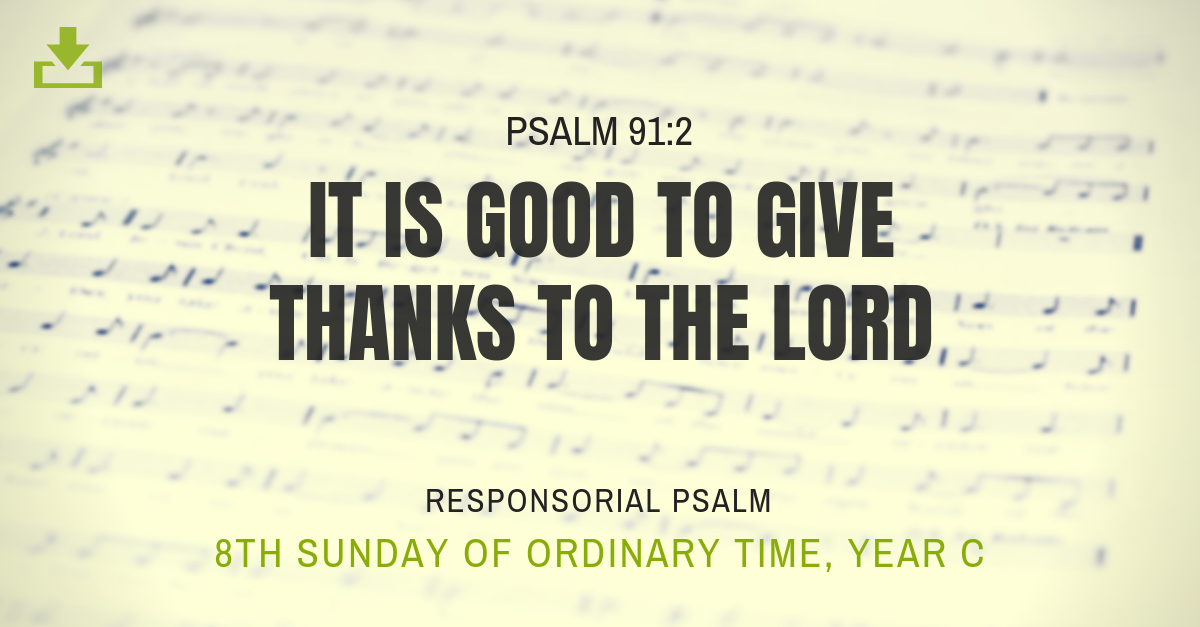
This Weekend we pray in solidarity with the Ukrainian people as their country is invaded. With Pope Franceie we pray for peace but as we see the Russian Leadership wants what it wants no matter what we and the rest of the world think so much prayer is needed. Next week we begin the season of Lent with the Ashes on Ash Wednesday and we begin again our annual  journey of repentance and conversion for 2022. We leave the Green of ordinary time behind  and we go to the Purple or violet of Lent. In our parishes we will have many opportunities to strengthen our spiritual lives over the 6 weeks of lent as we ponder what our faith really means to us as individuals and as a community of faith. Over these next few days before Ash Wednesday, the Lord invites us to prepare for this annual forty-day spiritual journey. Imagine you’re going on a sightseeing tour in a city you’ve never visited before. You’re going on foot, so anything you want to bring with you, you must carry all day. You have to decide what you really need and what to leave behind. Lent is a journey. What needs to come with us, and what needs to stay behind? During these final days before Ash Wednesday, let us accept the Lord’s invitation to leave all the excess behind and journey forward with faith, knowing that the Lord who comes to us in this Eucharist as our Bread for the journey has something greater to offer us, eternal life. The Apostle says it so beautifully in today’s second reading: “Death is swallowed up in victory.”

It was the Lord’s own death that swallowed death up in the victory of his empty tomb on Easter Sunday. Let us hasten to meet him there.  This Sunday in our Gospel Reading Jesus is coming to the end of what, in Luke, is called the “Sermon on the Plain”. He has instructed his disciples to love their enemies, turn the other cheek, treat others as they would want to be treated, not judge them, etc. Jesus is the wise person teaching his disciples a practical wisdom for their lives as disciples. Jesus says, in summary, a person’s words and actions will reveal their character. The Gospel tells us There is no sound tree that produces rotten fruit, nor again a rotten tree that produces sound fruit. For every tree can be told by its own fruit: people do not pick figs from thorns, nor gather grapes from brambles. A good man draws what is good from the store of goodness in his heart; a bad man draws what is bad from the store of badness. For a man’s words flow out of what fills his heart.’  God’s love is effective, it produces good fruit for the benefit of others. The good we do becomes a way to spread the faith to others. Jesus sends us to be witnesses to the faith we profess to practice what we teach and preach. Jesus words to us in this weekend’s gospel  show his concern for the integrity and quality of our lives. We cannot, he says, teach others if we ourselves are not witnesses to what we teach. For all of us  that is what Lent is all about moving forward in a spirit of conversion and prayerful return the spirit of metanoia. For now let us stop and reflect on the good we do for others and how becomes a way to bringing the faith to them where they are as we prepare to take up our Lenten challenges as all of us  go forward together with faith in God.
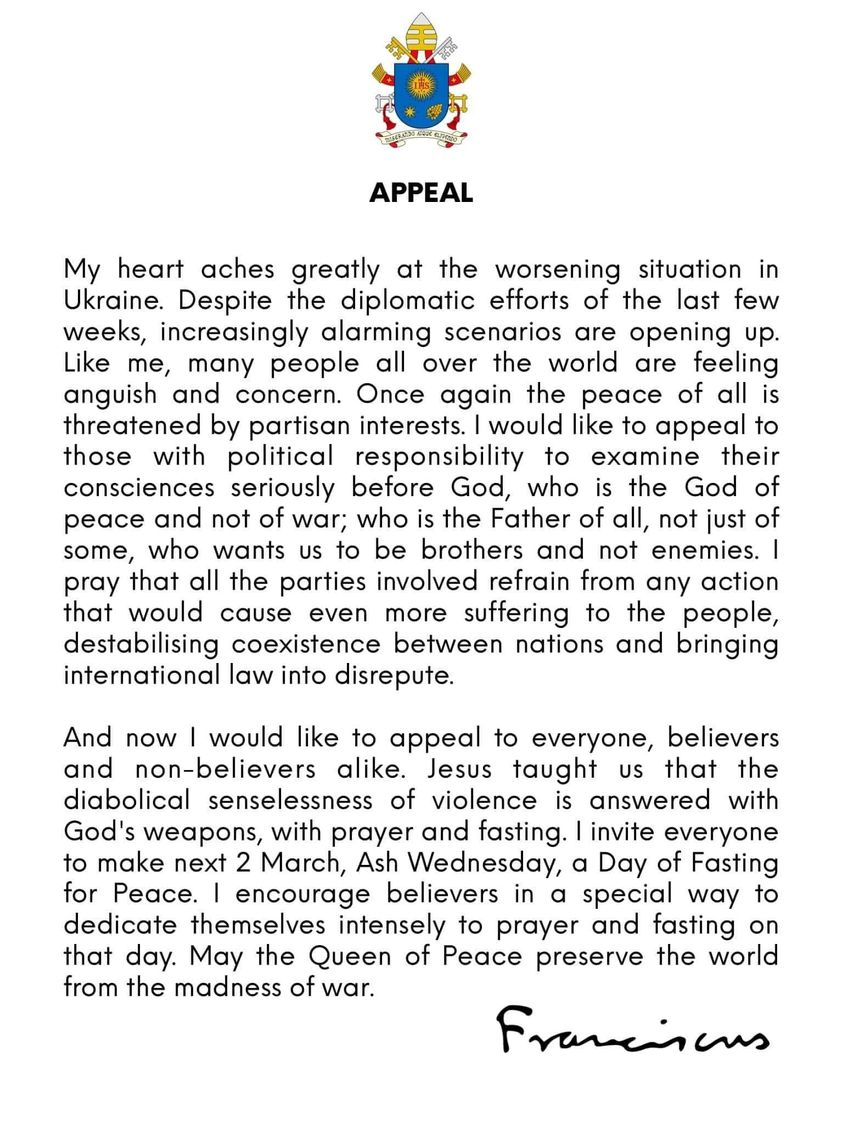
Letter From Pope Francis about Ukraine

7th sunday ordinary time

This weekend we are continuing to come out from the darkness of the COVID19 restrictions in our parishes. As we do this, we take the time to remember all those who are not with us as well as all those who have kept us safe wherever we are over the past 2 years. We pray a prayer of gratitude for all those who have done so much in so many different ways.

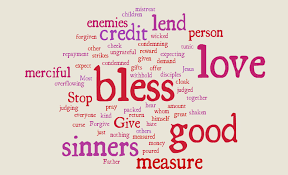
This weekend we think about the things the Lord asks us to do in following Him, nothing is more difficult that the teaching  in this weekend’s  Gospel. “Love your enemies, do good to those who hate you, bless those who curse you, pray for those who mistreat you. To the person who strikes you on one cheek, offer the other one as well, and from the person who takes your cloak, do not withhold even your tunic. Give to everyone who asks of you, and from the one who takes what is yours do not demand it back.

Do to others as you would have them do to you It is much easier to sacrifice our wants for the needs of others, then it is to avoid lashing out at someone but that is what Jesus is calling us to do.   And what does God do besides showing us extraordinary compassion, mercy and patience? What he does is love us the way we are. And his love for us is so immense that he makes the greatest of all sacrifices for us by giving for our salvation the life of his own dear Son.  What we are talking about then in today’s Gospel is not some ethical system for the good of society or for our own self-interest but something way beyond this. What Jesus gives us is the very principle behind the creation of the universe: God’s infinite love for us all. This is the extraordinary challenge that he lays before us: To love the people around us just as he loves us, just as he loves them.  It is not easy and we won’t achieve it often but we know that this is what God wants from us and it is something that deep in our hearts we are glad to do. The way God treats us is to be the guideline for our life as Christians. God is infinitely compassionate and merciful, he is extraordinarily patient with our many shortcomings and he puts up with all sorts of foolishness on our part.  It is our task as a true disciple to imitate our master, to imitate the behaviour of God himself.  In the words of Micah this is what God asks of us: only this, to act justly, to love tenderly and to walk humbly with our God.

6th Sunday in Ordinary time

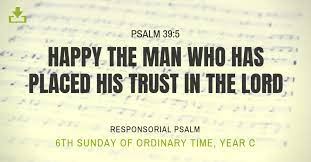
On this the 6th Sunday of Ordinary time we remember all those who are sick and those who care for them as we have just celebrated the World Day of Prayer for the sick on Friday11th February. We pray that they will get the strength to continue their lives. This and next week’s gospels are from the “Sermon on the Plain,” – a parallel to Matthew’s “Sermon on the Mount.” While similar, both evangelists are writing for different audiences and tailor their material accordingly.  Jesus speaks to his disciples, those who are already following him. How many of the crowd who heard him were attracted to the good news he was sharing? Did they become his disciples too? Did what he said affect their lives; change their notion of God? Has the Sermon had similar affects on us? After listing the four situations in life that make people blessed, Luke then lists their opposites, declaring the “woes.” The word for “blessed” is not a description of happiness as we know it; but is a gift bestowed by God. You don’t earn the blessings; you just need them and God notices. Those who have nothing – no material wealth, or food, who are weeping and hated, because of Jesus, will receive God’s favour.

St. Luke addressed his gospel to the downtrodden, the lowly. He sees a tremendous virtue that the poor have: Because they recognize that what they have comes from God, they are generous with others believing that God will provide for them if they give the little they have to those more needy then themselves. Blessed are you poor. St. Luke also quotes Jesus as saying, “Woe to the rich.” Jesus is not concerned with the amount of money a person has. He’s concerned with the false sense of security that money often gives people and we see that in todays world. Many people are tempted to trust in their possessions instead of trust in God. We should aim to live our lives for others in accordance with the Gospel values and, in this way, we will acquire virtue and so become great in the eyes of God.

If we live our lives in this way but then find ourselves experiencing some of those things that Jesus is talking about in the Beatitudes, such as periods of poverty or hunger or bereavement or persecution, we will not see these things in a negative way. We will see them rather as gifts from God which are intended to strengthen us. We will realise that they have been given to us for our spiritual growth. Of course, we will still suffer privation and perhaps even extreme need but we will know that these outwardly negative things actually have a true and lasting spiritual value. What we should be attempting to achieve is true authenticity as human beings. What we should be striving for is to live real and genuine lives. What we should be cultivating is human warmth, generosity and goodness. We might not end up as people with fame or wealth but we will most definitely end up as people who are appreciated by others. We will most definitely end up as well-rounded human beings who are making a real and effective contribution to our families and to society at large. We will most definitely end up as people who have a real and deep spirituality and find ourselves being led into an ever-closer union with our loving Saviour. 

5th Sunday in Ordinary Time

Fishers of Men - This Week's Mass Warm-Up | HOO

This Sunday we celebrate the 5th Sunday in Ordinary time and we remember and pray for all those who are sick as we celebrate the world day for the Sick on the 11th February. We also pray for all those who are caring for our sick in any way Doctors nurses, care workers  and Family members to name just a few. We ask God through the intercession of Our Lady of Lourdes to bless our sick and all those who look after them. Our Gospel story for this Sunday recounts the story of the of Peter’s calling to be a fisher of men. After a fruitless night’s fishing, Peter obeys the word of Jesus and catches a huge number of fish. He feels unworthy before Jesus; but he is now called to be a fisher of men.  Peter recognises the hand of God in what has happened and at the same time realises his own sinfulness but Jesus comes to show us the mercy of his Father.

Jesus did not come to be a hermit with an unreachable address in the desert; rather, his whole mission moves in the opposite direction, for he has come “to seek out and save the lost” (Luke 19:10). So Jesus travels into people’s lives, into our lives not away from them.  He entertains sinners he enters their homes, meets their families, eats at their table, listens to their stories, and calls them as well as ourselves to a new way of life when he says follow me. Throughout his life Jesus is never far from all of us as well for we in simple terms are also sinners. Jesus doesn’t write us off because we are sinners; Jesus has other plans because he believes that we sinners have a future, not just a past. Simon Peter received his call while he was doing his work. He said, “Yes,” and responded by changing his life. Every day, in the midst of our routine, at work, home, school or play, there are opportunities to respond to Jesus’ call to follow him. In many ways our Christian vocation must guide what we say and how we act. In big decisions and small, we are asked to live what we profess as Jesus’ followers; to be attentive to what God may be asking of us at this particular moment of decision in our lives. This may entail being faithful to the commitments we already have; responding to a need we see, or taking the opportunity to witness to what we believe. Of course such responses may seem small and insignificant.

 They may be small, but they are never insignificant! In addition, who knows where the next “Yes” we say to Christ may lead us? At different times in our lives, God has called us to do his work. Usually, there hasn’t been anything particularly grand about where God has called us. With Isaiah, it was at his work in the Jerusalem temple. With Paul, it happened as he was galloping towards the city of Damascus on his horse. With Peter and his companions, it was while they were trying one night to catch fish as we hear in this Sundays gospel reading. So too with all of us, God has tracked us down wherever we live or work or pray. Let us not be afraid to take up the challenge of saying yes to Jesus and the faith in God the Father we have through Jesus  as we follow him.

Post Navigation