4th Sunday of Easter Good Shepherd Sunday
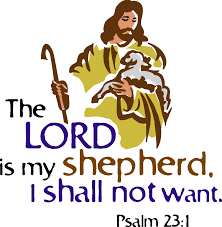
The Fourth Sunday of Easter is often called “Good Shepherd Sunday” because no matter what reading cycle we are in, the Gospel always focusses on the image of Jesus as the Good Shepherd. The image of a caring shepherd, which was formed within an ancient agricultural society, remains valid even today. It speaks of the intimate closeness and tenderness of Christ’s relationship with each one of us individually. The shepherd knows his sheep, and the sheep their shepherd. Complete trust is implicit. The first reading gives us insight into how the early church was struggling with the opening up of the good news to the Gentiles, leading to diversity in the make-up of the communities, much as we have in parishes today. Antioch, where Paul and Barnabas were preaching, was home to a military garrison, so conversion of the soldiers promoted the spread of the good news as they were stationed throughout the Roman Empire.
The Gospel today makes some sweeping claims eternal life promised for his sheep, and total protection from anyone who would seek to snatch them away. It finishes up with the declaration that Jesus and God are one. The Latin root word for shepherd is pastor, and it is from this root that spring the church terminologies and concepts of pastoral care and roles within faith communities. These roles imply a duty of love and care. Besides that the Shepherd-King was an ancient image of God used by the Hebrew people. This year, the Gospel reading talks about Jesus as the ‘gate of the sheepfold’, that is, Jesus is the one through whom we truly enter into the fold of God. The reading implies that those who get into the sheepfold some other way bring only disaster and destruction. Those who enter the fold through Christ, the Good Shepherd, will be safe, will be led to good pasture. The parable of the Good Shepherd has many consoling truths and promises for people of every century, including ourselves in the twenty first. That mixture of tenderness and toughness, care and self-sacrifice, is one that summarises Jesus own practice of leadership.
It is not a leadership of detachment and defensiveness; rather, it is a leadership of physical involvement and self-sacrificial love. In the good shepherd’s foolish extravagant love, his own life matters less than that of his sheep as we know Jesus gave up his life for us on the cross on Good Friday. When we think of Jesus as our Shepherd, we also need to think about being good shepherds to other people. The good shepherd challenges our own way of leaving people behind remember that Jesus also said “I have come to seek out and save the lost.” All of us know people who have wandered away from the Church, who have lost their sense of belonging, who feel they have no community to belong to. How will they know they are welcome back if no one tells them? How will they be helped back if no one offers to make the journey with them shepherding them back to the sheepfold? The story of the good shepherd gives us the opportunity to be good shepherds to those around us and its up to us to take up the challenge. This Sunday also marks the celebration of the World Day of Prayer for Vocations instituted by Pope Paul VI in 1964.The theme this year will be “Vocations: grace and mission ”. In his message for the day, Pope Francis explains that there is no vocation without mission. Today we remember those who were shepherds for us as we pray for more people to take up the call of priesthood or religious life continuing the mission of Jesus in our own time and place, as we continue our journey in the steps of the Good Shepherd who calls out to all of us follow me.
 Fullerton T