Fullerton T

RELIGION LITURGY AND LIFE

Archive for the month “January, 2024”

4th Sunday in Ordinary Time
Over the past few days we have been celebrating Catholic Schools week. We  have taken the time to think about the good that has come from our schools. We have also taken time to thank god for our school teachers and our parents who in our homes are our first teachers. But as we thank God for our schools and our teachers we remember that  learning is a lifelong experience of so many things. THE readings for the 4th Sunday in Ordinary invite us to recognize Jesus and grant him authority in our lives. Moses was the prophet for his time and for the needs of his people. In the first reading, Moses foretells the coming of a mighty prophet. Who are the Moses-like prophets for this time for us and our needs? Who do we trust and follow? Whose words and examples direct our minds to Jesus the word of God the authority of the Father? The second reading from Corinthians discusses the states of married and unmarried life, highlighting how the unmarried can focus more directly on pleasing the Lord. This theme of undistracted devotion is relevant to understanding different vocations and the ways they can lead to holiness.

In this Sundays  Gospel we hear about the authority of the Lord to cast out demons and devils. The gospel  reading is taken from Marks gospel . As Jesus begins to teach in Capernaum. The people are spellbound because he spoke with authority, not like the scribes. A man comes to Jesus who is in the hand of an evil power and Jesus makes the devil come out of the man. The bystanders are amazed because Jesus has such authority.  What do we mean when we speak about the authority of the Lord? What do we mean when we talk about authority in general? What ways do we exercise authority in relation to those around us? What ways do we exercise the authority of the Lord as Christians?  The word authority comes from the Latin word auctoritas.  The basic meaning of this Latin word is creator, the word author also comes from this word. In general, authority is intimately connected with its source that source is the person who gives another the authority to do something so the authority that Jesus has comes from his Father.  God’s love for everyone is declared to us in the scriptures. God speaks with us there.  The message is clear: If we are God’s we are to care about and for each other and that includes the refugees, the abused, the poor, the ill, and the mentally challenged.

It means Everyone everywhere! Jesus, entire public life was about compassion and mercy. He despised arrogance, fought hypocrisy, and he believed the heart was stronger than the law. He brought God’s mercy and compassion to the earth and in the process brought us forgiveness from our self-interest, our scapegoating, our manipulation of frayed emotions, and our insecurity in the face of diversity of language, race, nationality origin, or whatever We are truly prophets when we stand for the truth, for the marginalized, for the alien, for the victim of war, for the victims of capitalism that serves only the capitalist. We are surrounded by many voices claiming authority – in media, in politics, in our communities. How do we recognize the true prophetic voice? The key is do those voices follow the teachings of Christ and the Church. The challenge for all of us is to discern and hear the voice of God, to speak and live our faith authentically, and to orientate our lives towards our faith so that other people may believe what Christ teaches and take up his request to follow as we are following  him.

3rd Sunday in Ordinary Time

Every time we pick up a newspaper, or turn on the radio or TV these days  we are confronted with bad news, much of it of a very distressing nature. It leaves us numb and helpless when many parts of the world are waring with each other as we realise that we cannot do a lot about what is going on we continue to pray for peace in our world. This weekend the readings talk about good news. The prophet, Jonah, in the first reading took a little time to answer God’s call in fact he only did so the second time around. The first time, Jonah packed his bags and ran away to sea in order to escape God’s wishes. However, God did not give up. Jonah was given a second chance and when he accepted the call, he preached with such faith that the people of Nineveh repented. Mark’s gospel times Jesus’ proclamation of the gospel with John the Baptist’s imprisonment by Herod. It was like passing a baton to the next runner in a race. John’s work was completed: he had prepared the people for the Christ.

His preparation accelerated the expectations that the Messiah was coming soon. Repentance was needed to prepare minds and hearts to receive the Messiah. Even so, repentance was thought to be something of the mind, of the will. Just clearing the landscape of the trash of sin did not completely prepare a person to receive and follow Jesus.  It is interesting to note how Jesus begins his ministry by announcing good news that “The kingdom of God is at hand. Repent and believe the good news”. What is this good news? Essentially it is that we can come back to the father’s house like the prodigal Son, where a welcome instead of  judgement awaits us: The Good Shepherd has arrived. His stated aim is ‘”to seek out and to save the sheep that· are lost”  In the Gospel Jesus went to Galilee, preaching God’s imminent kingdom and urging repentance and belief in His message. By the Sea of Galilee, He called Simon and Andrew, fishermen, to follow Him and become ‘fishers of men.’ They promptly did. Next, Jesus summoned James and John, who also instantly left their father and work to follow Him.

This  illustrates the compelling nature of Jesus’ call. That meant they were to get up and leave family and friends to go out into the world to proclaim the good news of salvation.  We too are called to follow Jesus right where we are today. We are called to repent and to encourage others to do the same.  Like Jonah and Peter, we have to make many decisions. sometimes these affect the whole direction of our lives and the lives of others.   Whether we are like Jonah or like Peter in our in the way we make our decisions it is important for all Christians to realise that God is always there. He is waiting for us to accept his challenge to change our lives. As Jonah demonstrates, the story isn’t over yet. That all-important decision to answer the call of Jesus to follow Jesus may be made  right now today or even tomorrow. For every day is a new beginning, every day is brimming over with opportunities to start afresh.  So let us join Jesus in his mission so that others may believe the good news of salvation and hear the call follow me.

2nd Sunday in Ordinary Time

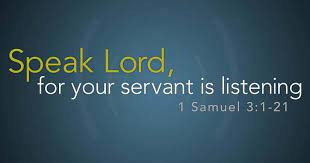
This Sunday we return to Ordinary Time with the Christmas and new year festivities a now distant memory. Our readings for the second Sunday in ordinary time are all about how god is calling his people. In the first reading we read about ‘Samuel’s Call’. Three times he hears God calling but thinks it is Eli a Temple priest and goes to him. Eli finally understands that it is God calling Samuel and tells him that next time he hears the voice to say, “Speak, Lord, your servant is listening”. The reading concludes with the thought that God dwelt with Samuel and that he spoke in God’s name. In this Sunday’s Gospel the apostles asked Jesus “Where do you live”? his reply was the invitation for them to “Come and see”.  As well as the Apostles all of us  are invited and welcome to  come and see where Jesus lives as well as what’s going on in our Faith Communities. When we accept the invitation of Jesus we have to ask ourselves why do we come and what do we seek? The early disciples of Jesus must have asked themselves those same questions.  They lived in a culture that distrusted anything new.  

We also  live in a culture that distrusts many things especially faith and all it represents.  The people in this gospel story are like you and me they are people looking and searching for God. Like the disciples we are seekers who want to find Jesus and stay or at least try and stay him. John’s disciples were seekers and it is late in the day for them as the gospel tells us. “It was about the tenth hour around four in the afternoon,” when the disciples received their invitation from Jesus. They need rest from their search and Jesus is offering it to them. The “four in the afternoon” possibly refers to the beginning of the Sabbath the next day.  The disciples spend time with Jesus, they are transformed. One of the disciples, Andrew, is so moved by his encounter with Jesus that he immediately goes to find Simon his brother and tells him, “We have found the Messiah”. Andrew’s response is a beautiful example of evangelization. He cannot keep the good news to himself; he feels compelled to share it with others. This is a reminder for us that encountering Christ should lead us to share the joy of the Gospel with those around us.  Simon, upon meeting Jesus, is given a new name, Cephas, which means “rock.”

This renaming signifies the mission that Jesus would give him, to be the rock upon which he will build his Church.  Just as the disciples were transformed by their encounter with Jesus, we too are invited to open our hearts to him, to seek him with sincerity, and to respond to his call. It is not a passive following to which we are called. This is about making room for him in our hearts and our lives, becoming the living embodiment of the Gospel.  May our encounter with Jesus and what he teaches us deepen our faith, transform our lives, and inspire us to be witnesses of his love in the world wherever  we are.

The Baptism of the Lord

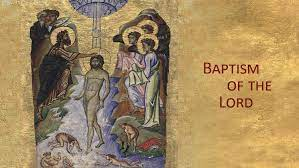
On the Sunday that follows the Epiphany of the Lord, the Church commemorates the baptism of Jesus and  the beginning of his public mission in the world.  Jesus began his mission, like any Christian does, by being baptized by one of those who are charged with representing him on earth.  John the Baptist is indeed the figure of the Church at its beginning, and he is the one who resembles Christ, and represents him among the people of his time.  When John the Baptist baptizes, he told the people that there was someone coming after him and he was not good enough to undo the strap of his sandals.  The Baptism of the Lord emphasizes our incorporation into God’s family through baptism, mirroring Jesus’ own baptism.  The first reading discusses being formed and called by God. The psalm highlights themes of peace, water, and salvation, integral to the baptismal experience. The second reading reflects on the start of the Good News with Jesus’ baptism.

 The Gospel vividly recounts Jesus’ baptism by John the Baptist in the Jordan, symbolizing the beginning of His ministry and our own spiritual journey through baptism. Many of us have been to a baptism but none of us remember the time we were baptised unless we were an adult who was baptized at the Easter Vigil or at another time. The beginning of the messianic work of Jesus is marked by the moment of his baptism in the Jordan. We remember that John the Baptist foretold Jesus  coming and he is acclaimed on earth by John and Jesus links himself to John by being baptized by him. Jesus is acclaimed from heaven by the voice of the Father and the presence of the Spirit.  Most of us rarely, if ever, think about our baptism. Through our baptism we died with Christ and have been reborn into a whole new life (Romans 6). We, the baptized, are made a part of the body of Christ. We are called to imitate Jesus, whom Paul says, “went about doing good.” We don’t need a detailed rule book in order to know how we should act in each situation of our lives, for in baptism, we have the companionship of the Spirit of Jesus who is our wisdom, our help and our guide to do good. The baptism of Jesus is a moment of special grace in the story of our salvation. Not only did the Son of God join us in our human condition but the Father and the Spirit were seen and heard to be present with him by the banks of the Jordan. At Jesus’ baptism, the voice heard from heaven identifies him as God’s beloved son. Our baptism also identifies us as beloved sons and daughters of the father. The Church teaches that baptism leaves a “mark” on us which can never be removed. No matter what we do, that mark is always with us. This gospel about Jesus and his baptism by John is the beginning of a purpose filled journey, which, through our own baptism, each of us is asked to travel. It is a journey and the purpose for us is to try and live our lives as people of God enlivened by the Holy Spirit so that others will be inspired to follow Christ by seeing the lives we lead as baptised people who believe in Jesus the Son of God and what he teaches us.

Epiphany

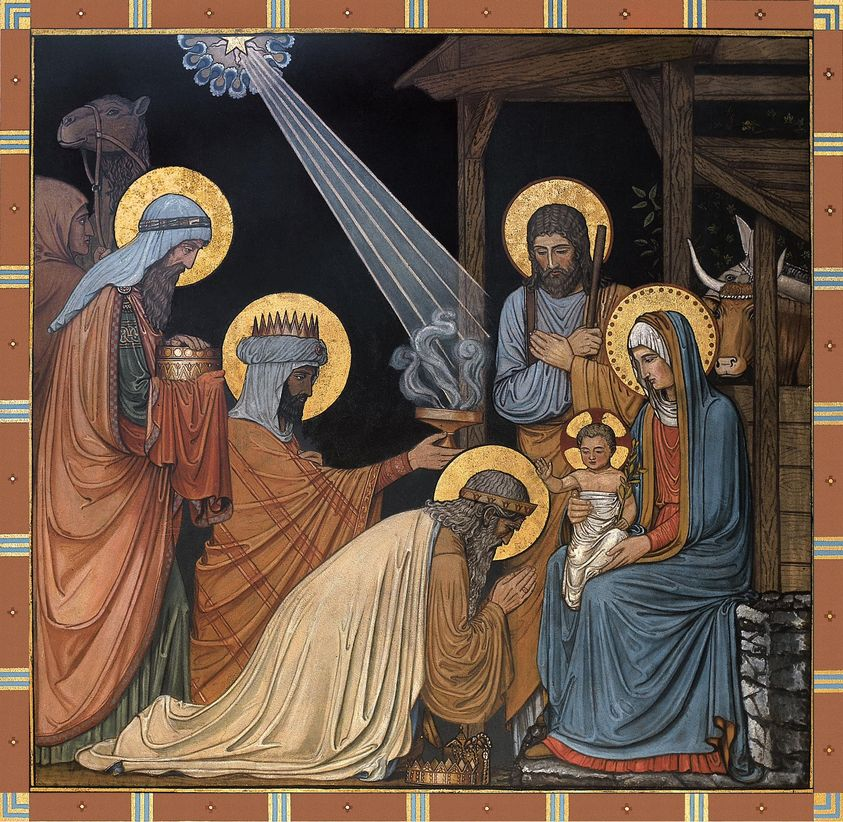
On January 6th  we celebrate the three wise men and their visit to Jesus, as we know they brought gifts of Gold Frankincense and myrrh valuable gifts indeed. As we reflect on the Magi and their gifts we should also reflect on humble start of the church: Jesus was born in a stable as there was no room in the inn. Jesus gave us the Eucharist at the Last supper in the upper room . There he told his apostles as he tells us today do this in memory of me when he blessed the bread and wine he said this after washing the disciples feet remember the Master of the household did not wash the feet of anyone.  Jesus died on the Cross with two thieves one on each side of him no Gold frankincense or Myrrh there just the words of the thief when he said  Jesus remember me when you come into your kingdom. The Magi from the east, guided by a star, sought the newborn King of the Jews in Jerusalem, unsettling King Herod and the city.

Informed by religious leaders about the prophesied birth in Bethlehem, Herod deceitfully instructed the magi to report back after finding the child. Following the star, the magi reached Jesus, worshiping Him and offering gifts. They returned home by another way to avoid Herod. In the gospel reading for this feast the Wise men represent the “mystery” of the son of God made manifest in human life by becoming one with us and like us. By their very nature they are seekers, people who came looking for the “king of the Jews.” Where would they find this royal child? Not in the courts of the powerful, like Herod. He was an example of how those in power would react to the gentle one who would draw all people into his kingdom. Jesus was not born in a mighty city, nor was he an heir to a powerful ruler. Instead, he was born  in Bethlehem. it was a backwater in the eyes of those of Herod’s court and the religious leaders in Jerusalem.

We, like the wise men, will find Christ among the “least.” and this is the message, that lies at the heart of our gospel for today. The call of the Savior is given  to each of us. What do we hear? Will we believe what we hear and see as the Wise men did? we are not going to be able to bring Gold Frankincense and Myrrh to the Lord instead we bring the priceless gift which is our faith and belief in Christ the Son of God. Our faith in Jesus enables us to bear witness to him as a light for all the nations. Like the wise men we come to worship the one we have found in the manger and then go out and share with everyone out there the treasure we have received kneeling at the crib like the wise men

EPIPHANY

On January 6th  we celebrate the three wise men and their visit to Jesus, as we know they brought gifts of Gold Frankincense and myrrh valuable gifts indeed. As we reflect on the Magi and their gifts we should also reflect on humble start of the church: Jesus was born in a stable as there was no room in the inn. Jesus gave us the Eucharist at the Last supper in the upper room . There he told his apostles as he tells us today do this in memory of me when he blessed the bread and wine he said this after washing the disciples feet remember the Master of the household did not wash the feet of anyone.  Jesus died on the Cross with two thieves one on each side of him no Gold frankincense or Myrrh there just the words of the thief when he said  Jesus remember me when you come into your kingdom. The Magi from the east, guided by a star, sought the newborn King of the Jews in Jerusalem, unsettling King Herod and the city.

Informed by religious leaders about the prophesied birth in Bethlehem, Herod deceitfully instructed the magi to report back after finding the child. Following the star, the magi reached Jesus, worshiping Him and offering gifts. They returned home by another way to avoid Herod. In the gospel reading for this feast the Wise men represent the “mystery” of the son of God made manifest in human life by becoming one with us and like us. By their very nature they are seekers, people who came looking for the “king of the Jews.” Where would they find this royal child? Not in the courts of the powerful, like Herod. He was an example of how those in power would react to the gentle one who would draw all people into his kingdom. Jesus was not born in a mighty city, nor was he an heir to a powerful ruler. Instead, he was born  in Bethlehem. it was a backwater in the eyes of those of Herod’s court and the religious leaders in Jerusalem.

Through the “least,” and the poor, Christ comes to us. We, like the wise men, will find Christ among the “least.” and this is the message, that lies at the heart of our gospel for today. The call of the Savior is given  to each of us. What do we hear? Will we believe what we hear and see as the Wise men did? we are not going to be able to bring Gold Frankincense and Myrrh to the Lord instead we bring the priceless gift which is our faith and belief in Christ the Son of God. Our faith in Jesus Christ enables us to bear witness to him as a light for all people. Like the wise men we come to worship the one we have found in the manger and then we share with others the treasure we have received kneeling at the crib.

Post Navigation