Fullerton T

RELIGION LITURGY AND LIFE

Archive for the month “April, 2024”

5th Sunday of Easter
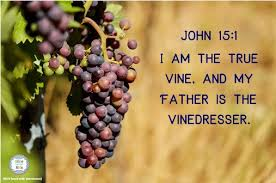
This Sunday we hear the gospel  story of the Vine and the Vinedresser. Jesus uses the  Old Testament image of the vine and branches to help his disciples to understand the closeness of their relationship with him and the necessity of their maintaining it.  They are not simply teacher and disciples.  Their lives are mutually dependent as close as a vine and its branches.  In fact, in using this image, Jesus is explaining to them and to us what our relationship with him should become. The first reading, taken from the Acts of the Apostles, testifies to the abundance of spiritual fruits yielded by the apostles because of their close bond with the risen Lord.  The reading tells us how the Lord pruned the former fanatical Pharisee, Saul of Tarsus, who had persecuted the Church, to produce a fruit-bearing branch called Paul the zealous Apostle to the Gentiles, a man now entirely dedicated to the proclamation of the Gospel.  Even Paul’s forced return to Tarsus for a brief period is an example of God’s pruning of the vine to bring forth a greater harvest, namely, the mission to the Gentiles.

Our task is in fact to continue the work of Christ in the world. In order to know what to do we must look at his life and imitate him as best we can.  He taught the truth, he spoke words of comfort, he healed the sick, he brought sight to the blind, he spent much time in prayer in communion with the Father. And ultimately he laid down his life for our salvation. We must find ways to translate his actions and his words into our actions and our words We are meant to live in the peace and joy of the Easter gospel not in fear and uncertainty. “Without me you can do nothing,” Jesus tells us. But with him we can do everything. If we remain in his love, we can ask anything of the Father in his name and it will be given to us. The life of faith in Christ and what he teaches us  is a gift freely given and accepted by we also have the freedom to reject the life of faith  and the  love of Christ.  God calls us through Jesus his Son to make His message real in the world he asks us to make his actions and words our own as we bring His Love to the world wherever we are within it.
4th Sunday of Easter

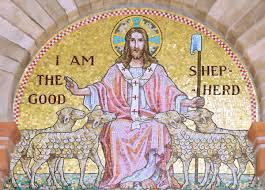
This weekend we celebrate the 4th Sunday of Easter also known as Good Shepherd Sunday. The image of the good shepherd is a deep revelation of Christ’s sacrificial love and commitment towards us. Unlike the hired hand who might flee at the first sign of danger, Jesus stands firm, ready to lay down His life for His sheep. This act of ultimate sacrifice is a testament to the depth of His care and concern for us you only have to look at the cross to realise this it’s a love that goes beyond duty or obligation. Jesus wants to be our shepherd, guiding us, protecting us, and leading us to pastures of eternal life.  In the Old Testament, the shepherd was a metaphor for the leaders of the  people of God. Most often those leaders failed in their responsibilities and many were corrupt. God excoriates the incompetent and sinful leaders who were appointed to shepherd the people which they did not do. With the failures of the leaders of the people, God decided to take on the shepherding role. “For thus says the Lord: I myself will look after and tend my sheep. (Ezekiel 34:11).

In the First Reading – from the acts of the Apostles Peter declared the healing of a man came through Jesus Christ of Nazareth, whom they crucified but God raised. He emphasized that salvation can only come through Jesus, the stone the builders rejected that became the cornerstone.  In the Responsorial Psalm we acknowledge God’s unfailing kindness, we find solace in His shelter, surpassing human reliance. The once-rejected stone now underpins our faith, a divine act that fills us with awe. Blessed by God’s response and rescue, we celebrate and give thanks for his eternal love and mercy. In the Second Reading we are told that  we are already God’s children, loved deeply by the Father. The world doesn’t know us, as it didn’t know Him. In the future, we’ll fully become like Him, seeing Him as He truly is. In this Sundays gospel Jesus likens Israel’s corrupt shepherds to the “hired man who deserts the sheep when danger approaches, leaving them in peril. The hired shepherd may leave the sheep behind but Jesus the Good shepherd the Son of the Father does not leave his sheep. One of the most comforting Psalms which is also a hymn begins with the line: “The Lord is my shepherd.”

It ends with this line: “Goodness and mercy shall follow me all the days of my life.” Goodness and mercy, in the person of Jesus the good Shepherd are with us even now. The Gospel of the Good Shepherd teaches us how to embrace the gift of redemption by hearing and recognizing the voice of Jesus the Good Shepherd. There are numerous voices calling us to believe and practice things that might seem nice, but those voices are not of or from the Lord. We need to tune our ears and hearts into recognizing the voice of truth that comes from the Good Shepherd through the preaching and teaching of the Church. We are his people the sheep of his flock means that we are people who are able to recognize the voice of the Lord and faithfully follow him.  On Good shepherd Sunday the Church also invites us to think about and pray for vocations. We pray in a special way for all those young and not so young who have a vocation to the priesthood, Permanent diaconate or the religious life. We pray that in their lives they may be like Christ the Good shepherd who came to give his life as a ransom for many shepherding  his people into the sheepfold of God the Father  .

3rd Sunday of Easter

This weekend we celebrate the third Sunday of Easter. As we journey through the Easter season, the readings for the 3rd Sunday of Easter invite us to reflect deeply on the themes of repentance, forgiveness, and the power of the Resurrection. The call to turn back to God and the assurance of His forgiveness are central messages that resonate throughout the readings, offering us a path to renewal and hope. In the first reading from the Acts of the Apostles, Peter addresses the people with a powerful message of repentance. He acknowledges that both the people and their leaders acted in ignorance when they rejected Jesus and chose a murderer instead. However, Peter’s words are not of condemnation but of invitation. He invites his listeners to repent and turn back to God so that their sins may be wiped out. This passage highlights a fundamental truth of the Christian faith: God’s mercy is greater than our sins, and His desire is always to bring us back into full communion with Him.

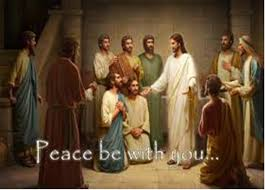
The apostles on the road didn’t recognize him at first, but they did after he opened the Scriptures and broke bread with them. After their encounter they returned to the community in Jerusalem with the news of what had happened. While they were still speaking to the community, Jesus stood in their midst and said to them peace be with you. He is encouraging them not to be afraid. Then he invites them to touch him. Still more, he asks for food and eats in their presence. The resurrected Christ is present, in the same way he was when they traveled and ate together. He is not just someone who somehow survived what was done to him and escaped. He didn’t experience a near death on the cross he died and rose again as he said he would. Jesus reminds all of us that he is the same, yet there is something very different about him. They knew that he was with them; Yet, the disciples needed more in order to accept his new presence with them. What he did for the disciples on the road to Emmaus he does again and again for us through  our priests. He tells us what the Scriptures had said about him in the same way our priests do for us today.

Do we understand what God done  for us as he brings us new life after death? Jesus doesn’t choose just certain Scriptures as proof texts. He tells us as he told the disciples “everything written about me in the law of Moses, and in the prophets and psalms must be fulfilled.” What would we be like if Jesus came and stood among us in real flesh and blood, I think that our reaction would be exactly the same as the apostles disbelief. But if we stop and think for a moment Jesus does come amongst us each time  we go to the Eucharistic liturgy, Jesus is there with us on the Altar in the elements of Bread and wine and in the person of the Priest offering these gifts to the Father on our behalf. We remember the last supper when Jesus gave us himself as an everlasting memorial and we remember that each time we hear the prayers of consecration at Mass that we do this in memory of him. We are Easter people Jesus walks with us and we are called by our baptism to bring the light and peace of Christ  to the world.

2nd Sunday of Easter Divine Mercy Sunday

This weekend we celebrate the second Sunday of Easter also known as Divine Mercy Sunday when we celebrate the mercy of God in a special way. Our first reading from the acts of the apostles tells us that the early believers were united, sharing possessions and resources. The apostles’ powerful testimony about Jesus’ resurrection earned them high regard. They distributed funds meet everyone’s needs, ensuring no one was in need. These days we ask ourselves are we helping to provide for those who have needs in our own places. In the second Reading we see that  Belief in Jesus as the Christ the son of God  shows we are born of God. Loving God and His children means obeying His commandments, which are not burdensome. Our faith in Jesus as God’s Son overcomes the world, affirmed by the Spirit of truth. In the Gospel story Jesus appears to his disciples, offering peace and showing his wounds, which brought them joy. He empowered them with the Holy Spirit and the authority to forgive sins.

The Apostles were huddled together in fear. They weren’t so sure that the women’s report that Jesus had risen was believable. They weren’t singing for joy! Now, a whole week has gone by. They still felt “rocky” about their future and what it would hold for them. Thomas wasn’t the only one who had doubts about Jesus, I think so many were doubtful then as so many are doubtful right here and now. The Apostles were pondering the shocking experience of the week before when all seemed to be lost as Jesus hung on the Cross. But here we are over 2000 years later thinking about how they felt after the events of that first Holy Week.  Jesus had broken through those doors and came to assure them that he was alive and then his message must have troubled them: “As the Father has sent me, so I send you.”  The disciples  were to go out to  teach, to preach, to heal by announcing the gospel. They were going  to open the eyes of the blind, to give hearing to the deaf, and soften the hardened hearts of man. They were sent to bring the message of Jesus to others and in the same way we are sent out to bring his message to other people wherever we are by what we say and do.

We are asked to bring the mercy and love of God to all those out there who need his healing merciful touch.  We remember the joys the hope, the grief and the anxieties of the people in our time these are the joys and hopes, the grief and anxieties of the followers of Christ. The Apostles felt rocky about their future as many of us do today but god is with us as we go out into the world as his messengers. May all of us be witnesses to the Gospel bringing the mercy of God to the people of our time and place as we go forward into a the future as Easter people with Christ as our light  to help and guide us along the road we travel.

Post Navigation