Fullerton T

RELIGION LITURGY AND LIFE

Archive for the month “January, 2025”

The Presentation of the Lord
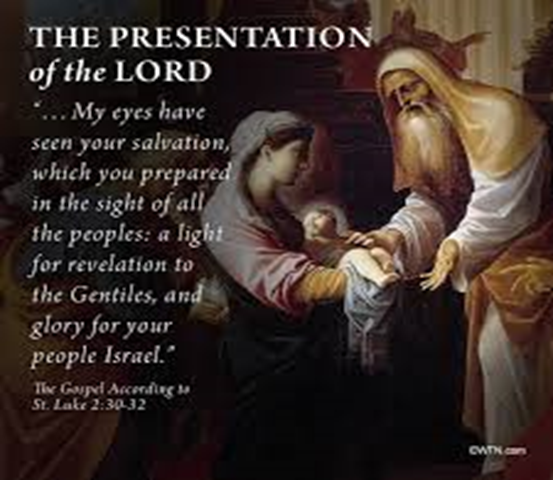
The Feast of the Presentation of the Lord is an ancient celebration in the Church. It is also called Candlemas because, on this day, candles are blessed in many parishes. The feast is celebrated on February 2nd  forty days after Christmas. It recalls the day when Mary and Joseph brought Jesus to the Temple in Jerusalem to present Him to God. This event is rooted in Jewish tradition. According to the Law of Moses, every firstborn son belonged to God. Jewish parents were to bring their son to the Temple and offer a small sacrifice in thanksgiving. By bringing Jesus to the Temple, Mary and Joseph followed God’s law faithfully. This act shows their humility and obedience to God.

The Church has celebrated the Presentation of the Lord for many centuries. In the early Church, people gathered in the evening for a candlelit procession, honouring Christ as the Light. February 2, exactly 40 days after Christmas, was chosen because of this tradition in Jewish law. It also marks the end of the Christmas season for some Catholic communities.   In the First Reading the text, taken from the Prophet Malachi tells us, “I am sending my messenger to prepare the way before me; and suddenly there will come to the temple the Lord who you seek” (Mal 3:1). From the Gospels, we know  that the precursor was John the Baptist who was born 6 months before Jesus, we also know that God sent John to prepare His way. So, soon after the Baptist’s birth, God entered His temple. Jesus’ presentation signifies God’s entrance to His temple. God made man entered the temple, presenting Himself to those who were really searching for Him. In the Gospel reading  from Luke we are introduced to different people and events that in themselves provide numerous pointers  for  reflection. First of all, Mary and Joseph respect the Mosaic Law by offering the sacrifice prescribed for the poor: a pair of turtledoves or two young pigeons. Simeon and Anna were two venerable elderly people dedicated to prayer and fasting their strong religious spirit rendered them able to recognize the Messiah when they saw him.

  Simeon blessed God and said “Now, Master, you may let your servant go in peace, according to your word, for my eyes have seen your salvation, which you prepared in the sight of all the peoples: a light to the Gentiles, and glory for your people Israel.” We are familiar with the beautiful symbolism associated with light. Light in the spiritual sense means Christ and the supernatural life of grace. The Presentation of the Lord connects the Old Covenant with the New. In the Old Covenant, people followed the law to be close to God. But Jesus brings the New Covenant, where people are saved by faith in Him as the Son of God and what he teaches. By being presented in the Temple, Jesus shows respect for the Old Covenant while also opening a new way for the people to follow.  In the Presentation of the Lord, we see that Jesus came to bring light, hope, and salvation to the world. Through Mary and Joseph’s faithfulness, Jesus’ mission begins humbly but with great purpose. This feast invites us to embrace the light of Jesus and to trust in His saving plan for us and for the world. It also prompts us to ask ourselves how can we, as the Body of Christ be Light and Hope for others especially in the darkness of our current times.  

We are also invited to present ourselves to God, offering our lives in joyful hope filled service and love. We remember the call to live as “children of the light,” walking in hope, faith and trust lighting the path for those around us to follow the god of hope and joy.
3rd Sunday of Ordinary Time

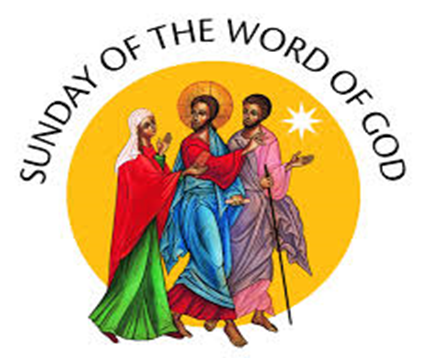
This Sunday we celebrate the 3rd Sunday of ordinary time as well as Word of God Sunday. Today’s readings make an unmistakable directive that we are to seek joy that comes from faith.  They provide insight  to how we are to go about instilling joy into our the core of our being.  In our first reading from Nehemiah,  we find ourselves at the Feast of Tabernacles at a time of true revival.  God had intervened and had brought the Israelites back to Jerusalem.  Not only had they returned home from captivity in Babylon, but God had miraculously provided all the resources needed to rebuild the temple and the walls of the inner city. In the Psalm we are reminded again of the power of God’s Word as it “refreshes the soul”.  His Words bring “Spirit and Life.”  They provide “rejoicing to the heart,” “enlightenment”, a “fear of the Lord which is pure, enduring forever”. 

All of these reminders point us to God’s Holy Word, which is the ultimate source of the overflowing joy we need to not only rejoice, but to effectively point others to our Lord and Savior the reason for the hope and joy that is within us. In our Second Reading from 1 Corinthians, we see how our joy is to be lived out.  We are reminded that our church the  body of Christ is made up of many  unique individuals, all with unique talents & purposes.  We are instructed that there can be no divisions, but rather shared concern for one another.  True joy is found only when we focus upon others, allowing our joy  to flow into their lives both in their good times and their challenges. In the Gospels for this Sunday and next, Luke tells the story of Jesus’ visit to his hometown of Nazareth. Luke wants to make very clear to his readers what drives Jesus the Prophet from Galilee and what is the goal of his action. We as Christians need to know in what direction the Spirit pushes Jesus, since following him means that we are walking down the same path as he did and often times it will be in opposition to what is going on in the world.  With the Spirit poured upon him at his baptism, Jesus would proclaim freedom for captives, sight for the  blind, and help for those who are oppressed.  When Jesus spoke, hearts and minds turned to God and health of mind, body and spirit were restored.

There is an immediate life implication in this gospel passage  that is easy to overlook and that is the Spirit of the Lord came upon Jesus and the Church in order to bring the good news of hope and joy to us and we are called to bring it to the people of our time and place. The “today” of Jesus that the Gospel speaks about is not only the day he was speaking. It is our “today” as well here  right where we are in 2025. As pilgrims of hope in this Holy Year we are called to bring the joy of Christ that we have as people of faith into the lives of others. Wherever we are that is our challenge it is the challenge of hope filled joyful people who proclaim freedom for captives, sight for the  blind, and help for those who are oppressed.   

2nd Sunday of Ordinary Time

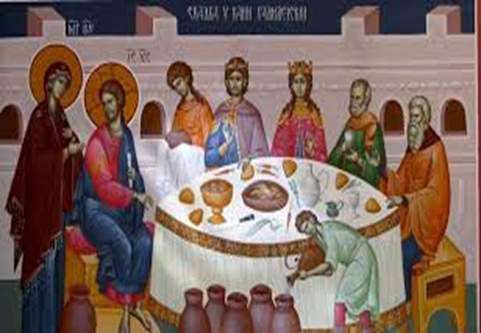
THE WEDDING FEAST AT CANA

In the First Reading we hear Issiah telling us for the sake of Zion and Jerusalem, I will speak until their righteousness shines. Nations will see their glory. The Lord will rejoice over them as a bridegroom rejoices over his bride. In the Psalm we Sing to the Lord, proclaim his salvation, and declare his wonders. We give him glory, worship him, and say to the nations: The Lord is king who rules with justice. In the Second Reading we hear that it is the same Spirit that gives different gifts to each person for the benefit of all, such as wisdom, knowledge, faith, healing, miracles, prophecy, discernment, tongues, and their interpretation.

The  gospel story of the wedding at Cana was the first time that Jesus worked a miracle when he changed the water into wine. We hear Mary telling Jesus that ‘they have no wine’ Jesus said ‘Woman, why turn to me? My hour has not come yet.’ His mother said to the servants, ‘Do whatever he tells you.’   This story is not just about Mary asking her Son to help with the wine it is also about us here today. Mary told the servants to do whatever he tells you and she says the same thing to us here and now. In Lourdes in the Rosary Basilica right above the altar there is a huge icon of our lady with the inscription to Jesus through Mary. Though Mary was the mother of Jesus she did not claim any of the limelight for herself instead she pointed the people around her to her son as she told them to do whatever he tells you. Mary, who asks for help when she tells Jesus “they have no wine”, Mary the faith filled disciple, has trust in divine providence.  

In her response at the wedding at Cana Mary shows herself a model disciple who trusts in God. She shows that trust with the words that are meant for all of us even now as we read them again “Do whatever he tells you.”   At the end of this Gospel passage, John tells us that Jesus’ action in turning the water into wine was the first of the signs he gave.  In John’s Gospel there will be six more. All of them to do with healing, saving, restoring, feeding and giving life to human beings. None are empty displays of Jesus’ power. The ‘glory’ of Jesus lies in revealing the God of love, especially in moments of real human need. The signs show that the power of love which comes from God are always at the service of human beings. We, too, are called to allow the glory of God to shine out through us in loving, healing, transforming and hopeful words and actions.

Today what does Jesus ask us to do as we think about the wedding at Cana are we like Mary prepared to trust in God the Father who can give us all things or are we prepared just to go along accepting the things that happen to us. I think that we should be prepared to learn and understand the message that is given to us through Jesus whose mother asks us in the gospel to ”do whatever he tells you.”

The Baptism of the Lord

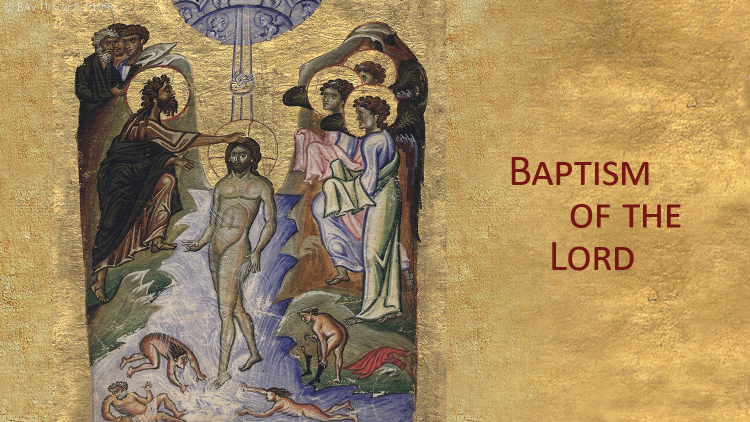
This weekend we celebrate the baptism of Jesus in the Jordan by John. This celebration is also a reminder of our own Baptism which for many of us took place a long time ago when we were babies but I am sure we have been to a baptism of a child. Some of us  may have been to the baptism of an adult during the Easter season as part of the RCIA process where people come into the faith communities where they live after a time of preparation during Lent. In the First reading from Isaiah We hear an ancient description of the mysterious “servant” who is endowed with the spirit of God. His mission is to bring true justice to the nations, and he will accomplish this in quietness and gentleness. In the Second reading  from the Acts of the apostles Peter addresses the household of Cornelius and tells them how Jesus began his public ministry after John the Baptist’s preaching when he was anointed with power by the Holy Spirit coming down from heaven upon Jesus.

The gospel for this Sunday uses the simple phrase that “the heavens were opened,” the voice of the Father was heard saying this is my Son in whom I am well pleased and it is a powerful statement. This particular gospel story is the beginning of the journey that Jesus was to undertake and it brought him to Calvary and the cross.  Through our own baptism, each of us is asked to travel a spiritual journey of hope and faith though we won’t end up on the Cross. The sacrament of Baptism is the is the foundational sacrament key to all the other sacraments. Baptism has three essential results, firstly it wipes us clean from original sin and secondly it makes us members of the Church. It also opens up the opportunity for us to receive the other sacraments, most particularly the Eucharist which is the sacrament that we most frequently experience and which is the main way that our souls are nourished by God’s grace. We remember that John foretold Jesus  coming and he is acclaimed on earth by John and Jesus links himself to John by being baptized by him.  Jesus is acclaimed from heaven by the voice of the Father with  the presence of the Spirit.   Most of us rarely think about our own baptism, Through our baptism we died with Christ and have been reborn into a whole new life (Romans 6). We, the baptized, are made a part of the body of Christ.  We are called to imitate Jesus, who St. Paul says, “went about doing good.” We don’t need a detailed rule book to know how we should act in each situation of our lives, for in baptism, we have the companionship of the Spirit who is our wisdom, our help and our guide to do good and enable us to do what is right in all the situations we may find ourselves in.

Our personal faith journeys have one great purpose and the purpose is to try and live our lives as sons and daughters of the living God brothers and sisters of Jesus enlivened by the Holy Spirit. Today we are invited to renew that first encounter of our own baptism and look at it  in a new light. In baptism Christ has made all of us his own. He invites all of us to a deeper relationship with Him, a relationship that throws new and perhaps unexpected light on the grace of that first encounter in the baptismal font.

Second Sunday after Christmas

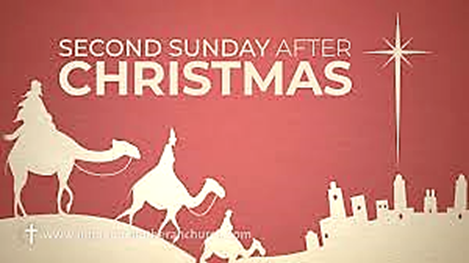
Here we are at the second Sunday after Christmas as we look forward to the arrival of the three wise men on the feast of the Epiphany which takes place on Monday 6th January.  By long standing  tradition Christians celebrate Christmas as a season, with the twelve days between Christmas and the Epiphany as one long “Christmas feast.” The season ends with the Baptism of the Lord which is also the first Sunday of ordinary time and that takes place next Sunday.  In the first reading this weekend we hear that  wisdom speaks her own praises in the great assembly, this reading tells us  how Wisdom personified as a woman speaks about her role as she glories in herself in the presence of the mighty one. The reading goes on to tell us  from eternity in the beginning he created wisdom and for all eternity wisdom will remain.

In the Second Reading Paul begins his letter to the Ephesians with a hymn which praises God for choosing us in Christ. He prays that all will be blessed with the spirit of the heavenly blessings `so that through wisdom we will get to know God, so that we can see the hope that his call holds for us. In the Gospel we hear the magnificent Prologue to John’s Gospel: how in the beginning there was the Word and through the word all things came to be and then in the fulness of time god sent his Son. When John comes to speak about Jesus notice how he goes back beyond the time of Jesus’ birth and conception to the very beginning of time itself. He sees Jesus as the Word that was with God, the Word that was God. John rejoices in his Gospel that this Word which made the beginning now comes into the world.   The Word is not only had a great power that makes all things; the Word became flesh and dwelt among us. The Incarnate Word comes among his own people in the person of Jesus the Son of God the only Son of the Father.  At Christmas we celebrate the humility of Emanuel  God with us who came to be one with us in the good and bad times that are part of our lives.

As Christians, we will very often find ourselves living in contradiction of so many things that are part and parcel of this present age.  Regrettably we have to get used to the fact that we will face conflict among friends, and even at times within families, as we seek to live out and the Christian life more generously and we know that if our words fail, the Word of God never fails. May we not be afraid in the Holy Year of Hope that has just begun to seek  and find the wisdom that God wants to give us, so that we can see the hope that his call holds for us so that we will have the wisdom to follow Jesus the light for the world the hope of all who believe.

Post Navigation