Fullerton T

RELIGION LITURGY AND LIFE

Archive for the month “March, 2025”

4th Sunday of Lent

3rd Sunday of Lent

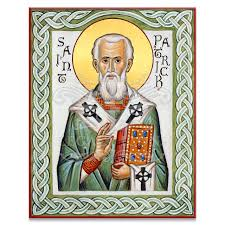
Saint Patricks Day

With the Irish all over the world we celebrate the feast of Saint Patrick who was credited with bringing the faith to the Irish nation. I often wonder what St. Patrick who drove the snakes out of Ireland would do about the modern snakes that we have in Ireland today. I imagine he would look at what was going on around him and roll up his sleeves and get on with the job of proclaiming the Gospel. Jesus tells his disciples to go and make disciples of all nations in today’s reading from Matthew, that would sound absurd if taken literally in ancient Israel.

He was a small town prophet with a rag-tag group of disciples laying claim as the son of God. His own hometown rejected him. Why would the next town pay any attention, let alone the rest of the world? And yet, 2025 years later, that great commission to preach and teach the word of God continues. Christianity has spread all across the globe to every nation.  Patrick’s first trip to Ireland was when he was taken there as a slave. At age 16. For six years, he was held as a prisoner who cared for his master’s sheep. He prayed one hundred times every morning and one hundred times every evening for God’s protection.  By that time he was 22 years old. He was able to escape by ship, which he rode for three days before getting off and walking for the next month. Before he was taken as a slave, again. He was able to escape once more and then finally make his way home.  He then went back to Ireland.  He took what could have been the worst things to ever happen to him and turned them into inspiration for his life’s work.  Here we are so many years after Saint Patrick thinking about his message and how we can put it into action in our own lives and there is much to value in that message.  

The spirit of St Patrick affirms the worth of each human being. His Confession invites us all to personal conversion. His message was to draw people to follow Christ in the sharing spirit of the Gospel.  This mission is still an urgent one especially in today’s world were there are so many people who are experiencing a crisis of faith and many other crises as well. Saint Patrick proclaimed the message of salvation and many years later we and all the generations in between are the inheritors of faith that is the rich inheritance born of him.  Today we  give thanks to God for our faith and for sending St Patrick to us. It is also a day to reflect on and give thanks for the example of so many men and women who inspire us by their example. There are many things that are wrong in the world and there are many snakes out there looking to destroy what we hold as being good and honourable it is up to us to us to choose the right course; to be brave under trials; and make the Good News the hope for our salvation our message as we honour Saint Patrick on his feast day.

2nd Sunday of Lent

1St Sunday of Lent

ASH WEDNESDAY

We start our annual  journey of repentance and conversion for 2025 with the Ashes of Ash Wednesday. The readings and the ashes call on us to change our lives in the spirit of conversion and renewal. There is a big question for all of us as we begin lent will the ashes of today help us to realise that we should have a change of heart and mind as we seek spiritual renewal in Lent, each individual will have the answer to that question for themselves. All of us will have many opportunities to strengthen our spiritual lives during  the 6 weeks of lent as we ponder what our faith really means to us as individuals and as a community.  Ashes hold deep symbolism in the Church, representing both our mortality and the need for repentance. This powerful symbol finds its roots in the Scriptures, where ashes were used as a sign of mourning and repentance. In the Old Testament, ashes were often associated with expressions of grief and sorrow. Job, for example, sat in ashes as a sign of his deep mourning and repentance before God.

The prophet Daniel also fasted and covered himself in ashes as a way of seeking God’s mercy and forgiveness for the sins of his people. These practices served as a visible reminder of our need to turn away from sin and return to God. On Ash Wednesday, we receive ashes on our foreheads as a sign of our own personal need of conversion and renewal of heart  and spirit. As the priest or minister applies the ashes, they say the words, “Remember that you are dust, and to dust you shall return.” This solemn reminder prompts us to reflect on the brevity of life and the importance of living in accordance with God’s will. The ashes are a call to return to god and let go of the things that hinder our relationship with God and embrace a life of holiness.

In the First Reading –Joel 2:12-18: The Lord urges a heartfelt return to him with fasting and repentance, highlighting His gracious and compassionate nature, Slow to anger abounding in love. A communal fast is called, involving everyone, with priests pleading for mercy, leading to God’s compassionate response as he had mercy on the people. In The Responsorial Psalm – Psalm 51  we hear that each person in acknowledging their own sinfulness, implores God’s mercy. As all of us seek a renewed heart and spirit, with God’s presence in our lives and the restoration of the joy found in salvation. The Second Reading  tells us that we are called to be reconciled with God. Christ bore our sins to make us righteous as we  Embrace God’s grace, for now is the time of salvation. As ambassadors of Christ we are called to be reconciled to him and through this reconciliation we are called to be reconciled to one another.

In the Gospel reading from  Matthew  Jesus emphasizes the importance of sincerity in the practice of faith. He advised against performing acts of charity, prayer, and fasting for public admiration, as such actions lack true spiritual value.  Instead, he encouraged discreet and private expressions of faith, assuring that God, who sees everything that is done  in a quiet prayerful way, will duly reward genuine devotion. Lent is all about moving forward in a spirit of conversion and prayerful return to god that is the spirit of metanoia. So the Church asks us at the beginning of Lent to renew our own lives through the great spiritual works of prayer, fasting and almsgiving, and to listen to Jesus’ advice in today’s Gospel. On ash Wednesday the ashes are a call for us to change our lives and how we live them. We begin our journey for lent 2025 and we receive the ashes as a sign that we are willing to return to god who says return to me with all your heart and we do that in a special way during this holy  year of hope.

8Th Sunday of ordinary time

Next week we begin the season of Lent with the Ashes on Ash Wednesday and we begin our annual  journey of repentance and conversion for 2025 as pilgrims of hope. All of us will have many opportunities to strengthen our spiritual lives over the 6 weeks of lent as we ponder what our faith really means to us as individuals and as a community. We also continue our prayers for the health and wellbeing of Pope Francis.

In the First Reading  this Sunday we are told that a persons  speech reveals their faults and true character. Do not praise someone before hearing them speak as this is the test of men. The Responsorial Psalm is  Psalm 91 and we hear that  It is good to thank and praise the Lord, whose kindness and faithfulness are constant. We are also told that the righteous flourish and bear fruit, proclaiming God’s justice and reliability to those around them. In our Second Reading  we are told that Through Jesus, we have victory over death. Again we are called to be steadfast and devoted to the Lord’s work, knowing all we do is not in vain even though sometimes it might look that way for in the Lord we do not labour in vain.

This Sunday in our Gospel Reading Jesus is coming to the end of what, in Luke, is called the “Sermon on the Plain”. He has instructed his disciples to love their enemies, turn the other cheek, treat others as they would want to be treated, not judge them, etc. Jesus is the wise person teaching the disciples a practical wisdom on how to live their lives as his disciples. Jesus says, in summary, a person’s words and actions will reveal their character. The Gospel tells us There is no sound tree that produces rotten fruit, nor again a rotten tree that produces sound fruit. For every tree can be told by its own fruit: people do not pick figs from thorns, nor gather grapes from brambles. A good man draws what is good from the store of goodness in his heart; a bad man draws what is bad from the store of badness. For a man’s words flow out of what fills his heart.’ God’s love is effective, it produces good fruit for the benefit of others. The good we do is the  way to spread the faith to others. Jesus sends us to be witnesses to the faith we profess to practice what we preach in all we do and say. Jesus words to us in this weekend’s gospel  show his concern for the integrity and quality of our lives. We cannot, he says, teach others if we ourselves are not witnesses to what we teach. There are many people out there who were witnesses to the truth of the gospel who have turned away and betrayed the truth and become rotten fruit.  Lent is the time to renew our  selves in terms of faith so that we are able to move forward in the certain knowledge and hope of being true witnesses to the faith. Lent is all about moving forward in a spirit of conversion and prayerful return the spirit of metanoia.

 During Lent we are provided with many opportunities for spiritual renewal but that will be for the weeks ahead. But for now let us stop and reflect on the good we do for others and how that becomes a way of  bringing the faith to the people where they are. As we continue our journey as pilgrims of hope we remember  that  God’s love is effective, and it produces good fruit for the benefit of others and we are called to show gods love through all we do and say for one another.

Post Navigation