Fullerton T

RELIGION LITURGY AND LIFE

Archive for the month “November, 2025”

1st Sunday of Advent
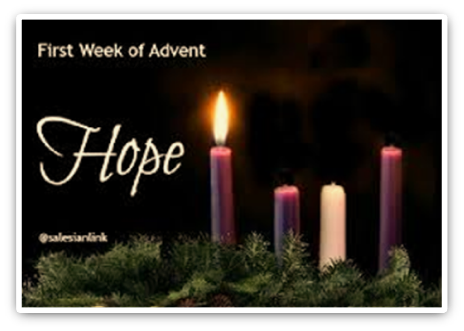
This weekend we celebrate the first Sunday of Advent. As we light the first purple candle on the advent wreath we recall the faith of the people who looked out for Jesus and prepared the way for him, and said he was coming to us. We look to the writings of the Old Testament to see what they say about the promise of God to visit his people and during these coming weeks we will read much from the prophet Isaiah; we also think about all those who prepared the way for his coming and we think about the work of John the Baptist who was the lords herald. As we reflect, we also think about Mary whose faith and acceptance of the invitation of God brought about the whole Christian era.

The readings for this Sunday speak about peace, joy, and staying awake. In the first reading Isaiah gives a picture of all nations coming to God’s mountain to learn his ways. In the future, the Lord’s mountain will be the highest. All nations will come to learn His ways, and there will be peace. In the Second Reading Paul tells us to wake up for our sleep as our salvation is near. We are called to live properly, putting aside darkness and putting on the light of Jesus Christ. This week’s Gospel we are told to “Stay awake”, to be vigilant and attentive to the signs of the times so that we do not miss the moment when God breaks into human history once again. The God who came among us is still among us. In Advent we try to see the reign of God more clearly so that we may be totally caught up in God’s action in the world as we wait for the final manifestation of God’s glory. We continually work for a peaceful and just world, so that Christ may have room in that world, our homes and our hearts. Moreover, we must change our conduct abandoning the works of darkness and put on the ‘armor of light’. (cf. Rm 13:12-14). Jesus, through the story in the parable this weekend outlines the Christian lifestyle that must not be distracted and indifferent but must be vigilant and recognize even the smallest sign of the Lord’s coming because we don’t know the hour in which He will arrive. (cf. Mt 24:39-44)  Saint John Henry Newman reminded us in a homily for the Advent Season: “Advent is a time of waiting; it is a time of joy because the coming of Christ is not only a gift of grace and salvation It is also a time of commitment because it motivates us to live in the present as a time of responsibility and vigilance.  This ‘vigilance’ means the urgency of an industrious, living ‘wait’ We need to take Advent seriously, for the coming of the Lord is not just about Christmas, but the actual day of judgment.

The real tragedy of this season of preparation is that we have been programmed to believe it’s all about buying things, about gift giving, and frenetic activity that leaves us exhausted and happy, it’s all over the time Christmas arrives. So then because of all the hustle and bustle we forget the 12 days of Christmas. So, what are we really waiting for this Advent? May we be vigilant, hopeful, and ready to welcome Christ our king at Christmas making room for Him not only in the celebrations, but in our hearts, our homes, and our world. In doing that, we embrace the true spirit of Advent the season of waiting, in joyful and hope filled anticipation as we live as people of the light.
Christ the King

This weekend we celebrate the last Sunday of ordinary time which is also called the feast of Christ the King. The Feast of Christ the King was established by Pope Pius XI in 1925 as an antidote to secularism, that is a way of life which leaves God out of man’s thinking and living life as if God did not exist. In the First Reading The tribes of Israel came to David in Hebron, recognizing his leadership. They made an agreement before the Lord, and David was anointed king of Israel. In the Second Reading we hear Let us thank the Father for rescuing us and bringing us into the kingdom of his Son, Jesus, who is the image of God and the head of the church.

In Our Gospel reading for this Sunday Rulers and soldiers mocked Jesus on the cross, challenging him to save himself. One criminal joined in, but the other defended Jesus and asked to be remembered in his kingdom. Jesus promised him a place in Paradise. The Gospel reading reminds us that Jesus rules with love, even from the cross. The Good Thief didn’t have fancy words, just honest prayer. Jesus answered with a promise of heaven. it’s never too late to choose faith, and Jesus is always ready to listen. How do we work to make Jesus and the kingdom of God known is the question to ask ourselves today. The way to serve Christ our King is to work for the coming of his kingdom. We do this through working for the relief of the deprived, the oppressed and the outcast. By doing that we are serving Christ in person, because he fully identifies himself with all those in need. The disciple of Christ the King cannot afford the luxury of saying “I keep myself to myself” or “I do nobody any harm.” To be deaf to the cries of the oppressed is to be deaf to Christ. To be blind to the agony of those around us is to be blind to Christ. To take Christ as our King involves becoming a shepherd to others making Christ present to others and reaching out showing the faith to them and leading them into the paths of faith.

The kingdom of Christ, a reign of charity and peace, is for all. The Lord sends us out as his disciples so that all mankind may be brought under his reign in the world. We remember that The Kingdom of God exists in every home where parents and children love each other. It exists in every region and country that cares for its weak and vulnerable. It exists in every parish that reaches out to the needy. The Kingdom of God happens whenever someone feeds a hungry person, or shelters a homeless person, or shows care to a neglected person. It happens whenever we overturn an unjust law, or correct an injustice, or avert a war.

We the baptized are the agents through whom the kingship of Christ will be realized. Our baptism is our commission and our grace for the apostolate. As we conclude the liturgical year, are you with Christ and what he teaches us? Is your life an open sacrifice in a demonstration of love?  As we begin Advent next week lets not forget the beautiful truths that we have learned, but let’s continue to learn more about them, celebrate them, live them, and pass them on. The Solemnity of Christ the King reminds us that Jesus is the true King. His rule is not about power or wealth. It is about love, mercy, and peace. He leads us by giving His life for us. This feast helps us see what kingship means in God’s eyes.  As we remember that Jesus is the servant King who came to serve and gave his life on the Cross as a ransom for many. Everything belongs to Him. Yet He chooses to care for us as a shepherd cares for his sheep. 

This Sunday we are invited to deeper discipleship, marked by generous service and unwavering hope. As we move into Advent with its spiritual preparation for Christmas let us respond with open hearts and generous spirits with a renewed commitment to serve others, as we walk with Christ our King, making His kingdom present wherever we are.

33rd Sunday in Ordinary Time

This weekend we celebrate the 33rd Sunday in Ordinary Time and the readings remind us that God is always at work, even when times are hard and for many people these days they certainly are. The readings also speak of judgment, they give us a  warning about what we need to do  and also give us hope. They call us above everything else to stay faithful and trust that God will care for those who honor Him. In the First Reading  A fierce day will come in which a fire  will consume the arrogant and wicked, says the Lord. But those who honour him will see the healing sun of righteousness rise. The promise of the “sun of righteousness” reflects Malachi’s theme of God restoring His people. For those who honor Him, healing and renewal are certain. 

In the Second Reading  St Paul tells the Thessalonians we worked hard among you as an example to follow. We taught that one must work to eat and advised against idleness and meddling. Living in hope of Christ’s coming does not excuse laziness but calls for service and steady work. The vision of the future in the Gospel Reading for this Sunday doesn’t look very appealing. The bad news is delivered first of all. Jesus imagines a time of terror and trouble and persecution ‘Nation will fight against nation, and kingdom against kingdom. There will be great earthquakes and plagues and famines and there; there will be fearful sights and great signs from heaven. Jesus says, “These things must happen.” Then there will be cosmic upheavals: “the sun will be darkened, the moon will lose its brightness, the stars will come falling from heaven”. After this catalogue of disaster there is the good news. Jesus looks beyond the time of distress to the final time, when the Son of Man will gather the nations the scattered people of God to himself.  Jesus sees beyond suffering and persecution to a future of peace with God and one another. God does not want us to be anxious, but he calls us to confidence in the message we hear in the gospel and asks us to live  it in our lives so  that we will remain in his light. Let us encourage one another to remain steadfast in faith, to live with vigilance, and to look forward to Christ’s coming with joy and trust.

The Lord calls us to stay awake amidst the many distractions of life, so that we will recognize him when he comes again. St. John of the Cross wrote, “When evening comes, you will be examined in love” (Sayings, 60).  We prepare for the day of Christ’s coming by recognizing him in the people around us our families and friends as well as  those in the communities where we live and by knowing him through  his word and the sacramental life of faith.  As we see in the world these days false securities and shallow guarantees will not sustain us in times of real strife and testing and we see this in many places in the world.   By rejecting the false securities that are offered to us and placing our trust in God, we find true confidence, strength and peace. In our trials God alone must be our hope our salvation and our shield for  God’s ways must be our ways, so that when our misplaced confidences fail us we can turn our eyes to the Fathers  saving light. We are called this weekend to be living signs of God’s promise a people prepared for the glory that awaits all who honour the Lord. Let us be vigilant and not anxious for that day when God calls us and looks at us with love and says Your endurance has won you your life.’

THE DEDICATION OF THE LATERAN BASILICA

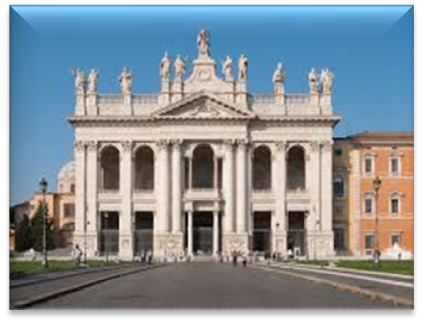
Each year, on 9 November, the Catholic Church celebrates the Dedication of the Basilica of St John Lateran. This event commemorates the consecration of the cathedral church of  the Bishop of Rome. Known as “Mother and Head of all the Churches of the City and the World”, St John Lateran holds a unique place in the history and liturgy of the Church. Although the basilica of St. John Lateran is the cathedral of the Holy Father as Bishop of Rome, today’s liturgy focuses not on the Petrine ministry but on the place of God’s house, the temple. In the First Reading – Ezekiel tells us From the temple, water flows eastward, bringing life and freshness to everything it touches, with fruit trees along its banks providing food and healing. In the Second Reading we are told that  we are God’s building, with Jesus as the foundation. Each must build carefully, for we are temples of the Holy Spirit, sacred and protected by God. 

The Gospel  from John tells us that Near Passover, Jesus visits the in Jerusalem, expelling merchants and overturning money-changers’ tables, condemning the commercialization of the sacred space. Challenged by the Jews for a sign to justify his actions, he mentions rebuilding the temple in three days, a reference to his resurrection understood later by his disciples. The feast of the Dedication of St John Lateran symbolises the unity of the universal Church and the spiritual leadership of the Pope. This celebration calls all of us to reflect on our own role as “living stones” in the spiritual temple of God. We no longer look upon stone edifices to see God’s presence on earth, but we look on the broken body of Jesus on the cross. He is both the high priest and the offering acceptable to God. Paul’s message continues this truth. We are living stones forming a building.  God’s presence according to Paul is through us. We are built on the foundation of Jesus’ message but we must be careful in the way we build. As we live out our lives we grow individually energized either by the Spirit of God or by the spirit of the world.  The Spirit of God unites, forms us into a single building. The spirit of the world destroys unity and forms warring factions where each side competes with the vother for power, wealth, influence and pleasure.  So we must be careful how we build our life. We are the presence of God to one another through the Spirit that dwells in us and energizes and directs us. So, why do we celebrate the dedication of a Church building in Rome?

St. John Lateran basilica becomes a sign and a symbol for us.  It is a sign of God’s presence in the world. It is high on a hill that is visible for all to see and for all to take hope from its strength.   It is a symbol of those who believe and work to grow in faith hope, love and concern for God’s creation, and all those who are within it. It rejects no one, opening its arms to embrace not only the privileged but also the ordinary people.  Even the ones ignored and forgotten are welcomed and find a place where they might be healed and find life. The Dedication of the Lateran Basilica inspires us to embrace the call to be a living temple of God. Just as the Basilica in Rome is a physical representation of the Church, we are called to be living stones, united in faith and working together to build up the Kingdom of God through his Church. Each person has a unique role to play in the Church and that their contributions, no matter how small, are essential to the overall mission of spreading the Gospel in the world today. May the feast we celebrate this weekend inspire us to cherish our heritage, embrace our mission, and strive to make the Church a true sign of God’s presence, hope, and unity for all the  people wherever we are in the world.

All Saints & All Souls

This weekend we celebrate two feasts All Saints on Saturday and All Souls on Sunday.  These feasts are rich in tradition and spiritual significance and they invite us to reflect on the universal call to holiness that we see in the lives of the Saints and the enduring bond between the living and the dead. It is important not to confuse All Saints’ Day with All Souls’ Day. While All Saints’ Day honours those who are Saints in heaven, All Souls is dedicated to praying for all the faithful departed. On November 1st the Church celebrates all saints the great multitude of those who are in heaven enjoying the beatific vision. During the early centuries the Saints venerated by the Church were all martyrs. Later November 1st   was set  as the day for commemorating all the Saints.

What must we to do in order to join the company of the saints in heaven? We “must follow Jesus footsteps as we seek  to do  the will of the Father in all things.  In this way, the holiness of the People of God will grow into an abundant harvest of good, as is admirably shown by the life of so many saints in Church history” (Lumen Gentium)  The feast of All Saints should inspire us with tremendous hope.  Among the saints in heaven are some  people who we have heard of such as Pope Saint John Paul, Padre Pio and more recently  Carlo Acutis .  But there are so many more ordinary people who show us how to be saints by the way they lead their lives and we try to follow their example. All Saints Day is a time to thank God for the saints. We pray to them for their help as we believe they are with God in heaven and will intercede for us. On the 2nd Novemberafter rejoicing  with the saints in heaven we  pray for all those souls in purgatory as they  await the day when they will join the company of saints. The Feast of All Souls serves as a poignant reminder of the connection  between life and death, love and loss. It invites us to reflect on the lives of those who have gone before us in faith, to pray for their eternal peace, and to cherish the memory as we remember their presence with us.  

In a special Part of  the eucharistic prayer the priest remembers all those who have fallen asleep in the Lord, imploring God to grant them a place of happiness, light and peace in the kingdom of the father. Through prayer, remembrance, and tradition, All Souls’ Day offers comfort and hope to the faithful, uniting the generations in spiritual communion with one another. In a special way during November we remember our families and friends who have died. We also remember all those faithful people who have passed on and we pray for them during the whole month which is known as the month of the Holy Souls. The two days work together. All Saints’ Day is a celebration of those already in Heaven, while All Souls’ Day is a day of prayer for those still waiting to get there. Both days help us remember the importance of eternal life and our connection to the whole Church, in Heaven and on earth. So this weekend we pray with the saints in heaven as we remember all  the holy souls who need our prayers  may they rest in the peace of the kingdom of God.

Post Navigation