Fullerton T

RELIGION LITURGY AND LIFE

Archive for the month “January, 2026”

4th Sunday of Ordinary Time
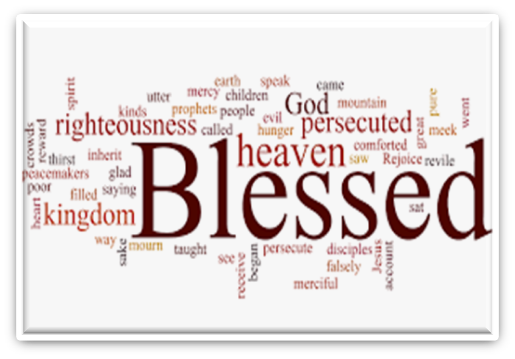
in the gospel we hear Jesus taught his disciples, on the mountain, outlining the Beatitudes. He declared blessings on the spiritually humble, mourners, the gentle, those yearning for righteousness, the merciful, the pure in heart, peacemakers, and those persecuted for righteousness. He encouraged joy amidst persecution for his sake, promising heavenly reward. The first Beatitude strikes the keynote also for the seven Beatitudes that follow. The decisive word in this first Beatitude is the word, poor The first recipients of the Beatitudes are, in fact, the ‘poor in spirit’, an expression that indicates those who have their hearts and consciences directed intimately to Our Lord. They are the expression of the just who are tried by moments of suffering and difficulties. However, they are called ‘blessed’ and ‘happy’ because God’s merciful and compassionate gaze rests on them. These are the poor that the Bible text really refers to. The poor in the Bible are the humble people who bear a burden on their shoulders. They are given God’s favour and because of this the Word identifies them as just, meek and humble. All kinds of attitudes are included in the eight beatitudes. This way the true significance of the ones who don’t confide mainly in themselves but in God.

The poor are those who detach themselves concretely and interiorly from the possession of people and things and above all of themselves.  The poor don’t find security in the gods of this world like success, power or pride but the true Lord God in Heaven. Those who are called “blessed” or “happy” in these beatitudes can hardly be described as fortunate or lucky people in the eyes of the world: the lowly, the mourners, those deprived of justice, those who are persecuted and abused. In structuring the beatitudes in the way he does, Matthew is not offering an unusual programme to happiness; rather, he is describing what happens to Christian discipleship when the kingdom breaks into this broken world. The beatitudes speak of a variety of experiences that disciples undergo because of their involvement in living the Gospel. The result of this involvement might appear to the world as senseless suffering, but Jesus heaps blessings on those who struggle to love the truth of the Gospel.  Discipleship is centred on Jesus. Because of who he is, others will change. Jesus alone is the source of discipleship. Without the person of Jesus, discipleship is meaningless. All of us have some experience of the cost of discipleship. Some will know what it is like to be counted as a nobody because of our fidelity to Jesus.

As Christians we are pledged to share the wisdom of Jesus who was counted a nobody himself. In doing that we will continue “to shame the wise” by declaring the foolishness of God, as we remember that gods foolishness is wiser than human wisdom.
3rd Sunday in Ordinary Time

This week as we celebrate the week of prayer for Christian Unity we continue our prayer for peace. The world seems to be in complete turmoil now however we know things really are in the hands of God and we place our trust in him. The Sundays of Ordinary Time lead us through the three years of Christ’s public ministry. We began last week with his identification as the Lamb of God by John the Baptist and this week we hear how he called the Apostles to follow him.  The readings for the third Sunday of ordinary time remind us that God brings light into darkness and hope to those who are hopeless. He is near, even in hard times and these days many things are beyond our control and are hard to think about but god is still with us.

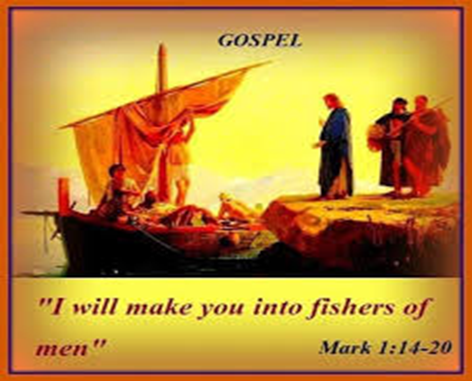
In the First Reading God transformed the fortunes of Zebulun and Naphtali, bringing light to their darkness, joy like a harvest, and breaking the bonds of oppression, reminiscent of Midian’s defeat. In our Second Reading St. Paul says I urge unity and no divisions among you, to avoid factions that claim allegiance to different leaders. Christ alone should be our focus, not human leaders. In our Gospel story we hear about Jesus calling Andrew, Simon, Peter, James son of Zebedee and his brother John to follow him. As Jesus travelled around Galilee, he actively built a following. Biblical scholars speculate that the Galileans would network and form groups around social, economic, or religious issues. Even though the Romans put down revolts with brutal efficiency, large Jewish protests did sway official decisions, especially at the local level. There was strength in numbers.  Part-time fishermen like Peter and Andrew, like James and John would easily leave their daily tasks, if the group they joined promised to protect and enhance their way of life.  Proclaiming the Kingdom was a message with political undertones for Jews and Jesus quickly amassed an audience.  This gospel story is about the call of Jesus to the first apostles to be his followers. This gospel is not just an echo from the past it is very much for us today as Christ and his message are the same yesterday today and will be the same forever. Are we listening to Jesus as he says to us today, “Come follow me and I will make you fishers of men?”  

This Gospel also asks us to remember that our own vocation is an absolutely free gift from God.  This means that we are totally free to accept or deny the invitation for us to take up the vocation that is there for us. Some are called to the Priesthood, or Consecrated Life, others to marriage, others are called to a single life there are many other vocations in life all of them are different. May we experience the beauty of accepting the vocation call we have in our lives.  In this way we will become like the first apostles who quickly responded, continued to learn during their three years walking with Jesus and then in the years afterwards with the power of the Holy Spirit, they did what they probably never imagined they would do when first called; they travelled to the ends of the earth bringing the message of Jesus with them.

2nd Sunday in Ordinary Time

This Sunday we celebrate the second Sunday in ordinary time. As we gather wherever we are there are many things to occupy our minds with many things to talk and pray about. When we look at the world around us, and we see so much war and destruction it is hard to know where we should start in our prayer for peace. We pray for those countries who are at war and those who may go to war. We pray for the leaders of the countries in the world that they will be peacemakers instead of war mongers. We pray for those stubborn people that they will move away from words and actions that may lead to war and promote the peace of the world. We also pray for ourselves that we will be people of peace with peace in our hearts. May god enable us to be people of peace bringing peace into our world.

 In our first reading for this Sunday Isaiah speaks about the task of the Messiah. He calls him a ‘servant’ of the people who will bring light and salvation not only to the tribes of Israel, but to the ends of the earth. In The Gospel reading we hear the words of John the Baptist the man who went before the Lord as his herald “Behold, the Lamb of God, who takes away the sin of the world!”  We know these words, so well for we hear them in Church when we are just about to receive the Body and Blood of Christ during the eucharistic celebration.   The first Christian communities saw a clear difference between John’s baptism that immersed people in the river Jordan and Jesus’ baptism that communicated his own Spirit, to cleanse, renew and transform the hearts of his followers. Without that Spirit, the Church would simply close up and die, but that spirit of Jesus has been the guiding light throughout the intervening years right up to this present moment. Only the Spirit of Jesus can put truth and life into today’s Christianity and lead us to recover our identity, leaving the paths that lead us further away from the Gospel and what it teaches behind. Only that Spirit of Jesus can give us light and energy to light up the fire of renewal within ourselves and the people around us so that we can also become Christ’s authoritative witnesses in the world.

Our baptism links us to Jesus as well as the long line of his followers throughout the ages who believe in Jesus as the Lamb of God and that his death and resurrection is the source of new life for all people. This is our inheritance born of them and we are called to be, “a light to the nations” like God’s servant in this Sundays first reading from Isaiah. The Love of God is made real to us through Jesus his Son, let us share our belief in Jesus and what he teaches with everyone we meet. Let us consider how we can bring Christ’s spirit of peace and reconciliation into our own communities especially these days with so much global conflict going on. Through small acts of kindness and gentle words, we contribute to building a world where peace may flourish despite the challenges, we see around us and during these uncertain times. As we remember our baptismal call, may we carry the light of Christ into all that we do, trusting that even the smallest gesture can make a difference in the world. May our prayers inspire us to be peacemakers, ever mindful of God’s presence with us and his love guiding us forward.  Then we will be able to say with John the Baptist that Jesus is the lamb of God that takes away the sin of the world, the Chosen One of God.’ Let us follow him.

Second sunday of Christmas

Yes, you did read the heading correctly it is the second Sunday after the feast of Christmas, and we are now almost at the arrival of the Three wise men on Epiphany which takes place on Tuesday 6th January. By long standing sacred tradition Christians celebrate Christmas as a season, with the twelve days between Christmas and the Epiphany as one long “Christmas feast.” The season ends with the Baptism of the Lord which is also the first Sunday of ordinary time and that takes place next Sunday.

The first reading is from the book of wisdom. In the wisdom writings we frequently find the ‘Wisdom’ that comes from God is personified. Here in chapter 24 of Ecclesiasticus’, Wisdom ‘speaks her own praises’. She is told to dwell in ‘Jacob’, among the tribes of Israel. She is described as ‘created in the beginning’ and ‘resting’ in the ‘beloved city’. In the second reading from the letter to the Christians of Ephesus begins with a hymn of praise for the plan of God, who chose us ‘from the foundation of the world’ to be his adopted children through the abundance of grace lavished on us in Christ.  In later verses from the same chapter, Paul prays for the Christians of Ephesus, that their faith may grow, and that ‘the God of our Lord Jesus Christ, the Father of glory’ may bestow on them a ‘spirit of wisdom’ and of ‘revelation. The Gospel tells us about the word who was in fact the Son of God. Jesus Christ, therefore, the Word made flesh, was sent as “a man to men.”  He “speaks the word of God” to us and completes the work of salvation which His Father gave Him to do.  

When we look for Jesus as the wise men did, we will find Christ among the “least” and this is the humble message that lies at the heart of our faith especially at this time of year. Jesus does not seek what is good and wise in the eyes of the world he seeks out the small and the humble people those who are unwise in the world’s eyes. May we not be afraid in the year that has just begun to seek the true wisdom that God wants for us, the wisdom of the Wise Men which is the wisdom to seek God and follow the star which is Jesus the light.

Post Navigation