Fullerton T

RELIGION LITURGY AND LIFE

Archive for the category “Faith”

4th Sunday of Ordinary Time

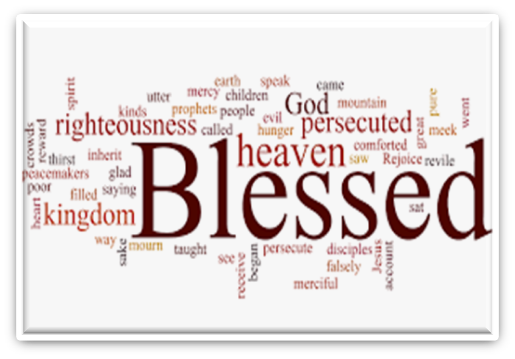
in the gospel we hear Jesus taught his disciples, on the mountain, outlining the Beatitudes. He declared blessings on the spiritually humble, mourners, the gentle, those yearning for righteousness, the merciful, the pure in heart, peacemakers, and those persecuted for righteousness. He encouraged joy amidst persecution for his sake, promising heavenly reward. The first Beatitude strikes the keynote also for the seven Beatitudes that follow. The decisive word in this first Beatitude is the word, poor The first recipients of the Beatitudes are, in fact, the ‘poor in spirit’, an expression that indicates those who have their hearts and consciences directed intimately to Our Lord. They are the expression of the just who are tried by moments of suffering and difficulties. However, they are called ‘blessed’ and ‘happy’ because God’s merciful and compassionate gaze rests on them. These are the poor that the Bible text really refers to. The poor in the Bible are the humble people who bear a burden on their shoulders. They are given God’s favour and because of this the Word identifies them as just, meek and humble. All kinds of attitudes are included in the eight beatitudes. This way the true significance of the ones who don’t confide mainly in themselves but in God.

The poor are those who detach themselves concretely and interiorly from the possession of people and things and above all of themselves.  The poor don’t find security in the gods of this world like success, power or pride but the true Lord God in Heaven. Those who are called “blessed” or “happy” in these beatitudes can hardly be described as fortunate or lucky people in the eyes of the world: the lowly, the mourners, those deprived of justice, those who are persecuted and abused. In structuring the beatitudes in the way he does, Matthew is not offering an unusual programme to happiness; rather, he is describing what happens to Christian discipleship when the kingdom breaks into this broken world. The beatitudes speak of a variety of experiences that disciples undergo because of their involvement in living the Gospel. The result of this involvement might appear to the world as senseless suffering, but Jesus heaps blessings on those who struggle to love the truth of the Gospel.  Discipleship is centred on Jesus. Because of who he is, others will change. Jesus alone is the source of discipleship. Without the person of Jesus, discipleship is meaningless. All of us have some experience of the cost of discipleship. Some will know what it is like to be counted as a nobody because of our fidelity to Jesus.

As Christians we are pledged to share the wisdom of Jesus who was counted a nobody himself. In doing that we will continue “to shame the wise” by declaring the foolishness of God, as we remember that gods foolishness is wiser than human wisdom.

3rd Sunday in Ordinary Time

This week as we celebrate the week of prayer for Christian Unity we continue our prayer for peace. The world seems to be in complete turmoil now however we know things really are in the hands of God and we place our trust in him. The Sundays of Ordinary Time lead us through the three years of Christ’s public ministry. We began last week with his identification as the Lamb of God by John the Baptist and this week we hear how he called the Apostles to follow him.  The readings for the third Sunday of ordinary time remind us that God brings light into darkness and hope to those who are hopeless. He is near, even in hard times and these days many things are beyond our control and are hard to think about but god is still with us.

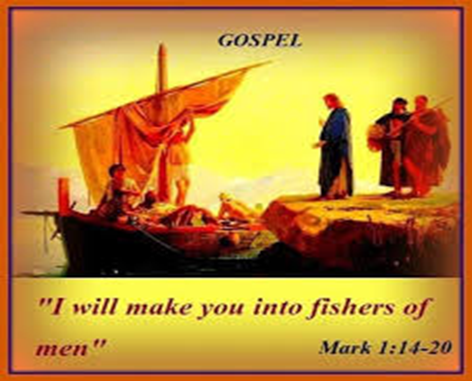
In the First Reading God transformed the fortunes of Zebulun and Naphtali, bringing light to their darkness, joy like a harvest, and breaking the bonds of oppression, reminiscent of Midian’s defeat. In our Second Reading St. Paul says I urge unity and no divisions among you, to avoid factions that claim allegiance to different leaders. Christ alone should be our focus, not human leaders. In our Gospel story we hear about Jesus calling Andrew, Simon, Peter, James son of Zebedee and his brother John to follow him. As Jesus travelled around Galilee, he actively built a following. Biblical scholars speculate that the Galileans would network and form groups around social, economic, or religious issues. Even though the Romans put down revolts with brutal efficiency, large Jewish protests did sway official decisions, especially at the local level. There was strength in numbers.  Part-time fishermen like Peter and Andrew, like James and John would easily leave their daily tasks, if the group they joined promised to protect and enhance their way of life.  Proclaiming the Kingdom was a message with political undertones for Jews and Jesus quickly amassed an audience.  This gospel story is about the call of Jesus to the first apostles to be his followers. This gospel is not just an echo from the past it is very much for us today as Christ and his message are the same yesterday today and will be the same forever. Are we listening to Jesus as he says to us today, “Come follow me and I will make you fishers of men?”  

This Gospel also asks us to remember that our own vocation is an absolutely free gift from God.  This means that we are totally free to accept or deny the invitation for us to take up the vocation that is there for us. Some are called to the Priesthood, or Consecrated Life, others to marriage, others are called to a single life there are many other vocations in life all of them are different. May we experience the beauty of accepting the vocation call we have in our lives.  In this way we will become like the first apostles who quickly responded, continued to learn during their three years walking with Jesus and then in the years afterwards with the power of the Holy Spirit, they did what they probably never imagined they would do when first called; they travelled to the ends of the earth bringing the message of Jesus with them.

2nd Sunday in Ordinary Time

This Sunday we celebrate the second Sunday in ordinary time. As we gather wherever we are there are many things to occupy our minds with many things to talk and pray about. When we look at the world around us, and we see so much war and destruction it is hard to know where we should start in our prayer for peace. We pray for those countries who are at war and those who may go to war. We pray for the leaders of the countries in the world that they will be peacemakers instead of war mongers. We pray for those stubborn people that they will move away from words and actions that may lead to war and promote the peace of the world. We also pray for ourselves that we will be people of peace with peace in our hearts. May god enable us to be people of peace bringing peace into our world.

 In our first reading for this Sunday Isaiah speaks about the task of the Messiah. He calls him a ‘servant’ of the people who will bring light and salvation not only to the tribes of Israel, but to the ends of the earth. In The Gospel reading we hear the words of John the Baptist the man who went before the Lord as his herald “Behold, the Lamb of God, who takes away the sin of the world!”  We know these words, so well for we hear them in Church when we are just about to receive the Body and Blood of Christ during the eucharistic celebration.   The first Christian communities saw a clear difference between John’s baptism that immersed people in the river Jordan and Jesus’ baptism that communicated his own Spirit, to cleanse, renew and transform the hearts of his followers. Without that Spirit, the Church would simply close up and die, but that spirit of Jesus has been the guiding light throughout the intervening years right up to this present moment. Only the Spirit of Jesus can put truth and life into today’s Christianity and lead us to recover our identity, leaving the paths that lead us further away from the Gospel and what it teaches behind. Only that Spirit of Jesus can give us light and energy to light up the fire of renewal within ourselves and the people around us so that we can also become Christ’s authoritative witnesses in the world.

Our baptism links us to Jesus as well as the long line of his followers throughout the ages who believe in Jesus as the Lamb of God and that his death and resurrection is the source of new life for all people. This is our inheritance born of them and we are called to be, “a light to the nations” like God’s servant in this Sundays first reading from Isaiah. The Love of God is made real to us through Jesus his Son, let us share our belief in Jesus and what he teaches with everyone we meet. Let us consider how we can bring Christ’s spirit of peace and reconciliation into our own communities especially these days with so much global conflict going on. Through small acts of kindness and gentle words, we contribute to building a world where peace may flourish despite the challenges, we see around us and during these uncertain times. As we remember our baptismal call, may we carry the light of Christ into all that we do, trusting that even the smallest gesture can make a difference in the world. May our prayers inspire us to be peacemakers, ever mindful of God’s presence with us and his love guiding us forward.  Then we will be able to say with John the Baptist that Jesus is the lamb of God that takes away the sin of the world, the Chosen One of God.’ Let us follow him.

Second sunday of Christmas

Yes, you did read the heading correctly it is the second Sunday after the feast of Christmas, and we are now almost at the arrival of the Three wise men on Epiphany which takes place on Tuesday 6th January. By long standing sacred tradition Christians celebrate Christmas as a season, with the twelve days between Christmas and the Epiphany as one long “Christmas feast.” The season ends with the Baptism of the Lord which is also the first Sunday of ordinary time and that takes place next Sunday.

The first reading is from the book of wisdom. In the wisdom writings we frequently find the ‘Wisdom’ that comes from God is personified. Here in chapter 24 of Ecclesiasticus’, Wisdom ‘speaks her own praises’. She is told to dwell in ‘Jacob’, among the tribes of Israel. She is described as ‘created in the beginning’ and ‘resting’ in the ‘beloved city’. In the second reading from the letter to the Christians of Ephesus begins with a hymn of praise for the plan of God, who chose us ‘from the foundation of the world’ to be his adopted children through the abundance of grace lavished on us in Christ.  In later verses from the same chapter, Paul prays for the Christians of Ephesus, that their faith may grow, and that ‘the God of our Lord Jesus Christ, the Father of glory’ may bestow on them a ‘spirit of wisdom’ and of ‘revelation. The Gospel tells us about the word who was in fact the Son of God. Jesus Christ, therefore, the Word made flesh, was sent as “a man to men.”  He “speaks the word of God” to us and completes the work of salvation which His Father gave Him to do.  

When we look for Jesus as the wise men did, we will find Christ among the “least” and this is the humble message that lies at the heart of our faith especially at this time of year. Jesus does not seek what is good and wise in the eyes of the world he seeks out the small and the humble people those who are unwise in the world’s eyes. May we not be afraid in the year that has just begun to seek the true wisdom that God wants for us, the wisdom of the Wise Men which is the wisdom to seek God and follow the star which is Jesus the light.

Feast of the Holy Family

This weekend we celebrate the feast of the Holy Family. We are reminded that Jesus lived in a real family. He had a mother and a father who cared for Him and protected him. Mary and Joseph did not have easy lives, but they trusted God and followed His plan. Their home was simple, but it was full of love. This feast helps us think about our own families. Every home has struggles. like the Holy Family, we are called to  care for each other with patience. Love grows in quiet moments, hard choices, and daily kindness.

The readings show how God works through family life. They speak about honouring parents, caring for others, and choosing peace. These small acts shape a strong and faithful home life. In the first Reading God values honouring one’s parents. Respecting them brings many blessings, including answered prayers, long life, and comfort for mothers. Caring for aging parents kindly and patiently. In the Second Reading we are called to embrace the virtues of compassion and kindness, forgiving each other, and allowing Christ’s peace and message guide us as we act in all things in the name of Jesus with gratitude in our hearts. The Gospel Reading tells us that Joseph, following angelic directions in dreams, fled with Mary and Jesus to Egypt to escape Herod’s threat, returned to Israel after Herod’s death, and settled in Nazareth as foretold by prophets.

Tradition says that after three years in exile, another angel informs Joseph that Herod the Great is dead. The Holy Family returns to their homeland, not to Bethlehem, since the new king who reigns in his father’s place is also a cruel and barbaric ruler. Joseph brings Mary and Jesus to his native town of Nazareth in Galilee. There, they lived a simple ordinary life, Joseph as a carpenter, and Mary as his wife and mother of Jesus. Jesus grew in holiness and in knowledge of God’s will in the same ordinary ways that families do in our day.  We also remember the care that Mary and Joseph gave to Jesus.  We recognize the sacrifice they made for Jesus, in the same way as we recognize the sacrifices our parents made for us and many more parents are making for their children today. The feast of the Holy Family represents what Family means for us as people of faith, in the guidance protection, the goodness and kindness, and the love and support of our parents! 

In the friendship of other family members. And in things that have happened to us good and not so good!  Every parent wonders about their children. Every parent is full of hope for their children. Over a period, this might turn into fear and anxiety, but the fundamental feeling of hope is still there. We hope that everything will turn out well for them; we hope that they will be successful in life; we hope that they will be safe and keep out of trouble; we hope that they will be happy.  As we honour the Holy Family, let us ask God to bless all our families with unity, peace, and faith. May we look to Mary, Joseph, and Jesus as historical figures, but as guides for our own journeys. Lord, help us to live with love, patience, and trust, so that our homes and our families  may shine with the light of Christ this Christmas time.

CHRISTMAS 2025

We have completed our advent observance with all its preparation and now we celebrate Christmas with joy and happiness. So now then let us rejoice in the Lord, that is, rejoice in faithfulness and not in iniquity; rejoice in the hope of eternity and not the brief flower of vanity that is part of our daily lives. At this time when we celebrate the birth of “a saviour who has been born for” us, the One who is “Wonder- Counsellor and  Prince of Peace,” the One who is “a great light” we welcome an opportunity to put aside our cares and worries, and bask in the joy and generosity of the season, as we sing with the angels “Glory to God in the highest as we celebrate the birth of Jesus Christ.  

But with all the tidings of great joy we need to remember those who may not be happy this Christmas. People have lost their faith, Faith in God and man. Many others sit in dark despair wondering where exactly the light will come from and who will bring it to them. And it simply is the baby in the manger the reason for the season that brings the light of God into the world.  At the mass during the night, we have a dramatic prophesy about a “child is born for us.” The Gospel is the most familiar about Mary and Joseph traveling to Bethlehem and finding no room in the inn, they settle for a stable. The Gospel for the mass at Dawn relates how the shepherds who had heard the message of the angels believe that they had heard something inviting and so they too go to the stable. The third Gospel for the Mass during the day is not about stables and angels, nor about stars and kings, but a well-worked summary of how believers much later than the writers of the early accounts, express “The Word became flesh and made his dwelling among us.”   The Word which was in the beginning, now has embraced time and space. God so loved the world that God did not send an idea or a feeling or a document.

Jesus Emanuell  has come to be heard, seen, received and lives among and with us all.  None of us will travel to Bethlehem to behold the newborn infant lying in the manger in the way the shepherds and the wise men did. But all of us travel the road of daily life, and we are called to see Jesus the newborn Infant in the youngster who needs companionship, the teenager who needs a listening ear, the parent who needs a helping hand, the older person who needs someone to care. We remember in a special way all those who have died since last Christmas and we keep their families in our thoughts and prayers. Some of our Christmas customs seem to turn away from Christ. Or do they? The giving of gifts expresses love of the other person. Festive decorations set this season apart from all others. Santa Claus was originally St. Nicholas of Myra, a bishop remembered for his generosity whose feast day is in December.  Every letter sent and received bears the stamp of this special season, tidings of goodwill, and a reminder that those who are far away are close to us in mind and heart. The customs of this season are veiled announcements of one message: Christ is born for us.

To remove the veil, to hear the good news, we gather in our churches. There the message of Christmas speaks loud and clear. The Letter to the Hebrews tells us, “In times past, God spoke in various ways to our ancestors through the prophets; in these last days, he speaks to us through his Son.” The customs of Christmas speak the message in partial ways, but God speaks the message clearly through his Son, who has come into our midst.  At Christmas the whole community of heaven joins with all believers of goodwill on earth in a jubilant song of praise for the good news proclaimed by the angels:  Behold, I bring you good news of a great joy which will come to all the people, for to you is born this day in the city of David a Saviour, who is Christ the Lord (Luke 2:10-11). So, why do we celebrate Christmas? It is more than the birth of Jesus. It is a celebration of God with us. It is the realization that God’s love and faithfulness dwell among us. It is a sign that we are to carry that love and faithfulness to others. Like the Baptist, we, too, are to witness to God’s living, breathing Word and we are called to be faithful.

So, with Mary and Joseph with the shepherds and Angels and the whole company of heaven let us adore the Christ Child the child in the manger who is the reason for the Season that we celebrate over the next few weeks.

4th Sunday of Advent

In the first reading Ahaz sounds like the great model of faith. We are taught not to tempt God by asking for signs to prove our faith. If we got those signs, we wouldn’t have faith! God, speaking through Isaiah, invites Ahaz to ask for a sign any sign from God: “Let it be deep as the nether world, or high as the sky!” Ahaz refuses saying, “I will not ask! I will not tempt the Lord.” Ahaz is showing great faith in God. He doesn’t want any proofs from God; he doesn’t want to test God or so it seems. He will not ask for the sign; he will not put his and the nation’s security in God’s hands. But God decides to give a sign anyway: “The virgin shall conceive and bear a son and shall name him Emmanuel.” The promise found in Scripture will be fulfilled.  By referring his readers to the scriptures, Isaiah reminds us that believers do well to put confidence in the word of God to sustain our hope and strengthen our faith in discouraging times such as we are in these days with so many people suffering in war and so many other avoidable crises. In the second reading Paul, a servant of Jesus, greets the believers in Rome. He emphasizes Jesus’ divine and human natures and wishes them grace and peace.

We meet Mary in the Gospel who had been prepared for the coming of the Messiah. She has received the angel’s greeting, and his strange news, and accepted her role in God’s plan Matthew is well planted in his Jewish tradition. He shows that from the very beginning of his gospel. Joseph was betrothed to Mary; Mary’s pregnancy turns Joseph’s world and his plans upside down.  Instead of exposing her, he “decided to divorce her quietly.” He was a “righteous man”, and he will protect Mary from being publicly dishonoured. He is not vengeful and, though wronged, displays mercy. After his dream when the angel told him do not be afraid Joseph took his wife into his home. The world God chose to enter was one of poverty, hard labour and political and military oppression. God took a big chance being born among us especially in those circumstances. Surely there must have been neater options for God, to make the saviour’s path and work a bit smoother. But none of us has a “smooth path” through life.  It’s good to know that Jesus, Emmanuel, “God with us,” chose to be with his people who live in the real and messy world. We began Advent with the cry, ‘Come, Lord Jesus’. We will end it with the joyful Christmas call, ‘God is with us!

Throughout our Advent journey we were told to stay awake for the coming of the Lord. As we go forward to the Christmas Celebration there is much to be thankful even in our messy world with all its problems. The message of Christmas is about God’s loving kindness, his compassion, his mercy, and his abiding, living love and presence with us in his Son Jesus the son of God Emmanuel who is God with us.

Third Sunday of Advent

The third Sunday of Advent is also known as Gaudete Sunday. The term Gaudete refers to the Entrance Antiphon, “Rejoice in the Lord always again I say rejoice for the lord is very near.” Rose vestments are worn in many churches to emphasize our joy that Christmas is near, and we also light the rose candle on the Advent wreath. In many places the Parishes celebrate Bambinelli Sunday when the Children are asked to bring the baby Jesus Crib Figure to get a special blessing and then they place the baby Jesus in the Crib on Christmas Morning.  As Christmas draws near, the Church emphasizes the joy which should be in our hearts over all that the birth of our Saviour means for us or all that it should mean for us, especially in our world where so many have little or nothing at all.

The readings for this Sunday are full of life. Isaiah tells us the desert will bloom. James encourages us to wait with patience. Jesus reminds us of the signs that God’s kingdom is near. These words give strength to those who are tired or uncertain and in our world these days there are many people who are tired of the present and uncertain about the future.  In the First Reading –Isaiah tells us that the desert will bloom and rejoice. God will strengthen the weak and bring justice. The blind will see, the deaf will hear, and the saved will enter Zion with joy. In the Second Reading – James tells us to be patient for the Lord’s coming, like a farmer waiting for crops. Strengthen your hearts, avoid complaining, and follow the example of patient prophets. All four Gospels testify to an important truth: that John the Baptist stands at the beginning of the Gospel. He is the one who marks the end of the time of waiting and the beginning of the new age in Jesus. He is the last of the great prophets, the one who came after a long period when no prophet spoke to the people.  John the Baptist has an unusual address as he lived in the wilderness. But that was the traditional place associated with the growth of Israel’s religion. It was in the desert that Israel first met God, and the story of the people’s wanderings through the wilderness became the story of their growth from crisis to settlement in the promised land.

In the desert the people were tested, and later, when they failed God, they were told that they would be taken back into the desert where God would speak again to their heart (Hosea 2:16).   In today’s gospel we meet John the Baptist in prison, sending his disciples to ask Jesus, “Are you the one who is to come, or should we look for another?” This is a poignant moment in the gospel. John was the fiery prophet who had proclaimed the coming of the Messiah. Jesus had come, but he doesn’t seem to be what John expected. John sounds like he is wrestling uncertainty; might even be wondering if he had gotten God’s message right. He lives in a state we know as well: between promise and fulfilment; between what has begun in Christ and what we still await and hope. John voices our own questions in Advent when we ask, “Lord, where are you? Are you really present at this time in our world with all that is going on within it?” The delay in God’s promises being fulfilled can cause us to wonder if God and the kingdom are near.  That is our Advent question and besides raising the question we are also invited to listen to Jesus’ gentle reply. Here is the answer Jesus gives to John’s disciples about himself. “The blind regain their sight, the lame walk, lepers are cleansed, the deaf hear, the dead are raised hands the poor have the good news proclaimed to them.”

Jesus does not argue or explain. He points to what’s happening: healing mercy and transformation. Aren’t those signs of God’s kingdom? Advent faith invites us to look for those same signs. They may be small and hidden, or right before our eyes, hard to miss. These signs announce to us to God’s saving power is still at work among us. Do we not see? How can we participate in them? We note the beatitude in today’s gospel, “Blessed is the one who takes no offense at me.” This is an Advent challenge because God’s ways can surprise or unsettle us. We can’t stumble when Christ comes to us in a form we do not expect in the poor, and suffering, in the slow process of grace. Faith means trusting that even when we do not see everything clearly, God’s promises being fulfilled. John the Baptist is a reminder to us that even the prophet of fiery conviction struggles to understand how God is working. Like him, we too may wonder: where is God’s kingdom? Why does it seem delayed when the world needs it to come in its fullness? We wait with hope in our hearts for the culmination of all things in Christ and the prayer that is on our lips is ‘thy kingdom come!’ As we continue our Advent journeys let us prepare the way for the Lord in our own lives remembering that in the words of the psalm the lord keeps faith forever and he won’t let us down. Gaudete Sunday gives the strength for the present and hope for the future as we look forward to Christmas.

Second Sunday of Advent

This year as we light the second purple candle on the Advent Wreath the 2nd Sunday of Advent points us to something new. Isaiah speaks of a branch growing from Jesse’s stump. It is a sign of hope. God is doing something fresh. The old ways are ending. A peaceful king will come. Justice and harmony will grow again. In the First Reading (Is 11:1-10). The reign of David was the high point in the history of Israel. But his successors failed wretchedly. Still, the hope remained that a future king would succeed where his predecessors failed. Here Isaiah foretells that even though the family tree of Jesse (David’s father) has been reduced to a mere stump, nevertheless from that stump a new shoot will spring. He goes on to sketch a portrait of the true king’. In the Second reading (Rom 15:4-9). Paul sees Jesus as the one through whom God fulfilled his promises. He highlights the value of hope.

The scriptures show that those who hope refuse to give up. By urging us to treat others in the same friendly way Christ has treated us, the reading continues the theme of peace and harmony of the First Reading. The Gospel for this Sunday brings the powerful prophetic voice of John the Baptist to centre stage with his urgent summons to conversion. His programme for reform seriously rattled the complacency of the Pharisees and Sadducees who ventured out into the desert to hear him preach. The God he proclaimed is a God who refuses to be controlled or tamed, a God whose presence is one that both consoles and makes radical demands of those who follow him. We hear about John the Baptist the lords herald who said that there is one who is to come after me and I am not worthy to take the sandals of his feet.  John’s task was to go before the lord announcing the coming of Jesus and to point to him when he came. John was called to reawaken a sense of expectation among the people who had grown tired and distant from God.   John was called to bring renewal to institutional expressions of religion which, at the time, had become fossilized into external ritual without meaning.   John attracted thousands to come out into the desert to see him.  Tradition sees the desert as the place where God speaks to the heart of his people.

It is from this solitary place of spiritual combat, the desert bordering the Jordan, that John appears “with the spirit and the power of Elijah” (Luke 7:17).  By his word and his baptism with water, john called the children of the covenant back to the Lord their God as he calls us to come back to the Lord our God today. The figure of John serves as a warning, to all Christians, of our need to draw our strength from Christ alone, rather than identifying with the cultural patterns or the Fads and fashions of the time, which come and go.   The Church is here in the present as it has been in past times to proclaim and live out the message of Jesus in every generation in season and out of season whether people like it or not. The Church is not there in any way to be inward looking.  The people of God, you and I included are called to constant renewal, looking outwards to tear ourselves away from conventional expectations, attitudes and superficial things and centre ourselves completely on God. In every age the church must become like John the Baptist, it must be the uncomfortable reminder of how we must allow the truth of Jesus to break into our lives to enlighten the darkness that can enter our lives or the life of the Church. As the journey of Advent continues, as we prepare to celebrate the nativity of Christ, John the Baptist’s call to conversion sounds out in our communities.

It is a great and pressing invitation to open our hearts and souls to welcome the Son of God who comes among us to make the kingdom of God real to all of us. Johns call for repentance and renewal challenge us to move beyond mere words or fleeting emotions, urging us instead to seek genuine transformation in our lives. His example serves as an enduring reminder that true faith requires courage, humility, and the willingness to put God’s purpose above personal ambition. John’s life highlights the importance of integrity and moral conviction, even when such values come at a great personal cost.  His steadfastness in the face of adversity and his readiness to speak truth to power continue to inspire believers to stand firm in their faith and to act with justice and compassion. In a world often marked by power and self-interest, the witness of John the Baptist remains a beacon, calling each of us to prepare a way for the Lord in our own hearts and communities. Let listen with renewed faith and hope to John the Baptists  call this Advent.

1st Sunday of Advent

This weekend we celebrate the first Sunday of Advent. As we light the first purple candle on the advent wreath we recall the faith of the people who looked out for Jesus and prepared the way for him, and said he was coming to us. We look to the writings of the Old Testament to see what they say about the promise of God to visit his people and during these coming weeks we will read much from the prophet Isaiah; we also think about all those who prepared the way for his coming and we think about the work of John the Baptist who was the lords herald. As we reflect, we also think about Mary whose faith and acceptance of the invitation of God brought about the whole Christian era.

The readings for this Sunday speak about peace, joy, and staying awake. In the first reading Isaiah gives a picture of all nations coming to God’s mountain to learn his ways. In the future, the Lord’s mountain will be the highest. All nations will come to learn His ways, and there will be peace. In the Second Reading Paul tells us to wake up for our sleep as our salvation is near. We are called to live properly, putting aside darkness and putting on the light of Jesus Christ. This week’s Gospel we are told to “Stay awake”, to be vigilant and attentive to the signs of the times so that we do not miss the moment when God breaks into human history once again. The God who came among us is still among us. In Advent we try to see the reign of God more clearly so that we may be totally caught up in God’s action in the world as we wait for the final manifestation of God’s glory. We continually work for a peaceful and just world, so that Christ may have room in that world, our homes and our hearts. Moreover, we must change our conduct abandoning the works of darkness and put on the ‘armor of light’. (cf. Rm 13:12-14). Jesus, through the story in the parable this weekend outlines the Christian lifestyle that must not be distracted and indifferent but must be vigilant and recognize even the smallest sign of the Lord’s coming because we don’t know the hour in which He will arrive. (cf. Mt 24:39-44)  Saint John Henry Newman reminded us in a homily for the Advent Season: “Advent is a time of waiting; it is a time of joy because the coming of Christ is not only a gift of grace and salvation It is also a time of commitment because it motivates us to live in the present as a time of responsibility and vigilance.  This ‘vigilance’ means the urgency of an industrious, living ‘wait’ We need to take Advent seriously, for the coming of the Lord is not just about Christmas, but the actual day of judgment.

The real tragedy of this season of preparation is that we have been programmed to believe it’s all about buying things, about gift giving, and frenetic activity that leaves us exhausted and happy, it’s all over the time Christmas arrives. So then because of all the hustle and bustle we forget the 12 days of Christmas. So, what are we really waiting for this Advent? May we be vigilant, hopeful, and ready to welcome Christ our king at Christmas making room for Him not only in the celebrations, but in our hearts, our homes, and our world. In doing that, we embrace the true spirit of Advent the season of waiting, in joyful and hope filled anticipation as we live as people of the light.

Post Navigation