Fullerton T

RELIGION LITURGY AND LIFE

Archive for the category “Faith”

2nd Sunday in Ordinary Time

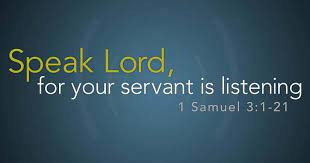
This Sunday we return to Ordinary Time with the Christmas and new year festivities a now distant memory. Our readings for the second Sunday in ordinary time are all about how god is calling his people. In the first reading we read about ‘Samuel’s Call’. Three times he hears God calling but thinks it is Eli a Temple priest and goes to him. Eli finally understands that it is God calling Samuel and tells him that next time he hears the voice to say, “Speak, Lord, your servant is listening”. The reading concludes with the thought that God dwelt with Samuel and that he spoke in God’s name. In this Sunday’s Gospel the apostles asked Jesus “Where do you live”? his reply was the invitation for them to “Come and see”.  As well as the Apostles all of us  are invited and welcome to  come and see where Jesus lives as well as what’s going on in our Faith Communities. When we accept the invitation of Jesus we have to ask ourselves why do we come and what do we seek? The early disciples of Jesus must have asked themselves those same questions.  They lived in a culture that distrusted anything new.  

We also  live in a culture that distrusts many things especially faith and all it represents.  The people in this gospel story are like you and me they are people looking and searching for God. Like the disciples we are seekers who want to find Jesus and stay or at least try and stay him. John’s disciples were seekers and it is late in the day for them as the gospel tells us. “It was about the tenth hour around four in the afternoon,” when the disciples received their invitation from Jesus. They need rest from their search and Jesus is offering it to them. The “four in the afternoon” possibly refers to the beginning of the Sabbath the next day.  The disciples spend time with Jesus, they are transformed. One of the disciples, Andrew, is so moved by his encounter with Jesus that he immediately goes to find Simon his brother and tells him, “We have found the Messiah”. Andrew’s response is a beautiful example of evangelization. He cannot keep the good news to himself; he feels compelled to share it with others. This is a reminder for us that encountering Christ should lead us to share the joy of the Gospel with those around us.  Simon, upon meeting Jesus, is given a new name, Cephas, which means “rock.”

This renaming signifies the mission that Jesus would give him, to be the rock upon which he will build his Church.  Just as the disciples were transformed by their encounter with Jesus, we too are invited to open our hearts to him, to seek him with sincerity, and to respond to his call. It is not a passive following to which we are called. This is about making room for him in our hearts and our lives, becoming the living embodiment of the Gospel.  May our encounter with Jesus and what he teaches us deepen our faith, transform our lives, and inspire us to be witnesses of his love in the world wherever  we are.

The Baptism of the Lord

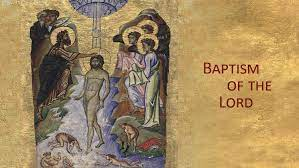
On the Sunday that follows the Epiphany of the Lord, the Church commemorates the baptism of Jesus and  the beginning of his public mission in the world.  Jesus began his mission, like any Christian does, by being baptized by one of those who are charged with representing him on earth.  John the Baptist is indeed the figure of the Church at its beginning, and he is the one who resembles Christ, and represents him among the people of his time.  When John the Baptist baptizes, he told the people that there was someone coming after him and he was not good enough to undo the strap of his sandals.  The Baptism of the Lord emphasizes our incorporation into God’s family through baptism, mirroring Jesus’ own baptism.  The first reading discusses being formed and called by God. The psalm highlights themes of peace, water, and salvation, integral to the baptismal experience. The second reading reflects on the start of the Good News with Jesus’ baptism.

 The Gospel vividly recounts Jesus’ baptism by John the Baptist in the Jordan, symbolizing the beginning of His ministry and our own spiritual journey through baptism. Many of us have been to a baptism but none of us remember the time we were baptised unless we were an adult who was baptized at the Easter Vigil or at another time. The beginning of the messianic work of Jesus is marked by the moment of his baptism in the Jordan. We remember that John the Baptist foretold Jesus  coming and he is acclaimed on earth by John and Jesus links himself to John by being baptized by him. Jesus is acclaimed from heaven by the voice of the Father and the presence of the Spirit.  Most of us rarely, if ever, think about our baptism. Through our baptism we died with Christ and have been reborn into a whole new life (Romans 6). We, the baptized, are made a part of the body of Christ. We are called to imitate Jesus, whom Paul says, “went about doing good.” We don’t need a detailed rule book in order to know how we should act in each situation of our lives, for in baptism, we have the companionship of the Spirit of Jesus who is our wisdom, our help and our guide to do good. The baptism of Jesus is a moment of special grace in the story of our salvation. Not only did the Son of God join us in our human condition but the Father and the Spirit were seen and heard to be present with him by the banks of the Jordan. At Jesus’ baptism, the voice heard from heaven identifies him as God’s beloved son. Our baptism also identifies us as beloved sons and daughters of the father. The Church teaches that baptism leaves a “mark” on us which can never be removed. No matter what we do, that mark is always with us. This gospel about Jesus and his baptism by John is the beginning of a purpose filled journey, which, through our own baptism, each of us is asked to travel. It is a journey and the purpose for us is to try and live our lives as people of God enlivened by the Holy Spirit so that others will be inspired to follow Christ by seeing the lives we lead as baptised people who believe in Jesus the Son of God and what he teaches us.

Epiphany

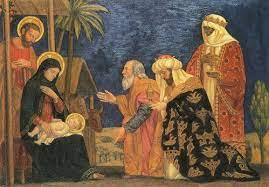
On January 6th  we celebrate the three wise men and their visit to Jesus, as we know they brought gifts of Gold Frankincense and myrrh valuable gifts indeed. As we reflect on the Magi and their gifts we should also reflect on humble start of the church: Jesus was born in a stable as there was no room in the inn. Jesus gave us the Eucharist at the Last supper in the upper room . There he told his apostles as he tells us today do this in memory of me when he blessed the bread and wine he said this after washing the disciples feet remember the Master of the household did not wash the feet of anyone.  Jesus died on the Cross with two thieves one on each side of him no Gold frankincense or Myrrh there just the words of the thief when he said  Jesus remember me when you come into your kingdom. The Magi from the east, guided by a star, sought the newborn King of the Jews in Jerusalem, unsettling King Herod and the city.

Informed by religious leaders about the prophesied birth in Bethlehem, Herod deceitfully instructed the magi to report back after finding the child. Following the star, the magi reached Jesus, worshiping Him and offering gifts. They returned home by another way to avoid Herod. In the gospel reading for this feast the Wise men represent the “mystery” of the son of God made manifest in human life by becoming one with us and like us. By their very nature they are seekers, people who came looking for the “king of the Jews.” Where would they find this royal child? Not in the courts of the powerful, like Herod. He was an example of how those in power would react to the gentle one who would draw all people into his kingdom. Jesus was not born in a mighty city, nor was he an heir to a powerful ruler. Instead, he was born  in Bethlehem. it was a backwater in the eyes of those of Herod’s court and the religious leaders in Jerusalem.

We, like the wise men, will find Christ among the “least.” and this is the message, that lies at the heart of our gospel for today. The call of the Savior is given  to each of us. What do we hear? Will we believe what we hear and see as the Wise men did? we are not going to be able to bring Gold Frankincense and Myrrh to the Lord instead we bring the priceless gift which is our faith and belief in Christ the Son of God. Our faith in Jesus enables us to bear witness to him as a light for all the nations. Like the wise men we come to worship the one we have found in the manger and then go out and share with everyone out there the treasure we have received kneeling at the crib like the wise men

EPIPHANY

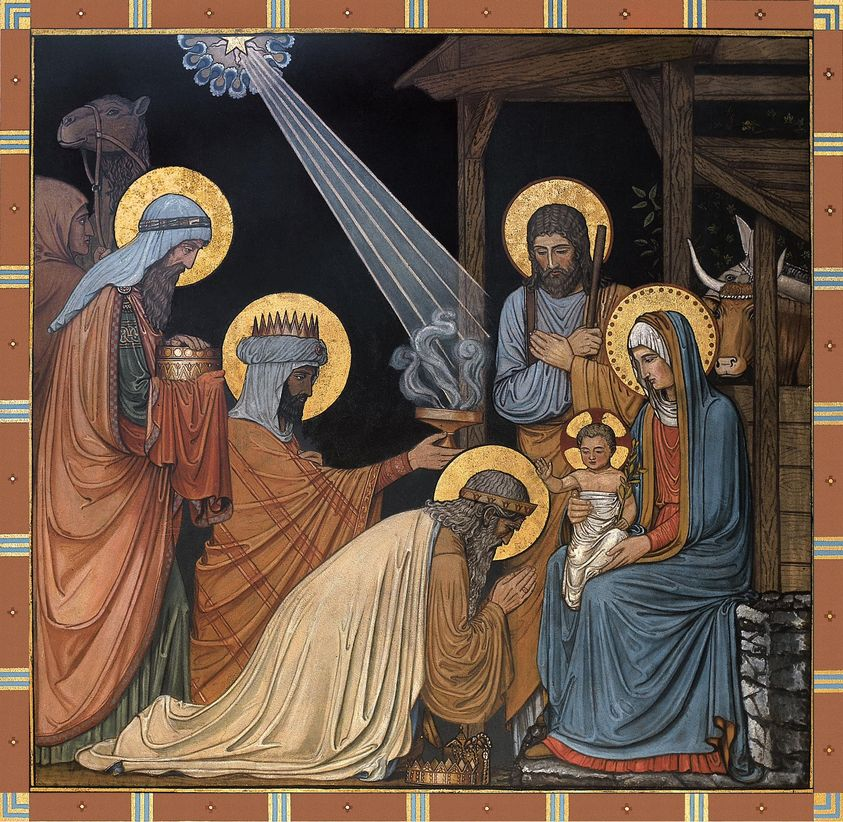
On January 6th  we celebrate the three wise men and their visit to Jesus, as we know they brought gifts of Gold Frankincense and myrrh valuable gifts indeed. As we reflect on the Magi and their gifts we should also reflect on humble start of the church: Jesus was born in a stable as there was no room in the inn. Jesus gave us the Eucharist at the Last supper in the upper room . There he told his apostles as he tells us today do this in memory of me when he blessed the bread and wine he said this after washing the disciples feet remember the Master of the household did not wash the feet of anyone.  Jesus died on the Cross with two thieves one on each side of him no Gold frankincense or Myrrh there just the words of the thief when he said  Jesus remember me when you come into your kingdom. The Magi from the east, guided by a star, sought the newborn King of the Jews in Jerusalem, unsettling King Herod and the city.

Informed by religious leaders about the prophesied birth in Bethlehem, Herod deceitfully instructed the magi to report back after finding the child. Following the star, the magi reached Jesus, worshiping Him and offering gifts. They returned home by another way to avoid Herod. In the gospel reading for this feast the Wise men represent the “mystery” of the son of God made manifest in human life by becoming one with us and like us. By their very nature they are seekers, people who came looking for the “king of the Jews.” Where would they find this royal child? Not in the courts of the powerful, like Herod. He was an example of how those in power would react to the gentle one who would draw all people into his kingdom. Jesus was not born in a mighty city, nor was he an heir to a powerful ruler. Instead, he was born  in Bethlehem. it was a backwater in the eyes of those of Herod’s court and the religious leaders in Jerusalem.

Through the “least,” and the poor, Christ comes to us. We, like the wise men, will find Christ among the “least.” and this is the message, that lies at the heart of our gospel for today. The call of the Savior is given  to each of us. What do we hear? Will we believe what we hear and see as the Wise men did? we are not going to be able to bring Gold Frankincense and Myrrh to the Lord instead we bring the priceless gift which is our faith and belief in Christ the Son of God. Our faith in Jesus Christ enables us to bear witness to him as a light for all people. Like the wise men we come to worship the one we have found in the manger and then we share with others the treasure we have received kneeling at the crib.

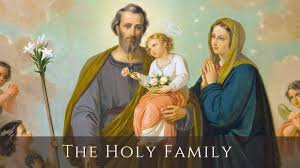
The Holy Family

We recognize the sacrifices Joseph and Mary made for Jesus, in the same way as we recognize the sacrifices our parents made for us  and many other parents  are making for their children today.    In the readings of the Feast of the Holy Family, we encounter a profound invitation to transform our homes and our lives into sanctuaries of God’s love and faithfulness.  The first reading from Sirach emphasizes the respect and honour owed to our parents, linking family life to the spiritual life. It shows us that the familial bond is not just a social thing but a sacred covenant. The Holy Family, in their simple yet profound acts of faith, become a model for us, guiding us to see our family relationships as opportunities to grow in holiness love and charity. The Gospel of Luke, detailing the presentation of Jesus in the Temple, underscores the holy families deep-seated obedience to God’s will as they went up to the temple to do what the law required.

 This gospel story  is a vivid portrayal of a family committed to their faith, where each action and decision is rooted in faith and love.  The Church is a great family, the great family of God. The Church is prophetic: she proclaims the Kingdom of God. Simeon, as well as the prophetess Anna, are there in this gospel to witness to this. This example sets a high standard for us: to make our embodiments of divine love, where every interaction is steeped in the virtues of faith and love. As we meditate on these scriptures, we are called to think about our own family dynamics. It is in our family homes that we learn a philosophy of life. It is there that we acquire principles by which we should live and relate to others. It is there, in the domestic church, that God is acknowledged, that prayer is learned. It is there that our soul is nurtured at the family altar, the family table in which we share a communion of food for the body, the mind and the soul. So in thanking God for the gift of the Christ Child, we also thank God for our mothers, fathers, sisters and brothers, and the wonderful gift that our families are for us. By strengthening these bonds, we mirror the Holy Family’s commitment to God’s plan and we become active participants in the manifestation of His love and mercy in the world where we are and we are impowered to pass his love and mercy on to those around us.

CHRISTMAS 2023

4th Sunday of Advent

This weekend we celebrate the 4th Sunday of Advent and this year it is also Christmas eve. Our first reading from Samuel, points to the dangers of religion becoming institutionalized.  When the Israelites travelled through the wilderness, God travelled with them and dwelt in their midst in the “meeting tent.”  God wasn’t limited to one place but moved in the hearts and faith of the people.  But now Israel was going through a comfortable period of peace and prosperity with its enemies vanquished and king David ensconced in a comfortable palace.  But David needs to be reminded who’s in charge.  God was the one who took the lowly shepherd boy David and made him king of Israel.  God, not David, was the reason for Israel’s success and God will be the one to give them peace and protection from their enemies. 

Since God was the reason for their past success God, not David, will see to their future as well.   In our Gospel we hear the story of the Angel Gabriel coming to tell Mary that she would be the mother of Jesus. But as we hear this story we should stop and step aside from all the ongoing activities of this time of year to think about how Mary felt when she got this news that she was to have a child. Luke tells , ” she was greatly troubled at what was said and pondered what sort of greeting this might be.” The angel has to reassure her, “Do not fear Mary.” she must have been afraid. In that uneasy world of Galilee, a place of conflict and struggle, Mary’s personal response showed confusion and doubt. Still, Mary did not get a roadmap of the future neither do we. All her questions weren’t answered and many of our questions are unanswered. Gabriel announced that Mary’s child would be “great”. He would be Son of the “Most High” the highest concept of divinity one could have.

Mary made room for God in her life. Scripture suggests God wants to enter more fully into our messy lives with all the good and bad and all the happy and sad times that are part and parcel of our daily living. Mary accepted, and  proclaimed, God’s will in her life. She placed her future in the hands of the Father so should we.  God’s promise of a permanent resting place with us is being fulfilled.  And where will this God be found?  Not in the places of power and world influence; but among those who have known the powerful works of God in their lives.  So today we look back and see how God’s hand strengthened us in many difficult situations. Like Mary who proclaims the greatness of the Lord we see that  God guides us when we wander, strengthens us when we falter and consoles us when we weep.  We thank God for his presence among us and we pray that we will be his presence in the world so that others can find God’s presence in their lives where they are.

Third sunday of Advent

The third Sunday of Advent  is also known as Gaudete Sunday. In some places Rose vestments are used and we light the rose  candle on the Advent wreath. It is the advent  Sunday when we rejoice as we look forward to the birth of Jesus. Many parishes are also celebrating Bambinelli Sunday.  This  is a Roman tradition where  the priest will bless the baby Jesus from family cribs brought to Mass by the children on Gaudete Sunday. Then on Christmas Morning they place the baby in the crib in the family home and say a prayer.  Our first reading tells us that prophet was sent to bring good news to the poor Anointed by God, he tells us I am sent to bring hope to the poor, heal the broken-hearted, and proclaim freedom. Clothed in salvation, I joyfully await God’s justice to flourish.

 We are also called by god and sent out to bring hope to the poor, heal the broken-hearted, and proclaim freedom, as we joyfully await God’s justice to flourish through  Jesus his son. In this  psalm for Mass that is part of  the Magnificat Mary proclaims God’s greatness as she announces what God has done for her and will do for the all those who have turned to God the father for help.  The second reading tells us to rejoice always, pray ceaselessly, and give thanks in all situations we find ourselves. We know that god has called us to follow him and he will not let us down because he is faithful. Our Gospel story tells us about John the Baptist who was the voice crying out in the desert, make straight the way of the Lord. John the Evangelist presented the Baptist as God’s witness, the one who spoke eternal truth in a transient world. John’s message and ministry of a repentant baptism prefigured Christ’s. John baptized in the spirit of hope and we live in the spirit of hope. The baptism of Jesus in the Jordan realized that hope.

Those baptized by John looked forward to a life with God. Those baptized by the Christ lived in God as we live in God.  The joy of Christmas will come to us if we set about actively trying to create the same joy for others.  The Joy we have at Christmas is not about the Secular Razzmatazz of the ongoing parties instead it is about Jesus Christ the Son of God who is for us the light in the darkness. It is about reaching out to others family members, friends and relations those who we might not value as much as we should. On Gaudete Sunday we joyfully praise God. We thank him for all he has done for us in our own lives and in the lives of all those who are dear to us, families and friends. We rejoice that through the coming of his Son Jesus we have come to know god as our Father. We do what we can to imitate Jesus life, to follow his Gospel in a spirit of joy.  As we continue our  Advent journey in  the run up to Christmas with all its chaos let us stop and take the time  to prepare the way for the Lord remembering that  the words of the  entrance antiphon for Gaudete Sunday  rejoice in the Lord always; again I say, rejoice. the Lord is near. 

Second Sunday of Advent

Here we are at the second Sunday of Advent as time continues to pass by as we head towards Christmas at breakneck speed. I wonder how many people out there really understand the meaning of Advent and the reason for the season of Christmas.  Advent is all about watching and waiting and Christmas is about the birth of the Christ Child and how we welcome him into our lives. This weekend we continue our wait as we light the second purple candle on the Advent Wreath. Our first  reading from Isaiah announces the “breaking news” that the people’s exile was coming to an end. They had hoped for a new beginning and God was coming to fulfill their hopes. just when we are stuck in our own desert of discouragement, failed plans and “bad-news days,” God sees our predicament and helps us to understand what we have to do. The prophet in the reading cries out, “Get Ready and that is what we do in Advent!”

The reading from Isaiah has a message of consolation for us and a promise of a new start and here we are in 2023 preparing to celebrate the new start once again. In the gospel reading John the Baptist the voice in the wilderness takes centre stage as he calls us to prepare the way and make the paths straight for the lord. He also tells us that there is someone coming after him who is more powerful than he was and that he was not fit to undo the strap of his sandal. So are we making the paths straight for the lord as we try to make sense of all the ongoing razzmatazz or are we going with the flow, just too busy with all the secular preparations to really take notice of the importance of the preparation that John the Baptist talks about?   John was called to bring renewal to the institutional expressions of religion which, at the time, had  become fossilized into mere formulae or external ritual.   As the journey of Advent continues John the Baptist’s call to conversion sounds out in our communities.

Like John the Church in every age including our own must become a reminder of the light of the truth Jesus proclaims and we have to allow that light to shine brightly  in our lives and in the life of the Church. As we continue our preparations for Christmas let us not forget the true and lasting message of Christmas that god came among  us a message that has lasted over the  years right down through the generations to us here in 2023. For many people out there in the wilderness the voice of Jesus means very little as they go about their daily lives.  This weekend through the Prophet Issiah and John the Baptist all of us  are called to reawaken within ourselves the great spirit of expectant waiting as we wait on the Christmas feast. So are we making the paths straight for the lord or are we just going to go with the flow taking little or no  notice of the importance of the preparation of our hearts and minds for the great spiritual feast  that Christmas is. We need to refocus ourselves as we prepare the way for the Lord doing our best to make his paths straight. So now as we continue the preparation will it be the secular razzamatazz that will take over our Advent and Christmas celebrations or will it be Jesus the Child in the Manger who will take his  place amongst us, our families and  friends. So how are our preparations for the coming of Jesus at Christmas going this Advent?

First Sunday of Advent

This weekend we begin Advent as we journey to Christmas and the birth of Jesus the Prince of Peace in Bethlehem. We bless the Advent wreath and light the first purple candle as we remember all the places where there is war and continue our prayers for peace in the world. It seems no time since we began the church year that ended last weekend with the feast of Christ the King. In the secular world out there Advent seems to begin the season of Christmas and ends with the measuring of profits in the business sections of our newspapers on Christmas eve. In churches and faith communities throughout the world this season’s sounds will be contradict all this is going on outside the with the Scriptures, liturgical banners and  purple colors that tell us that we should “Prepare the way of the Lord.”  

Amongst all the razzmatazz of the Christmas preparations and the madness of the shoppers on our town and city streets we stop and ask ourselves what or who are we waiting for this Advent ? Jesus the master, is coming to help us put aside all that is false in our lives and our world and rebuild our house on rock, that is the rock of faith. We remember Paul’s words “God is faithful” and he will accompany us through any change or adjustment we need to make in our lives. This is the God Isaiah evokes as he imagines us as clay to be formed by our God, “the potter,” and reminds us, “we are all the work of gods hands.” Hope is the basis for a watchful and vigilant spirit in Advent. The Lord will come. And in the blink of an eye, God will renew us, he will also renew the world. In our anticipation for the Lord’s coming, our faith will help us to reveal the Kingdom and prepare ourselves as well as others for eternity.

Our efforts alone will not bring about the Kingdom. But, God,  will reveal the Kingdom through us and what we do and say. Blessed John Henry Newman reminded us in a homily for the Advent Season: “Advent is a time of waiting, it is a time of joy because the coming of Christ is not only a gift of grace and salvation but it is also a time of commitment because it motivates us to live the present as a time of responsibility and vigilance. This ‘vigilance’ means the necessity, the urgency of an industrious, living ‘wait’.  To make all this happen, then we need to wake up, as we are warned by the apostle to the Gentiles, in the  reading to the Romans: ‘Besides this you know what hour it is, how it is full time now for you to wake from sleep.  For salvation is nearer to us now than when we first believed” (Rm 13:11). As we begin this advent we ask ourselves what are we waiting for? Are we waiting for the presents and razzmatazz of Christmas Day or are we preparing for the greatest gift of God, Jesus his Son, Christ the  prince of peace and  the light in the darkness for a broken world .

Post Navigation