Fullerton T

RELIGION LITURGY AND LIFE

Archive for the category “Faith”

Mary Mother of God

As we end 2022 we pray for the late Pope Emeritus, Pope Benedict who passed away this morning May he rest in peace and rise in glory.  This Sunday we celebrate the Feast of Mary Mother of God. It’s an opportunity to honour Mary, the Mother of God, and our mother too, who said “yes” in the name of all of us. Her “yes” enabled God to take flesh in the Person of Jesus, who came as a humble baby who would grow and walk in our midst, proclaiming the good news of the Kingdom of God. Our faith cannot neglect a profound devotion to the Mother of God, as she shows us the easiest way to reach Jesus.  Mary is Christ’s mother, and since we are, through grace co-heirs with him, she is spiritually our mother as well. Supported by her prayers and encouraged by her example we can be helped towards responding positively to God. Mary was chosen to accomplish this astounding act of generous love. Throughout her life she had many secrets and treasures to store and ponder in her heart. With open eyes she watched the plan of God the Father unfolding; with a loving acceptance of God’s will,regardless of her personal happiness or safety she simply said yes to all that was asked of her.

This special relationship Mary has with God makes her the ideal person to pray to god for us as our spiritual mother.  But as we celebrate Mary as mother of God let’s not forget the shepherds who play an important part in the  Nativity story. Their story began with the angel’s visit to them in the fields. A new age was beginning with Christ’s birth, but the shepherds were afraid by the angel’s appearance. They were outcasts in their society. Their wandering life made them suspect: “Here today gone tomorrow” – and what did they take with them when they left town? They were treated like the dregs of society. When the angel showed up they must have thought that God’s wrath was about to come upon them. But, the first words they heard from the angel were, “You have nothing to fear” (2:10). Like the shepherds in the story, we too have had Christmas experiences, ones that have led us to believe in our hearts and live in our lives ‘what the shepherds had to say’. In the very ordinariness and humanness of that stable of Bethlehem, then, we have gained glimpses of God.

Once more. we who ‘walked in darkness have seen a great light’, the light shining on and from the Baby of Bethlehem, the source and inspiration of our hope, joy, love, and life.  During Christmas we are reminded  of the mystery of Mary as Mother of God, mother of the Incarnate Word, and mother of His mystical body, the Church.  In the Rosary Basilica in Lourdes the inscription on the mosaic over the Altar is to Jesus through Mary and the mosaic shows Mary with open arms, again at the wedding at Cana Mary told the attendants as she tells us do whatever he tells you. Mary did not take any of her sons glory for herself she points away from herself to Jesus and tells us to do what he asks us to do. These are two pointers for us in our modern day as to what we should do in order to follow the light of Christ. Mary is often given the title ‘Queen of Peace’ and today is also World Day of Peace. We know that sadly there are wars , threats of wars and many people and countries suffering because of violence and random acts of terrorism. Sadly some of these acts of violence take place in our own communities and in our own streets.  This weekend we pray to Mary, Mother of God, and Queen of Peace, to help us play our part in breaking down barriers of hate and fear and become bearers of hope so that we will be able to bring the Light of Christ out to the world at Christmas and throughout the new year 2023.

4th Sunday of Advent

This weekend we come to the last Sunday of the Advent season. In our churches we light the last purple candle leaving the white candle for the Midnight  Mass of Christmas Day. It’s only in this last few days  before Christmas that we begin to hear about the “Christmas story” itself. For the past weeks we have been preparing ourselves to greet the Lord, when he comes. Now we prepare to remember how he first came, by listening to the prophecies of his coming, and by listening to the stories of scripture about the events before Jesus birth. In the first reading for this Sunday Ahaz sounds like the great model of faith. We are taught not to tempt God by asking for signs to prove our faith. If we got those signs we wouldn’t have faith! God, speaking through Isaiah, invites Ahaz to ask for a sign–any sign from God: “Let it be deep as the nether world, or high as the sky!” Ahaz refuses saying, “I will not ask! I will not tempt the Lord.” Good for Ahaz, he is showing great faith in God.

He doesn’t want any proofs from God; he doesn’t want to test God–or so it seems. He will not ask for the sign; he will not put his and the nation’s security in God’s hands. But God decides to give a sign anyway: “The virgin shall conceive and bear a son and shall name him Emmanuel.”  The promise found in Scripture will be fulfilled.  By referring his readers to the scriptures, Isaiah reminds us that believers do well to put confidence in the word of God in order to sustain hope and strengthen faith in discouraging times such as we are in these days. God enters into our world: it’s a world where plans don’t always work out and where people have to adjust to the reality presented to them at the time. We  meet Mary in the Gospel for who had been prepared for the coming of the Messiah. She has received the angel’s greeting, and his strange news, and accepted her role in God’s plan Matthew is well planted in his Jewish tradition. He shows that from the very beginning of his gospel. Joseph was betrothed to Mary; Mary’s pregnancy turns Josephs world and his plans upside down.

Instead of exposing her, he “decided to divorce her quietly.” He was a “righteous man” and he will protect Mary from being publicly dishonoured. He is not vengeful and, though wronged, displays mercy. After his dream when the angel told  him do not be afraid Joseph took his wife into his home. The world God chose to enter was one of poverty, hard labour and political and military oppression. God took a big chance being born among us especially in those circumstances. Surely there must have been neater options for God, to make the saviour’s path and work a bit smoother. But who has a “smooth path” through life none of us that’s for sure? It’s good to know that Emmanuel, “God with us,” chose to be with us his people who live in  the real and messy world. God is with us in the mess of our daily lives!  We began Advent with the cry, ‘Come, Lord Jesus’. We will end it with the joyful  Christmas call, ‘God is with us! Our Advent journey has asked us to: stay awake to the coming of God, as well as preparing ourselves to receive the Lord, and to receive him with faith and love when he comes.As we look forward to the Christmas Celebration there is much to be thankful for even in our messy world with all its problems. The real message of Christmas is about God’s loving kindness, his compassion, his mercy, and his abiding, living presence with us who is Jesus the son of God Emmanuel who is God with us.

Third Sunday of Advent

This this weekend we celebrate Gaudete Sunday. The term Gaudete refers to the first word of the Entrance Antiphon, “Rejoice”. Rose vestments are worn to emphasize our joy that Christmas is near, we also light the rose candle on the Advent wreath. In many places the Parishes celebrate Bambinelli Sunday when the Children are asked to bring the baby Jesus Crib Figure to get a special blessing and then they place the baby Jesus in a wee bag and place it under the Christmas tree until Christmas morning when the put the baby in the Crib. In these weeks before Christmas our reflection and prayer focus our minds on the various ways that the Lord is near to us: he is the One who is continually coming into our world with his good news of peace and joy.  The readings for this Sunday, express this theme of rejoicing at the imminent coming of the Lord.

When John the Baptist was in prison, he heard about the things Jesus was doing; so he sent his disciples to inquire: “Are you ‘the one who is to come,’ or do we look for another?” Jesus said to tell John “what you hear and see: ‘Look around you’, they are told. ‘The blind see, the lame walk, lepers are cleansed, the deaf hear, the Good News is proclaimed to the poor and happy are those who believe.’ We rejoice that through the coming of his Son Jesus we have been saved. We do our best to follow his Gospel as we wait.  We wait with hope in our hearts for the culmination of all things in Christ and the prayer that is on our lips is ‘thy kingdom come!’ We expect much from the Lord who gives us much. His gifts challenge us to pass them along to others. As Jesus has freed us from need, so we, too, must free others from need. Sometimes, however, all we can do is stand in awe as we see god working through the people around us. We remember all those organizations such as the Salvation Army and the St. Vincent DePaul who do so much good at this time of year for so many people.  

Many in our world live without this expectation, without hope. Some believe but live with dread and fear.  But at each mass, we are verbally reminded of the blessed hope of the coming of our savior.  The Church continually presents the hope of his coming and his work of redemption as we go through the liturgical year.  Advent is the season of expectation. It is a time when all of us young and old make lists of what we have to do or what we would like to find under the Christmas Tree. But Advent means more than that. We anticipate and hope for renewal and deepening of our faith during this time when we are looking forward to the coming of Jesus at Christmas to give us sight where we are blind-to open our ears to what we have not heard to cleanse us of the past that weighs us down in order to make us bearers of his good news to those who need us. The customs of the advent season are announcements of one single message: Christ is born for us, so let us rejoice and be glad. As Christmas approaches we pray that we will be strong in faith  and hope as we await the coming of the lord for he is near.

Second Sunday Of Advent

Christmas is coming! If you are not already busy preparing, I am sure you will have people telling you it is time you started getting ready and that is what John the Baptist is telling us this weekend as he tells us to prepare the way for the Lord. As the people of faith we need to start thinking about welcoming Jesus and the preparations that we are have  to make as his followers. We must prepare the way for the Lord to enter our lives, to enter the lives of those around us, and to enter into our world with his word of peace and forgiveness. This weekend  we recall the ministry of St John the Baptist. Jesus said about John: among those born of women no one has been greater than John the Baptist (Mt 11:11) his mission was to prepare a people who would receive the Lord when he came.

We see John as the culmination of the work of the prophets, and now on the brink of the coming of the Christ he announces: ‘repent, for the kingdom of heaven is near. John’s task was to announce the coming of Jesus and to point to him when he came. He was called to reawaken a sense of expectation among a people that had grown tired and distant from God as many have done in our present generation.   John attracted thousands to come to see him and be baptized by him. Tradition sees the desert as the place where God speaks to the heart of his people. It is from this solitary place of spiritual combat, the desert bordering the Jordan, that John appears “with the spirit and the power of Elijah” (Luke 7:17). By his word and his baptism with water, john called the children of the covenant back to the Lord their God as he calls us today to come back to the Lord our God.

The figure of John serves as a warning, to all believers, that we need to draw our strength from God alone, rather than going with the Fads and fashions of the time.  The Church is here in the present as it has been in past times to proclaim and live the message of Jesus in every generation in order to prepare the way of the Lord whether people like it or not.  The Church in every age must become like John the Baptist, who was an uncomfortable reminder of how we must allow the truth of Jesus to break into our lives to lighten the darkness that is there. As our Advent journey continues, John the Baptist’s call to conversion sounds out in our communities. It is a pressing invitation to open our hearts and minds to welcome the Son of God who comes among us to make the kingdom of God manifest. As we continue our personal Advent Journeys  let us hear the call of John the Baptist to prepare the way for the Lord and put it into action in our lives in our preparations for Christmas.

First Sunday of Advent

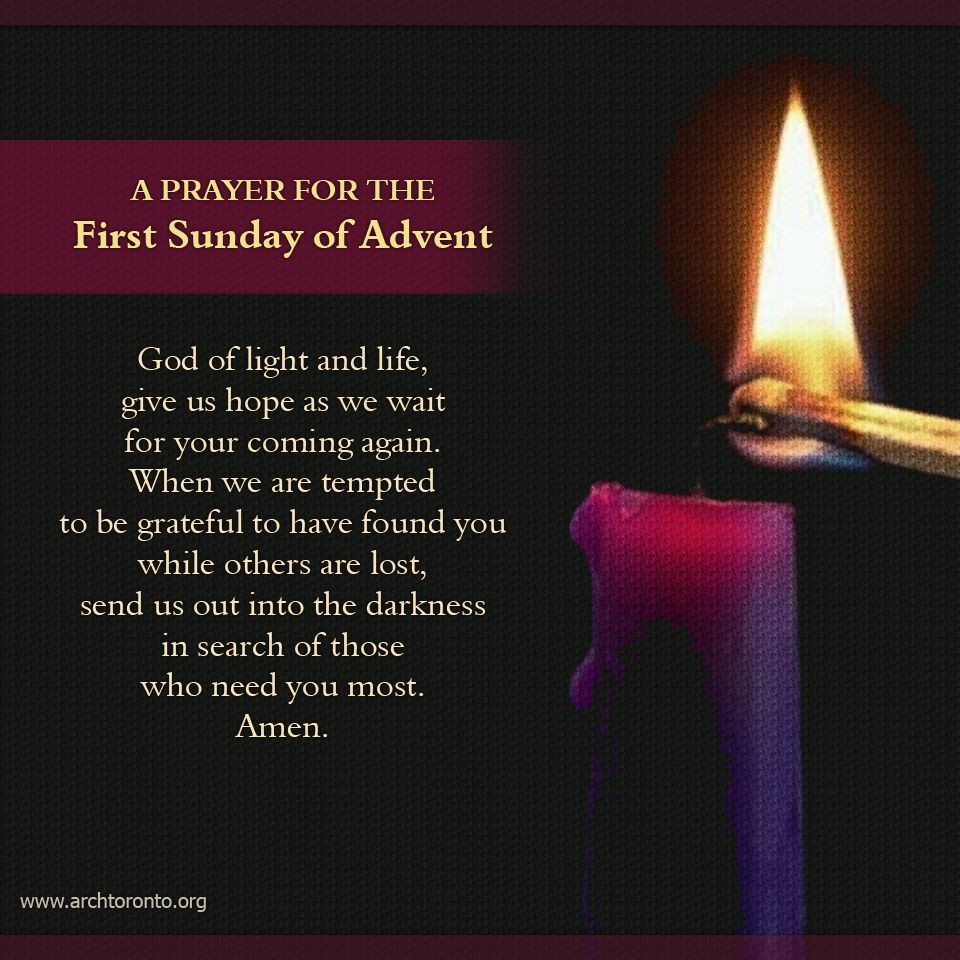
This weekend we celebrate the first Sunday of Advent. In four weeks’ time we will celebrate Christmas and the coming of the Son of God among us as our prophet, our priest, and our king.  But to know who Jesus is, we must recall the faith of the people who looked out for him, and said he was coming to us. We look to the writings of the Old Testament to see what they say about the promise of God to visit his people  and during these coming weeks we will read much from the prophet Isaiah; we also think about all those who prepared the way for his coming and we recall the work of John the Baptist; as we reflect on how the Christ comes to birth in our world we also remember Mary whose faith and acceptance of the invitation of God inaugurated the whole Christian era.

This week’s Gospel calls us to “Stay awake”, to be vigilant and attentive to the signs of the times so that we do not miss the moment when God breaks into human history once again. The God who came among us is still among us. In Advent we try to see the reign of God more clearly so that we may be totally caught up in God’s action in the world as we wait for the final manifestation of God’s glory. We continually strive to work for a peaceful and just world, so that Christ may have room in that world, our homes and our hearts.  Moreover, we must change our conduct abandoning the works of darkness and put on the ‘armor of light’. (cf. Rm 13:12-14). Jesus, through the story in the parable this weekend  outlines the Christian life style that must not be distracted and indifferent but must be vigilant and recognize even the smallest sign of the Lord’s coming because we don’t know the hour in which He will arrive. (cf. Mt 24:39-44)

Saint John Henry Newman reminded us in a homily for the Advent Season:   “Advent is a time of waiting, it is a time of joy because the coming of Christ is not only a gift of grace and salvation it is also a time of commitment because it motivates us to live the present as a time of responsibility and vigilance. This ‘vigilance’ means the urgency of an industrious, living ‘wait’ We need to take Advent seriously, for the coming of the Lord will be not just a beautiful Christmas, but the actual day of judgment. At the beginning of each church year we are reminded that Jesus the Christ is present as a person to us.  When we think that his presence is something so exalted as to be beyond our own experience, we are reminded that he was born in the lowest of places, a common stable.  Remember who the first people to visit Jesus were the shepherds.   

The real tragedy of this season is that we have been programmed to believe it’s all about buying things, about gift giving, about Non stop activity that leaves us exhausted and happy it’s all over the time Christmas arrives.  So then as a result of all that we forget the 12 days of Christmas and dump the tree and the lights as we wait for Valentine’s Day. So what are we really waiting for this Advent?  Is  it all the presents and the comings and goings that families and friend’s bring over Christmas or is it the birthday of Jesus the Son of god our saviour who gives the true meaning to our Advent preparations and our Christmas celebrations. On this first Sunday of Advent we are invited to renew our hope in God and his promises. We are waiting and hoping for the coming of the Lord in our midst, to Lead us to a great and wonderful future. As the first reading tells us let us go up to the mountain of the Lord, to the Temple of the God of Jacob that he may teach us his ways this Advent time.

CHRIST THE KING

This Sunday we celebrate the feast of Christ the King the last Sunday of the Churches year. The Feast of Christ the King was established by Pope Pius XI in 1925 as an antidote to secularism, this was a way of life that leaves God out of a person’s thinking and has us living life as if God did not exist as we all know God does exist and we have seen this through the example of  so many people throughout history right down to ourselves. The readings this Sunday come as a sort of final warning. Malachi pulls no punches. Those who have chosen to live their life harming others will disappear without a trace. Those whose lives are centered on themselves in self-pride that considers no one their equal will face the truth of their lives and the way they lived them. Our Gospel reading for this Sunday has Jesus on the cross between the two thieves.

The cross reveals both the folly of sin and the toll that sin takes on our world where the innocent suffer cruelly at the hands of the powerful.  The cross also reveals God’s profound and undying love for us. Even Jesus’ crucifixion did not turn God away from us. God loves us, even when we do our worst. We have a God who is not indifferent to our suffering, indeed, he has entered into our pain and the horror of death for us. Christ the King does not condemn those who murder him; while he passes a merciful judgment on those who turn to him in sorrow and need. Remember the thief who asked Jesus to remember him in his kingdom Jesus told him that he would be with him in paradise. The gospel shows us that all through his life and right up to his death Christ has taken a place with the suffering, poor, sick, the defeated and the outcast who cry out to God. In our midst he stays faithful to us, no matter how far we have attempted to go down the road on our own; or how far life and its attractions  have driven us.

 As we celebrate Christ as our King we are asked to embrace the cross and walk in the victory of the King of Kings and the Lord of Lords. What began as a humble event with the birth of Jesus in the stable has changed the world.  As we prepare for Christmas during Advent that begins next Sunday  are we with Jesus and his call to us to be his light to the people around us? Whenever we show the light of Christ to the world, the Kingdom of God breaks into it. Whenever we are moved by the Spirit to respond to need, to work for justice, to transform and heal our society, the grace of God becomes clearly visible in what we do and say.  We can be sure that nobody there on the first Good Friday  thought they were witnessing the death of a great King.  The kind of kingship Jesus spoke can only be learned among the poor and needy and those whom the world has forgotten. For our king is the servant of the poor and we only belong to his court when we become servants of the poor. let’s not forget the beautiful truths of faith that we have learned, let’s continue to learn more about them, celebrate them, live them, and pass them on. So that when people look at us, they will see that in our daily lives and dealings with those around us  “Christ is King to the glory of God our father.”

33rd Sunday in ordinary time

In November as people of faith we pray for the dead in many Churches we will have our annual masses and ceremonies of remembrance for the parishioners who have died in the last year  may all of them rest in peace and their families be consoled by the love of the communities where they are. This weekend we also remember all those who died in the Wars as we celebrate remembrance Sunday. As we come to the end of the Liturgical Year we listen to Jesus’s words concerning the end times. The vision of the future in the Gospel Reading for this Sunday doesn’t look very appealing. The bad news is delivered first of all. Jesus imagines a time of terror and trouble and persecution ‘Nation will fight against nation, and kingdom against kingdom. There will be great earthquakes and plagues and famines and there; there will be fearful sights and great signs from heaven.

Jesus says, “These things must happen.” Then there will be cosmic upheavals: “the sun will be darkened, the moon will lose its brightness, the stars will come falling from heaven”. After this catalogue of disaster there is the good news. Jesus looks beyond the time of distress to the time, when the Son of Man will gather the scattered people of God to himself.  Jesus sees beyond suffering and persecution to a future of peace with God . God does not call us to be anxious, but he calls us to confidence in the message we hear in the gospel and asks us to proclaim it in our lives so  that we will remain in his light. Christ remains our high priest who has offered himself for the forgiveness of our sins. God knows what it is to be human. The Lord calls us to stay awake amidst the distractions of life, so that we will recognize him when he comes again. St. John of the Cross wrote, “When evening comes, you will be examined in love” (Sayings, 60). We prepare for the day of Christ’s coming by first recognizing him in our brothers and sisters and by knowing him in his word and his sacraments.

False securities and shallow guarantees will not sustain us in times of strife and testing and there are many of these in our lives these days. God alone must be our hope. God’s ways must be our ways, so that when our securities and misplaced confidences fail us we can turn our eyes to the saving light of Gods love. Let us keep vigilant watch and not be anxious for that day when God who is love calls us and looks at us with love and says Your endurance has won you your life.’

32Nd Sunday of Ordinary Time

This week we have just celebrated the feast of All Saints as well as All Souls, during November we pray for all those who have died. Members of our families our friends as well as all those holy souls in purgatory who have no one to pray for them. In the course of his public ministry Jesus faces a variety of groups and individuals critical of his beliefs and values. In this Sundays Gospel story the Sadducees pit their fundamentalist interpretation of the Law against what they regard as an unorthodox innovation, belief in the resurrection. They attempt to ridicule the resurrection of the dead by recalling the Mosaic Law on marriage. The Sadducees develop an example to the point of absurdity in instancing seven brothers each of whom marries the same woman, but each of whom dies childless. None of the brothers has proved husband in terms of producing an heir: in that case, the Sadducees ask whose wife would the woman be in the resurrection? In his reply Jesus makes it clear that there is no comparison between human life, shared by all, and the resurrection, shared by those who are children of God. Jesus makes the distinction between the people of this age who live a life peculiar to this time, and the just who are resurrected from the dead into a new life in the kingdom of god.

 Moses called God the God of Abraham, of Isaac and of Jacob. If the Lord is God of the living, then he will continue to be so to those who have died. Relationship with God does not end in death: to God all people are alive.  Perhaps the Sadducees’ method of argument sound familiar. There are many who belittle people rather than consider if there is any truth to their beliefs. Most of us have experienced this when we profess our faith. Someone says to us “So, you believe in the Trinity, prove it. So you believe in the spiritual, prove it. Your Catholicism, your Christianity, is just child’s stories. Jesus did not back down he knew that he had come to do the will of the Father in doing that He would suffer being scorned by others for his faith. He would be crucified for his faith. Because so many around us do not respect our faith, or respect us as Christians or as Catholics, we are often called to put up with their scorn for the sake of the kingdom of God. Pope St. John Paul told us from the very beginning of his papacy, “Do not be afraid.” We cannot be afraid of what others are thinking about us. We cannot be afraid of what others might say about us. We cannot be afraid of what others might do to us. Our only fear should be the fear that we cave into the world, reject Christ, or push Him aside in any way. With St. Paul, we pray, “May the Lord Jesus Christ Himself and God the Father who loves us and gives us everlasting encouragement and hope, fortify our hearts and strengthen us.

Let us pray that Jesus’ compassion and mercy will touch the people of this world that God loves. Let us pray that when that touch is to come from the community of faith, from the Church, from us, that we may respond as Jesus did.  Let us pray that all people would see one another as valued human beings, so that people of all races and backgrounds would be respected, so that the peace of the Kingdom of God would transcend all barriers of nations and cultures and unite a fractured, broken world.

31st Sunday in Ordinary Time

The scene for the Gospel for this Sunday is, set by the first reading from the Book of Wisdom in praise of a God whose love for what he has created allows him to overlook sin. God is all-powerful and all-merciful, the lover of all he creates and the lover of all life, ‘whose imperishable spirit is in all’. God corrects his people through forgiveness, drawing people away from evil and towards trust in himself and that was what happened to the Tax Collector in the Gospel Jesus drew Zacchaeus to himself. The tax collectors in Jesus time were despised because they were seen as enforcing the tax system of a foreign country. It seems that Zacchaeus was a small man who was anxious to see the person that all the fuss was about; as he climbed up into the branches of the sycamore tree to get a look at Jesus as he passed by.  Zacchaeus put his dignity and the prestige of his position on the line when he scrambled up the tree Jesus saw him and he saw his willingness to accept the message of salvation.  The story of Zacchaeus encourages us to seek and find Jesus in our daily lives.

Sometimes we need to go and climb up to a different level to see the Lord as he passes by. All of us have a role to play in the ongoing work of building up the kingdom of God in our own place. We come to worship in our churches each week to get a better glimpse of Jesus as our Faith is the “tree” we climb. Our hope is that Jesus will  give us a clearer view of where he is in the midst of the issues and struggles we face day and daily. We’ll stay in this “tree” for a short while, then we will climb down to return to our daily lives. The final verse in today’s Gospel can help us interpret many other stories about Jesus. His key mission was “to seek out and save what was lost.” Like Zacchaeus, we are pleased to hear that Jesus wants to stay with us. We tell Jesus: ‘Come to us, and we welcome HIM with joy.’ But then we add, quickly, as Zacchaeus did ‘lord, whatever we did wrong, we shall put right again.’ Jesus wants to make a home with us in the very places we have closed up and locked away. He knocks on the door of our hearts and invites us to let him in to change what we have given up on and so many people have given up on Faith and all it entails in recent times.

There is just so much enlightenment and comfort for all of us in this touching incident. We see Jesus for what he was and what he remains – ‘the friend of sinners’,. Our understanding, compassionate, and forgiving friend! Our friend who is there when others fail or desert us! Just like Zacchaeus, then, let us welcome this great person Jesus and his ‘amazing grace’ into our homes and lives, knowing and trusting what an amazing and lasting difference he will make!

30th Sunday in Ordinary Time

The month of October is Mission Month when we celebrate the missionary effort of the Church throughout the world. This Sunday we celebrate Mission Sunday and we remember all those who have given up everything to go to far off lands to bring the gospel message  to the people there. We also remember all those who support them such as the Apostolic Work and Missio here in Ireland. The readings in our Liturgy for this weekend are all about the HUMBLE person of faith that God calls all of us to be. What does the Gospel Reading about the tax collector and the Pharisee say to us today ? Also and I think more importantly what about the words of the Tax Collector who said in a humble way  God be merciful to me a sinner what do these words  say to us?

The Tax Collector despised by the people because of the job he was doing  is saying to us that we need to be humble before God who knows that we are sinners even before we acknowledge that we are we also have to be humble with other people dealing with them with real humility. Real humility is about facing  the truth  about the person we are and often times we don’t like to hear the truth about ourselves.  It is a long journey from the Pharisee at the front to the tax-collector at the back. It is a journey of repentance and of facing up to the truth. It is a journey that Life will provide if we have the courage and honesty to find it. If any of us  still think that we should be up at the front with the Pharisee, then our lives will be not be as happy and we will never find peace. In our modern world, Pride which was very strong in the words the Pharisee spoke dominates many situations of life and it is this pride which has led  many people the world over down a lonely road.

The Pharisee gives thanks to God for not being like everyone else. He is a person of means, he has enough money to tithe. He lives a virtuous life; he’s not “greedy, dishonest, adulterous.” He probably feels “blessed” by God for all he has. So, he offers a prayer of thanksgiving. But his self-satisfaction counters whatever sincerity he might have.This Sunday’s parable demonstrates the necessity of knowing oneself. In order to avoid building up false self-image, creating a bogus reality in our minds and hearts. We need to stop and see where we should be saying with the tax collector Lord be merciful to me a sinner. These words from prophet Micah really sum up what we are asked to do and the people we are called to be  as faith filled Christians this Sunday and everyday. Micah asked and what does the Lord require of us? He requires us To do justice,  to love kindness, and to walk humbly with our God? The Lord requires us to be just, and kind in our dealings with one  another and other people as we walk humbly with him and as a result of this we will be  able to help  those who need us most where we are in the world.

Post Navigation