Fullerton T

RELIGION LITURGY AND LIFE

Archive for the category “Faith”

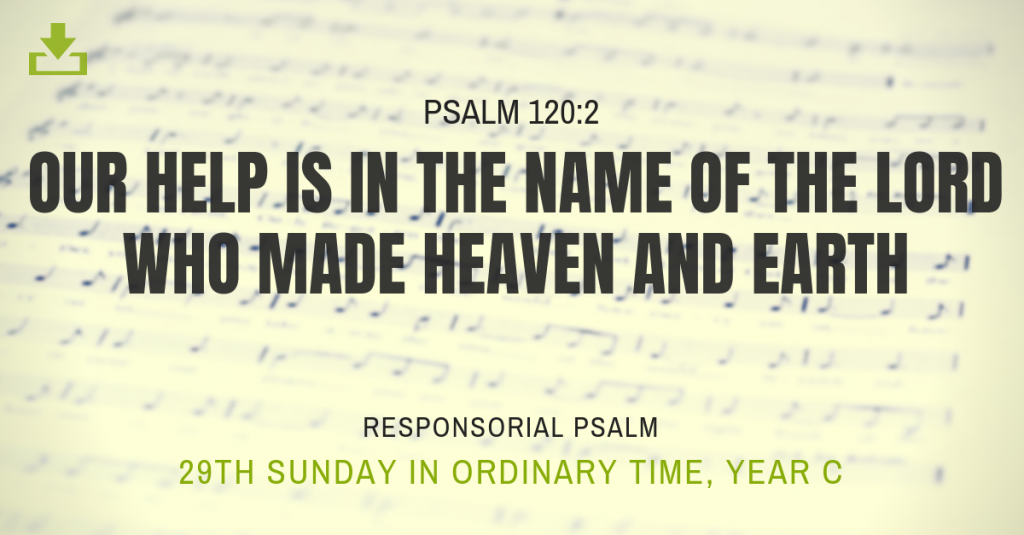
29th Sunday of ordinary time

We remember in prayer the people of Creeslough in Donegal who have lost loved ones and we also pray for all those who are showing the compassion of a caring community to them at this sad time. Long after the TV cameras and the worlds media have left Creeslough the words of young Hamish O’Flaherty at his fathers funeral will be remembered he said “We should be grateful for our families. Cherish them. Be grateful because they won’t be there forever so use up the time you have wisely,” “Be grateful for your own life, because that too will not last forever, For you will be able to rest after your hard work. “Be grateful that God has given us this life and the times in it, our families our friends and our home and this world that is awash with hope and love that God has given us.” There in these few words is a great lesson for all of us .

In our Gospel for this Sunday Jesus tells us about our need to pray and not to lose heart when we don’t get what we pray for straight away.Over a long period of time many people have prayed for various things for example family concerns for healing of body mind or spirit or whatever. We  often pray for things and don’t get them straight away but we get the things we pray for when we really need them. Remember No great work can ever be achieved without long and patient effort and this is the same for us in our prayer lives. The work of patient persistent prayer will yield results as God helps us to get through all our problems large and small. Remember the saying that nothing is impossible for those who have faith and if our faith is the size of mustard seed it can move mountains.  Like one of the ten lepers in last weeks gospel, we ask, and then when our prayers are answered, we return in order to  thank God. When we meet the judge and the widow in this Gospel passage we meet them at a crisis point. We have no case history for the widow but we do for the judge. He is a hard man who isn’t influenced by religious principle or by public opinion. Both justice and compassion are absent from his dealings with the widow.She has no influential friends to bring pressure on the judge and she has no money to bribe him: all she has is the justice of her cause and her own persistence. Jesus encourages us to be persistent in our prayer and never lose heart.

We have to invest in our faith  and prayer will help us to do this. Through this parable, Jesus teaches us the need for perseverance in prayer. This perseverance develops our trust and confidence in God. It helps us realize how weak we are when left to ourselves. It keeps us close to God, as we learn how dependent we are on His generous love. Let us  pray for what we need, but above all let us pray that we will lead a life filled with faith in God as we go forward in Faith..

28th Sunday in Ordinary Time

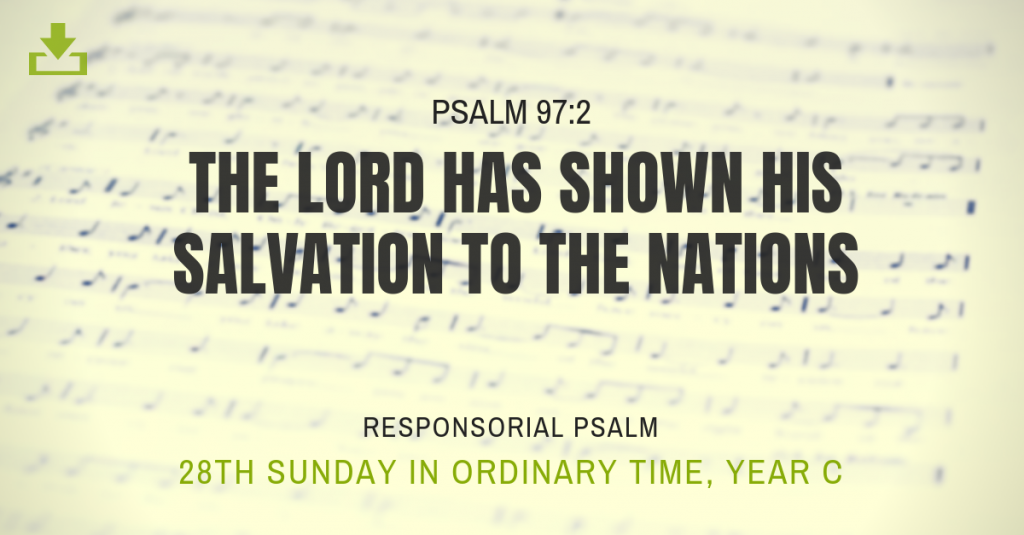
We pray this weekend for the people of Creeslough in Donegall as they come to terms with the events that took place at the Applegreen station  on Friday. We pray that those who died will rest in peace and their families and friends will find solace in the love of their extended families, friends  and the community around them. We also pray a prayer of thanksgiving for the work of the emergency services who worked tirelessly since the explosion to save life.   This Sunday our readings are all about gratitude and the attitude of gratitude  The leper we hear about in the first reading is Naaman he was desperate for a cure and made another expedition into Israel, not to capture slaves but to be cured of his leprosy. When Elisha heard he was coming, he sent a message to the Syrian commander to bathe seven times in the Jordan river. Naaman was furious, but eventually his friends persuaded him to follow the advice of the prophet. He did and was cured. Rather than return to Syria, he sought out the prophet to show his gratitude and offer him a reward. Elisha declined the reward but agreed that Naaman should take back some earth to build a shrine to the one true God. Naaman not only rejoiced in the gift of healing he had received but also recognised the giver. He praised God and thanked the prophet. So it is that the God of Israel heals the outsider and the pagan.

In our Gospel Reading  we hear the story of the ten Lepers and their lack of gratitude for their healing. It is no accident that the grateful leper is not a Jew but a Samaritan – an outsider, excluded by race, religion and his illness. He joins the others in asking a Jewish Rabbi for mercy. In this incident the man who had the decency to return and say thank you  was the one least expected to do so. This pleased our Lord and led Him to remark on the ingratitude of the others. This Gospel story is not only about the Lepers it’s also about our lack of gratitude for the many good  things that we have in our lives given to us by God. When we were youngsters growing up we were taught to say, “Thank you” by our parents when they gave us a sweet or whatever, when we didn’t we would be dutifully reminded, “What do you say?” and of course we said the magic words ‘Thank You.’ All the lepers showed great faith and confidence in Jesus’ power to heal but only one of them said thanks. They had not heard Him preach nor had they seen any of His miracles. They lived in isolation camps because of the leprosy, yet they believed the reports they had heard. The nine lepers were appreciative of what Jesus had done; we don’t know, why they didn’t bother to show their gratitude to Jesus. We can only look to ourselves to ask why we are often reluctant to say thank you for all the good things we have. There is seems to be great deal of awkwardness surrounding the attitude of gratitude and saying thank you. All of us have reasons to give thanks for so many things yet very few turn to the Lord with words and hearts expressing our thanks for all the wonders he has done for us in our lives.  Do we have the attitude of gratitude which thanks god and those around and us for their goodness to us.

When we gather in prayer we come to join God in the midst of the assembly with gratitude in our hearts. We give praise and thanks to God and we thank him for all those who have given us their help. May all of us have the attitude of gratitude for all the good things that we have in our lives which means that we are thankful for all that we are and all that we have especially in this time of worldwide crisis when so many have very little or nothing at all.

27th Sunday in Ordinary Time

This weekend we begin the month of October and there is a dual theme throughout the month. It is the month when we celebrate the missionary effort of the Church throughout the world as well as celebrating the Rosary. Also this Sunday we have the annual Day for Life and it has as its focus caring for the Older Person. We  remember all those members of our families and our friends who are Older as well as those who care for them. In the First Reading  for this Sunday the prophet Habakkuk asks God how long he is going to ignore the cries of his battered people. He accuses God of simply looking on while tyranny and violence flourish.  His cry is not a scream of despair but a cry that is rooted in faith in God and what he had done and is doing for his people it is a cry of faith. The Prophet  believes God will do something and his perseverance in prayer and faith is proved right.. This Reading with its cry to God is our cry to God as we see all the things that are happening in our world today. We pray like  the prophet that god will listen to our prayers knowing that he will hear and answer in due course.

 The Gospel is made up of two apparently unrelated sayings of Jesus, one dealing with the gift  of faith and the other a very stark and challenging reminder to the apostles of the call to service as people sent by God to share in Jesus’ mission of proclaiming the Good News. We might be tempted to skip over such ‘hard sayings’ but we are asked to listen to them because the Gospel always liberates us from false ideas about ourselves and God and that can only be a good thing. Perhaps we think that having faith means believing certain things. Thinking our faith is small can keep us from doing so many things that we are called to do by our faith in Jesus the Son of God.  The disciples must have thought their faith was so small they couldn’t act on it. But Jesus wants his disciples as well as ourselves  to trust and act on our god given faith. The alternative to acting out of faith would be saying things like: I can’t take on that responsibility, I don’t have enough faith. The disciples may have felt similar inhibitions after hearing what Jesus just taught about not leading others into sin and the necessity to forgive someone not  seven times a day but 77.  

Jesus teaches, us  to “Act on the little faith you have. You’ll be surprised what you can do.” His example of the deep-rooted mulberry tree underlines his lesson to us about the power of the smallest seed of faith to work marvels. We may find ourselves doing something that surprises us and those who know us. Perhaps it’s a great act of charity; working away on another’s behalf; or, an act of forgiveness. But despite the things we might do, we must acknowledge the source of all our good deeds the mustard seed that is faith planted in us by God. Realizing this we can say with those servants in the parable: “We are unprofitable servants, we have done what we were obliged to do.” We could also add: “We have only done what the mustard seed of  our faith has enabled us to do. “God gives us the grace to do great things in his name.  As we pray for our faith to be strengthened we thank god for all those people who helped us to have faith in the first place, our parents, families, teachers, friends and our clergy throughout our lives all of them played their part in giving us the faith.  Although Christ was speaking to the Apostles, His words apply to all of us, in our own lives here and now. Following the example of the Apostles, Going forward we pray for greater trust and faith in God and his love for all of us so we are able to bring the seed of faith to others in their time and place .

26th Sunday in Ordinary Time

It is hard to believe that we are nearly at the end of September as the schools and everything else settle into the rhythm of the new academic year. This Sunday the gospel story tells us about two people, a rich man and a poor man it is a good reflection on the situation in the world at the present time where those who are rich are getting richer at the expense of the poor who are getting poorer. The rich man is wealthy in clothes and food; he is also rich in privilege and  freedom he is free from the worry that besets those who are poor even though he was poorer than the poorest man because of the way he lived his life. You can imagine Lazarus praying: “Give us this day our daily bread.” But he didn’t get  a crumb. You cannot imagine the rich man praying, “Give us this day our daily bread.” Because the privilege he has blinds him to Lazarus the man who lies at his own gate.

As we see both men eventually die.  Lazarus went straight to heaven to the joy  of endless happiness.  On the other hand the rich man fares very differently. He is now in Hades and he is told that he can expect no relief. He abused his time on earth he acted as though there would be no judgment day of course there was. He knows that he has no one to blame but himself which adds to his torment. It is also a cause of additional grief to him that his bad example will lead his fellowmen to a similar fate. All the parables of our Lord are based on everyday happenings and they can be applied to us in our daily living even now.  This rich man is in eternal torment because he let his wealth become his master and forgot God and his neighbor. There are people like the rich man in our world who completely ignore their real future. While they know that their stay on this earth is of very short duration and that they will have to leave it they still act and live as if they had a permanent home in this world.

There is a lovely scripture verse that tells us that when the tent of our earthly dwelling is folded up we will come to our true home in heaven and this is so true. For all of us today there is a simple question are we going to be like the rich man and ignore those around us who are the Lazarus’s of our own time and place. The homeless, the refugees or those who don’t have enough daily bread. Or will we follow Jesus who calls us in the story of Lazarus and the Rich Man to share our riches with those who need our help and the help of a caring sharing community of believers and not be like the rich man who ended up with nothing of lasting value.

25th Sunday in Ordinary Time

As we come to the funeral of Queen Elisabeth on Monday we also remember all those who have passed to their eternal rest in the days since her death.  In the parish where I live there have been 4 funerals this week and we pray that all of those who died recently wherever they are will rest in peace. Our gospel story for this Sunday tells us about the rich Man and his dishonest steward. The steward who looked after his master’s estates is accused of wasting his employer’s goods; he is dismissed, but before he goes he must submit the final account of his stewardship.  In this time of crisis the steward takes firm and immediate action to ensure his own future. He is praised not for his dishonesty, but for his resourcefulness in coping with an emergency with such speed.  If a dishonest man can use his employer’s money to ensure there will be people to welcome him when he’s out of a job.

How much more should honest people use their money in such a way that they will be welcomed into the kingdom of God when they arrive there. This parable invites us to examine our use of material possessions. Material things can divert our attention and in some cases they can take the place of what truly matters in life. These particular words of Jesus are a warning to us his followers that we shouldn’t be the slaves of earthly things and this is applicable to all of us. Most of us may feel that this warning is for millionaires and business magnates. Our Lord didn’t say who he was warning and his words are meant to be a challenge for all of us where we are. What Jesus warned against was not the just acquisition of things but their unjust acquisition, and the dishonest use of them when they were justly acquired. Christian life is a stewardship in which the wealth that one handles is wealth God wishes the whole world to share, not one’s personal possession.

The followers of Jesus must choose wisely and act decisively. When it comes to wealth, they must choose between the interests of God and their own self-interest. There are many people who follow the thrust of the parable and make good use of their time, their talents and their wealth. They use their possessions to serve Jesus through the people around them treating the  as sons and daughters of God.  Stirred by this gospel story  they decided to act quickly and decisively to help others. Jesus asks all of us to remember no matter what situations we might find ourselves in that we shouldn’t become slaves to the processions or wealth that we might have and that we shouldn’t be afraid to use whatever our we have for the good of everyone especially those in need and there are many people who are in need around us these days when we have the cost of living and the fuel price crisis. May we take this parable to heart as we help others and journey with them in their time of need.

23rd Sunday of Ordinary Time

This week the local schools went back and the parents breathed a big sigh of relief now  that the summer holidays are over for another year. Its hard to believe that we are beginning another school year but that’s the nature of life from one end of the year to the next we go round in the circle of life. In this Sundays first reading the author of the book of Wisdom reflects that it is hardly surprising that we have trouble figuring out the intentions of God when we have so much trouble figuring each other. He warns: “It is hard enough for us to work out what is on earth, laborious to know what lies within our reach.” There are times when those within our reach puzzle us. Even though God has revealed himself through his Holy Spirit, nobody can claim to fully understand the mystery that is God. In the Gospel there is plenty of figuring out to be done too. Jesus gives people notice that they have to work out for themselves if they are equal to the demands of discipleship. That means that first they have to figure out the cost of discipleship, then consider whether they have the resources to meet that cost.  

To drive the point home, Jesus uses twin parables Anyone intending to build a tower would “first sit down and work out the cost”. If he started without finishing, the sum of his achievement would be a monument to his own stupidity. Likewise, the king who discovers that his forces are outnumbered would “first sit down and consider”whether the opposing arithmetic is too heavy. If he wants to be a smart survivor he will practise his speeches on the wonders of peace! In both instances the advice is clear: take the time; sit down; look at the demands; figure out whether you can honestly meet them.  Much of our lives involve figuring out what is within our reach and what we ourselves can realistically achieve. So the moral for all of us in these days of uncertainty is that when we come to make life changing decisions we need to stop and do what this gospel tells us and that is to take the time; To look at the demands the decision to be made will make on us as individuals and communities; and figure out what is within our reach and what we can realistically achieve that will help us to go forward in faith and in hope rather than backwards in fear and despair.  As we look at the way we are with all that is going on in our world let us redouble our efforts to support one another so that we are able to see what needs to be done and get on and do it.

=

22nd Sunday of ordinary time

This Sunday we celebrate the 22ndrSunday of Ordinary Time. This is a time for new beginnings with the youngsters going back to school or college next week and their  parents breathing a big sigh of relief that the long holidays are now at an end. Many of us have the feeling that time is passing by so very quickly and it seems like a blink of an eye since the end of June when the schools and colleges closed.The  readings  for this Sunday are all about humility, a virtue that doesn’t seem to be valued that much in our world. These days, it’s all about how many “friends” we have on Facebook, how many followers we have on Twitter. But for all of today’s technology we can still pick up on someone whose humility is done for show, whose humbleness is not the real thing and there are people like that around and about. Humility is about: being real, being grounded. Accepting and sharing our gifts as well as acknowledging our  faults.

We thank God for all the things that he has given to us It is his grace that produces the right attitude within us to live in a humble way. This  involves the giving of one’s time, talent, and money for the common good without thought of personal gain.  In this Sundays  Gospel Jesus is at a meal in the house of one of the leading Pharisees. He has noticed an undignified scramble for the places of honour and is moved to comment on what he sees. When a guest arrives early at a feast to appoint himself a place of honour, his position is insecure because he runs the risk that a later guest will have more claim to his place. And when the host insists that he vacates the place, he will have to pass all the other places already occupied and take the lowest place.  Jesus advises that his listeners take the lowest place at table – then the only risk they run is that of being exalted! Since it is the host’s party, he should decide who sits where. When Jesus addresses his host he advocates a more radical style: learning humility not so much by playing musical chairs at banquets, but by associating with “the poor, the crippled, the lame, the blind”.

The guest list for Jesus’ feast is a parable of the kingdom: God is the host whose delight is to feast with those who are always overlooked in a society that scrambles for honour and the best places at the table.  St. Augustine once said, “Humility is the foundation of all the other virtues; hence, in the soul in which this virtue does not exist there cannot be any other virtue except in mere appearance.” Real humility takes awareness and acceptance of our real selves with all the aspects of our lives both good and bad that is why humility is so hard for us to achieve. May we be the Humble people that we are called to be accepting our real selves so that that we may use our  God given gifts wisely in the service of others.

21st Sunday in Ordinary Time

As we gather this weekend we remember all those who have received or will be getting  state exam results over these next few weeks here where I am. We offer a prayer for all those who have done well as well as those who have not done as well as they continue their education. In this Sundays  Gospel Luke tells us about the door policy of the kingdom of God and how there is no such thing as automatic membership. While Jesus is making his way to Jerusalem, someone asks him about the number of those who will be saved. Rather than speculate about the arithmetic of salvation, Jesus gives practical advice to all of them: “Try your best to enter by the narrow door, because, I tell you, many will try to enter and will not succeed.” The image changes from tight space to time up.  

Those who wait until the door is shut try knocking, but the householder regards them as strangers. The latecomers tell the householder about  the common ties that bind them together. They are distressed because they are being excluded, the people in the story try to prove they are part of the group when they say  “We ate and drank with you, and you taught in our streets.” Jesus like the house owner is not impressed with this type of superficial acquaintance: people who eat and drink in the same restaurants and bars, read the same papers, watch the same TV programmes, don’t always  share the same commitment to God and their faith. In the gospel stories Jesus has a habit of telling religious people not to be smug; in fact, the so-called “devout and religious” were the ones who rejected Jesus the most.  He was most critical of the judgmental religious leaders who were the very ones to condemn him in Jerusalem. Jesus is our example of the faithful person who goes through a period of trials trusting God no matter what happens. Through Jesus we come to know the faithfulness and love of God.

For Isaiah, a faithful band of witnesses will announce the news of God’s restoring love and they invite all of us  to see the manifestation of God’s power and faithfulness. For us, Jesus is the “sign” of God’s fidelity and love for us . The God who raised him from the dead offers us that same new life through him.  Saint Pope Paul VI said in his famous encyclical, “Evangelii Nuntiandi” that people listen more to witnesses than to teachers. Pope Paul was also right  when he said that the most convincing messengers of our faith are those who speak from their personal experience of God. We are called to be authentic witnesses to the Gospel message Passed down to us through the Scriptures as well as  many individual people. Our lives must be changed by our faith in Jesus. We are given the gift of faith; but a change of heart is expected as our response to that gift so let us not be afraid to change the things in our lives that need to be changed  remembering to give thanks for  the great gift of faith that is ours so we will be able to enter through the Narrow Door knowing that we have Jesus as a friend.

17th Sunday of Orinary Time

As we hear the apostles asking Jesus to teach the to pray we pray for all the intentions we bring to the Lord this weekend. There are so many things  that everyone is praying for but we continue our prayers for Peace in the world especially in Ukraine we also pray for peace and unity in the Church at this time as we remember that God is in charge. In The Gospel this Sunday we hear the disciples asking Jesus to teach them to pray. In response to this request Jesus teaches them how to pray in the words of the our Father. He also encourages them to be unwearied in their prayer because the Father who loves them will pay attention to their pleas.

Prayer is good, because it shows trust in God. As we pray, we are changed as the Our Father says thy kingdom come thy will be done and that is our hope and our prayer that the kingdom of God will come and gods will shall be done. Many people have told me that they have prayed for this or that intention but didn’t get that particular thing that they prayed for. My experience is that we often get the thing that we pray for not when we think we need it but when god knows  that we really need it.  There are so many different forms of prayer such as the Rosary and the Stations of the Cross etc. each of us will have a particular favorite. The greatest example of prayer that has been passed down to us through the generations is the Mass.  Each time we gather as a community of believers to take part in the Mass we reaffirm our belief in God made incarnate in Jesus his Son. We also bring all our intentions with us and we leave them for god to answer in his own time. Persistence in prayer is a worthwhile exercise because the God we believe in is not some sulky, withdrawn figure who is unmoved by what he hears and sees remember that our God is with us.

The message of Jesus in the our Father is that our God is one who cares for us as well as concerned about us and those who are close to us. So can we depend on God’s providence to feed us, to shelter us, to clothe us, to save us from violence? If we pray hard enough will God see to it that we have a new car, a better house, maybe win a lottery? God Doesn’t work for us in that way. When things don’t go the way they should, we benefit from our prayers. Think of Jesus in the Garden of Olives. He prayed what was coming his way would not happen. He also added he would abide by God’s will when he said Abba, Father let it be done as you not I would have it. If we stay in sync with the will of God and realize that he is in charge of everything  we will grow day by day, despite the good or bad things that come our way we will know that God is our refuge and our strength in all things.  These days when so many parts of the world are hurting for many reasons let us remember the power of prayer to help us to do the right thing in the situations we might find ourselves for God will direct us along the right road as we pray to him with a sincere heart.

16th Sunday in ordinary time

Wherever we are these day the summer holidays are in full swing with many people going to foreign destinations and many more staying at home.  All of us are sweltering in the hot weather that is in Europe at this time. We pray for all those in France, Portugal and Spain who are affected by the wildfires and we also continue of prayers for Ukraine and its people.  In our Gospel reading for this Sunday we hear all about Martha and Mary. On his way to Jerusalem, Jesus led his entourage into the village to call at  the home of Martha. As the good host, she served them but, her sister, Mary, sat listening to Jesus. Martha tried to shame Mary into helping with the work but Jesus would have none of it.

Instead, he praised Mary’s choice when he said leave her alone for she has chosen the better part. Martha loved Jesus as much as Mary did, and it is clear that he treasured them both. Her mistake was in not trying to find out how Jesus wanted to be entertained, while visiting her house. Her sister correctly senses that when Jesus comes on a visit the last thing he wants is to have people fussing over how to feed him.  So, while Martha makes the greater housekeeping effort, Mary understands better what is expected of her by Jesus. Her contemplative intuition grasps the real reason for Jesus’ visit.  He is there not to receive but to give, not to be served but to serve. He has something he needs to say and the one thing necessary is to listen to him when he speaks.  There is a whole theology of contemplation in this gospel reading, on how to receive the Lord’s visit. It starts off from the basis that, no matter who our visitors may be, there is always something to be learned from them. When Jesus comes to us he wants to talk to us in quietness of  our hearts and he wants to share with us the Word that brings us salvation. He comes not because he needs us but because we need him.

The one thing that is necessary for all of us, is to listen to the Word of God in the quiet moments of life and there like Mary in the Gospel  we will  find the better part. Martha’s roles of welcome and service are important works of the church as we welcome the Lord in the stranger and person in need especially these days when we have refugees coming to live in our midst from Ukraine and other places in the world.  There were many gifts among women in the early church, some like Mary  were quiet disciples attentive to the words of Christ; others like Martha were active in getting the work done. In their own ways, both Martha and Mary welcome Christ, each has apparently heard his teachings and shown love to God and service to neighbor. If we are to make people welcome in our community it will be by being attentive to who that person is and what they seek rather than giving them the impression that their presence is disrupting our well ordered lives.  let us not be afraid of being like Mary in the Gospel attentive to what Jesus is telling each of us today and then may we  take action to put it into our lives where we are.

Post Navigation