Fullerton T

RELIGION LITURGY AND LIFE

Archive for the category “Faith”

First Sunday of Lent

Image result for first sunday of lent year b responsorial psalm

This Sunday is the first Sunday in Lent and we would normally begin with the ashes on Ash Wednesday but this year things are very different. With covid19 around and an ever present danger we began Lent with  the Ash Wednesday services online but as usual we were asked to  repent and be faithful to the Gospel. This year lent is different  for all of us little did any we realize that we would be in the various restrictions  for so long. Nor did we realize that so many would be saying goodbye to their loved ones who died from the Corona Virus over the last 11 months. This Year Lent will be different as we go into the wilderness with Jesus and that is where we seem to have been for the last 11 months or so with the restrictions in place.

Many of us feel that we have been in the wilderness we also remember that Jesus has been with us in that wilderness and is journeying with us in all we have gone through as we look forward to more hope and joy filled times. Lent throws out many question to challenge us and the questions I often think about  around this time of year is Why do we have Lent every year? Why penance? Why fasting? Why almsgiving? What does that have to do with us? If we take our faith seriously then Lent, penance, fasting and almsgiving have a great deal to do with us. This reading from the Gospel of Mark also tells us that the time has come for us to repent and believe in the Good News. It is an ancient custom in the Church that the story of the temptation of Jesus in the desert should be read on the first Sunday of Lent. Jesus spent forty days in the wilderness. At the beginning of the forty days of Lent the Church always puts before us his time of solitude and it also puts before us a time for renewal.

We ask ourselves what in our homes, at work, local, and parish communities needs to be changed for so many are out there in the wilderness of a godless faithless life. During the season of Lent we take stock of where we are in our lives and where we really need to be as people of faith who believe in God. These next few weeks will be a time of refreshment, a time of repentance and also a time of renewal that prepare us for Holy Week and Easter. So now as we begin Lent we are invited to commit our lives fully to God and God’s ways remembering that god’s ways are not our ways.  Jesus preaches “Metanoia which requires change of heart, mind and Spirit. Let us ask ourselves whether we are open to be really changed as gods people s so we will be able to enter more fully into the great ceremonies of our redemption during Holy Week and Easter.

6th Sunday in Ordinary Time

Image result for 6th sunday in ordinary time year b

This Sunday we celebrate the 6th Sunday of ordinary time as we finish the first part of Ordinary Time as the Holy Season of Lent begins again with the Ashes of ash Wednesday next week. We have now come full circle and here we are facing into Lent with all its opportunities. However Ash Wednesday and Lent will be different this year because of the COVID Pandemic.

Our Gospel story tells us  about the Leper going to Jesus who healed him but it is about much more than just the healing, it is about the faith that the leper had in Jesus. It is also about the faith we have in Jesus.  After he heals him Jesus tells the man to be silent. He wants the miracle to be personal and quiet for a purpose. The man is to go first to the priests and go through the ritual cleansing prescribed in Leviticus (14:1ff.) Maybe the priests would ask the man how he was cured and then they would hear about Jesus. Who better to give witness to Jesus than someone whose life has been changed by him? Who better to witness to the strength, joy, encouragement, hope and direction that Jesus gives us than one who has been transformed by him?  

It is interesting to note that during his healing of the leper Jesus reaches out his hand and touches the man. This is a clear breach of one of the rules set down by Moses; touch was forbidden for fear of passing on the infection. But, of course, touch is often an important part of the healing process and Jesus does not hesitate to touch the man he is healing. In hospitals the doctors carry out the physical treatment but it is often the tender loving care given by the nurses that actually brings about the real healing. This TLC, as we call it, cannot be truly given without touching. When we consider the disease of leprosy we can see too that it has many similarities with that other great disease that afflict mankind, namely sin. Leprosy separates human beings from each other, but sin separates us both from God and from each other. Sin brings division and damages the cohesion of the community.  The lepers life was changed by Jesus’ compassion, touch and words but Jesus told him not to tell anyone. We have to ask ourselves are our own lives changed when we hear the words of Jesus?  Do we allow ourselves to be transformed by the words of Jesus in order to show his compassion to others? The man who Jesus cured became an evangelist.

He “proclaimed and spread the word.” In the context of Mark, the cured man brought others to faith even though he was told not to tell anyone. So many, in fact, Jesus could not travel in the open for fear of a mob. Yet, they came to him from every point in Galilee. Jesus continued his ministry despite restrictions placed on him. But he could not visit new territories and preach. Word of his power preceded Jesus and brought the needy to him. May we share the healed man’s enthusiasm to make known the goodness of God. As we begin the season of Lent  next Wednesday Let us pray for a spirit of compassion and understanding as we journey through Lent to the great celebration of Holy Week and Easter especially during the covid19 pandemic.

Feast of our Lady of Lourdes

Image result for our lady of lourdes

Recently I was looking at the readings for the feast day our Lady of Lourdes and the gospel Reading is the Wedding Feast at Cana, So let us reflect on the wedding at Cana for a moment. The bride and groom whose wedding was being celebrated were in the background because at the heart of this story we see Mary and Jesus. Mary, who asks for help when she tells Jesus “they have no wine”,  And Jesus who replied why ask me my time has not come. Of course Jesus did the miracle of changing the water into wine  because Jesus like so many other children he could not refuse his mother’s request. Mary the faith filled disciple, had trust in God and in divine providence and knew what Jesus would do. The care, concern and affection of God are manifest in Jesus and it is the same care and affection that is reflected through Mary his mother. In her response at the wedding at Cana Mary shows herself a model disciple who trusts in God. She shows that trust with the words that are meant for all of us even now as we read them again “Do whatever he tells you.”

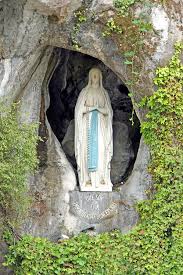
 As all of us who travel to Lourdes know In the Rosary Basilica there is an icon over the main altar with the words To Jesus through Mary and that is another aspect of this story, Mary always points away from herself to Jesus.  Mary is giving us the direction to do what Jesus asks us to do. She is not saying that we should do what she wants us to do instead she is showing us the way to Jesus the son of God. She is mother to us all and  also the first disciple of her son. She knows the way to live because she learned it by listening to her son and pondering in her heart what he did and said. We should listen closely to what she says as Mary is the one who “keeps all these things in her heart,.” Do whatever he tells you is Mary’s message for us today because God never gives up on us and calls us to a better way of life a life of love and  service for others where ever we are. This past year has been a hard one for all of us wherever we are in the world with the COVID19. As a result of the pandemic many of us have not travelled to Lourdes in 2020 and again  in 2021 many of us will not be able to get our annual  pilgrim visits due to the ongoing COVID-19 restrictions.

So with Mary we stop and ponder in our hearts  all the things Lourdes means to all of us individuals who go there as Pilgrims, as Hospitalite members or as pilgrimage helpers of one sort or another or priests or pilgrimage leaders. We also remember  all the Sanctuary Staff  the hoteliers and their hotel staffs with the travel agents who enable us to do all we do in Lourdes. We say a prayer for all of the Pilgrims known to us who have died remembering  all the Lourdes pilgrims and helpers  who have lost their lives because of COVID19. In Lourdes we see a reflection of God’s care in the commitment of all the people who tend to the suffering of others. They are God’s compassion in flesh, God’s care in motion. We pray on this feast day that we may continue to be the compassionate face of god wherever we are called to be in the world as members of the international Lourdes pilgrim family.

5TH SUNDAY OF ORDINARY TIME

This weekend we hear from Job who believes there is nothing left for him but a life drudgery and grief. Like Job in the first reading, we all come upon times of chaos, times of stress. There are so many aspects to life for which there are no solutions especially during the COVID19 pandemic. Like Job we all experience what he called months of misery and it has been like that for so many people and countries for the past year or more as we endure  COVID19 .Perhaps, we do not suffer to the extent that Job seems to have suffered, but life these days brings many challenges, including challenges to our faith that God will get us through. The Lord is aware of our difficulties. He sees our turmoil. He wants to heal us, just as he healed all those people in this weekend’s Gospel.  In the Gospel Reading for this Sunday, Jesus comes to Peter’s house, he finds that Peter’s mother-in-law is sick, and he heals her. The whole town hears of her healing and rushes all their sick to Peter’s house. The house is surrounded, and so is Jesus. Now, all of a sudden, Jesus seems to have become a one-man hospital the man who heals all their ills.

He is so besieged that he can’t even pray in the house. He has to head out into the countryside secretly in the dark of morning. When his absence is detected, his disciples go looking for him. when they find him, they tell him “Everybody is looking for you!”  We Christians of today have many advantages over the people of Capernaum. They saw Christ with their eyes as a man of power amongst them; we see him with the eyes of faith as he really was and is the Son of God who came on earth in order to make us the family of God. We know who he really was and we know the full meaning of his mission. We have seen that mission completed amongst us by his death on the cross and his resurrection. By his death he conquered death by his resurrection he opened the gates of heaven for us and shows us  how to get there. The road we have to take is not easy and many people have chosen other roads. But I believe that people of all ages are out there looking for Jesus seeking the things of lasting value they are out there looking for Jesus and they are finding and following him. The questions of the suffering Job are not answered in the Gospel. Jesus may have his own questions about the suffering that surrounds him, as he will have his own questions when his own suffering becomes his passion on good Friday.

But whatever his questions are, Jesus stays committed to caring for the sick. That is his witness. Through the witness of Jesus we hold fast to the truth that God loves us in our weakness and fragility, in our sickness and suffering. We can see a reflection of God’s care in the commitment of doctors, nurses, healers, hospital chaplains and all the people who tend to the suffering of others especially in these times of the COVID19 pandemic. They are God’s compassion in flesh, God’s care in action on the ground. No doubt all of them have reason to wonder, to protest, to be angry when they see the innocent suffer. But they carry on. That is their enduring witness. Last Tuesday  we celebrated the feast of the presentation of Jesus in the temple and we blessed the candles. The candles represent the light of Christ will we be the light of Christ in all the places and situations we will find ourselves in  as we head towards the season of Lent that starts on the 17th February? Will we be the people who point others along the right roads that lead to Jesus  in what we do and what we say during the season of Lent and beyond?

4th Sunday in Ordinary Time

This week we have been taking part in Catholic Schools week, over these days we have been celebrating what it means to be a catholic  school. This year with the schools closed there have been a number of celebrations online as most of the learning at home has been online and we pray for our teachers, parents, grandparents and the young people  that make up our school communities. For all our young people and their parents this past year has been a tough one but we should not forget that things will get better as we go forward and we pray for all those involved in education wherever they are.

in this Sundays  Gospel we hear about the authority of the Lord to cast out demons and devils. The reading is taken from the Gospel of Mark. As Jesus begins to teach in Capernaum. The people are spellbound because he spoke with authority, not like the scribes. A man comes to Jesus who is in the hand of an evil power and Jesus makes the devil come out of the man. The bystanders are amazed because Jesus has such authority.  What do we mean when we speak about the authority of the Lord? What do we mean when we talk about authority in general? What ways do we exercise authority in relation to those around us? What ways do we exercise the authority of the Lord as Christians?  The word authority comes from the Latin word auctoritas. The basic meaning of this Latin word is creator, the word author also comes from this word. In general, authority is intimately connected with its source that source is the person who gives another the authority to do something so the authority that Jesus has comes from his Father. Jesus, speaks for God through his divine nature. His entire public life was about compassion and mercy. He despised arrogance, fought hypocrisy, and he believed the heart was stronger than the law.  He brought God’s mercy compassion and love to the earth and in the process brought us forgiveness from our self-interest, our scapegoating, our manipulation of frayed emotions, and our insecurity in the face of diversity of language, race, and nationality. Are we going to ignore the calling of Jesus to be prophets in our own place or will we step up and be the prophets of god for our own time here and now where we are? Recent events in America show us that we need prophets for our time people who are not afraid to stand up and be counted when it comes to pointing out the errors that people make as they need to hear us  speak truth to power. We are truly prophets when we stand for the truth, for the marginalized, for the alien, for the victim of war, for the victims of capitalism that serves only the capitalist when it should serve everyone. We are stronger when we show that there is another way and that way is the way of forgiveness it is the way of compassion and it is the way of love that comes to us from god the authority for all we do and say as people of faith hope and love we who are the people of god.  

When we find ourselves depressed by the evil we see in others, perhaps we best hear the authoritative teaching of Jesus when we hear it as a call to conversion of heart mind and spirit bringing God’s mercy compassion and love to the people around us as well as ourselves. If that call seems to touch us when we are at our weakest, let us be encouraged that such weakness is an opening for God’s healing and liberating power so let us be the prophets of gods healing in our broken world a world that needs healing more than ever these days of the uncertainty that comes with COVID19 and many other things and people as well.

3RD SUNDAY IN ORDINARY TIME

As we continue our journey with the COVID19 virus we continue our prayers for everyone wherever they are who is affected by the pandemic. This Sunday is the 3rd Sunday of ordinary time  and we celebrate the Sunday of the Word of God in which we emphasise the centrality of Gods word in our lives, the Second Vatican Council gave great impulse to the rediscovery of the word of God, thanks to its Dogmatic Constitution Dei Verbum. The Constitution clearly expounds the nature of sacred Scripture, its transmission from generation to generation, its divine inspiration embracing the Old and New Testaments, and the importance of Scripture in the life of the Church . Pope Benedict convoked an Assembly of the Synod of Bishops in 2008 on “The Word of God in the Life and Mission of the Church”, and then issued the Apostolic Exhortation Verbum Domini. That document emphasizes the particular character of the Word of God, especially in the context of the liturgy, in which its sacramental character comes to the fore.

May we listen more attentively to the voice of the lord in the Scripture readings as we travel the roads of life during these difficult times and they will provide a lamp for our feet.

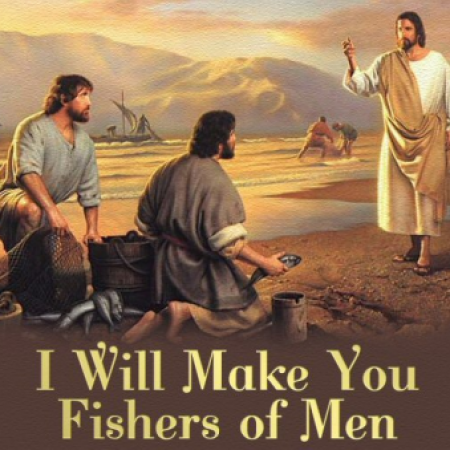
In the Gospel  for this Sunday we hear the call to get up and get going. That is to get up and leave family friends and go out to the world to proclaim the good news of Jesus. Of course in today’s world the church and faith in general mean a lot less in people’s eyes and many tell you that the faith they had in God has got up and gone and for a great number that was a long time ago!! So many have placed their trust in the worldly things whilst leaving the lasting things that is things of god behind.  The  second reading for this Sunday tells us that though we live in the world and are of the world we need to remember that all of us  who have to deal with and live in the world should not become engrossed in it as the worldly life has often taken  people down the wrong road and that road  leads away from a god and his ways.  In the Gospel we learn the names of the first four disciples, the brothers Simon and Andrew, and the brothers James and John.

Christ saw something in Simon James Andrew and John that led Him to entrust them with carrying out His mission at the beginning building His Church when he called them to be fishers of Men. Each person had their unique role to play in that process at the beginning, just as each of us have a unique role to play  now.   The fishermen abandon both their work, and their family ties. Something momentous is happening in their lives and they see the Call of Jesus as just that, a momentous event that they cannot ignore. It was amid the preoccupations of each day that the Lord called his disciples. It is also true for each of us that amid the preoccupations of our time many people are called by the Lord to be fishers of men. So are we prepared to take up the call of Jesus to be fishers of men where we are? Being fishers of men does not necessarily mean that we leave our families and our lives behind though many take up this part of the challenge as priests or religious serving gods people in that particular way.

 The challenge for us as followers of Jesus in the modern world is to be an example of faith in all we do and say and as a result of this we will be fishers of men because the people out there will see how we live our lives and they will want to follow us to see where we have come from and where we are going and when we finally finish our journey all of us will find lasting things of great value that are the things based in faith in God and his Church.

Second Sunday of Ordinary Time

2nd Sunday in Ordinary Time, Year B | CJM MUSIC

After the anticipation of Advent and all the fuss of Christmas and the new year here we are back at ordinary time. With the COVID 19  pandemic continuing and the recent events in Washington it is good to note that no matter what happens faith in God continues and we as people of faith pray for those affected by the Pandemic as well as praying for peace in the USA and the world.

In this Sunday’s Gospel the apostles asked Jesus “Where do you live”? his reply was “Come and see”.  Invitations as we know come in all shapes and sizes. Some come in the mail or in e-mail. Others come on the street corner by word of mouth. Others come in unexpected ways. Some are personal, almost intimate. Others are general and impersonal. No matter what the invitation means, an invitation tells us that you are invited please come. We see Jesus inviting the apostles to come and see by association through faith  all of us  are invited and welcome to  come and see what’s going on in our Faith Communities.

When we accept the invitation of Jesus we have to ask ourselves why do we come and what do we seek? The early disciples of Jesus must have asked themselves those same questions. Living in a culture that distrusted novelty, they would go and see something new and that was the public appearance of the Messiah. We in our turn live in a culture that distrusts faith and people of faith as well as many other things and I often wonder what Jesus would think if he was here today. The people in this gospel story like you and me are out there looking and searching for God. Like the disciples we are seekers who want to stay or at least try and stay with Jesus. John’s disciples were seekers and it is late in the day for them as the gospel tells us. All of us remember special moments by recalling the date and the time they happen. John tells us, “It was about four in the afternoon,” when the disciples received their invitation from Jesus. They need rest from their search and Jesus is offering it to them. The “four in the afternoon” possibly refers to the beginning of the Sabbath the next day.

The invitation to come and see is an invitation to deepen our friendship with God and find rest in his presence. It is an invitation to enrich our belief in the faith that we profess each time we celebrate the sacramental life of the Church wherever we are in the world.  We, are being invited to follow Jesus with all that is going on in our lives and our world at this time, Invited to spend time with him and to discover who he is here and now, not dwelling on the  past or looking to the future the past is gone and the future may never be ours to have. The big question for us this weekend is will we accept the invitation that Jesus gives us in our time to come and see the one who has the message of eternal life or will we just ignore the invitation?

The Baptism of the Lord

This Sunday we celebrate the baptism of the Lord, when Jesus was baptized in the river Jordan by John. None of us remember when we were baptized when we were infants but that said we may know someone who was who was baptized at the Easter Vigil or at another time.  It may seem strange, but this is a Christmas Feast if we have followed the Feasts of Christmas as well as the Holy Family and Epiphany, we will see the feast of the baptism of the Lord in terms of the growing manifestation or appearance of the Son of God. Now in the River Jordan, Jesus, Son of Mary, is revealed to all and everyone as the fullness of all God’s promises: as the fathers voice from heaven tells us “This is my Son, the Beloved“. Just as Jesus entered the Jordan to be baptized, so he enters our lives today especially with the COVID19 restrictions that are in force in many places.

Jesus is the one promised in the Isaiah, the one who will “set prisoners free.”  He comes to those hidden places that keep us locked up. He goes to the imprisoned areas of our lives and our restricted ways of behaving which we sometimes excuse by saying, “That’s just the way I am.” Jesus comes down into the dark places where we are. He helps us face the shadows and hidden places and leads us out – just as God promised God would do for us. Jesus’ baptism reminds us today that, through our own baptism, we are united to him. Most of us rarely, if ever, think about our baptism. Through our baptism we died with Christ and thus have been reborn to a new life ( Rom 6). We, the baptized, are incorporated into the body of Christ. We are called to imitate Jesus, who St. Paul says, “went about doing good.” We don’t need a detailed rule book in order to know how we should act in each situation of our lives, for in baptism, we have the companionship of the Spirit of Jesus, the Holy Spirit  who is our wisdom, and help to do good.

Our role as baptized Christians has some of the characteristics of St. John the Baptist in that we are called to prepare the way for Christ, not only in our own lives, but in the lives of those around us . We do this by the example of how we live our lives according to the gospel values In a secular world that celebrates life achievements the church rejoices at the baptism of a person young or old into the church as well as beginning  their own unique relationship with Jesu as they are sealed and marked as Gods  own son or daughter.  Take a moment and reflect on where your baptismal journey has taken you. Then look around at those around you our sisters and brothers, and give thanks that all of us together can celebrate our life in Christ our common life of faith as we go forward into 2021 and beyond.

Second Sunday After Christmas

Second Sunday after Christmas 1/5/20 - YouTube

This weekend we celebrate the second Sunday after Christmas and it gives us the opportunity at the beginning of the new year to reflect and look back at 2020. For all of us it has been hard going as a result of the COVID19 pandemic with many people losing their lives and so many others feeling the pressure that the pandemic has brought to the world at large in so many different ways. It has been a strange time but it has also been a time when many people went out of their comfort zones to look after the people who needed help and we pray a prayer of thanksgiving that we have come through to this point as we look to the future.

Johns Gospel  opens with a statement about the origins of Jesus: “In the beginning was the Word, the Word was with God.” It goes on to affirm that the Word became flesh for us. By becoming one of ourselves we might expect the Incarnate Word of God to share the same emotions as ourselves, and indeed he did. We read how Jesus showed his love to various people, to Martha, Mary and Lazarus, to his disciple John and to the rich young man who wanted to follow him.  Equally, he shared their experience of distress as he shares ours now.

He could shed tears at times of loss and crisis, such as when his friend Lazarus died and before he publicly entered Jerusalem, knowing that the city would reject and execute him. The Gospels also tell how Jesus enjoyed social occasions and was a guest at so many dinners that his critics called him a glutton and a drunkard. He felt a strong empathy for people who suffered, and when they were hungry he provided the food that they needed. He felt intense fear just before his passion, and openly admitted to his followers how troubled he felt in his soul. In his agony he prayed “Father let his cup pass me by.” When the Word became flesh, he joined us on so many levels. He dwelt among us, fully, passionately. He didn’t just come to live a quiet life. He “pitched his tent among us” and shared the full range of our human experience, in order to draw us near to God. Over the years Jesus has shown that he is with us in so many different ways and through many different people. In 2020 we have seen the love of god shine out through so many people in the face of the COVID19 pandemic. Those who are caring for the sick in the nursing homes, hospitals and other care settings. Those who are following the regulations and doing what they have to do for the good of everyone even though they do not like the restrictions and none of us like restrictions if we are telling the truth.

All those who have made donations to the various aid organisations especially the food banks that have become a necessity for so many. These are just a few examples of what has gone on in terms of people caring for others during 2020. As well as all the goodness and thoughtfulness there has been so much heartbreak with families loosing much loved family members as a result of this pandemic and we pray for them and their families in a special way. Our God is the God  who gave us Jesus his Son who is with us throughout our lives in happy and sad times. We remember that we celebrate  Emmanuel at Christmas time  and that means God is with us and it also means that in all the trials that we will go through  he is with us in our lives where we are as we go through 2021 with the challenges it will certainly bring we will go far remembering that our god with us as a friend who will help us to get through the difficulties whatever they might be..

FEAST OF THE HOLY FAMILY

This weekend we celebrate the feast of the Holy Family, and it is a  good time to stop and reflect on the meaning of the Family. As we reflect on the family with the continuing COVID19 pandemic we remember those families who are struggling at this time. We also remember those families who have lost loved ones this year for whatever reason and we say a prayer for all of them.

This Sunday, we commemorate a family in deep stress because their Son is seen as a threat to a jealous king as Joseph and Mary are running for their lives from Herod the Great. Tradition says that after three years in exile, another angel informs Joseph that Herod is dead. The Holy Family returns to their homeland, not to Bethlehem, since the new king who reigns in his father’s place is also a barbaric ruler. Joseph brings Mary and Jesus to his native town of Nazareth in Galilee. There, they lived a simple ordinary life, Joseph as a carpenter, and Mary as his wife and mother of Jesus.

Jesus grew in holiness and in knowledge of God’s will in the same ordinary ways that families do in our day. We  also remember the care that Mary and Joseph gave to Jesus. We recognize the sacrifice they made for Jesus, in the same way as we recognize the sacrifices our parents made for us  and many more  are making for their children today in our I want I get world.    For us who have come together to celebrate the Holy Family of Nazareth, the feast is a reminder of all that the Christian Family has means to us.  We remember that we have come to know Jesus  through the guidance and the love and support, of our parents!  In this Sundays  Gospel reading Simeon makes his prophecy about Christ’s destiny and as it says, ‘the child’s father and mother stood there wondering about him. Every parent wonders about their children and every parent is full of hope for their children. Over a period of time this might turn in to fear and anxiety, but the fundamental feeling of hope is still there. 

We hope that everything will turn out well for them; we hope that they will make a success of life; we hope that they will be safe and keep out of trouble; and that they will be happy.  As we think about family life and what it is now we pray that the great ideal of the Family  will continue to be cherished and that we will celebrate it in our own lives and the lives of our families especially during the COVID19 pandemic.

Post Navigation