Fullerton T

RELIGION LITURGY AND LIFE

Archive for the category “Faith”

4th Sunday of Easter Good Shepherd Sunday
SHEP

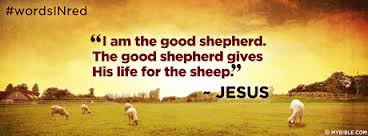
This weekend we celebrate the 4th Sunday of Easter which is also known as Good Shepherd Sunday. The idea of Jesus as the Good Shepherd is a lovely thought because it is a well known fact that the shepherd never leaves his sheep outside the sheepfold. If any are outside the sheepfold the shepherd will seek the lost sheep at all costs until they are found. In the same way for us Jesus will seek us out and help us to find our way back into the sheepfold of the faith. In the Old Testament, the shepherd was a metaphor for the leaders of the  people of God. Most often those leaders failed in their responsibilities and many were corrupt. God excoriates the incompetent and sinful leaders who were appointed to shepherd the people which they did not do. With the failures of the leaders of the people, God decided to take on the shepherding role. “For thus says the Lord: I myself will look after and tend my sheep. (Ezekiel 34:11). In today’s gospel Jesus likens Israel’s corrupt shepherds to the “hired man” who deserts the sheep when danger approaches, leaving them in peril. The hired shepherd may leave the sheep behind but Jesus the Good shepherd the Son of the Father does not leave his sheep.

One of the most comforting of the Psalms which is also a hymn begins with the line: “The Lord is my shepherd.” It ends with this line: “Goodness and mercy shall follow me all the days of my life.”Goodness and mercy, in the person of Jesus the good Shepherd are with us even now. The Gospel of the Good Shepherd teaches us how to embrace the gift of redemption by hearing and recognizing the voice of the Good Shepherd. There are numerous voices calling us to believe and to practice things that might seem nice, but those voices are not of or from the Lord. We need to tune our ears and hearts into recognizing the voice of truth that comes from Jesus, the Good Shepherd. We are his people the sheep of his flock and that means that we are people who are able to recognize the voice of the Lord and to faithfully follow him.  This Sunday we also pray for vocations to the priesthood and religious life. We pray for all those young and not so young who have a vocation to the priesthood, Permanent diaconate or the religious life. We pray that in their lives they may be like Christ the Good shepherd who came to give up his life as a ransom for Many bringing his people into the sheepfold of God and faith in him.
SHEP1

3rd SUNDAY OF EASTER

images

This weekend we continue our celebration of the Easter season which continues until Pentecost Sunday when we celebrate the coming of the Holy Spirit.

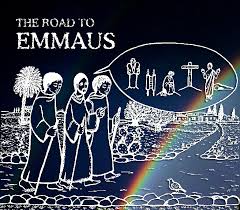
Our gospel reading for this Sunday tell us about the two disciples who were on their way to Emmaus. They were leaving Jerusalem, their hopes shattered after Jesus’ death or at least that is what they felt. Then they met the risen Lord. They didn’t recognize him at first, but they did after he opened the Scriptures for them and broke bread with them. After their encounter they returned to the community in Jerusalem with the news of what had happened. While they were still speaking to the community, Jesus stood in their midst and said to them peace be with you. He is encouraging them and not to be afraid. It’s still not enough. Then he invites them to touch him. Still more, he asks for food and eats in their presence. The resurrected Christ is very physically present, very much as he was when they traveled and ate together. Still, he’s different; more is needed. He is not just someone who somehow survived what was done to him and escaped. He didn’t experience a near death on the cross – he died and rose again as he said.

Jesus reminds them and us that he is the same, yet there is something very different about him. They knew that he was with them; he has proven that by establishing his physical presence. Yet, the disciples need more in order to accept his new presence with them. What he did for the disciples on the road to Emmaus he does again and again for us in the person of our priests. He expounds what the Scriptures had said about him in the same way our priests do for us today. Do we see that? Can we understand what God can do and has done  for us – bring new life after death? Jesus doesn’t choose just certain Scriptures as proof texts. He tells us as he told the disciples “everything written about me in the law of Moses, and in the prophets and psalms must be fulfilled.”

What would we be like if Jesus came and stood among us in real flesh and blood, I think that our reaction would be exactly the same as the apostles disbelief. But if we stop and think for a moment Jesus does come amongst us each time (for me as a Catholic) we go to Mass, Jesus is there with us on the Altar in the elements of Bread and wine and in the person of the Priest offering these gifts to the Father on our behalf.

We remember the last supper when Jesus gave us himself as an everlasting memorial and we remember that each time we hear the prayers of consecration at Mass that we do this in memory of him.  Let us walk with Jesus in all of those who serve the poor and needy in the name of Christ. Let us walk with those who serve the children or those outsiders who seek Christ. In the mere process of being witness, the context comes alive. For Christ walks with us  the Easter people when we serve others.

SECOND SUNDAY OF EASTER Divine Mercy Sunday

download (2)

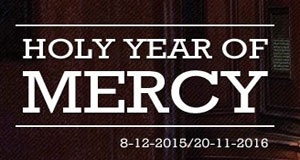
This weekend we celebrate the second Sunday of Easter. This Sunday is also known as Divine Mercy Sunday, we also have the launch of the extraordinary Jubilee of the Holy Year of  Mercy in Rome. The holy year will begin on the 8th December and will last until the feast of Christ the King 2016.

The Easter season has the most exciting Scripture readings of the year. They take us from the empty tomb of Easter Sunday all the way to the coming of the Holy Spirit 50 days later at Pentecost. The Apostles are huddled together in fear in the empty room. They weren’t so sure that the women’s report that Jesus had risen was believable. They weren’t singing for joy! Now, a whole week has gone by. They still felt “rocky” about their future.

Thomas wasn’t the only one who had doubts about Jesus, I think so many were doubtful then as so many are doubtful right here and now. The Apostles were pondering the shocking experience of the week before when all seemed to be lost as Jesus hung on the Cross. But here we are over 2000 years later thinking about how they felt after the events of that first Holy Week. Jesus had broken through those doors and came to assure them that he was alive and then his message must have troubled them: “As the Father has sent me, so I send you.” in the same way we are sent out in the Joy of the Gospel to bring his message to other people wherever we are by what we say and do. We are asked to bring the mercy of God to all those out there who need his healing merciful love.

We remember the joys the hope, the grief and the anxieties of the people in our time these are the joys and hopes, the grief and anxieties of the followers of Christ that means you and me. As Pope Francis directs us, we must courageously reach out in the joy of the Gospel to those who are doubtful among us, and assure them of the great mercy of Jesus. Our world is hurting so much because of the many evil things that are happening within it. May all of us be the witnesses to the joy of the Gospel bringing the caring face of the mercy of God to the people of our time and place as Christians in our own communities.

MERCY YEAR

EASTER VIGIL AND EASTER SUNDAY

images (35)

Having  completed our Lenten observance and after the liturgies of Holy Thursday and  Good Friday we  are now at the stage of celebrating the Easter Vigil on the day of resurrection that is Easter Sunday. Holy Saturday is about emptiness, the cross is empty and Jesus lies in the tomb everything around us is still.  The heavens and the earth cry out with longing for the sinless one who is not to be found, if we stop to think for a moment we remember that Jesus died and rose again on the third day. We wait, as mourners beside a grave, unsettled, ill at ease, not knowing what to do with ourselves. The Church has only one thing to do today: to pray through the emptiness of Holy Saturday.

Holy Saturday is the day when we experience watching and waiting at the tomb as we await the celebration of the Resurrection which we celebrate in the Easter Vigil and the season of Easter. The Psalm for Easter Sunday says, “This is the day the Lord has made; let us rejoice and be glad in it.”Above all days, Easter is a day of joy. At Easter, we celebrate the kind each of us longs for, when every tear is wiped away, and there is no sorrow any more no more suffering from weather or hunger or hurtful human beings. As we sing in the much-loved hymn by Fr. John Foley, S. J., at Easter, “the cross and passion past, dark night is done, bright morning come at last!”  When we ourselves rise to meet our risen Lord, in that bright morning we will hear him say, “Come away, beloved. The winter is past; the rain is gone, and the flowers return to the earth” (Song of Songs 2:10-12).

In the loving union of that encounter, all the heart brokenness of our lives will be redeemed. That will be perfect  joy.So in that same vein of perfect joy we say “this is the ‘day which the Lord has made.’ Alleluia!  let us take fresh hope,  with Christ our Passover everything is possible! Christ goes forward with us in our future!” Let us go forward together as Easter people rejoicing in the Resurrection.


THE EASTER SEASON

 Art Advent 2C

It can seem that once Easter Sunday has passed Easter is finished, but the’ celebration continues for fifty days. The next Sunday of Easter after Easter  day  is traditionally known as Low Sunday or Dominica in Albis (White Sunday) which refers to the white baptismal garment of the newly baptised. Divine Mercy Sunday is a new feast also celebrated on this day. It comes almost as an opportunity in which anyone who missed out on celebrating the mercy of Christ in Holy Week has another chance. After forty days we celebrate the feast of the Ascension of Christ who returns to the Father to send us the Holy Spirit at Pentecost. We spend the novena (nine days) between the Ascension and Pentecost praying for the Spirit like Mary and the apostles in the Upper Room. On the fiftieth day (which is the literal meaning of the word “Pentecost”) Easter ends. On that day “Christ’s Passover is fulfilled in the outpouring of the Holy Spirit” (CCC 731). Our celebration of Easter resonates throughout the rest of the year: full of gratitude for Christ’s passion, joy in his resurrection and, strengthened by the Spirit, we continue our Christian journey.


Holy Thursday and Good Friday

Lent has ended and now we begin the Holy Week Triduum. The word Triduum is the Latin for three days that is the three days of Holy Thursday, Good Friday and the great Easter Vigil on Holy Saturday night. The Church celebrates one liturgy each day. We should not think of the liturgies of Holy Thursday, Good Friday and the Easter Vigil as three separate events, all three form part of one single extended liturgy. In fact at the end of the Mass on Holy Thursday there is no dismissal and blessing instead we accompany Jesus to the Altar of repose. In the same way there is no formal beginning and end to the Good Friday liturgy.  This three-day liturgy concludes with the solemn blessing at the end of the Easter Vigil or at the morning Mass on Easter Sunday.


HOLY THURSDAY

734506_10152104728687991_8069566745559020741_n

Holy Thursday is all about the priesthood and the institution of the Eucharist at the last supper. On the Morning of Holy Thursday, there is only one mass celebrated in a Diocese (Although the Chrism Mass may be celebrated earlier in the week). All the priests gather around the Bishop and the people of God to renew their commitment to priesthood. Also at this Mass the oils of Chrism, Catechumens and the Oil of the Sick are blessed by the bishop, these holy oils will be used in the Baptisms, Confirmations and anointing of the sick in the local parishes over the next 12 months. The theme running throughout this day is one of humble service that is service of God and his people.

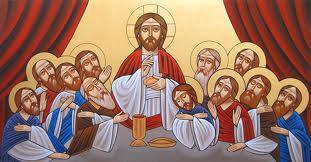
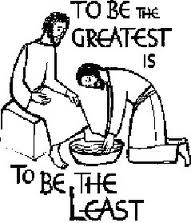
The Evening Mass commerates the Last Supper again the theme is service and sacrifice both of these are aspects of the same mystery.  We see Jesus as one who serves, who gives himself. Just as he freely gives himself in washing the feet of his disciples, so too he gives himself  in the bread and wine he takes, blesses and hands to the disciples.  

In the same way we receive Jesus in the form of Bread and wine from the hands of our priests. All these acts of self-giving are the same act – that of the Son of Man who came ‘not to be served, but to serve, and to give his life as a ransom for many.’ May we take up the mantle of humble service giving a helping hand to others and not counting the cost to ourselves. Many people over the years have given much at great personal cost and have not failed in their example of humble service and that for me  is what  Holy Thursday is all about  Humble service for others and not being afraid of being the presence of Christ for others no matter what the cost is.

images (33)

 GOOD FRIDAY

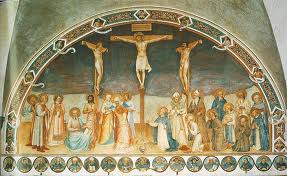
On this day in the liturgy we read St. Johns account of the passion, we pray for the needs of the Church and the world, we venerate the Cross and we receive the blessed Eucharist. We think of the death of Jesus on the cross, his death was a result of the courage of his convictions. He lived his life with a message of compassion, of equality and love, Jesus was often critical of those who lorded it over those who were less well off or who had little or even nothing at all. The cross of Good Friday is a sign and a symbol that all of us recognise, it is a sign of the completeness of the love that God has for each one of us faults and failings included. It is not accidental that the Passion according to John is always read on this day.  This account shows Jesus always in charge, in total command of his situation.  John’s Passion is an extended commentary on an earlier statement of Jesus found in John 10:17-18:  “I lay down my life that I may take it up again.  No one takes it from me, but I lay it down of my own accord.”   

 The focus of the liturgy of Good Friday, is not primarily a meditation on Jesus’ pain, nor on our sinfulness, nor on our imitation of Jesus’ humility on their own.  Rather the focus is a reminder to us that we are beneficiaries of this event, and so we call the Friday “Good” by thanking God for what God has done for us in Jesus.  The final words of Jesus from the cross say it all for us, “Is is accomplished!”  Jesus is not overcome.  On the contrary!  He has overcome! When we go up to venerate the cross on Good Friday we should allow the cross to move us to be better people. Consoling, comforting and challenging the people we meet with the values of Jesus and the Cross.

How splendid is the Cross- of Christ!

It brings life, not death;

Light not darkness;

Paradise, not its loss.

It is the wood on which the Lord,

like a great warrior;

was wounded in hands, and feet and side,

but healed thereby our wounds.

A tree had destroyed us,

a tree now brought us life.


Theodore of Studios


PALM SUNDAY

images (46)

As we gather together this weekend  we have come to our annual celebration of our Lord’s entrance into Jerusalem his own city at the beginning of Holy Week more commonly known as Palm Sunday. The entrance into Jerusalem is one of the very few events in Jesus’ life which is mentioned in all four gospels.  It is the only time that Jesus accepts and encourages public acclaim as Messiah.  He even goes as far as organising his entrance by telling the disciples to go and fetch the donkey.  The key moment in God’s great plan of salvation is about to unfold and Jesus knows exactly how it will unfold.

As we reflect upon the story of Jesus coming to Jerusalem we recommit ourselves to Christ and his message of salvation.The events of Palm Sunday were foretold thousands of years ago. The first reading from Isaiah, one of the four Suffering Servant oracles written at the time of the Babylonian captivity, speaks of a courageous and obedient messiah-figure, who says,

“I have set my face like flint” against the beatings and scourging that lie ahead, “knowing that I shall not be put to shame.” The second reading from Philippians reminds us of Jesus’ total emptying out of His divinity in order that He might identify Himself with the lowest criminal being led to His execution, “obedient to the point of death, even death on a cross.” We move towards the heavenly Jerusalem only because Christ himself has already made that journey to the Cross for us and now he offers to make it with us. 

 The full drama of the Gospel  begins with the crowd’s fickle acclamation of Jesus as King at the beginning of the reading. It is a foreshadowing of the blasphemous mockery the soldiers will hurl at our thorn-crowned Savior a few days later on Good Friday. And yet, we raise our voices joyfully with the crowd, linking the honor given Him, especially by the children, with His ultimate victory beyond the grave. We wonder and rejoice as the veil is raised to permit a glimpse of Jesus, the Messiah-King and liberator.

The Church is a master of drama in the liturgies of this week. Through the use of lay readers for the Passion and the voices of the congregation, we all become part of the action. On Palm Sunday we feel embarrassed to cry out “Crucify Him” with the palm branches still in our hands. It reminds us of our own fickle response and our lack of courage in responding to His love and truth. Yet we know that it was the sins of us all which brought Jesus to Calvary. Palm Sunday and Holy Week are all about Jesus suffering for our inadequacies and our own very real sins. Holy Week is a time for us to realize what we’re really like, and to find that the only remedy for our pains and our fears is love. That is Love of God and  love of others . Are we ready to join our own pains and fears to the Master’s? Are we ready to add as much love as we can possibly muster to His boundless love? As we recall the Passion story on Palm Sunday and then more solemnly on Good Friday we are called as witnesses to respond and to imitate his life. And as God’s family, we are called to look out for one another. It’s not just about “me.”It’s about “us.” Our journey is a journey of self-emptying in love too so let us not be afraid to set out on our Journey through the week that we are beginning with Palm Sunday so that we will be able to celebrate the bright light of  the resurrection at Easter.

HW

6TH SUNDAY IN ORDINARY TIME

conquerers_cross_wegast

Last Wednesday  on the feast of Our Lady of Lourdes we as the universal Church celebrated the world day of prayer for the sick this year  the theme chosen by pope Francis was “I was eyes to the blind, and feet to the lame” (Job 29:15). On that day we prayed in a special way for the sick and those who care for them. This Sunday in our parish we celebrate the anointing of the Sick and the reading from the Gospel is the healing of the leper. Our Gospel story tells us  about the Leper going to Jesus who healed him but it is about much more than just the healing, it is about the faith that the leper had in Jesus. It is also about the faith we have in Jesus.  After he heals him Jesus tells the man to be silent. He wants the miracle to be personal and quiet for a purpose. The man is to go first to the priests and go through the ritual cleansing prescribed in Leviticus (14:1ff.) Maybe the priests would ask the man how he was cured and then they would hear about Jesus. Who better to give witness to Jesus than someone whose life has been changed by him? Who better to witness to the strength, joy, encouragement, hope and direction that Jesus gives us than one who has been transformed by him?  The man’s life was changed not by any observance of religious codes or rituals, but by Jesus’ compassion, touch and words. We have to ask ourselves are our own lives changed by the words and compassion of Jesus?

Do we  show the same confidence in Jesus that the leper did?  Do we allow ourselves to be transformed by the compassion and words of Jesus in order to show the compassion of Jesus to others? Each one of us know what needs to be put right in our own situation, where we are and as we begin Lent next Wednesday we stop and thank God for the faith we have. May we share the healed man’s enthusiasm to make known the goodness of God. As we begin the season of Lent  with the Ashes next Wednesday with all the opportunities it provides for renewal of our spiritual lives Let us pray for a spirit of compassion and understanding as we journey through Lent to the great celebration of Holy Week and Easter.

4TH SUNDAY OF ADVENT 2014


This weekend we celebrate the 4th Sunday of Advent and we hear the story of the Angel Gabriel coming to tell Mary that she would be the mother of Jesus. But as we hear this story we should stop and step aside from all the ongoing activities of this time of year to think about how Mary felt when she got this news that she was to have a child. Luke tells , ” she was greatly troubled at what was said and pondered what sort of greeting this might be.” The angel has to reassure her, “Do not fear Mary.” – she must have been afraid. In that uneasy world of Galilee, a place of conflict and struggle, Mary’s personal response showed confusion and doubt. Still, Mary did not get a roadmap of the future – neither do we. All her questions weren’t answered – nor are ours. Gabriel announced the conception and birth of royalty. Mary’s child would be “great” (as unique and history changing, like Alexander the “Great”). He would be Son of the “Most High” (a title for the greatest God, the highest concept of divinity one could have. As we discussed last week, the title “Son of” indicated a unique, intimate relationship with this highest God and a sharing in this God’s power). He would have the Davidic throne of Israel forever. [1:32]


Mary made room for God in her life. She and the saints are more like us than the arts or literature about them show. They are amazingly human that is like you and me and it is among them, in all their human limitations, that God wants to dwell – among people who despite struggle and doubt, can say “Yes” to God. Scripture suggests God wants to enter more fully into our lives; our not-so-neat and orderly lives but our messy lives with all the good and bad and all the happy and sad times that are part and parcel of our lives. Mary accepted, even proclaimed, God’s will in her life. She placed her future in the hands of the Father so should we. Her example should inspire us to stand firm as Christians in today’s ever-changing fads and fancies and especially as we face up to the secular razzmatazz in the run up to Christmas. Remember, the words of others may sting, but the Spirit of God burns within. The divine fire can withstand the darts others fling toward us.


3RD SUNDAY OF ADVENT GAUDETE SUNDAY

AD3

This weekend we celebrate the 3rd Sunday of advent also known as Gaudete Sunday or Rejoicing Sunday. The term Gaudete refers to the first word of the Entrance Antiphon, “Rejoice”. Rose vestments are worn in many churches to emphasize our joy that Christmas the birthday of Christ is near, and we also light the rose candle on the Advent wreath. Again we hear John the Baptist in the Gospel Reading for this Sunday where he calls us to renewal and repentance in our lives and the lives of others when he calls all of us to make way for the lord

The question for us this “Gaudete” Sunday is how do we measure our lives and how do we make straight the ways of the Lord? By what standard do we live, work, and relate to the world and with those around us ? How do we encounter and relate to God? Advent the same as Lent has at its heart the message and the call to repentance, to what the Greeks called “metanoia ”which means to come back. In Advent we look towards a different measure for life and this is hard as we continue our preparations for the razzmatazz of Christmas

The secular world’s way to peace and happiness is always a focus on individual achievement to the exclusion of others. The way of God does not focus on the achievements of  the individual at the exclusion  of the other. We as people of god should realize that The Messiah’s message, revealed in his words and his deeds, provide us with a different standard  to live by a standard where all are valued and none are left out. A standard where all people are valued Sons or daughters of God and known as such .

I stated at the beginning that we are celebrating the joy of Gaudete Sunday which is about the happiness and rejoicing of Jesus the son of god being near. As Christmas draws near, the Church emphasizes the joy which should be in our hearts over all that the birth of our Savior means for us or all that it should mean for us especially in our world where so many have little or nothing at all. The joy of Christmas will come to us if we set about actively trying to create it for others. If I go about my life demanding that others carry me rather than seeking to carry them; feeding off others rather than feeding them; demanding that others meet my needs rather than trying to meet theirs, joy will never find me no matter how hard I party or try to crank up the Razzmatazz and the good cheer.

The Joy we have at Christmas is not really about Partying or the Secular Razzmatazz of the ongoing parties etc instead it is really about Jesus Christ the Son of God who is for us the light in the darkness. It is about really reaching out to others family members, friends and relations those who we might not value as much as we should. Indeed those who the secular world really count for nothing.

We joyfully praise God on this Gaudete Sunday. We thank him for all he has done for us in our own lives and in the lives of all those who are dear to us, families and friends whoever. We rejoice that through the coming of his Son Jesus we have come to know the Father. We do what we can to imitate Jesus life, to follow his Gospel of love in a spirit of joy. As we continue our Advent journeys  along the roads that lead to salvation let us prepare the way for the Lord in our own lives remembering that in  the words of the Antiphon  we should rejoice, that is Rejoice in the Lord always; again I say, rejoice. the Lord is near. 

26TH SUNDAY OF ORDINARY TIME

images

Well here we are at the weekend once more and again we are at the end of the month of September as we look towards the month of the Rosary, October. During the past week the order of the Sisters of Mercy (RSM)  celebrated the 20th anniversary of the beginning of the Mercy International Centre at the foundation house in Baggot Street Dublin. In 1827, Catherine McCauley established a ‘House of Mercy’ in Baggot St and there she and her companions provided food, clothing, hospitality and education for many of Dublin’s poor. In 1831 she founded the Sisters of Mercy, and the first Mercy house of became her first convent. Today there are thousands of Mercy sisters working all over the world. Baggot St is now the International Centre of the Sisters of Mercy.  I  take this opportunity to pay a personal tribute to all the mercy sisters who have done so much for the people here in Northern Ireland and in particular here in north Belfast where I live. From education to healthcare they were at the forefront and  the backbone of so many apostolic works that may not have otherwise been undertaken particularly here in Belfast and so many other places.The  first pioneering sisters came to Belfast in 1854 and threw themselves into the educational and social work for which they would soon become renowned and I take this opportunity to thank God for them and all they have done and continue to do within the communities where they live.

Our readings this weekend are really all about the mercy of God. From the first reading which is about the sinner who decides to turn away from his sinful ways to choose life to the second reading where we are encouraged always to consider the other person to be better than yourself,  and then the gospel  Jesus is teaching his listeners through this parable.  He is telling the pompous and self-righteous to beware.  Jesus says they are out of line, off track, and in danger of not entering the kingdom of heaven. He says that it is risky for them to think they already know everything and ignore the fact that what they do is not pleasing to God.  Jesus surprises them by responding favorably to the actions of the tax collectors and prostitutes who may have gotten it wrong at first but have since repented and come back    Sometimes it takes awhile to figure out God’s perspective of the right thing to do.  How fortunate for us that Jesus advocates and even applauds repentance and the prodigal who comes to his senses comes back to God the Father!  

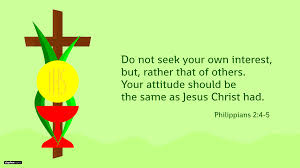
When we empty ourselves of our desire for status, position, respect, then we are like Christ, who humbled himself. For the Christian, empty means full. We empty ourselves of our concern for our self and find for ourselves that we become more Christ like. We often come upon the scripture passages where the Lord tells us to pick up our crosses and follow Him.  We know that this means accepting our suffering so the world can be filled with sacrificial love, and the Kingdom of God might grow. But we usually just relegate these passages to the way that we handle crises. Today’s second reading is more expansive. It tells us that to follow Christ we have to change our attitude in life to be like His.  We have to be like the One who humbled Himself. This is difficult. It is difficult because pride is so deeply rooted in each of us. But through the Grace of God we can conquer pride. And then we can be the people that God needs us to be for His Kingdom. Christ is the victor, even over our pride. And because He can conquer our pride, “He makes us an eternal offering to the Father.” 

images (3)

Post Navigation