Fullerton T

RELIGION LITURGY AND LIFE

Archive for the category “Faith”

20th Sunday of Ordinary Time

images 5

In the gospel today Jesus says, “I have come to set the world on fire and how I wish it were already blazing.” He is ready and willing to face the hardships that lie ahead. Jesus’ words must have unsettled his hearers then, as they do now for us. It doesn’t sound like Jesus meant that the practice of our faith should make us comfortable, guarantee harmony or tranquility. Indeed, as he predicted, belief in him would cause the most severe conflict, even in the close-knit-family world of his Mediterranean followers.

Jesus is zealous about his mission; it consumes him. He has a task to complete and will follow it through, despite the threats to his personal safety. Jesus refers to his fate as “a baptism with which I must be baptized.” He sees his coming passion as a baptism which he will accept and which will set a fire upon the earth. Remember when John the Baptist spoke of Jesus he linked baptism and fire, “He will baptize you with the Holy Spirit and fire” When our lives get difficult, for any reason perhaps running low on the resources of spirit, mind and psyche at critical moments,

we are tempted to think that the Holy One is asleep behind a closed door. We feel very much on the outside. At these times it’s important to remember that Jesus is with us throughout the turmoil we may have as a result of the hurts and hardship that life throws out to all of us on many occasions.

The saying goes that life is forever changing and this is very true as this week we heard of changes in the priests in some of our local parishes in North Belfast. August is a time for change and a time of change for this and other Parishes and the Clergy within the  diocese of Down and Connor. It is also a time of change with our P7 school kids changing schools and going into secondary or grammar schools and our year 14s going on beyond that to begin university as they continue their education and the journey of life.

Making decisions in the journeys of life is the natural process for us; we make many of them each day. Our senses take in all kinds of information some of which we accept, some we discard and much, we are not aware of. Our minds move us to a yes or no that is what the will does. So our imaginations can present data to our minds for a choice as well. So a faith-decision to walk the ways of Jesus needs some information which Jesus gives his disciples, that is formally handed on down to us in the liturgy through our Priests. But we also learn from our fellow parishioners, our own times of prayer and those flashes of God-given inspiration – and these can come in places of pilgrimage or simply as we walk down the road. The Spirit of God blows where it wills.

 

19TH SUNDAY OF ORDINARY TIME

images 3


Today’s Gospel begins with some of the most beautiful of Jesus’ words: 
“Fear not, little flock… “What love, what tenderness in these few 
words! “Fear not…”. Further down in the gospel reading we are told ” “Sell your possessions, and give alms; provide yourselves with purses that do not grow old, with a treasure in the heavens that does not fail, where no thief approaches and no moth destroys. For where your treasure is, there will your heart be also.”

 If God is at our service, what could be better than for us to place  ourselves at his service? For if we do not, God might just accuse us of  being ungrateful to him? Some will say: Certainly that might be true, but why does God involve himself in our life? Why bother with God Couldn’t he just leave us alone do get on with doing our own thing? Indeed, many people live in our modern world without paying much attention to God or man and as a result of this particular way of going we see that the world is in a terrible state. The world and its riches are supposed to be enough to make people happy, or at least that is how it seems to the vast number of people who think and act in this way. In fact, the truth is far from this particular idea of utopia, a godless life gives the illusion of happiness, like Money, material goods, the pleasure of the senses, all these things lead the men and women of our time to the greatest unhappiness: that of the glorification of “me myself and nobody else” when truthfully we should be setting ourselves and our selfish ways of going aside and focusing on the other person!

To escape from this, there is one solution:  which is the life of service to others, the life of service to God for the salvation of the world remembering that our hearts will be restless until they rest in him. What will we have done with our life if we haven’t used it to serve God in some way or another? Where have we put our treasure is it really where our hearts are? Have we put it in the banknotes kept in our safe, the bricks that make up our house, or in our beautiful brand new car? Let us consider this! Have we truly decided to place ourselves at the service of God? Let us look at the Crucifix, and listen to Saint Paul: “And being found in human form he humbled himself and became obedient unto death, even death on a cross.” (Phil. 2:7-8) It was reported recently that gold coins from a sunken Spanish ship were recently found in the waters off the coast of Florida using a simple metal detector. As you can imagine that this attracted quite a few more “gold diggers.” Should we be consumed in acquiring a vanishing kingdom here on earth when we have an eternal kingdom waiting for us? I would love to see a mad dash for the inexhaustible treasure that the Lord provides through the Church and all those who are within it especially our priests and religious and through so many other people and organizations associated to the Church.

We don’t know in advance what God may do with us and our own oftentimes selfish plans. To those who have faith, all things are possible the old saying that fait moves mountains is certainly true. Faith helps us to rely on the power God, not on our own. As the gospel points out, we are to live in this world as strangers who are on the way home. People who move from one place to another get rid of all they can from their old house and focus on furnishing the new house. They joyfully give away what they once cherished we have to be the same getting rid of the baggage that stop us from being the people we are called by our heavenly Father to be.

 “We cannot know when personal illness, bereavement or some other trying experience will put us to the test. But we do know that our life will be a success if we set our hearts and minds on values that go beyond all the transitory goods of this world. Our faith, is leading us onward, always pointing to something still to come, and at the end of our pilgrimage on this earth we will find where our true treasure is and we will simply discover that where our heart is there our treasure is as well.


17th Sunday In ordinary Time

FAITH

In the  Gospel reading this Sunday we see Jesus in a certain place praying when one of the disciples asked him to “teach us to pray”. Jesus then went on to give them one of  the greatest of all the prayers we have which we now know as the Our Father.  There are many things about the Lord’s prayer that could be said but the first thing to notice is that it is full of petitions of things that we are asking for. The first petition is that God’s name would be hallowed. The second is that God’s kingdom would come. The third is that God would give us our daily bread. And so on. The Lord ’s Prayer isn’t just a litany of praise to God, then. It isn’t just an expression of a pious wish that God’s will be done though we pray that the will of god will happen in our lives. It isn’t only a surrender of one’s own will to God. Just look at the request for daily bread. It presents to God what we would want God to give us but God gives us what he knows we need when he knows we need it. Having desires and presenting them to God are required by the Lord’s prayer. The second thing to notice is that people don’t generally get what they ask for. The Lord says ask and you will receive. I always say to people that God gives you exactly what you need when he sees that you really need it not what you want when you think you need that particular thing and this has been the case so often in my own life and in my dealings with other people.

But how many people around the world pray the Lord’s prayer and go without food that day? And food is only the beginning. Every mass we ask God for healing: “Only say the word and my soul shall be healed.” Then we lug our sinful, sick, and sorrowful souls around another day.

 So this  is the third thing to notice. Jesus doesn’t promise that we will get the very thing we ask for. He says that if we ask, we will receive; but he doesn’t happen to mention what we will receive and when we will receive it. If you think about it, you can see the point. If a sick person could heal himself, he would be the doctor, not the patient. The patient’s job is to want to get well. It is the doctor’s job to figure out how to get him well. In the same way, the Lord’s prayer requires us to trust God enough to tell him what we want—over and over and over. Our job is to ask continually. God’s job is to figure out what to give us that will really fill us and heal us. So we might not get what we ask for. But as long as we keep asking, the Lord promises that we will receive—grace, pressed down, shaken together, running over, and gently given, from the God who loves us. Our Lord and Saviour wants us to attain the joy of the  heavenly kingdom, and so he taught us to pray for it, promising to give it to us if we did so. “Ask, he said, and you will receive, seek and you will find, knock and the door will be opened to you.” in this year of faith we pray that when we ask for and  seek faith we will receive it, when we knock at the door of faith it will be opened wide to us.

16th Sunday in Ordinary Time

16sunOT


The story we hear in the Gospel Reading for this Sunday is the lovely story of Martha and Mary from the record, we can establish the Teacher (Jesus) stayed at the house of Martha and Mary in Bethany outside Jerusalem many times. He stayed there in the last three months of the year 29 when He was busily working the Jerusalem territory. He would stay in this house the first four days of Holy Week the sisters were not only generous hostesses but also bold ones. At this point, Jesus was walking about with a price on His head. He was an outlaw.. They hardly would find themselves in good favour with the police, the Temple authorities, and probably the Romans.  
But I am certain that they were quite aware that the Jesus was running a risk Himself in being their guest. Accepting hospitality from women was clearly forbidden by Rabbinic law. In addition, He had from their first encounter taken great pains to offer them instruction. This would not make Him popular with the male world in general or with the authorities.  The Christ was no doubt the only man in their circle who did not patronize them. He treated them as equals. What a welcome change that must have been for these intelligent women! They must have been so tired of being treated like children. No wonder Dorothy Sayers writes, “Perhaps it is no wonder that women were the first at the cradle and the last at the cross. They had never known a man like this Man…” We all know the story of this gospel. Martha is exhausting herself  putting together a meal worthy of a five star restaurant for the Lord. She is setting out the best of the best of everything for the meal the Irish linen, the Wedgewood china, the Tiffany silver, and the Steuben crystal of the time.

During all of this time her sister Mary is enjoying the company of their guest in the coolness of the family room. Martha is hardly amused. She storms into the room. There is Jesus with His worn sandals off and His feet up on the barca lounger. Mary is drinking in every word the Teacher speaks. She looks as though she wished she owned a Sony tape recorder. However, the Japanese had not yet reached Palestine. It is a pity for us that they had not. Martha loses her cool and sounds off with a bitter indictment of Mary the shirker. For her pains, all she gets from Jesus is a wrap-around smile and a healthy chuckle. It does not improve her mood when she hears Him say “It is Mary who has chosen the better part.”

 Martha loved Jesus as much as Mary did, and it is clear that he treasured them both. Her mistake was in not trying to find out how Jesus wanted to be entertained, while visiting her house. Her sister correctly senses that when Jesus comes on a visit the last thing he wants is to have people fussing over how to feed him. So, while Martha makes the greater housekeeping effort, Mary understands better what is expected of her by him. Her contemplative intuition grasps instinctively the real reason for Jesus’ visit. He is there not to receive but to give, not to be served but to serve. He has something he  needs to say and the one thing necessary is to listen to his voice. As we see in the gospel, God’s Message came in person to Mary, the sister of Martha, and we see her vibrant relationship with God in Christ.  On one level, we feel sorry for Martha, being left to do the household work on her own, but the key value here is that our listening to God, our attentiveness to Christ must never be drowned out by the bustle of our everyday lives. Then, in the reading from St Paul we are told how the Word of God, hidden from all mankind for centuries, comes to the gentiles.

How do we understand the complementarity of Martha’s generous hospitality in meeting Jesus’ need for food and Mary’s longing for personal communion with him? In response, we might follow the way of Jesus. He fed the hungry, cured the sick and expelled demons of every kind as an expression of love. In other words, our love must also become incarnate in whatever we do to meet the needs of others. Thus, our good work becomes a sacrament or an effective sign of our self-giving love. Etty Hillesum, a young Jewish woman who died at Auschwitz, expressed a similar understanding when she wrote that in prayer “‘God can enter you, and something of ‘Love’ too…the love you can apply to small, everyday things.”  

 Only one thing really matters in the hurly-burly of our modem world,  that is that we choose the better part we choose the better part when  we make space for God in our lives, when we reach out and grasp the message which God is continually presenting to us through many people in so many places we might find ourselves. We make space for God in our lives when we make the message of God our own, and that we allow it to guide and shape us, as we live and as we hope to die, in fulfillment of God’s wishes for us.  Let us not be afraid to take the better part especially in this year of Faith.

14th Sunday of Ordinary time

FAITH


When we think of Jesus preaching we think of people flocking to hear him, But in today’s gospel we hear of people being sent out from Jesus to prepare his way before him.  We also think of John the Baptist who went to prepare  a way for the lord making his paths straight so that all of us can see the salvation of the Lord. We gather  as Christians in the here and now of our daily lives in 2013  as we remember that  we are also the people that Jesus  has charged to prepare his way in the world today by the living of our faith in every situation we find ourselves. To be a disciple is not only to follow, but to go ahead of the Lord announcing his presence. with this in mind this weekend we reflect on these twin aspects of being Christians: following the Lord, and presenting the Lord to the world through  what we do and in what we say. We are called not only to be ‘disciples’ but ‘apostles’. But there is a constant danger: we often think that ‘the apostolic life’ is something that we can delegate to a few specialists: full time ‘apostles’ or ‘missionaries in foreign lands’ or those who live ‘the religious life’. Every individual and that includes you and I  are called in a specific way to spread the word and to bring the pres­ence of Christ into the world where we are remembering that only a few people are called to do so in a ‘high profile’ way. We are called to be apostles by our baptism; we cannot delegate the responsibility. Rather we must search out the precise way that each of us is called to be an apostle – whether it is high or low profile – and how we each can make ourselves better fitted to the precise place and moment in the history of salvation where we are called to be the rippling presence of God.

There are a number of things that are striking in the  gospel story for this Sunday: one is the simple urgency of the task of proclaiming the message. Some will accept it, others will not, but their rejection of the message should not be on account of any failing on the part of the messengers. It is encouraging to listen to the enthusiasm of the disciples when they returned. They rejoice on their return because they know that are participating in the ultimate struggle of good over evil. In sharing their joy, however, Jesus reminds them that it is not about them but about God working through them and that should be the source of their joy. It is a call to humility. They had obeyed Jesus, and it worked. His promise to them was vindicated.  They discovered that the call to mission contained the power to effect that mission. Jesus went even further in assuring them that he had given them full authority over all the power of the evil one, and that their names were registered as citizens of heaven.

The words at the end of this Sundays  gospel are addressed to each and every one of us. Jesus does give us his power we are empowered to do his work, and to work in his name. We have the power if we are willing to supply the goodwill. Community support is essential to living the gospel. Even a hermit has to be commissioned by a Christian Community, and must continue to be in touch with that group.

Today Jesus, present among us , continues to call us, send us, and empower us. Perhaps this coming week, in our quiet times, when we have the opportunity to reflect, or even to pray, it might be good to consider what task, seemingly beyond of strength or talents, our comfort zone, God wants us to take on and embrace, in the strength of the Holy Spirit, who has lived within us, often unrecognized, since the day we were adopted by God in Baptism.   We remember the words of  Jesus in the Gospel for this Sunday‘So I say to you: Ask, and it will be given to you; search, and you will find; knock, and the door will be opened to you. For the one who asks always receives; the one who searches always finds; the one who knocks will always have the door opened to him. May the door of faith open wide for us as we continue our journey of faith together.


13th SUNDAY OF ORDINARY TIME

FOLLOW ME

FOLLOW ME

Most of us will not have said to Jesus explicitly: ‘I will follow you wherever you go.’ Nonetheless, we gave that commitment on several occasions. One such time was the commitment made on behalf of each one of us by our parents and god-parents when we were baptized. Similarly, we ourselves renewed that commitment when we celebrated the sacrament of confirmation. Those of us who are married committed ourselves completely to the person and teaching of Jesus again when we committed ourselves to our spouses ‘for better for worse, for richer for poorer, in sickness and in health, all the days of our lives’.

The commitment we make at baptism, confirmation and marriage — which, if we are faithful, is total and life-long — parallels the irrevocable commitment that God has made to us, especially in sending his Son into the world. Jesus’ commitment to us was so complete that he suffered and died on the cross to save us from the consequences of our sins. Regrettably, we break our commitment to Jesus every time we sin. At the heart of Christ’s teaching is the invitation to make a commitment to him. ‘Follow me’ (Luke 5:27):
Jesus says this to us every day of our lives. Do we follow Christ at all times, even when colleagues and friends confront us with ideas and lifestyles that contradict his teaching? Furthermore, do we follow Christ in our daily relationships by challenging the cultural changes that have become accepted in our society despite the fact that they flout his great commandments to love God and to love our neighbour? Our baptismal commitment requires us to renounce the Devil and his temptations.

When Jesus goes to Jerusalem, this means, first of all, that he is resolutely going to face his executioners, those who will put him to death and make sure that, in accordance with the divine plan, the Saviour of men is taken away from this world: “When the days drew near for him to be received up, Jesus set his face to go to Jerusalem.” But, for Jesus, going to Jerusalem is, above all, the fulfilment of his mission as the one who brings peace to souls, beginning with his own. For, once he is dead, Jesus enters, with his soul, into heaven in order to eternally enjoy true peace, the Peace of God which passes all understanding! For Jerusalem means “Vision of Peace”! Jesus is the great peacemaker par excellence: he came into the world to bring peace, but his own Peace! The Peace of the Lord is that which establishes the soul in a perfect harmony with the body, a body that is entirely dominated by the spirit and that obeys it in all things. This is the Peace of God. It is not the peace of men, the peace of the world, which is never anything other than a relative equilibrium between the intention of not attacking others, provided that they do not attack us, and the intention of not doing too much good to others, for to do otherwise could be taken by others as a sign of our weakness and could be seen as an opportunity to attack us. The Peace of God is not like that of men and the world: “Peace I leave with you; my peace I give to you; not as the world gives do I give to you.” (Jn. 14:27)

 Jesus stayed faithful to his being raised on the cross. He remains faithful to us with our turning toward our own personal little kingdoms and all that they mean good and bad. Our faithfulness is not supposed to be totally to our own commitments, but to his faithful commitment to being our Saviour. He saves us from ourselves, our attempts at perfection which we will never achieve in our world. How can we live with ourselves who so constantly are inconstant?

With Paul we moan that we do not do all the good we want to do which is the nature of our lives, and those things we would rather not do, well, we easily do them and sometimes the hard things we should be doing are not easily done.. Our baptismal promises centre around Jesus being our personal and universal Saviour. We live with ourselves, because he lives in us and we are supposed to live in him. To be a follower of Christ, we must be prepared to travel light. Our possessions may distract us from keeping Christ as the center of our being. We may also be distracted by too many interests, too many commitments, too much food, or too much play. When we decide to follow Christ, we will leave some things behind. With faith let us continue our faith journeys as we follow Christ in our daily lives knowing that the peace of Christ is with us as in this year of faith 


11TH SUNDAY OF THE YEAR

Copy (2) of Project32

Here we are at the 11th Sunday of ordinary time and for us here in Ireland we are right bang in the middle of the schools college and university examination season. It is a time of anxiety and annoyance with a lot of frayed nerves with moms and dads trying to get the youngsters to do the revision and they not wanting to do it.  We all have been through the exams and we all have got out the other side unscathed and hopefully with reasonable results. In all of this I think that we have to remember that it is not always the exams that count but that we produce well rounded young people who are not afraid of the world and all it will throw at them good bad and in-between.

 The “theme” of the First Reading, Psalm and Gospel today is “forgiveness of sins”. We hear the touching Gospel story, of the “woman with a bad name in the town” coming to anoint Jesus’ feet. Living inspired by the love of Jesus is the key to our discipleship – his crucifixion is the sign of his love, which is in itself the forgiveness of sins. A sinner among sinners, Mary Magdalene was greatly loved by Jesus. How could it have been otherwise? If Jesus loves sinners, he does so to love his Father in them and through them. Jesus loves his Father in us and through us! For we are but creatures But, as every man or woman was created in the image of God  (cf. Gen. 1:27), Jesus, in loving his Father, also loves every man and woman in Him. So Jesus loved Mary Magdalene in loving his Father, that is to say divinely. Mary, the Mother of Jesus, followed the same path as her Son. Indeed, she imitated him, while preceding him in time, having contemplated in advance, in the Old Covenant, the unique model who is the Saviour of men! Thus Mary also loved God above all, in loving he who became her mystical Spouse, the Holy Spirit, during the Incarnation of the Word.

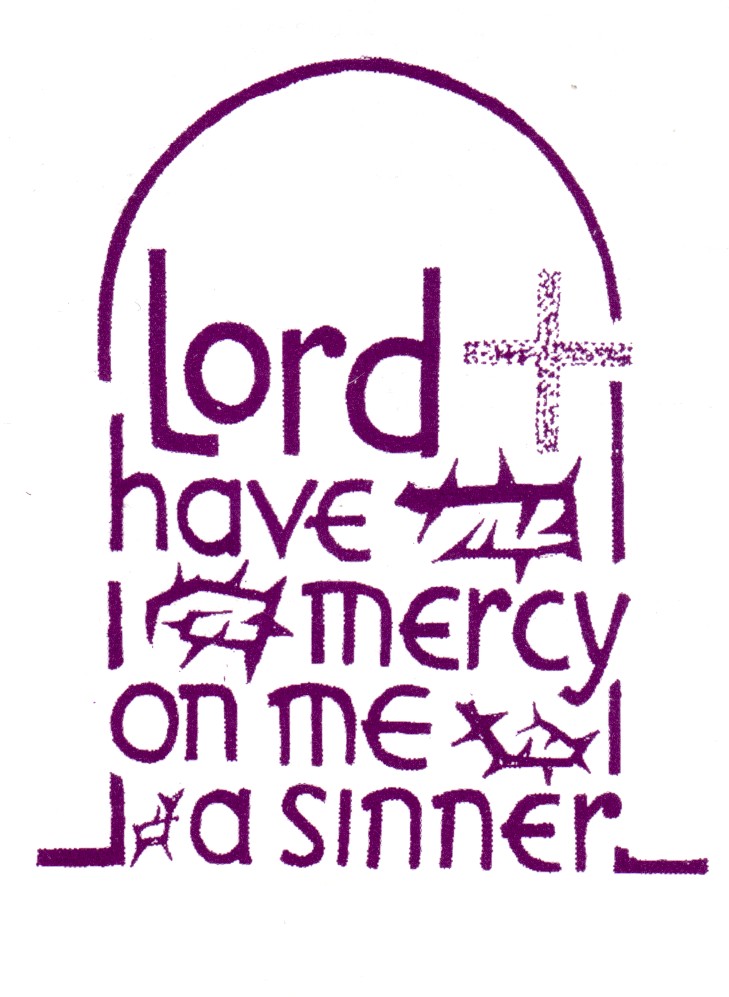
Mary gave herself to God from the first instant of her existence, enlightened and strengthened by the fullness of grace in her. May today’s Holy Communion teach us and help us to love God above all things, through the intercession of Mary Mediatrix We are challenged by the Good News of salvation to imitate God’s desire to forgive. As people who are forgiven, we are called to be forgiving towards ourselves and others. If we refuse to forgive, then we will be unable to value forgiveness when it is offered to us from other people and God. We pray that we will be gracious in accepting forgiveness when it is offered and that we will be generous in forgiving others. Sometimes we think that, unless we forget whatever was said or done that hurt us, we have not forgiven. But forgiveness is about an act of the will — it has nothing to do with the emotions which may remain. And it is not necessarily about forgetting the hurt caused. Forgiveness is about deciding not to be controlled any longer by the effects of the hurt, and not to nurture the grievance which only makes us bitter and angry. On a spiritual level forgiving means recognising that nothing we suffer in this life is equivalent to what Christ, who was totally innocent, suffered and died to secure our salvation. By uniting our sufferings with his suffering, we strengthen our character and our souls. Only then will we be really free people, because only then will we be able to think about or be in the presence of those who have offended us without allowing their damaging behaviour to cause further hurt. The reality is that it is easy for God to forgive sinners because he loves us. The readings for this Sunday underline the importance of our faith–faith in the dying and rising of Jesus Christ for our sins, and faith in the mercy of God toward sinners. God is much more concerned about our faith than He is about our sins! Without faith, David would never have asked for God’s forgiveness. Neither would have the penitent woman of this Gospel, whose great faith and love so pleased Jesus. Without faith, we cannot expect to enter heaven so in faith let us continue our faith journey as the beloved people of God forgiven and restored .


PRAY FOR OUR PRIESTS

1_0_684181

I normally don’t Blog during the week but this week I think that I should say something about a sad event that took place here in Belfast last Friday. The sad event was the death of one of the Parish Priests in the west of the city by suicide. Fr. Matt Wallace was a well respected and loved priest who was originally from County Wexford in the south and it will be very hard for the people in the west of the city and our local diocese in general to get over this. As you see above the little picture sums it all up  as we are asked to pray for our priests and religious. We need to support our priests and religious because at this time they are scarce on the ground and are to use simple terms a valuable  spiritual commodity that we simply cannot do without.  Let us pray for our priests wherever they are in the days ahead  that we may be true friends to them whenever they may need us.

Tenth Sunday Of Ordinary Time

conquerers_cross_wegast

As we return to “Sundays in Ordinary Time,” the liturgy begins with the tenth week! Why I hear you ask? Well by beginning here after Lent, Easter and the various feast days that are held on a Sunday the numbering will come out right at the 34th and last week at the end of the church year. Then, on December 1 this year, we’ll begin another church year with the First Sunday of Advent! (Now you know why this Sunday is the “Tenth Sunday”!) So As you can see it can be a bit of a jump to get back into the pattern of readings for the season of ordinary time. Readings chosen  are not the particular ones to celebrate a particular feast or mystery such as Corpus Christi or Pentecost, but the Sunday by Sunday continuous reading of the Gospel and Apostolic Letters. So this Sunday we get back into Saint Luke’s Gospel with the dramatic story of the raising of the widow’s son in the town of Nain.

 The ‘theme’ that unites the scriptures today is found in the psalm: “For me you have changed my mourning into dancing.” Our faith  tells us that the death and resurrection of Jesus has changed death forever – just as both Jesus and Elijah changed it in the stories read today. Christians will always mourn the death of loved one mother, father brother sister or whatever  just as Jesus himself wept over his friend Lazarus: but Christian mourning, while acknowledging grief, will also contain the hope of life and the hope of resurrection, as revealed in the stories we hear today.

 We look to Jesus as the Lord: he is the Son of the Father, the conqueror of death, who has visited us from on high to redeem us. In today’s gospel we see this in his raising a young man from the dead in Nain. We recall this incident from our memory of Jesus not because we expect miracles to happen like this every day, but because they remind us that the life Jesus gives us is not bounded by death. He gives us a new way of living in this world and the promise of the fullness of life with the Father in the world to come. The Gospel of Luke is the Gospel of the Compassionate Lord.  The message is clear: the Lord cares for each of us as individuals.  He is not too big for us, or too great for us.  In fact, He shows His greatness in the concern He has for each of us.And He calls us to follow. To be as He is.  In the Gospel of Matthew, we come upon the order “Be perfect as my heavenly father is perfect.”  In the Gospel of Luke the same directive is rephrased to: “Be compassionate as my heavenly father is compassionate.” It is impossible for us to be too caring, too giving, or too concerned about others.  It’s just difficult.  We have busy schedules.  We can’t handle additional emotional grief.  We find excuses why we can’t spend time with a family with a sick child, or with the elderly lady down the block. Many times people have said to me, “My child came down with cancer, and all my friends became strangers.” We were surrounded with help at first, but as the weeks became months and he became sicker and sicker, many people seemed to disappear.  Perhaps that’s because it hurts to expose ourselves to another’s grief.  But this hurt can bring support, this hurt can bring healing.  Sure, we are busy.   Jesus was busy too.  But He didn’t look for excuses to stop everything and reach out to the hurting. His heart went out to those in need.  He was compassionate. 

 The practical challenge, from reflecting on this miracle story, is to be convinced about God’s merciful love and to be sensitive to the difficulties of those who are less fortunate than ourselves. God is indeed compassionate, and Jesus is proof that God has visited his people. Just as the crowd who witnessed the widow’s dead son being brought back to life instantly recognised that this was the work of God, so we, too, strive to recognise God working, albeit perhaps less dramatically, in the events of our own daily lives. God was close to the widow of Nain and he is also close to each one of us. His heart goes out to us too.  He cares about every one of us.  And He calls us to be like him, to be compassionate. We remember what He said after He washed His disciples feet before the Last Supper: “What you have seen me do, you must do.” We have to allow the compassion of the Lord to flow through us to others. may god change our mourning into dancing as we  go forward in Peace as we continue our faith Journey 

CORPUS CHRISTI 2013


Art Corpus Christi


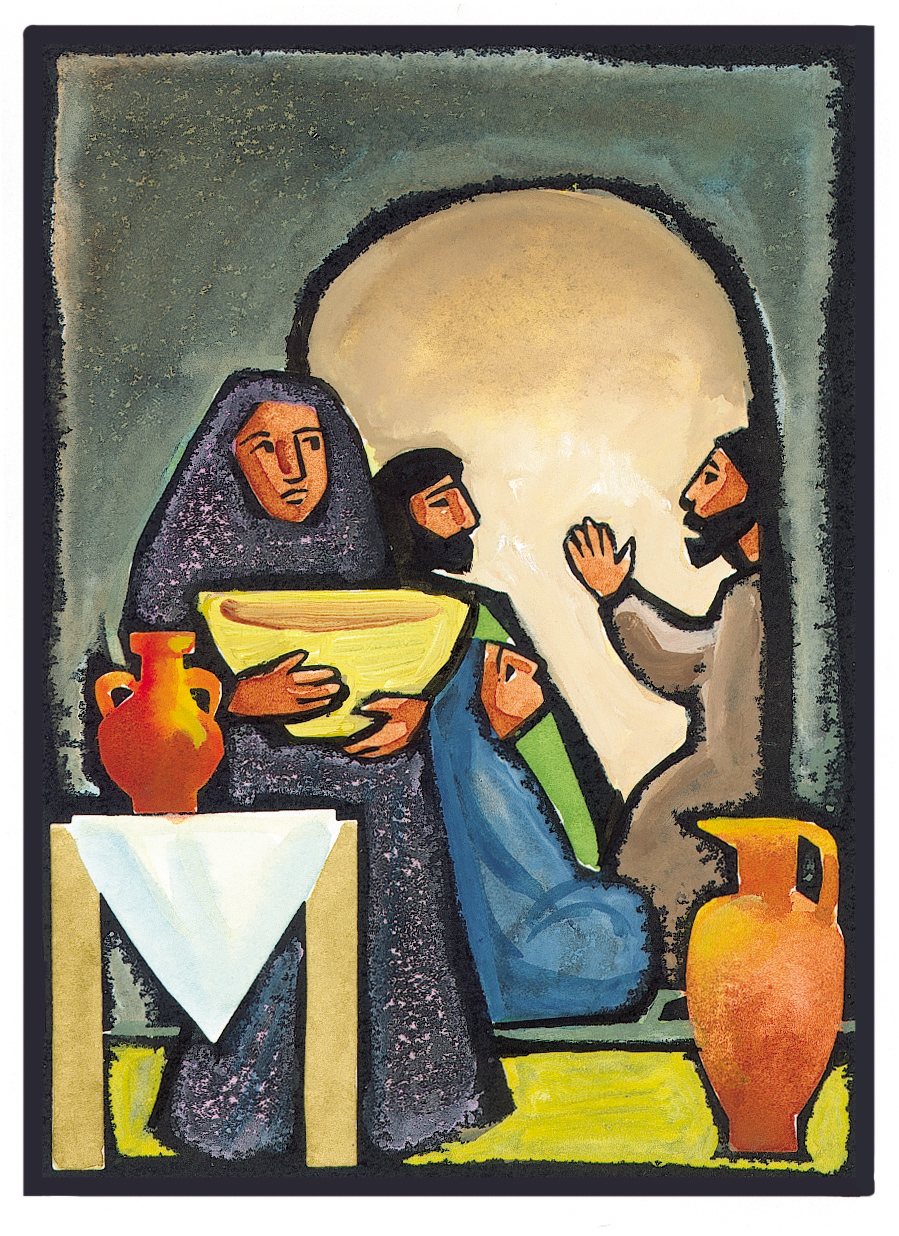
In many places throughout the world the Feast of Corpus Christi would have been celebrated last Thursday but we in Ireland and many other places celebrate this feast on the weekend after Trinity Sunday. Gathered at the Eucharist we bring our prayers to God. We each have our own needs. Friends are sick. Neighbours are losing their home. Kids need work. The person who has been in our lives for so long has died. We bring these prayers to church because they remind us of our need and they raise our hopes in the power of God. We have those hopes because God has rescued us and continues to rescue us time after time. Our relationship with God has produced fruitfulness, satisfied our longings, and brought us peace. Because of God’s faithfulness, we give thanks, offer sacrifice, and once again present our needs. In the story of the five loaves and the two fish, we learn that Jesus fed the hungry crowd by multiplying five barley loaves and two fish. He did this because he was concerned for the people who had stayed with him, listening to him and watching him cure the sick. In a sense, he was acknowledging their commitment to spending time with him.

 Initially, Jesus tested his disciples by asking them where they might get something for the hungry crowd to eat. They had no practical answer to his question, because Jesus always practised what he preached. He never asked other people to do what he was unwilling to do himself. He satisfied the crowd’s physical hunger and, in doing so, he enhanced the authority of what he had already said to them and of what he had already done when he cured the sick.

 The love and generosity of Jesus in tending to the needs of the hungry crowd offer us an insight into his own total self-giving for others at the Last Supper and in his suffering and death. Corpus Christi is an occasion for us to celebrate the sacrament of the Eucharist sacrament of Sacraments. It should be an occasion when we enter into the symbolism of this sacrament, letting it teach us deep lessons about life, our relationship with God and with one another. Since the very first days of the church before St Paul had set out on his journeys or any of the gospels were written — our brothers and sisters have been gathering every week for this sacred meal. But when we routinely do anything, we often lose sight of just how wonderful it is. We gather for Eucharist often. We still carry out one of the oldest and certainly the richest rituals in the Christian tradition. And whenever we eat and drink the body and blood of Christ, we proclaim the death of the Lord until he comes.

 It is a privilege to share this Eucharistic meal which is the bread of life. We have inherited it from a long tradition. And with it we have also inherited a responsibility to proclaim the death of the Lord until he comes by the way we live our lives. The Sacrament brings the gift of charity and solidarity, because the Sacrament of the Altar is inseparable from the new commandment of mutual love.

 The Eucharist is the power that transforms us and strengthens us . `It spurs us on our journey through life  and plants a seed of living hope in our daily commitment to the work before us’ in the family, at work and in society. From the beginning of the second century, St. Ignatius of Antioch defined Christians as those who `live according to Sunday,’ with faith in the Lord’s resurrection and his presence in the Eucharistic celebration. By receiving the Eucharist, we are nourished, and enabled to nourish others as Jesus does. As it unites us with the one who satisfies all our yearnings for love and fulfilment, so we must let that power flow through us to a world more desperately in need of God than ever before. Let us resolve to worship the Lord in the holy Eucharist and never to offend and dishonour him by our words or deeds.


Post Navigation