Fullerton T

RELIGION LITURGY AND LIFE

Archive for the category “Faith”

Second Sunday after Christmas
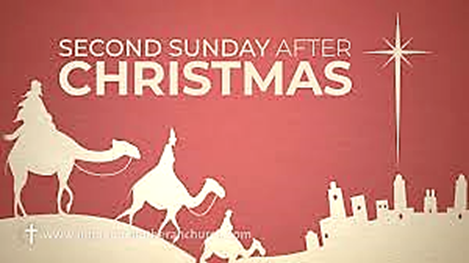
Here we are at the second Sunday after Christmas as we look forward to the arrival of the three wise men on the feast of the Epiphany which takes place on Monday 6th January.  By long standing  tradition Christians celebrate Christmas as a season, with the twelve days between Christmas and the Epiphany as one long “Christmas feast.” The season ends with the Baptism of the Lord which is also the first Sunday of ordinary time and that takes place next Sunday.  In the first reading this weekend we hear that  wisdom speaks her own praises in the great assembly, this reading tells us  how Wisdom personified as a woman speaks about her role as she glories in herself in the presence of the mighty one. The reading goes on to tell us  from eternity in the beginning he created wisdom and for all eternity wisdom will remain.

In the Second Reading Paul begins his letter to the Ephesians with a hymn which praises God for choosing us in Christ. He prays that all will be blessed with the spirit of the heavenly blessings `so that through wisdom we will get to know God, so that we can see the hope that his call holds for us. In the Gospel we hear the magnificent Prologue to John’s Gospel: how in the beginning there was the Word and through the word all things came to be and then in the fulness of time god sent his Son. When John comes to speak about Jesus notice how he goes back beyond the time of Jesus’ birth and conception to the very beginning of time itself. He sees Jesus as the Word that was with God, the Word that was God. John rejoices in his Gospel that this Word which made the beginning now comes into the world.   The Word is not only had a great power that makes all things; the Word became flesh and dwelt among us. The Incarnate Word comes among his own people in the person of Jesus the Son of God the only Son of the Father.  At Christmas we celebrate the humility of Emanuel  God with us who came to be one with us in the good and bad times that are part of our lives.

As Christians, we will very often find ourselves living in contradiction of so many things that are part and parcel of this present age.  Regrettably we have to get used to the fact that we will face conflict among friends, and even at times within families, as we seek to live out and the Christian life more generously and we know that if our words fail, the Word of God never fails. May we not be afraid in the Holy Year of Hope that has just begun to seek  and find the wisdom that God wants to give us, so that we can see the hope that his call holds for us so that we will have the wisdom to follow Jesus the light for the world the hope of all who believe.
Feast of the Holy Family

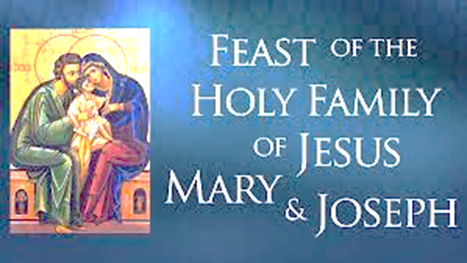
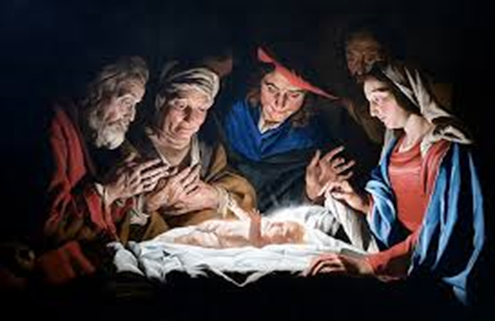
This weekend we celebrate the feast of the Holy Family our parish feast day as we begin the Holy Year of Hope in our diocese. I struggle with the disparity between the holiness of the Holy Family as reflected in many pictures and religious art compared to the reality of family life in the present day. In the First Reading we are told that respect and care for our parents brings great benefits, including answered prayers and a long life. In the Second Reading we are called to Embrace the virtues of compassion and kindness, and forgiveness so that Christ’s peace will rule our hearts.  In Luke’s gospel we listen to the story of boy Jesus stepping outside the family circle to engage elders in the temple. That had to be more exciting for Jesus than helping in the workshop or bringing in water from the well.

When Mary and Joseph find him in the temple 3 days later  they discover him talking with the teachers of the law busy with his Fathers work. The challenges for families today are as insistent and more intense than ever before in human history.  The drumbeat of consumerism focuses us on things you possess  instead of relationships with other people. Technology focuses us on how many “likes” we can collect as if those “likes” amounted to being truly loved and cared for which they really are not about.  Mobile phone technology removes the need to “listen” to one another in face to face conversations as Individuals control their contacts. We quickly learn how to “unfriend” people who annoy us. Even though voices from the past are loud and insistent, some parts of our world seems to be  moving towards authoritarian leadership fuelled by divisive rhetoric. On this day when we celebrate the Holy Family  we can only hope to find in the good news a way to transform our families. In Luke’s gospel, the return of Jesus to  his parents and in his listening to them is a model for not only children but also parents. In his rule Saint Benedict put it well when he said you should listen with the ear of your heart.

We need to listen to our children, to our spouses, to our extended families. If we listen with the ear of our hearts we learn from them, share with them, help them in their personal struggles as we share in their accomplishments hopes and dreams. Then when they look they will see that the road we are taking is the better road and join us along the way. As we think about the Holy Family we recognize the sacrifice that Joseph and Mary  made for Jesus, in the same way as we recognize the many sacrifices our own parents made for us  and many more  are making for their children today in our I want I get world.   Our families would find the disagreements, stressful relationships, and resentments that spoil the joy of family harmony so much easier to solve by trying to imitate the faith, love and trust of the Holy Family. So now as pilgrims of hope we pray for our families “Lord Jesus, you came to restore us to unity with the Father in heaven. May all our families find peace, wholeness, and unity in you, the Prince of Peace during this Holy Year of Hope.

CHRISTMAS 2024

This Christmas we begin the Holy Year of 2025 with the opening of the Holy Door is St Peters in Rome. The theme of the year is Pilgrims of Hope and Christmas is all about Hope and Joy. At Christmas the Christian Churches throughout the world celebrate the Birth of Jesus Christ,  as we remember “The Word was made flesh and dwelt among us.” The Son of God became man to give us a share in that divine life which is eternally His in the Blessed Trinity. Throughout the Advent season we have waited for the coming of our Savior. Now on the 25th of December we celebrate His birth with unrestrained joy.

The readings for the Nativity of the Lord emphasize the joyous celebration of the incarnation of Jesus Christ, God becoming one of us. Christmas is all about  the saving grace of Jesus, and the light and salvation brought by the birth of our Savior. During the Christmas season there is an extensive exchange of greetings, gifts and good wishes among friends. These greetings are a reminder of those “good tidings of great joy that shall be to all the people, for this day is born to you a Savior Who is Christ the Lord” (Lk. 2:11). They are a reminder, too, that all blessings and graces come to us from Christ. With the exchange of gifts comes the responsibility to remember those who have little or nothing at all in terms of a roof over their heads and food in the cupboard. During Christmas we are reminded  of the mystery of Mary as Mother of God, mother of the Incarnate Word, and mother of His mystical body, the Church. Christmas encourages us to contemplate Jesus together with Mary and Joseph reflecting on Jesus with ‘His mother’, as recounted many times in the Gospels.

Our faith cannot neglect a profound devotion to the Mother of God, as she shows us the easiest way to reach Jesus. Christmas reminds us of the great mystery of God’s people, the Church animated by the life giving Spirit. So, why do we celebrate Christmas? It is more than the birth of Jesus. It is a celebration of God with us. It is the realization that God’s love for us and faithfulness to us dwells among us. It is a sign that we are to carry that love and faithfulness to other people. Like the Baptist, we, too, are to witness to God’s living, breathing Word and we are called to be faithful so let us adore the Lord Jesus in the manger the reason for the season and bring his love and joy to those we meet in the days ahead as we begin the Holy Year as Pilgrims of Hope.

4th Sunday of Advent

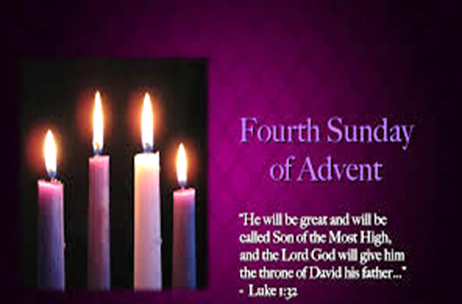
This weekend we light the third purple candle on the Advent wreath as the anticipation grows to a crescendo as we  draw closer to the celebration of the Christmas mysteries. Christmas is almost upon us: yet are we ready in the true sense of the word remembering that Jesus is the reason for the season? Christmas we are told is a time for so many things  yet for many it is a time of stress and pressure with all the extra work to sort out every­thing that needs to be done.  For many it is a time when we are fearful that the children won’t be disappointed or that there will be tension in relationships or there will be a breakdown in the ceasefire with the in-laws.  

In the first reading from Micah Jerusalem was under siege and Davids dynasty was in peril. The prophet said that salvation would come from an insignificant place and that was Bethlehem from there a new leader would gather the nations together into one people.  In the second reading from Hebrews the sacrifices mosaic law were unable to purify the people from sin. Only Christ himself was able to bring the reconciliation between  god and his people. We  meet Mary and her cousin Elisabeth in our Gospel reading. Mary, who herself had been prepared for the coming of the Messiah. She has heard the angel’s greeting, and his strange news, and has accepted her role in God’s plan.  Now she hurries to her kinswoman, Elizabeth, who herself bears John the Baptist in her womb. John, alerts us to the presence of the Lord, as he leaps for joy in his mother’s womb. His joy is that God has kept his promise, and is with his people.  That two women were chosen to play such a role in the story of salvation is remarkable, as women were often marginalized in the society of their time.

In all these events we see the great mission that Mary undertook as a privileged instrument in the hands of God. Mary is not only the mother of the source of grace; she is the very model of what a Christian heart should look like. We look to Mary to see our fullest Christian dig­nity. In Lumen Gentium 68, Vatican II describes our contem­plation of Mary as an act of entering our own deepest mystery, catching a glimpse of what we shall he at the end of our faith journey. Over the next few days the journey to Christmas will have many pressures for everyone especially those who are worried about so many things family and otherwise.  Mary in her calm gentle way encourages us to trust in God’s word and to believe in God’s promises as she did. The great Christmas feast is almost here. As always in Advent, what is promised in the first reading is brought to fulfilment in the Gospel reading. We began Advent with the cry, ‘Come, Lord Jesus’. We will end it at Christmas with the joyful shout, ‘God is with us!’

3rd Sunday of Advent

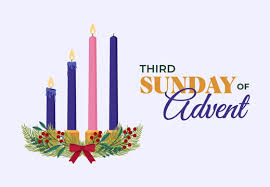
On this the 3rd Sunday of advent we light the rose coloured candle on the advent wreath and the vestments at mass may be Rose as well. This Sunday is also known as Gaudete Sunday as we rejoice that the Lord is near.  Last week we heard about John’s ministry of preaching repentance and baptism for the forgiveness of sins. The idea of repentance is about turning around and facing in a new direction. John’s call to the people was to turn away from the old ways of life and to turn towards God. The Gospel opens with the people, the tax collectors and some soldiers, having heard the call to change their lives, all asking John, ‘What must we do?” We should also be asking ourselves what must we do?

 Both John the Baptist and Paul share one belief: that the Lord is very near. God’s nearness didn’t act as a threat to them, but gave them a infectious  source of joy that no one could take away  from them. Their joy in the closeness of God gave an edge to their preaching and teaching. It gave them a vision to see the far side of disaster; it moved them to draw others into that sense of joy.  None of them was closed in his own joy they moved out going round in the hope their  inner joy would be caught by the people of their time and place and many people were caught by the joy they had to pass on to them. The picture of John the Baptist as a man of joy is not one you hear about very often. John is usually portrayed as a lonesome figure, with a weird wardrobe and weirder diet, who rants and raves at anyone with ears  to hear. But John was a character who intrigued people and as a result they would seek him out and follow him. People don’t journey into the wilderness just to get insulted; you don’t become disciples for the wardrobe and diet.Here was a man who cared nothing at all for comfort, money or fame, who could not be bought, and who would speak the truth without fear. In John people could see something of God.

John spoke in words they could grasp when he told them exactly what they should be doing.  He made such a deep impression on the crowd that word goes around that he might be the Christ. That expectant feeling is a measure of John’s effect on people around him. John did not  claim to know who the Messiah was going to be instead he tells the people that he is not that person. That role is for someone else, someone greater and more powerful than he was.  And as we know that person was Jesus the Son of the Father. We are called to be joyful witnesses to Jesus but as we know with all that is going on around us these days that is not easy. There are many things that continue to block the presence of the Lord within us. It’s time for us to answer the question what must we do and that is to  prepare the way so that we will be able to welcome Jesus  into our lives our hearts and our homes at Christmas. Let us  Rejoice in the lord always because the Lord is near.

2Nd Sunday of Advent

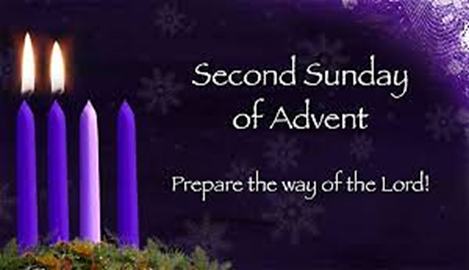
This Sunday we light the second purple candle on the Advent Wreath The sense of preparing is very strong in our readings this weekend. The Gospel highlights the role of John the Baptist as the one who prepares the way for Jesus. The first reading from the prophet Baruch is a call to do the same. It talks about taking off the dress of sorrow and distress and putting on the beauty and glory of God. It’s a call for the people to become God’s people.  In the Responsorial Psalm we hear about the  marvels the Lord worked for us! When the Lord restored Zion, they were overjoyed. Nations acknowledged God’s great deeds as they rejoiced, knowing that their sorrow would turn into joy.  

In the Second Reading  from St Pauls letter to the Philippians Paul says I joyfully pray for you, confident that God will complete His work in you. He goes on to say I pray your love grows in knowledge, so you can discern what is best and be righteous in Christ. John was  the herald of the Lord calling the people of his time and ours to  repentance John the Baptist plays a prominent role in all the gospels, but particularly in Luke. John hears the word in the desert and preaches throughout the whole region of the Jordan prepare the way for the Lord make straight his paths. The Jordan was another important place in the faith life of the Jewish believers. After their desert wanderings the people crossed over the Jordan river into the promised land. They left behind slavery, came to know God in the desert and were finally prepared by God to cross into new life.  Blessed John Henry Newman reminds us that “Advent is a time of waiting; it is a time of joy because the coming of Christ is not only a gift of grace and salvation it is also a time for commitment because it motivates us to live the present as a time of responsibility and vigilance.  

We all need help and encouragement to leave behind all the things that have become destructive in our lives. We need help in thinking about ourselves differently. We have to take time to reflect on the kind of person God wants us to be and what God’s plan is for us as we prepare the way for the Lord in 2024. This  means as we prepare the way for the Lord we prune away all that hinders us from making Jesus welcome when he comes at Christmas .  Our Advent journey is showing us how to prepare our hearts for a fresh discovery of God’s presence in our lives; how to recognise the presence of Jesus among and around us; showing us how to turn around and face towards God with faith, hope and love; and how to be the living presence of Jesus in our moment of history. As we continue our  advent  journey we ask ourselves what are we waiting for. Are we waiting for the presents and razzmatazz that the secular part of Christmas bring or are  we preparing spiritually for the greatest gift of God, his Son, Jesus the light in the darkness who John the Baptist foretold.

1St Sunday of Advent

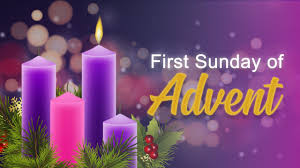
This weekend we begin our advent journey for 2024, everything goes from hopeful green of ordinary time to the penitential purple of Advent. Last Sunday we celebrated the end of the Church’s year with the Feast of Christ the King. Now one week later we start all over again as we bless the advent wreath and light the first purple candle. Advent is the season that brings us back to the ancient longing of the human race for the coming of one who would bring to this world liberation from sadness and the fulfillment of perfect peace. As we know in our world there is so much sadness and very little peace as a result of this we continue our prayers for peace in the world.

In the first reading this Sunday Jeremiah looks forward to the coming of one who will save God’s people, one who acts with honesty and integrity Jesus was the one he was talking about . In the second reading St Paul encourages the people of Thessalonica in their following of Christ. He prays that their love will grow and that their hearts will be ‘confirmed in holiness’  so that they would be blameless in the sight of God. In the gospel reading   Jesus is clearly fretful about the future as he paints a bleak picture of the end of the world. There is talk of nations in agony, of bewilderment, of people dying of fear, of the power which menaces the world.   It is a nightmare view of total disaster that “will come down on every living man on the face of the earth”.  Given that vision of ultimate collapse, it is hardly surprising that it might drive people to drink! Being sober and awake might not seem very attractive in the face of such catastrophe.  Yet that is Jesus advice to us: “Stay awake, and be ready praying at all times for the strength to survive all that is going to happen” so that we will have  confidence before the Son of Man.   

This Gospel is for our time as much as any other when we have so many countries at war as well as all the crazy things that are going on in world politics. The Gospel also encourages us to do two things which are difficult to hold together: to be honest with ourselves about the way things are going, and at the same time not to lose hope in the future. The danger is that we see the terror clearly, and don’t see the reason for the hope that is within us at all. Given the muddle we’re often in, Jesus has to convince us as he tells us about the future that is really liberating. The way he does that best is through the example of his own life. Advent reminds us that we don’t walk alone into the future whatever it holds for us. We look to the past to reassure ourselves here and now as we go forward. When we look we see how far-reaching God’s love is for all of us no matter who we are.  The Advent readings are a rich tapestry of images cantered on the truth that God has come among us and will come again. Our Advent invitation is to prepare the way for  the lord so we can welcome him as Emmanuel – God with us at Christmas.

Feast of Christ the King

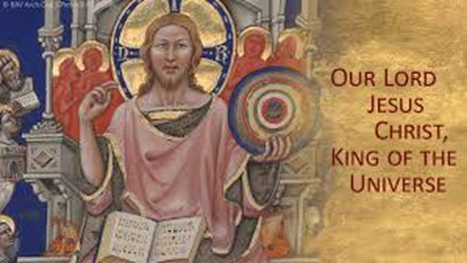
This weekend we celebrate the feast of Christ the King on the last Sunday of the Churches year. The Feast of Christ the King was established by Pope Pius XI in 1925 as an antidote to secularism, that is a way of life which leaves God out of a person’s thinking and has us living life as if God did not exist as we all know God does exist and we see this throughout history. In this feast  we profess our common belief: Christ is King to the glory of god the Father.. Our Gospel reading for this Sunday has Jesus before Pilate. Jesus turns his interrogation into a meeting of souls. It is an encounter that impresses Pilate deeply; encounters with Christ are bound to change us in some way.  Jesus refuses to answer Pilate’s charge of kingship directly. He states that his kingdom is “not from here” (John 18:36), which Pilate interprets to be an affirmation that Jesus is a king.

Jesus also puts the question aside as something Pilate claims, and instead offers the idea that he is a witness to the truth (18:37).In the reading from John’s Gospel  which is also part of the Good Friday Passion Narrative we see  this conflict is described in terms of the “truth” that Jesus  has brought from his Father: “It is because I speak the truth that you cannot believe me”.  Jesus urged the people of his time as he encourages all of us in our time to find the truth of our calling to be “a light to the nations,” showing the world the life and joy of people who are living according to all they have learned from Jesus.  The kingdom of Christ, is  a kingdom of charity and peace. We remember that the Kingdom of God exists in every home where parents and children love each other. It exists in every region and country that cares for its weak and vulnerable people. It exists in every parish that reaches out to the people of the parish without looking at who they are or what they can contribute .  The King we celebrate this weekend is the Son of God who walks the dusty roads of our daily lives finding the weak, the ill, the oppressed, the ones whose hearts are wounded, the ones whose minds are confused by the things that they see going on around them.

Jesus finds all kinds of people as he journeys with us along the dusty roads of life, he finds ordinary folk as well as the elite, the powerful as well as the weak and he invites all of us to walk in his ways as we prepare to start again as we begin the churches new year next Sunday. We remember that the kind of kingship that Jesus talks about places a different emphasis on all earthly kingdoms and empires, from Imperial Rome right to today. It topples the world’s values and overturns the concepts of power and majesty and replaces them with a kingship of service of god and one another. Sometimes we fall short, but Jesus always calls us back with forgiveness. He asks us to recommit ourselves to service wholeheartedly as we prepare spiritually  in  Advent for Christmas .

22Nd Sunday in Ordinary Time

This week the schools have re opened after the summer break and we begin the season of Creation that runs until the beginning of October. During the month we give thanks for our world and all the good things within it that are god given gifts remembering that we are called to use them wisely for the good of everyone.  The readings for this Sunday tell us to be wary of those things which lead us to sin and remind us that we must really follow Jesus in our hearts. In the first reading Moses instructs Israel to strictly follow God’s laws to demonstrate wisdom and receive life and land. God’s closeness and just laws set them apart from other nations. In the Second Reading we hear that all good actions and perfect gifts come from God, who is unchanging. We are called to embrace His word, act on it, and care for those in need.

In the Gospel Jesus is accused of flouting sacred tradition. Religious officials from Jerusalem and local Pharisees want to know why Jesus permits his disciples to disregard the unwritten tradition of the elders. The problem is that the disciples do not wash their hands before they eat. The complaint is not that the disciples ignore good hygiene, but that they ignore the tradition of ceremonial washing. In doing this they are numbered among the unclean. Jesus does not dismiss the Law but he condemns its misuse. The Pharisees were certainly guilty of misusing the Law by placing heavy burdens on the shoulders of the people. The ritual hand washing before eating has its origins in the common sense practice of washing one’s hands before eating a meal, something any sensible person would do. But by the time of Jesus this custom had become incorporated into the Law, it had become much more elaborate and was accompanied by prayers as a way of consecrating the whole day and all one’s actions to God. This is fine and good, but it should not become a burden or become a reason for accepting some people and rejecting others, depending on whether they observed these prescriptions or not. Jesus cuts through all of this and turns it around and accuses the Pharisees of honouring God with lip-service while their hearts are far from him.

 Jesus sees the true purpose of the Pharisees, he knows that they are there to build a case against him.  Jesus points out that nothing that goes into a man can make him unclean, it is what comes out of him that makes him unclean. Jesus goes to the very core of the matter and tells us that it is not whether we fail to perform this or that act that makes us evil but the desires of our heart. It is our heart that we have to look at to see whether we conform to God’s laws or not. The law of God forbids all those things that set people against each other: theft, murder, greed, etc. The positive command of God’s law is “to serve God in each other,” to walk blamelessly, do justice, walk humbly with our God and to not harm one’s fellow-man. Let us try to do this in the days ahead as we go forward as gods people.

21st Sunday or Ordinary Time

In the First Reading this weekend  Joshua challenges Israel to choose who they wanted to serve, the gods of their ancestors or the gods of the Amorites Joshua tells them that he will serve the Lord  and the people reaffirm their commitment to the Lord, recalling His deliverance and protection. In the Second Reading  from Ephesians we hear about how Christ’s love guides marital roles: wives respecting husbands as the church respects Christ, and husbands loving wives as Christ loves the church, symbolizing unity and sanctity. In this Gospel reading, Jesus puts the choice to His apostles of following Him, or of leaving Him that is also the choice he gives to all of us as well.

Jesus did not give an easy remedy for the doubts his disciples had in reaction to his words, nor did he water-down impact those words had on them. After hearing Jesus’ teaching on the bread of life, many of the people find Jesus’ language intolerable how could anyone accept it. As a result of this intolerable language some  of them choose to leave him.  In a similar way today so many people find the words of Jesus to be intolerable language as many people have got up and left their faith behind them and some may never return again. No one who accepts that Christ is the Son of God has any difficulty in believing that he left us himself in the Eucharist. He promised to give his body and blood in the Eucharist as an everlasting memorial to be our spiritual nourishment and our means of offering an acceptable  sacrifice to God every time his body and blood are made present by the words of the priest. He fulfilled that promise at the Last Supper. He gave to his Apostles and their successors the power to repeat this act of divine love when he said: “Do this in memory of me.”

When Simon Peter answered Christ’s challenge will you too go away?”  he spoke not only for his fellow Apostles he also spoke for us when he said “Lord to whom shall we go? You have the words of eternal life. and we believe; and we know that you are the Holy One of God.” We are the people who really believe that Christ was the incarnate Son of God. Peter made his act of faith before he was fully convinced of the divinity of Christ, but he already knew that Christ was close to God and spoke nothing but the truth. We have the proof of Christ’s divinity which Peter and the Apostles later got, he gave them the bread of life and he went to the cross and rose again. We also have the witness of the early Christians whose belief in Jesus   was at the very center of their Christian lives as it should be the center of ours.   We can trust that what Jesus taught is true, even if we do not fully understand how it could possibly be.

Many people who became saints died for their belief in Jesus; hopefully we can live our faith fully, even in times of doubting the actions of some of those in the Church.  So today we say Lord, You have the message of eternal life” and we believe; and  we know that you are the Holy One of God and we will follow you.

Post Navigation