Fullerton T

RELIGION LITURGY AND LIFE

Archive for the category “Life”

25TH SUNDAY OF ORDINARY TIME
images (1)

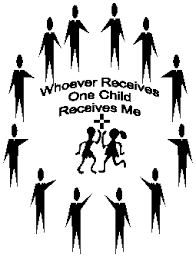
In our Gospel for this Sunday we begin with the second prediction of the passion. Like many things in the biblical tradition, a threefold repetition gives emphasis and dignity to the pronouncement. The predictions are also a reminder to us that Jesus was not surprised by the later events in Jerusalem; he had seen them on the horizon for a great part of his journey. The predictions are each constructed in the same way with Jesus’ teaching followed by misunderstanding. Towards the end of this Gospel Jesus brings the child to centre stage and instructs his disciples: “Anyone who welcomes one of these little children in my name welcomes me; and anyone who welcomes me welcomes the one who sent me.” In this instance Jesus doesn’t ask his disciples to become like children; he asks his disciples to welcome them. The disciples have a problem about welcoming littleness because they think that they are at the top of the tree and are above this. This basic Christian teaching, common to all the Gospels, is one that has not always been honoured. “To be first in the group is to occupy the last place and to be a servant to the group.”

That means to be the greatest you must make yourself the least in service of other people especially those around you. Jesus taught his followers the true meaning of leadership. Leadership does not mean power but service. Power often strangles life and brings a slow death. But, service brings life, even from death itself. An attitude of serving others should not be a triumphal attitude lording it over everyone else, yet much of our history has been about individuals seeing themselves as better than everyone else. In this passage we listen to the words of Jesus about the child he tells us “Whoever receives a child like this in my name receives me. Whoever receives me receives God”. In the first part, the disciples are told that a measure of their discipleship is their attitude to power. In the second part, discipleship can be judged on the disciple’s attitude to children who are powerless in many ways. We only have to think about the 3 year old refugee migrant boy Aylan Kurdi who was washed up on the shore of a Turkish beach recently to know that this is so true. This horrible event along with all the migrants that have died in recent times remind all of us that Life is precious. Jesus compares himself to the little child, the one who cannot resort to power tactics when threatened or maltreated. Jesus’ protection is his Father; his trust is placed in the God who will ensure his protection. When suffering comes, Jesus refuses to abandon trust in the Father.  That trust makes him vulnerable, like a little child, but unless the disciples can come to welcome that vulnerability they will never understand the way of Jesus.

When we welcome the stranger we might understand what Jesus means in this Gospel reading that wee bit better. Jesus offers us a permanent challenge to welcome the powerless, to take to heart the weakest members of the community. He places himself in their company. Their vulnerability is something that Jesus not only shares but values. May we understand that to be be first in the group is to occupy the last place and to be a servant to the group.”  May we take up the challenge that Jesus places before us in this gospel reading and that challenge is to become humble servants of those who need us whoever they are.
20 TH SUNDAY OF ORDINARY TIME

ce08ccee9da85f2bcefcf92cf8b96767

 We are now at the midpoint of August and summer has flown by and the thoughts of the children and their parents turn towards going back to school at the start of September. Over the next few weeks the preparations will get going and hit fever pitch with the buying of school uniforms and all the other things required for the school going population. This indicates an unending circle from one September to the next, each year being the same with the people involved getting a bit older as time goes by. Also this week the exam results are is for those doing the A levels and next week we have the results for those doing the GCSE exams. 

 Our Gospel Reading for this Sunday suggests when we take Communion we really are taking real Food and real Drink.   The receiving of this gift becomes the acceptance and acknowledgment of the Lord’s care for us and thus, ultimately, the nourishment we need to continue the journey. Sometimes it is not easy to put one foot in front of the other, let alone continue on the journey of faith.

In His book To Live Is to Love, Ernesto Cardenal says, “If in everything you fulfil God’s will rather than your own, every encounter in the street, every telephone call, every letter you receive, will be full of meaning, and you will find that everything has its good reason and obeys a providential design. To “live in love” requires us to be connected to the Love of God.     There is one concrete way that the Lord helps us to make this connection that is by providing the Eucharist the bread of Life.   In the bread and wine offered at the Eucharist, the risen Lord makes himself present.

While the priest invokes the words of blessing (thus acting as the instrument of Christ or “in persona Christi”), the conversion of the bread and wine into the blood into the Body and Blood of Christ remains the initiative of God (specifically, the Holy Spirit). The offer to partake in the “living bread” is God’s offer of unity with Christ and his followers (his “body,” the Church). The attraction of the Eucharist or Blessed Sacrament is dynamic. Jesus is dynamic.

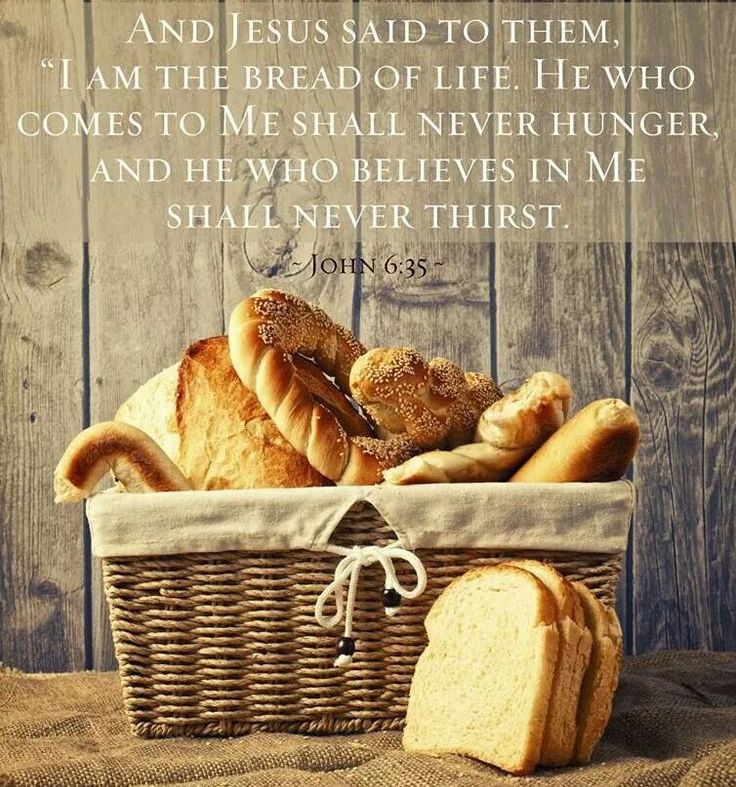
When we receive communion or when we come to pray before the Blessed Sacrament, we don’t receive an inanimate object.  We don’t kneel before a static entity. This is not a crucifix or a statue that reminds us of something. This is Jesus. The One Who Is who was and will be in the future. When we receive communion or come to adoration, we take within ourselves or we come before the dynamic, powerful Presence who speaks to us through the life He has given us. How great is our God. He has found a way for each of us to have continual, intimate encounters with Him. Let us pray, for those whose access to the Gift of the Eucharist or Blessed Sacrament is not so easy whether they have left the faith or perhaps they might be struggling with it or for many they may not yet found it as we remember that Jesus has said ‘I am the Bread of life he who comes to me will never be hungry.’

15TH SUNDAY OF ORDINARY TIME

images

This Sunday our Gospel reading is all about Mission. Jesus summons the twelve apostles and sends them out on a missionary tour.  The chosen followers of Jesus have to carry the word of God as a challenge to others. In that mission the apostles have the authority and the power of Jesus. They have to travel on that. They are not to rely on their own resources but on the authority that has been given to them and the hospitality that will be offered them. With no bread and no money, they have to depend on the kindness of others: that vulnerability makes their message their real resource. If they have bread to eat, it means that people are not only hospitable to them but to the word they preach. If they are not accepted, they have no option but to move on. And when a town rejects their message, the apostles are to shake the dust from their feet – a symbolic act performed by strict Jews returning to Palestine after journeying abroad. The Twelve went out and preached. Jesus and his Twelve preached that God would adopt humanity, making its members which include you and me “sons” and “daughters” of the Father This was Good News then just as it is now!  In recent times we have seen the decline in people attending Church in our parishes for many reasons and I think we need to be like the twelve who were sent out with the message of Jesus but with one difference we need to seek out those who do not want to hear the message instead of shaking the dust off our feet we really need to let our feet get dirty. We have to have carry the word of God as a challenge to others and it should also be a challenge to ourselves in our time and place. There is much within the Church that needs to be challenged but there is so much more that is of value even now. In telling us about the beginning of the church in so dramatic a fashion, Mark, wants to be certain that disciples in his church and in the church  of our time will be mindful of some important implications. We, like the first disciples, are inadequate for the task; yet Christ’s mission for God’s kingdom is given to us. If we labor under the illusion that we can bring about God’s reign on our own, we will be advancing something other than God’s kingdom on earth. Paul refers to his experience of preaching the gospel as foolishness (1 Corinthians 1: 1831). He relishes saying “we are fools for Christ’s sake? Because he understands that it is because of his weakness that the power of Christ can dwell in him (1 Corinthians 4: 10 and 2 Corinthians 12: 9). Of course, we know that is a task not confined to the clergy or to religious sisters and brothers. It is the job of every single member of the Church. The message of hope from today’s Gospel is that we don’t have to communicate the Gospel in highfaluting or overly technical language. We will be far more effective if we just use ordinary words and simple concepts. We don’t have to have spent years of study before we can explain what Christ means; we can do it quite easily using concepts we already understand as well as examples from our own lives.

The crucial point in the Gospel  is that by doing things Jesus’ way the Apostles get close to the people, they understand their concerns and they share their life. There is no better way of communicating the love of God to the people around us than sharing the concerns of others and getting close to the people of God. Let us be fools for Christ like St. Paul as we remember that it is through our weakness that the power of Christ can dwell in us and work through us for other people.

PENTECOST SUNDAY

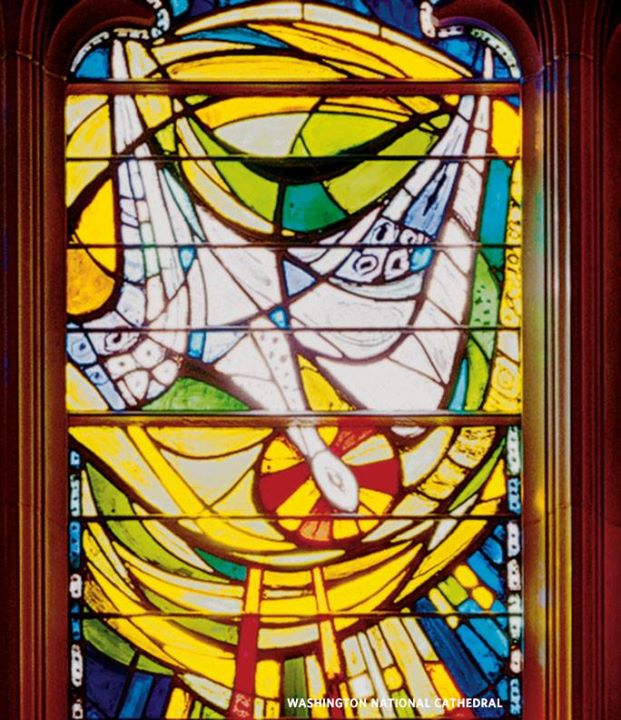
HOLY SPIRIT

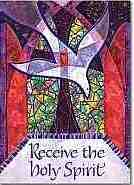
This Sunday is Pentecost Sunday, the day when we celebrate the decent of the Holy Spirit upon the Apostles and the beginning of the apostolic mission to bring the Church to the world. It is the birthday of the church so maybe we should sing happy birthday instead of Veni Creator Spiritus and blow out the candles on the birthday cake instead of blowing out the paschal candle because it’s the end of Easter!! With the feast of Pentecost the seven weeks of Easter have come to an end, Christ’s Passover is fulfilled in the outpouring of the Holy Spirit, manifested, given, and communicated as a divine person: of his fullness, Christ, the Lord, pours out the Spirit in abundance. (Cf. Acts 2:33-36) (CCC 731)

In the Gospel reading, Jesus, knowing that human nature is still weak, gives the apostles the power to forgive and reconcile those who sin. It is God’s mercy working through His bishops and priests down through the ages to ourselves in our own time and place! The scene in the gospel opened with fear and apprehension on the part of Jesus’ followers.  By the time John wrote his gospel, Jewish Christians had been excommunicated for their belief in the Messiah. Ostracized and socially persecuted, some Christians reacted in fear, while others boldly proclaimed the gospel Early Christians needed a sense of stability, a sense of divine peace. Through the words of Jesus, “Peace” was John’s prayer for his readers as it is for us as we listen to this gospel reading.

With the sight of Jesus, fear turned into great joy. Anxiety turned into relief. Desperation turned into vindication. Most important, a lack of spiritual direction turned into a sense of deep spiritual grounding. The divine presence stood close to them and with the divine presence came divine peace. We too have the divine presence in the Blessed Sacrament and it brings Joy and spiritual grounding to all those who come and Jesus says to each and everyone you are welcome.

 We can’t ignore the problems that are there both our own and other peoples. Most of the time, the problems in our lives and the lives of other people just don’t go away by themselves very often we need to stop and think things through.  If we pray through the problems as well as thinking them through and this seems to be the most reasonable solution for us as Christians, we will find that they are much easier to get through.  Simply put Prayer Moves Mountains.

 Gathered at the Eucharist week in week out we bring our prayers to God. We each have our own needs. Family and friends may be sick.  Kids need work. The person who has been in our lives for so long has died. We bring these and all our concerns in prayer to church because they remind us of our need and they raise our hopes in the power of God made real to every generation through the Holy Spirit.

Through the Holy Spirit our relationship with God has produced fruitfulness, satisfied our longings, and brings us peace. Because of God’s faithfulness, we give thanks, offer sacrifice, and once again present our needs this Pentecost Sunday as we remember the presence of God with us in all our lives.

FEAST OF THE ASCENSION

ASCENSION OF THE LORD

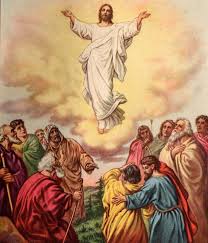
This Sunday in Ireland we celebrate the feast of the Ascension. In those places where the ascension was celebrated last Thursday the 7th Sunday of Easter is being celebrated instead.

The words of the Gospel for this Ascension day strike me in a particular way as we have our parish mission going on at the moment. Jesus tells us ‘go therefore make disciples of all the nations and know that I am with you yes to the end of time. This Gospel reading is all about the past and the future but it is also about ourselves in the here and now of today, and what are we doing to make disciples of all the nations in 2015 or at the least make disciples of those around us perhaps our families and friends. In today’s gospel, Jesus has little to say, but he is definite about what he has to say when he speaks.

This is in sharp contrast to the fact that, even at this last minute, some of his disciples still doubted. The disciples did what he told them to do. He asked them to meet him on the mountain, and they did that. Like any gathering of people, their feelings were varied. Some of them worshipped him, while some of them still doubted. Jesus didn’t seem to have any great problem with that, because he knew that, when the Spirit came, all of those doubts would be ended. It would seem, indeed, that he was in a hurry to take his leave of them, so that the second part of his plan of salvation could get underway. The mission of the apostles was simple to understand; difficult to carry out. It was to teach others all that Jesus had taught them. Just as he asked his disciples to follow him, they were to ask that others should obey his directions and instructions which was so hard then and especially hard in the world of today.

The programme of redemption and salvation was to begin at Pentecost and continue from generation to generation, until the end of time.

So many things have changed in the Church and society. However the two things that have not changed are Jesus himself and every word of his message as they are ever old and always new for each generation. The message of Jesus is ignored by many people inside and outside the Church for their own reasons. The essential message of God and his messenger Jesus his Son have never changed up to now and I don’t think that they will ever change. Again and again we need to ask ourselves what we are doing to make disciples of all the nations realizing that Jesus and his message are always new for each generation. May we be heralds of the Ascension as we place the message of Jesus before others by the way we live our lives in the Joy of the Gospel.

While Christ now reigns with his Father, he still dwells in his Body, the Church. Through the Church, Christ acts in the world. Through the Church he announces the Kingdom of God. Let us remember that you and I each and every one of us are members of the Body of Christ the Church and as such are called to be heralds of Gospel Joy. The Church, imperfect as it is as the assembly of sinners, still dares to declare the Kingdom to the world at large. For the Church is made whole through the work of Christ’s Spirit as the Body of Christ  which enables us  to Go out to the whole world to proclaim the Good News.

6th SUNDAY OF EASTER

images (1)

Next week in our Parish we begin the Parish Mission which is being led by the Ceili Community the mission has as its theme the beatitudes. During the first week the members of the mission team will be knocking on peoples doors inviting them to come to the events in Church during the second week. I think the mission will be about reconnecting the people with the Church in this part of the world. So many have left the Church for so many reasons and many others have left and have begun to find the way back to the Faith. I always have held the great belief that Faith, Religion and the Church are really about real people and their everyday situations and I am constantly reaffirmed in this conviction. So many people have left the Church and are now starting to return again. Last Sunday the deacon who had served in our parish Andrew Black was ordained to the Priesthood for service in the diocese of Down and Connor. We had our Parish celebration on Tuesday night with Fr. Andrew and number priests from the locality it was a joy filled celebration.

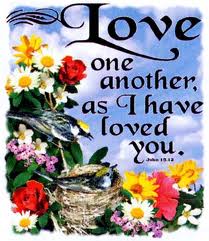
Our Gospel for this Sunday is  a reading from the gospel of John in which Jesus tells us ‘As the Father has loved me, so I have loved you. Remain in my love. This is my commandment: love one another, as I have loved you. The love of God is easy for those who see God as a loving and faithful Father. St. Therese of Lisieux,  was a master of the spiritual life tells us about the love which is its essence. She taught the “little way” of childlike simplicity and obedience to God as the way to grow in love.

 “It seems to me St. Therese said that there will be no judgment for victims of love, or rather, the good God will hasten to reward, with eternal delights, His own love which He will see burning in their hearts.” Love of God is tied to the commandments, because the commandments are the love of God in action. Those who love God long to be holy as he is holy and so live by the commandments. But they do it out of love not because they have to. “In the heart of the Church I will be love,” St. Therese exclaimed upon discovering her true vocation. Though bound by the walls of her cloister, she knew unlimited freedom to reach the heights of holiness through courageous devotion to charity. We too are students of the love of God. The commandments are the lessons by which we will master the love of God our Father in thought, word and action.

Jesus chose his followers to carry out God’s plan of salvation. He chooses us today to do the same. By allowing us to participate in his work of redemption, he gives us a personal stake in the Kingdom of God. “God …enables men to be intelligent and free causes in order to complete the work of creation, to perfect its harmony for their own good and that of their neighbors…they then fully become “God’s fellow workers” and co-workers for his kingdom.” (CCC 307)

Love is the best way to become his “co-worker,” since it reveals the reason he made the world to others and affirms our friendship with the creator. Love changes everything it touches. It tells us to stop bragging about this or that. It enhances our reputation. It denies the power of position and wealth which we sometimes feel is ours by right, it raises us up as true leaders. It might take away the advantage of our personal ideas on any topic. However, It connects us in unimaginable ways to God and to one another.

 Divine love transcends mere emotion. It becomes the lifeline to God. And it forms the basis of real community where everyone is valued and none are left out. It is inexplicable in theory, yet easily seen in action. Wherever God loves, he acts. Wherever he acts, he is there with us. HE IS WITH US simply because he loves us and the love of God knows no bounds; we remember the love that God has for each and every one of us each time we look at the Cross. We also remember that Jesus the son of God who gave up his life on the Cross out of love for us is our saviour.

SECOND SUNDAY OF EASTER Divine Mercy Sunday

download (2)

This weekend we celebrate the second Sunday of Easter. This Sunday is also known as Divine Mercy Sunday, we also have the launch of the extraordinary Jubilee of the Holy Year of  Mercy in Rome. The holy year will begin on the 8th December and will last until the feast of Christ the King 2016.

The Easter season has the most exciting Scripture readings of the year. They take us from the empty tomb of Easter Sunday all the way to the coming of the Holy Spirit 50 days later at Pentecost. The Apostles are huddled together in fear in the empty room. They weren’t so sure that the women’s report that Jesus had risen was believable. They weren’t singing for joy! Now, a whole week has gone by. They still felt “rocky” about their future.

Thomas wasn’t the only one who had doubts about Jesus, I think so many were doubtful then as so many are doubtful right here and now. The Apostles were pondering the shocking experience of the week before when all seemed to be lost as Jesus hung on the Cross. But here we are over 2000 years later thinking about how they felt after the events of that first Holy Week. Jesus had broken through those doors and came to assure them that he was alive and then his message must have troubled them: “As the Father has sent me, so I send you.” in the same way we are sent out in the Joy of the Gospel to bring his message to other people wherever we are by what we say and do. We are asked to bring the mercy of God to all those out there who need his healing merciful love.

We remember the joys the hope, the grief and the anxieties of the people in our time these are the joys and hopes, the grief and anxieties of the followers of Christ that means you and me. As Pope Francis directs us, we must courageously reach out in the joy of the Gospel to those who are doubtful among us, and assure them of the great mercy of Jesus. Our world is hurting so much because of the many evil things that are happening within it. May all of us be the witnesses to the joy of the Gospel bringing the caring face of the mercy of God to the people of our time and place as Christians in our own communities.

MERCY YEAR

EASTER VIGIL AND EASTER SUNDAY

images (35)

Having  completed our Lenten observance and after the liturgies of Holy Thursday and  Good Friday we  are now at the stage of celebrating the Easter Vigil on the day of resurrection that is Easter Sunday. Holy Saturday is about emptiness, the cross is empty and Jesus lies in the tomb everything around us is still.  The heavens and the earth cry out with longing for the sinless one who is not to be found, if we stop to think for a moment we remember that Jesus died and rose again on the third day. We wait, as mourners beside a grave, unsettled, ill at ease, not knowing what to do with ourselves. The Church has only one thing to do today: to pray through the emptiness of Holy Saturday.

Holy Saturday is the day when we experience watching and waiting at the tomb as we await the celebration of the Resurrection which we celebrate in the Easter Vigil and the season of Easter. The Psalm for Easter Sunday says, “This is the day the Lord has made; let us rejoice and be glad in it.”Above all days, Easter is a day of joy. At Easter, we celebrate the kind each of us longs for, when every tear is wiped away, and there is no sorrow any more no more suffering from weather or hunger or hurtful human beings. As we sing in the much-loved hymn by Fr. John Foley, S. J., at Easter, “the cross and passion past, dark night is done, bright morning come at last!”  When we ourselves rise to meet our risen Lord, in that bright morning we will hear him say, “Come away, beloved. The winter is past; the rain is gone, and the flowers return to the earth” (Song of Songs 2:10-12).

In the loving union of that encounter, all the heart brokenness of our lives will be redeemed. That will be perfect  joy.So in that same vein of perfect joy we say “this is the ‘day which the Lord has made.’ Alleluia!  let us take fresh hope,  with Christ our Passover everything is possible! Christ goes forward with us in our future!” Let us go forward together as Easter people rejoicing in the Resurrection.


THE EASTER SEASON

 Art Advent 2C

It can seem that once Easter Sunday has passed Easter is finished, but the’ celebration continues for fifty days. The next Sunday of Easter after Easter  day  is traditionally known as Low Sunday or Dominica in Albis (White Sunday) which refers to the white baptismal garment of the newly baptised. Divine Mercy Sunday is a new feast also celebrated on this day. It comes almost as an opportunity in which anyone who missed out on celebrating the mercy of Christ in Holy Week has another chance. After forty days we celebrate the feast of the Ascension of Christ who returns to the Father to send us the Holy Spirit at Pentecost. We spend the novena (nine days) between the Ascension and Pentecost praying for the Spirit like Mary and the apostles in the Upper Room. On the fiftieth day (which is the literal meaning of the word “Pentecost”) Easter ends. On that day “Christ’s Passover is fulfilled in the outpouring of the Holy Spirit” (CCC 731). Our celebration of Easter resonates throughout the rest of the year: full of gratitude for Christ’s passion, joy in his resurrection and, strengthened by the Spirit, we continue our Christian journey.


PALM SUNDAY

images (46)

As we gather together this weekend  we have come to our annual celebration of our Lord’s entrance into Jerusalem his own city at the beginning of Holy Week more commonly known as Palm Sunday. The entrance into Jerusalem is one of the very few events in Jesus’ life which is mentioned in all four gospels.  It is the only time that Jesus accepts and encourages public acclaim as Messiah.  He even goes as far as organising his entrance by telling the disciples to go and fetch the donkey.  The key moment in God’s great plan of salvation is about to unfold and Jesus knows exactly how it will unfold.

As we reflect upon the story of Jesus coming to Jerusalem we recommit ourselves to Christ and his message of salvation.The events of Palm Sunday were foretold thousands of years ago. The first reading from Isaiah, one of the four Suffering Servant oracles written at the time of the Babylonian captivity, speaks of a courageous and obedient messiah-figure, who says,

“I have set my face like flint” against the beatings and scourging that lie ahead, “knowing that I shall not be put to shame.” The second reading from Philippians reminds us of Jesus’ total emptying out of His divinity in order that He might identify Himself with the lowest criminal being led to His execution, “obedient to the point of death, even death on a cross.” We move towards the heavenly Jerusalem only because Christ himself has already made that journey to the Cross for us and now he offers to make it with us. 

 The full drama of the Gospel  begins with the crowd’s fickle acclamation of Jesus as King at the beginning of the reading. It is a foreshadowing of the blasphemous mockery the soldiers will hurl at our thorn-crowned Savior a few days later on Good Friday. And yet, we raise our voices joyfully with the crowd, linking the honor given Him, especially by the children, with His ultimate victory beyond the grave. We wonder and rejoice as the veil is raised to permit a glimpse of Jesus, the Messiah-King and liberator.

The Church is a master of drama in the liturgies of this week. Through the use of lay readers for the Passion and the voices of the congregation, we all become part of the action. On Palm Sunday we feel embarrassed to cry out “Crucify Him” with the palm branches still in our hands. It reminds us of our own fickle response and our lack of courage in responding to His love and truth. Yet we know that it was the sins of us all which brought Jesus to Calvary. Palm Sunday and Holy Week are all about Jesus suffering for our inadequacies and our own very real sins. Holy Week is a time for us to realize what we’re really like, and to find that the only remedy for our pains and our fears is love. That is Love of God and  love of others . Are we ready to join our own pains and fears to the Master’s? Are we ready to add as much love as we can possibly muster to His boundless love? As we recall the Passion story on Palm Sunday and then more solemnly on Good Friday we are called as witnesses to respond and to imitate his life. And as God’s family, we are called to look out for one another. It’s not just about “me.”It’s about “us.” Our journey is a journey of self-emptying in love too so let us not be afraid to set out on our Journey through the week that we are beginning with Palm Sunday so that we will be able to celebrate the bright light of  the resurrection at Easter.

HW

4TH SUNDAY OF ADVENT 2014


This weekend we celebrate the 4th Sunday of Advent and we hear the story of the Angel Gabriel coming to tell Mary that she would be the mother of Jesus. But as we hear this story we should stop and step aside from all the ongoing activities of this time of year to think about how Mary felt when she got this news that she was to have a child. Luke tells , ” she was greatly troubled at what was said and pondered what sort of greeting this might be.” The angel has to reassure her, “Do not fear Mary.” – she must have been afraid. In that uneasy world of Galilee, a place of conflict and struggle, Mary’s personal response showed confusion and doubt. Still, Mary did not get a roadmap of the future – neither do we. All her questions weren’t answered – nor are ours. Gabriel announced the conception and birth of royalty. Mary’s child would be “great” (as unique and history changing, like Alexander the “Great”). He would be Son of the “Most High” (a title for the greatest God, the highest concept of divinity one could have. As we discussed last week, the title “Son of” indicated a unique, intimate relationship with this highest God and a sharing in this God’s power). He would have the Davidic throne of Israel forever. [1:32]


Mary made room for God in her life. She and the saints are more like us than the arts or literature about them show. They are amazingly human that is like you and me and it is among them, in all their human limitations, that God wants to dwell – among people who despite struggle and doubt, can say “Yes” to God. Scripture suggests God wants to enter more fully into our lives; our not-so-neat and orderly lives but our messy lives with all the good and bad and all the happy and sad times that are part and parcel of our lives. Mary accepted, even proclaimed, God’s will in her life. She placed her future in the hands of the Father so should we. Her example should inspire us to stand firm as Christians in today’s ever-changing fads and fancies and especially as we face up to the secular razzmatazz in the run up to Christmas. Remember, the words of others may sting, but the Spirit of God burns within. The divine fire can withstand the darts others fling toward us.


Post Navigation