Fullerton T

RELIGION LITURGY AND LIFE

Archive for the category “Life”

31ST SUNDAY IN ORDINARY TIME
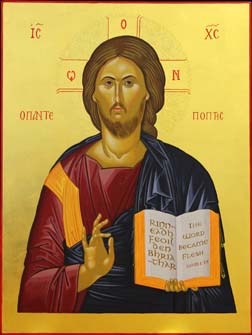
 

Every priest, and indeed every Catholic, can sometimes find themselves in the position of someone asking “This religion of yours – what’s it all about, really, when you come down to it? What’s the bottom line?” Our temptation might be to start going on at length, which is when we should remember this Gospel. Jesus, asked a very similar question, pins our faith down to two very simple things – love of God and love of neighbour – which together make up the foundation for everything else in our religion. The very simplicity of these two commandments is a gift, so that we can try to live them out each day of our lives. The first commandment, which is also that given by Moses in the first reading, is actually a prayer that our Jewish brothers and sisters still recite every single day.  Jesus, our perfect High Priest, gives us these two commandments to be written in our heads and our hearts, to remember each day, so that we may conduct ourselves in the paths of the Kingdom of God.

How can we find our way through the jungle of the multiple interdicts and commandments of the Law? This is the question a scribe puts to Jesus in all loyalty. From the confession of faith which every pious Jew recites twice a day, Jesus retains first and foremost the commandment to love God. If God is unique, like No one else, the commandment to love him above all is indeed the first.

Jesus also draws the scribe’s attention to another commandment. Although it is second, the love of neighbour is, for Jesus, inseparable from the love of God. In fact, it is by charity that humanity resembles God, that we participate in the very life of God. That is the goal of the Law. There is one unequivocal sign which characterizes those who are not far from the kingdom. It is not their fidelity to religious observance. It is their service of love in its two inseparable faces, God and neighbour.

This saying will quiet those of every age who value the letter of the law above the spirit. It should provoke thought in those institutions where more care is given to order than to love. The conversation with the scribe raises a point very frequently made by the prophets of the Old Testament and by Jesus: love of God and of neighbour is of more importance than ‘holocaust and sacrifice’. There is a profound agreement between Jesus and the teachers of Judaism. The tragedy which follows comes when worldly calculations are seen to be more important than seeking together to do the will of God. It is a situation repeated with dreadful regularity throughout the history of the world right us to ourselves in our modern world. A world where so few have so much and so many barely have enough to live on.

Let’s get back to the question at the start of today’s blogg every Catholic you and me included, can sometimes find themselves in the position of someone asking “This religion of yours – what’s it all about ? A Good  starting point for me in attempting to answer anyone’s questions about  the faith is found in the comment in St Peter’s first letter: ‘Always have your answer ready for people who ask you for the reason for the hope that is in you, but give it with courtesy and respect. The answer to the questions can simply be put in terms of love of God and love of neighbour which together make up the foundation for everything else in our religion.

In our relationship with God, we can ask the same question of ourselves “This religion of ours – what’s it all about what’s most important?” How does that question impact our prayer life, our family life, our social life? What one principle or character trait tells others we are followers of Christ? During this year of faith we should think about our faith and how we would give our answer to anyone who asks the question “This religion of yours – what’s it all about”?

30th Sunday of Ordinary Time

This Sunday we read in the Gospel Reading about Bartimaeus the blind man. There are so many  forms of blindness  apart from the physical blindness which is an awful thing  in itself. There is also another blindness that so many seeing people have and that spiritual  blindness . Blindness is terrifying. Darkness brings all our terrors before the minds eye. Not being able to see where we are going is the stuff of most human fears. The poverty and blindness of Bartimaeus speak to any human being of feeling  and, indeed, if there is someone to whom it does not speak, then that person probably would have no time for religion or things of the spirit as she/he would be insensitive to promptings in our imagination that lead us to faith.

We live in a world of blindness. There is the blindness of world leaders who press forward policies that are so short-term that we have whole regions that simmer with unrest such as the Middle East. We have blindness that prevents us seeing how policies create injustice and stop development. We have the blindness that sees global warming yet refuses to take action in time. In  our own  localities we have blind-spots.  blind spots about what is really of value in a society that has so much. In our own lives we can find blindness to those around us, blindness to the community, blindness to the needs of those who need us young and old. Blindness can be a great help in avoiding awkward questions of conscience. We are called to be seeing people, people who look at the world with eyes of faith and are not afraid to help others with their blindness. Seeing, however, isn’t limited to seeing the blue of the sky or the road to home. It is also a matter of seeing the truth about ourselves which we dont often want to know about.

And so in the Gospel Jesus gives Bartimaeus all that he asks for. Bartimaeus sees not only the world around him but also his Lord. And in seeing Jesus, Bartimaeus accepts the Giver with the gift of sight that is eyesight and more especially spiritual sight. As Jesus healed this blind man because he wanted so desperately to see, He will heal all of us who long to be cured of our spiritual blindness. When we ask in faith, Jesus will give us His  vision for ourselves and for our world. 

27th Sunday Of Ordinary Time

WEDDING RINGS

At the end of July this year I attended the wedding of friends daughter and I had great day and I enjoyed it so much especially as I knew so many of the people who were there. I know so many older people who are married for over 50 years. When my mother and Father were married for 50 years in 2009 my dad pointed out that he had done 2.5 life sentences (in Northern Ireland a life sentence in prison is around 20 years). He also said he wouldn’t have done anything else with all  the ups and downs of those 50 years which included the troubled times of Northern Ireland in the 1970’s and 1980’s.

This week the readings  are talking about the vexed question of DIVORCE. I’m sure there isn’t a family circle in our modern world that hasn’t been touched by the tragedy of a marriage that began with high hopes of unending love and then ended in a breakup with all kinds of people especially the children involved being hurt. Even in my own family circle we have had a marriage breakup with one of my brothers and his wife going their separate ways after a good many years together.

Instead of a lifelong union symbolizing God’s love for people, marriage is now seen merely in terms of human companionship; as friendships come and go, so do marriages.Because of the social and personal ramifications of divorce, the subject carries serious moral weight.Divorce may be an option that delivers a spouse from a personally and morally untenable situation, but it should only be seen and used as a last resort.

Despite his or her marital status, one should always seek the counsel of a good spiritual guide or confessor. In this way, the person can face the moral challenges that face him or her. Family is a core value to all societies, no matter their cultural form. Anything that challenges family should be rejected. Divorce may not challenge every family, but it should be a concern to everyone because it affects the stability of the parents and the welfare of the children.

In the gospel for today Jesus is asked an awkward question about the legality of divorce. He lays down very clearly that what God intends for marriage is what is found in Genesis where the “two become one” for all time rather than the dispensation granted through Moses (permitting a writ of divorce) which was an exception, not the rule. Jesus finishes His teaching in the presence of His disciples. Divorce, that is, the arbitrary dissolving of a true union in marriage, is against the order of things. The union continues being broken by divorce; marriage is the commitment to bringing that union closer. This wonderful and interesting discussion is broken up when mothers and fathers bring their children to Jesus. The disciples desire to continue this interesting conversation, but Jesus becomes upset and invites the children to come to him to be touched, blest and welcomed . These teachings on such hot topics as the importance of   community are difficult. The children  in this gospel represent the simplicity of heart and mind needed on the part of those who would be a part of the “kingdom” or new order which Jesus was initiating. 

Marriage and any true loving relationship between a woman and a man is a gift from God which keeps on giving, giving to each other and to those in the family . A loving relationship, and especially the relationship blest in Marriage, is a covenant of continuing God’s creation especially in these days when so many people are trying to redefine the proper meaning of marriage to suit certain lifestyles.

So then on this day we should remember those who have just been married during this year may they have a long and happy life together. we should also remember those who have been married 25 or 50 or even 60 years. Finally I also want to remember all those whose marriages didn’t last and ended up in the divorce courts, may they all find god there amongst all the hurt  and heartache that divorce causes to so manypeople.

26TH SUNDAY OF ORDINARY TIME


“Anyone who is not against us is for us”

‘Inclusiveness’ is a modern virtue! We are told of the importance of ‘inclusive language,’ sales people and politicians stress that all references to people must be ‘inclusive’: we are this, we are that, we are the other and we are supposed to be moving forward. As soon as any person or group is not ‘in the loop’ or consulted or mentioned, then there is trouble. Every decision must be inclusive because if someone or a particular group is excluded, then there will be BIG trouble.  ‘Exclusiveness’ seems at time to be virtue! A chic, expensive restaurant where people want to be seen is an ‘exclusive restaurant’ — ‘exclusive’ is an adjective of quality and approval. ‘An exclusive holiday destination’ is where only a few, ‘the so called better people’  go. In an exclusive resort there will be no riff-raff! An ‘exclusive offer’ for this or that comes with every postal delivery: it means we, just a few of us, are special. Unlike the great-unwashed mass of humanity, we appreciate such an exclusive opportunity and, indeed, being the special sort of people we are, we deserve this exclusive offer.

Exclusion as a tool within society is deeply programmed into us. The tribe is defined by the people who-do-not-belong. Then they become’ the others’ and because they are not’ with us,’ they are opposite us, and so they can easily be seen as opposed to us, and a threat. The others must be kept in place, they must be controlled, excluded from power, made subject to us and, if necessary, be destroyed. Exclusiveness is ideal as a means of making us united, but then can often destroy us in the conflicts and wars that it makes possible. We only have to look at the wars of the last century to see this.

In the Gospel reading for today the disciples were scandalized by an outsider curing in Jesus’ name. To the Jew of Jesus’ time, a name revealed the power and purpose of the particular person; to invoke the name of Jesus meant to tap into his healing power. But use of the name had a price; to use a name meant the one invoking it had a relationship to the person, the power, and the movement the name represented. On these grounds, John objects to the outsider healing in Jesus’ name. John’s question seems to say: “How dare he! This outsider should not be doing this it really should be one of us!”

Jesus turned the objection to the question of discipleship. No matter how small the kind act, no one who did good in the name of Jesus should be stopped. In fact, anyone who did not oppose Jesus and his movement were considered potential friends and benefactors. (This outward world view allowed Christianity to grow rapidly. Anyone was a potential Christian.) Friendship began with a simple kindness. A benefactor relationship began with a single act of charity. The good others did for Christ and his followers did matter then as it matters for us today! God’s choices are often surprising to us, and we might even be tempted to say: incomprehensible! For in today’s gospel we hear about someone who, no doubt having heard of the power of Jesus’ name, uses this strength and power to cast out demons, but without belonging to the group of disciples that the Lord had called to himself. This particular Gospel reading is a  precious  guide for our everyday life: “He who is not against us is for us.” When someone is NOT hostile toward Christ’s faithful, how could we judge his intention toward us? God alone knows the depths of our own hearts and all of the thoughts of our minds!

Who could say that the Lord had not given  such a person the gift of his grace in order that this same person might love him in his heart? God and his church are a free gift, at all times, in all places through so many people   given to all of us! If we look outside of our so called tribes and comfort zones with eyes of faith we will find that there will be many more people for us than there are against us. We remember the lines from the gospel for today;

Jesus said, “no one who works a miracle in my name is likely to speak evil of me. Anyone who is not against us is for us”let us remember these words in the days ahead.

25th Sunday Of Ordinary Time

THE CHILD FROM TODAY’S GOSPEL

This Sunday is the 25th Sunday Of Ordinary Time and we are now back into the daily routine of school or work with the various clubs etc restarting after the Summer. Almost four weeks have already gone by as we head towards the Autumn or the Fall as it is called in the USA. Time waits for no one and as I often say it certainly isn’t waiting on me and I certainly don’t want time to stand still for me permanently even though on some occasions is wish it would stop for a while to savour the particular things that I am doing that have brought me happiness.

Each week when we gather together as the family of god in the church and we renew our commitment to being disciples: followers of the Christ following the way of the Lord on our pilgrimage through life. As a pilgrim people we have been listening to Mark during this year as he reminds us of the demands of discipleship. Today Mark reminds us as disciples that the core of the mystery we celebrate is that Jesus, the Son of Man was arrested, put to death, and rose again. This is the mystery of faith. But we also hear him warning us about how we can be distracted in our discipleship: instead of seeing this community as the group which must model the way God’s people should live, it can all too easily degenerate into being a group where people argue and compete for honours and position. We as disciples have to be focused on the Lord and recognise how often we fail as disciples.

Last Sunday we had the first prediction of the passion in the Gospel and today we come to the second time in Mark when Jesus speaks about what awaits him in Jerusalem. However, we are invited to see in these readings   an attempt by Jesus to persuade his disciples that they need to change their attitude towards him and his ministry, and I would hope that in these reading we would be persuaded to change our way as well. It is clear that the disciples are happy to be with Jesus as their long awaited and triumphant Messiah but they are failing completely in that Jesus is not interested such discipleship. He wants them and by association he wants us  to learn the way of the kingdom which is the way of the cross. This is not the path to glory as human beings understand it but the path of humble service and love.

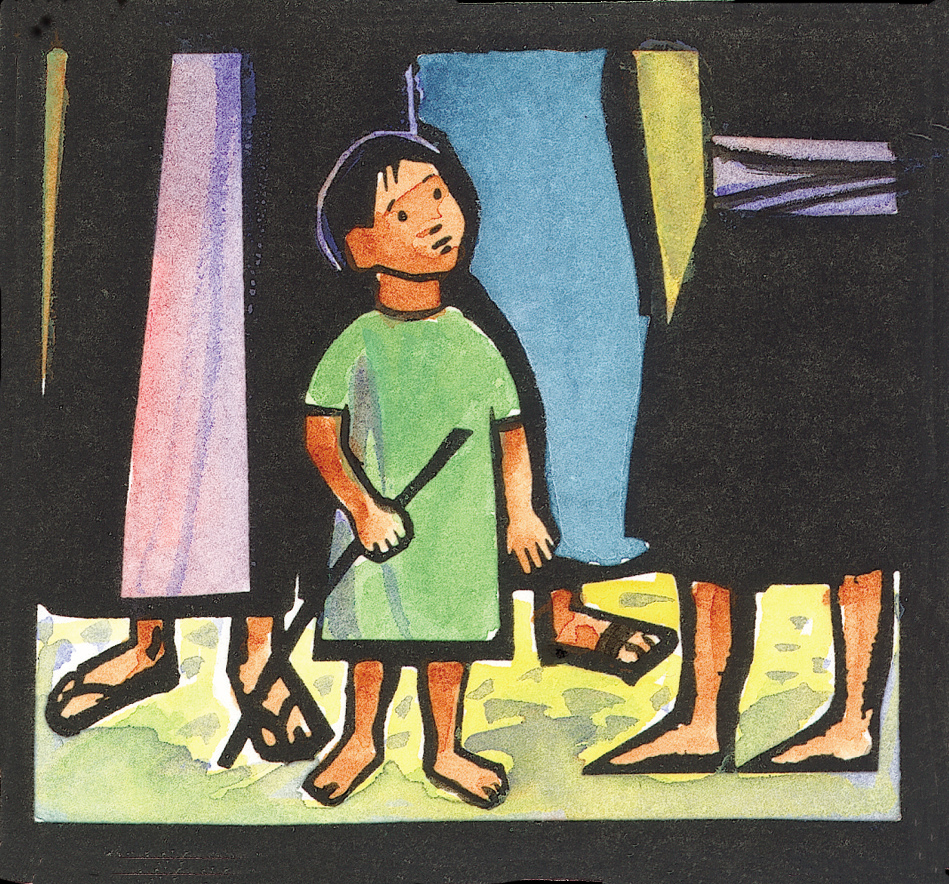
To emphasize Jesus’ vision of leadership, he gives us the example of serving a  child, children were the least important people in ancient cultures; children had the status of slaves. People had children to serve them and provide financial security in their elderly years. And they had many children, because the morality rate for children under 16 years of age was 50 percent. Childhood was precarious time in the ancient world. Reflecting this outlook, St. Thomas Aquinas once answered the question, “If there was a fire, whom should I rescue first?” Thomas listed in the order of importance: one’s parents first, one’s spouse second; one’s children last of all. Children were the least important. Serving one such as a child really showed true leadership for they served the ignored and the helpless.

To serve someone as lowly as a child took an act of extreme humility.  But who was the “child” of which Jesus spoke? Who was the Christian to serve? In one respect, the Christian was to show hospitality those who had the social status of the child: the outcast, the sinner, the sick and feeble. In another respect, the Christian was to show hospitality to all of God’s children, regardless if they were friend or foe. In a third respect, the Christian was to show hospitality to those who had become the “children” of the community, the Christian missionary who risked life and limb to spread the Good News. Obviously it took wisdom to discern how one would serve these different groups. But Jesus made one thing clear. Leadership meant serving all. It meant esteeming the least important.

We all have the opportunity and the responsibility to exercise leadership in our lives. But, as the gospel points out, leadership means service. It means setting aside our selfish desires to care for others’ needs and to show them respect. 

24th Sunday IN Ordinary Time

This Sunday we are asked to reflect on the question that Jesus asked his apostles “who do you say I am?” And this is a question that Jesus also asks you and me today who do you say I am? We need to stop and think about exactly who Jesus is . Put in a simple way Jesus is the Son of God our saviour who came into the world so that we could have life and have it to the full.

Jesus explained to all who would listen what it would personally cost them to follow him as their Lord and Messiah – it would cost them everything, even their very lives! How can anyone make such a demand? God the Father freely gave us his Son, to save us from sin and death – not just physical death but spiritual death as well. When we exchange our life for his we receive far more that we give up. We receive pardon, peace, and the abundant life of God’s kingdom now, and the promise of the resurrection and unending life with God in the age to come.  When we discover the treasure of God’s kingdom – God himself – we gladly give up all that we have in exchange for the life of joy and happiness God offers us in our faith. The joy he offers no sadness or loss can diminish God gives without measure. The cross of Christ leads to victory and freedom from sin and death.

Following   Jesus Christ   is a serious business.  It is not just a matter of being a member of a faith community.  It is not just a matter of observing various rules and regulations.  Christ is calling us to more than this.  He is calling us to be completely sold on His Kingdom.  He is calling us to put our faith in God our father in heaven.  That means being mocked because we take our faith seriously.  That means being hurt because we refuse to join a crowd that is more pagan than Christian.  That means being spat on, and hit in the face, and even dying for the sake of Jesus Christ let us remember Good Friday and the Cross.

Following Jesus is always going to have a cost to it no matter what way you look at it.  That is because good is always going to be opposed by evil and good always triumphs over evil.  May we not be afraid of being what we are people who are called by Jesus to follow him in faith. There will always be people who will decide not to follow Christ and it is their free choice. Having said that let all of us who are people of faith continue on our faith journeys as we answer the call of Jesus to follow him.


23RD SUNDAY OF ORDINARY TIME

Well here we are at the beginning of the new school year. I can just imagine the frustration of the parents trying to get their children out of bed last Monday morning. I always hated going back to school at the beginning of September as the long summer holidays were at an end. But then of course the next holiday would be Halloween and then of course Christmas and i’m sure there are already whispers of what the youngsters around and about are hoping to get for CHRISTMAS. The less said about that the better, I had a friend who wouldn’t let you talk about Christmas until after Halloween which in today’s climate is a very good policy for all of us .

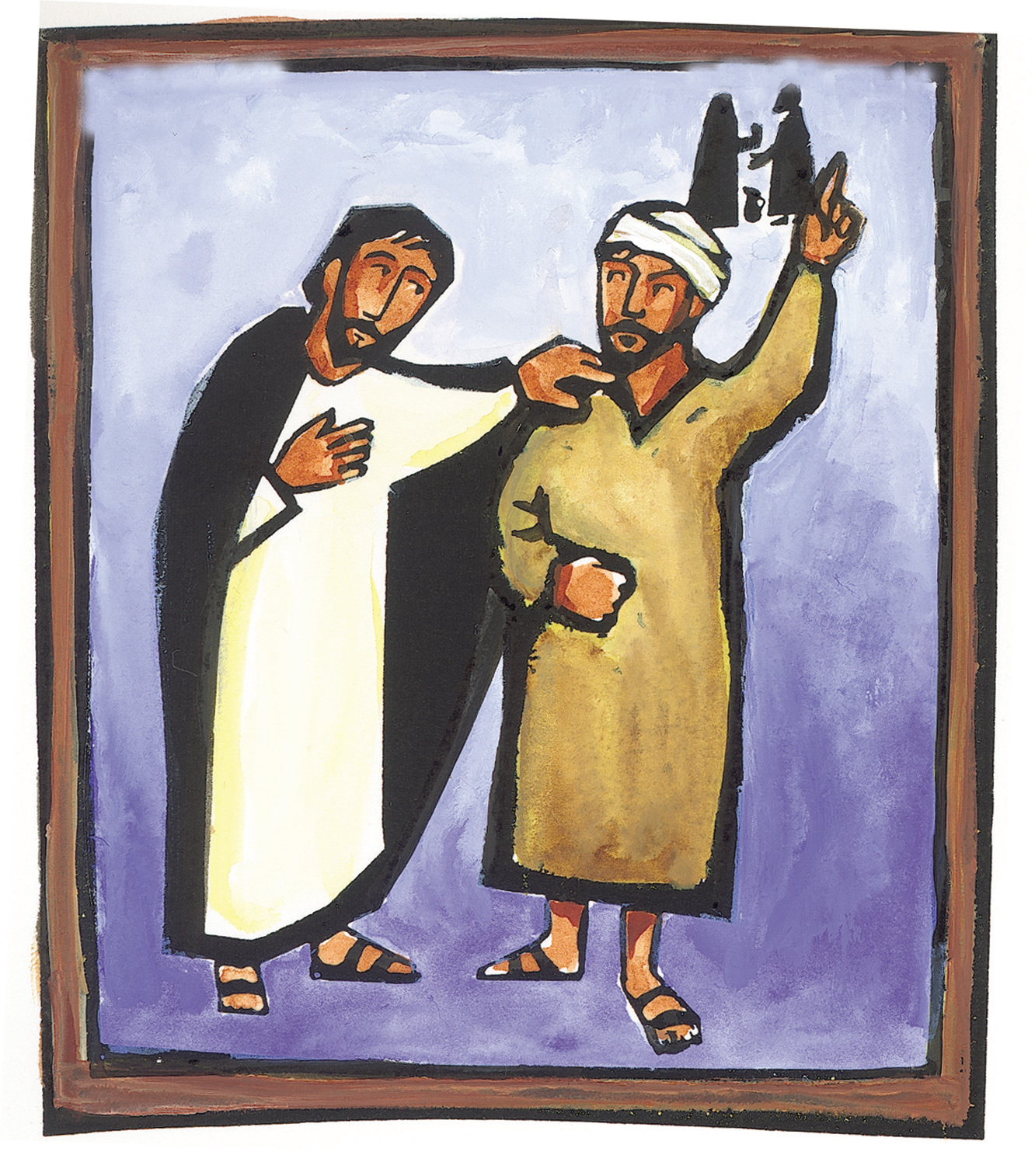
Our Gospel reading for this Sunday focuses on the deaf man regaining his hearing or rather Jesus healing the deaf man. What is the significance of Jesus putting his fingers into the man’s ears? Gregory the Great (540-604 AD) comments on this miracle: “The Spirit is called the finger of God. When the Lord puts his fingers into the ears of the deaf mute, he was opening the soul of man to faith through the gifts of the Holy Spirit.”The people’s response to this miracle testifies to Jesus’ great care for others: He has done all things well. No problem or burden was too much for Jesus’ careful consideration. Jesus freed the man from more than a physical ailment. He restored the man’s moral character and social contacts.

Jews in the time of Jesus assumed physical ailments (like the one the man suffered from) were the result of sin, either personal or ancestral. Such an ailment reflected moral deficiencies. It also placed barriers between the man and a normal social life. (Indeed, some of his family members might have been ashamed of his condition and sought to hide him.)

There are many people out there who are deaf, that is deaf and maybe even blind to the treasures of the faith. Many have never had anyone to show them the faith, Saint Paul pointed out in his time and what he said is more relevant today when he said was How are men to call on him (Jesus) if have not come to believe in him?  And how can they believe in him if they havenever  heardof him? Of course there are so many others who are blind and deaf to the faith by choice and the big question for us to ask ourselves  is how do we help the non practising to see and hear again and how do we inspire those who are seeking the faith in ways that will bring them to the faith .

The Year of Faith beginning in October is a summons and a call for all of us to come to an authentic and renewed conversion to the Lord, the one Saviour of the world. By faith, across the centuries, men and women of all ages, have confessed the beauty of following the Lord Jesus wherever they were called to bear witness to the fact that they were Christian: in the family, in the workplace, in public life, in the exercise of the charisms and ministries to which they were called. By faith, we too live: by the living recognition of the Lord Jesus, present in our lives and in our history. In faith all of us are challenged, to understand that God’s love is for everyone, and that we are agents of that love. To be agents of God’s love does not mean that we develop halos and a saintly patience; it means to remember the Faith that we profess and act accordingly. So let us also receive, with faith, Jesus in the Eucharist! Let us ask Mary to help us to believe and have faith as she has always believed in God! May she prepare our heart to worthily receive this most great sacrament, mystery of faith and love!

22nd Sunday Of Ordinary Time

WASH YOUR HANDS 

Here we are at the twenty-second Sunday in ordinary time at the beginning of September, doesn’t time fly! Some of our local schools here in Belfast have returned and began the new school year during the past week and the rest restart tomorrow. The old saying that time waits for no man rings true for me as I simply don’t know where the past two months have gone, perhaps I am getting old. That said of course I am getting older but the great consolation is that each of us one and all are getting older. I am reminded by the commentaries that I have about on this Gospel reading of my mother telling all of when we were growing up us to go up to the bathroom and wash our hands before we had our dinner. Indeed I see my brother and his  partner telling their children the  same thing when they are here in our house and of course it is the right thing to do.

In this Sundays Gospel We hear about the Pharisees and the  scribes who know both the original laws of Moses and those laws added to by the “elders” or rabbis down through  the centuries, they question Jesus about His disciples’ not observing exactly the traditions especially in their preparation for the feast.  The Pharisees have the evidence of the non-conformity of the disciples and so there is a certain amount of tension and there is also a teaching moment. The issue is far more important than a detail of ritual observance. Those who were leaders in Israel should have been helping the people to live according to the ways of God – so that they would be ‘a light to the nations’, as the prophets had taught. Instead they had lost sight of Israel’s great destiny, and worked against it, in fact, by elaborating a system of self-serving regulations. Jesus shows himself a true interpreter of Israel’s faith as he urges his followers to find integrity through the motives of the heart rather than in the observance of external rituals of purification. No wonder the people followed him so eagerly. Our Response to the Psalm for today expresses the message of the liturgy’s readings: ‘The just will live in the presence of the Lord’.

As the Sermon on the Mount (Mt chapters 5 and 6) teaches us, we are truly the People of God if our life together gives expression to the ways of our Father in heaven. We have to be open to God and the road he is asking us to take which in these present days is a rocky road with loads of pot holes. Many people ask themselves what road is God asking them to take and the simple answer is that all of us are asked to keep on  the road of the faith and that road will never be an easy one especially if our life of faith gives expression to the ways of our Father in heaven.

Let us offer ourselves and our prayers to the Lord in order to manifest his Glory in all of our lives and living in body, mind and Spirit. Let us cast our eyes towards Mary, the Mother of Jesus! Let us ask her to help us keep the faith as we travel along the roads of life which often times are rocky with many distractions. Let us remember that nothing is impossible for God and he does not let us down! Nothing is impossible with prayer and in particular the help of Mary’s prayer!


21 ST SUNDAY OF ORDINARY TIME.

Here we are at the end of August with the final roundup of getting back from the holidays and the beginning of the manically busy days of getting ready for the beginning of the new school year on the horizon. We always came back from the country for the last week in August in order to get ready for the beginning of September and the opening of the various schools and colleges we all attended. There always that certainty of going home and getting back to the normal daily routine after the summer, when everyone was going around and about doing their own thing and enjoying the break from the monotony of the same old thing school, college or work day in and day out.

 In the Gospel readings of the past weeks, Jesus has been distressing the disciples by his words. Last week he said we have to consume his flesh and blood in order to have eternal life. His followers could not possibly have understood this. They whispered, “This saying is hard; who can accept it?” In the Gospel, we have finally reached  the great conclusion of the discussion about Jesus’ being the “Bread of Life”, and his being the one ”sent”. Some of His disciples find these words offensive to their senses and so their minds boggle. They have to leave and return to their former ways of seeing, thinking and believing.

They saw the miraculous distribution of bread and fish and ate their fill. Their senses told them something they could grasp. Jesus stretches their minds and asks them as he asks all of us to be as open to something even more miraculous, but which goes beyond the information provided by the senses. They choose the path of the “flesh” while Jesus is inviting them to walk the way of the Spirit. They stumble over what they cannot see or imagine. It takes faith and trust to believe in Jesus and to accept his words. Real faith, however, is neither blind trust nor ignorant belief. Augustine of Hippo once said: “I believe, in order to understand; and I understand, the better to believe.” Faith and reason go together, because faith seeks understanding of God’s truth and revelation. That is why God gives us the help and guidance of the Holy Spirit, who is our instructor and daily tutor in the wisdom and knowledge of God. Paul the Apostle teaches us to pray for understanding that God “may give you a spirit of wisdom and of revelation in the knowledge of him, having the eyes of your heart enlightened” (Ephesians 1:17-18). Faith or lack of faith is our personal response to God’s revelation of himself to us. Jesus reveals who God is and offers us a personal relationship with God as our heavenly Father. Peter’s profession of faith was based on the personal relationship he had with Jesus. Peter grasped, through the eyes of faith, that Jesus truly was the Messiah, the Holy One of God.  Through the gift of faith Peter came to understand that Jesus was both God and man, sent into the world by the Father who loved the world so much that he gave us his only Son (John 3:16).

Peter believed in the words which Jesus spoke, because he accepted Jesus as the Son of God and saviour of the world. Faith is an entirely free gift of God which enables us to respond to God’s word with trust because God is true and utterly reliable. Faith is the key to understanding and experiencing God at work in our daily personal lives. Do you believe, as Peter did, that Jesus can change your life because he has the words of everlasting life?

Many leave, but some stay including Peter. So Jesus puts the big question to them and him, “Do you also want to leave?” He also puts that question to us here and now, will we remain faithful or will we go our own way by travelling down the road of life on our own without the certainty of a spiritual life.  I think that the quotation above from Augustine of Hippo is a good starting point for us as people of faith. We believe in order to understand and we understand better to believe. Faith is an entirely free gift of God which enables us to respond to God’s word with trust because God is true and utterly reliable so let us trust in God to help us in every difficulty there may be in the future as he has done in the past .

20th Sunday in ordinary Time

Here we are at the 20th Sunday in ordinary Time and we have just past the middle of August as we head onwards towards the end of the Holiday season. Then  we get into September and the beginning of the time of return with so many  going back to work, school, college or whatever.  For some it may be a time of change and for others it will be a time for renewing old acquaintances and work, school or college friendships. Our Gospel reading today speaks again of Jesus as the bread of life and once again he is misunderstood. Anyone who eats this bread will live forever.’ We who share this meal share in the life of Jesus. Within our sharing we are brought into the life of God. We are caught up in the life of the Father, who has sent his Son among us as our source of life and wisdom, and who has sent his Spirit into our hearts.

The Second Vatican Council speaks about the centrality of the Eucharist. “The Eucharistic Sacrifice,” the Council says is  “the fount and apex of the whole Christian life.” The Latin words are “fontem” and “culmen.” Even if you don’t know Latin, you can recognize their meaning. Culmen” provides the root for our English word, “culminate” – to reach the highest point. Fontem” refers to a “fount,” or a source. The Eucharist is the source and summit of our lives and all we have and do as Catholics and as Christians. The meaning of the Eucharist should be reflected in the lives of all who receive the sacrament.

The Eucharist helps us to be more thoughtful, compassionate and forgiving but this cannot happen without our own commitment to love and service of others as well as our commitment to our faith and that includes the parts of it that we particularly like as well as the parts of faith that are a challenge and I think that these days faith and being a person of faith is a big challenge. The Christian faith is an all in package and many people want what they want from their faith picking and choosing what they like and as a result they don’t realise or see that the great goodness of the faith taken as a whole is what god wants for all of us. The people who heard Jesus’ preaching at the beginning could not mistake his meaning. He meant in no uncertain terms, that if they were to receive his life eternally in the kingdom, then they must begin now to receive the Body and Blood which he poured out unto death at Calvary in the Eucharist, first instituted on Holy Thursday in the upper room and faithfully handed down in the Church in every generation right to ourselves in the present day. when some of his own beloved people rejected him, as many of his beloved people do today Christ did not change his teaching or water it down, he watched them leave with sadness, and i’m sure Jesus is looking down on us with that same sadness when he sees so many leaving his church in our time. Today   as the Body of Christ that is the Church we remember Jesus because he shared human life with us and enjoyed all that we enjoy, including a good meal, good friends and good conversation. We remember him when in the Eucharist we break bread and pour wine, because he poured out his life for us, allowing his body to be broken by death on the cross.  

We remember Jesus because He placed himself at the service of his Father and at the service of the people he loved . We too are called all these years later to that same service of others, being people who are called to be more thoughtful for others, compassionate and forgiving .By receiving the Eucharist, we are nourished, and enabled to nourish others through the example of our lives and the way we live them.

Post Navigation