Fullerton T

RELIGION LITURGY AND LIFE

Archive for the category “LITURGY”

CHRIST THE KING

This Sunday we celebrate the feast of Christ the King the last Sunday of the Churches year. The Feast of Christ the King was established by Pope Pius XI in 1925 as an antidote to secularism, this was a way of life that leaves God out of a person’s thinking and has us living life as if God did not exist as we all know God does exist and we have seen this through the example of  so many people throughout history right down to ourselves. The readings this Sunday come as a sort of final warning. Malachi pulls no punches. Those who have chosen to live their life harming others will disappear without a trace. Those whose lives are centered on themselves in self-pride that considers no one their equal will face the truth of their lives and the way they lived them. Our Gospel reading for this Sunday has Jesus on the cross between the two thieves.

The cross reveals both the folly of sin and the toll that sin takes on our world where the innocent suffer cruelly at the hands of the powerful.  The cross also reveals God’s profound and undying love for us. Even Jesus’ crucifixion did not turn God away from us. God loves us, even when we do our worst. We have a God who is not indifferent to our suffering, indeed, he has entered into our pain and the horror of death for us. Christ the King does not condemn those who murder him; while he passes a merciful judgment on those who turn to him in sorrow and need. Remember the thief who asked Jesus to remember him in his kingdom Jesus told him that he would be with him in paradise. The gospel shows us that all through his life and right up to his death Christ has taken a place with the suffering, poor, sick, the defeated and the outcast who cry out to God. In our midst he stays faithful to us, no matter how far we have attempted to go down the road on our own; or how far life and its attractions  have driven us.

 As we celebrate Christ as our King we are asked to embrace the cross and walk in the victory of the King of Kings and the Lord of Lords. What began as a humble event with the birth of Jesus in the stable has changed the world.  As we prepare for Christmas during Advent that begins next Sunday  are we with Jesus and his call to us to be his light to the people around us? Whenever we show the light of Christ to the world, the Kingdom of God breaks into it. Whenever we are moved by the Spirit to respond to need, to work for justice, to transform and heal our society, the grace of God becomes clearly visible in what we do and say.  We can be sure that nobody there on the first Good Friday  thought they were witnessing the death of a great King.  The kind of kingship Jesus spoke can only be learned among the poor and needy and those whom the world has forgotten. For our king is the servant of the poor and we only belong to his court when we become servants of the poor. let’s not forget the beautiful truths of faith that we have learned, let’s continue to learn more about them, celebrate them, live them, and pass them on. So that when people look at us, they will see that in our daily lives and dealings with those around us  “Christ is King to the glory of God our father.”

33rd Sunday in ordinary time

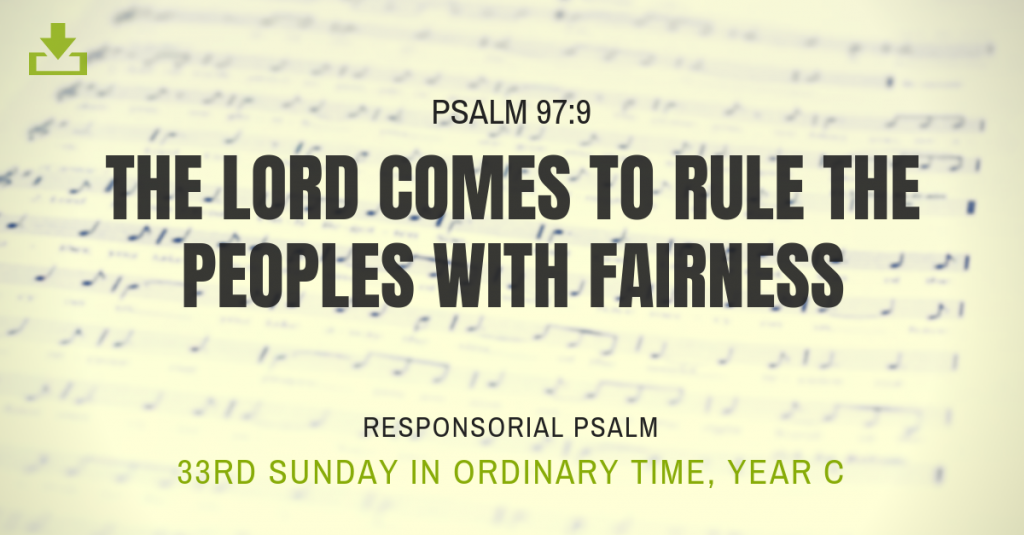
In November as people of faith we pray for the dead in many Churches we will have our annual masses and ceremonies of remembrance for the parishioners who have died in the last year  may all of them rest in peace and their families be consoled by the love of the communities where they are. This weekend we also remember all those who died in the Wars as we celebrate remembrance Sunday. As we come to the end of the Liturgical Year we listen to Jesus’s words concerning the end times. The vision of the future in the Gospel Reading for this Sunday doesn’t look very appealing. The bad news is delivered first of all. Jesus imagines a time of terror and trouble and persecution ‘Nation will fight against nation, and kingdom against kingdom. There will be great earthquakes and plagues and famines and there; there will be fearful sights and great signs from heaven.

Jesus says, “These things must happen.” Then there will be cosmic upheavals: “the sun will be darkened, the moon will lose its brightness, the stars will come falling from heaven”. After this catalogue of disaster there is the good news. Jesus looks beyond the time of distress to the time, when the Son of Man will gather the scattered people of God to himself.  Jesus sees beyond suffering and persecution to a future of peace with God . God does not call us to be anxious, but he calls us to confidence in the message we hear in the gospel and asks us to proclaim it in our lives so  that we will remain in his light. Christ remains our high priest who has offered himself for the forgiveness of our sins. God knows what it is to be human. The Lord calls us to stay awake amidst the distractions of life, so that we will recognize him when he comes again. St. John of the Cross wrote, “When evening comes, you will be examined in love” (Sayings, 60). We prepare for the day of Christ’s coming by first recognizing him in our brothers and sisters and by knowing him in his word and his sacraments.

False securities and shallow guarantees will not sustain us in times of strife and testing and there are many of these in our lives these days. God alone must be our hope. God’s ways must be our ways, so that when our securities and misplaced confidences fail us we can turn our eyes to the saving light of Gods love. Let us keep vigilant watch and not be anxious for that day when God who is love calls us and looks at us with love and says Your endurance has won you your life.’

32Nd Sunday of Ordinary Time

This week we have just celebrated the feast of All Saints as well as All Souls, during November we pray for all those who have died. Members of our families our friends as well as all those holy souls in purgatory who have no one to pray for them. In the course of his public ministry Jesus faces a variety of groups and individuals critical of his beliefs and values. In this Sundays Gospel story the Sadducees pit their fundamentalist interpretation of the Law against what they regard as an unorthodox innovation, belief in the resurrection. They attempt to ridicule the resurrection of the dead by recalling the Mosaic Law on marriage. The Sadducees develop an example to the point of absurdity in instancing seven brothers each of whom marries the same woman, but each of whom dies childless. None of the brothers has proved husband in terms of producing an heir: in that case, the Sadducees ask whose wife would the woman be in the resurrection? In his reply Jesus makes it clear that there is no comparison between human life, shared by all, and the resurrection, shared by those who are children of God. Jesus makes the distinction between the people of this age who live a life peculiar to this time, and the just who are resurrected from the dead into a new life in the kingdom of god.

 Moses called God the God of Abraham, of Isaac and of Jacob. If the Lord is God of the living, then he will continue to be so to those who have died. Relationship with God does not end in death: to God all people are alive.  Perhaps the Sadducees’ method of argument sound familiar. There are many who belittle people rather than consider if there is any truth to their beliefs. Most of us have experienced this when we profess our faith. Someone says to us “So, you believe in the Trinity, prove it. So you believe in the spiritual, prove it. Your Catholicism, your Christianity, is just child’s stories. Jesus did not back down he knew that he had come to do the will of the Father in doing that He would suffer being scorned by others for his faith. He would be crucified for his faith. Because so many around us do not respect our faith, or respect us as Christians or as Catholics, we are often called to put up with their scorn for the sake of the kingdom of God. Pope St. John Paul told us from the very beginning of his papacy, “Do not be afraid.” We cannot be afraid of what others are thinking about us. We cannot be afraid of what others might say about us. We cannot be afraid of what others might do to us. Our only fear should be the fear that we cave into the world, reject Christ, or push Him aside in any way. With St. Paul, we pray, “May the Lord Jesus Christ Himself and God the Father who loves us and gives us everlasting encouragement and hope, fortify our hearts and strengthen us.

Let us pray that Jesus’ compassion and mercy will touch the people of this world that God loves. Let us pray that when that touch is to come from the community of faith, from the Church, from us, that we may respond as Jesus did.  Let us pray that all people would see one another as valued human beings, so that people of all races and backgrounds would be respected, so that the peace of the Kingdom of God would transcend all barriers of nations and cultures and unite a fractured, broken world.

30th Sunday in Ordinary Time

The month of October is Mission Month when we celebrate the missionary effort of the Church throughout the world. This Sunday we celebrate Mission Sunday and we remember all those who have given up everything to go to far off lands to bring the gospel message  to the people there. We also remember all those who support them such as the Apostolic Work and Missio here in Ireland. The readings in our Liturgy for this weekend are all about the HUMBLE person of faith that God calls all of us to be. What does the Gospel Reading about the tax collector and the Pharisee say to us today ? Also and I think more importantly what about the words of the Tax Collector who said in a humble way  God be merciful to me a sinner what do these words  say to us?

The Tax Collector despised by the people because of the job he was doing  is saying to us that we need to be humble before God who knows that we are sinners even before we acknowledge that we are we also have to be humble with other people dealing with them with real humility. Real humility is about facing  the truth  about the person we are and often times we don’t like to hear the truth about ourselves.  It is a long journey from the Pharisee at the front to the tax-collector at the back. It is a journey of repentance and of facing up to the truth. It is a journey that Life will provide if we have the courage and honesty to find it. If any of us  still think that we should be up at the front with the Pharisee, then our lives will be not be as happy and we will never find peace. In our modern world, Pride which was very strong in the words the Pharisee spoke dominates many situations of life and it is this pride which has led  many people the world over down a lonely road.

The Pharisee gives thanks to God for not being like everyone else. He is a person of means, he has enough money to tithe. He lives a virtuous life; he’s not “greedy, dishonest, adulterous.” He probably feels “blessed” by God for all he has. So, he offers a prayer of thanksgiving. But his self-satisfaction counters whatever sincerity he might have.This Sunday’s parable demonstrates the necessity of knowing oneself. In order to avoid building up false self-image, creating a bogus reality in our minds and hearts. We need to stop and see where we should be saying with the tax collector Lord be merciful to me a sinner. These words from prophet Micah really sum up what we are asked to do and the people we are called to be  as faith filled Christians this Sunday and everyday. Micah asked and what does the Lord require of us? He requires us To do justice,  to love kindness, and to walk humbly with our God? The Lord requires us to be just, and kind in our dealings with one  another and other people as we walk humbly with him and as a result of this we will be  able to help  those who need us most where we are in the world.

29th Sunday of ordinary time

We remember in prayer the people of Creeslough in Donegal who have lost loved ones and we also pray for all those who are showing the compassion of a caring community to them at this sad time. Long after the TV cameras and the worlds media have left Creeslough the words of young Hamish O’Flaherty at his fathers funeral will be remembered he said “We should be grateful for our families. Cherish them. Be grateful because they won’t be there forever so use up the time you have wisely,” “Be grateful for your own life, because that too will not last forever, For you will be able to rest after your hard work. “Be grateful that God has given us this life and the times in it, our families our friends and our home and this world that is awash with hope and love that God has given us.” There in these few words is a great lesson for all of us .

In our Gospel for this Sunday Jesus tells us about our need to pray and not to lose heart when we don’t get what we pray for straight away.Over a long period of time many people have prayed for various things for example family concerns for healing of body mind or spirit or whatever. We  often pray for things and don’t get them straight away but we get the things we pray for when we really need them. Remember No great work can ever be achieved without long and patient effort and this is the same for us in our prayer lives. The work of patient persistent prayer will yield results as God helps us to get through all our problems large and small. Remember the saying that nothing is impossible for those who have faith and if our faith is the size of mustard seed it can move mountains.  Like one of the ten lepers in last weeks gospel, we ask, and then when our prayers are answered, we return in order to  thank God. When we meet the judge and the widow in this Gospel passage we meet them at a crisis point. We have no case history for the widow but we do for the judge. He is a hard man who isn’t influenced by religious principle or by public opinion. Both justice and compassion are absent from his dealings with the widow.She has no influential friends to bring pressure on the judge and she has no money to bribe him: all she has is the justice of her cause and her own persistence. Jesus encourages us to be persistent in our prayer and never lose heart.

We have to invest in our faith  and prayer will help us to do this. Through this parable, Jesus teaches us the need for perseverance in prayer. This perseverance develops our trust and confidence in God. It helps us realize how weak we are when left to ourselves. It keeps us close to God, as we learn how dependent we are on His generous love. Let us  pray for what we need, but above all let us pray that we will lead a life filled with faith in God as we go forward in Faith..

28th Sunday in Ordinary Time

We pray this weekend for the people of Creeslough in Donegall as they come to terms with the events that took place at the Applegreen station  on Friday. We pray that those who died will rest in peace and their families and friends will find solace in the love of their extended families, friends  and the community around them. We also pray a prayer of thanksgiving for the work of the emergency services who worked tirelessly since the explosion to save life.   This Sunday our readings are all about gratitude and the attitude of gratitude  The leper we hear about in the first reading is Naaman he was desperate for a cure and made another expedition into Israel, not to capture slaves but to be cured of his leprosy. When Elisha heard he was coming, he sent a message to the Syrian commander to bathe seven times in the Jordan river. Naaman was furious, but eventually his friends persuaded him to follow the advice of the prophet. He did and was cured. Rather than return to Syria, he sought out the prophet to show his gratitude and offer him a reward. Elisha declined the reward but agreed that Naaman should take back some earth to build a shrine to the one true God. Naaman not only rejoiced in the gift of healing he had received but also recognised the giver. He praised God and thanked the prophet. So it is that the God of Israel heals the outsider and the pagan.

In our Gospel Reading  we hear the story of the ten Lepers and their lack of gratitude for their healing. It is no accident that the grateful leper is not a Jew but a Samaritan – an outsider, excluded by race, religion and his illness. He joins the others in asking a Jewish Rabbi for mercy. In this incident the man who had the decency to return and say thank you  was the one least expected to do so. This pleased our Lord and led Him to remark on the ingratitude of the others. This Gospel story is not only about the Lepers it’s also about our lack of gratitude for the many good  things that we have in our lives given to us by God. When we were youngsters growing up we were taught to say, “Thank you” by our parents when they gave us a sweet or whatever, when we didn’t we would be dutifully reminded, “What do you say?” and of course we said the magic words ‘Thank You.’ All the lepers showed great faith and confidence in Jesus’ power to heal but only one of them said thanks. They had not heard Him preach nor had they seen any of His miracles. They lived in isolation camps because of the leprosy, yet they believed the reports they had heard. The nine lepers were appreciative of what Jesus had done; we don’t know, why they didn’t bother to show their gratitude to Jesus. We can only look to ourselves to ask why we are often reluctant to say thank you for all the good things we have. There is seems to be great deal of awkwardness surrounding the attitude of gratitude and saying thank you. All of us have reasons to give thanks for so many things yet very few turn to the Lord with words and hearts expressing our thanks for all the wonders he has done for us in our lives.  Do we have the attitude of gratitude which thanks god and those around and us for their goodness to us.

When we gather in prayer we come to join God in the midst of the assembly with gratitude in our hearts. We give praise and thanks to God and we thank him for all those who have given us their help. May all of us have the attitude of gratitude for all the good things that we have in our lives which means that we are thankful for all that we are and all that we have especially in this time of worldwide crisis when so many have very little or nothing at all.

27th Sunday in Ordinary Time

This weekend we begin the month of October and there is a dual theme throughout the month. It is the month when we celebrate the missionary effort of the Church throughout the world as well as celebrating the Rosary. Also this Sunday we have the annual Day for Life and it has as its focus caring for the Older Person. We  remember all those members of our families and our friends who are Older as well as those who care for them. In the First Reading  for this Sunday the prophet Habakkuk asks God how long he is going to ignore the cries of his battered people. He accuses God of simply looking on while tyranny and violence flourish.  His cry is not a scream of despair but a cry that is rooted in faith in God and what he had done and is doing for his people it is a cry of faith. The Prophet  believes God will do something and his perseverance in prayer and faith is proved right.. This Reading with its cry to God is our cry to God as we see all the things that are happening in our world today. We pray like  the prophet that god will listen to our prayers knowing that he will hear and answer in due course.

 The Gospel is made up of two apparently unrelated sayings of Jesus, one dealing with the gift  of faith and the other a very stark and challenging reminder to the apostles of the call to service as people sent by God to share in Jesus’ mission of proclaiming the Good News. We might be tempted to skip over such ‘hard sayings’ but we are asked to listen to them because the Gospel always liberates us from false ideas about ourselves and God and that can only be a good thing. Perhaps we think that having faith means believing certain things. Thinking our faith is small can keep us from doing so many things that we are called to do by our faith in Jesus the Son of God.  The disciples must have thought their faith was so small they couldn’t act on it. But Jesus wants his disciples as well as ourselves  to trust and act on our god given faith. The alternative to acting out of faith would be saying things like: I can’t take on that responsibility, I don’t have enough faith. The disciples may have felt similar inhibitions after hearing what Jesus just taught about not leading others into sin and the necessity to forgive someone not  seven times a day but 77.  

Jesus teaches, us  to “Act on the little faith you have. You’ll be surprised what you can do.” His example of the deep-rooted mulberry tree underlines his lesson to us about the power of the smallest seed of faith to work marvels. We may find ourselves doing something that surprises us and those who know us. Perhaps it’s a great act of charity; working away on another’s behalf; or, an act of forgiveness. But despite the things we might do, we must acknowledge the source of all our good deeds the mustard seed that is faith planted in us by God. Realizing this we can say with those servants in the parable: “We are unprofitable servants, we have done what we were obliged to do.” We could also add: “We have only done what the mustard seed of  our faith has enabled us to do. “God gives us the grace to do great things in his name.  As we pray for our faith to be strengthened we thank god for all those people who helped us to have faith in the first place, our parents, families, teachers, friends and our clergy throughout our lives all of them played their part in giving us the faith.  Although Christ was speaking to the Apostles, His words apply to all of us, in our own lives here and now. Following the example of the Apostles, Going forward we pray for greater trust and faith in God and his love for all of us so we are able to bring the seed of faith to others in their time and place .

26th Sunday in Ordinary Time

It is hard to believe that we are nearly at the end of September as the schools and everything else settle into the rhythm of the new academic year. This Sunday the gospel story tells us about two people, a rich man and a poor man it is a good reflection on the situation in the world at the present time where those who are rich are getting richer at the expense of the poor who are getting poorer. The rich man is wealthy in clothes and food; he is also rich in privilege and  freedom he is free from the worry that besets those who are poor even though he was poorer than the poorest man because of the way he lived his life. You can imagine Lazarus praying: “Give us this day our daily bread.” But he didn’t get  a crumb. You cannot imagine the rich man praying, “Give us this day our daily bread.” Because the privilege he has blinds him to Lazarus the man who lies at his own gate.

As we see both men eventually die.  Lazarus went straight to heaven to the joy  of endless happiness.  On the other hand the rich man fares very differently. He is now in Hades and he is told that he can expect no relief. He abused his time on earth he acted as though there would be no judgment day of course there was. He knows that he has no one to blame but himself which adds to his torment. It is also a cause of additional grief to him that his bad example will lead his fellowmen to a similar fate. All the parables of our Lord are based on everyday happenings and they can be applied to us in our daily living even now.  This rich man is in eternal torment because he let his wealth become his master and forgot God and his neighbor. There are people like the rich man in our world who completely ignore their real future. While they know that their stay on this earth is of very short duration and that they will have to leave it they still act and live as if they had a permanent home in this world.

There is a lovely scripture verse that tells us that when the tent of our earthly dwelling is folded up we will come to our true home in heaven and this is so true. For all of us today there is a simple question are we going to be like the rich man and ignore those around us who are the Lazarus’s of our own time and place. The homeless, the refugees or those who don’t have enough daily bread. Or will we follow Jesus who calls us in the story of Lazarus and the Rich Man to share our riches with those who need our help and the help of a caring sharing community of believers and not be like the rich man who ended up with nothing of lasting value.

25th Sunday in Ordinary Time

As we come to the funeral of Queen Elisabeth on Monday we also remember all those who have passed to their eternal rest in the days since her death.  In the parish where I live there have been 4 funerals this week and we pray that all of those who died recently wherever they are will rest in peace. Our gospel story for this Sunday tells us about the rich Man and his dishonest steward. The steward who looked after his master’s estates is accused of wasting his employer’s goods; he is dismissed, but before he goes he must submit the final account of his stewardship.  In this time of crisis the steward takes firm and immediate action to ensure his own future. He is praised not for his dishonesty, but for his resourcefulness in coping with an emergency with such speed.  If a dishonest man can use his employer’s money to ensure there will be people to welcome him when he’s out of a job.

How much more should honest people use their money in such a way that they will be welcomed into the kingdom of God when they arrive there. This parable invites us to examine our use of material possessions. Material things can divert our attention and in some cases they can take the place of what truly matters in life. These particular words of Jesus are a warning to us his followers that we shouldn’t be the slaves of earthly things and this is applicable to all of us. Most of us may feel that this warning is for millionaires and business magnates. Our Lord didn’t say who he was warning and his words are meant to be a challenge for all of us where we are. What Jesus warned against was not the just acquisition of things but their unjust acquisition, and the dishonest use of them when they were justly acquired. Christian life is a stewardship in which the wealth that one handles is wealth God wishes the whole world to share, not one’s personal possession.

The followers of Jesus must choose wisely and act decisively. When it comes to wealth, they must choose between the interests of God and their own self-interest. There are many people who follow the thrust of the parable and make good use of their time, their talents and their wealth. They use their possessions to serve Jesus through the people around them treating the  as sons and daughters of God.  Stirred by this gospel story  they decided to act quickly and decisively to help others. Jesus asks all of us to remember no matter what situations we might find ourselves in that we shouldn’t become slaves to the processions or wealth that we might have and that we shouldn’t be afraid to use whatever our we have for the good of everyone especially those in need and there are many people who are in need around us these days when we have the cost of living and the fuel price crisis. May we take this parable to heart as we help others and journey with them in their time of need.

22nd Sunday of ordinary time

This Sunday we celebrate the 22ndrSunday of Ordinary Time. This is a time for new beginnings with the youngsters going back to school or college next week and their  parents breathing a big sigh of relief that the long holidays are now at an end. Many of us have the feeling that time is passing by so very quickly and it seems like a blink of an eye since the end of June when the schools and colleges closed.The  readings  for this Sunday are all about humility, a virtue that doesn’t seem to be valued that much in our world. These days, it’s all about how many “friends” we have on Facebook, how many followers we have on Twitter. But for all of today’s technology we can still pick up on someone whose humility is done for show, whose humbleness is not the real thing and there are people like that around and about. Humility is about: being real, being grounded. Accepting and sharing our gifts as well as acknowledging our  faults.

We thank God for all the things that he has given to us It is his grace that produces the right attitude within us to live in a humble way. This  involves the giving of one’s time, talent, and money for the common good without thought of personal gain.  In this Sundays  Gospel Jesus is at a meal in the house of one of the leading Pharisees. He has noticed an undignified scramble for the places of honour and is moved to comment on what he sees. When a guest arrives early at a feast to appoint himself a place of honour, his position is insecure because he runs the risk that a later guest will have more claim to his place. And when the host insists that he vacates the place, he will have to pass all the other places already occupied and take the lowest place.  Jesus advises that his listeners take the lowest place at table – then the only risk they run is that of being exalted! Since it is the host’s party, he should decide who sits where. When Jesus addresses his host he advocates a more radical style: learning humility not so much by playing musical chairs at banquets, but by associating with “the poor, the crippled, the lame, the blind”.

The guest list for Jesus’ feast is a parable of the kingdom: God is the host whose delight is to feast with those who are always overlooked in a society that scrambles for honour and the best places at the table.  St. Augustine once said, “Humility is the foundation of all the other virtues; hence, in the soul in which this virtue does not exist there cannot be any other virtue except in mere appearance.” Real humility takes awareness and acceptance of our real selves with all the aspects of our lives both good and bad that is why humility is so hard for us to achieve. May we be the Humble people that we are called to be accepting our real selves so that that we may use our  God given gifts wisely in the service of others.

Post Navigation