This week we began the extraordinary month of Mission, October is the month when we pray for the missionary’s who bring the gospel message to those in other countries so that the people there will have faith in Jesus and what he teaches us. The Gospel for this Sunday is made up of two apparently unrelated sayings of Jesus, one dealing with the gift of faith and the other a very stark and challenging reminder to the apostles of the call to service they have received as people sent by God to share in Jesus’ mission of proclaiming the Good News. We might be tempted to skip over such ‘hard sayings’ but we are asked to listen to them because the Gospel always liberates us from false ideas about ourselves and God and that can only be a good thing.
So many people have little or no faith and many who have been brought up in the catholic faith have left for many reasons. Perhaps we think that having faith means believing certain things. Thinking our faith is small can keep us from doing so many things that we are called to do by our faith in Jesus the Son of God. The disciples must have thought their faith was so small they couldn’t act on it. But Jesus wants his disciples and by association ourselves to trust and act on our god given faith.
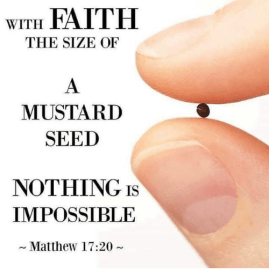
The alternative to acting out of faith would be saying things like: I can’t take on that responsibility, I don’t have enough faith. I can’t be kind to those people that will take more faith than I have. The disciples may have felt similar inhibitions after hearing what Jesus just taught about not leading others into sin and the necessity to forgive someone seven times a day (17 1-5). But Jesus teaches, “Act on the little faith you have. You’ll be surprised what you can do.” His example of the deep-rooted mulberry tree underlines his lesson to us about the power of the smallest seed of faith to work marvels. We may find ourselves doing something that surprises us and those who know us. Perhaps it’s a great act of charity; working away on another’s behalf; or, an act of forgiveness. Such deeds often win praise among those around us. But despite the remarkable things we might do, we must acknowledge the source of all our good deeds the mustard seed that is faith planted in us by God. Realising this we can say with those servants in the parable: “We are unprofitable servants, we have done what we were obliged to do.” We could also add: “We have only done what the mustard seed of our faith has enabled us to do. “God gives us the grace to do great things in his name.
As we pray for our faith to be strengthened we thank god for all those people who helped us to have faith in the first place, our parents, families, teachers, friends and our clergy throughout our lives all of them played their part in giving us the faith. Although Christ was speaking to the Apostles, His words apply to all of us, in our own lives here and now. Following the example of the Apostles, we must all pray for greater trust and faith in God and his love for all of us.
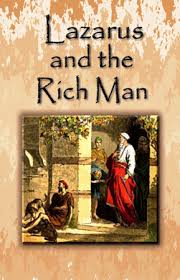
This Sunday the gospel story tells us about two people, a rich man and a poor man it is a good reflection on the situation in the world at the present time where those who are rich are getting richer at the expense of the poor who are getting poorer. The rich man is wealthy in clothes and food; he is also rich in privilege and freedom he is free from the worry that besets those who are poor even though he was poorer than the poorest man because of the way he lived his life. You can imagine Lazarus praying: “Give us this day our daily bread.” But he didn’t get a crumb. You cannot imagine the rich man praying, “Give us this day our daily bread.” Because the privilege he has blinds him to Lazarus the man who lies at his own gate. Both men eventually died as all of us will. Lazarus went straight to heaven to the joy of endless happiness.
On the other hand the rich man fares very differently. His enjoyments are over. He is now in Hades and he is told that he can expect no relief. Abraham tells him why he is in his present state: he abused his time on earth he acted as though there would be no judgment day of course there was and he sees the truth of this. He knows that he has no one to blame but himself which adds to his torment. It is also a cause of additional grief to him that his bad example will lead his brothers that is his fellowmen to a similar fate. All the parables of our Lord are based on everyday happenings. While we hope and pray that the case of the rich man described here is not an everyday occurrence, there is no doubt that such cases have happened and will happen again especially these days when the few have so much and so many have little or nothing at all. This rich man is in eternal torment because he let his wealth become his master and forgot God and his neighbor and his own real welfare that leads us all to eternal life. There are people like the rich man in our world today, men and women young and old who completely ignore their real future. While they know that their stay on this earth is of very short duration and that they will have to leave it they still act and live as if they had a permanent home here. There is a lovely scripture verse that tells us that when the tent of our earthly dwelling is folded up we will come to our true home in heaven and this is so true.
For all of us today there is a simple question are we going to be like the rich man and ignore those around us who are the Lazarus’s of our own world. There are times when our lack of Compassion and action is our crime think of how we react to The homeless, the refugees or those who don’t have enough daily bread. All of them all worthy of our thoughts our prayers and a share of our resources. Christ, shared his riches with everyone we should do the same and not be like the rich man in the gospel story!!!
Our gospel story for this Sunday tells us about the rich Man and his dishonest steward. The steward who looked after his master’s estates is accused of wasting his employer’s goods; he is dismissed, but before he goes he must submit the final account of his stewardship. In this time of crisis the steward takes firm and immediate action to ensure his own future. He is praised not for his dishonesty, but for his resourcefulness in coping with an emergency with such speed. If a dishonest man can use his employer’s money to ensure there will be people to welcome him when he’s out of a job, how much more should honest people use their money in such a way that they will be welcomed into the kingdom of God when they arrive there. This parable invites us to examine our use of material possessions. One of the central themes in Luke’s gospel is the suspicion Jesus conveys towards worldly wealth.
Material things can divert our attention and in some cases they can take the place of what truly matters in life. These particular words of Jesus are a warning to those who follow him on the road to heaven, the warning is that we shouldn’t be the slaves of earthly things and this is applicable to all of us. Most of us may feel that this warning is for millionaires and business magnates. Our Lord didn’t say who he was warning and his words at all times are meant to be a challenge for all of us where we are. What Jesus warned against was not the just acquisition of this world’s goods but their unjust acquisition, and the dishonest use of them when they were justly acquired. There are wealthy people in Luke’s gospel who seem to follow the thrust of the parable and make wise use of their time, their talents and their wealth. They use their possessions to serve Jesus as sons and daughters of God.
Stirred by teachings like today’s gospel story they decided to act quickly and decisively to help others and journey with them in their time of need. This gospel story gives us an example of someone who knew what he had to do in a crisis situation and Jesus asks all of us to remember no matter what situations we might find ourselves in that we shouldn’t become slaves to the processions or wealth that we might have and that we shouldn’t be afraid to use whatever our resources are for the good of everyone especially those in need and there are many people who are in need around us these days.
In our reading from the Gospel of Luke on this Sunday we hear the story of the Prodigal Son. This story is about 2 things the mercy of God the Father as well as being about us seeking the mercy of the father. Many people today become so entrenched in their opinion on many subjects that they see no other point of view apart from their own and find it impossible to come back or start to take the steps to return. At times the steps necessary for our walk back to the Father may seem too many and too arduous for us and we hesitate even to make the first move. Perhaps it is only when we see, like the Prodigal Son, that we are then willing to rouse ourselves to say sorry and to take the path of conversion that leads to the merciful embrace of our heavenly Father.
When we make even the slightest effort in sorrow, with God’s grace, it is then we see the Father waiting with love to embrace us and welcome us home. Rejection of the love and presence of his father, in the communion of life and love as a family, was a terrible choice for the prodigal son. He desired things over people, his share of the inheritance in preference to a life in communion with the father who gave him life and loved him. He wanted the father to be as if dead to him. Having said that let us remember that God celebrates every time that we return to him. Jesus said, “I tell you that there will be more celebration in heaven over one sinner who repents then over ninety-nine righteous people who have no need of repentance.” The tax collectors and sinners did not come to hear the Pharisees and scribes, because they knew that they would find only judgment. They came to hear Jesus, because he was happy that they wanted to change their lives.
God did not give up on them and he does not give up on us as well. He will not give up on us, calling us to him personally Seeking us out. Nor does He give up on anyone, even those who have been far from the faith. He calls us all to join Him in the joy of His Presence, the Joy of the Banquet of the Lord. The return of those who have had been away is a time for celebration. The cause of their leaving no longer matters. They have returned. The family is back together. We need to celebrate. We need to remember that no matter who we are or what we have done that all of us need the loving mercy of God in the same way as the prodigal Son needed the mercy of his Father who welcomed him back with open arms.
This weekend there are a number of protests taking place in Belfast against Abortion being brought into Northern Ireland. If we had a working assembly this would not be happening in this way as I do not believe that it is the will of the people of Northern Ireland. We pray for our Politicians and the people they represent at this difficult time in our history in terms of what is happening in Northern Ireland regarding Abortion and Brexit.
In this Sundays first reading the author of Wisdom reflects that it is hardly surprising that we have trouble figuring out the intentions of God when we have so much trouble figuring each other. He warns: “It is hard enough for us to work out what is on earth, laborious to know what lies within our reach.” There are times such as these when those within our reach puzzle us. And even though God has revealed himself through his Holy Spirit, nobody can claim to fully understand the mystery that is God. We still have much to figure out in so many things especially the things that relate to God.
In the Gospel there is plenty of figuring out to be done too. Jesus gives people notice that they have to work out for themselves if they are equal to the demands of discipleship. That means that first they have to figure out the cost of discipleship, then consider whether they have the resources to meet that cost. To drive the point home, Jesus uses twin parables Anyone intending to build a tower would “first sit down and work out the cost”. If he started without finishing, the sum of his achievement would be a monument to his own stupidity. Likewise, the king who discovers that his forces are outnumbered would “first sit down and consider” whether the opposing arithmetic is too heavy. If he wants to be a smart survivor he will practise his speeches on the wonders of peace! In both instances the advice is clear: take the time; sit down; look at the demands; figure out whether you can honestly meet them. Much of our lives involve figuring out what is within our reach and what we ourselves can realistically achieve. Jesus knows that his disciples must prefer following him to following in their fathers’ footsteps.
He calls them away from the primacy of the family because discipleship means a new and all-consuming loyalty. It means following Jesus who makes his way of love with the cross on his back. So the moral for all of us in these days of uncertainty around so many things that matter is that when we come to make life changing decisions we need to stop and do what this gospel tells us and that is to take the time; look at the demands the decision to be made will make on us as individuals and communities; and figure out what is within our reach and what we can realistically achieve that will help us to go forward in faith and in hope rather than backwards in fear. In these days when so much is at stake let us redouble our efforts in Prayer and action to make those who are responsible for the mess that we are in sit up and take notice so they will make good decisions for the common good of everyone based on proper consideration of what is possible rather than some unachievable ideal that will never happen.
This Sunday we celebrate the 22nd Sunday of Ordinary Time. This is a time for new beginnings with the youngsters going back to school or college and their parents breathing a big sigh of relief that the long holidays are now at an end .Many of us have the feeling that time is passing by so very quickly and it seems like a blink of an eye since the end of June when the schools and colleges closed.
The readings for this Sunday are all about humility, a virtue that doesn’t seem to be valued that much in our world. These days, it’s all about how many “friends” we have on Facebook, how many followers we have on Twitter. But for all of today’s technology we can still pick up on someone whose humility is done for show, whose humbleness is not the real thing and there are people like that around and about. Humility is about: being real, being grounded. Accepting and sharing our gifts without fanfare; acknowledging and accepting our own faults without undue self-recrimination.
If we live a virtually unrecognized life of goodness and quiet service, sooner or later someone will praise us in some way. We thank God for all the things that come to us and humbly acknowledge that we were using the gifts of God for the good of all. It is his grace that has produced the right attitude within us to live in a humble way. To me, generosity involves the giving of one’s time, talent, or money for the common good without thought of personal recompense and without thought of scrutinizing the recipients. For people who want to seek a more human and fraternal world, Jesus says that welcoming the poor and needy must rank before all other relationships or social conventions.
Many people do this quite effectively and seem to match Jesus’s expectation perfectly. Some people, however, widen their giving to include the less fortunate but maintain a certain level of superiority to the recipients which is wrong. Jesus’s message in this Gospel Reading is unconditional giving of oneself and one’s resources and it needs to be done willingly according to Jesus’s direction rather than to further one’s own motives as those who were seeking the best seats in the Gospel were trying to do. Being humble is something we learn through living fully with our successes and our failures, and never forgetting our dependence on God our merciful Father. St. Augustine once said, “Humility is the foundation of all the other virtues; hence, in the soul in which this virtue does not exist there cannot be any other virtue except in mere appearance.” Without humility, our compassion is meager; our mercy, condescending. Real humility takes awareness and acceptance of our real selves which is why it is so hard for us to achieve. May we be the Humble people that we are called to be in the Gospel of this Sunday accepting our real selves so that that we may use our God given gifts wisely in the service of others.
As we gather this weekend we remember all those who have got A level exam results. We offer a prayer for all those who have done well and we also pray for those who have not done as well as they continue their education. We also thank god for our teachers, families and friends, all those who have helped our young people and journeyed with them along the way. We also pray for the world as the heads of government from the G7 nations meet in France to discuss the current world situation which includes the fires in the Amazon Forests among many other things.
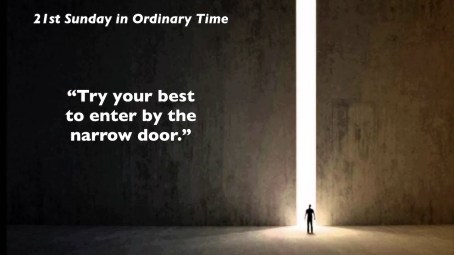
In this Sundays Gospel Luke tells us about the door policy of the kingdom of God and how there is no such thing as automatic membership. While Jesus is making his way to Jerusalem, someone asks him about the number of those who will be saved. Rather than speculate about the arithmetic of salvation, Jesus gives practical advice about the present time:“Try your best to enter by the narrow door, because, I tell you, many will try to enter and will not succeed.” The image changes from tight space to time up. Those who wait until the door is shut try knocking, but the householder regards them as strangers. The latecomers try to remind the householder of common ties: they ate and drank with him, they listened to him teaching in their streets. In Jesus’ world there were “insiders” and “outsiders.” A person would be an insider by their birth into a family or group. Or, one might become part of the family/group by being invited to eat with the members. Thus, they are distressed because they are being excluded, the people in the story “prove” they are part of the group. “We ate and drank with you, and you taught in our streets.” Jesus like the house owner is not impressed with this type of superficial acquaintance: people who eat and drink in the same restaurants and bars, read the same papers, watch the same TV programmes, don’t always share the same commitment to God.
In the gospel stories Jesus has a habit of telling religious people not to get smug; in fact, the so-called “devout and religious” were the ones who rejected Jesus the most. He was most critical of the judgmental religious leaders who were the very ones to condemn him in Jerusalem. Jesus is our example of the good and faithful person who goes through a period of trials and even death trusting God no matter what happens. Through Jesus we come to know the faithfulness of God. For Isaiah, a faithful band of witnesses will announce the news of God’s restoring love and invite all people to Jerusalem to see the manifestation of God’s power and fidelity. For us, Jesus is the “sign” of God’s fidelity. The God who raised him from the dead offers us that same new life through him. Pope Paul VI said in his famous encyclical, “Evangelii Nuntiandi” that people listen more to witnesses than to teachers. Pope Paul was also right when he said that the most convincing messengers of our faith are those who speak from their personal experience of God – they are viable witnesses.
Perhaps, they were sick and God healed them, or gave them strength and endurance for the trials of life. We are reminded today that everyone loves a humble person, because the humble person keeps a balanced outlook on people and events. And what is it that we are called to be as gods people ? We are called to be authentic witnesses to the Gospel message Passed down to us through the generations through the Scriptures and so many individual people. Our lives must be changed by our faith in the life, death and resurrection of Jesus. We are given the gift of faith; but a subsequent change of life is expected as our response to that gift so let us not be afraid to change for the better the things in our lives that we need to change remembering to give thanks for the great gift of faith that is ours so we will be able to enter through the Narrow Door.
This Sunday we remember and pray in a particular way for the family of Nora Quoirin in this time of such indescribable anguish. The news of Nora’s death puts all that is going on in the world in its proper perspective.
In the gospel for this Sunday Jesus says, “I have come to set the world on fire and how I wish it were already blazing.” Jesus is ready and willing to face the hardships that lie ahead. Jesus’ words must have unsettled the people who heard them the first time. It doesn’t sound like Jesus meant that the practice of our faith should make us comfortable, guarantee harmony or tranquility. Indeed, as he predicted, belief in him would cause the most severe conflict, even in the close-knit-family world of his Mediterranean followers and this interreligious conflict continues today in many places throughout the world especially in the Holy Land. Jesus is zealous about his mission; He has a task to complete and will follow it through, despite the threats to his personal safety. Jesus refers to his fate as “a baptism with which I must be baptized.”
He sees his passion as a baptism which he will accept and which will set a fire upon the earth. Remember when John the Baptist spoke of Jesus he linked baptism and fire, “He will baptize you with the Holy Spirit and fire”. When our lives get difficult, for any reason perhaps running low on the resources of spirit, mind and psyche at critical moments, we are tempted to think that the Holy One is asleep behind a closed door. We feel very much on the outside. At these times it’s important to remember that Jesus the Son of God is with us throughout the turmoil we may have as a result of the hurts and hardship that life throws out to all of us on many occasions. Making decisions on the journey of life is a natural process for us; we make many of them each day. Our senses take in all kinds of information some of which we accept, some we discard and much, we are not aware of. Our minds move us to a yes or no that is what the will does. So our imaginations can present data to our minds for a choice as well. So a faith based decision to walk the ways of Jesus needs some information which Jesus gives his disciples, that information is handed down to us in a special way through the scriptures the word of God.
But some information has to be provided by our memory and imaginations and in so many cases Memory and imagination are not always good at telling the truth of the matters under discussion at any particular moment. The faith that Jesus the face of the father’s mercy calls us his followers to is a faith that leads us to live lives which reflect the life of Jesus the mercy of God. It is much easier to follow from a safe distance and not let our lives be challenged and changed by faith in God. It is very easy to let the bitterness of others take us over but at the end of it all Jesus went to the Cross to overcome all the hatred and bitterness that we see around and about us. Today we are invited to lead lives less dominated by greed possessiveness and hatred or whatever is the opposite to the love and mercy of Jesus. Remember that the words of Jesus are there to afflict the comfortable and comfort the afflicted those who are in any need. Faith was not easy at the beginning of the Church and isn’t easy now the martyrs of the faith throughout history right up until our present time bear witness to this. If we stop and look around us even now there are people who are prepared to give everything they have including their lives in defense of the faith.
Deciding to follow Jesus is not easy and we will have to work at it for anything that is worth doing or being part off will never be easy. At the end of it all in simple terms we are called to follow were God leads us and he will do the rest for nothing is impossible to God who journeys along with throughout our lives in the good and bad times of our lives.
There are so many things to think about this weekend including the recent shootings in the USA and of course here in Northern Ireland we are thinking of Brexit and all the issues around that. There are many people out there who are fearful and afraid for so many different reasons. This Gospel begins with some of the most beautiful of Jesus’ words: “There is no need to be afraid, little flock, for it is your Father’s good pleasure to give you the kingdom. These particular words fear not little flock are so full of meaning especially these days when there is so much fear and distrust around in many different spheres of life. The words of our Lord should make us all sit up and take notice. He has taken us into his household. He has made us his “little flock.” We are invited guests in his house rather than just being mere servants. Jesus also warns us that we must always be busy about our vocation and there are many vocations in life religious, priesthood marriage or whatever. We also remember the reason why he invited us into his home. We are Christians, we are members of his Church, God, through Christ’s Incarnation, has put us on the road to heaven. He is always helping us on the way.
We don’t know in advance what God may do with us and our own oftentimes selfish plans a friend of mine always told me that Man proposes and God disposes in other words the will of God will happen no matter what you or I might want or do. To those who have faith, all things are possible the old saying that faith moves mountains but we should keep on climbing is certainly true. Faith helps us to rely on the limitless power of God, not on our own limited power. The gospel also points out; we should live in this world as strangers who are on the way home. People who move from one place to another get rid of all they can from their old house and focus on furnishing the new house. They joyfully give away what they once cherished we have to be the same getting rid of the baggage that stops us from being the people we are called to be by our heavenly Father. We don’t know when personal illness, bereavement or some other trying experience will put us to the test. But we do know that our life will be a success if we set our hearts and minds on values that go beyond all the transitory goods of this world. Our faith, is leading us onward, always pointing to something still to come, and at the end of our pilgrimage on this earth we will find where our true treasure is and we will simply discover that where our heart is our treasure is there as well.
In these days of uncertainty these words of the gospel fear not little flock are a call for us to place our trust in God and he will do the rest for us and help us along when we come to the trials and tribulations of our lives.
This Sundays gospel is the parable of the rich man who stored up his wealth in barns for A future that he thought would be in his own hands instead the future was in the hands of God. The parable calls the man foolish for his planning and for believing that he was immune to life’s tragedies none of us are. We remember the those who live around us as well as the world at large and who have any annoyance in their lives this weekend. The lesson of this Sundays parable is obvious to all, and it is perhaps as difficult to put into practice as it is obvious. To be in this world and not of it, to collect the necessary goods of this world by honest labor and yet remain detached from them, to possess but not be possessed by worldly riches, this is an ideal to which our weak human nature responds very reluctantly.
A large percentage of Christians, however, do respond to the challenge. They earn and use the goods of this world, while at the same time they keep God’s laws and earn wealth for heaven putting their riches into their spiritual bank. Some renounce even the right, which is theirs, to possess the necessary things of this world, by entering religious life taking on the vows of religion. Thus they set themselves free to devote their whole time and energy to the service of God and neighbor. Others, and they are of necessity the more numerous, have to own the world’s goods in order to provide for themselves and their dependents, but, while so doing they never let their temporal possessions come between them and their God. To do this is not easy, but God’s helping grace is always available to the willing heart. The message of the Jesus is one of hope, and compassion. No one can claim perfection. It is not obedience to laws and regulations, it is not the achievement of great influence or wealth, it is not the power over others that prove our greatness.
The last sentence of the parable is stark and clear: Do not store up treasure for yourself, but seek to be rich in the sight of God. What does this mean? Later it becomes clear: “Seek ye first the Kingdom of God… Fear not, little flock, for it is your Father’s good pleasure to give you the Kingdom.” (Lk 12:31-34) As Christian people we know that the values of this world are transitory and that they cannot bring true fulfilment. We place our trust in the things of God and understand that true fulfilment in life consist in embracing the heavenly virtues such as truth, humility, honesty, patience, kindness and so on. The true Christian knows that it is only by cultivating these virtues that we will reach the kingdom of god.



 Fullerton T