Fullerton T

RELIGION LITURGY AND LIFE

Archive for the category “RELIGION”

26TH SUNDAY IN ORDINARY TIME

Living-Church-Feature

This weekend here in my home diocese of Down and Connor in Northern Ireland we have just launched our diocesan pastoral Plan. The plan which has been in the making for around two years through the Living Church imitative has a number of headings which include Passing on the faith, faith and worship, lay participation, clergy and religious and being an open and welcoming community. The hope is that from the launch of this plan to its completion we will become a community that will be co responsible. Being co responsible means that all of us the people of God should play our part along with our priests deacons and religious working together to promote a common vision where all are valued With everyone working together to further the kingdom of God in the Parishes and organizations that make up the diocese.
 

lazarus

Lazarus

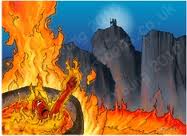
In Our readings Last Sunday we were introduced to the idea of dishonest wealth. Dishonest wealth is riches perceived as more important than human life and dignity.  It consumes and enslaves those who believe in it.  Honest wealth is riches of mind, of spirit and even material assets used with justice and compassion. The followers of Jesus including you and me  imagine a world that is just, caring and sensitive to all.  We want to correct what is wrong and bring all people into harmony and peace with everything that they need to keep body and soul together.  Many of us struggle to do something about those things that beat down our fellow man.  The parable of “Mr. Rich and Mr. Poor” which we hear this Sunday is a warning for prosperous people in our prosperous countries. Indifference to the needs of the poor is against the gospel.

 The gospel for this Sunday contrasts the two attitudes of rich and poor, that of Lazarus, the image of the poor, the downtrodden, those left penniless by the greed of the wealthy and the tax-collectors, and whose only hope was in the mercy of God, and on the other hand that of the rich man, clothed extravagantly, and feasting magnificently every day, self-sufficient, not seeing any need whatsoever to ask  for God’s mercy. In many ways we can are often like the man who seemed to be self-sufficient, not seeing any need whatsoever to beg for God’s mercy and there are so many in the world today who see no need for god and his merciful fatherly love in their lives. When our lives radiate Christ, people desire to know him and the Church, like a moth is drawn to a light. If we say we love Jesus, yet do not act on his commands or the teachings of his Church, then we extinguish that light and repel people. We have been given a mission to shine the light of Christ to the nations; we accomplish this through deeds and words. This is the call for all of us at this time in history. Catholicism does not hedge on the truth, even when the truth is not popular or politically correct as we all know the truth is not always welcomed.  We do not hedge on our faith because it has been handed down to us through every generation and we in our turn will pass on the faith to the next. As we move forward may be like Lazarus trusting in the mercy and love of God.




25th Sunday in Ordinary Time

TRIN

This week has been a bit different, the Anglican Church of Ireland has just elected its first woman Bishop and also our Holy Father Pope Francis has asked the Church to refocus our lives as Christians in order to get away from the narrow mindedness that we see from focusing on some issues such as Abortion and sexuality  instead of looking at the whole picture. As far as I am concerned the teachings of the Church relating to these issues need to be upheld but the constant talking about them and the attached commentary in the media about these issues makes the world at large think that as Catholics we think about these particular issues and not much else. This is so far from the truth as so many other equally important issues are ongoing in church circles and they don’t get the coverage and promotion that they also deserve. Issues such as faith, Justice, Vocations and how to reconnect the people of God with the Church. These are a few issues that come to mind whilst writing this but there are many more issues than there may be solutions but we must move beyond the negativity of being seen as a one or two issue church to being a Church where our principles are upheld and people are valued as we move forward as Gods faithful; people.

The readings for this weekend  show two sides of witnessing to the faith. On the one hand Amos is trenchant in his public criticism of the scandalous behavior of his fellow citizens. His stand will get him into serious difficulties with the authorities and, according to some traditions, his death.Paul, on the other hand, wants believers to witness to their faith by the good, quiet lives they lead. As a new movement he understands that more people will be attracted to it by the good example of its members. The same tension can and does exist for believers today. There is a great need for the fearless prophetic witness which calls attention to the oppressive injustices of our time. Equally, Christians must also show by their lives that they are not simply political agitators but people committed to the values of the kingdom of God. Oscar Wilde  described a cynic as “one who knows the price of everything and the value of nothing.” A Christian should be the reverse: one who has less interest in the price of a thing than in its true value. Let us remember then that we should treasure our faith and its true value.When money becomes our master then God takes a poor second place and the consequences of that choice are everywhere to be seen in our world where so few have so much and so many have little or nothing at all and that includes faith.

24TH SUNDAY OF ORDINARY TIME

555760_449833125050286_1922659540_n

In our reading from the Gospel of Luke on this Sunday we hear the story of the Prodigal Son. This story is all about the mercy of God for all of us. It is also about us seeking the mercy of the father while not being afraid to say that we were wrong in a certain situation. At times the steps necessary for our walk back to the Father may seem too many and too arduous for us and we hesitate even to make the first move. Perhaps it is only when we see, like the Prodigal Son, that we are then willing to rouse ourselves to say sorry  and to take the path of conversion that leads to the merciful embrace of our heavenly Father, so rich in mercy. When we make even the slightest effort in sorrow, with God’s grace, it is then we see the Father waiting with love to embrace us and welcome us home. Rejection of the love and presence of his father, in the communion of life and love as a family, was a terrible choice for the prodigal son. He desired things over people, his share of the inheritance in preference to a life in communion with the father who gave him life and loved him. He wanted the father to be as if dead to him. Having said that let us remember that God celebrates every time  that we return to him.  Jesus said, “I tell you that there will be more celebration in heaven over one sinner who repents then over ninety-nine righteous people who have no need of repentance.” The tax collectors and sinners did not come to hear the  Pharisees and scribes, because they knew that they would find only judgment. They came to hear Jesus, because he was happy that they wanted to change their lives.  God does not give up.  He will not give up on us, calling us to him personally.  Seeking us out individually.Nor does He give up on anyone, even those who have been far from the faith,  from morality.  He calls us all to join Him in the joy of His Presence, the Joy of the Banquet of  the Lord. The return of those who have had been away is a time for celebration.  Maybe greed, lust, anger, pride, some sin or other, convinced them to leave the warmth of the family. The cause of their leaving no longer matters.  They have returned. The family is back together.  We need to celebrate. We need to remember that no matter who we are that all of us need the loving mercy of our God.

23rd Sunday of Ordinary Time

download

At this time of year  all the various things that stopped at the end of June for  the summer are  beginning to happen again. Schools and colleges return after the summer holidays and all the clubs societies etc that closed for the summer months now reopen and everything gets back into the normal swing of things. There is much change as many people who were around and about with us before he summer are not here with in my own case  a friend that I had known for over 42 years passed on to her heavenly home and the clergy in our local parish have been reassigned to other places. Change is all around as all those who remain are left are thinking about the future.

 In our Gospel reading for this Sunday taken from Luke’s Gospel we are told that Jesus was speaking to the crowds. This time he is not addressing those he personally called to follow him, his disciples. Instead, he is speaking to those who might be thinking about following him. Earlier when someone had such a notion he said to Jesus, “I will be your follower wherever you go” (9:57). Jesus responded to this person with a stark reminder, “the foxes have lairs, the birds of the sky have nests but the Son of Man has nowhere to lay his head”. A sobering reminder of what it will mean to follow the one who has “nowhere to lay his head.” The costs of discipleship might mean detachment from one’s previous world and way of living. Jesus is asking total loyalty to him. Anything within ourselves, or with those we love, which might create a split in loyalties, must be put aside in favor of Christ.

 Jesus used examples from his time and place; a farmer’s lookout tower, a king and his army marching into battle. We would use different examples for life’s challenges – but we get his point. Have we considered what Christ’s invitation to follow him involves? Are we realistic about the personal costs investing our whole selves will require? Are we willing to use our strength and resources to fulfill the promises we have made to Christ? Even more to the point: have we heard his most direct challenge, “Whoever does not carry his/her own cross and come after me cannot be my disciple.” How costly is that! To be willing to carry a cross, an instrument of sacrifice and death; willing to accept pain and loss of our own lives to respond to Jesus’ invitation to discipleship.

 Who among us hasn’t stumbled, or even failed miserably, in our calling as disciples? We have existed on the edge of our church community, rather than given time and resources to help build it up.  Today  Jesus places three demands before us. We must be willing to risk family ties, practice self-denial and have a readiness to give up possessions. Being a follower of Christ is not something we can take casually. It’s not easy to follow Christ it always has a price, we cannot forget Good Friday and the Cross of Calvary. But we also remember that we are not on our own despite whatever happens to us. When we fail, Christ is by our side ready to respond to our plea, “Lord have mercy.”Nor are we on our own as we attempt to make big sacrifices in Jesus’ name. Rather, Jesus has given us the gift of the Holy Spirit who is ever ready to guide us more and more into a fuller response to the invitation each of us has heard through our baptism, “Come follow me.” As we try to follow Jesus the way the truth and the life we also remember Syria and all the various places where people are at WAR for whatever reason. Today we pray in a particular way for peace and we unite ourselves with Pope Francis call for fasting and prayer for peace in Syria and in the world on Saturday 7th September.

22nd Sunday of Ordinary Time

humility


It is hard to believe that it is now 50 years from Martin Luther King’s great and inspirational I HAVE A DREAM SPEECH in Washington. While celebrating this anniversary I think we all should be mindful of the situation in Syria and the middle East in General. We also need to continue our prayers for peaceful outcomes in all the various places where there are wars or violence of whatever sort throughout the world.

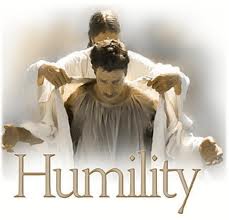
 The  readings  for this Sunday are all about humility, a virtue that doesn’t seem to be valued that much in our world. These days, it’s about how many “friends” we have on Facebook, how many followers we have on Twitter. But we can still immediately pick up on someone whose humility is done for show, whose humbleness is not the real thing and there are so many people like this around and about. Humility is about: being real, being grounded. Accepting and sharing our gifts without fanfare; acknowledging and accepting our faults without undue self-recrimination. Knowing we are no better or worse than any other of God’s children.   If we live a virtually unrecognized life of goodness and quiet service, sooner or later someone will praise us in some way.  Once again, it is fitting that we be thankful to God for all the things that come to us and humbly acknowledge that we  were using God’s gift to us for the good of all.  

It is his grace that has produced the right attitude within us to live in such a humble way. To me, generosity involves the giving of one’s time, talent, or treasure for the common good without thought of personal recompense and without thought of scrutinizing the recipients.  Many people do this quite effectively and seem to match Jesus’s expectation perfectly.  Some people, however, widen their giving to include the less fortunate but maintain a slight level of superiority to the recipients which is not right.   Jesus’s message in this Gospel Reading was unconditional giving of oneself and one’s resources and it needs to be done willingly and even lavishly according to Jesus’s direction rather than to further one’s own motives as those who were seeking the best seats were doing.  Being humble is not something we do, instead It is something we are, something we learn through living fully with our successes and our failures, and never forgetting our dependence on God.  Humility is a cornerstone of Pope Francis, along with compassion and mercy. And as St. Augustine once said, “Humility is the foundation of all the other virtues; hence, in the soul in which this virtue does not exist there cannot be any other virtue except in mere appearance.” Without humility, our compassion is meager; our mercy, condescending.

Real humility takes awareness and acceptance of our real selves which is why it is so hard for us to achieve. May we be the Humble people that we are called to be in the Gospel of this Sunday accepting our real selves so that that we may use our  God given gifts wisely and during the time that we have them.


21st SUNDAY OF ORDINARY TIME

conquerers_cross_wegast

Our first reading this Sunday is taken from Sirach, a book of practical advice for living. In this passage, we are reminded that everyone loves a humble person, especially God. The humble person keeps a balanced outlook on people and events. This reading advises us to listen to wiser minds than our own. By listening, we ourselves become wise. There is so much terribly wrong about what we see and hear in the world: terrorism and war, violence and shock on TV, family members who go off the deep end, religious persecution, civil strife ripping countries apart, etc. So much is out of focus. Where is God in all this and what is our future, if we are believers? We shake our heads and wonder if the world isn’t “going to hell in a hand basket?”  In the pagan world  of the this Gospel Story Jesus lived, surrounded by Romans, a devout person could think that they, and not the pagans, were on the right path, entitled to a well-deserved place in the kingdom of God. After all, they took time in a busy schedule to come out to hear Jesus. In addition, the person in this Sundays Gospel Reading reveals some devotion by calling Jesus, “Lord.” Since that title is a post-resurrection one, Luke might be voicing a concern of his own Christian community. Jesus’ response should make us church folk, a bit uncomfortable.

He would always appreciate a compassionate disciple; but his response to the question “Lord will only a few be saved?” doesn’t indicate he is speaking to such a disciple. Most likely it was someone who felt part of Jesus’ inner circle; feeling they had made it, but others would not. You just know that Jesus is going to shake the person back on their heels. In The gospel stories Jesus has a habit of telling religious people not to get smug; in fact, the so-called “devout and religious” were the ones who rejected Jesus the most. He was most critical of the judgmental religious leaders who were the very ones to condemn him in Jerusalem – where he is determined to go… and where he asks us to follow and that includes the cross that Jesus carried to Calvary.

Pope Paul VI said in his famous encyclical, “Evangelii Nuntiandi” that people listen more to witnesses than to teachers. Pope Paul was also right when he said that the most convincing messengers of our faith are those who speak from their personal experience of God and faith they are true witnesses. Perhaps, they were sick and God healed them, or gave them strength and endurance. Their marriage was in a rut and a Marriage Encounter weekend revived it. They had lost their way and were too consumed by their jobs and then they refocused on family and all the pleasures and ups and downs that this brings.

 we are called to be authentic witnesses to the Gospel message as Gods people, and the message of hope  that we have and hold dear is for everyone in these times where so few have so much and so many have little or nothing  at all let us not be afraid as we go forward in our daily lives and faith Journeys to be humble people of faith. Having Faith in God and in eachother.


20th Sunday of Ordinary Time

images 5

In the gospel today Jesus says, “I have come to set the world on fire and how I wish it were already blazing.” He is ready and willing to face the hardships that lie ahead. Jesus’ words must have unsettled his hearers then, as they do now for us. It doesn’t sound like Jesus meant that the practice of our faith should make us comfortable, guarantee harmony or tranquility. Indeed, as he predicted, belief in him would cause the most severe conflict, even in the close-knit-family world of his Mediterranean followers.

Jesus is zealous about his mission; it consumes him. He has a task to complete and will follow it through, despite the threats to his personal safety. Jesus refers to his fate as “a baptism with which I must be baptized.” He sees his coming passion as a baptism which he will accept and which will set a fire upon the earth. Remember when John the Baptist spoke of Jesus he linked baptism and fire, “He will baptize you with the Holy Spirit and fire” When our lives get difficult, for any reason perhaps running low on the resources of spirit, mind and psyche at critical moments,

we are tempted to think that the Holy One is asleep behind a closed door. We feel very much on the outside. At these times it’s important to remember that Jesus is with us throughout the turmoil we may have as a result of the hurts and hardship that life throws out to all of us on many occasions.

The saying goes that life is forever changing and this is very true as this week we heard of changes in the priests in some of our local parishes in North Belfast. August is a time for change and a time of change for this and other Parishes and the Clergy within the  diocese of Down and Connor. It is also a time of change with our P7 school kids changing schools and going into secondary or grammar schools and our year 14s going on beyond that to begin university as they continue their education and the journey of life.

Making decisions in the journeys of life is the natural process for us; we make many of them each day. Our senses take in all kinds of information some of which we accept, some we discard and much, we are not aware of. Our minds move us to a yes or no that is what the will does. So our imaginations can present data to our minds for a choice as well. So a faith-decision to walk the ways of Jesus needs some information which Jesus gives his disciples, that is formally handed on down to us in the liturgy through our Priests. But we also learn from our fellow parishioners, our own times of prayer and those flashes of God-given inspiration – and these can come in places of pilgrimage or simply as we walk down the road. The Spirit of God blows where it wills.


19TH SUNDAY OF ORDINARY TIME

images 3


Today’s Gospel begins with some of the most beautiful of Jesus’ words: 
“Fear not, little flock… “What love, what tenderness in these few 
words! “Fear not…”. Further down in the gospel reading we are told ” “Sell your possessions, and give alms; provide yourselves with purses that do not grow old, with a treasure in the heavens that does not fail, where no thief approaches and no moth destroys. For where your treasure is, there will your heart be also.”

 If God is at our service, what could be better than for us to place  ourselves at his service? For if we do not, God might just accuse us of  being ungrateful to him? Some will say: Certainly that might be true, but why does God involve himself in our life? Why bother with God Couldn’t he just leave us alone do get on with doing our own thing? Indeed, many people live in our modern world without paying much attention to God or man and as a result of this particular way of going we see that the world is in a terrible state. The world and its riches are supposed to be enough to make people happy, or at least that is how it seems to the vast number of people who think and act in this way. In fact, the truth is far from this particular idea of utopia, a godless life gives the illusion of happiness, like Money, material goods, the pleasure of the senses, all these things lead the men and women of our time to the greatest unhappiness: that of the glorification of “me myself and nobody else” when truthfully we should be setting ourselves and our selfish ways of going aside and focusing on the other person!

To escape from this, there is one solution:  which is the life of service to others, the life of service to God for the salvation of the world remembering that our hearts will be restless until they rest in him. What will we have done with our life if we haven’t used it to serve God in some way or another? Where have we put our treasure is it really where our hearts are? Have we put it in the banknotes kept in our safe, the bricks that make up our house, or in our beautiful brand new car? Let us consider this! Have we truly decided to place ourselves at the service of God? Let us look at the Crucifix, and listen to Saint Paul: “And being found in human form he humbled himself and became obedient unto death, even death on a cross.” (Phil. 2:7-8) It was reported recently that gold coins from a sunken Spanish ship were recently found in the waters off the coast of Florida using a simple metal detector. As you can imagine that this attracted quite a few more “gold diggers.” Should we be consumed in acquiring a vanishing kingdom here on earth when we have an eternal kingdom waiting for us? I would love to see a mad dash for the inexhaustible treasure that the Lord provides through the Church and all those who are within it especially our priests and religious and through so many other people and organizations associated to the Church.

We don’t know in advance what God may do with us and our own oftentimes selfish plans. To those who have faith, all things are possible the old saying that fait moves mountains is certainly true. Faith helps us to rely on the power God, not on our own. As the gospel points out, we are to live in this world as strangers who are on the way home. People who move from one place to another get rid of all they can from their old house and focus on furnishing the new house. They joyfully give away what they once cherished we have to be the same getting rid of the baggage that stop us from being the people we are called by our heavenly Father to be.

 “We cannot know when personal illness, bereavement or some other trying experience will put us to the test. But we do know that our life will be a success if we set our hearts and minds on values that go beyond all the transitory goods of this world. Our faith, is leading us onward, always pointing to something still to come, and at the end of our pilgrimage on this earth we will find where our true treasure is and we will simply discover that where our heart is there our treasure is as well.


17th Sunday In ordinary Time

FAITH

In the  Gospel reading this Sunday we see Jesus in a certain place praying when one of the disciples asked him to “teach us to pray”. Jesus then went on to give them one of  the greatest of all the prayers we have which we now know as the Our Father.  There are many things about the Lord’s prayer that could be said but the first thing to notice is that it is full of petitions of things that we are asking for. The first petition is that God’s name would be hallowed. The second is that God’s kingdom would come. The third is that God would give us our daily bread. And so on. The Lord ’s Prayer isn’t just a litany of praise to God, then. It isn’t just an expression of a pious wish that God’s will be done though we pray that the will of god will happen in our lives. It isn’t only a surrender of one’s own will to God. Just look at the request for daily bread. It presents to God what we would want God to give us but God gives us what he knows we need when he knows we need it. Having desires and presenting them to God are required by the Lord’s prayer. The second thing to notice is that people don’t generally get what they ask for. The Lord says ask and you will receive. I always say to people that God gives you exactly what you need when he sees that you really need it not what you want when you think you need that particular thing and this has been the case so often in my own life and in my dealings with other people.

But how many people around the world pray the Lord’s prayer and go without food that day? And food is only the beginning. Every mass we ask God for healing: “Only say the word and my soul shall be healed.” Then we lug our sinful, sick, and sorrowful souls around another day.

 So this  is the third thing to notice. Jesus doesn’t promise that we will get the very thing we ask for. He says that if we ask, we will receive; but he doesn’t happen to mention what we will receive and when we will receive it. If you think about it, you can see the point. If a sick person could heal himself, he would be the doctor, not the patient. The patient’s job is to want to get well. It is the doctor’s job to figure out how to get him well. In the same way, the Lord’s prayer requires us to trust God enough to tell him what we want—over and over and over. Our job is to ask continually. God’s job is to figure out what to give us that will really fill us and heal us. So we might not get what we ask for. But as long as we keep asking, the Lord promises that we will receive—grace, pressed down, shaken together, running over, and gently given, from the God who loves us. Our Lord and Saviour wants us to attain the joy of the  heavenly kingdom, and so he taught us to pray for it, promising to give it to us if we did so. “Ask, he said, and you will receive, seek and you will find, knock and the door will be opened to you.” in this year of faith we pray that when we ask for and  seek faith we will receive it, when we knock at the door of faith it will be opened wide to us.

16th Sunday in Ordinary Time

16sunOT


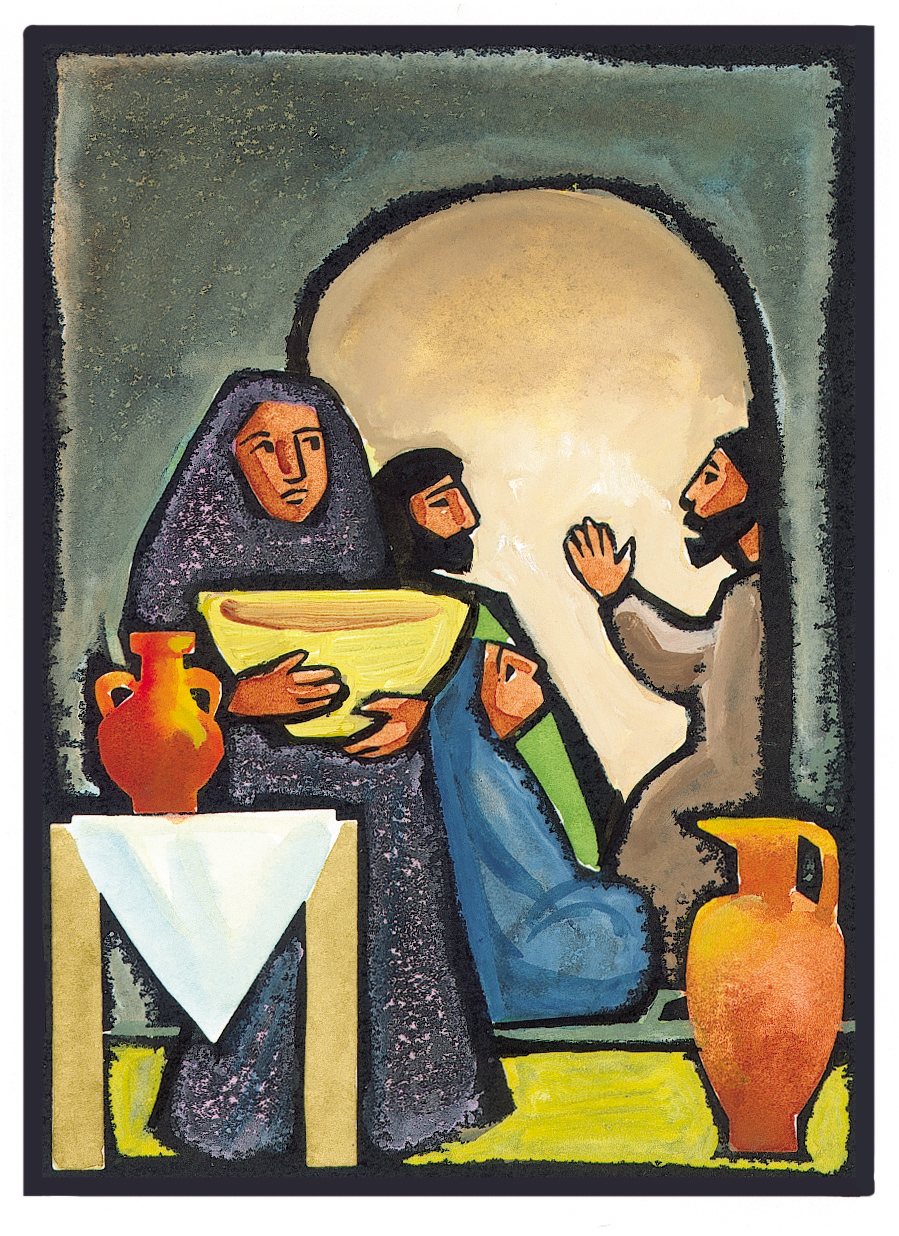
The story we hear in the Gospel Reading for this Sunday is the lovely story of Martha and Mary from the record, we can establish the Teacher (Jesus) stayed at the house of Martha and Mary in Bethany outside Jerusalem many times. He stayed there in the last three months of the year 29 when He was busily working the Jerusalem territory. He would stay in this house the first four days of Holy Week the sisters were not only generous hostesses but also bold ones. At this point, Jesus was walking about with a price on His head. He was an outlaw.. They hardly would find themselves in good favour with the police, the Temple authorities, and probably the Romans.  
But I am certain that they were quite aware that the Jesus was running a risk Himself in being their guest. Accepting hospitality from women was clearly forbidden by Rabbinic law. In addition, He had from their first encounter taken great pains to offer them instruction. This would not make Him popular with the male world in general or with the authorities.  The Christ was no doubt the only man in their circle who did not patronize them. He treated them as equals. What a welcome change that must have been for these intelligent women! They must have been so tired of being treated like children. No wonder Dorothy Sayers writes, “Perhaps it is no wonder that women were the first at the cradle and the last at the cross. They had never known a man like this Man…” We all know the story of this gospel. Martha is exhausting herself  putting together a meal worthy of a five star restaurant for the Lord. She is setting out the best of the best of everything for the meal the Irish linen, the Wedgewood china, the Tiffany silver, and the Steuben crystal of the time.

During all of this time her sister Mary is enjoying the company of their guest in the coolness of the family room. Martha is hardly amused. She storms into the room. There is Jesus with His worn sandals off and His feet up on the barca lounger. Mary is drinking in every word the Teacher speaks. She looks as though she wished she owned a Sony tape recorder. However, the Japanese had not yet reached Palestine. It is a pity for us that they had not. Martha loses her cool and sounds off with a bitter indictment of Mary the shirker. For her pains, all she gets from Jesus is a wrap-around smile and a healthy chuckle. It does not improve her mood when she hears Him say “It is Mary who has chosen the better part.”

 Martha loved Jesus as much as Mary did, and it is clear that he treasured them both. Her mistake was in not trying to find out how Jesus wanted to be entertained, while visiting her house. Her sister correctly senses that when Jesus comes on a visit the last thing he wants is to have people fussing over how to feed him. So, while Martha makes the greater housekeeping effort, Mary understands better what is expected of her by him. Her contemplative intuition grasps instinctively the real reason for Jesus’ visit. He is there not to receive but to give, not to be served but to serve. He has something he  needs to say and the one thing necessary is to listen to his voice. As we see in the gospel, God’s Message came in person to Mary, the sister of Martha, and we see her vibrant relationship with God in Christ.  On one level, we feel sorry for Martha, being left to do the household work on her own, but the key value here is that our listening to God, our attentiveness to Christ must never be drowned out by the bustle of our everyday lives. Then, in the reading from St Paul we are told how the Word of God, hidden from all mankind for centuries, comes to the gentiles.

How do we understand the complementarity of Martha’s generous hospitality in meeting Jesus’ need for food and Mary’s longing for personal communion with him? In response, we might follow the way of Jesus. He fed the hungry, cured the sick and expelled demons of every kind as an expression of love. In other words, our love must also become incarnate in whatever we do to meet the needs of others. Thus, our good work becomes a sacrament or an effective sign of our self-giving love. Etty Hillesum, a young Jewish woman who died at Auschwitz, expressed a similar understanding when she wrote that in prayer “‘God can enter you, and something of ‘Love’ too…the love you can apply to small, everyday things.”  

 Only one thing really matters in the hurly-burly of our modem world,  that is that we choose the better part we choose the better part when  we make space for God in our lives, when we reach out and grasp the message which God is continually presenting to us through many people in so many places we might find ourselves. We make space for God in our lives when we make the message of God our own, and that we allow it to guide and shape us, as we live and as we hope to die, in fulfillment of God’s wishes for us.  Let us not be afraid to take the better part especially in this year of Faith.

Post Navigation