Fullerton T

RELIGION LITURGY AND LIFE

Archive for the category “RELIGION”

32nd Sunday of Ordinary Time


This Sunday in our Gospel reading we read about the Widows mite, that is the widow who gave the temple authorities her last coins. God does not have favourites”, Saint Paul tells us, but God always makes a special place for the poor, and those whom society would push into second place. In the traditions of Israel God invited the people to have special care for the “widows and orphans” – so the story we hear in today’s Gospel would have a particular resonance. The paradox of Christian faith is this: in giving, we receive. Christ gave everything, sacrificing his very life, and in return received a new and unending life. The widow in the first reading gave her last food to the prophet Elijah, and in return received an endless supply. Today’s readings provide a contrast: the self-assured scribes parading their virtue, and the humble widow offering all she had to live on in terms of food and money.

Jesus attacks the HYPOCRISY of those religious people who make an outward show of virtue, but whose hearts are full of GREED. His words against such behaviour are harsh: they will receive a severe sentence. Such texts as this are sometimes used as a pretext for a general denigration of all the teachers of Judaism. We must bear in mind that the gospels also tell us of good and virtuous scribes and Pharisees of which there were many.

Jesus observes the generosity of the poor widow. Unlike the scribes he has previously criticized, she does not trumpet her virtue and in that same vain neither should we. Almost unnoticed, she gives all she can for the upkeep of the temple of God. The widow in Mark’s gospel represented the truly poor, those who can neither speak for themselves nor fend for themselves. She shared what we had for the good of others and the glory of God. We are called to do as much.

The Church identifies itself with the poor.   Jesus himself proclaimed the Kingdom as the home of the poor. Throughout the centuries, many faithful people have served the less fortunate. Today, we, as Christians, are called to share our time, talent, and treasure with those who cannot speak for themselves.

The corporal works of mercy (feeding the sick, sheltering the homeless, clothing the naked, visiting the imprisoned and the sick, burying the dead) detail the Church’s love for the poor. These should be at the forefront of Christian activity, not an afterthought. Jesus attacks the hypocrisy and the greed of those who should have known better and he observes the generosity of the poor widow may we be like the poor widow remembering that any love of wealth is inconsistent with our love for the Lord and that we are called to humble service of one another.

31ST SUNDAY IN ORDINARY TIME


Every priest, and indeed every Catholic, can sometimes find themselves in the position of someone asking “This religion of yours – what’s it all about, really, when you come down to it? What’s the bottom line?” Our temptation might be to start going on at length, which is when we should remember this Gospel. Jesus, asked a very similar question, pins our faith down to two very simple things – love of God and love of neighbour – which together make up the foundation for everything else in our religion. The very simplicity of these two commandments is a gift, so that we can try to live them out each day of our lives. The first commandment, which is also that given by Moses in the first reading, is actually a prayer that our Jewish brothers and sisters still recite every single day.  Jesus, our perfect High Priest, gives us these two commandments to be written in our heads and our hearts, to remember each day, so that we may conduct ourselves in the paths of the Kingdom of God.

How can we find our way through the jungle of the multiple interdicts and commandments of the Law? This is the question a scribe puts to Jesus in all loyalty. From the confession of faith which every pious Jew recites twice a day, Jesus retains first and foremost the commandment to love God. If God is unique, like No one else, the commandment to love him above all is indeed the first.

Jesus also draws the scribe’s attention to another commandment. Although it is second, the love of neighbour is, for Jesus, inseparable from the love of God. In fact, it is by charity that humanity resembles God, that we participate in the very life of God. That is the goal of the Law. There is one unequivocal sign which characterizes those who are not far from the kingdom. It is not their fidelity to religious observance. It is their service of love in its two inseparable faces, God and neighbour.

This saying will quiet those of every age who value the letter of the law above the spirit. It should provoke thought in those institutions where more care is given to order than to love. The conversation with the scribe raises a point very frequently made by the prophets of the Old Testament and by Jesus: love of God and of neighbour is of more importance than ‘holocaust and sacrifice’. There is a profound agreement between Jesus and the teachers of Judaism. The tragedy which follows comes when worldly calculations are seen to be more important than seeking together to do the will of God. It is a situation repeated with dreadful regularity throughout the history of the world right us to ourselves in our modern world. A world where so few have so much and so many barely have enough to live on.

Let’s get back to the question at the start of today’s blogg every Catholic you and me included, can sometimes find themselves in the position of someone asking “This religion of yours – what’s it all about ? A Good  starting point for me in attempting to answer anyone’s questions about  the faith is found in the comment in St Peter’s first letter: ‘Always have your answer ready for people who ask you for the reason for the hope that is in you, but give it with courtesy and respect. The answer to the questions can simply be put in terms of love of God and love of neighbour which together make up the foundation for everything else in our religion.

In our relationship with God, we can ask the same question of ourselves “This religion of ours – what’s it all about what’s most important?” How does that question impact our prayer life, our family life, our social life? What one principle or character trait tells others we are followers of Christ? During this year of faith we should think about our faith and how we would give our answer to anyone who asks the question “This religion of yours – what’s it all about”?

30th Sunday of Ordinary Time

This Sunday we read in the Gospel Reading about Bartimaeus the blind man. There are so many  forms of blindness  apart from the physical blindness which is an awful thing  in itself. There is also another blindness that so many seeing people have and that spiritual  blindness . Blindness is terrifying. Darkness brings all our terrors before the minds eye. Not being able to see where we are going is the stuff of most human fears. The poverty and blindness of Bartimaeus speak to any human being of feeling  and, indeed, if there is someone to whom it does not speak, then that person probably would have no time for religion or things of the spirit as she/he would be insensitive to promptings in our imagination that lead us to faith.

We live in a world of blindness. There is the blindness of world leaders who press forward policies that are so short-term that we have whole regions that simmer with unrest such as the Middle East. We have blindness that prevents us seeing how policies create injustice and stop development. We have the blindness that sees global warming yet refuses to take action in time. In  our own  localities we have blind-spots.  blind spots about what is really of value in a society that has so much. In our own lives we can find blindness to those around us, blindness to the community, blindness to the needs of those who need us young and old. Blindness can be a great help in avoiding awkward questions of conscience. We are called to be seeing people, people who look at the world with eyes of faith and are not afraid to help others with their blindness. Seeing, however, isn’t limited to seeing the blue of the sky or the road to home. It is also a matter of seeing the truth about ourselves which we dont often want to know about.

And so in the Gospel Jesus gives Bartimaeus all that he asks for. Bartimaeus sees not only the world around him but also his Lord. And in seeing Jesus, Bartimaeus accepts the Giver with the gift of sight that is eyesight and more especially spiritual sight. As Jesus healed this blind man because he wanted so desperately to see, He will heal all of us who long to be cured of our spiritual blindness. When we ask in faith, Jesus will give us His  vision for ourselves and for our world. 

Mission Sunday

This Sunday we celebrate Mission Sunday It is very appropriate that we celebrate Mission Sunday this the first Sunday on the Year of Faith. Over the years many people have taken up the call of the Lord to be workers in his vineyard and set out all over the world to open the door of  faith in the far corners of the world. In our own parish here there have been so many people who have joined the various missionary congregations. The orders that come to mind are the Columban Fathers, Holy Ghost Fathers, St. Patricks Kilteegan. There are so many other missionary congregations throughout the world and we pay tribute to all of them on this day

The idea of going as a missionary to people who might have a religious faith is not too fashionable in our world of today. But that’s what Saint Augustine did, that’s what Saint Patrick did for us here in Ireland and the reason we are here today is that ultimately someone took the trouble to bring the Gospel with all its richness to us. The challenge for us is to afford the same opportunity to others.

To take up the Lord’s command to make disciples of all the nations and bring the truth of the Gospel to the far ends of the earth.

Blessed Pope John Paul II said ‘The Church proposes; she imposes nothing. It respects individuals and cultures, and she honours the sanctuary of conscience’ (Redemptoris Missio 39). Faith in God is first and foremost a mystery and a gift. We can witness to the Gospel through charitable works, and that is mostly what missionaries do. ‘Faith without witness bears no fruit, while charity without faith would be a sentiment constantly at the mercy of doubt. Faith and charity require each other’ (Benedict XVI, Porta Fidei). Missionaries provide education and healthcare, run hospitals and provide aid. These good works are motivated solely by their faith in God. Faith truly changes everything and the way we look at our world.

In today Gospel reading  James and John ask that when Jesus enters his glory he would grant them positions of honour and power. Jesus responds that they do not understand the cost of what they are asking. When the ten hear about the ambitious request, they become indignant. Jesus then summons the twelve and reveals the meaning of the divine mission for the kingdom that he has come to fulfil. Those who are rulers over the Gentiles lord it over them and make their authority felt. Among his disciples, however, whoever wishes to be great will become a servant, and whoever wishes to be first will be the slave of all. Then follows perhaps the most radical and most revealing saying of Jesus about himself and about discipleship in the entire gospel: “For the Son of Man did not come to be served but to serve and to give his life as a ransom for many.”

Today we celebrate the missionary work of the church in our world  and we thank God for all those missionaries  men and women religious and Lay  who took up the Lord’s command to make disciples of all the nations and bring the truth of the Gospel to one and all in past generations.  We also pray that many more will take up the vocation to be missionaries bringing the gospel to those who have never heard it opening the door of faith for those who want to hear the  Gospel with all its riches.

28TH SUNDAY OF ORDINARY TIME

Today in our readings we hear all about riches that is the riches that we get when we follow the way of God. Not the riches that we may find as a result of our human endeavours. When I think of the various things in my life  I often think that to have a bit more money or whatever would be great the truth is that if we have food  on the table and enough money to pay our way that is enough . But then I also have family, friends and faith and these are treasure indeed. Why does Jesus call his disciples to “sell all” for the treasure of his kingdom? Treasure has a special connection to the heart, the place of desire and longing, the place of will and focus. There is a lovely saying that where your heart is your treasure should be. The Lord himself is the greatest treasure we can have.  Selling all that we have could mean many different things – letting go of attachments, friendships, influences, jobs, entertainments, styles of life – really anything that might stand in the way of our loving God first and foremost in our lives and giving him the best we can with our time, resources, gifts, and service. Those who are generous towards God and towards their neighbour find that they cannot out give God in his generosity towards us.

God blesses us with the priceless treasures of his kingdom – freedom from fear and the griping power of sin, selfishness and pride which block his love and grace in our lives; freedom from loneliness, isolation and rejection which keep his children from living together in love, peace, and unity; and freedom from hopelessness, despair, and disillusionment which blind our vision of God’s power to heal every hurt, bind every wound, and remove every blemish which mar the image of God within us.

God offers us treasure which money cannot buy. He alone can truly satisfy the deepest longing and desires of our hearts.  In this the Year of Faith which began last Thursday we are called to renewal 50 years after the second Vatican council. The council, which began in October 1962, was under the guidance of Pope John 23rd and the inspiration of the Holy Spirit. The council spoke of letting the light into the Church. As a result of this council many things were renewed within the Church and its structures and today we thank God for being where we are. But the renewal that was begun 50 years ago continues in this present age as the Church is called to renew herself in each and every generation, as she reminds the generations that the faith that we have is handed down to us from Jesus through the apostles is ever old but always new. 

 So then  let us continue on our pilgrim journey of faith  as we seek the priceless treasures of his kingdom of god in the months ahead as the year of faith as its opportunities for renewal unfold before us.


A REFLECTION AT THE BEGINNING OF THE YEAR OF FAITH

On Thursday 11th October we begin the Year of Faith. This year was called by Pope Benedict to remember the second Vatican council during this the 50th anniversary year. The council, which began in October 1962, was under the guidance of Pope John and the inspiration of the Holy Spirit. The council spoke of letting the light into the Church. As a result of this council many things were renewed within the Church and its structures and today we thank God for being where we are. But the renewal that was begun 50 years ago continues in this present age as the Church is called to renew herself in each and every generation, as she reminds the generations that the faith that we have is handed down to us from Jesus through the apostles is ever old but always new.  We remember that Jesus did not make anyone follow him. He simply invited his followers ‘follow me’. He then left the way open for them to follow him. So it is for us today, he asks us to follow him in   faith and he leaves the choice up to us, to make up our own minds.

Faith is something that is within each and every one of us from the beginning of our lives but that wee mustard seed needs nourishment to help it grow and mature. I remember always the family going together to Mass on Sundays and then the daily family rosary. Throughout our lives we need to come back many times to the fountain for that spiritual water that we receive when we attend Mass and the Sacraments

” Faith is the assurance of things hope for born from the conviction of things not seen”.(Hebrews: 11,1). We must be prepared to witness to things unseen, things of faith as an important part of life but of course it is difficult to be such a witness, precisely because they are things unseen, And how can they believe in him if they have never heard of him? And how will they hear of him unless there is a preacher for them? and how will there be a preacher for them if one is not sent? So faith comes from hearing and what is  heard comes from the preaching of Christ. (Romans:10,14-17.17)>

Our duty as Christians in today’s world is to be like the preachers mentioned in that text. But what does this mean in practice?  In the 1930s there was an association in England called the Catholic Evidence Guild. Its members were well trained in apologetics and public peaking, but the difficulty was to find them an audience.

The local group of the Catholic Evidence Guild decided to take Scripture literally and to send a preacher to the nearby town of Bury St Edmunds. On market day, a kitchen table was placed in the square; Fr Gilbey stood on it and spoke eloquently, but no one stopped to listen to him. People just looked at him in an awkward  way and went past to buy their meat and veg from the market  as usual.  The preacher was speaking to nobody apart from himself. Perhaps in certain cultures and at certain periods in time such a method might have been successful but it was not successful in the 1930’s and I do not think it would be successful  for us in the world of today where so few have so much and so many have very little especially in the present world..

 A better starting point for proclaiming the faith for me is found in the comment in St Peter’s first letter: ‘Always have your answer ready for people who ask you for the reason for the hope that is in you, but give it with courtesy and respect. (Peter: 3, 15).   “Have your answer ready” is good starting point because it means if someone asks you about the faith you have your answer to hand and this is an opportunity that must not be missed to give that answer in sincerity and respect. The spiritual life of faith cannot be lived only in a pew, in church because the hard bench will sooner or later become a soft bed.  It takes imagination to get out and do something and  to come in to that pew for solace and spiritual rejuvenation.

Every Sunday and on   many other occasions that arise there are opportunities for us to come together in prayer. The life of St. Therese of Lisieux on the surface seems serene and tranquil, but it took hard work of imagination to live the little way. It took imagination to see a daily chore as a new challenge, a new way of transforming an ordinary event into an act of love in God. All practice of life in God, requires some imagination.

When I think about faith I also have to stop for a moment and think about the scandals within our faith community, It would be so very easy to ignore the scandalous events that have happened but we if we are true to the faith we must face the scandals head on remembering that Jesus said. “Scandal will come, but woe to those by whom it comes,”. Christians scandalize others by claiming to be Christian while, for example, profaning the Lord’s Day, a grave obligation, by omitting to attend Mass for a less than grave reason. “Scandal is an attitude or behaviour which leads to evil. The person who gives scandal   damages virtue and integrity; he may even draw his brother into spiritual death. Scandal is a grave offense if by deed or omission another is deliberately led into a grave offence ” (CCC 2284) “Scandal takes on a particular gravity by reason of the authority of those who cause it I think in particular of the abuse of minors by   the Clergy and members of religious orders In Ireland and so many other countries throughout the world.

Scandal is grave when given by those who by the nature of their office are obliged to teach and educate others in matters of faith and morals.  With faith all of us can move forward and so many people who were injured by the actions of a small minority of clergy and religious have been inspirational in their determination to move forward.

Our lives in this world take on the character of a journey in very many ways, but none more so than the way of salvation. In our pilgrimage of faith to our heavenly destination we sometimes fall or turn away in discouragement and sin. At times the steps necessary for our walk back to the Father may seem too many and too arduous for us and we hesitate even to make the first move. Perhaps it is only when we see, like the Prodigal Son, the misery that our sins have wrought, that we are then willing to rouse ourselves to sorrow and to take the path of conversion that leads to the merciful embrace of our heavenly Father, so rich in mercy. When we make even the slightest effort in sorrow, with God’s grace, it is then we see the Father waiting with love to embrace us and welcome us home. Rejection of the love and presence of his father, in the communion of live and love as a family, was a terrible choice for the prodigal son.  He desired things over people, his share of the inheritance in preference to a life in communion with the father who gave him life and loved him. He wanted the father to be as if dead to him.

“Becoming a disciple of Jesus means accepting the invitation to belong to God’s family, to live in conformity with His way of life: For whoever does the will of my Father in heaven is my brother, and sister, and mother. Parents should welcome and respect with joy and thanksgiving the Lord’s call to one of their children to follow him for the sake of the Kingdom. Many are quick to praise Christ.  Few possess the generosity and self-sacrifice to follow him closely by giving up mother, father, wife and children for his sake. It is a higher calling to anticipate the kingdom of heaven by embracing the will of Christ through the priesthood and religious life. From the very beginning of the Church there have been men and women who have renounced the great good of marriage to follow the Lamb wherever he goes, to be intent on the things of the Lord, to seek to please him, and to go out to meet the Bridegroom who is coming. (Cf. Rev 14:4; 1 Cor 7:32; Mt 25:6.)  Proper celebration of the faith and life of the Church should unfailingly lead to serenity and hope despite the vicissitudes of life.

Faith must have as its foundation an ongoing investigation and acceptance of the truths the Church teaches. When sacramental celebration and prayer flow from this firm foundation, the faithful are able to reap the benefits of our Catholic Faith.

I stated at the beginning of this reflection that Faith is an entirely free gift that God makes to mankind. We can lose this priceless gift, as St. Paul indicated to Timothy: ‘Wage the good warfare, holding faith and a good conscience.  By rejecting conscience, certain persons have made shipwreck of their faith.’ (1 Tim 1:18-19.) To live, grow, and persevere in the faith until the end we must nourish it with the word of God; we must beg the Lord to increase our faith;(Cf. Mk 9:24; Lk 17:5;22:32.) it must be ‘working through charity,’ abounding in hope, and rooted in the faith of the Church.(Gal 5:6; Rom 15:13; cf. Jas 2:14-26.)” (CCC 162)

Following   Jesus Christ in faith is a serious business.  It is not just a matter of being a member of a particular faith community.  It is not just a matter of observing various rules and regulations though we need all of these to keep good order within our faith.   Christ is calling us to more than this He is calling us to put our faith in God our father in heaven.  That means being mocked because we take our faith seriously.

That means being hurt because we refuse to join a crowd that is more pagan than Christian.  That means being spat on, and hit in the face, and even dying for the sake of Jesus Christ let us remember the betrayal of Judas, Good Friday and the Cross .

The pope put it very well when he stated that The Year of Faith is a summons and a call for all of us to come to an authentic and renewed conversion to the Lord, the one Saviour of the world. By faith, centuries across the world, men and women of all ages, have confessed the beauty of following the Lord Jesus wherever they were called to bear witness to the fact that they were Christian: in the family, in the workplace, in public life, in the exercise of the charisms and ministries to which they were called.  By faith, we too live: by the living recognition of the Lord Jesus, present in our lives and in our history, in our time and place.

In faith all of us are challenged, to understand that God’s love is for everyone, and that we are agents of that love. To be agents of God’s love does not mean that we develop halos and a saintly patience; it means to remember the Faith that we profess and act accordingly. So let us also receive, with faith, Jesus in the Eucharist! Let us ask Mary to help us to believe and have faith as she has always believed in God! May she prepare our hearts to worthily receive this most great sacrament, mystery of faith and love!

Following Jesus is always going to have a cost no matter what way you look at it.  That is because good is always going to be opposed by evil and good always triumphs over evil and the evil that is within the world will never win. May we not be afraid of being what we are and that is people who are called by Jesus to follow him in faith. There will always be people who will decide not to follow Christ and it is their free choice. Having said all of this let us continue on our pilgrim journey of faith and in faith as we answer the call of Jesus to follow him in the months ahead as the year of faith and its opportunities unfold before us.
27th Sunday Of Ordinary Time

WEDDING RINGS

At the end of July this year I attended the wedding of friends daughter and I had great day and I enjoyed it so much especially as I knew so many of the people who were there. I know so many older people who are married for over 50 years. When my mother and Father were married for 50 years in 2009 my dad pointed out that he had done 2.5 life sentences (in Northern Ireland a life sentence in prison is around 20 years). He also said he wouldn’t have done anything else with all  the ups and downs of those 50 years which included the troubled times of Northern Ireland in the 1970’s and 1980’s.

This week the readings  are talking about the vexed question of DIVORCE. I’m sure there isn’t a family circle in our modern world that hasn’t been touched by the tragedy of a marriage that began with high hopes of unending love and then ended in a breakup with all kinds of people especially the children involved being hurt. Even in my own family circle we have had a marriage breakup with one of my brothers and his wife going their separate ways after a good many years together.

Instead of a lifelong union symbolizing God’s love for people, marriage is now seen merely in terms of human companionship; as friendships come and go, so do marriages.Because of the social and personal ramifications of divorce, the subject carries serious moral weight.Divorce may be an option that delivers a spouse from a personally and morally untenable situation, but it should only be seen and used as a last resort.

Despite his or her marital status, one should always seek the counsel of a good spiritual guide or confessor. In this way, the person can face the moral challenges that face him or her. Family is a core value to all societies, no matter their cultural form. Anything that challenges family should be rejected. Divorce may not challenge every family, but it should be a concern to everyone because it affects the stability of the parents and the welfare of the children.

In the gospel for today Jesus is asked an awkward question about the legality of divorce. He lays down very clearly that what God intends for marriage is what is found in Genesis where the “two become one” for all time rather than the dispensation granted through Moses (permitting a writ of divorce) which was an exception, not the rule. Jesus finishes His teaching in the presence of His disciples. Divorce, that is, the arbitrary dissolving of a true union in marriage, is against the order of things. The union continues being broken by divorce; marriage is the commitment to bringing that union closer. This wonderful and interesting discussion is broken up when mothers and fathers bring their children to Jesus. The disciples desire to continue this interesting conversation, but Jesus becomes upset and invites the children to come to him to be touched, blest and welcomed . These teachings on such hot topics as the importance of   community are difficult. The children  in this gospel represent the simplicity of heart and mind needed on the part of those who would be a part of the “kingdom” or new order which Jesus was initiating. 

Marriage and any true loving relationship between a woman and a man is a gift from God which keeps on giving, giving to each other and to those in the family . A loving relationship, and especially the relationship blest in Marriage, is a covenant of continuing God’s creation especially in these days when so many people are trying to redefine the proper meaning of marriage to suit certain lifestyles.

So then on this day we should remember those who have just been married during this year may they have a long and happy life together. we should also remember those who have been married 25 or 50 or even 60 years. Finally I also want to remember all those whose marriages didn’t last and ended up in the divorce courts, may they all find god there amongst all the hurt  and heartache that divorce causes to so manypeople.

26TH SUNDAY OF ORDINARY TIME


“Anyone who is not against us is for us”

‘Inclusiveness’ is a modern virtue! We are told of the importance of ‘inclusive language,’ sales people and politicians stress that all references to people must be ‘inclusive’: we are this, we are that, we are the other and we are supposed to be moving forward. As soon as any person or group is not ‘in the loop’ or consulted or mentioned, then there is trouble. Every decision must be inclusive because if someone or a particular group is excluded, then there will be BIG trouble.  ‘Exclusiveness’ seems at time to be virtue! A chic, expensive restaurant where people want to be seen is an ‘exclusive restaurant’ — ‘exclusive’ is an adjective of quality and approval. ‘An exclusive holiday destination’ is where only a few, ‘the so called better people’  go. In an exclusive resort there will be no riff-raff! An ‘exclusive offer’ for this or that comes with every postal delivery: it means we, just a few of us, are special. Unlike the great-unwashed mass of humanity, we appreciate such an exclusive opportunity and, indeed, being the special sort of people we are, we deserve this exclusive offer.

Exclusion as a tool within society is deeply programmed into us. The tribe is defined by the people who-do-not-belong. Then they become’ the others’ and because they are not’ with us,’ they are opposite us, and so they can easily be seen as opposed to us, and a threat. The others must be kept in place, they must be controlled, excluded from power, made subject to us and, if necessary, be destroyed. Exclusiveness is ideal as a means of making us united, but then can often destroy us in the conflicts and wars that it makes possible. We only have to look at the wars of the last century to see this.

In the Gospel reading for today the disciples were scandalized by an outsider curing in Jesus’ name. To the Jew of Jesus’ time, a name revealed the power and purpose of the particular person; to invoke the name of Jesus meant to tap into his healing power. But use of the name had a price; to use a name meant the one invoking it had a relationship to the person, the power, and the movement the name represented. On these grounds, John objects to the outsider healing in Jesus’ name. John’s question seems to say: “How dare he! This outsider should not be doing this it really should be one of us!”

Jesus turned the objection to the question of discipleship. No matter how small the kind act, no one who did good in the name of Jesus should be stopped. In fact, anyone who did not oppose Jesus and his movement were considered potential friends and benefactors. (This outward world view allowed Christianity to grow rapidly. Anyone was a potential Christian.) Friendship began with a simple kindness. A benefactor relationship began with a single act of charity. The good others did for Christ and his followers did matter then as it matters for us today! God’s choices are often surprising to us, and we might even be tempted to say: incomprehensible! For in today’s gospel we hear about someone who, no doubt having heard of the power of Jesus’ name, uses this strength and power to cast out demons, but without belonging to the group of disciples that the Lord had called to himself. This particular Gospel reading is a  precious  guide for our everyday life: “He who is not against us is for us.” When someone is NOT hostile toward Christ’s faithful, how could we judge his intention toward us? God alone knows the depths of our own hearts and all of the thoughts of our minds!

Who could say that the Lord had not given  such a person the gift of his grace in order that this same person might love him in his heart? God and his church are a free gift, at all times, in all places through so many people   given to all of us! If we look outside of our so called tribes and comfort zones with eyes of faith we will find that there will be many more people for us than there are against us. We remember the lines from the gospel for today;

Jesus said, “no one who works a miracle in my name is likely to speak evil of me. Anyone who is not against us is for us”let us remember these words in the days ahead.

25th Sunday Of Ordinary Time

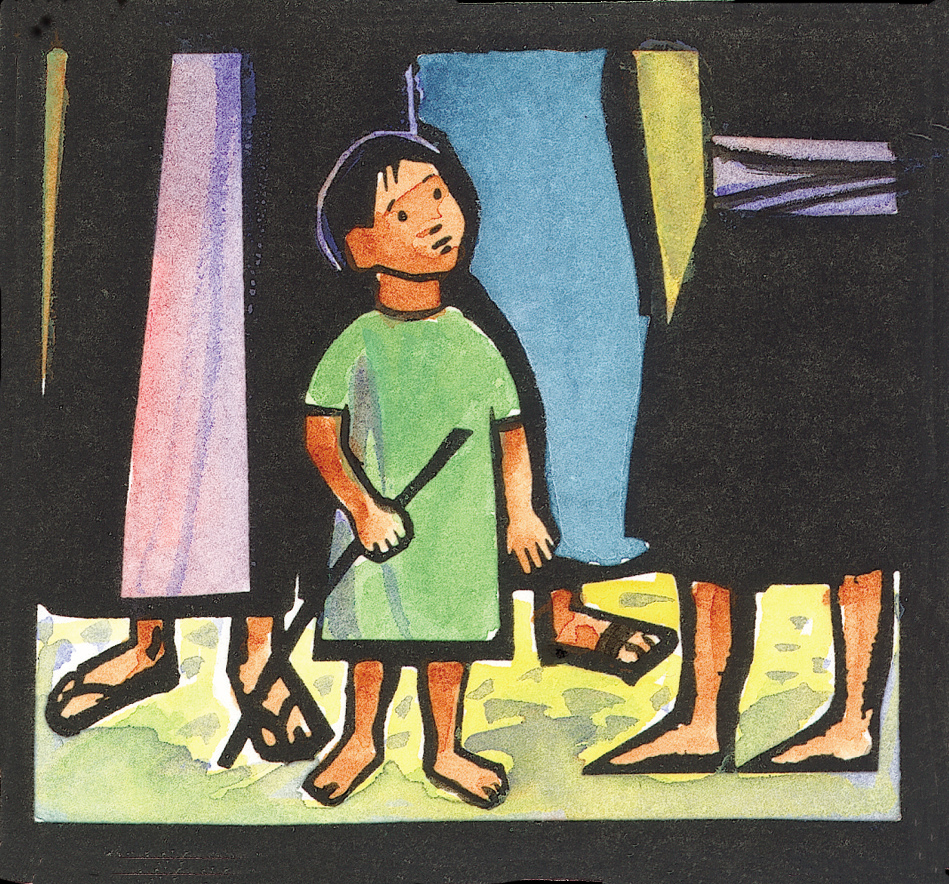
THE CHILD FROM TODAY’S GOSPEL

This Sunday is the 25th Sunday Of Ordinary Time and we are now back into the daily routine of school or work with the various clubs etc restarting after the Summer. Almost four weeks have already gone by as we head towards the Autumn or the Fall as it is called in the USA. Time waits for no one and as I often say it certainly isn’t waiting on me and I certainly don’t want time to stand still for me permanently even though on some occasions is wish it would stop for a while to savour the particular things that I am doing that have brought me happiness.

Each week when we gather together as the family of god in the church and we renew our commitment to being disciples: followers of the Christ following the way of the Lord on our pilgrimage through life. As a pilgrim people we have been listening to Mark during this year as he reminds us of the demands of discipleship. Today Mark reminds us as disciples that the core of the mystery we celebrate is that Jesus, the Son of Man was arrested, put to death, and rose again. This is the mystery of faith. But we also hear him warning us about how we can be distracted in our discipleship: instead of seeing this community as the group which must model the way God’s people should live, it can all too easily degenerate into being a group where people argue and compete for honours and position. We as disciples have to be focused on the Lord and recognise how often we fail as disciples.

Last Sunday we had the first prediction of the passion in the Gospel and today we come to the second time in Mark when Jesus speaks about what awaits him in Jerusalem. However, we are invited to see in these readings   an attempt by Jesus to persuade his disciples that they need to change their attitude towards him and his ministry, and I would hope that in these reading we would be persuaded to change our way as well. It is clear that the disciples are happy to be with Jesus as their long awaited and triumphant Messiah but they are failing completely in that Jesus is not interested such discipleship. He wants them and by association he wants us  to learn the way of the kingdom which is the way of the cross. This is not the path to glory as human beings understand it but the path of humble service and love.

To emphasize Jesus’ vision of leadership, he gives us the example of serving a  child, children were the least important people in ancient cultures; children had the status of slaves. People had children to serve them and provide financial security in their elderly years. And they had many children, because the morality rate for children under 16 years of age was 50 percent. Childhood was precarious time in the ancient world. Reflecting this outlook, St. Thomas Aquinas once answered the question, “If there was a fire, whom should I rescue first?” Thomas listed in the order of importance: one’s parents first, one’s spouse second; one’s children last of all. Children were the least important. Serving one such as a child really showed true leadership for they served the ignored and the helpless.

To serve someone as lowly as a child took an act of extreme humility.  But who was the “child” of which Jesus spoke? Who was the Christian to serve? In one respect, the Christian was to show hospitality those who had the social status of the child: the outcast, the sinner, the sick and feeble. In another respect, the Christian was to show hospitality to all of God’s children, regardless if they were friend or foe. In a third respect, the Christian was to show hospitality to those who had become the “children” of the community, the Christian missionary who risked life and limb to spread the Good News. Obviously it took wisdom to discern how one would serve these different groups. But Jesus made one thing clear. Leadership meant serving all. It meant esteeming the least important.

We all have the opportunity and the responsibility to exercise leadership in our lives. But, as the gospel points out, leadership means service. It means setting aside our selfish desires to care for others’ needs and to show them respect. 

24th Sunday IN Ordinary Time

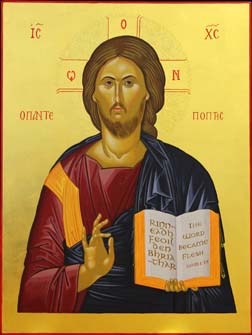
This Sunday we are asked to reflect on the question that Jesus asked his apostles “who do you say I am?” And this is a question that Jesus also asks you and me today who do you say I am? We need to stop and think about exactly who Jesus is . Put in a simple way Jesus is the Son of God our saviour who came into the world so that we could have life and have it to the full.

Jesus explained to all who would listen what it would personally cost them to follow him as their Lord and Messiah – it would cost them everything, even their very lives! How can anyone make such a demand? God the Father freely gave us his Son, to save us from sin and death – not just physical death but spiritual death as well. When we exchange our life for his we receive far more that we give up. We receive pardon, peace, and the abundant life of God’s kingdom now, and the promise of the resurrection and unending life with God in the age to come.  When we discover the treasure of God’s kingdom – God himself – we gladly give up all that we have in exchange for the life of joy and happiness God offers us in our faith. The joy he offers no sadness or loss can diminish God gives without measure. The cross of Christ leads to victory and freedom from sin and death.

Following   Jesus Christ   is a serious business.  It is not just a matter of being a member of a faith community.  It is not just a matter of observing various rules and regulations.  Christ is calling us to more than this.  He is calling us to be completely sold on His Kingdom.  He is calling us to put our faith in God our father in heaven.  That means being mocked because we take our faith seriously.  That means being hurt because we refuse to join a crowd that is more pagan than Christian.  That means being spat on, and hit in the face, and even dying for the sake of Jesus Christ let us remember Good Friday and the Cross.

Following Jesus is always going to have a cost to it no matter what way you look at it.  That is because good is always going to be opposed by evil and good always triumphs over evil.  May we not be afraid of being what we are people who are called by Jesus to follow him in faith. There will always be people who will decide not to follow Christ and it is their free choice. Having said that let all of us who are people of faith continue on our faith journeys as we answer the call of Jesus to follow him.


Post Navigation