Fullerton T

RELIGION LITURGY AND LIFE

Archive for the category “RELIGION”

23RD SUNDAY OF ORDINARY TIME
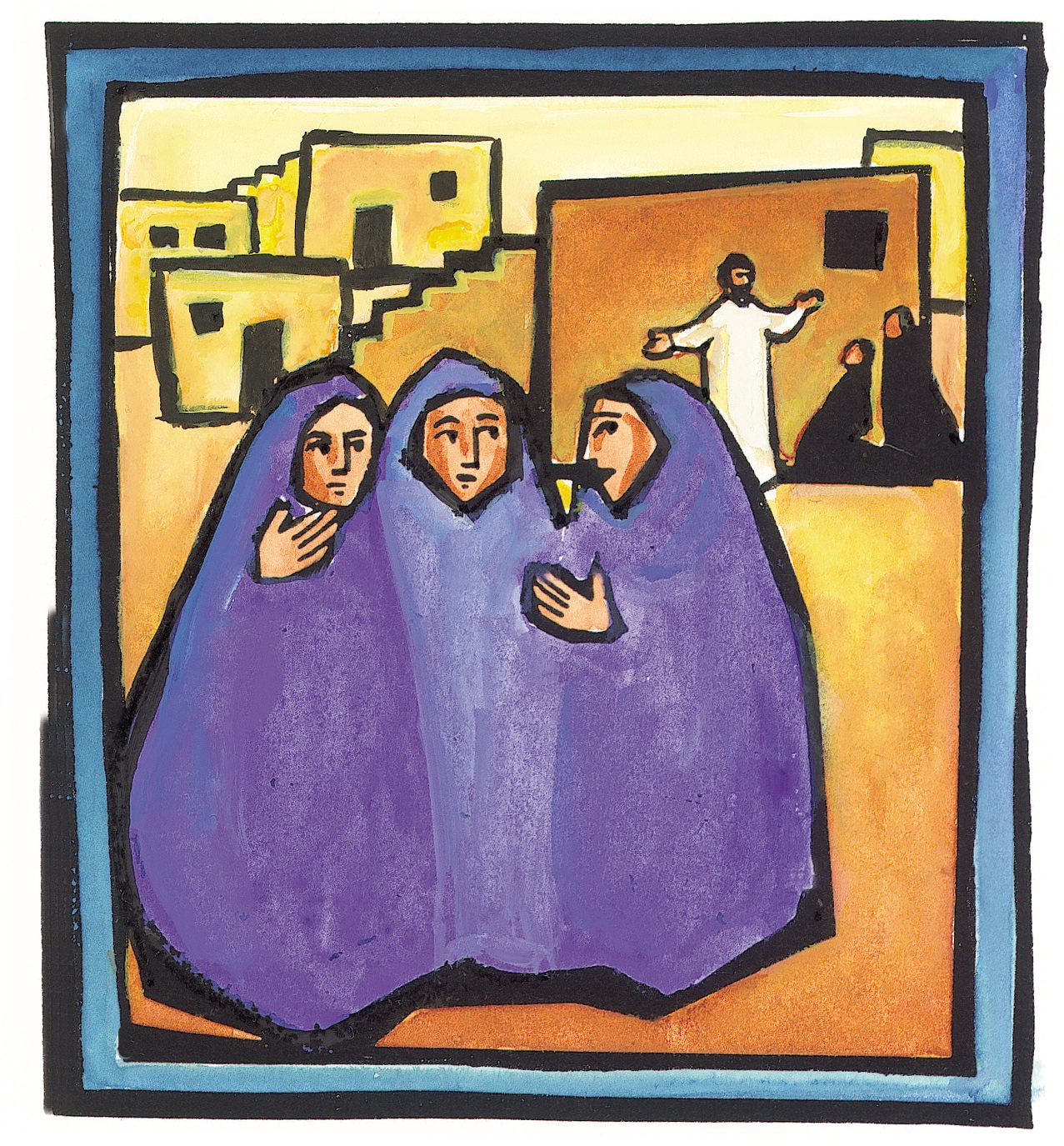
Well here we are at the beginning of the new school year. I can just imagine the frustration of the parents trying to get their children out of bed last Monday morning. I always hated going back to school at the beginning of September as the long summer holidays were at an end. But then of course the next holiday would be Halloween and then of course Christmas and i’m sure there are already whispers of what the youngsters around and about are hoping to get for CHRISTMAS. The less said about that the better, I had a friend who wouldn’t let you talk about Christmas until after Halloween which in today’s climate is a very good policy for all of us .

Our Gospel reading for this Sunday focuses on the deaf man regaining his hearing or rather Jesus healing the deaf man. What is the significance of Jesus putting his fingers into the man’s ears? Gregory the Great (540-604 AD) comments on this miracle: “The Spirit is called the finger of God. When the Lord puts his fingers into the ears of the deaf mute, he was opening the soul of man to faith through the gifts of the Holy Spirit.”The people’s response to this miracle testifies to Jesus’ great care for others: He has done all things well. No problem or burden was too much for Jesus’ careful consideration. Jesus freed the man from more than a physical ailment. He restored the man’s moral character and social contacts.

Jews in the time of Jesus assumed physical ailments (like the one the man suffered from) were the result of sin, either personal or ancestral. Such an ailment reflected moral deficiencies. It also placed barriers between the man and a normal social life. (Indeed, some of his family members might have been ashamed of his condition and sought to hide him.)

There are many people out there who are deaf, that is deaf and maybe even blind to the treasures of the faith. Many have never had anyone to show them the faith, Saint Paul pointed out in his time and what he said is more relevant today when he said was How are men to call on him (Jesus) if have not come to believe in him?  And how can they believe in him if they havenever  heardof him? Of course there are so many others who are blind and deaf to the faith by choice and the big question for us to ask ourselves  is how do we help the non practising to see and hear again and how do we inspire those who are seeking the faith in ways that will bring them to the faith .

The Year of Faith beginning in October is a summons and a call for all of us to come to an authentic and renewed conversion to the Lord, the one Saviour of the world. By faith, across the centuries, men and women of all ages, have confessed the beauty of following the Lord Jesus wherever they were called to bear witness to the fact that they were Christian: in the family, in the workplace, in public life, in the exercise of the charisms and ministries to which they were called. By faith, we too live: by the living recognition of the Lord Jesus, present in our lives and in our history. In faith all of us are challenged, to understand that God’s love is for everyone, and that we are agents of that love. To be agents of God’s love does not mean that we develop halos and a saintly patience; it means to remember the Faith that we profess and act accordingly. So let us also receive, with faith, Jesus in the Eucharist! Let us ask Mary to help us to believe and have faith as she has always believed in God! May she prepare our heart to worthily receive this most great sacrament, mystery of faith and love!

21 ST SUNDAY OF ORDINARY TIME.

Here we are at the end of August with the final roundup of getting back from the holidays and the beginning of the manically busy days of getting ready for the beginning of the new school year on the horizon. We always came back from the country for the last week in August in order to get ready for the beginning of September and the opening of the various schools and colleges we all attended. There always that certainty of going home and getting back to the normal daily routine after the summer, when everyone was going around and about doing their own thing and enjoying the break from the monotony of the same old thing school, college or work day in and day out.

 In the Gospel readings of the past weeks, Jesus has been distressing the disciples by his words. Last week he said we have to consume his flesh and blood in order to have eternal life. His followers could not possibly have understood this. They whispered, “This saying is hard; who can accept it?” In the Gospel, we have finally reached  the great conclusion of the discussion about Jesus’ being the “Bread of Life”, and his being the one ”sent”. Some of His disciples find these words offensive to their senses and so their minds boggle. They have to leave and return to their former ways of seeing, thinking and believing.

They saw the miraculous distribution of bread and fish and ate their fill. Their senses told them something they could grasp. Jesus stretches their minds and asks them as he asks all of us to be as open to something even more miraculous, but which goes beyond the information provided by the senses. They choose the path of the “flesh” while Jesus is inviting them to walk the way of the Spirit. They stumble over what they cannot see or imagine. It takes faith and trust to believe in Jesus and to accept his words. Real faith, however, is neither blind trust nor ignorant belief. Augustine of Hippo once said: “I believe, in order to understand; and I understand, the better to believe.” Faith and reason go together, because faith seeks understanding of God’s truth and revelation. That is why God gives us the help and guidance of the Holy Spirit, who is our instructor and daily tutor in the wisdom and knowledge of God. Paul the Apostle teaches us to pray for understanding that God “may give you a spirit of wisdom and of revelation in the knowledge of him, having the eyes of your heart enlightened” (Ephesians 1:17-18). Faith or lack of faith is our personal response to God’s revelation of himself to us. Jesus reveals who God is and offers us a personal relationship with God as our heavenly Father. Peter’s profession of faith was based on the personal relationship he had with Jesus. Peter grasped, through the eyes of faith, that Jesus truly was the Messiah, the Holy One of God.  Through the gift of faith Peter came to understand that Jesus was both God and man, sent into the world by the Father who loved the world so much that he gave us his only Son (John 3:16).

Peter believed in the words which Jesus spoke, because he accepted Jesus as the Son of God and saviour of the world. Faith is an entirely free gift of God which enables us to respond to God’s word with trust because God is true and utterly reliable. Faith is the key to understanding and experiencing God at work in our daily personal lives. Do you believe, as Peter did, that Jesus can change your life because he has the words of everlasting life?

Many leave, but some stay including Peter. So Jesus puts the big question to them and him, “Do you also want to leave?” He also puts that question to us here and now, will we remain faithful or will we go our own way by travelling down the road of life on our own without the certainty of a spiritual life.  I think that the quotation above from Augustine of Hippo is a good starting point for us as people of faith. We believe in order to understand and we understand better to believe. Faith is an entirely free gift of God which enables us to respond to God’s word with trust because God is true and utterly reliable so let us trust in God to help us in every difficulty there may be in the future as he has done in the past .

20th Sunday in ordinary Time

Here we are at the 20th Sunday in ordinary Time and we have just past the middle of August as we head onwards towards the end of the Holiday season. Then  we get into September and the beginning of the time of return with so many  going back to work, school, college or whatever.  For some it may be a time of change and for others it will be a time for renewing old acquaintances and work, school or college friendships. Our Gospel reading today speaks again of Jesus as the bread of life and once again he is misunderstood. Anyone who eats this bread will live forever.’ We who share this meal share in the life of Jesus. Within our sharing we are brought into the life of God. We are caught up in the life of the Father, who has sent his Son among us as our source of life and wisdom, and who has sent his Spirit into our hearts.

The Second Vatican Council speaks about the centrality of the Eucharist. “The Eucharistic Sacrifice,” the Council says is  “the fount and apex of the whole Christian life.” The Latin words are “fontem” and “culmen.” Even if you don’t know Latin, you can recognize their meaning. Culmen” provides the root for our English word, “culminate” – to reach the highest point. Fontem” refers to a “fount,” or a source. The Eucharist is the source and summit of our lives and all we have and do as Catholics and as Christians. The meaning of the Eucharist should be reflected in the lives of all who receive the sacrament.

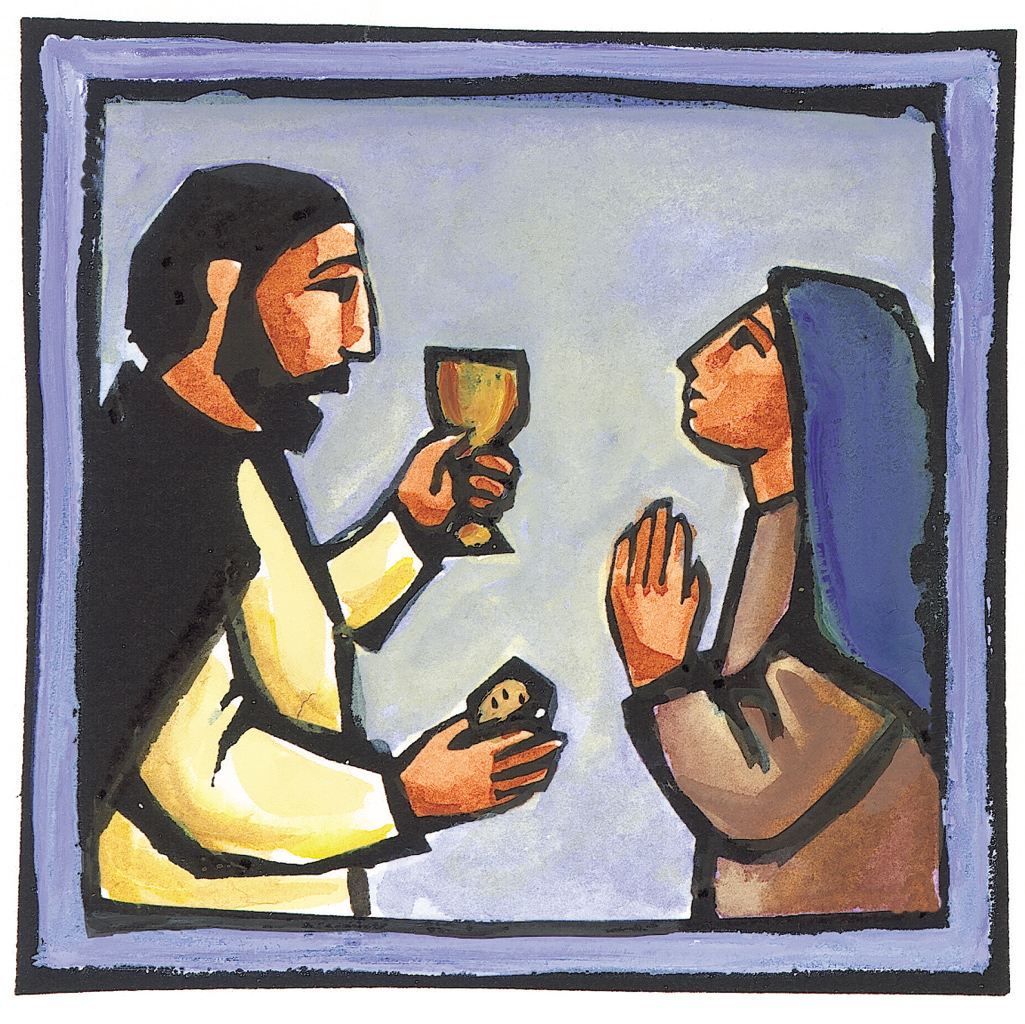
The Eucharist helps us to be more thoughtful, compassionate and forgiving but this cannot happen without our own commitment to love and service of others as well as our commitment to our faith and that includes the parts of it that we particularly like as well as the parts of faith that are a challenge and I think that these days faith and being a person of faith is a big challenge. The Christian faith is an all in package and many people want what they want from their faith picking and choosing what they like and as a result they don’t realise or see that the great goodness of the faith taken as a whole is what god wants for all of us. The people who heard Jesus’ preaching at the beginning could not mistake his meaning. He meant in no uncertain terms, that if they were to receive his life eternally in the kingdom, then they must begin now to receive the Body and Blood which he poured out unto death at Calvary in the Eucharist, first instituted on Holy Thursday in the upper room and faithfully handed down in the Church in every generation right to ourselves in the present day. when some of his own beloved people rejected him, as many of his beloved people do today Christ did not change his teaching or water it down, he watched them leave with sadness, and i’m sure Jesus is looking down on us with that same sadness when he sees so many leaving his church in our time. Today   as the Body of Christ that is the Church we remember Jesus because he shared human life with us and enjoyed all that we enjoy, including a good meal, good friends and good conversation. We remember him when in the Eucharist we break bread and pour wine, because he poured out his life for us, allowing his body to be broken by death on the cross.  

We remember Jesus because He placed himself at the service of his Father and at the service of the people he loved . We too are called all these years later to that same service of others, being people who are called to be more thoughtful for others, compassionate and forgiving .By receiving the Eucharist, we are nourished, and enabled to nourish others through the example of our lives and the way we live them.

19th Sunday of the year


I AM THE BREAD OF LIFE

Today we hear all about Jesus as the Bread of Life. I live near a bakery in Belfast and up until a few months ago you always woke up in the early morning to the smell of the baking bread and cakes and it was so good. Also I remember the same smell when we had the soda bread baking in the oven here at home or wherever we might have been on holiday or whatever. There is nothing quite like getting the first bit of fresh crusty bread or the end of the soda loaf just out of the oven with LOADS of butter melting into it and maybe a bit of strawberry jam as well. The two staple parts of anyone’s diet in the western world always have been bread and milk. But the bread that the Gospel of today tells us about is so much more than the bread that we get from our local bakery , it is as Jesus puts it the bread of life which in reality is our spiritual nourishment.

How would you and I tell someone that we do not live by bread alone? What would we give or say to make them understand the idea of the bread of life in the sense of today’s readings? Our first thoughts would probably be to give them a lecture, or to try to arrange a spiritual experience. Or maybe to offer a really spiffy education class, with professional videos and worksheets and breaking into small groups to go over some discussion questions – maybe that would do it. How about it I know that I don’t do lectures and I certainly am not Spiffy.

In simple terms the Eucharist, the Body of Christ, stands as the greatest sign of contradiction against the culture of death and destruction that are so much the norm in today’s world. I think that I would tell them that Jesus is The “Bread of Life”, and he calls all of us to recognize our own dignity and the dignity of others as Sons and daughters of God. As Jesus continues his discourse on the Bread of Life in our Gospel reading today, he faces the complaints and criticism of the crowd, who take a very short-sighted view of what he says, and he affirms for them that true life, a life the will never end, is found in him, he is the one who has come from the Father, and so he simply is the living bread which gives life. There is an  explicit link between “belief” and “eating the bread of life”: the two lead to each other, and they both bring about that which man most desires ‑ to live forever in God. In our world today it is easy to be negative instead of being positive and for many faith filled people there is such negativity towards faith and people of faith. Negativity is an infectious disease, and the two old men who were on at the end of the Muppet  show set the bar high for holding a negative position, boy were those two a pair of old grumps. One negative thought leads to another. One negative person easily infects another.

We shouldn’t forget that above and beyond  all the negativity about many aspects of religion life and living we have been gifted with the antidote that is the Positive joy of Eternal Life which the Bread of life really is about. The eternal Word has become one of us. He who for all eternity is in intimate union with divinity, shares His life with us.

When we see only what is right in front of us in black and white and nothing else we are impoverished, we are living on the cold outside surface of our lives. To live by bread alone, that is food that will not last means to see no farther than the particular things themselves, and as a result we miss the presence the love and the call of God that are really a part of every piece of the spiritual bread we have. The bread that God gives us is seen in all we have for life and living – so that we may be drawn beyond all the passing things of life. Jesus says that he is the Bread that came down from heaven. He came to give his life for us. No one takes it from him. He freely gives it. The good news of the gospel is that the Father gives us this bread that draws us to our Father and teaches us all about him. This is the gift of faith that enables us to see that it is Jesus, given by the Father, who will satisfy our deepest hunger for eternal life.

 We believe God loved the world so much that he gave his only Son so that the hunger of every human being may be satisfied and that means you and me along with everyone else. May we not be afraid to partake of the bread of life.

EIGHTEENTH SUNDAY OF THE YEAR


“I am the Bread of Life.”


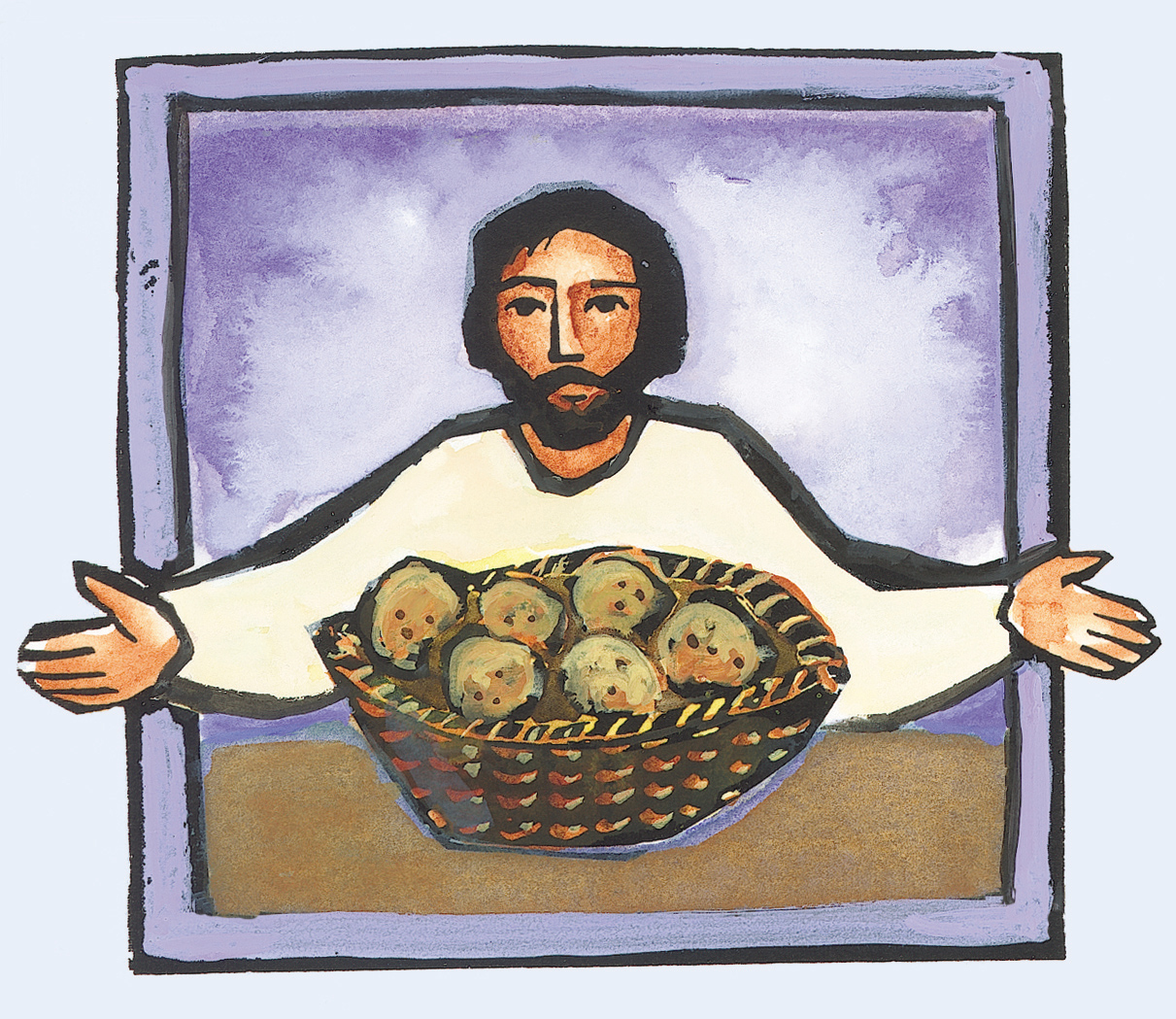
On this the eighteenth Sunday of the year we think about Jesus as the Bread of Life. Today’s Gospel takes place the day after the feeding of the five thousand. The people who had been fed search for Jesus. They really don’t want Him. They want the free food. Jesus uses this as an opportunity to speak about the food that really matters, the Bread of Life that God provides. He tells them about a gift of food that they knew very well, the gift that was the manna in the desert during the time of Moses. This was seen as the greatest gift of God. It was His daily testimony of His love and care for His People until they arrived at the Holy Place he would give them. Jesus mentions that they ate the manna, but they were still hungry. Jesus would provide food that would not leave them hungry, the Bread of Life. What do you and I most hunger and thirst for in life? Jesus addressed this issue with those who sought him after the miracle of the multiplication of the loaves. Where they simply hungry for things which satisfy the body or for that which satisfies the heart and soul? Jesus echoes the question posed by the prophet Isaiah:”Why do you spend your money for that which is not bread, and your labour for that which does not satisfy” (Isaiah 55:2)? Only God can satisfy the spiritual hunger in our heart and soul – the hunger for truth, for life, for companionship and love. So we come before the Lord seeking the bread of life this and hopefully on every Sunday, or perhaps for some of us, every day, and we say to the Lord, “Feed me.” But do we really want to be fed? The food that God gives demands a commitment to Him and what he calls us to be that is faithful and faith filled people. Let us compare spiritual nourishment to food for a moment. Eating out once a week in a restaurant is not unusual. But what if that was the only meal the person ate. Someone who goes back to their familiar seat in a restaurant week after week to enjoy their one meal of the week could never be nourished enough to make it through the remaining six days. In the same way, our worship in church on Sunday going back to the same pew or seat week in week out is meant to be an important part of one’s spiritual food and drink, if this is your whole game plan for feeding your spirit you will never get rid of our spiritual hunger. A good example of Spiritual nourishment for us when we were growing up was the nightly ritual of kneeling down as a family to say the rosary. The saying was that the family that prayed together stayed together and that was true for us as youngsters in Northern Ireland during the 70’s and 80’s. Much of this has now gone as well as family life and living as a family unit with a mother and father with the children but that’s for another time. So much of our lives are spent working for the food that perishes we only have to look at the state of the world and its peoples to realise this. Of Course we must work to earn money to buy the food we eat and pay for the roof over our heads and all the extras that make life enjoyable. But we need to realise that as well as the externals there is much more to life than the daily grind of life and living. For a fulfilled life, one should try to make time during the day for prayer and that is the food that endures for eternal life the gift of Jesus who came so that you and I might have life and have it to the full. In the Eucharist, we don’t merely listen to the words, “Take eat,” but we actually get up, come to the altar to take and eat the bread. It’s not just the bread that we take, bless, break and give. God took Jesus’ whole life, blessed, broke it and gave it to us. Jesus wanted those who followed him after having their fill of fish and bread to discover real spiritual nourishment so that they would never hunger again. “Our daily bread” contains many grains of nourishment.   It is about doing God’s will by receiving what God is giving us at any one moment and sometimes it can seem like crumbs, or crust, or  even quite stale. That Holy Bread, containing in Him all “sweetness” is God’s pledge that we will not be abandoned or left to go our own way grumbling that we did not get enough when in truth we have more than enough in material goods and if we stop we also have so much nourishment for our spiritual lives in the Eucharist, the Bread of Life and in our prayer life. Together, at the invitation of the Lord, let us go to him! For he says to us: “He who comes to me shall not hunger!” let us remember that we go to the Lord in order to fill our hunger and to satisfy the real desires of our soul the hunger for truth, for life, for companionship and love.

17TH SUNDAY OF ORDINARY TIME

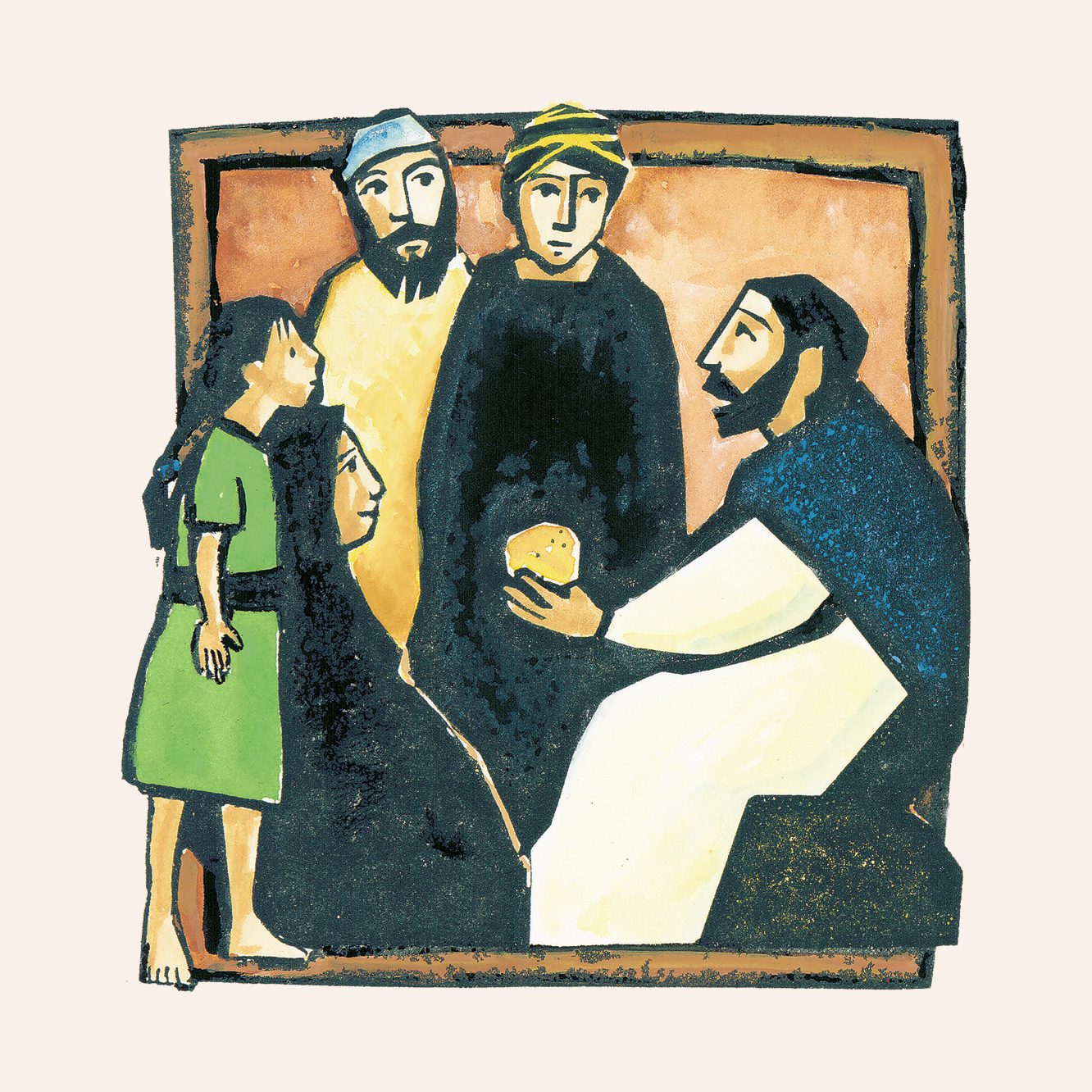
Jesus took the Loaves and the Fishes


Here we are at the 17th Sunday of ordinary time and our Gospel story tells us about the feeding of the 5,000. When we were growing up i’m sure it felt like the five thousand for my mother as we were a large family with 9 kids and mum and dad. With my  mum like so many others trying to make the food on the table go that wee bit further. I think that the apostles in the gospel were like that wondering how the five loaves and fishes would feed all those people and really knowing deep down that in this case it wouldn’t. A great multitude had gathered to hear Jesus, no doubt because they were hungry for the word of life. Jesus’ disciples wanted to send them away at the end of the day because they did not have the resources to feed them. They even complained how much money it would take to feed such a crowd ‘Two hundred denarii would only buy enough to give them a small piece each.’

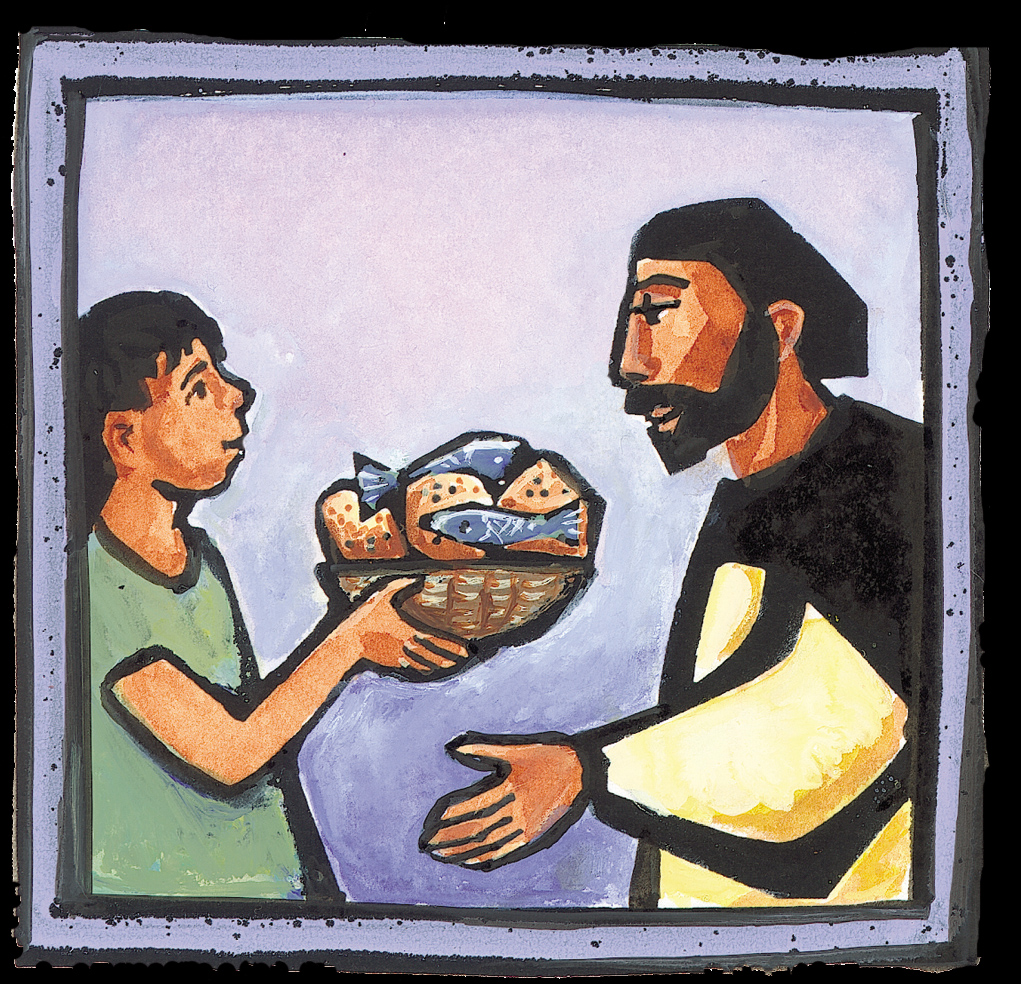
 Jesus, the Bread of Life, took the little they had – five loaves and two fish – and giving thanks to his heavenly Father, distributed to all until they were satisfied of their hunger. The feeding of the five thousand shows the remarkable generosity of God and his great kindness towards us. When God gives, he gives abundantly and without question. about how or what or where or when. He simply gives more than we need for ourselves so that we may have something to share with others, especially those who lack what they need. God takes the little we have and multiplies it for the good of others. We see this in so many ways especially through the likes of Trocaire and the Order of Malta and the many other Church agencies that bring the love of God into the world at large.  The implication of this gospel for each of us is a simple one: Jesus wants to work the miracle of feeding a huge number of people who are hungry; but the miracle will not happen without someone to provide five barley loaves and two fish. Jesus must have loved the boy who was willing to share what was really his to eat.

The miracle of the gospel is as much about the boy as it is about Jesus as well as being about you and me. The boy in this gospel is each of us you and I one and all who have something to offer the Lord. Jesus did  not spiritualize the hunger of the poor, or postpone his love for them to the next world. Today the Lord asks all sorts of people to make their contribution to the well being of those who have little or nothing at all. We shouldn’t be afraid of what we are asked to do in the Lord’s name. What we are asked to do is to  give food to the hungry, shelter to the homeless and give some of our resources to the poor. May we not be afraid to show gods love remembering that He  gives more than we need for ourselves so that we have something to share with others, especially those who lack what they need to live their lives without Hunger with a roof over their heads and perhaps a few shillings in their pockets.

16th Sunday in Ordinary Time


I am the Good Shepherd


I always remember when on holiday in the country wondering how the shepherds knew their sheep. When we would go up to Donegal from Omagh where we stayed with granny We would sometimes go through the Barnes more Gap with the hills rising very steeply on both sides of the road, with the sheep dotted here and there all around those hills and sometimes the shepherds with them. The image of the shepherd is quite an ancient one with Jesus being portrayed as the Good Shepherd. Today’s Scripture is all about the Shepherd looking after his sheep. With the various violent events of recent times in the USA and in Syria and other places it is good to know that we have a good shepherd looking after us.

What does the image of a shepherd tell us about God’s care for us? Shepherding was one of the oldest of callings in Israel, even before farming, since the Chosen People had travelled from place to place, living in tents, and driving their flocks from one pasture to another. Looking after sheep was no easy calling. It required great skill and courage. Herds were often quite large, thousands or even ten thousands of sheep.  The flocks spent a good part of the year in the open country. Watching over them required a great deal of attention and care. Sheep who strayed from the flock had to be sought out and brought back by the shepherd. Since hyenas, jackals, wolves, and even bear were common and fed on sheep, the shepherds often had to do battle with these wild and dangerous beasts. A shepherd literally had to put his life on the line in defending his sheep.

Shepherds took turns watching the sheep at night to ward off any attackers. The sheep and their shepherds continually lived together. Their life was so intimately bound together that individual sheep, even when mixed with other flocks, could recognize the voice of their own shepherd and would come immediately when called by name.

The image of the shepherd tells us so much about Jesus the Good shepherd and about what he does for all of us who say we are Christians. Each of us is called to be a good shepherd to one another looking after the various needs that the people in the communities in which we live might have.  So too our Bishops and priests are also called to be good shepherds after the heart and mind of Jesus leading us along the  path that leads to the way the truth and the life.  Our own age also has many sheep without shepherds ‑ a great wandering crowd of gods people , seeking something, but not knowing what they are seeking. The Church is a sheepfold whose one and indispensable door is Christ the son of God.  It is a flock of which God Himself foretold He would be the shepherd, and whose sheep, although ruled by human shepherds; are nevertheless continuously led and nourished by Christ Himself, the Good Shepherd and the Prince of the shepherds, who gave His life for the sheep.

We stop on this day to spare a thought and a prayer for all those who have been affected by the events in Denver in the USA. We pray for the 12 people who have died and their families and we pray for the injured and all those who are close  to them at this horrible time. May God through Jesus the Good shepherd give them strength to continue their lives in his love.

Fifteenth Sunday of Ordinary Time


This weekend the Church celebrates the Fifteenth Sunday of Ordinary Time. Both the first reading and the gospel deal with the idea of being sent on a mission for the Lord. The reading from Amos makes clear that God picks whomever He wishes and the Gospel reading shows the sense of mission and the urgency that should be visible in the behavior of those sent. Paul gives us a beautiful picture of God’s love in the new status of Christians as adopted children of God. The readings ask us to reconsider the fullness of our own responses to the mission that God has given each of us by virtue of our baptism and confirmation. Do we respond with the openness of Paul and the faithfulness of the Apostles or do we just close everyone else out concentrating only on oneself? we are also asked how we respond to others who have been given a task by the Lord. Do we react like Amaziah in our first reading when we encounter someone sent by God to help us? What kind of authority and power does the Lord Jesus want us  to exercise on his behalf?

Jesus gave his apostles both the power and the authority to speak and to act in his name. This power comes down from St. Peter the first pope right down through the centuries to the present Holy Father and the bishops and priests of our own time and place.  Jesus commanded them to do the works which he did and they were to heal, to free people from the power of the evil one, and to speak the word of God – the good news of the gospel which they received from Jesus. When Jesus spoke of power and authority he did something unheard of, He wedded power and authority with love and humility. The world and those within it more often than not seek power for their own selfish gain. Jesus teaches us to use any power we might have  for the good of our neighbour and those around and about us who may be in any need. The Lord Jesus commissions all the members of his body the church including all of us to be his ambassadors and missionaries – to bring the good news of the gospel to all peoples, lands, and nations wherever we are. He freely pours out his Holy Spirit upon each one of us so that we may have the confidence and boldness to speak and act in his name wherever he places and sends us. Why does Jesus tell the apostles to “travel light” with little or no provision? “Poverty of spirit” frees us from greed and preoccupation with possessions and makes ample room for God’s provision.

The Lord wants his disciples to be dependent on him and not on themselves and he wants us to be dependent on him as well. He wants to work through and in each one of us for the  glory of God .

Are you and I ready to handle the power and authority which God wishes us to exercise on his behalf that is the power of humble service working with love and humility? The Lord entrusts us with gifts and talents. Are we eager to place ourselves at his service, to do whatever he asks of us, and to witness his truth and saving power to whoever he sends us? Last Sunday in a neighbouring parish here where I am there was an Ordination of a young man to the priesthood to serve in our Diocese. We pray today that many people of all ages and abilities will have the courage to do whatever Jesus asks them to do especially when he calls them to follow him into the priesthood or religious life. 

Fourteenth Sunday Of Ordinary Time

Where did the man get all this? What is this wisdom that has been granted him, and these miracles that are worked through him?


When we assemble each week on Sunday, we are continuing an earlier tradition of God’s people who met on Saturday – the Sabbath. For the Jews, the Sabbath was, and is, the day to rejoice in the goodness of God in creating the universe, and our human family. The first Christians moved the celebration to Sunday as this day was seen as the day of resurrection: God’s great act of restoring and renewing the creation in Jesus.
But whether it is celebrating the creation of all by God, or the renewal of all in Christ, the celebrations have some common elements: the people are to recall God’s love in a meal and in reading the scriptures. For the Jews, the meal takes place in their homes on Friday evenings and they gather on Saturday to hear the Law and pray. We listen to the scriptures first, what we call the New Law, and then have our meal together here. Today we recall that Jesus entered the assembly on the Sabbath in his home town; we believe that he is here among us in this assembly today. Let us recall his presence, and pray that he may find us a community of faith.

The gospel passage for this Sunday is St Mark’s version of Jesus’ return to his home town of Nazareth, accompanied by his disciples. He began to teach in Nazareth, and many were astonished by what they saw in him. They wondered where all this wisdom had come from. What they saw was very different from what others had seen. This man was one of them, in the deepest sense; they knew him and his family. The people of the town would not accept him; even though they had heard of his outstanding accomplishments in other places, they could not see what made him so special. The story of what happened to Jesus when he decided to return to his town is a familiar story, one that happens to all of us:  we achieve wonderful things far away from home – in another city, or perhaps in some other part of the world, where we are not well known; then the time comes when we know we must return to our own country and  there we find that people at home do not see us in the same way.

The situation recorded in today’s gospel shows a reaction that must have been widespread: the local people have Jesus in one box in their imaginations: he is the guy from down the road —they know him, and his background. For anyone who comes from their town they have a box for what they expect for and from that person: fine to get him to do a job for you, fine to go to the well with his sisters, fine to engage with them socially. That’s all there is to them: another family, just like us, and they should not think of themselves as anything special. So if Jesus stands up and presents himself as a leader, that is just not on! across as one filled with wisdom, he is a teacher like they have heard, he speaks in a way they have always imagined a prophet would speak. They have another box marked ‘prophet’ and he seems to fit there too! But that box comes with a label: prophets are very distant from everyday life, they are exceptional in every way, they are ‘not like us’. So when these people find that Jesus ticking both the box marked ‘prophet’ and ticking the box marked ‘ordinary bloke’ ‘regular guy’ ‘one of our own,’ they cannot cope with this complexity. So, since they are more sure that he is the guy down the road, they reject him as a prophet .

I have seen many people give up the faith because they suffered some humiliation indeed on a number of times in the past I too have felt that way. Somebody says a word that hurts them; they start brooding and the devil is right there telling them to throw in the towel. That is not Jesus’ way. He keeps going. Jesus suffered rejection not only from so many people when he walked in person here on earth. The first thing that Jesus does is acknowledge it. Jesus is so deep in Scripture that he is able to put the attack into a biblical context. Okay, these people are taking offense at me. They are making some cutting remarks. But look what the prophets suffered. Why should I expect anything different?
Faith is the ability to imagine that God’s goodness is greater and closer than the bits-and-pieces around us and the ups-and downs of life. In this case, faith was the ability to imagine that God was so close that Jesus was both the guy from down the road and the great prophet and the wise teacher and more besides. But the group could not make that leap of imagination —and Jesus was amazed at their lack of faith.

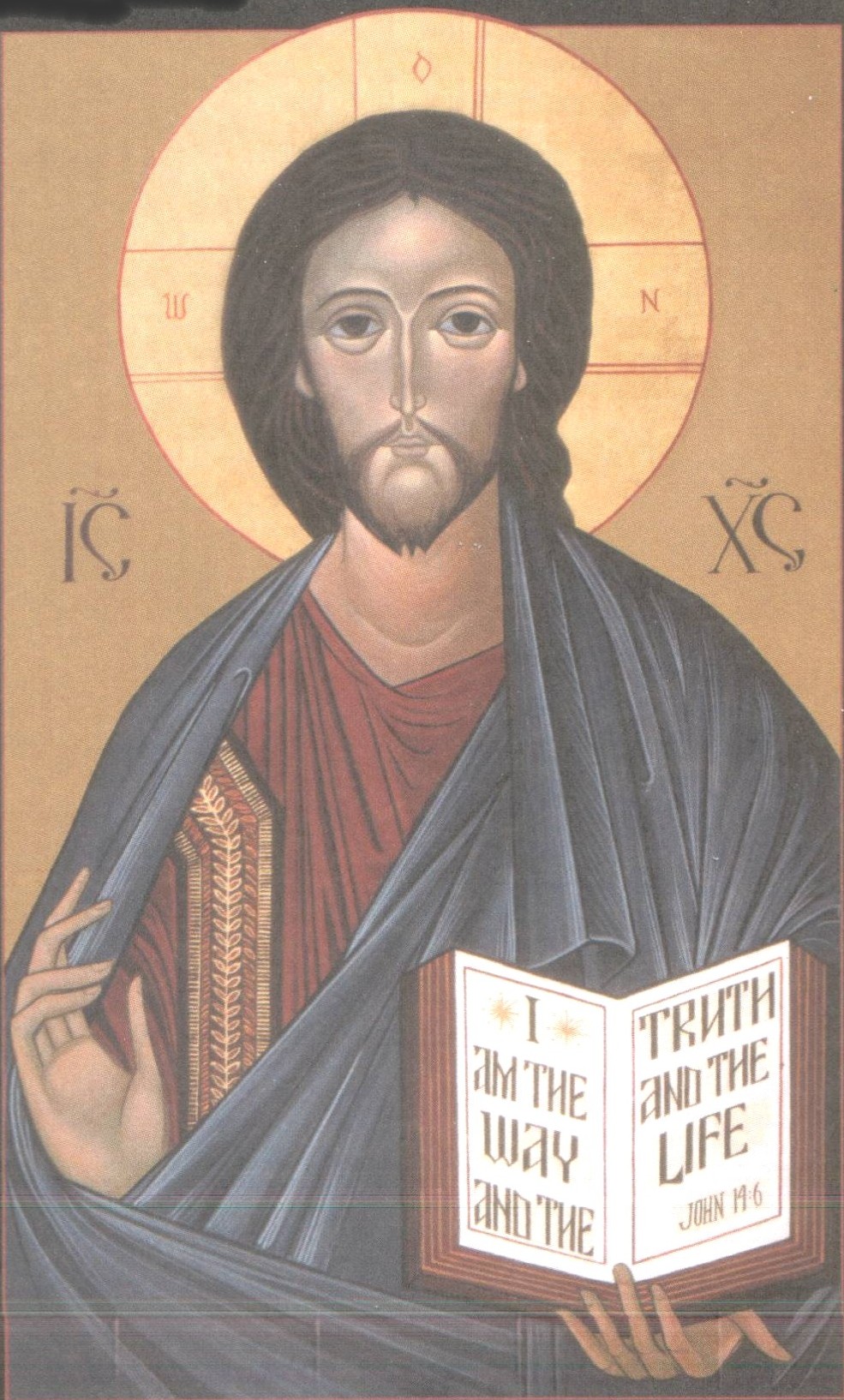
Let us remember that in the bits-and-pieces around us and the ups-and downs of life that Jesus is there with us and he shows us that he is the way the truth and the life.

THIRTEENTH SUNDAY OF ORDINARY TIME

The Gospel story for this Sunday tells us about the woman with the haemorrhage and the Synagogue official Jairus who pleaded with Jesus to come because his daughter was sick. As we know the woman and the Child were both cured. Today’s readings reinforce for us the undeniable reality that suffering is not unique to us or to our times, and that if the truth be told we know very little about the ultimate meaning of death as no one has ever come back to tell us where they have gone. Wars, hunger, economic disasters abound and bring us to despair; personal illness, pain, and loss in our families sometimes cause us to lose hope. Often times we feel as if we are alone in our pain; and as a result of this perceived loneliness we ask, Why me? There is so much fear around and about in our country and in the world today: fear of “the other person,” fear of losing a job and not being able to pay the mortgage and look after our families, fear of crazy people with guns, fear of not succeeding, oh, so many fears and perhaps not enough of the old reliable that is FAITH.

People in desperate or helpless circumstances were not disappointed when they sought Jesus out and we are not disappointed when we seek Jesus as well. What drew them to Jesus? Was it hope for a miracle or a word of comfort in their affliction? What did the woman who had suffered greatly for twelve years expect Jesus to do for her? And what did a grieving father expect Jesus to do about his beloved daughter who had died?  It was the same for them as it is for us today Jesus gave hope where there seemed to be no human cause for it because his hope was based in and directed to God. He spoke words of hope to the woman (Take heart, daughter!) to ignite the spark of faith in her (your faith has made you well go in peace!).A 4th century church father, Ephrem the Syrian, comments on this miracle:

“Glory to you, hidden Son of God, because your healing power is proclaimed through the hidden suffering of the afflicted woman. Through this woman whom they could see, the witnesses were enabled to behold the divinity that cannot be seen. Through the Son’s own healing power his divinity became known. Through the afflicted women’s healing her faith was made manifest. She caused him to be proclaimed, and indeed was honoured with him.

For truth was being proclaimed together with its heralds. If she was a witness to his divinity, he in turn was a witness to her faith…He saw through to her hidden faith, and gave her a visible healing.” Jesus also gave divine hope to a father who had just lost a beloved child. It took considerable courage and risk for the ruler of a synagogue to openly go to Jesus and to invite the scorn of his neighbours and kin. Even the hired mourners laughed at him in scorn. Their grief was devoid of any hope. Nonetheless, Jesus took the girl by the hand and delivered her from the grasp of death. Peter Chrysologus, a 5th century church father comments on this miracle: “This man was a ruler of the synagogue, and versed in the law. He trusted therefore in God that his daughter would be restored to life by that same hand which, he knew, had created her…He who laid hands on her to form her from nothing, once more lays hands upon her to reform her from what had perished.” In both instances we see Jesus’ personal concern for the needs of others and his readiness to heal and restore life. In Jesus we see the infinite love of God extending to each and every individual as he gives freely and wholly of himself to each  person he meets.

Every Sunday is a little ‘Easter Sunday’: because Jesus rose on Sunday, triumphant over death, we gather on Sundays. We gather to rejoice and celebrate his meal, the Eucharist: he died, yet he lives, he has departed from us, yet also he is here among us. To celebrate that Jesus rose from the dead is to celebrate that in him is our victory over suffering, pain, and death itself. In proclaiming that the Father raised Jesus from the dead, we are stating and restating our conviction that all those parts of life and living that strike us as annoying  and destructive are not part of the Father’s will for us:

Let us bring all our many fears and worries to god our Father through Jesus his Son who gives us hope and healing in our daily lives and living. May we be like the Woman with the haemorrhage and Jairus the Synagogue official who had faith and hope in their Hard times.

“Lord Jesus, you love each of us individually

with a unique and personal love.

Touch our lives with your saving power,

heal and restore us  to fullness of life.

And help us in our present hard times to

keep on going in faith and hope.

Post Navigation