Fullerton T

RELIGION LITURGY AND LIFE

Archive for the category “RELIGION”

THE FEASTDAY OF SAINT JOHN THE BAPTIST

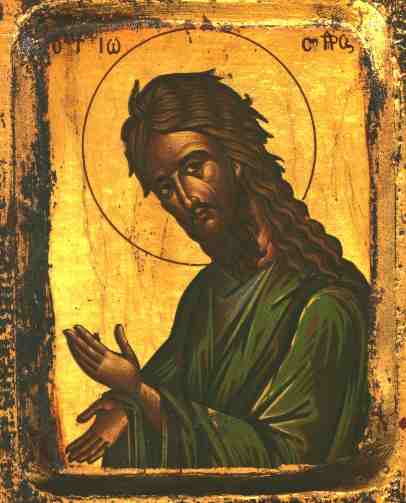
JOHN THE BAPTIST

 Birthdays are a special time to remember and give thanks for the blessings that have come our way in our lives family, friends faith or whatever. In many churches of the East and West the birth of John the Baptist is remembered on this day. St Augustine points out that The Church observes the birth of John as in some way sacred; and you will not find any other of the great men of old whose birth we celebrate officially. We celebrate John’s, as we celebrate Christ’s. Augustine also points out that this point cannot be passed over in silence, and  he states if I may not perhaps be able to explain it in the way that such an important matter deserves, it is still worth thinking about it a little more deeply and fruitfully than usual. So in the spirit of St Augustine let us stop for a moment to think about this feast a little more deeply

John was born of an old woman who is barren; Christ was born of a young virgin woman. That John will be born was not believed, and his father is struck dumb; that Christ will be born was believed, and he is conceived by faith.  The Gospel of this day recalls that great figure: John the Baptist.  We hear in our gospel that Zachariah regained his speech when they came to name the child John. John’s task was to announce the coming of Jesus and to point to him when he came.

John’s work was extraordinary.  He was called to reawaken a sense of expectation among a people that had grown tired and distant from God as many have done in our present generation.   John was called to bring renewal to institutional expressions of religion which, at the time, had so often become fossilised into mere formulae or external ritual.  He attracted thousands to come out into the desert to see him. Tradition sees the desert as the place where God speaks to the heart of his people. It is from this solitary place of spiritual combat, the desert bordering the Jordan, that John appears “with the spirit and the power of Elijah” (Luke 7:17). By his word and his baptism with water, he must call the children of the covenant back to the Lord their God as he calls us today to come back to the Lord our God.

John was a man who stood out. His strange dress the wild camel hair shirt and the leather girdle   was not chosen as a publicity gimmick or a trademark as many things today are chosen because they are a trademark and gimmicky.  His message was one that spoke of rising above conventional ways of thinking, conventional expectations and attitudes.  He shunned the external amenities of a comfortable life because he wanted to show his absolute dependence on God.  His detachment from life’s comforts gave him the freedom to truly recognise the message of Jesus and who he was the Son of God. John is not only the fiery preacher of judgement  He also appears as the friend who leads the bride to the bridegroom and then withdraws. He relentlessly directs hearts and minds OUR hearts and minds toward Jesus. Then he seeks to decrease so that the Jesus may increase. Thus is the servant conformed to his master.

The figure of John serves as a warning to us today, to all believers, to the Church and to Church organisations of every age of our need to draw our strength from Christ alone, rather than identifying with the cultural patterns or the Fads and fashions of the time, which in any case come and go.The Church is here to proclaim and live out the message of Jesus in every generation in season and out of season whether people at large like it or not. It is not there in any way to be inward looking.  The Church that is the people of god, you and I  are called to constant renewal, to tear ourselves away from conventional expectations, attitudes and superficialities and centre ourselves completely on God.  The Church in every age must become like John the Baptist, an uncomfortable reminder of how we must allow the truth of Jesus to break into our lives to enlighten the darkness that can at any moment enter into our lives or the life of the Church.

The Christian message always has the ability to fascinate and challenge everyone in every age. It calls on all of us to interpret correctly the meaning of Christ’s coming for our lives and for the society in which we live. Young and old that is all of us one and all need to hear Christ’s message in its clarity with all its demands and challenges. We need to see that the true foundation of the meaning and the hope we have comes in its entirety from the message of Jesus: of whom john said “He is the one”. Like John the Baptist, the Lord invites each of us to make our life a free-will offering to God. God wants to fill us with his glory all the days of our lives, from birth through death. Today then let us renew the offering of ourselves and our lives to God and give him thanks for his mercy and favour towards us as we celebrate the birthday of John the Baptist

ELEVENTH SUNDAY OF ORDINARY TIME

Our Gospel story today is the parable of the sower and we see how the farmer (GOD) has sown a tiny seed (FAITH); we see how he watches and waits for it to bear fruit. Jesus makes a comparison between the small and negligible start and the extraordinary results and we see many of these results in the spiritual lives we are celled to lead. The farmer is in no hurry; he simply sits, waits and lets things happen having sown the seed. Whatever happens will take its own time and the farmer must certainly not hurry its growth. He does not try to find out how this happens, but allows things to develop as they will. From God’s perspective, things are often not what they appear to be at first. The tiny mustard seed may seem small and insignificant, but within it looms something so very valuable, a vital part of creation. This parable helps us to realize that size can be deceiving? It helps us to understand that out of a small thing can come something wonderful and Spiritually powerful. The Church grew from a small mustard seed into what it is today that is something wonderful and Spiritually powerful in every generation past present and moving on into the future.   Of course there are those within the Church who have let us all down in many ways and not least in recent years through the various scandals that have taken place, the life of faith is never easy. In this parable, Jesus spoke about the truth that smallness has its strengths, advantages and possibilities. Smallness is a theme to which Jesus returned again and again in his ministry. And we know, too, that smallness was the basis on which the church began and in which the church continues to flourish.The church operates best when it carries into larger ministries the insights and techniques of smallness. We are at our best when we engage as individuals in reaching out to the other person because we have but one ministry as an example – that of Jesus himself. He gathered around him a small band of followers, totalling at best two dozen people. He worked closest with a select band of 12 who gathered with him at the Last Supper and heard his message of servanthood. When the church began as a small mustard seed, it was empowered by the Holy Spirit on the first Pentecost to carry the good news of Christ out into the world. It found expression in a small group of 11 who became empowered by the risen Lord in the upper room and grew into such a faith filled group of people. The people Jesus chose to carry on his work were, by the world’s standards, small men – fishermen, unlearned, probably illiterate.   One was a despised tax collector. They were simple ordinary people. Some of his band of followers were the very rejects of society. By all outward signs and appearances, they were small people. This, of course, was based on the judgment and standards of quantity, wealth education and worldly power. But in God’s eyes, they can be seen as the greatest of people. And we learn that, in the midst of the world that has a culture that idolizes the big the bold and the beautiful whilst waiting on the next BIG THING to come along, for us Catholic and Christian people generally there is a faith that honours the smallness and stillness in life that is the kind of smallness and stillness with which Jesus worked. This smallness means maintaining concern for individuals, providing opportunity for looking after everyone, promoting a feeling of worth and good in everyone, we meet making sure that all are interconnected, so that, for example, there is somebody to miss you when you are absent for whatever reason and then somebody to say how are you, to ask where you have been and how you are doing when you return. The Stillness means that we stop from time to time to recharge the batteries of faith so that the Mustard Seed of Faith can grow as the father intended. From the right kind of “small thinking and stillness of soul and spirit” can flow the values and mission that Jesus gave to his first followers who have passed it on to us. down through every generation to the present time.

The parable of the sower is all about you and me when we stop to really think about things we see how God has sown a tiny seed that is the seed of faith within each of us and we see how he watches and waits for it to bear fruit in us and through us for other people. This particular parable reminds us it is not the size of the seed planted that is important, but what counts is what grows up from that tiny seed. And what grows up from the tiny seed should be a life filled and lived in Faith and hope.

As I write this we are in the middle of the 80th Eucharistic Congress Week. I hope that all who have taken part in the week by their attendance or for those who were unable to be there in person spiritually by their prayer will be richly blessed. The Church in Ireland that is one and all of us have begun our Journey along the road of renewal. Yes it is our journey along a road less travelled with all its bumps and turns good and bad some better than others and some simply awful. On this day we recommit ourselves to renewal of our faith renewal of spirit and Soul. The faith from the tiny mustard seed, The faith of the upper room, the faith of Jesus Christ this is such a rich inheritance for us in our time may we not be afraid to embrace it in our generation and pass it on so that future generations will have the faith, that is faith in God and one another

THE FEAST OF CORPUS CHRISTI

THE FEAST OF CORPUS CHRISTI

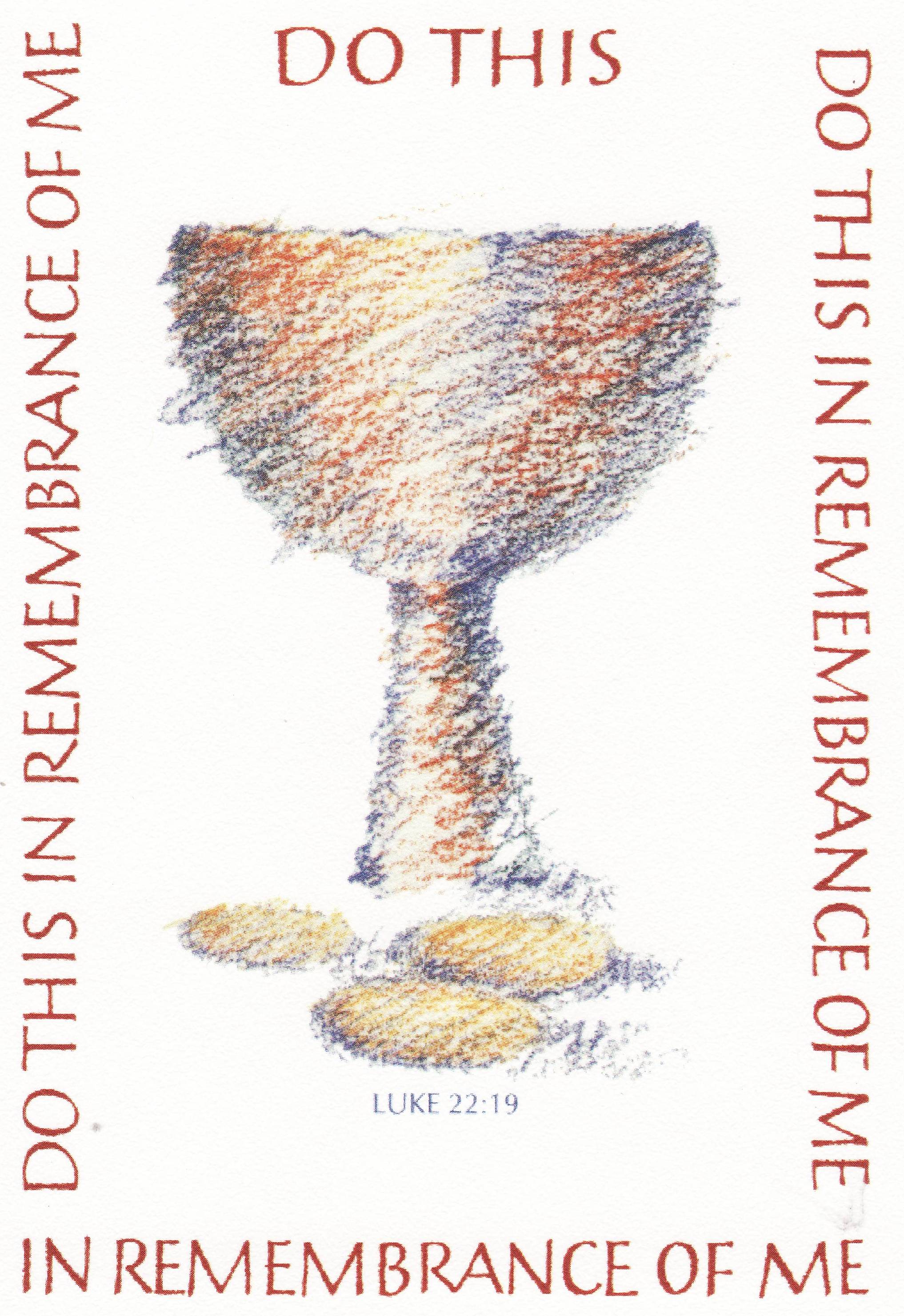
On Sunday 10th June we celebrate the feast of Corpus Christi, that is the Body and Blood of Christ. It is so very apt that we are reflecting on the theme of the Eucharist on this particular day as we in Ireland begin the 80th Eucharistic Congress week – a week in which we make a spiritual journey in Communion with Christ and with one another. (cf www.iec2012.ie)

The Israelites celebrated the first Passover in Egypt. The Lord ordered that they should celebrate it every year and that they should explain to their children and to their children’s children, from generation to generation, what this Passover signifies (Ex 12:25-27). The awareness of what it is, is absolutely necessary for appreciating this celebration and for celebrating it as it should be celebrated.

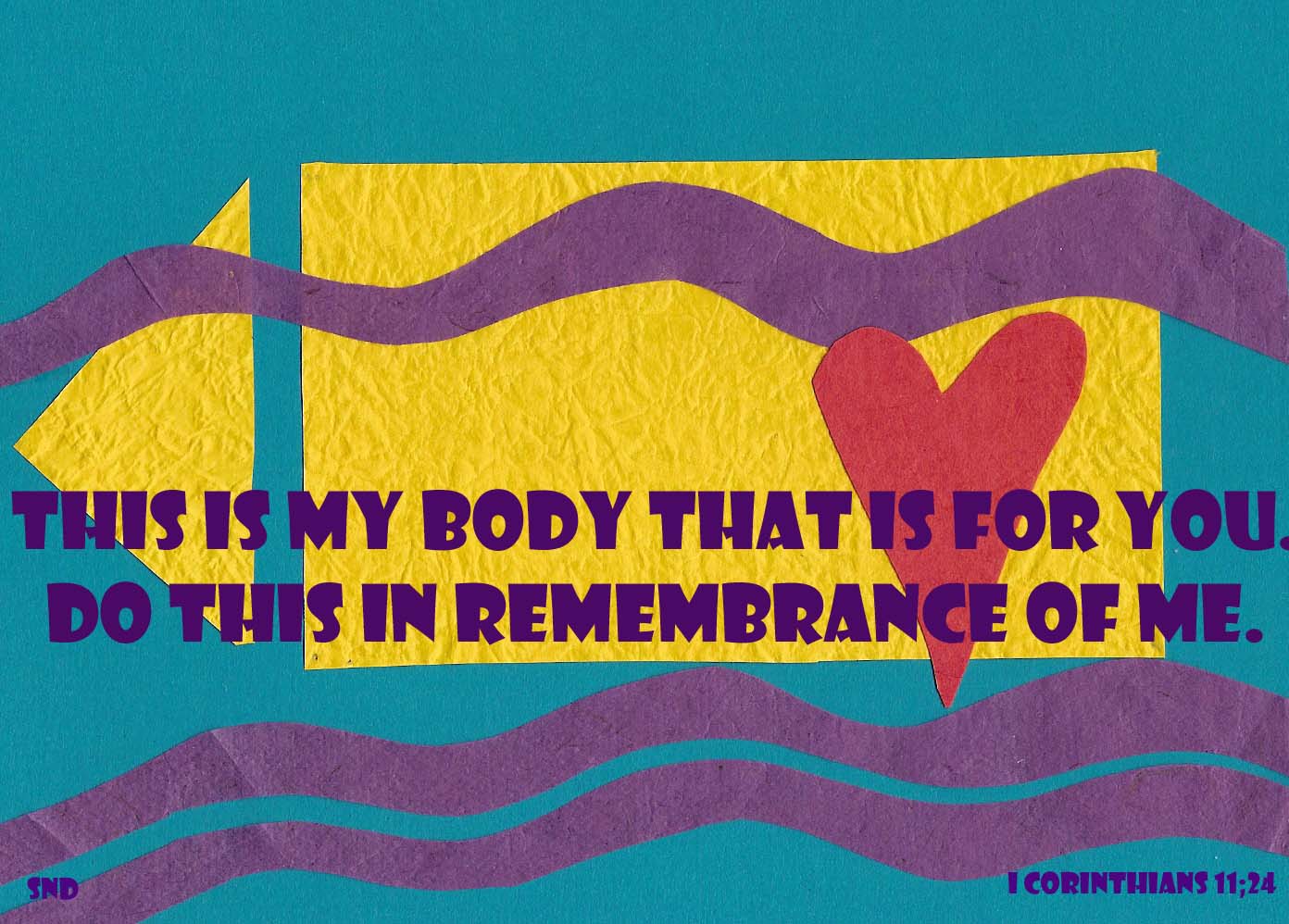
The same applies to the Eucharist, the Passover of the New Testament. Jesus celebrated the first Passover of the New Testament, when at the Last Supper he changed bread and wine into his Body and Blood and gave them to his Apostles as food and drink, and then the next day dying on the cross he offered himself as victim to his Father. Each time his followers celebrated the breaking of bread in his name, they would re-present, no longer the lamb of Egypt that saved the Israelites but the sacrificial death of Jesus that offers us liberation through his blood. In the Holy Mass, Jesus is offering himself, in the form of bread and wine, through the ministry of the priest, to God the Father, reminding us of his death and resurrection and what it means for us as people of faith.

From the very beginning, the Church believed these truths and taught them and upheld them against all errors and heresies. St Thomas Aquinas, expressed beautifully the Eucharistic faith of the Church in the hymn “Adoro te devote”, which he composed for the Solemnity of Corpus Christi and is still sung today. Along with him let us also say: ‘We cannot know you through seeing or touching or tasting, but we believe in you through hearing what you have said. We believe whatever you have said, for nothing is more true than your word. On the cross only your divinity was hidden, but here in the Eucharist also, your humanity is hidden. But we believe and proclaim both, i.e., that both your divinity and humanity are present in the Eucharist, and we make the same request of you as the penitent thief Lord remember me in your kingdom’.

If the sacrifice of the Mass is the same as the sacrifice of Calvary, but offered in an un-bloody manner, how devoutly should I celebrate it or participate in it? In the early Church, public sinners and non-Christians were not admitted to the Eucharist. The faithful were taught, that to be able to receive communion worthily and to benefit from it, one must be free from grave sin. St Paul had given a warning: You must examine yourselves before you receive the Body and Blood of the Lord. If one receives the Eucharist unworthily, one is bringing judgment upon oneself (I Cor 11:27-29). If you are at Mass and are also aware that you have committed a grave sin, do not go for Communion and bring judgement on yourself. Today let us resolve to worship the Lord in the Holy Eucharist and never to offend and dishonour him as so many people do in so many ways. When we receive from the Lord’s table we unite ourselves to Jesus Christ, who makes us sharers in his body and blood.

Ignatius of Antioch (35-107 A.D.) calls it the “one bread that provides the medicine of immortality, the antidote for death, and the food that makes us live forever in Jesus Christ” (Ad Eph. 20,2). This supernatural food is healing for both body and soul and strength for our journey heavenward. When we approach the Table of the Lord, what do we expect to receive? Healing, pardon, comfort, and rest for our souls? The Lord has much more for us, more than we can ask or imagine. The principal fruit of receiving the Eucharist is an intimate union with Christ.  As bodily nourishment restores lost strength, so the Eucharist strengthens us in charity and enables us to break with disordered attachments to things and creatures and leads us to be more firmly rooted in the love of Christ.  Jesus shared himself with his disciples in many different ways before offering himself to them as food and drink at the Last Supper. Jesus nourishes us in so many ways, spiritually and of course especially in the Eucharist. Those, who have a deep sense of the presence of God, in the whole of creation, will not have great difficulty in believing, that He is present in a very special way in the Eucharist. God alone can satisfy all the longings and hunger of our hearts because He alone can give us the bread of eternal life. Without it we would not have the strength to follow Christ. By receiving the Eucharist, we are nourished, and enabled to nourish others through the example of our lives and the way we live them.

 We do not live in the Kingdom, even though we live in constant expectation of God’s reign. However, the Eucharist we celebrate makes the Kingdom real because the Lord in truly present what is called the ‘real presence’. He is with us at Mass so he can be one with us in our daily lives and living. Our struggles, our pain, our happiness and our sorrow and our anticipation of the Kingdom become his. And the gift of his self-giving becomes ours in order that we may pass it on to others as they see us living our lives as faith filled Christian people.

So let us remember on Sunday  at the start of the 80th Eucharistic Congress that this is the day that the Lord has made let us rejoice and be glad in it – rejoicing that we are in communion or rather trying to be in communion with Christ and with one another.

Always rejoice in the Lord

Last  Saturday morning  the following reading was in the office of readings for the daily office of the church for feast of Saint Phillip Neri there is much within it to reflect upon about rejoicing in God..

From a sermon by Saint Augustine

The Apostle commands us to rejoice, but in the Lord, not in the world. For, you see, as Scripture says, whoever wishes to be a friend of this world will be counted as God’s enemy. Just as a man cannot serve two masters, so too no-one can rejoice both in the world and in the Lord.

Let joy in the Lord win and go on winning, until people take no more joy in the world. Let joy in the Lord always go on growing, and joy in the world always go on shrinking until it is reduced to nothing. I do not mean that we should not rejoice as long as we are in this world, but that even while we do find ourselves in this world, we should already be rejoicing in the Lord.

Someone may argue, “I am in the world; so obviously, if I rejoice, I rejoice where I am”. What of it? Because you are in the world, does it mean that you are not in the Lord? Listen to the same Apostle in the Acts of the Apostles, speaking to the Athenians, and saying about God and about the Lord, our Creator, In him we live, and move, and are. Since he is everywhere, there is nowhere that he is not. Is it not precisely this that he is emphasising to encourage us? The Lord is very near; do not be anxious about anything. This is something tremendous, that he ascended above all the heavens but is still very near to those who dwell on earth, wherever they may be. Who can this be that is both far away and close at hand, except the one who became our near neighbour out of mercy?

The whole of the human race, you see, is that man who was lying in the road, left there by robbers, half dead, who was ignored by the passing priest and Levite, while the passing Samaritan stopped by him to take care of him and help him; and when the Immortal, the Just, was far away from us mortals and sinners, he came down to us to become – that far distant being – our near neighbour. He has not treated us according to our sins. For we are his children. How do we prove this? The only Son died for us so that he would not remain the only child. He did not want to be alone, who died alone. The only Son of God made many children for God. He bought himself brothers and sisters with his blood; rejected, he accepted us; sold, he bought us back; dishonoured, he honoured us; killed, he brought us life. So then, my brethren, rejoice in the Lord, not in the world; that is, rejoice in faithfulness and not in iniquity; rejoice in the hope of eternity and not the brief flower of vanity. Rejoice thus, and wherever you are here, as long as you are here, the Lord is very near: do not be anxious about anything.

Saint Augustine

There is so much in our lives in these days of instant communications to make us anxious worried and afraid. Anxious and worried about the present times and afraid of the future but we have to remember in him that is in God in whom we live, and move and have our being and nothing is impossible to our heavenly Father. I know that there is a great spirit of rejoicing for many people for many reasons all over the place whilst there is also a spirit of fear and trepidation for many more in these uncertain times financially and otherwise. Let us pause and remember as we continue our daily lives that the Lord is very near to us as we journey along our pilgrim path and as a result we should not be anxious about anything because everything is in the hands of god. So then let us rejoice in the Lord, not in the world; that is, rejoice in faithfulness and not in iniquity; rejoice in the hope of eternity and not the brief flower of vanity that is our daily lives and living.

 Rejoice thus, and wherever you are here or there , remember that  the Lord is very near  do not be anxious about anything our hope and our salvation are at hand.

PENTECOST SUNDAY


Pentecost is here and This Sunday is what everything has been leading up to – Good Friday, Easter Sunday, Ascension: the coming of the Holy Spirit, the descent of the Paraclete, the pouring down of the fullness of love proceeding from the Father and the Son. New vitality for a weary people and we certainly need a new vitality in our present day and age with so many people searching for something lasting for their lives. The Holy Spirit is Like a bonfire that makes your heart leap up; like a heat wave in July(Heres Hoping)! after a cold and cloudy April May and June. Like a spring of clear water deliciously refreshing. Like a white dove that in­spires perfect gentleness; like a mighty March wind that invigorates the first green growth.

Pentecost is the fruitfulness of the Church as Mother in the midst of the Apostolic Community, overshadowed and filled as once before with the Power from God, bringing forth again – but in a different form – the body of Christ, the Church. It is a dazzling spectacle of sound and light, of wind and fire, tongues and voices, a joyful cacophony of ecstasy and praise, of preaching and proclamation. In this upper room the local Church and the Universal Church are perfectly united one in heart and mind. This is not just a revelation of the Church’s beginnings. It is an apocalyptic vision of the end, of how things will be when Christ comes again in his glory at the consummation of the ages.

But the vision is momentary. The Church of the Holy Spirit must bear in its body all the wounds that were borne in the body of its Saviour on the cross and in our present situation here in Ireland we certainly see the wounds of the Church being borne by Jesus on the Cross. Not until the eschaton would the Christian community experience in its’ outward appearance, the inner perfection of what it really is. Instead it would be racked by division, scarred by sin, torn apart by heresy and schism, humiliated by the world, betrayed from within, judged from without – and yet would endure as a sign of salvation on earth when all other societies, systems and ideologies had passed into the history books.

What is it about the Church that causes it to continue from the first Pentecost right up until 2012? Impoverished in its sinful members, often without influence; its authority frequently ignored and still it goes on, proclaiming the gospel, celebrating a crucified Christ, dragging itself along the way of the cross, looking towards the future with a hope that never deserts it. It has no earthly reason for doing so. Only a divine Spirit accounts for its touching courage. The indwelling Paraclete is a restless Spirit; it will not let you rest and that is why our hearts are restless until they rest in God.

For us as the Church we are on a pilgrimage which I often refer to the pilgrimage of life and it is the Spirit’s mission to bring the pilgrim Church home. Pentecost is a reminder of how this all began, who it is that leads us. It is also a foretaste of the future, of what has already been accomplished and lies in store at the journey’s end. In the tension between the `already here and now’ and the `not yet but to come’, we live by the Spirit who once led Jesus to the desert and the cross and who leads us still in the certain conviction that he who began this good work in us will indeed bring it to completion.


THE SIXTH SUNDAY OF EASTER

In our gospel reading for this Sunday Jesus tells his disciples, this is my commandment, that you love one another, as I have loved you. The language of commandment is deliberate; the author of John’s gospel is making an explicit reference to God as law-giver to accomplish at least two purposes: to affirm Jesus’ divine mandate, and to help readers to understand the weight given to loving one another. As Peter discovered when he went to the home of Cornelius, we do not have anything like exclusive access to God’s truth, God’s Spirit or God’s love. We have a piece of the puzzle, and others – people who in all likelihood don’t look or talk like us – have other pieces. God is bigger than we are, and by definition, not comprehensible in full by humans. It takes all of our puzzle pieces – and more – to begin to comprehend the reality of the Holy among us. There is a humility required of us if we are going to manage to love one another as we are commanded to do in this gospel reading. If a person believes that he or she has all the answers and there are many people in the Church, the country and the world at large who think in this way, those people have no need of community, except perhaps to make them feel superior as they lord it over other people.

If, however, we understand ourselves to be limited beings, loving an unlimited all loving God, we might choose to seek God wherever God might be found – in the least and the greatest, in the communities of which we are a part, and outside their borders.  We might find ourselves stretching our boundaries of mind and heart, to bother personally and in community, to include the multiple voices of so many harmonizing on the same theme: love of God and things of the spirit, and love of one another united body and soul in the church. It might be helpful to remember that Jesus loves us all and gave up his life for the love of his father and all of us. Jesus loved Peter, a Galilean fisherman with a tendency to speak first and ask questions later. Jesus loved Cornelius, a devout Roman soldier. Jesus loves you, and Jesus loves me with all our lumps and bumps and all the things that we don’t want other people to see and hear about us. Jesus doesn’t love me any more than you, or vice versa. By grace, we are all beloved, sons and daughters of the father and all have the opportunity to exercise that love in how we treat others. In the world of today and in our own country we see the Church getting such a hammering as a result of a number of clergy and religious doing so much damage from within. There are so many who have been hurt by the misdeeds of the few and we have a duty to remember them in prayer and in our care for their needs. Showing the love of God to all those who feel the hurt of betrayal, by our prayer and our action and reaction to all of them they will see the love of god given to all through us.

It is human nature to want to draw a circle around ourselves and maintain borders that define who is part of us, and who is not. It is the Holy Spirit’s nature to push us past our borders, and ask us to grow. If there’s a sure-fire test for whether the Spirit is prompting us or not, it’s this:

if we think we are called to shrink our borders, include fewer people, be more selective in our society, we can be absolutely sure that those feelings don’t come from God.

God’s desire for us is that we expand our understanding, make the effort to love people who are not like us and to accept with grace the fact that our vision of God and God’s kingdom is limited. We need to hear about the vision of others to broaden our perspective and perhaps eve broaden their outlook on the world. We need to stop and listen to the stories of those who were hurt in times that are long past in order to help them to heal their brokenness and in their brokenness we one and all will see the Church that we are meant to be an all caring place where everyone will be valued as a son or daughter of God. The film ‘The Best Exotic Marigold Hotel’ has a particularly good line spoken by one of the main characters several times during the film when things had not worked out quite as people hoped: ‘Everything will be all right in the end, so if is not all right then it is not yet the end.’ For us it is not the end for at this time we certainly are in a Mess but for us as people of faith all things will work out for the good of this we can be sure.

Being a person of faith is not easy at the present time but this is our calling as members of the Church, which is the body of Christ.  In June Ireland will host the 50th Eucharistic Congress, 80 years after the Eucharistic congress was held here in 1932.

There have been many changes in Ireland in the intervening period of the last 80 years and a great number of these changes were not for the better. The contemporary context of modern Ireland is very different in so many ways. The style, purpose and outcome of Eucharistic Congresses have also altered considerably over the years. In recent times an International Eucharistic Congress is more like a festival of faith, consisting of seminars, concerts, workshops, exhibitions and most importantly and above all else  the daily celebration of the Mass..  From the 10th to the 17th June many people will come to Dublin from all over the world in celebration of their faith that is faith in God in communion with Christ and one another. As I said at the start of this and I repeat this again In our gospel reading for this Sunday Jesus tells his disciples, this is my commandment, that you love one another, as I have loved you. This is what Eucharist is all about loving one another as Jesus loves us no one has ever sent his or her son into the world to die for all of us and yet that is exactly what our father in heaven did he sent Jesus his son into our world to give his life as a ransom for many, and though we are many we are one. We cannot forget the great sacrament of the body of Christ, Corpus Christi the sacrament Par excellence instituted on that first Holy Thursday in the upper room what love and joy there are within this great sacrament. This Sacrament of the Body of Christ truly shows the love of the Father not as some far off thing or person away out there somewhere but as a person that we can see in the eucharistic bread who has a part to play in our daily life and living.

My hope is that we will listen to the voice of Jesus in the broken hearts, and in the victims of our society the people out there who are hungry or lost, lonely or frightened, helpless or sick; and then in the days, weeks months and years ahead we can truly say that we are In loving communion with Christ and one another

In our gospel reading for this Sunday Jesus tells his disciples, this is my commandment, that you love one another, as I have loved you. The language of commandment is deliberate; the author of John’s gospel is making an explicit reference to God as law-giver to accomplish at least two purposes: to affirm Jesus’ divine mandate, and to help readers to understand the weight given to loving one another. As Peter discovered when he went to the home of Cornelius, we do not have anything like exclusive access to God’s truth, God’s Spirit or God’s love. We have a piece of the puzzle, and others – people who in all likelihood don’t look or talk like us – have other pieces. God is bigger than we are, and by definition, not comprehensible in full by humans. It takes all of our puzzle pieces – and more – to begin to comprehend the reality of the Holy among us. There is a humility required of us if we are going to manage to love one another as we are commanded to do in this gospel reading. If a person believes that he or she has all the answers and there are many people in the Church, the country and the world at large who think in this way, those people have no need of community, except perhaps to make them feel superior as they lord it over other people.

If, however, we understand ourselves to be limited beings, loving an unlimited all loving God, we might choose to seek God wherever God might be found – in the least and the greatest, in the communities of which we are a part, and outside their borders.  We might find ourselves stretching our boundaries of mind and heart, to bother personally and in community, to include the multiple voices of so many harmonizing on the same theme: love of God and things of the spirit, and love of one another united body and soul in the church. It might be helpful to remember that Jesus loves us all and gave up his life for the love of his father and all of us. Jesus loved Peter, a Galilean fisherman with a tendency to speak first and ask questions later. Jesus loved Cornelius, a devout Roman soldier. Jesus loves you, and Jesus loves me with all our lumps and bumps and all the things that we don’t want other people to see and hear about us. Jesus doesn’t love me any more than you, or vice versa. By grace, we are all beloved, sons and daughters of the father and all have the opportunity to exercise that love in how we treat others. In the world of today and in our own country we see the Church getting such a hammering as a result of a number of clergy and religious doing so much damage from within. There are so many who have been hurt by the misdeeds of the few and we have a duty to remember them in prayer and in our care for their needs. Showing the love of God to all those who feel the hurt of betrayal, by our prayer and our action and reaction to all of them they will see the love of god given to all through us.

It is human nature to want to draw a circle around ourselves and maintain borders that define who is part of us, and who is not. It is the Holy Spirit’s nature to push us past our borders, and ask us to grow. If there’s a sure-fire test for whether the Spirit is prompting us or not, it’s this: if we think we are called to shrink our borders, include fewer people, be more selective in our society, we can be absolutely sure that those feelings don’t come from God.

God’s desire for us is that we expand our understanding, make the effort to love people who are not like us and to accept with grace the fact that our vision of God and God’s kingdom is limited. We need to hear about the vision of others to broaden our perspective and perhaps eve broaden their outlook on the world. We need to stop and listen to the stories of those who were hurt in times that are long past in order to help them to heal their brokenness and in their brokenness we one and all will see the Church that we are meant to be an all caring place where everyone will be valued as a son or daughter of God. The film ‘The Best Exotic Marigold Hotel’ has a particularly good line spoken by one of the main characters several times during the film when things had not worked out quite as people hoped: ‘Everything will be all right in the end, so if is not all right then it is not yet the end.’ For us it is not the end for at this time we certainly are in a Mess but for us as people of faith all things will work out for the good of this we can be sure.

Being a person of faith is not easy at the present time but this is our calling as members of the Church, which is the body of Christ.  In June Ireland will host the 50th Eucharistic Congress, 80 years after the Eucharistic congress was held here in 1932.

There have been many changes in Ireland in the intervening period of the last 80 years and a great number of these changes were not for the better. The contemporary context of modern Ireland is very different in so many ways. The style, purpose and outcome of Eucharistic Congresses have also altered considerably over the years. In recent times an International Eucharistic Congress is more like a festival of faith, consisting of seminars, concerts, workshops, exhibitions and most importantly and above all else  the daily celebration of the Mass..  From the 10th to the 17th June many people will come to Dublin from all over the world in celebration of their faith that is faith in God in communion with Christ and one another. As I said at the start of this and I repeat this again In our gospel reading for this Sunday Jesus tells his disciples, this is my commandment, that you love one another, as I have loved you. This is what Eucharist is all about loving one another as Jesus loves us no one has ever sent his or her son into the world to die for all of us and yet that is exactly what our father in heaven did he sent Jesus his son into our world to give his life as a ransom for many, and though we are many we are one. We cannot forget the great sacrament of the body of Christ, Corpus Christi the sacrament Par excellence instituted on that first Holy Thursday in the upper room what love and joy there are within this great sacrament. This Sacrament of the Body of Christ truly shows the love of the Father not as some far off thing or person away out there somewhere but as a person that we can see in the eucharistic bread who has a part to play in our daily life and living.My hope is that we will listen to the voice of Jesus in the broken hearts, and in the victims of our society the people out there who are hungry or lost, lonely or frightened, helpless or sick; and then in the days, weeks months and years ahead we can truly say that we are In loving communion with Christ and one another
 

Fifth Sunday of Easter

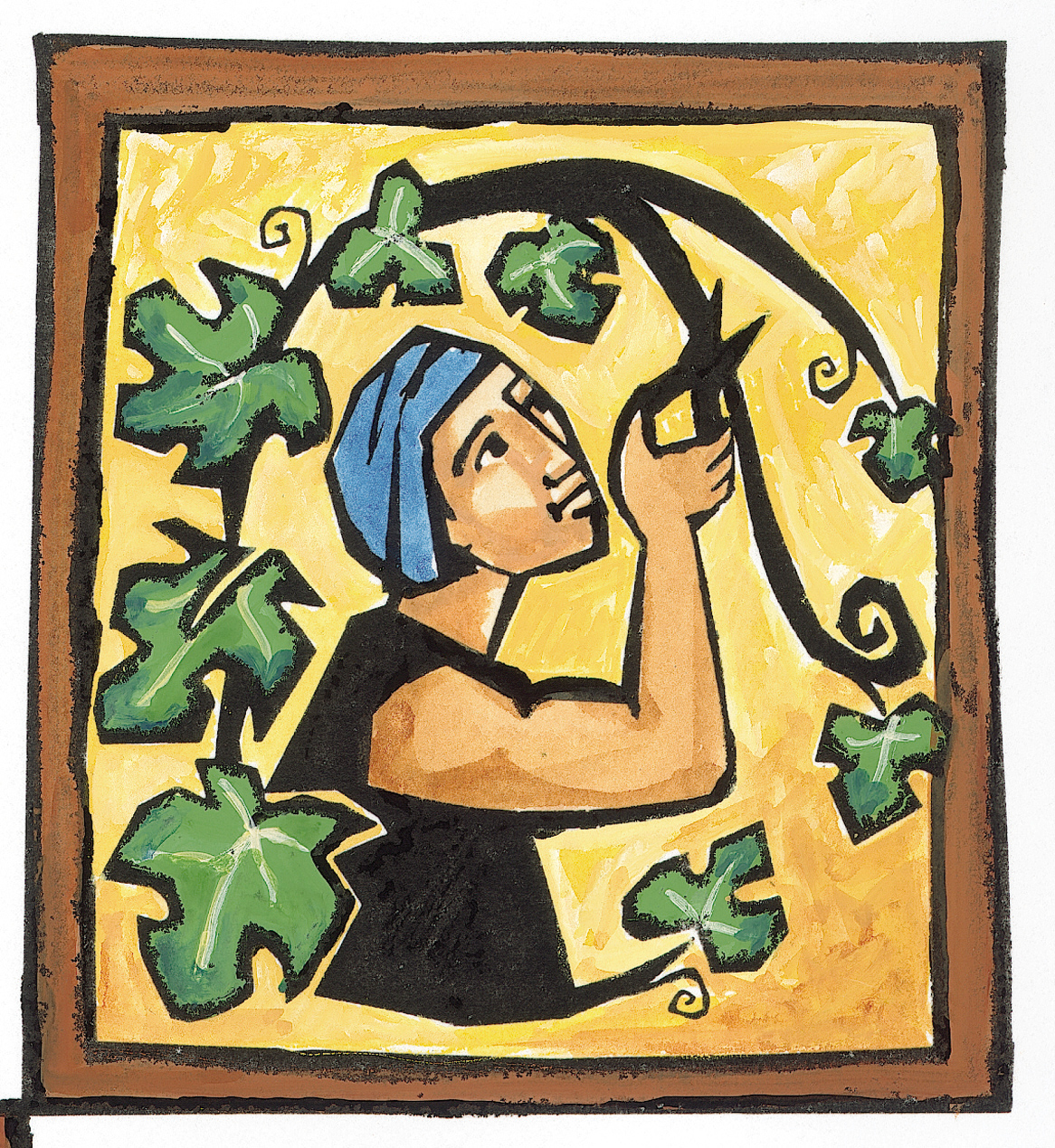
Here we are at the 5th Sunday of Easter soon we will come to Ascension(Jesus returning to the Father) and then the end of the 50 days of the Easter season at  Pentecost(The coming of the Holy Spirit sometimes called the Holy Ghost). The Gospel reading for  this Sunday speaks of Jesus as the Vine Dresser. The image of “vine”, “vine grower”, and “branch” is a tactile as well as visual aid. We are the receivers of life and the producers of “fruit” that is spiritual fruit.  This image of the people of God as “God’s vineyard” is a very old one, going back to the Jewish psalms, as well as other places in the Old Testament. Listen to part of Psalm 80: “You brought a vine out of Egypt; you drove out the nations and planted it. You cleared the ground for it; it took deep root and filled the land.” Again, notice that it is God who is doing all the planting here, not us. And think of all the other I AM statements found in the Gospel of John: “I AM the light of the world,” “I AM the gate,” “I AM the resurrection and the life.” The “Grower” is pictured as the One Who trims away those who have refused their identity as branches that is members of the church; perhaps they want to be the “vine” themselves. By the choices that they might make they are lost to the process of bringing life and nourishment through Christ, into this world. The Trimmer is seen to prune the branches so that even more fruit may grow. I do not like hearing this, because I do not like being shaped up. Many of us have many things that we do not want others to really know about, there are many lumps and bumps in our lives but we all need to remember that god loves us just as we are with all the things good and bad that are part and parcel of us and our lives.

Any Movements Religious or otherwise that have new ideas and identities that challenge the status quo can be found frightening by those who fear what is new or rather those who fear a challenge to their authority and are closed to where God is leading them and in our own time many are closed to the idea of  a new way of life hat is our Christian Faith .  It was the same in the first days of the church The followers of the way was the name that the first Christians were known by and feeling  was that they were a threatening group because of the newness of their idea.  They believed that their leader, Jesus of Nazareth, who had been crucified, was risen from the dead. All these years later we believe in Jesus who has risen from the dead and  we believe in the message of Jesus passed down to us right from the very time of the resurrection to ourselves through every generation right down to us in the here and now of 2012. The promise of Jesus, the Vine, the Gate, the Light, is abundant life here and now, and in eternity. Our heavenly Father is doing more in our lives than any of us are aware, but the trick is to let God do what God needs to do and for us to try our best to be part of it and everything else will fall into place. We pray in the days ahead that we won’t be afraid of being pruned back by Jesus the Vinedresser in order to move forward with the confidence that comes from knowing that we have faith in one another and more importantly faith in God.

THE EUCHARISTIC CONGRESS 2012

In less than six weeks time Ireland will host the 50th Eucharistic Congress, 80 years after the Eucharistic congress was held here in 1932.  There have been many changes in Ireland in the intervening period of the last 80 years. The contemporary context of modern Ireland is very different. The style, purpose and outcome of Eucharistic Congresses have also altered considerably over the years. In recent times an International Eucharistic Congress is more like a festival of faith, consisting of seminars, concerts, workshops, exhibitions and most importantly and above all else  the daily celebration of the Mass. The upshot of all of this is that the 2012 Congress will be quite unlike that held eighty years ago.  From the 10th to the 17th June many people will come to Dublin from all over the world in celebration of their faith that is faith in God in communion with Christ and one another. I know that our visitors from all over the world will get a truly great Irish welcome as many Irish people have received a warm welcome from other countries over the years.  The theme of the 50th Eucharistic Congress is in Communion with Christ and with One another. All of us should stop and ponder the theme and how it affects us in our daily lives and living, and how we relate to our Eucharistic sharing in the Mass and with one another and how we bring that sharing out into the wider world.

As a result of our participation in the Congress  whether we go to Dublin or stay at home we should be encouraging each other to live simply and happily, building a community that welcomes and loves all those who feel that they are unwelcome and unloved. Many people have  turned against a greedy world where they see and such an uncaring and unloving place. It was no easier or harder for those who in past generations who heard the voice of Christ in those less well off, and saw his face in those who were in need of love and care in need of a friendly word of encouragement, those people were able to reach out in their time and so taking their examples as a role models we should be able to reach out to all who are in need in the world of today.

Jesus when he spoke had great clarity of vision he continually spoke out against the injustices that were taking place in his own time. We should not forget the words of Jesus were there when they were first spoken and continue to be here in our present age to afflict the comfortable and comfort the afflicted. My hope is that we will  listen to the voice of Jesus in the broken hearts, and in the victims of our society the people out there who are hungry or lost, lonely or frightened, helpless or sick; and then in the days, weeks months and years ahead we can truly say that we are in communion with Christ and one another as one body of faithful people  .

4th Sunday of Easter Good Shepherd Sunday

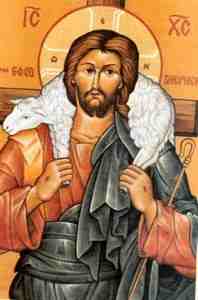
Today we gather on the fourth Sunday of Easter which is also known as Good Shepherd Sunday it is also the day when we pray that the Lord will send inspire people young and not so young to take up the vocation of service as priests or religious. One of the gentle images that we find applied to God in the Old Testament is that the Lord is the shepherd of his people: The Lord is my shepherd, there is nothing I shall want is the first line of the hymn with the title the Lord’s my shepherd. We Christians apply this title to Christ the Lord. He is the good Shepherd who knows his sheep and lays down his life for them. That is to say that Jesus is our Good Shepherd and he knows us laid down his life for us. We may find this language of sheep and flocks and shepherds strange, but beneath the imagery the belief it points to is at the heart of our faith: a gentle God who is concerned about and caring for everyone.  In today’s Gospel we hear Jesus say twice “I am the good shepherd The Good Shepherd seems to be calling always to His sheep to follow Him into the unfamiliar, the pastures, yonder, over there.  Most of us, upon listening to our own recorded voices, wonder if that is really us! What we sound like to others is not the exact way we sound like to ourselves. People who are visually impaired learn quickly who is who by their footsteps, pace, noisiness as well as their voices. Jesus is telling us that He will keep calling in the same voice and when we begin to follow, He will keep speaking. And what will Jesus be saying to us his followers to us  he simply says I am the Good shepherd follow me.

There will always be other voices, from within ourselves and from outside. How will we ever learn to recognize His voice as different from our self-cantered voices! A lot of people just want what they want not thinking about the true implications for themselves and the rest of those around them and this is why the calling of the Good Shepherd is so very different. That is what Jesus is calling us to on this day and every day to follow Him into the unfamiliar territory which will lead us along the roads of faith that will bring to the fullness of faith and life. We pray that the Lord will send us good shepherds into our lives who by their lives and example lead us along the highways and byways that lead us to faith, that is faith in God and in oneanother, the body of Christ the Church.

Third Sunday of Easter


Here we are at the third Sunday after Easter already and where have Lent and Holy Week gone? Time stops for no one and it certainly didn’t stop for me and all of us got through Lent, and Holy Week with all their opportunities and challenges. I am very thankful to God for the journey that we began on Ash Wednesday the road we travelled during the days of Lent and our arrival at our first destination that is the day of resurrection that is Easter Sunday on route to Ascension and Pentecost moving forward with our faith in God, in life and living strengthened and maybe for some restored. But as I said above we are travelling along the road that is the road of faith and that road is a lifetimes work from beginning to end and we have to keep on working at it, to nurture it and help it grow. The roadmap we follow is the road map of faith so let us continue on our journey of faith.

In the aftermath of the walk to Emmaus, as Luke recorded, Jesus appeared to his followers, gave them convincing proof of his resurrection, and opened their minds so they could preach with authority about the Messiah.  And down through the ages many have done this right down to the present time. We hope  and pray that many people will take up the call to do the same in every generation into the future.

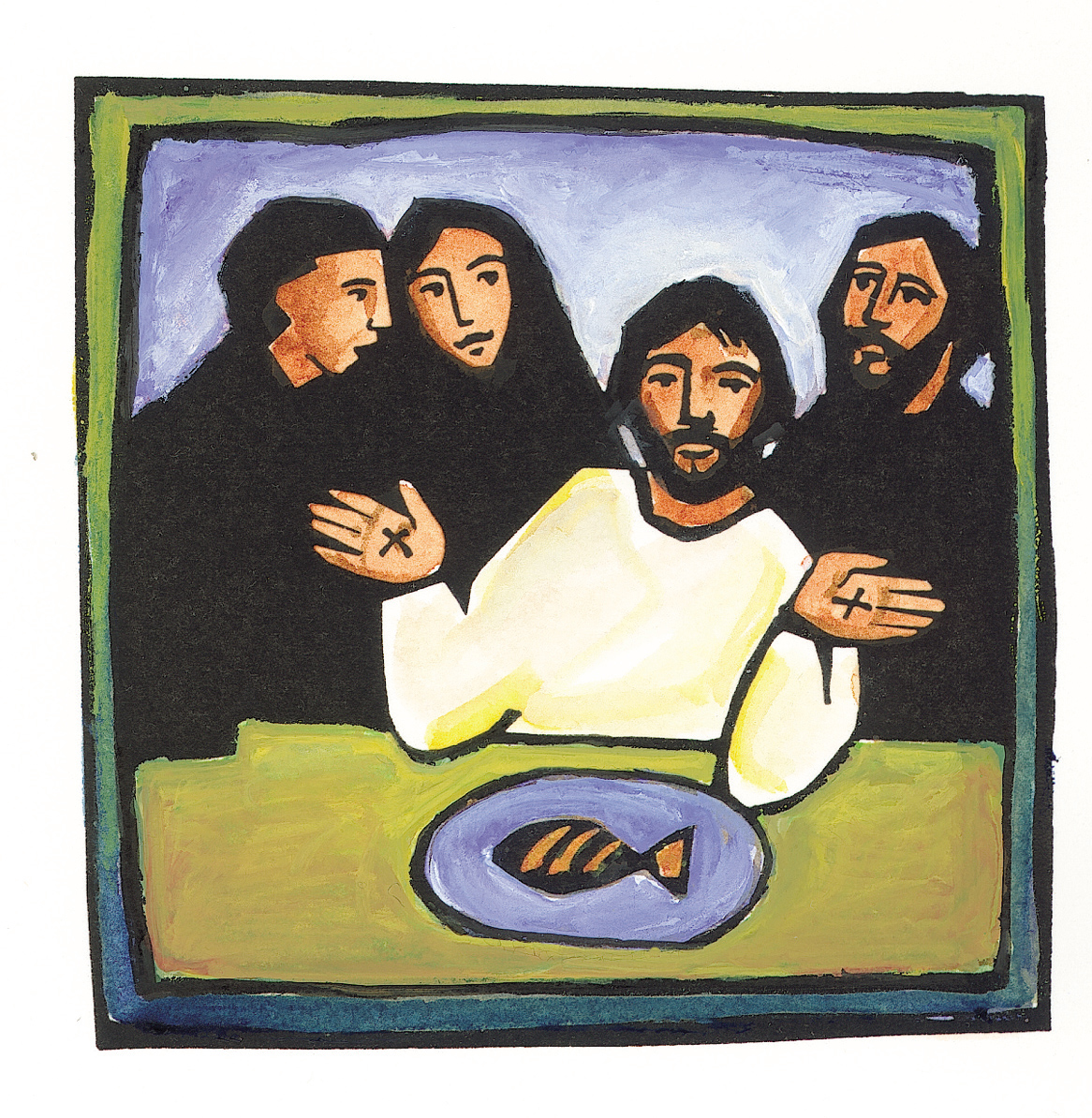
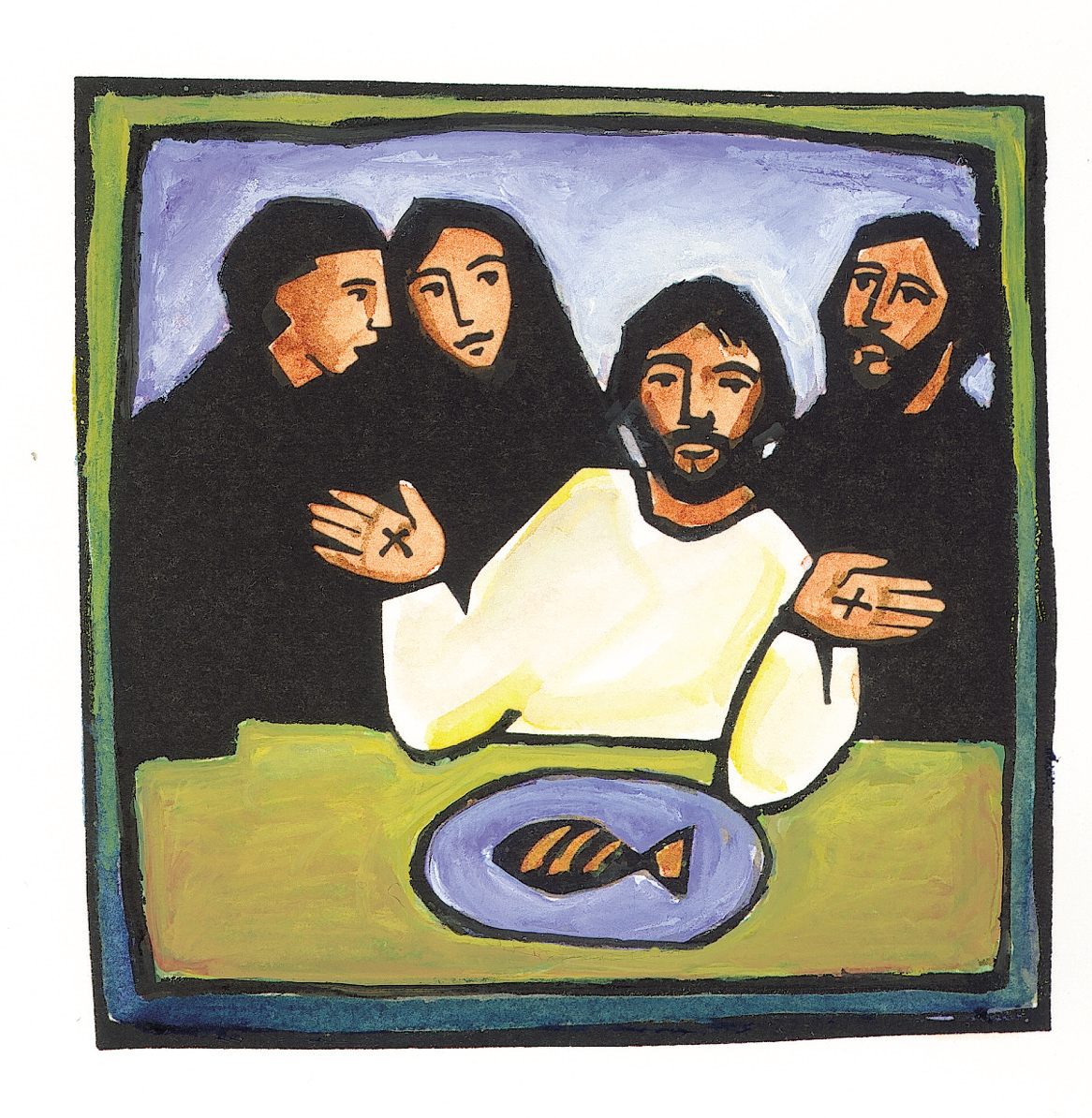
The appearance of the risen Lord was so new, it was outside the experience and  comprehension of the disciples. They could not interpret the experience; they could not put it into a proper context of time and place. In fact, they were powerless to understand in the sight of what they saw and heard. Only Jesus was able to  validate the experience and supply a proper understanding of it. Many ask what the message of Jesus was and what is his message for us today? We see, hear, and touch Christ today through the sacraments, through shared witness and service to others this is the message of Jesus for us today to see Jesus in the Sacraments and the sacramental life of the Church and be of help to other people and maybe by our example bring them to a knowledge of faith.  As witnesses, the early disciples were charged to tell others what they saw and in a similar way we are told tell people about what we celebrate as Christians.  Over the past two weeks, the Sunday gospels have recalled the confusion and fear caused by the Resurrection. They have also echoed Jesus’ greeting of Shalom that soothed the emotions of the early followers. This Sunday adds a new element to the disciples’ vision experience: a context for understanding. This context would sustain the changes the Church would undergo in its first few generations of believers as it sustains us as the modern Church of today. We, like most Christians, are tempted to take the context for granted.

The Good News might become the old news as many people are looking for the next big thing. To shake off this inclination, let us place ourselves in the company of those who first heard the words of the two from Emmaus when they recognised him in the breaking of the bread and let us pass on the message of the resurrection so that we can say to others as Jesus said to the apostles peace be with you.

Post Navigation