Fullerton T

RELIGION LITURGY AND LIFE

Archive for the category “RELIGION”

SECOND SUNDAY OF EASTER DIVINE MERCY SUNDAY
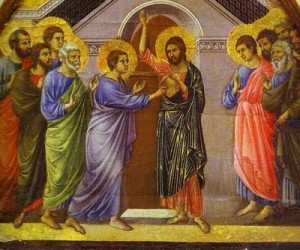
Our gospel lesson for today is the story of Doubting Thomas. Many of us are familiar with the story and i’m sure we can relate to the doubts that Thomas has in this particular story. In the evening of that first Easter Day, the risen Lord appeared to his disciples, but Thomas was not with them. When the other disciples tell him that they have seen the Lord, Thomas says, “Unless I see the mark of the nails in his hands, and put my finger in the mark of the nails and my hand in his side, I will not believe.” A week later the risen Lord appears to his disciples again, but this time Thomas is with them. Jesus tells him to see his hands and to touch his side. And Thomas responds by saying, “My Lord and my God.” When Thomas sees the risen Christ he says, “My Lord and my God.” It is more than simply a matter of historical knowledge. Rather, it is about the transformation of Thomas’ whole life, because in the risen Christ, in his wounds, he sees his Lord and his God, who is there for him and for his salvation. How many times do we doubt people things and in particular god and his great love for us? How many times do we say to ourselves Father I believe help my unbelief.  Let us remember that god our Father loves us where we are with the doubts in faith that we have. Through our faith he helps us to get through all the various things including the doubts that our belief in Jesus brings to all of us at some time or other during our lives  so that along with Thomas we are able to say MY LORD AND MY GOD I BELIEVE IN YOU.
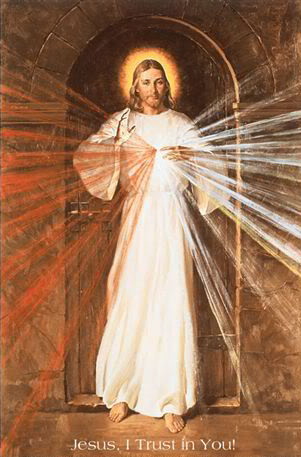
Today is also Divine mercy Sunday It comes as an opportunity to celebrate the mercy of God shown to us in our own time by Saint Faustina who was made a saint by Blessed John Paul. In the Old Testament, mercy was something that had to be begged from God. In the New Testament it is given without having been even asked for. The mercy of Jesus was not giveneveryone but Jesus did not merely “show” mercy he was merciful, towards everyone whom he met who wanted to receive it. In the last days especially, he was merciful towards those who, would show him none. We should not forget Good Friday and the Cross. This is often the paradox of being merciful the burden and test of mercy. For being merciful often involves our own suffering. It may mean not only giving what we have, but giving ourselves that as so many including myself have learned can be very hard indeed but once this has been done once it gets so much easier. We often look upon the example of the mercy of Jesus with little or no imagination with fear and caution, too afraid to see and take those first bold steps of mercy that the gospel and our faith call us to, instead we prefer to tread the old familiar ground. It takes determination to make this mercy of God more than a show of words. It takes the effort of long days and hard work. Mercy is not just shown in the demeanour of your face, in a gesture of the hand—it is done, it is work and it is hard work. It took some imagination on Jesus’ part when he pro­nounced the fifth beatitude to his hearers in Galilee when he told them:

 “How blest are those who show mercy;

mercy shall be shown to them”.

This was a bold act of confidence on his part.”Show mercy, and you will receive mercy,

This seems like such an ordinary and bland precept, hardly far-fetched. But of all the beatitudes, it is the most difficult to achieve. It really takes confidence to show mercy not merely once in a while. Rather it takes confidence and love to be merciful, all of the time —to seek out occasions of mercy, to take the initiative, be inventive and creative, in our mercy filled outlook on life and living, it is not always easy to convince ourselves that we are the merciful kind. Usually we like to think of ourselves as being rational, clear-headed, and reasonable about the situations we might find ourselves in. We like to think that people get their “just desserts,” because that way everything evens out. It does not take much imagination to see that this was not the attitude of Jesus. He raised his hand against no one. And he found ways, every day in a vast desert land with few villages and a small, widespread population to show what his mercy was. The world is so much bigger now and yet we have not yet figured out what it means to show mercy, to be merciful to one another.  We must be careful to recognize the needs of all the various people we come across and not be harsh, supercilious, or whatever. The mercy that we will be shown will be the mercy that we will have shared with others.  On this Divine Mercy Sunday let us not be afraid to show the Mercy of God to those we meet as we go along the roads of our lives and daily living.
EASTER


This weekend we celebrate the beginning of the Easter Feast or more correctly we begin the great 50 days of Easter with Easter Sunday of the Resurrection of the Lord. On the Saturday evening there is the Easter Vigil  during which we light the Easter Candle symbolising Christ the light (Lumen Christi) We light the new Easter Candle from a large fire outside to remind us that Jesus is our light in the darkness in our lives and living, we then process into the darkened church. We hear the great hymn of praise called the ‘Exsultet, in which we praise Christ for saving us. The hymn says that we would greatly prefer a fallen universe with Christ to a perfect one without him. “O Happy fault which deserved so great a Saviour.” We hear more readings than usual on this night, recounting the history of our salvation. Most significantly we welcome new members into the Church and our parish communities. Then With those who have been baptized we all renew our Baptismal promises. We need time to do all of these things well, s o we begin a fifty day season of feasting with a long liturgy that is packed with all the riches the Church has to offer.

It can seem that once Easter Sunday has passed Easter is finished, but the’ celebration continues for fifty days. The next Sunday of Easter day  is known as Divine Mercy Sunday. It comes almost as an opportunity in which anyone who missed out on celebrating the mercy of Christ in Holy Week has another chance. After forty days we celebrate the feast of the Ascension of Christ who returns to the Father to send us the Holy Spirit. We spend the novena (nine days) between the Ascension and Pentecost praying for the Spirit like Mary and the apostles in the Upper Room. On the fiftieth day (which is the literal meaning of the word “Pentecost”) Easter ends.

We live in a culture that yearns for the next “big thing,” the next event that will “wow” us. It can be new media, new technology, or new faces. Our culture demands not only progress, but “freshness,” something that will deliver us from the routine of whatever our lives entail.

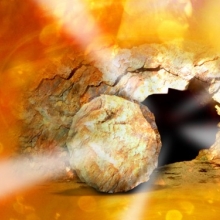
The Resurrection stands as the eternal “Big Thing.” But, after 2000 years, it receives the lip service of the routine, the stale, and the disposable. The resurrection we should remember is never stale or disposable it is ever old and always new as it delivers us from the dull stale routine which our lives, spiritual and otherwise contain. No one ever witnessed the Resurrection of Jesus first hand. But, the Catechism points to historical evidence that supports a conclusion that faith in the Resurrection is a reasonable thing to have. The first sign was the empty tomb. Obviously many other reasons could be given for the absence of Jesus’ body. But, if we place this with others pieces of evidence a pattern emerges that points simply to faith in the Father. It is an amazing thought how the faith has come down through the ages in every generation to us , right until the here and now of today. We have knelt at the cross for ourselves and those who are dear to us and we have knelt at the cross for the sins of the whole world that the Lamb of God will take away our sins and grant us peace.


The Cross is stark in its portrayal of a suffering God, and yet full of meaning in its depictions of us and our lives yes we are all there on the cross of Good Friday. Now after the horror of the cross we bask in the joy and the happiness of the resurrection of Jesus who is the light of the world who promises us eternal life. Our celebration of Easter resonates throughout the rest of the year  full of gratitude for Christ’s passion, joy in his resurrection and, strengthened by the Spirit, we continue our Christian journey.

GOOD FRIDAY


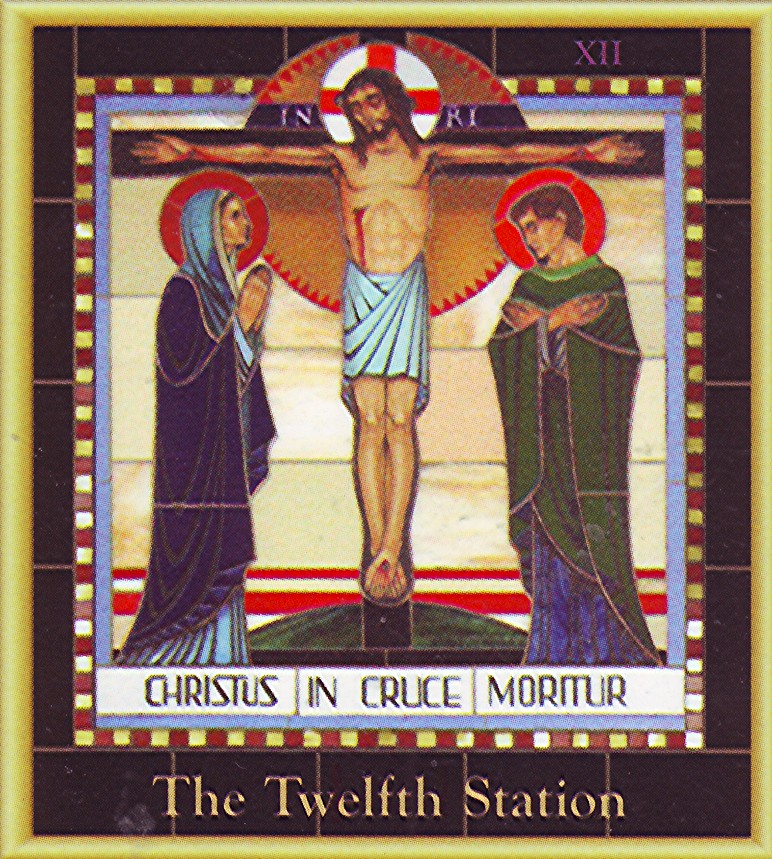
On this day the churches are bare and empty in the liturgy we read St. John’s account of the passion, we pray for the needs of the Church and the world, we venerate the Cross and we receive the blessed Eucharist. We think of the death of Jesus on the cross. His death was a result of the courage of his convictions. He was not afraid to do the will of his father. He lived his life with a message of compassion, of equality and love. Jesus was often critical of those who lorded it over those who were less well off or who had little or even nothing at all. The cross of Good Friday is a sign and a symbol that all of us recognise, it is a sign of the completeness of the love that God has for each one of us. We need to show that we are a caring people showing the love of God to all those whose lives are loveless, to all who have nobody to care for them we have to show them that ours is an all loving and caring God. Today when we go up to venerate the cross we should allow the cross to move us to be better people. Consoling, comforting and challenging the people we meet with the values of Jesus and the Cross. The death of the Lord our God should not be a cause of shame for us; rather, it should be our greatest hope, our greatest glory. I am sure that the apostles and all the others who accompanied Jesus to Calvary would be completely amazed at the idea of all of us gathering here in 2012 to celebrate the events of the first Good Friday. It is an amazing thought how the faith has come down through the ages in every generation, right until the here and now of today.

In the silence of this day we will feel the emptiness of dying, and we will experience something of what it is like to be without God in our lives – the light that is Christ (lumen Christi) has gone out, and the encroaching darkness coming to replace it. The Liturgy of Good Friday takes us to this dark place. The image of the suffering servant, the cry, “My God, my God, why have you forsaken me?” at the beginning of Psalm 22, and the reading of the Passion according to John – these things strip our minds of any trivialities and focus us on the great things god has done for us especially on the CROSS.

Today we stand at the cross for others who cannot be here. We stand here for those who cannot begin to fathom this day, for those whose own pain keeps them from being here and there are many who are suffering intolerable pain because of the abuse that has been inflicted on them by clergy and others who should have known better. We stand at the cross for those who do not know Jesus, and those who openly scorn him. We stand at the cross for those who have been exploited by others and for their exploiters. We stand at the cross for those who think life is an opportunity to get all one can. We stand at the cross for those who are in prison for their crimes, for those who fight on the field of battle, for those who are tormented by memories of war and terror. We stand at the cross for those who are dying at this moment that they may enter into the light of Christ in eternal life. We stand at the cross for those who cannot pray, for those who no longer believe, and for those who have lost all hope in God and man.

We kneel at the cross for ourselves and for the sins of the whole world that the Lamb of God will take away our sins and grant us peace. The Cross is stark in its portrayal of a suffering God, and yet full of meaning in its depictions of us and our lives yes we are all there in the cross.  Let us then fearlessly acknowledge, and even openly proclaim that Christ was crucified for us; let us confess it, not in fear but in joy, not in shame but in glory. We should glory in the Cross of Christ for in it and in him is our salvation

How splendid is the Cross- of Christ!

It brings life, not death;

Light not darkness;

Paradise, not its loss.

It is the wood on which the Lord,

like a great warrior;

was wounded in hands, and feet and side,

but healed thereby our wounds.

A tree had destroyed us,

a tree now brought us life.

Theodore of Studios


HOLY THURSDAY

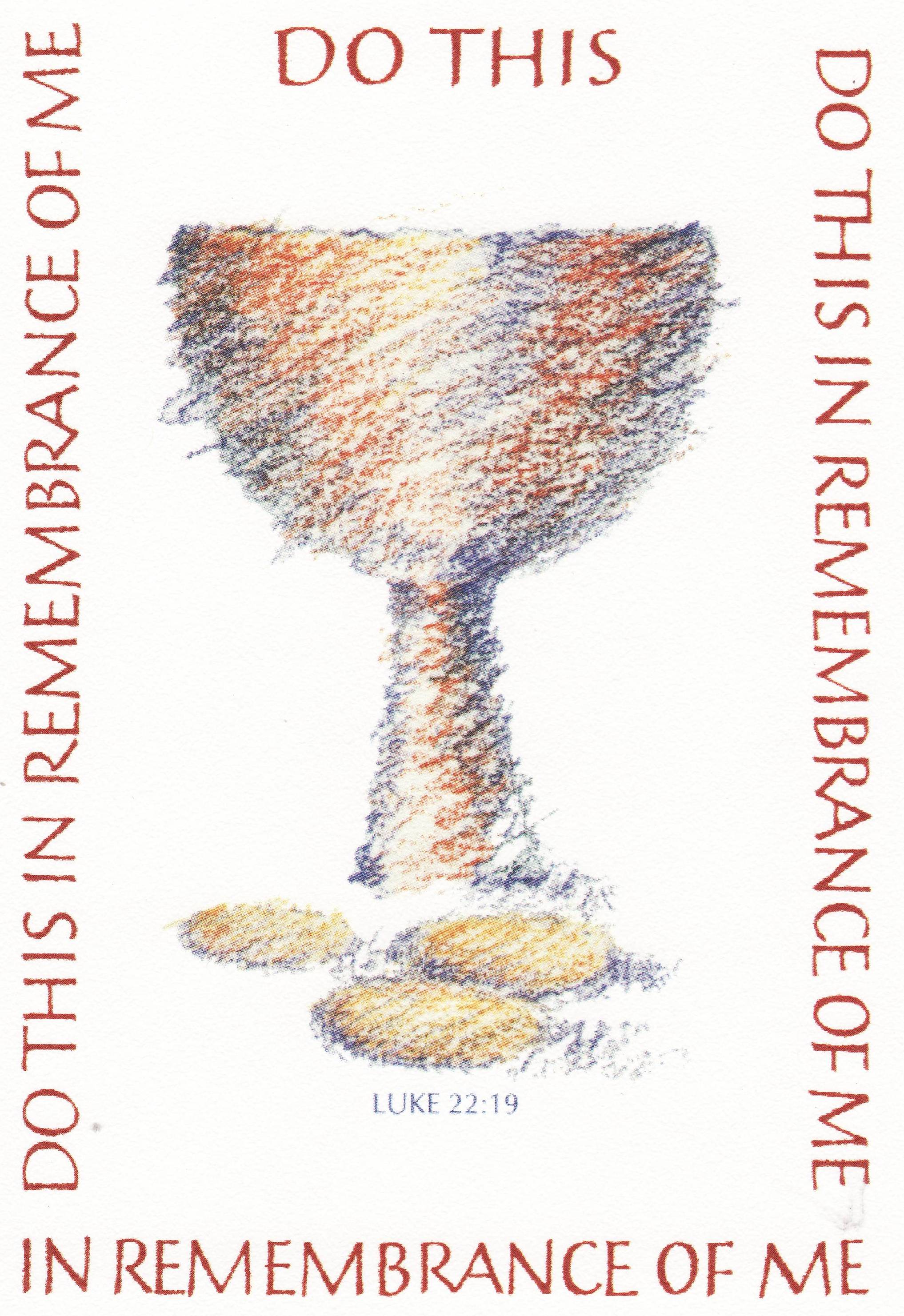
On This day we celebrate the feast of the Priesthood and the institution of the Eucharist at the last supper. In the morning we gather people and priests along with our Bishops to celebrate the gift of the priesthood and we also witness the renewal of the Vows of the priests who renew their commitment to serve the people of God in the year ahead. The consecration of the holy Chrism and the blessing of the oils of the sick and the catechumens also take place during this Mass. Today we pray for and with our priests remembering that humble prayer to God and humble service for and with his people should be what all of us priests and people should be about. Our priests need our prayers and we need their prayers for and with us more and more in an age where so many have little or nothing at all. We need them more especially for all they bring to us through the celebration of the Eucharist the sacrament Par Excellence. We need to stop and refocus ourselves on this day on the priesthood that is the Vocation of the priesthood and the service of God’s people that the priestly life means. We need to pray that the Lord will send gentle shepherds to guide his people in these trying times for people of faith. We also remember those who have been hurt by the misdeeds of the few so called bad priests may God give their victims peace of mind to continue their lives in his love.

In the evening we begin the Triduum and The Church speaks of these Three Days in the following way:

“Christ redeemed us all and gave perfect glory to God principally through his paschal mystery: dying he destroyed our death and rising he restored our life. Therefore the Easter Triduum of the Passion and Resurrection of Christ is the culmination of the entire liturgical year…. The Easter Triduum begins with the evening Mass of the Lord’s Supper (on Holy Thursday), reaches its highpoint in the Easter Vigil, and closes with evening prayer on Easter Sunday. On Good Friday and, if possible, also on Holy Saturday until the Easter Vigil, the Easter fast is observed everywhere.”

-General Norms for the Liturgical Year,

nos. 18-19


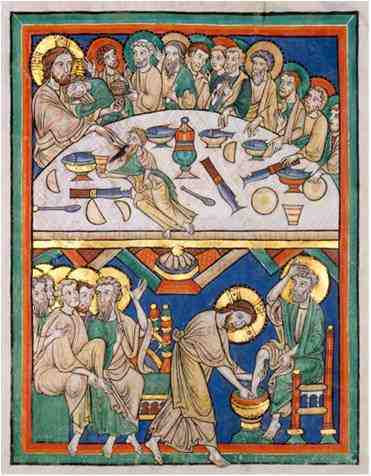
Lent actually ends on Holy Thursday up until a few years ago I didn’t realize this as i’m sure many others didn’t know that fact. Friday and Saturday are days of communal and private prayer. We fast from food, work, and entertainment in anticipation of the great Vigil. We hold in special prayer the elect who will be baptized, be confirmed, and join in the eucharistic banquet. Thus are the death and Resurrection of Christ proclaimed in our midst. At various moments from Thursday evening until Sunday, the community gathers for prayer and vigil. In the times between these communal celebrations, we pray at home, as individuals and as a family. In the Gospel of the Last supper we see Jesus getting up from the table to wash the disciples feet. Masters of houses in Jesus’ time most emphatically did not wash the feet of their disciples. It simply was not the done thing. Yet Jesus surely does it and when you stop to think about it Jesus never did the done thing.

Jesus the Son of God always did the right thing and this always showed up those who stood on their dignity. Those who said I am not doing that because it is not the done thing!

Then eventually Peter catches on, proclaiming, “Lord, not my feet only but also my hands and my head!” He has learned, in his own larger-than-life way, the lesson of Holy Thursday, the new commandment of love and service. That we should love one another as God loves us. It was I think, Origen, who said that it was not just the death that Jesus died but the life that he lived which was pleasing to God. If we think  again about Jesus life, we see how he used his senses for others. He saw Zacchaeus up there in his tree, he heard Bartimaeus at the wee man at the back of the crowd, he felt the touch of the woman with the haemorrhage, he smelt the decaying body of Lazarus and spoke to the demonic man. He touched the untouchables; he ate and drank with publicans, tax collectors and sinners. In other words Jesus did not do the done thing and in the same way we should embrace all those who are in need of any kind as Christ did.

We should be leading lives of generous service to all those who need our help wherever they are and there are many people around who may need our help and care.  We need to show that we are a caring people showing the love of God to all those whose lives are loveless to all who have nobody to care for them we have to show them that ours is an all loving and caring God, an all loving and caring God embodied in all we do and say for one another not counting the cost.

When we serve our brothers and sisters showing them that our God is an all-loving and caring father in heaven then the Eucharist when we partake of this great sacrament will bring us joy and peace may we not be afraid to pass them on to others in our words and deeds.

Almighty ever-living God,

direct our actions according to your good pleasure,

that in the name of your beloved Son

we may abound in good works.

Through Christ our Lord


AMEN

PALM SUNDAY

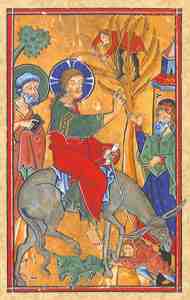
From the ashes on Ash Wednesday we have almost gone full circle through the six weeks of Lent and here we are at Palm Sunday with three more days to come as we head towards the last round up that is the Easter Triduum. In the 1960’s there was a TV programme called ‘That was the week that was’ and the week that we are beginning today (HOLY WEEK) certainly was the week that was but unlike the TV programme which ended within a few years over 2000 years later we are celebrating Palm Sunday and Holy Week which we celebrate year after year. There is a connection between the two days of Ash Wednesday and Palm Sunday that I’m sure not many people know about, the ashes we use on Ash Wednesday are the burnt palm branches from the previous year’s Palm Sunday. If you look and listen carefully at the liturgy from time to time you might see and hear about connections that you may not be aware of. From Palm Sunday to Easter Sunday we have so many great events rolled into just seven days. In Holy Week we celebrate life death and resurrection, we celebrate happiness and sorrow and we see all that is good in human life as well as all that is bad. We begin our Holy Week journey in the Joy of Palm Sunday with Jesus entering Jerusalem in triumph, with the people singing hosanna to the son of David. We read the passion gospel, in this reading we see betrayal but we also see hope.  Jesus has brought his disciples together as a group, then it all seems to fall apart with one of his apostles Judas betraying Jesus and then of course we all know what followed.

There are so many different aspects to this week it is so hard to flag up all of them on this particular day and I’m not going to do that, as they each have their own emphasis and there will be time to comment on them later on in the week.  Holy Week and the events within it give all of us an opportunity to look at our lives and to accept responsibility for all that is within our lives good bad or indifferent. It is important that we who say we are Christians accept the truth about ourselves and then in our acceptance of the truth we will be able to look at the Cross and recognise the love of God our Father for us and for everyone. This week and indeed the whole of our Lenten Journey give us the opportunity to look hard at ourselves and see exactly where we have come from and where we are going and perhaps were we should be going. We have always to remember that Jesus came to take away our sins and to point us in the right direction that is towards our father in heaven and all that is good.  During this week we remember that Christ came to give his life as a ransom for many and as a result of this he points us to faith in God. Christ took our sinful ways on himself because of his love for us. May the passion story inspire all of us to try to imitate in some small way the all loving all forgiving Jesus who went through betrayal to death and finally to resurrection for us so that we will have life and have it to the full.  Over the next few days let us prepare with greater intensity for the Easter Triduum and then we will really be able to enjoy Easter feast which we have been preparing for since Ash Wednesday.

THE FIFTH SUNDAY OF LENT

Here we are at the fifth Sunday of Lent with five weeks of our Lenten observances behind us with just two weeks to go to the day of Resurrection that is Easter doesn’t time fly by, for me life in general just seems to be flying past the eye of my mind.  I hope that you haven’t found the Lenten exercises you began on Ash Wednesday to hard to continue but everyone  of us one and all are getting there, keep on going.


As we approach Holy Week and the celebration of Christ’s death and resurrection our Gospel story today tells us that anyone who loves his life will lose it and anyone who hates his life in this world will keep it for eternal life. This challenges us to recognise just how very different the vision of life we must have If we are to follow Jesus Christ. These 40 days of Lent help us to identify with Jesus, who spent 40 days of fasting and prayer in the wilderness of the dessert before beginning his public ministry. The number 40 is connected with other biblical events. It is no coincidence that Moses spent 40 days of fasting and prayer before receiving the Ten Commandments on Mount Sinai. After escaping captivity in Egypt by crossing the Red Sea, the Hebrew tribes spent. 40 years wandering in the desert before reaching the promised land. Jesus calls us into a spiritual world that stands in sharp contrast to world of today where so many have little or nothing and so few have so much more than they need. Simply put Jesus, his life and example call us into the world of God in order for us to bring it out there to other people by the way we live our lives in our words, deeds and example.

The Lord calls us to rise above the selfish goals that many of us might have for many things in our daily lives. Selfish goals that mean that we want what we want and not what is good for all of us. Jesus sets before us his vision   a vision that is a new view and way of life, a life of meaningful faith in God and in one another. Unlike his fellow Jews, Jesus viewed glory not as the acquisition of power or the ability to control their own destiny after centuries of foreign rule, but he looked at glory as the ability to serve others for a greater purpose, Gods purpose.

Humble prayer to God and humble service for and with his people should be what we are about and this is what our Lenten journey is all about. Lent is a time to refocus our spiritual selves to be what god asks us and wants us to be humble servants of one another empowered by a life lived in faith. Lent is the journey into the gentle and humble heart of our faith which began in the upper room on the first Holy Thursday all those years ago. A few days ago at the early mass in our local parish a sense of wonder filled my mind at what we were celebrating at that time and have been celebrating as Christians for two thousand and twelve years after the event actually happened. Two thousand plus years of celebrating the love of god present with us day and daily in all our ups and downs which are our everyday lives. The treasure we have in the sacramental life of the Church is beyond doubt and we need to value the sacraments especially our Eucharistic sharing in our Masses on Sundays and on a daily basis more and more.

It is often said that our treasure is where our heart is and we store up true treasure when we carve out time for prayer, for reading scripture celebration of the Eucharist and confession as well as all the other spiritual things that we are asked to do during this time of renewal and throughout our lives. If we do these things or at least some of them then we will be able to celebrate Holy week and Easter with renewed hearts minds and souls.

Glory to you, O Lord our God.

Your love calls us to be your people.

By sharing our many and diverse gifts

we share in your mission.

We ask you, Lord,

to shape us into a community of faith.

Nourish us by your word and sacraments that we may grow into the image of Jesus.

Through the power of your Holy Spirit, heal us that we,

in turn, may heal the wounded.

Form us to be instruments of love, justice, and peace in our land , and send us to proclaim your saving work.

renew us, Lord, that we may renew the face of the earth. Amen

FOURTH SUNDAY OF LENT

We gather together at our Sunday or in some cases at our daily mass  as God’s holy people. As you know this Sunday is the fourth Sunday in Lent it is also Mothers Day and we thank all our mothers for their goodness to us over the last year and we pray for all those who have lost their mothers since this time last year. Also for all those who are Irish or of Irish decent I wish you all a Happy St. Patricks Day.

We pause at this  point of our Lenten Journey to reflect on the journey of spiritual renewal we are undertaking. Lent is the penitential journey of reflection and renewal a journey that will bring us to the celebration of the death of Jesus at holy Week and his resurrection on Easter Sunday. The threefold practice of fasting, alms giving and prayer are more visible during Lent than at any other time of the year. Fasting and penitential acts clarify the mind and they reveal to us the limitations on our liberty which self-indulgence imposes. In the Catholic tradition, I am a Catholic, there are now only 2 days of fast & abstinence Ash Wednesday and Good Friday. Having said that I would encourage those who are able to try and undertake these 2 fast days. Apart from these two particular days we are asked to make every Friday a day when we undertake some sort of fasting.

Almsgiving through the many Christian organizations of which Trocaire is our primary one with their annual Lenten campaign makes us more available to others in a brotherly sharing of our resources unhampered by the divisions and artificialness  of social life. Praye­r at all times and in a special way in Lent makes us more open to God and more aware of that fundamental dependence of all creation on his word.  What images and memories does the word “Lent” bring to your mind? Are they mostly positive, negative, or somewhere in between? I always remember liking the Holy Week ceremonies more than the 40 days leading up to them.  I liked them because of the actual ceremony and I really like them now because I understand their spiritual meaning more. The season of Lent is not a time for rejoicing, in its starkness it is more of a time for Spiritual preparation for the events of Holy Week & Easter. Lent offers all of us the opportunity to seriously examine and enrich our commitment to Christ and his church. But this does not mean we have to walk around with sad expressions on our faces it was once said by A saint “May Heaven deliver us from sour-faced people!”

There are so many means available to us to realize the purpose of Lent, the celebration of the sacraments, especially Sunday and daily Mass, prayer and the sharing of our goods with others, fasting and abstaining from various things are examples of some of  the things that we might do to have a good Lent. So then during Holy Week we rededicate ourselves as members of the church as we recall our Lord’s death on Good Friday and victory over death in the Resurrection on Easter Sunday. On Ash Wednesday we began by placing the  ashes on our foreheads and by undertaking our Lenten observances .we made a commitment to become more credible witnesses to God’s love for humanity in this season of renewal and beyond it into our daily lives and living right through this year.

Lord  Jesus,

you call us to bring your joy to the world.

You invite us to be your Body on earth the Church,

Your mission for us is to reach out to the fearful and weak! You empower us to reveal your presence to a weary world. You enthuse us to enter deeper into a life assured of resurrection. Be with us, as we continue our pilgrim journey Guide our footsteps with the light of faith, that we may walk in your ways during this Holy season of Renewal

THIRD SUNDAY OF LENT

Image

Here we are at the third Sunday of Lent, how have your Lenten observances been going I hope that the going has not been too hard, keep up the good work .

In the gospel for this Sunday John paints a picture of an angry Jesus, entering the symbol of Israel’s security the temple in Jerusalem, whip in hand, driving out those who had turned the Temple into the centre of a money-making racket. As you may know, the Temple was the only place of sacrifice for the Jews. Sacrifice meant the offering to God of that which God created, whether in the form of wheat or grapes, doves or lambs, depending on the purpose of the sacrifice. Sacrifice meant the offering of life on behalf of individuals and families and once a year, on the Day of Atonement, on behalf of the nation itself.

The racket Jesus encountered was rather clever. For example, when a family brought its sacrifice to the Temple. It had to be inspected to make sure that it was of high enough quality to be acceptable. If the object was rejected, there were substitutes available at a price. When the head of the family offered payment, his money was rejected because it was the usual Roman coinage. Yet, guess what? These coins could be exchanged for pure Temple currency, at a price. Those of us who have travelled abroad know how annoying it is to find our dollars exchanged for a foreign currency and having to pay the exchange rate. So something meant to be holy, special, unique, had been turned into a crooked commercial transaction. Jesus was furious. There’s no “gentle Jesus, meek and mild” in the gospel today. Jesus, whip in hand drives out these crooked merchants, many of whom were priests.

Catechism Theme: Jesus and the Temple (CCC 583-586)

Jesus had the deepest respect for the Temple and its traditions. According to John, Jesus went to the Temple to celebrate various holy day festivals (John 2:13-14; 5:1, 14; 7:1, 10, 14; 10:22-23). He even cleansed the Temple courtyard out of respect for what the Temple meant: God’s dwelling place on earth. However, Jesus saw beyond the Temple and the nation it represented. The parochial interests of the Jewish leadership would soon lead to the destruction of the Jerusalem and its Temple. But, the message of Judaism was too important to keep to the nation itself. The God of Israel was truly the God of all. There was, however, another reason to predict the destruction of the Temple (Matthew 24:1-2). The destruction of the Temple was another sign for the coming of the end time, which began with the death of Christ on the cross. His Risen Body replaced Temple and became a home for all believers, a safe haven for all who awaited the Day of Yahweh.

God gives us signs as anchors of faith.  But, at some point, we must trust the Lord enough to cut ourselves from the anchors we hold on to  and allow him to guide us through rough currents that we often have to swim against. In our lives we have many things and events which could overwhelm us but they don’t because of our trust is in god and in the  things of god.

Very often Faith will cause scandal and in recent times we have been reminded of this very forcefully indeed in Ireland and in many other countries throughout the world . Do we waver in the face of scandal? Or, do we redouble our efforts in faith? In the end, a faith that survives scandal is the toughest faith of all. We pray particularly for all those who have been hurt by the scandals and the scandalous actions  of individuals within in our church.  There are many good things and people within the church at large but as we know everything has not been good and more often than not the good has been tarnished by the bad.

Being a person of faith was never meant to be easy and is certainly not easy at the present time but this is our calling as members of the Church, which is the body of Christ, the calling is to try to remain Gods faithful people as best we can in what are very trying times for people who are trying to live out their faith in the circumstances of their daily lives.

Post Navigation