Fullerton T

RELIGION LITURGY AND LIFE

Archive for the category “Uncategorized”

3RD SUNDAY OF EASTER 2014

download (8)


We gather this weekend in the joy of the gospel after the solemn celebration of Easter and Divine Mercy Sundays, we also thank God for the canonization of Pope John XXIII and Pope John Paul II. we thank God for their leadership of the Church over the years. We also remember that the celebration of Easter continues until the coming of the Holy Spirit on Pentecost Sunday and then Easter Time ends and the paschal candle is placed near the baptismal font.

After his Resurrection, Jesus appeared to his disciples several times.  This Sunday’s gospel recounts the apparition of Jesus on the evening of Easter to two disciples who were going from Jerusalem to Emmaus.  Now, however, their life with Jesus has all come to an abrupt end.  For in these past few days Jesus, their beloved Leader and Teacher, has been arrested, tried, sentenced, tortured and killed. Now they are feeling that without his presence, his inspiration and guidance, his support and encouragement, they simply cannot go on. So disappointed and so disillusioned are they about Jesus in fact, that they have even decided to leave the Church, the community of his followers.  This is just what they are doing when we catch up with them today. Slowly but surely they are walking away from it all.

Slowly but surely they are putting Jerusalem and the other disciples behind them. They are heading for the village of Emmaus, some seven miles away, to start a new and different way of life. The Emmaus story is the story of the church it is the story of you and me the two disciples represent all of us who claim that we are Christians with all our doubts and disagreements.

We come together in our churches each Sunday in answer to a call, often a quiet murmur from the recesses of our hearts which calls out to us saying come to me you who are weary and overburdened and I will give you rest.  We’re searching just as the companions on the road to Emmaus  were and they were weary from all that had happened to them.  The people of God come together for a purpose and that is to seek God. We work together for God’s kingdom since the kingdom provides unending meaning and purpose: we worship together so we’ll not miss seeing God with us.  God comes to us in the Scriptures handed down throughout the ages.  The experiences of our faith ancestors in those scriptures give substance and meaning to our lives.  In these we find explanation and understanding of events and relationships which have shaped the faith of so many for many years. Our faith is lived out in the real world, the world of family, of work, of recreation, of politics and economics. We don’t live in two separate worlds one spiritual and the other secular.  

Those who would have us believe that we can separate our lives into two compartments are mistaken as history has shown.  The fellowship we share helps us ask the questions of faith.  It is the application of scriptures to the events of our own times that reveal that God is walking with us and maybe even working through us. But it is in the breaking of bread that we recognize the Christ who is already among us on our journey. It is in the sharing of the Bread and the Cup that we are made one with each other and with Christ.  Our faith grows and our relationship with God and his called-together-people unites us in bond of love.  We are formed into one Body, the Body of Christ.  The trip to Emmaus is the journey we make as faithful people of god.  We are on this journey in fellowship with one another  being led by Jesus who calls out to us to follow him from the Cross of Good Friday as well as from the empty tomb of Easter Sunday. 

 As we grow in faith, we are led to understand those past events as experienced yet again in our time and place.  It is in the breaking of bread, in the hospitality of Jesus, that we recognize Jesus as God’s Son.   The Risen Lord uses so much gentleness with us! He doesn’t oblige us to ‘believe’ but He offers us the instruments that enable us to judge based on the measure of our own hearts. As St Augustine extraordinarily wrote in the opening of his Confessions ‘our heart is restless until it rests in you

(St. Augustine, Conf. 1,1,1:PL32,659-661)

There is still one more detail that calls for our attention and raises many questions: why did the eyes of the disciples open to recognize Jesus whilst they were at table with Him? The Eucharistic context of the Emmaus story is undeniable. The disciples are at table, the Lord is with them; He took the bread and saying the prayer of benediction, broke it. It was during the last action of the breaking of the bread that the companions recognised Jesus. It was not only the action in itself but finally as his friends could see, with their own eyes, and we too see the breaking of the bread with our eyes and hear the word of god and yet so many are slow to believe in the great joy that so many people have in the present as so many had in the past.  Pope Francis tells us in the Joy of the Gospel his recent letter to the Church, let us go forth to offer everyone the life of Jesus Christ… If something should rightly disturb us and trouble our consciences, it is the fact that so many of our brothers and sisters are living without the strength, light and consolation born of friendship with Jesus Christ, without a community of faith to support them, without meaning and a goal in life… At our door people are starving and Jesus does not tire of saying to us: “Give them something to eat” (Mt 14,16; Mk 6:37; Lk 9,13). Pope Francis Apostolic Exhortation « The Joy of the Gospel »

As we recognize Jesus in the breaking of the bread may we be joyful agents of conversion of one another and to those who are around us. Bringing the joy of the Gospel and its message to everyone without exception and be the caring face of the Church those who need us wherever they may be.


The Baptism Of The Lord

images (17)

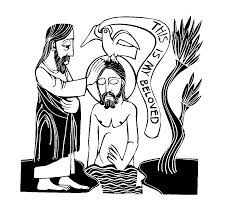
This Sunday we celebrate the baptism of the Lord, when Jesus was baptised in the river Jordan by John. None of us remember when we were baptised when we were infants but that said we may have known and Adult who was baptised.  It may seem strange, but this is a Christmas Feast. Not if we think of Christmas only in terms of the Baby in Bethlehem, but if we have followed the ideas of the Feasts of Holy Family and especially Epiphany, and have seen the Season in terms of the growing manifestation or appearing of the Son of God: first to the shepherds and then to the wise men from the East. Now in the River Jordan, Jesus, Son of Mary, is revealed to all and everyone as the fullness of all God’s promises: “This is my Son, the Beloved“. 

Just as Jesus entered the Jordan to be baptized, so he enters our scene of darkness and confinement in our lives today. He is the one promised us in the prophet Isaiah, the one who will “bring out prisoners from their prisons.” He comes to those hidden places that keep us locked up. He goes to the imprisoned areas of our lives and our restricted ways of behaving which we sometimes excuse by saying, “That’s just the way I am.” Rather than be a cheerleader on the sidelines, Jesus comes down into the dark places where we are. He helps us face the shadows and hidden places and leads us out – just as God promised God would do for us through the prophet Isaiah. Jesus’ baptism reminds us today that, through our own baptism, we are united to him. Most of us rarely, if ever, think about our baptism. Through our baptism we died with Christ and thus have been reborn into a whole new life ( Romans 6). We, the baptized, are incorporated into the body of Christ. We are called and enabled to imitate Jesus, whom Paul says, “went about doing good.” We don’t need a detailed rule book in order to know how we should act in each situation of our lives, for in baptism, we have the companionship of the Spirit of Jesus who is our wisdom, impulse and help to do good.

 Some treat Baptism as a private family event only. They even insist on a baptismal ritual separate from the ones celebrated at Sunday Mass or on Sunday afternoon. They don’t appreciate that Baptism is not a private, but a public affair. Jesus didn’t insist that John baptize him further up the Jordan River with only his mother and a few family members and friends present. Jesus’ baptism was public – and so should each Christian’s be – a public ritual for people who are called to live their Christian vocation in public ways. There is little that is private about our vocation to follow Christ Our role as baptised Christians has some of the characteristics of St. John the Baptist in that we also are to prepare the way for Christ, not only in our own lives, but in that of others. We do this by the example of how we live our own lives and by teaching informally when the occasion arises. If we are doing this, we can ask ourselves, “Does this role bring us joy as it did St. John the BaptistIn a world that celebrates life achievements mostly for celebrities, the church rejoices at the baptism of a person into the church as well as into their own unique relationship with Jesus, as they are sealed and marked as Christ’s own forever. Take a moment now and reflect on where your baptismal journey has brought you. What have you done as a result of your life in Christ? How has Jesus led you to use your talents and gifts for righteous actions? What has been joyful for you on this journey? Then look around at your sisters and brothers, and give thanks that together we  can celebrate our life in Christ and look forward to further adventures in the life of faith.


images-1.jpg

30th SUNDAY IN ORDINARY TIME YEAR C


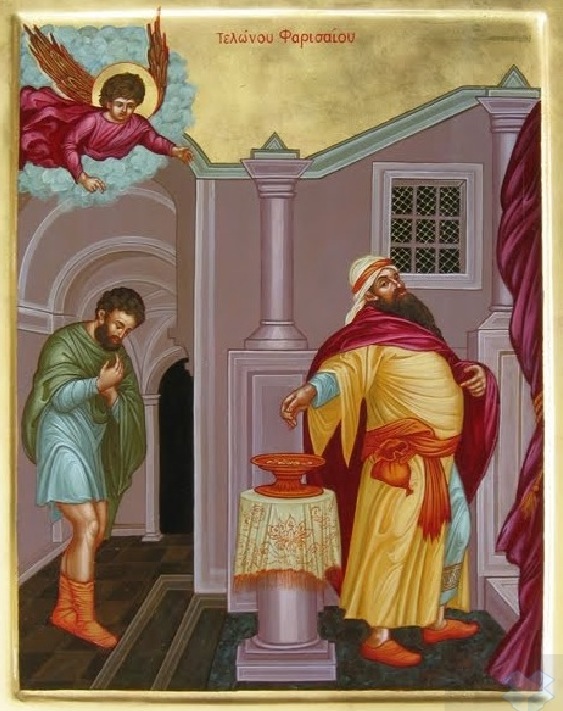
The Tax Collector and the Pharisee

The Tax Collector and the Pharisee

It is hard to believe that we are almost at the end of October with the schools in our locality having the midterm break for Halloween next week. It is also hard to believe that next Friday we celebrate the feast of All Saints closely followed by all souls the next day but that as the saying goes is for later. The readings in our Liturgy for this weekend are all about the HUMBLE person of faith that God calls all of us to be in our own time and place. That means that we shouldn’t lose the run of ourselves when dealing with people and the situations that we might find ourselves. What does the Gospel Reading about the tax collector and the Pharisee say to you and I, what do the words of the Pharisee who thinks that he is better than everyone else say. Also and I think more importantly what about the words of the Tax Collector when he said in a simple humble way  God be merciful to me a sinner what do these words  say to you and me? I think that the Tax Collector despised by the people possibly because of the job he does (nobody likes the tax man even now) is saying to us that we need to have the humility to be humble before God who knows that we are sinners even before we say it and we also have to be humble with other people dealing with them with real humility.

To have a person showing real humility is to be true to yourself in word and deed:  humility is the truth and often times we don’t like to hear the truth about ourselves or any situations we might find ourselves in.  The person who is truly humble will always see pride in him or herself as a bad thing.  The person who is humble believes himself to have nothing, when in fact he has God, for him and in him!  The person who knows  himself to be dependent on God humbles himself so much,  putting himself in his proper place before his Creator, that God cannot  leave him in this state:  the Lord lifts him up to his own Glory in order to make him his adopted child.  In a word, he who humbles himself, God justifies! The more someone belittles himself before God, the more the Lord is pleased to come and live in him and to make him shine with his divine light. 

In our modern world, Pride which was very strong in the words the Pharisee spoke dominates the world, and it is this pride which often leads many people the world over down a long lonely path. The old saying rings true that pride comes before a fall and in so many places and situations we might find ourselves or perhaps we have seen other people in. Today, the same as  every  other Sunday, we shall receive within us Jesus in the sacrament of the Eucharist.  We shall approach the altar of the Lord.  This approach testifies at once to our humility and to our grandeur.  It testifies to our humility, for we humble ourselves in believing that what we see as bread is not bread but rather the Body of Christ.  It testifies to our grandeur, for, in communion, we truly become the Body of Christ, adoptive sons in the only Son of God!  May this approach be our justification, for the salvation of the world! I finish with these words from Micah which sum up the gospel reading for this Sunday and what does the Lord require of you? To do justice, and to love kindness, and to walk humbly with your God? The Lord requires us in the same way to be just, kind and to walk humbly with our god so let us go forth into the world with true humility in our hearts and minds.


Twelfth Sunday of the year

Image


TAKE UP YOUR CROSS AND FOLLOW ME

In our Gospel Reading for this Sunday we hear the immortal words of Jesus when he asks the disciples WHO DO YOU SAY I AM?  That is a very good question to ask ourselves during the year of faith who do we say that Christ is. Peter put it very well when he said: “You are the Christ, the Son of the living God.” (Mt. 16:16) This profession of faith belongs to the heritage of the Church: Peter said it once and for all of us and as a result of his words from that time, and for all time entered into the history of the Church, the mystical Body of Christ!  Like a living body, a body which is always growing, whose members live forever in God even when they have ceased to live on earth? We also see that Jesus tells us that we must take up our cross every day and follow Jesus. During Sunday Masses, we may be tempted to “turn off” when we hear the Gospel especially when the message that Jesus tell us says, “If anyone wishes to come after Me, he must deny himself and take up his cross daily and follow Me.” Many people do not want to deny themselves in our world where so few have so much and so many have little or nothing at all Yet, Jesus insists on this qualification for being His follower. As experience of living teaches us over and over, “biting the bullet” and facing the hard things that come our way has rich rewards from the point of view of faith. Enduring pain from illness, accident, or loss can transform us to a richer level of living. How can we possibly measure up to this kind of living? We know the answer very well. It’s our decision (inspired by prayer and God’s grace) to love God more and more.

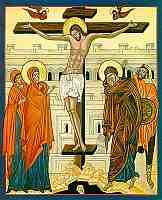
 All of us want to be followers of Jesus, but many refuse to pay the price of discipleship we cannot forget Good Friday and the Cross the greatest example of love and discipleship that Jesus gave us. We won’t go through the Calvary that Jesus went through and there is no consolation at all in being a half-hearted disciple. There is no freedom in that. Even though we all want to live  a pain- and trouble-free existence and I don’t think anyone anywhere really gets to live in a a pain- and trouble-free existence. Religion is a two-sided coin. On the one hand, it comforts us with the security of God’s love and protection. On the other hand, it makes demands of us that are frightening in their consequences. Jesus, the Good Shepherd, represents a combination of the two aspects of religion. “I give my life for my sheep, ” . Those of us who follow Jesus must rely on God’s protection and must “endure many sufferings.” We must care for God’s people  our brothers and sisters and many people have given their lives for them over many years. So in this year dedicated to the Faith let us remember the words of Jesus “If anyone wishes to come after me, he must deny himself and take up his cross daily and follow me. Let us follow the Lord by taking up the crosses that he places before us so that we may grow in faith and be able to say in answer to the question that Jesus asks us who do you say I am You are the Christ, the Son of the living God.”


Pentecost Sunday


penecost


Last Sunday we celebrated the Ascension when Jesus ascended to the Father  and in ordinary terms returned home. This Sunday we celebrate the feast of Pentecost which was the start of the Church. We arrive at the fiftieth day ‑ the completion of the Easter Season, and the completion of the Paschal Mystery: the Lord has died, is risen, has ascended to heaven and now gives birth to his Church, by sending the Spirit upon the apostles. This feast of the gift of the Spirit is so significant for us, because it marks the handing on of Jesus’ ministry to the Church ‑ in the Church we are guaranteed the presence of the Lord, in his sacraments  in his ministers, in the Blessed Sacrament and in his Celebrated Word. It also marks the fulfilment of our thoughts about baptism throughout this season: the gift of the Spirit which we receive in Confirmation is the `seal’ of our baptism, guaranteeing and confirming all that baptism achieves.

 The gospel reading for the feast of Pentecost has already been read, in a more extended form, on the Second Sunday of Easter. It was read then to include Jesus’ encounter with Thomas ‘eight days later’. On the feast of Pentecost we have the opportunity to focus on the earlier verses, in which Jesus brings the gift of peace and the gift of the Holy Spirit. The account of the day of Pentecost is found in our first reading, from the second chapter of the Acts of the Apostles. Fifty days after the resurrection there was a spectacular manifestation of the power of the Spirit. Jews and proselytes, gathered from the nations for the Jewish feast of Pentecost, witness the power of the Spirit and hear the preaching of the apostles each in his own tongue. This event launches the mission to the whole world.

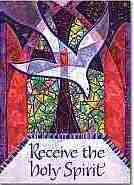
Our gospel teaches that the Holy Spirit was also given by the risen Christ before the events of Pentecost. This is a quieter and more intimate demonstration of the power of the Spirit. It is related to the preaching of forgiveness and the possibility of new life for those who ask for it. The disciples are empowered to bring the forgiveness of Christ, but it is possible for people to reject this forgiveness. This seems to be the sense of the final verse, that some have their sins retained. This is the final day of the Easter period. The Lord who died on the cross has shown himself in his risen body. He has taken our humanity into the presence of the Father. He is no longer visibly present, but his Spirit is with us to remind us of Jesus and to lead us into all truth. That Spirit, as St Paul writes to the Corinthians, bestows gifts in abundance for the benefit of the whole Church.

 The apostles used the gifts of the Holy Spirit as they encouraged people to turn away from sin and as they transformed the world so that the kingdom of God could emerge in people’s lives. Although in earlier days they had deserted Jesus, most of them were eventually martyred because of their later faithfulness to his teaching. Pentecost was certainly a turning point in their lives. Applying this truth to ourselves, the sacrament of confirmation is our personal Pentecost event. It is the great sacrament of transformation. In confirmation we are ‘filled’ with the Holy Spirit and we receive the gifts of the Holy Spirit. Our lives are transformed so that, like the apostles, we can be courageous witnesses for Christ. But also like them, we must choose daily to welcome and accept the Spirit.When we are responsive to the Holy Spirit in our lives, we joyfully proclaim the truth of God’s word in every situation whatever the consequences.

Every Pentecost is an exultant celebration of the gift and presence of the third person of the Blessed Trinity and a deep invitation to live out his guidance and purpose in every area of our lives. Pentecost reminds us that we are called and emboldened by the Holy Spirit to bring him into each moment of our lives and every interaction with others. The Holy Spirit gives us his gifts to dwell in and his fruits to bear to the world. In Acts 2 we read that people from every nation were gathered, yet with the coming of the Holy Spirit they all heard each other in their own language. How the Holy Spirit enabled the apostles to do this is a mystery – and yet, in a real way we are also called to “speak” to the world with a similarly unifying language as we share our faith: the language of love, joy, peace, kindness, goodness, faithfulness, self-control, gentleness, wisdom, understanding, wonder, awe, right judgement  knowledge, courage and reverence. We remain committed to the Church as the guardian and teacher of the faith. We turn away from sin. By doing so, we begin to transform the world so that God’s presence is always glorified and many of the effects of the gifts of the Holy Spirit (what we call the fruits of the Holy Spirit) become evident in our lives. Among these effects are charity, joy, peace, patience, kindness, goodness, generosity, gentleness, faithfulness, modesty, self-control and chastity. Pentecost emphasises the continuous outpouring of the Holy Spirit on the Church and the Church’s worldwide mission. It also reminds us about the sacrament of confirmation and the personal transformation that is possible in our lives if we are open to the promptings and guidance of the Spirit. So now let us continue our faith Journey along the roads that lead to God during this year of Faith.


CL1794


THIRD SUNDAY OF EASTER


Here we are at the 3rd Sunday of Easter and the schools are open again after the Easter holiday. It really seems no time since we got the ashes on our foreheads on Ash Wednesday and yet here we are at the 3rd Sunday of Easter 6 or seven weeks on.

In the Gospel story for today we see Simon Peter and his companions catching nothing after fishing all night. At dawn as they approach shore, someone on the shore whom they do not recognize directs them to cast out their net. When the net is filled with a large catch, the beloved disciple recognizes Jesus, now risen from death, and says to Peter, “It is the Lord.” When they reach shore, they see a charcoal fire with fish on it and bread. Jesus invites them to eat with him. He takes bread and gives it to them and in like manner the fish. Jesus then asks Peter three times if he loves him, and says to him in turn, “Feed my lambs…Tend my sheep…Feed my sheep.” Jesus then speaks of the kind of death Simon Peter will undergo, and says to him, “Follow me.” His call is exactly the same for you and me when he says to us FOLLOW ME.

In today’s gospel passage, John also links friendship with Jesus with his real presence at our Eucharistic meal. The meal Jesus shares with his disciples together with the feeding of the large crowd (John 6) and the Last Supper Discourse reveal the meaning of the Eucharist for us. Jesus, the Risen Lord, truly is with us at our sacred meal— speaks to us, prays with us, leads us in self-giving to the Father, gives himself to us as the bread of life  and cup of salvation. He calls us his disciples and his friends: the life implications remain the same.  The way we will fulfil his request to follow him as disciples in service of others is unique and particular for each of us. We can count on the Spirit of Jesus to guide us in discerning what that service will be.Jesus is always here with us! This is our joy! This is our everyday Easter! That is our life in the joy of the Spirit! For Jesus said: “I am with you always, to the end of time.” (Mt. 28:20)Remembering this brings us happiness and joy: this memory, this memorial of the Lord who becomes sacramental in the Eucharist – is this not a true apparition of the Lord? For Jesus can appear to his disciples in a manner that is mysterious and real through his grace, through the gifts of his Spirit, just as he appeared  to his Apostles on the shore of the Sea of Tiberias.

Today’s Gospel, which many people consider the most beautiful of the resurrection stories, has many themes: the failed fishing trip, the inability of Peter to recognise the risen Jesus, the miracle of the fish and the simple, powerful reassuring words of Jesus to his confused disciples: “Come and have breakfast.” We can all find ourselves a place in this Gospel story, as we continue to wonder at the resurrection. Let us continue our journey  during this Easter Time as we go forward in faith.

THE FIFTH SUNDAY OF LENT FEAST OF SAINT PATRICK.

THE WOMAN CAUGHT COMMITTING ADULTERY

THE WOMAN CAUGHT COMMITTING ADULTERY


Today is the 17th March and  for anyone who is Irish or claims to have Irish ancestry we celebrate the feast of our National Saint. That said  this year our readings are for the 5th Sunday of Lent and we reflect on them in a moment. It is good to have an opportunity to remember what today is really about – not parades, not entertainment, not drink, not sporting events, not all the other stuff that goes with St Patrick’s Day. This day is about remembering the arrival of the Christian faith upon the  shores of Ireland. The vibrancy and the power of that faith come to us  through in the writings of the time. Being a Christian wasn’t just about attending a church on a Sunday, it was about living every second and every minute and every hour under the protection of God. There was a belief inherited from the Celtic past that there was an energy, a force, a power, a strength behind all things, the God proclaimed by Patrick fulfilled this belief. Through all the experiences of life Patrick has a sense of Christ with him and within him. Patrick shows his familiarity with the writings of Saint Paul in the penultimate verse. Paul writes to the Galatians, ‘I no longer live, but Christ lives in me. The life I live in the body, I live by faith in the Son of God, who loved me and gave himself for me’.

At the end of St. Patrick’s Breastplate  Patrick has come full circle – back to the Trinity, back to God and in the closing two lines he expresses the message of the Gospel, “Praise to the Lord of my salvation, Salvation is of Christ the Lord’. May we follow Patrick’s example: may we bind God to ourselves and may we, like Patrick, know Christ as our Lord.

Today is also the Fifth Sunday of Lent – the final Sunday prior to Palm Sunday and Holy Week. We pray for our Holy Father Pope Francis that he will be accompanied by the prayers of the Church throughout the world as he begins his ministry as Pope. Lent is a time of endless opportunity for new growth, a time for insights into the meaning of God’s love for us. On this Fifth Sunday of Lent, we need to perk up the ears of our hearts when God says to a despondent people in exile, to look forward not backward, as though this moment in which they hear Isaiah’s prophecy is really the first day of their lives. He tells them to forget the past, for He has decided to do something new! This prophecy is really a veiled reference to the Father’s decision to send His Son Jesus as Messiah. By His sacrifice, He will bring them out of their vicious cycle of sinning. How sad that hundreds of years later, when their descendants actually saw their Messiah in the flesh, they failed to remember Isaiah’s words that God was doing something new!

In today’s Gospel Jesus meets the woman who was caught in adultery. He frees her from captivity to the crowd, the Pharisees and the Law. The “courtroom” tension is resolved by Jesus’ inviting her fellow-sinners to keep the Law by stoning her, if they themselves are without sin.  Nobody is left to throw stones as they were all sinners as we all are. We can understand why Israel had a “zero tolerance” policy against adultery. But Jesus is not about policies or procedures; he is about people and all the concerns and needs that they have. He knows that we all have in some way turned against God. And Jesus wants to free each one including us in our present time and place. He faces the woman’s accusers and his look causes each to examine his conscience. Then he speaks to the woman. Instead of condemnation, he offers a new beginning, “Go and from now on do not sin any more ” This is really what Lent is about, it is about all of us recognising that we are sinners, confessing our sins and then going out to try and sin no more.


ASH WEDNESDAY 2013

REPENT AND BELIEVE THE GOOD NEWS

REPENT AND BELIEVE THE GOOD NEWS OF THE GOSPEL

I am just sitting here at my computer the day after hearing the news about the resignation of our Holy Father Pope Benedict.  As i’m sure you know this news came yesterday around midday Irish Time as a complete bolt out of the blue to use Cardinal Sodanos words and that is certainly what it was. In two weeks time the Catholic Community throughout the world will be like sheep without a shepherd as the Pope resigns the See of Peter at 8pm on the 28th of February. The Director of the Holy See’s Press Office explained that the Holy Father “will move to Castel Gandolfo on 28 February, and, once he has finished the tasks he has in progress, he will take up residence in the former cloistered monastery in the Vatican. The process for the election of a new Pope will begin on 1ST  March. We do not yet know the exact date of the conclave, but obviously there will be no need to wait the normal eight days of mourning (novendali) after the death of the Pope. Thus, in two weeks, during the month of March, in time for Easter, we will have a new Pope … Benedict XVI will have no role in next March’s conclave, nor in the running of the Church during the time between popes, the time of Sede Vacante. The Apostolic Constitution gives no role in this transition to a pope who resigns.” So after all of this we now face into Ash Wednesday and our time of Lenten Prayer, the Church never stops amazing its people as we have seen. So then, in this season of repentance let us rethink how we treat one another. With the certain aid of the Holy Spirit, let us focus not on sin, but on service — service to one another and therefore to God.

For if we are truly focused on serving, we will not readily sin, because our focus is truly on what God desires unconditional love of all His precious children.  We also need to pray during this first part of Lent for the Church local and world-wide and its leadership. We also need to pray that the Holy Spirit will inspire the Cardinal Electors when they come to elect the next pope to elect the man who will lead us Catholics along the roads that lead to Salvation.


THE FEASTDAY OF SAINT JOHN THE BAPTIST

THE FEASTDAY OF SAINT JOHN THE BAPTIST.

Post Navigation