Fullerton T

RELIGION LITURGY AND LIFE

Archive for the category “Uncategorized”

TRINITY SUNDAY


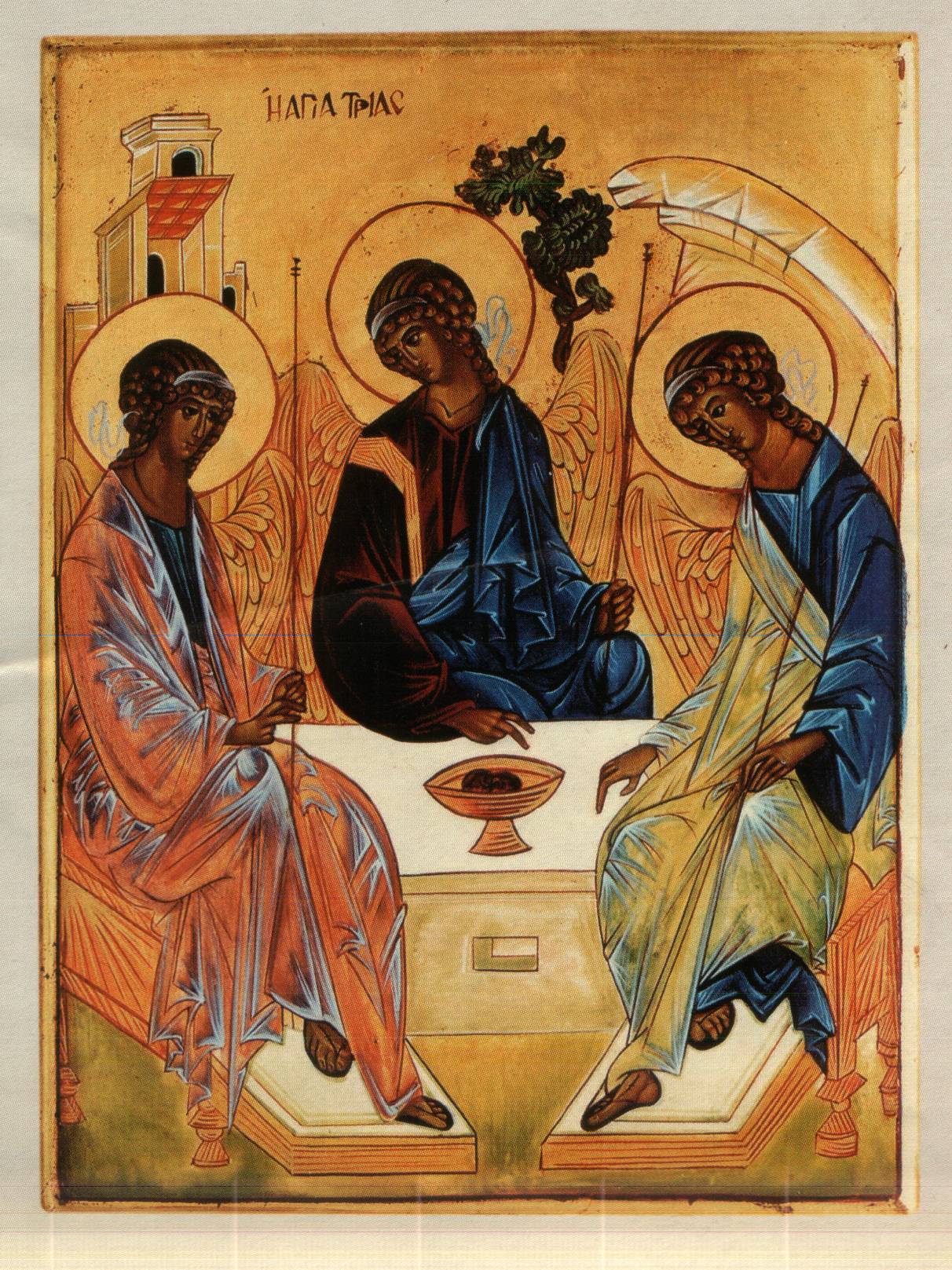
Today is Trinity Sunday and this feastday was popularized by St. Thomas a Becket centuries ago. The feast of the Trinity became so important that until recently Anglicans numbered the long summer Sundays as “Sundays After Trinity”. This feast is unique in that the focus of our celebration is not an aspect of the history of salvation, but reflection on the nature of God as we believe it has been revealed to us as Christians. It is worth reflecting that today’s focus is the very essence of Christian identity. We begin every liturgy by stating that we are acting ‘In the name of the Father …’ and that is a declaration of our basic faith, not just an opening formula.

In 324 A.D., the gathering of bishops at Nicaea declared doctrine of the Trinity. Their declaration was in response to a false teaching that the Son and Spirit were merely creatures. If the Son and Spirit were creatures, then the relationship of all believers to the Father would be distant. The bishops rejected this teaching and reaffirmed God’s intimacy with his faithful. As Catholics, we profess the Nicean Creed every Sunday at Mass. We are living in an age of information overload – driven by means of communication which have profoundly changed the nature of our relationships with one another and our lives and the way we live them. You can even have a “best friend” you have never met  through the internet and other computerised ways of communication– and before you scoff, we need to hit the “pause” button to reflect on how we relate to God, Father Son and Spirit one. Our world seems locked in battle between contending parties and groups, and division and tension have even got into the churches as we are divided over so many different issues and some of the issues that have divided us are so very hard to deal with at so many different levels. Common sense tells us God exists and Jesus gave us a new look into nature of God. As creator, God is “Father.” Jesus made that distant concept close intimate and personal to us all. The Father became “Our Father” who cares for each and every one of us his creatures with an intense, personal love he has called each one of us by name and we are his.

As he showed us God as this loving Father, Jesus revealed himself as the only Son of the Father. As the Son, he became our model and connection with the Father. Through the Son we touch the warm embrace of the Father. The Spirit continues the mission of the Son through the Church. The Spirit moves us to intimacy with the Father. It moves us to prayer and worship, witness and evangelization, community and service. Through the Spirit, the strangers become friends, friends become believers, and believers come close to God. Hence, we believe God is Trinity (three divine persons in one God) simply because we experience divine power in the words, deeds, life, death, and resurrection of Jesus. And we experience divine life in the Spirit. In both we find what we call “God.” In both, we experience the Father as a personal, intensely loving, and compassionate God. The Church receives new believers “in the name of the Father, the Son, and the Spirit.” The singular term “name” referred to the ancient notion that God in substance (nature or essence) is one, but three in person (or “hypostasis”). The family acts as an easily understood analogy of this mystery. There is only one family, but many members. Just as grace is given from the Father through the Son, so there could be no communication of the gift to us except in the Holy Spirit.  So whenever  we say In the name of the Father, and of the Son, and of the Holy Spirit let us remember the love of the Father, the grace of the Son and the fellowship of the Spirit himself given freely to all of us.

Ascension of the Lord

Today we celebrate the Ascension of Jesus to the Father in Heaven. There is an air of finality about today’s festival but as we know it was end and a beginning. Our focus is on the retelling of a story declaring that Christ has returned to the Father, and so we think of it as the ‘end’ of the Christ event or the ‘end of Easter’ – in times past there was a custom of extinguishing the Paschal Candle after the gospel to signify: ‘he is gone’. That said he is gone but at the same time we believe that he is truly here with us. The ascension was an end As well as a beginning. While it was the end of Jesus’ physical presence with his beloved disciples, it marked the beginning of Jesus’ presence with them in a new way. Jesus promised that he would be with them always to the end of time (Matthew 28:20)  and he is with us too in the Eucharist, that is also called the real presence of Jesus in the blessed Sacrament.  Now as the glorified and risen Lord and Saviour, Jesus ascended to the right hand of the Father in heaven, and he promised to send the Apostles the Holy Spirit who would give them his power on the Feast of Pentecost.


Why did Jesus leave his disciples forty days after his resurrection? Forty is a significant number in the scriptures. Moses went to the mountain to seek the face of God for forty days in prayer and fasting. The people of Israel were in the wilderness for forty years in preparation for their entry into the promised land. Elijah fasted for forty days as he journeyed in the wilderness to the mountain of God.

For forty days after his resurrection Jesus appeared numerous times to his disciples to assure them that he had risen indeed and to prepare them for the task of carrying on the work which he began during his earthy ministry.  When the Lord Jesus departed physically from the apostles, they were not left in sorrow or grief. Instead, they were filled with joy and with great anticipation for the coming of the Holy Spirit. Jesus’ last words to his apostles point to his saving mission and to their mission to be witnesses of his saving death and his glorious resurrection and to proclaim the good news.  As I have said before I wonder what those same apostles would say if they realised that 2012 years later we in our own time would be writing and talking about the ascension of Jesus their friend and ours .Their task  in their time was to proclaim the gospel – the good news of salvation – not only to the people of Israel, but to all the nations. This is also our task to proclaim the good news of salvation to those around us by what we say, and how we live as Christian and Catholic people.

We remember that God’s love and gift of salvation is not reserved for a few or for one nation or one particular person alone instead gods salvation is for the whole world – for all who will accept it. Today as we celebrate the Ascension let us pray that we proclaim the good news of that Jesus is with us in our lives and daily living to those around us by what we say, and how we live as Christian and Catholic people.  The gospel is the power of God, the power to release people from their burden of guilt, sin, and oppression, and the power to heal, restore, and make us whole. Do we believe in the power of the gospel in our lives in 2012? All believers are given a share in this task – to be heralds of the good news and ambassadors for Jesus Christ. Next Sunday we celebrate the feast of the coming of the Holy Spirit as we celebrate Pentecost Sunday, and sing Come Holy Spirit creator come  we remember that We have not been left alone in this task, for the risen Lord works in and through us by the power of his Holy Spirit.

Post Navigation