Fullerton T

RELIGION LITURGY AND LIFE

Archive for the category “Uncategorized”

19th Sunday of Ordinary Time

Jesus is the Bread of Life – John 6:35 – ScriptureWay – Whitney V. Myers -  ScriptureWay

This Sunday we hear Jesus telling the Apostles that he is the bread of life. The Gospel reading deals with a doubting audience, and at times we  are also members of that doubting audience. The people who heard Jesus were shocked and critical of his claim to have come down from heaven as the Bread of Life. Despite the miracles they had witnessed, and the words of wisdom they heard preached with such convincing authority, they could not take the extra step to accept His claim. Many people these days are also unable to make that extra step on their faith journey. We, on the other hand  are able to take that extra step because our Christian faith has come to us from Jesus, passed down through the generations of those who went before us.

We know where he came from, we know where we are going and we know how to reach that destination. The personal faith that we have means that “God out of the abundance of his love, speaks to us as a friend and lives among us as  the living bread which came down from heaven.  The Gospel lesson for this weekend tells us that we can’t live our lives by ourselves as we search for answers when we have doubts.  We find Jesus who is the answer to the doubts we have through the teachings of the church and through our communion with him through the eucharist the bread of life.  When we gather at the Eucharist we bring ourselves and our needs in prayer to God. We bring ourselves to God because God is with us and continues to be with us in good and bad times through the sacramental life of the Church and through the Eucharist in particular.

When we see the Eucharistic Bread, we believe that it is Jesus who is there before us:  such is the faith we have in the Eucharist the bread of life.   In our day-to-day lives we are empowered to be imitators of God’s love and we are asked to pass that love on to those around us.  So, at the end of each day, when we give thanks for all of our blessings, most of all, we give thanks to God for the presence of Jesus in our lives and the lives of those who are around us as we remember that Jesus is the bread of life.

6th Sunday of Easter

6th Sunday of Easter (Year B)

We continue our journey out of the COVID restrictions and as we do that we remember all who are affected especially those in India and other affected countries.  Our Gospel for this Sunday is  a reading from the gospel of John in which Jesus tells us ‘As the Father has loved me, so I have loved you. Remain in my love. This is my commandment: love one another, as I have loved you. The love of God is easy for those who see God as a loving and faithful Father. St. Therese of Lisieux,  who was a master of the spiritual life tells us about the love which is its essence. She taught the “little way” of childlike simplicity and obedience to God as the way to grow in love.  “It seems to me St. Therese said that there will be no judgment for victims of love, or rather, the good God will hasten to reward, with eternal delights, His own love which He will see burning in their hearts.” Love of God is tied to the commandments, because the commandments are the love of God in action.

Those who love God long to be holy as he is holy and so live by the commandments.  But they do it out of love not because they have to. “In the heart of the Church I will be love,” St. Therese exclaimed upon discovering her true vocation. Though bound by the walls of her cloister, she knew unlimited freedom to reach the heights of holiness through courageous devotion to charity.  We too are students of the love of God. The commandments that Jesus gives are valuable  lessons by which we master the love of God our Father in thought, word and deed. Jesus chose his followers to carry out God’s plan of salvation. By allowing us to participate in his work of redemption, he gives us a personal stake in the Kingdom of God. “Love is the best way to become his “co-worker,” since it reveals the reason he came into  the world and affirms our friendship with the creator. Love changes everything it touches. It tells us to stop bragging about this or that. It enhances our reputation. It denies the power of position and wealth which we sometimes feel is ours by right, it raises us up as true leaders.

It might take away the advantage of our personal ideas on any topic. However, It connects us in unimaginable ways to God and to one another. Divine love transcends mere emotion. It becomes our lifeline to God. And it forms the basis of real community where everyone is valued and no one is left out. It is inexplicable in theory, yet easily seen in action. Wherever God loves, he acts. Wherever he acts, he is there with us. He is with us because he loves us and the love of God knows no bounds.  we remember the love that God has for each and every one of us each time we look at the Cross. We also remember that Jesus the son of God who gave up his life on the Cross out of love for us is our saviour who will show us the way to bring the love of God the Father into our lives so that we will pass it on to other people.

21ST SUNDAY IN ORDINARY TIME

These days we are preparing for the re opening of the local schools and the return of the pupils. The children and parents out there are wondering what will happen and how things will go. I am sure  it is the same for the teachers returning into these new circumstances where much remains the same but so much more has changed. There is a lot of nervousness around this week as we prepare for the safe return to school. We keep our teachers and our school going members of our communities and their families in our prayers in the days ahead as we return to School.

This Sunday in our gospel reading Jesus asks the apostles “who do you say the Son of Man is?” Jesus was in Caesarea Philippi in the north eastern corner of Palestine. There no one would not look for Him. He had much to teach the twelve before He could leave them this was quality teaching time. So, He put the question to them that went to the heart of the matter, “Who do you say I am?” Peter acting as spokesman for the others told Him He was “the Son of the living God” Peter confesses the deep mystery of Jesus, who is the Christ and the Son of God.

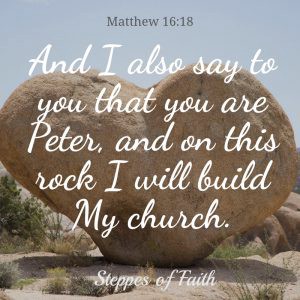
In the light of this inspired confession, Peter is chosen to be the rock on which the Church is built. When Jesus told him “ you are Peter and on this rock I will build my Church” Peter received the gift of being the leader of the Church. Peter was first among the apostles, first among those who were called to proclaim the Kingdom of God on earth. Peter took the leadership of the Church at Pentecost. After he, the apostles and Mary, received the Holy Spirit, Peter led everyone out to the Temple and began preaching the good news to the people. After Saul became Paul, after the persecutor of the primitive Church accepted Jesus Christ, Paul spent three years in the desert reflecting on his experience of the Lord on the Road to Damascus. He then went to Jerusalem to receive Peter’s blessing and commission to bring the Good News of the Gospel to the world.  We do not know how Peter got to Rome. We know that he was there, though. We know that Peter died in Rome, crucified head down. The excavations under the Basilica of St. Peter revealed a tomb with the words, Here Lies Peter. We also know that when Peter died, the charism he was given to lead the Church remained active in Rome. The ones who took his place, St. Linus, and those who followed him, St. Cletus, St. Clement in the Apostolic succession right through the centuries up until Pope Francis in our present time.

.All of them are recognized as having received the  same charism that the Lord gave to Peter to lead the Church and this has passed down through the centuries. As time went on, these bishops of Rome would be given the title, Pope, Papa, Holy Father, leader of the Church. Through our baptism, all Christians have received a share in the power of the keys to heaven. With that power goes responsibility to witness to the Gospel. So who do you and I say Jesus is in light of this Sundays Gospel reading and what it teaches us today?

FOURTH SUNDAY OF ADVENT


6051561be4026151eac8aa9e6c5046b9.jpg


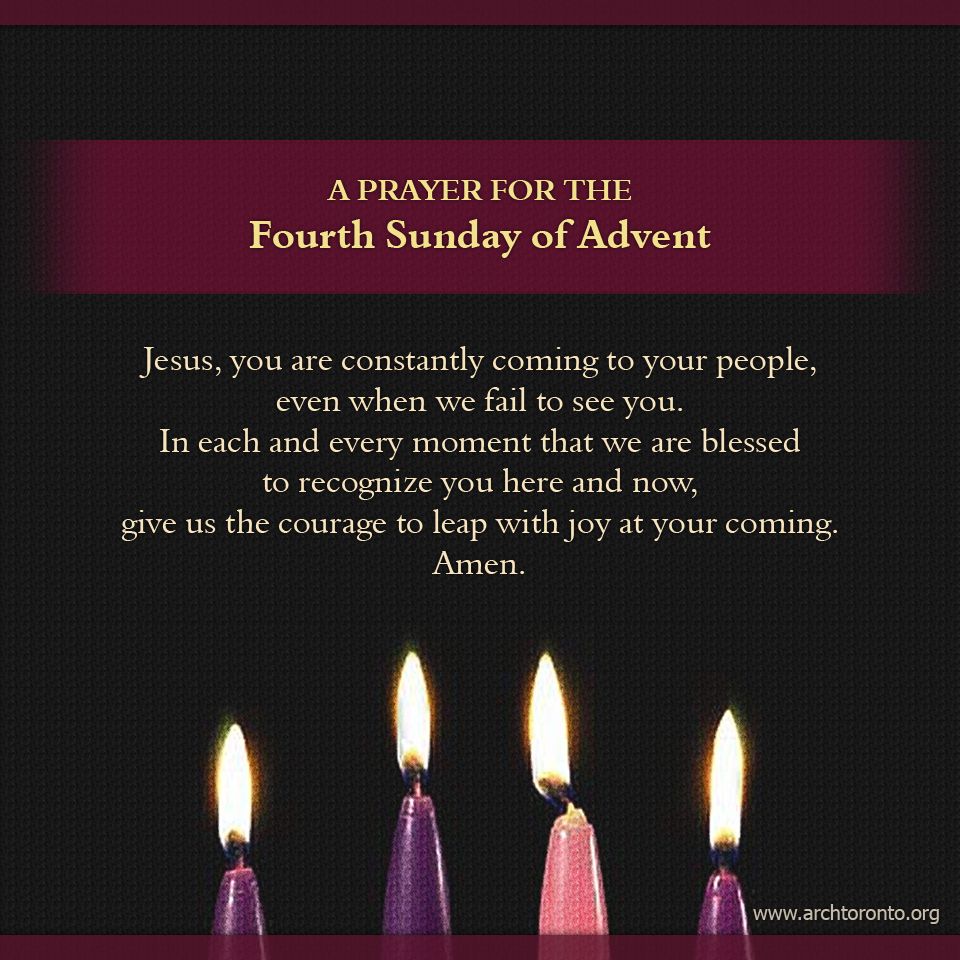
This weekend we come to the last Sunday of the Advent season. In our churches we light the last purple candle as well as the other three leaving the last candle the white one for the first Mass of Christmas Day. It’s only in this last few days  before Christmas that we begin to hear about the “Christmas story” itself. For the past weeks we have been preparing ourselves to greet the Lord, when he comes. Now we prepare to remember how he first came, by listening to the prophecies of his coming, and by hearing of the events before his birth. We meet Mary, who herself had been prepared for the coming of the Messiah. She has received the angel’s greeting, and his strange news, and accepted her role in God’s plan. Now she hurries to her kinswoman, Elizabeth, who herself bears John the Baptist in her womb. John,  alerts us to the presence of the Lord, as he leaps for joy in his mother’s womb.

His joy is that God has kept his promise, and is with his people. Matthew is well planted in his Jewish tradition. He shows that from the very beginning of his gospel. By quoting the prophet Isaiah, Matthew tells us that God is with us; not in general, but now on the throne of David – as God had promised. The promise found in Scripture has been fulfilled.  By referring his readers to the scriptures, Isaiah reminds his readers that believers do well to put confidence in the word of God especially to sustain hope and strengthen faith in discouraging times. God enters into our world: it’s a world where plans don’t always work out and where people have to adjust to the reality presented to them. Joseph was betrothed to Mary; he had his plans. Mary’s pregnancy turns his world and plans upside down. Instead of exposing her, he “decided to divorce her quietly.” He was a “righteous man” and he will protect Mary from being publicly dishonored. He is not vengeful and, though wronged, displays mercy.

After his dream Joseph, “took his wife into his home.” The world God chose to enter was one of poverty, hard labor and political and military oppression. God took a big chance being born among us especially in those circumstances. Surely there must have been neater options for God, to make the savior’s path and work a bit smoother. But who has a “smooth path” through life none of us that’s for sure? It’s good to know that Emmanuel, “God with us,” chose to be with us his people who live in  the real and messy world. God is with us in the mess of our daily lives! So as we come to the end of this Advent as we look forward to the Christmas Celebration there is much to be thankful for. We  thank God for being with us through good and bad as well as happy and sad times and we also remember with all the secular razzmatazz that is going on around us that Jesus the Son of God is the reason for the Christmas season.

27TH SUNDAY IN ORDINARY TIME


with-faith-the-size-of-mustard-seed-nothing-is-impossible-15312263


This week  we began the extraordinary month of Mission, October is the month when we pray for the missionary’s who bring the gospel message to those in other countries so that the people there will have faith in Jesus and what he teaches us. The Gospel for this Sunday is made up of two apparently unrelated sayings of Jesus, one dealing with the gift  of faith and the other a very stark and challenging reminder to the apostles of the call to service they have received as people sent by God to share in Jesus’ mission of proclaiming the Good News. We might be tempted to skip over such ‘hard sayings’ but we are asked to listen to them because the Gospel always liberates us from false ideas about ourselves and God and that can only be a good thing.

So many people have little or no faith and many who have been brought up in the catholic faith have left for many reasons. Perhaps we think that having faith means believing certain things. Thinking our faith is small can keep us from doing so many things that we are called to do by our faith in Jesus the Son of God.  The disciples must have thought their faith was so small they couldn’t act on it. But Jesus wants his disciples and by association ourselves to trust and act on our god given faith.

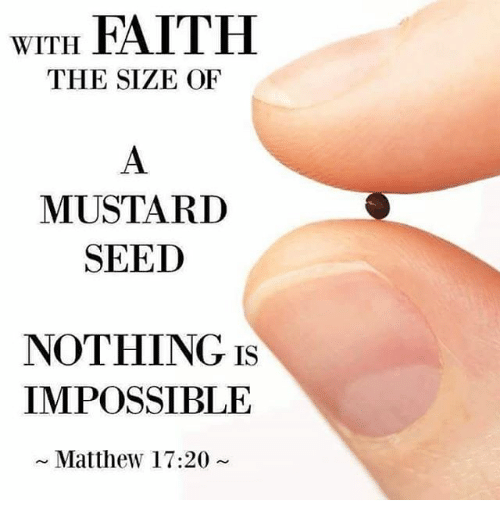
The alternative to acting out of faith would be saying things like: I can’t take on that responsibility, I don’t have enough faith. I can’t be kind to those people that will take more faith than I have. The disciples may have felt similar inhibitions after hearing what Jesus just taught about not leading others into sin and the necessity to forgive someone seven times a day (17 1-5). But Jesus teaches, “Act on the little faith you have. You’ll be surprised what you can do.” His example of the deep-rooted mulberry tree underlines his lesson to us about the power of the smallest seed of faith to work marvels. We may find ourselves doing something that surprises us and those who know us. Perhaps it’s a great act of charity; working away on another’s behalf; or, an act of forgiveness. Such deeds often win praise among those around us. But despite the remarkable things we might do, we must acknowledge the source of all our good deeds the mustard seed that is faith planted in us by God. Realising this we can say with those servants in the parable: “We are unprofitable servants, we have done what we were obliged to do.” We could also add: “We have only done what the mustard seed of  our faith has enabled us to do. “God gives us the grace to do great things in his name.

As we pray for our faith to be strengthened we thank god for all those people who helped us to have faith in the first place, our parents, families, teachers, friends and our clergy throughout our lives all of them played their part in giving us the faith.   Although Christ was speaking to the Apostles, His words apply to all of us, in our own lives here and now. Following the example of the Apostles, we must all pray for greater trust and faith in God and his love for all of us.

ON LEAVING THE EU

Today has been one of those political days when you pinch yourself and say did this actually happen? In 2016 I voted to remain in the EU but the result of the referendum stated that we must leave and now today two years on we were to leave and we have not left such are the politics of the UK. The most amazing thing in my circle of family and friends has been the fact that over the past 2 years Brexit was not and is not a topic of conversation unless I asked what the people thought about it and what it meant and then you heard what they thought. Since the UK joined the EU in 1974 the conservative party has been Euro-sceptic looking for a way to leave and in 2016 David Cameron gave them a referendum which gave the unexpected leave result and this result has to be honoured. But the people have spoken and parliament and the MPs that we the people send to Westminster have spoken but they are saying something different as a result the people and the MPs seem to be at odds. Simply put whether the MPs or me or anyone else likes it or not we should leave because this is the will of the people freely expressed in a referendum. I personally would like to remain but the majority says leave and as we live in a democracy that is the way it should be.

4th SUNDAY OF ADVENT

4th-Sunday-Of-Advent-Candles-And-Palm-Leaves-Clipart

This weekend we light the third purple candle on the Advent wreath as the anticipation grows to a crescendo as we  draw closer to the celebration of the Christmas mysteries. Christmas is almost upon us: yet are we ready in the true sense of the word remembering that Jesus is the reason for the season? Christmas we are told is a time for so many things  yet for many of us it is a time of stress and pressure with all the extra work to sort out everything that needs to be done.  For many it is a time when we are fearful that the children won’t be disappointed or that there will be tension in relationships or there will be a breakdown in the ceasefire with the in-laws.  And on top of all this there is a feeling of guilt for feeling like this when we should be happier that we are at this particular moment in our lives.

Now in the midst of the preparations we meet Mary and her cousin Elisabeth in our Gospel reading for this weekend. Mary, who herself had been prepared for the coming of the Messiah. She has heard the angel’s greeting, and his strange news, and has accepted her role in God’s plan.  Now she hurries to her kinswoman, Elizabeth, who herself bears John the Baptist in her womb. John, alerts us to the presence of the Lord, as he leaps for joy in his mother’s womb. His joy is that God has kept his promise, and is with his people.  That two women were chosen to play such a role in the story of salvation is remarkable, as women were often marginalized in the society of their time. In all of these events we see the great mission that Mary undertook as a privileged instrument in the hands of God. Mary is not only the mother of the source of grace; she is the very model of what a Christian heart should look like. We look to Mary to see our fullest Christian   dig­nity.

In Lumen Gentium 68, Vatican II describes our contem­plation of Mary as an act of entering our own deepest mystery, catching a glimpse of what we shall he at the end of our faith journey. Over the next few days the journey to Christmas will have many pressures for everyone especially those who are worried or afraid about so many things family and otherwise.  Mary in her calm gentle way encourages us to trust in God’s word and to believe in God’s promises as she did. If we believe and have trust in God all the problems that might arise will assume their proper perspective and we will get through them and come out the other side wondering why we got so worried in the first place.

2ND SUNDAY OF ADVENT

download

This Sunday we light the second purple candle on the Advent Wreath and we hear the gospel story of the voice in the wilderness that is John the Baptist. John was called to be the herald of the Lord calling the people of his time to  repentance John the Baptist plays a prominent role in all the gospels, but particularly in Luke. John hears the word in the desert and preaches prepare the way for the Lord make straight his paths” throughout the whole region of the Jordan.” The Jordan was another important place in the faith life of the Jewish believers. After their desert wanderings the people crossed over the Jordan river into the promised land. They left behind slavery, came to know God in the desert and were finally prepared by God to cross into new life. All the readings share a marvellous insight: people begin to change when they are encouraged to see the best in themselves, not when they are asked to dwell with the worst in themselves.

Blessed John Henry Newman reminds us that “Advent is a time of waiting; it is a time of joy because the coming of Christ is not only a gift of grace and salvation but it is also a time of commitment because it motivates us to live the present as a time of responsibility and vigilance. We all need help and encouragement to leave behind all the things that have become destructive in our lives. We need help in thinking about ourselves differently, and imagining the good effect that will have on others. We have to take time during advent to reflect what kind of person God wants us to be, what God’s plan is for us as we prepare the way for the Lord. We need to have faith in the future, to see the power of God working in the change that Jesus brings to us and through us to others. In this Gospel passages John calls all of us to a better faith filled life. This  means the necessity, of an industrious, living ‘wait’ as we prepare the way for the Lord pruning away all that hinders us from making him welcome when he comes at Christmas .

As we continue our  advent  journey we need to ask ourselves what are we waiting for. Are we waiting for the presents and razzmatazz that the secular part of Christmas bring or are  we preparing spiritually for the greatest gift of God, his Son, Jesus the light in the darkness who John the Baptist foretold.

31ST SUNDAY OF ORDINARY TIME


greatest-commandment.jpg


This weekend we celebrate the 31st Sunday of ordinary time and last Thursday we celebrated the feast of All Saints. Each of us are called to be saints and the feast of All saints  honours all those unsung heroes of the faith who are saints even though the Church has not Canonised them. They are the men and women who “hung in there” despite all sorts of obstacles, to faithfully believing in God and His Son, Jesus.   All of us have this “universal call to holiness.” What must we to do in order to join the company of the saints in heaven? We “must follow in Jesus footsteps and try to conform ourselves to his image as we seek  to do  the will of the Father in all things In this way, the holiness of the People of God will grow into an abundant harvest of good, as is admirably shown by the life of so many saints in Church history”.

Our Gospel reading this weekend is all about the first and greatest commandments of the law. In his reply to the scribe Jesus makes it clear that you cannot compose summaries of the Law while forgetting love of neighbour.

The scribe is pleased with Jesus’ reply and adds his own point, that the love of God and neighbour is far more important than any ritual worship. In supporting the scribe’s addition, Jesus places the demands of liturgy far below the demands of active love.The transformation caused by God’s love is so profound that it flows from us towards God and is expressed in love of neighbour. Like Moses, Jesus calls us to love God with our entire being because his life and death are a manifestation of God’s love for each of us. The scribe in this Gospel states that the law of love of God and neighbour is greater than any of the religious observances and laws concerning sacrifices. Revered Temple worship and sacrifice must take second place to the observance and sacrifice that comes with loving God and neighbour. Jesus says that the scribe has answered wisely about the superiority of love over any sacrifice and then says to him, “You are not far from the kingdom of God. Our God is the God of history. Our God is the creator of all that is. We are God’s dream. Our living with God is not only in our places of worship and community. God is with us in the market place, on the factory floor, in the politics of life. Our God is with us on the streets, in homeless shelters, in the hospitals and mental institutions that seek to heal us.

As a matter of fact God is with us wherever we are and in whatever we are doing in his name. Our lives are not divisible into secular and religious though some might want it that way. We are called like the pharisee in this Gospel story to love the Lord our God and  our neighbour as well and to bring that love out into the world where we are.


21st Sunday in Ordinary Time


AWMF2018


Pope Francis has Landed. I am in shock as I write this I didn’t think that nearly 40 years after the visit of Pope John Paul to Ireland I would be writing about another pope visiting Ireland with the visit of Pope Francis to Ireland for the world meeting of families. I remember as a 12 year old the anticipation of the visit and even now the excitement is there as the pope comes to Ireland. So much has changed in terms of faith and people and it would be easy to be critical and many are with good reason but we need to stop for a while and bask in spiritual sunshine that the world meeting of families and the pope’s visit bring to us and the world. There is much that has changed in my lifetime in relation to the faith that we profess and family life and I am sure that much will change if the future. But the words of Oscar Romero  who will be made a saint in October sum up what we are about we are workers, not master builders, ministers, not messiahs. We are prophets of a future that is not our own.  So as we go forward we thank God that we are at this point and we acknowledge that we are not perfect as the Church is not perfect as we look to the future that is gods not ours to own.

In this Sundays Gospel, Jesus puts the choice to His apostles of following Him, or of leaving Him. Many of the Lord’s followers had left Him because of His teaching that He Himself is the Bread of Life. After hearing Jesus’ teaching on the bread of life, many of the people find Jesus’ language intolerable. As a result of this intolerable language some  of them choose to leave him. Today in a similar way so many people find the words of Jesus to be intolerable language as many Christians have got up and left their faith behind them and some may never return again. When Simon Peter answered Christ’s challenge—”will you too go away?”—he spoke not only for his fellow-Apostles that day with: “Lord to whom shall we go? You have the words of eternal life.” but for all of us in our own time and place as well, people who really believe that Christ was the incarnate Son of God.

Peter made his act of faith before he was fully convinced of the divinity of Christ, but he was already convinced that Christ was close to God and spoke nothing but the truth. We have the proofs of Christ’s divinity which Peter and the Apostles later got. We have also the faith of two thousand years of Christian people whose belief in the bread of life as a sacrifice and sacrament was at the very center of their Christian lives. This belief was passed down to us through each generation. We have also the noble example of many martyrs who gladly gave their lives in defense of this truth. “Lord to whom shall we go? You have the words of eternal life.” Lord we will go to you for you have the message of eternal life now as in the past and will lead us into the future by your grace and hope.


Post Navigation