Fullerton T

RELIGION LITURGY AND LIFE

Archive for the category “Uncategorized”

4TH SUNDAY OF EASTER

images

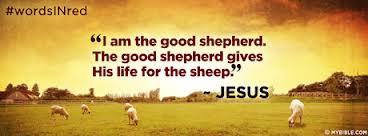
This Sunday we celebrate the fourth Sunday of Easter and we hear the story of the Good Shepherd. The parable that Jesus tells us today seems to be easy to understand: it is the parable of the good shepherd who leads his sheep to pasture. The figure of the good shepherd is very well known. From the very first centuries of the Church, this image was used to represent the Lord when a sacred place was being adorned… However, according to Saint John, it seems that the listeners who were present at the time did not completely understand the exact sense of this parable: “This figure Jesus used with them, but they did not understand what he was saying to them.” The flock that he is talking about is the Church and we also think about our priests and the role that they have as shepherds after the heart of Christ. We also remember the vocation of priesthood in a special way today.

The Gospel of the Good Shepherd teaches us how to embrace the gift of redemption by hearing and recognizing the voice of Jesus the Good Shepherd. There are so many voices out there calling us to believe and to practice things that might seem nice, but are not truly of or from the Lord. We need to tune our ears and hearts into recognizing the voice of truth that comes from Jesus, the Good Shepherd. Just as Jesus is the Good Shepherd, we have the call to be Good Sheep. Men and women who are able to recognize the voice of the Lord and to faithfully follow him.

FOURTH SUNDAY OF ADVENT

DDEA6629

This weekend we come to the last Sunday of the Advent season. In our churches we light the last purple candle as well as the other three leaving the last candle the white one for the first Mass of Christmas Day. It’s only in this last week before Christmas that we begin to hear about the “Christmas story” itself. For the past weeks we have been preparing ourselves to greet the Lord, when he comes. Now we prepare to remember how he first came, by listening to the prophecies of his coming, and by hearing of the events before his birth. At Christmas we will concentrate on the simplicity and poverty of Our Lord’s birth: how human he was, born of a young woman, not in luxurious comfort, but in the discomfort of a stable. That shows him as one of us, the human side of “Emmanuel.” God enters into our world: it’s a world where plans don’t always work out and where people have to adjust to the reality presented to them. Joseph was betrothed to Mary; he had his plans. Mary’s pregnancy turns his world and plans upside down. Instead of exposing her, he “decided to divorce her quietly.”

He was a “righteous man” and he will protect Mary from being publicly dishonored. He is not vengeful and, though wronged, displays mercy. Joseph, “took his wife into his home after the angel appeared to him in a dream. The world God chose to enter was not only one of poverty, hard labor and political and military oppression but, from the beginning, messy – even while the child was still in his mother’s womb. God took a big chance being born among us. Surely there must have been neater options for God, to make the savior’s path and work a bit smoother. But who has a “smooth path” through life anyway not many if anyone has it easy. It’s good to know that Emmanuel, “God with us,” chose to be with us people of the world and living in the messiness of the world. God is with us in our daily lives with all the ups and downs! Christmas with the child in the manger with Mary and Joseph with the angels and the shepherds challenges us to enter into an intimate relationship with God who is Love itself. We are challenged to keep on trusting that we will receive love, and keep on receiving love, from God and others.


28TH SUNDAY OF ORDINARY TIME

28c_4

This Sunday in our Gospel Reading we hear the story of the ten Lepers and their lack of gratitude. This is one of many such examples of ingratitude that occurred during Christ’s public ministry, most of those he cured forget to thank him. In today’s incident there was one who had the decency to return and thank his benefactor, and he was the one least expected to do so,. This pleased our Lord and led Him to remark on the ingratitude of the others. “Were not all ten made whole, where are the other nine?” This Gospel story is not only about the Lepers it’s also about our lack of gratitude for the many good  things that we have in our lives given to us by God. When we were youngsters growing up we were taught to say, “Thank you” by our parents when they gave us a sweet or whatever, when we didn’t we would be dutifully reminded, “What do you say?” and of course we said the magic words ‘Thank You.’

All the lepers showed great faith and confidence in Jesus’ power to heal but only one of them said thanks. They had not heard Him preach nor had they seen any of His miracles. They lived in isolation camps because of the leprosy, yet they believed the reports they had heard.  The nine lepers were appreciative of what Jesus had done; we don’t know, why they didn’t bother to show their gratitude to Jesus. We can only look to ourselves to ask why we are often reluctant to say thank you for all the things we have. There is seems to be great deal of awkwardness surrounding the attitude of gratitude and saying thank you. Personally I find that to be thanked means more to me than being given a gift for a task just done. Whatever the reason for our own ingratitude, we know that it diminishes us and those who help us. All of us have reasons to give thanks for so many things yet very few turn to the Lord with words and hearts expressing our thanks for all the wonders he has done for us in our lives.  We need to ask ourselves today, “Am I really grateful for God’s constant love? Or do I just take Him for granted?”

Do we have the attitude of gratitude which thanks god and those around and us for their goodness to us.  When we gather each Sunday we come to join God in the midst of the assembly with gratitude in our hearts. We give praise and thanks to God and we thank God for all those who have given us their help. May all of us have the attitude of gratitude for all the good things that we have in our lives which means that we are thankful for all that we are and all that we have.

23RD SUNDAY IN ORDINARY TIME

download (3)

This Sunday we celebrate the 23rd Sunday of Ordinary Time it is a time for new beginnings with the youngsters going back to school or college and their  parents breathing a big sigh of relief that the long holidays are now at an end. Many of us have the feeling that time is passing by so very quickly. You know just how quickly life is going by when your nephew at 24 years of age  is complaining about his life just running past him such is the life of so many both Young and Old time is just passing by all of us. In our Gospel for this Sunday Luke tells us that Jesus is not addressing those he called to follow him, his disciples. Instead, he is speaking to those who might be thinking about following him. Earlier when someone had such a notion he said to Jesus, “I will be your follower wherever you go” (9:57). Jesus responded to, what sounds like, a person caught up in the enthusiasm of the moment, with a stark reminder, “the foxes have lairs, the birds of the sky have nests but the Son of Man has nowhere to lay his head” (9:58).

This is a sobering reminder  to all of us about what it will mean to follow the one who has “nowhere to lay his head.”  The cost of discipleship might mean detachment from one’s previous world and way of living. Jesus is asking total loyalty to him and many have shown that loyalty by giving their lives in defense of the faith. Jesus used examples from his world; a farmer’s lookout tower, a king and his army marching into battle. We would use different examples for life’s challenges – but we get the point.

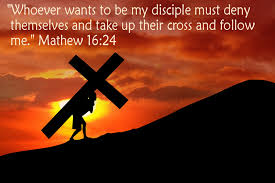
Have we considered what Christ’s invitation to follow him involves? Are we realistic about the personal costs investing our whole selves will require? Are we willing to use our strength and resources to fulfill the promises we have made in faith? Even more to the point: have we heard his most direct challenge, “Whoever does not carry his/her own cross and come after me cannot be my disciple.” How costly is that! To be willing to carry a cross, an instrument of sacrifice and death; willing to accept pain and loss of our own lives to respond to Jesus’ invitation to discipleship.

Who among us hasn’t stumbled, or even failed in our calling as disciples? We have chosen comfort over sacrifice. We have been still, when we should have spoken up. We prefer diversions, rather than learning more about our faith. We have existed on the edge of our church community, rather than given time and resources to help build it up. Have we compromised on the call to follow Christ and the sacrifices that call requires? At some point on many things faith and otherwise we have compromised. That’s why we begin Mass with the penitential rite, in which we acknowledge our failings. We can say with Peter, “Depart from me Lord, for I am a sinful person.” But the emphasis isn’t on our sin; it’s on the mercy of God, as we pray, “Lord have mercy.” We struggle to do the best we can, and when we don’t, instead of pulling back in shame, we come together as a community that surrenders in trust to God’s mercy Especially during this Year of Mercy. Following Christ is a life changing journey. We have a limited time in which to complete this journey. Therefore, we must travel a certain distance each day. This does not mean that we must spend every day in prayer and meditation.

There are other tasks to be done, but we must Christianize these other tasks. Even the members of religious orders who “leave the world,” that is, who are set free from the family and financial cares of this world by their vows of chastity and poverty, have to busy themselves with other cares like teaching, nursing, tilling the soil perhaps, house-keeping, writing and many such activities.  They cannot and do not spend all their day and every day in prayer and meditation. Nor does Christ demand this of them. Jesus tells us that Discipleship is costly and not something we can take casually. It’s not easy to follow Christ. But we are not on our own. When we fail, Christ is by our side ready to respond to our plea, “Lord have mercy.”Nor are we on our own as we attempt to make big sacrifices in Jesus’ name. Rather, Jesus has given us with the Holy Spirit who is ever ready to guide us more and more into a fuller response to the invitation each of us has heard through our baptism, “Come follow me.” Let us not be afraid to follow where Jesus calls us to be.
20TH SUNDAY OF ORDINARY

images (9)


In the gospel for this Sunday Jesus says, “I have come to set the world on fire and how I wish it were already blazing.” Jesus is ready and willing to face the hardships that lie ahead. Jesus’ words must have unsettled the people who heard them the first time. It doesn’t sound like Jesus meant that the practice of our faith should make us comfortable, guarantee harmony or tranquillity. Indeed, as he predicted, belief in him would cause the most severe conflict, even in the close-knit-family world of his Mediterranean followers and this inter-religious conflict continues today in many places throughout the world especially in the Holy Land. Jesus is zealous about his mission; He has a task to complete and will follow it through, despite the threats to his personal safety. Jesus refers to his fate as “a baptism with which I must be baptized.”

He sees his passion as a baptism which he will accept and which will set a fire upon the earth. Remember when John the Baptist spoke of Jesus he linked baptism and fire, “He will baptize you with the Holy Spirit and fire”. When our lives get difficult, for any reason perhaps running low on the resources of spirit, mind and psyche at critical moments, we are tempted to think that the Holy One is asleep behind a closed door. We feel very much on the outside. At these times it’s important to remember that Jesus the mercy of God is with us throughout the turmoil we may have as a result of the hurts and hardship that life throws out to all of us on many occasions. Making decisions on the journey of life is a natural process for us; we make many of them each day. Our senses take in all kinds of information some of which we accept, some we discard and much, we are not aware of. Our minds move us to a yes or no that is what the will does. So our imaginations can present data to our minds for a choice as well. So a faith based decision to walk the ways of Jesus needs some information which Jesus gives his disciples, that information  is handed down to us in a special way through the scriptures the word of God.

But some information has to be provided by memory and imagination and in so many cases memory and imagination are not always good at telling the truth of the matters under discussion at any particular moment. The faith that Jesus the face of the father’s mercy calls us his followers to is a faith that leads us to live lives which reflect the life of Jesus the mercy of God. It is much easier to follow from a safe distance and not let our lives be challenged and changed by faith in God. It is very easy to let the bitterness of others take us over but at the end of it all Jesus went to the Cross to overcome all the hatred and bitterness that we see around and about us. Today we are invited to lead lives less dominated by greed possessiveness and hatred or whatever is the opposite to the love and mercy of Jesus. Remember that the words of Jesus are there to afflict the comfortable and comfort the afflicted those who are in any need.

Faith was not easy at the beginning of the Church and isn’t easy now the martyrs of the faith throughout history right up until our present time bear witness to this and I  include Fr. Hamel the 84 year old priest who was killed in France recently while celebrating Mass in this. Deciding to follow Jesus in Faith is not easy and we will have to work at it for anything that is worth doing or being part off will never be easy.  At the end of it all in simple terms we are called to follow were God leads us and he will do the rest for nothing is impossible to God who is rich in mercy.


19TH SUNDAY OF ORDINARY TIME

download

This Sundays Gospel begins with some of the most beautiful of Jesus’ words: “Fear not, little flock, for it is your Father’s good pleasure to give you the kingdom. “What love, what tenderness in these few words Fear not, little flock! “. These particular words fear not little flock are so full of meaning especially in these days when there is so much fear and distrust around with so many people promoting fear and distrust in many different spheres of life. The words of our Lord should make us all sit up and take notice. He has taken us into his household. He has made us his “little flock.” We are invited guests in his home, the Church, rather than just being mere servants. Jesus also warns us that we must always be busy about our vocation and there are many vocations in life religious priesthood marriage or whatever. We also remember the reason why he invited us into his home. We are Christians, we are members of his Church, God, through Christ’s Incarnation, has put us on the road to heaven. He is always helping us on the way. We don’t know in advance what God may do with us and our own often times selfish plans a friend of mine always told me that Man proposes and God disposes in other words the will of God will happen no matter what you or I might want.

To those who have faith, all things are possible the old saying that faith moves mountains but we should keep on climbing is certainly true. Faith helps us to rely on the limitless power and mercy of God, not on our own limited power. The gospel also points out; we should live in this world as strangers who are on the way home. People who move from one place to another get rid of all they can from their old house and focus on furnishing the new house. They joyfully give away what they once cherished we have to be the same getting rid of the baggage that stops us from being the people we are called to be by our heavenly Father. We don’t know when personal illness, bereavement or some other trying experience will put us to the test. But we do know that our life will be a success if we set our hearts and minds on values that go beyond all the transitory goods of this world. Our faith, is leading us onward, always pointing to something still to come, and at the end of our pilgrimage on this earth we will find where our true treasure is and we will simply discover that where our heart is there our treasure is as well. In these days of uncertainty these words of the gospel fear not little flock are a call for us to place our trust in God and he will do the rest for us and help us along when we come to the trials and tribulations of our lives.

5th Sunday of Easter

download (1)

In this Sundays Gospel Jesus calls us to a new way of living when he tells us to love one another as I have loved you.  At one level this is a simple call to love, at another it is a big challenge for us to be Christ like  to others in this sometimes horrible world. This means that we should love as Jesus loves, in order to be the face and heart of Christ the face of the fathers mercy to a wounded and hurting world. It seems to me that our faith should constantly challenge us to live lives of love, love of God and love of one another and this ideal is so very hard to achieve. The love Jesus speaks of seems to be narrow and restrictive. He is addressing his disciples when he says, “love one another.” This love may seem insular and applicable just to an inner circle of his followers. Is he telling us that the sacrificial love he calls us to applies only to those around us in the Church? No, of course he is not saying that because we know from other parts of John’s gospel that Jesus’ mission of love includes an outreach to the world (John 10:16 I have other sheep, that are not of this fold; I must bring them also, and they will heed my voice. So there shall be one flock, one shepherd.)  That outreach in our modern times must include all those who have left the Church for many reasons we should not leave them behind as many people might want to do.

Jesus wants us to be united with him and one another in love. A loving and caring community has a great effect on others bringing those who might be doubtful with it. What more articulate proclamation of the gospel can there be than a group of diverse people drawn together, not by similarities in education, economic status, neighborhood, citizenship, race, etc, but by the love that God has for them and their bringing that love for one another to other people? A community such as this couldn’t help but draw others into it and to one who is the source of their universal love. We are called to be that community of love showing the love of God to those around us especially during this year of Mercy and at all other times as well.


4th SUNDAY OF EASTER Good Shepherd Sunday

SHEP


This weekend we celebrate the 4th Sunday of Easter which is also known as Good Shepherd Sunday. The idea of Jesus as the Good Shepherd is a lovely thought because it is a well known fact that the shepherd never leaves his sheep outside the sheepfold. If any are outside the sheepfold the shepherd will seek the lost sheep at all costs until they are found.  The wandering figure of the shepherd, anxiously tending his sheep to the point where he is willing to surrender his life for them, is the image Jesus uses about himself in this Gospel Reading. That mixture of tenderness and toughness, care and self-sacrifice, is one that summarises his own practice of leadership. It is not a leadership of detachment and defensiveness; rather, it is a leadership of physical involvement and self-sacrificial love. In the good shepherd’s foolish extravagant love, his own life matters less than that of his sheep as we know Jesus gave up his life for us on the cross Good Friday. 

The good shepherd is not an image of religious authority that is involved with its own importance, blind to the useless pain it causes in those it leads. The authority of the shepherd costs the shepherd, not the sheep. The image of the shepherd cannot be separated from how the shepherd actually cares for his own sheep. When we see how Jesus actually behaves as a leader, we see his tenderness and courage.   The parable of the Good Shepherd has many consoling truths and promises for people of every century, including ourselves in the twenty first. The good shepherd challenges our own way of leaving people for lost: remember that Jesus also said “I have come to seek out and save the lost.” All of us know people who have wandered away from the Church, who have lost their sense of belonging, who feel they have no community to belong to. How will they know they are welcome back if no one tells them? How will they be helped back if no one offers to make the journey with them?

This as we know is the Year of Mercy a year of return a year of journeying with those who want to return to God as well as those who believe. Turning our gaze to God the merciful Father, and to our brothers and sisters in need of mercy, means focusing our attention on the essential contents of the Gospel: As we celebrate the Jubilee Year of Mercy we are asked to place Jesus Christ, the face of the all merciful Father, at the centre of our personal life and that of our communities. As people of mercy we are asked to journey with those who are trying to return to the sheepfold as well as journeying along with our friends who are still there.


3rd SUNDAY OF EASTER

images (1)

This Weekend we celebrate the third Sunday of Easter it seems strange that we have come so far from the ashes of Ash Wednesday right through to Easter and Jesus resurrection but time waits for no one. In Jesus resurrection we are given the possibility of forgiveness, of being forgiven and of forgiving each other. That new possibility and its radical mercy should never be understated or forgotten as we celebrate the joy of Easter. We celebrate the resurrection of the one who affirms for us that our God has walked on our streets, confronted the evil we confront and suffered for us, even though we celebrate Easter Joy the craziness of some people is still there.

The resurrection assures us that life can come out of death and good can overcome evil and it does. It doesn’t always seem that way these days but for people of faith that is people who have faith in God and Faith in each other nothing is impossible. Of recent times we are being harangued by unyielding ideologues that say I am right even though they are inherently wrong. After a tragedy like Paris, Brussels, or whatever there is a strong response of self-sacrifice and compassion from everyone to help the victims and those affected by the violence.

Then with the passage of time we go back to where we were before the crisis, preoccupied by our concerns and yet through all of this bad stuff God is with us remember at Christmas we sing about Jesus, Emanuel and that means as we all know that God with us. After the earth shattering events of Good Friday and Easter Sunday Peter and the others were ready to put the events of those days behind them and return home to what they did before they came across Jesus. But Jesus won’t let them go. In our Gospel Story for this Sunday he comes to the shore fishing for them. He gets their attention, as he did when he first called them, with a large catch of fish. He prepares breakfast for them and invites them to eat, “Come, and have breakfast.”

After the meal Jesus asks Peter three times about the reality of his love. Insisting on love is something of a mark with Jesus. Three times Peter affirms his love, as three times Jesus insists on it. And when Peter professes his love Jesus commissions him to care for his flock when he says feed my sheep. And that is what Peter does – as we hear in Sunday’s first reading. In his ministry of preaching and healing Peter gets through to many people, and the authorities become nervous at the ability of Peter and the apostles to work in the name of Jesus. In spite of the opposition Peter will continue insisting on his love for Jesus and this insistence will take him to martyrdom in Rome.

No matter whether the believer is new or old, a pew sitter or a leader of people, the call of Christ is the same: “Follow me.” Following Christ means life in the community where we are. Are we, like Peter, spreading the net for new believers and professing a true love for our Savior? Or are we on the sidelines watching others doing the work when we should really be out there doing the work with them? At the end of the day whatever happens we remember that God is with us and wants us to be with him now and in the future, He is with us in good and bad times so let us take courage this Easter to go forward in faith.

FIFTH SUNDAY OF LENT

download

This weekend we hear another of the great gospel stories of mercy as we continue our journey of mercy. Following on from the parable of the prodigal Son we hear the story of the woman caught in adultery. Jesus did not deny the Scribes and Pharisees the right to carry out this prescription of the Law, but he insisted on one condition, namely, that they have no sin on their consciences.”Let the one among you who is without sin be the first to throw a stone at her.” So many of us today are like the Pharisees in that we are prepared to lift the stone and be the first person to throw it despite our own shortcomings. This story is about so much more that throwing the stones it is really about God’s mercy to the woman and by association God’s mercy to us. When Jesus and the woman were left alone, he looked up and said, “Woman, where are they?” Ironically, the self-righteous observers of the Law, so eager to throw stones, could not measure up to the requirement that Jesus had laid down and all of them had left.

After they had gone, Jesus lifted up his eyes to the woman looking at her with the eyes of gentleness; he asks her, ‘Has no one condemned you?’ She replies, ‘No one, Lord.’ And he says, ‘Neither do I condemn you. What does this say to you and me today as so many of us are prepared to throw stones of condemnation at so many people and of course there are also people who would throw stones at us as well.   If we remember what Jesus tells us when he says let the one among you who is without sin be the first to throw the stone then we won’t go far wrong. The simple truth whether we like it or not is that all of us are sinners and none of us are in a position to throw the stone!! As we continue our celebration of the Year of Mercy let us ask the Lord to show us his mercy especially as we head towards Palm Sunday and Holy Week.

Post Navigation