Fullerton T

RELIGION LITURGY AND LIFE

6th Sunday of Ordinary Time
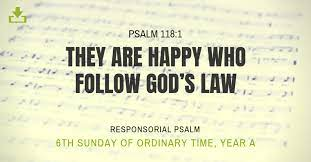
This weekend we celebrate the feast of Our Lady of Lourdes on Saturday as well as the world day of Prayer for the sick. We remember  in a special way all those who are sick in the places where we live as well as all those caregivers who look after them.  Following two Sundays of discipleship training we come to the discipleship that is the  easiest to understand. It is about compliance, about rules and regulations. The First  reading from Sirach sets the theme very clearly. “If you choose to keep the commandments, they will save you: if you trust in God you shall live. Before man are life and death, good and evil, whichever he chooses shall be given him.” That is a clear statement about will-power, choice. There seems to be nothing about using our heads to think, to discover meaning, nothing about growing spiritually, nothing about forming our personal characters. Just show me the rules, give me the commandments, let me know what behaviour is expected and I’ll choose life.

Stick to the letter of the law and we’ll be saved from an eternity of damnation and that’s what the pharisees in the Gospel for this weekend were all about keeping the rules and regulations.  In the Gospel reading for this Sunday Jesus tells us that he has come to fulfil the law not to abolish or replace it.  When he introduced the New Law of the Kingdom of God Jesus said something that was absolutely shocking to those heard what he told them that the holiness of the people had to surpass that of the scribes and the Pharisees. How could anyone be holier than the Pharisees who were supposed to be holy men”!  They dressed well, they fasted said their prayers loudly for all to hear. Jesus explains, our external actions must be a reflection of what we are really like. If what we do is not a reflection of who we are, then we are hypocrites. Hypocrite, is the word that Jesus uses over and over to describe the Pharisees. They were considered the righteous and holy ones who in truth were neither righteous or holy in so many ways.  Jesus’ challenge was not only to his followers, but to the Pharisees and scribes as well.  

Their religious faith was to go deeper than exterior works – the right motives were supposed  to support the right behaviour. His demands are high indeed!  They seem impossible to achieve. The Pharisee spent a lot of time and energy fulfilling the Law like so many people today the law was more important than compassion. They were of the middle class and unlike the desperately poor, who were most of Jesus’s followers, the Pharisees had the education and leisure to pursue the purity of observance. What chance did the illiterate, overworked and burdened poor followers of Jesus have? For that matter, what chance do we have in fulfilling these teachings? Jesus’ demands are more radical; his vision sharper; his expectations greater in regard to  looking after his  poor illiterate, overworked and burdened followers. When we see our own record of doing good against the demands of Jesus in the Gospel, we all come away feeling helpless. Our own efforts look so shabby against the clear unambiguous demands of the larger vision that Jesus had.

May we be courageous in taking up the challenge that Jesus vision gives each one of us today that is the call to live our lives so that everyone will see that we are faith filled people who live our lives with the compassion of God for those around us in our hearts and that we are not afraid to show it.
5Th Sunday in Ordinary time

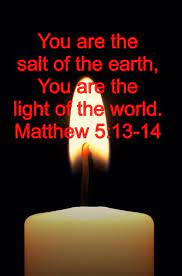
In this weekends Gospel  passage Jesus speaks again in the present tense, “You are the salt of the earth.You are the light of the world.” It is very common these days, upon entering a church or religious institution, to see the community’s “Mission Statement” prominently posted. Usually, such a statement is the result of a prayerful dialogue by the community to arrive at a description of its identity and mission in the light of the Gospel. Jesus’ mission statement to us, his followers, fits the requirement of a brief, focused and easily remembered summary of our task. Even those who don’t read much scripture can quote today’s teaching, “You are salt of the earth….You are light of the world.” Jesus begins to describe the task for his disciples by using two images. We are to affect the world the way salt and light affect their environments.

 Salt seasons food, and in Jesus’ world, it was used as a preservative. It kept food from spoiling. Light removes or pushes the darkness back.  Even one lighted match can be seen at a distance on a dark night. With the salt image comes a warning. “But if salt loses its taste…it is no longer good for anything but to be thrown out and trampled underfoot.” that means that if we loose our ability to show we are people who believe in Jesus then we will be trampled underfoot by the faithless secular world We must change what needs changing in ourselves and the world around us to be the salt of the earth that brings the saltiness of faith to other people. Remember the saying, “If it were a crime to be a Christian, would they have any evidence to convict you?” Would the charges against us  be upheld and what exactly would we be convicted by?

 The danger for the church and us  its members  is that, being in the world, we can take on worldly ways and lose our “saltiness” of faith. As salt of the earth we are called to draw out goodness in the world by supporting what protects, nourishes and enhances life, while rejecting what limits or destroys it.  If we cannot bring about better conditions through  everything we do and say  then Jesus is right, we are salt without flavor and useless for his purposes of passing on the good news. In this Gospel reading Jesus urges those who had just heard His teaching on the Beatitudes not to “light a lamp and then put it under a bushel basket.” No, “your light must shine before others, that they may see your good deeds and glorify your Father in heaven.” We need always to look outward to those who are looking for light, as well as to those who have given up hope of ever finding it!  As we hear the challenging call that  Jesus gives us we can feel what those first disciples must have felt  we are not large or influential enough to affect the world and resist the powers that “run the world’s affairs.” On our own, that’s true. But remember we are not on our own.  Through Word of god and the Sacramental life of faith we are formed and reformed by God. We strive, with God’s grace, to live out the gospel mission statement to be salt of the earth and the light to the nations as we go forward in faith and hope.

4th Sunday in Ordinary Time

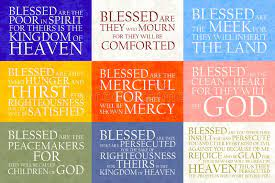
This week we have been taking part in Catholic Schools week, over these days we have been celebrating what it means to be a catholic  schools. We pray for our teachers, parents, grandparents and the young people  that make up our school communities where we are. The Gospel text for this weekend is the story that  we know as the ‘Beatitudes’. The beatitudes introduce Jesus’ teaching about the kingdom, discipleship, the true meaning of the Law and true righteousness (virtue), interior disposition of the heart against external fulfilment of Law, trust in God and keeping the Kingdom as the focus of the disciples life. In the ancient languages of Aramaic and Greek, the statements of blessedness are an exclamation of surprise and applause. “Oh, Blessed the poor in spirit.” This is acclamation, a shout of praise. The first Beatitude strikes the keynote for the seven Beatitudes that follow.  The decisive word in this first Beatitude is the word, poor.

The poor are called ‘blessed’ and ‘happy’ because God’s compassionate gaze rests on them. The poor in the Bible are the humble people  who bear a burden on their shoulders. They are given God’s favour and because of this they are  identified as just, meek and humble of heart. All kinds of attitudes are included in the eight beatitudes. The poor the weak, the gentle, those who mourn, the merciful, the pure in heart, the persecuted and the peacemakers. These eight blessings stand at the head of the Sermon on the Mount, pointing out eight ways in which we can welcome God into our lives. They are ways of living out God’s blessing. The first and the last knit them all together with ‘theirs is the kingdom of heaven’. Those who are called “blessed” or “happy” in these beatitudes can hardly be described as fortunate or lucky in the eyes of the world: the lowly, the mourners, those deprived of justice, those who are persecuted and abused. In structuring the beatitudes in the way he does, Matthew is not offering a programme that leads to worldly happiness; instead, he is describing what happens to Christian disciples when the kingdom of God breaks into their lives and our broken world.  The beatitudes speak of a variety of experiences that disciples undergo as a result of following  Jesus message. The result of this involvement might appear to the world as senseless suffering, but Jesus heaps loads of blessings on those who struggle to love and live the truth of the Gospel in their own time and place. Because of who he is Jesus will change us and others will change because they see the change that he makes in us. Without the person of Jesus, Christian discipleship is meaningless.

We are people of the beatitudes when we show the attitude of the beatitudes when we stand for the truth, for the marginalized, for the alien, for the victims of war, for the victims of  economic and political systems that serve only the capitalist when they should serve everyone.  We are stronger when we show that there is another way and that way is the way of blessedness that is proclaimed in the beatitudes. In that blessedness we remember the poor, the weak, the gentle, those who mourn, the merciful, the pure in heart, the persecuted and the peacemakers we who are the people of god inheritors of the Apostles are called to pass that blessedness on to those around us so the Kingdom of God will be theirs.

3rd Sunday of Ordinary Time

The Sundays of Ordinary Time lead us through the three years of Christ’s public ministry. Every Sunday we listen to the word of God in the Readings at Mass. Throughout the whole year we see the message of salvation placed before us as the scriptures tell us about the message of salvation. From the Angel at the annunciation to the birth of Jesus in Bethlehem. From the temptation of Jesus to the Last Supper in the upper room. From  the Cross of Good Friday and the resurrection from the tomb on Easter Sunday to Pentecost when the Church began with the Holy Spirit coming down on the Apostles. This the story of salvation and we are part of that story wherever we are today . We began last week with his identification as the Lamb of God by John the Baptist and this week we hear how he called the Apostles to follow him.

In our Gospel story  this Sunday we hear about Jesus calling Andrew, Simon, Peter, James son of Zebedee and his brother John to follow him. As Jesus travelled around Galilee, he built up a following. Biblical scholars speculate that the Galileans would network and form groups around social, economic, or religious issues. Even though the Romans put down revolts with brutal efficiency, large Jewish protests did influence  official decisions especially at the local level. There certainly  was strength in numbers. Part-time fishermen like Peter Andrew, James and John would easily leave their daily tasks, if the group they joined promised to protect and enhance their way of life.  Proclaiming the Kingdom was a message with political undertones for Jews and Jesus quickly amassed an audience. When Jesus heard that John the Baptist had been arrested, he left Nazareth and went to Capernaum. Herod Antipas was ruler of this territory. It is here that Jesus goes to take up the dangerous mission of John, to proclaim the coming of God’s kingdom.

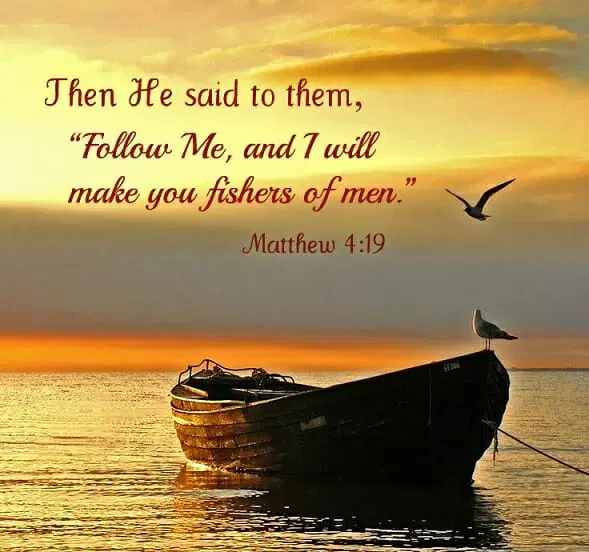
Jesus then proceeds to call Peter, Andrew, James and his brother John to follow him as disciples. Through Jesus, what has been spoken through the prophet Isaiah is at last fulfilled: “. . . the people who walk in darkness have seen a great light, God manifests Himself as ‘The Light’ that disperses the darkness and then the joy and happiness became real in Jesus presence amongst them. He is the promised light that has come into their  midst.  The light that shines brightly marks God’s first merciful and free step towards humanity. This gospel story is not just an echo from the past it is very much for us today as it was long ago. Are we listening to Jesus saying to us today, “Come follow me and I will make you fishers of men?” We are totally free to accept or refuse the  invitation for us to take up the vocation that is there for us.  Some people are called to the Priesthood, or Religious Life, others to marriage, or to the single life there are many other vocations in life all of them are  different and yet they are all calls that we are given and accepted freely. 

Each person had their unique role at the beginning of Jesus ministry  just as each of us have a unique role to play now. The fishermen abandon both their work, and their family ties. Something momentous is happening in their lives and they see the Call of Jesus as just that, a momentous event in their lives that they can’t ignore. It was amid the preoccupations of the day that the Lord called his disciples, and he called them by name. So the question to be asked of each of us is are we prepared to take up the call to be fishers of men where we are? Being fishers of men does not necessarily mean that we leave our families and our lives behind though many take up this part of the challenge.  As followers of Jesus the challenge for us is to be an example of faith in all we do and say and as a result of this we will be fishers of men because people out there will see how we live our lives and will want to follow us to see where we are going and when we get there all of us will find the lasting things of great value that are the things of God and his Church.

SECOND SUNDAY OF ORDINARY TIME

The lights of Christmas Epiphany and the start of the new year have all faded and are now a distant memory. As our lives grow more pressured, more tired, and more restless, perhaps more than anything else we long for “ordinary time,” quiet, routine and space away from the hectic pace of daily life and all that goes on within it. We’ve come from last Sunday’s feast of the Baptism of the Lord to the second Sunday of  ordinary time. In  our first reading for this Sunday Isaiah speaks about the task of the Messiah. He calls him a ‘servant’ of the people who will bring light and salvation not only to the tribes of Israel, but to the ends of the  earth. In The Gospel reading we hear  the words of John the Baptist the man who went before the Lord as his herald “Behold, the Lamb of God, who takes away the sin of the world!”  We know these words, so well for we hear them in Church when we are just about to receive the Body and Blood of Christ during the eucharistic celebration. 

The first Christian communities saw a clear difference between John’s baptism that immersed people in the river Jordan  and Jesus’ baptism that communicated his own Spirit, to cleanse, renew and transform the hearts of his followers. Without that Spirit, the Church would simply close up shop and die, but that spirit of Jesus has been the guiding light for over 2000 years right up to this present moment. Only the Spirit of Jesus can put truth and life into today’s Christianity and lead us to recover our true identity, leaving the  paths that lead us further and further away from the Gospel and what it teaches behind. Only that Spirit of Jesus can give us light and energy to light up the fire of renewal within  ourselves and the people around us  so that we can also become Christ’s authoritative witnesses in the world. Our baptism links us to Jesus as well as  the long line of his followers throughout the ages who believe in Jesus as  the Lamb of God and that his death and resurrection is the source of new life for all people. This is our inheritance born of them and we  are called to be, “a light to the nations”  like God’s servant in this Sundays first reading from Isaiah. The Love of God  is  made real to us through Jesus his Son, let us share our belief in Jesus and what he teaches with each other and everyone else we meet. We do that by living or trying to live a Christian life through  what we do and say. When we do that we will be able to say with John the Baptist that Jesus is the lamb of God that takes away the sin of the world, the Chosen One of God.’ Let us follow him.

Baptism of the Lord

This weekends  feast of the Baptism of the Lord marks the end of the Christmas season and the beginning of the Churches Ordinary Time. The first reading today foretells the coming of a messiah who will bring forth justice for the nations, firmly leading them from darkness to light: We are told that” He does not break the crushed reed, nor quench the wavering flame, until He establishes justice on the earth.” As Jesus began his mission, He must have been aware of this prophecy of Isaiah. He must, have been excited and a little fearful at beginning His great mission. Has journeyed to the banks of the Jordan, where a crowd surrounds a man in strange attire his cousin John the Baptist. In the Gospel we hear that Jesus beholds His own cousin with whom He had played as a child. They meet in a solemn moment as all see John stare, then greet Jesus warmly. And Jesus asks John for baptism! John protests that’s for sinners!”, and Jesus, seeking full solidarity with  humanity, urges John, “Give in for now.” And John does! As the water is poured over Him, the Spirit descends from the sky.

From the sky come the same words Isaiah had proclaimed hundreds of years before are heard again: “This is my beloved Son. Listen to Him!” And Jesus, rising up from the waters, assumes the role of Prophet of justice, truth, and love. He begins to gather other men and women who can share His mission. Just as Jesus entered the Jordan to be baptized, so he enters our scene of darkness and confinement in our lives today. He is the one promised to us in the prophet Isaiah, the one who will “bring out prisoners from their prisons.” He comes to those hidden places that keep us locked up. He goes to the imprisoned areas of our lives and our restricted ways of behaving which we sometimes excuse by saying, “That’s just the way I am.” Rather than be on the side-lines, Jesus comes down into the dark places where we are.  He helps us face the shadows and hidden places and leads us out  just as God promised he would do for us through the prophet Isaiah. Jesus’ baptism reminds us today that, through our own baptism, we are united to him. Most of us rarely, if ever, think about our baptism. Through our baptism we died with Christ and thus have been reborn into a whole new life ( Romans 6).  We, the baptized, are incorporated into the body of Christ.

We are called and enabled to imitate Jesus, whom Paul says, “went about doing good.” We don’t need a detailed rule book in order to know how we should act in each situation of our lives, for in baptism, we have the companionship of the Spirit of Jesus who is our wisdom, impulse and help to do good. Our role as baptized Christians has some of the characteristics of St. John the Baptist in that we also called by what we say and do  to prepare the way for Christ, not only in our own lives, but in the lives of others. We do this by the example we give of how we live our own lives of faith.  The church rejoices at the baptism of a person into the church as well as into their own unique relationship with Jesus, as they are sealed and marked as Christ’s own forever. Take a moment and reflect on where your own baptismal journey has brought you.  How has Jesus led you to use your talents and gifts for righteous actions? What has been joyful for you on this journey? Then look around at our sisters and brothers in faith, and give thanks that together we  can celebrate our life in Christ as we look forward to further adventures in the life of faith in 2023.

Mary Mother of God

As we end 2022 we pray for the late Pope Emeritus, Pope Benedict who passed away this morning May he rest in peace and rise in glory.  This Sunday we celebrate the Feast of Mary Mother of God. It’s an opportunity to honour Mary, the Mother of God, and our mother too, who said “yes” in the name of all of us. Her “yes” enabled God to take flesh in the Person of Jesus, who came as a humble baby who would grow and walk in our midst, proclaiming the good news of the Kingdom of God. Our faith cannot neglect a profound devotion to the Mother of God, as she shows us the easiest way to reach Jesus.  Mary is Christ’s mother, and since we are, through grace co-heirs with him, she is spiritually our mother as well. Supported by her prayers and encouraged by her example we can be helped towards responding positively to God. Mary was chosen to accomplish this astounding act of generous love. Throughout her life she had many secrets and treasures to store and ponder in her heart. With open eyes she watched the plan of God the Father unfolding; with a loving acceptance of God’s will,regardless of her personal happiness or safety she simply said yes to all that was asked of her.

This special relationship Mary has with God makes her the ideal person to pray to god for us as our spiritual mother.  But as we celebrate Mary as mother of God let’s not forget the shepherds who play an important part in the  Nativity story. Their story began with the angel’s visit to them in the fields. A new age was beginning with Christ’s birth, but the shepherds were afraid by the angel’s appearance. They were outcasts in their society. Their wandering life made them suspect: “Here today gone tomorrow” – and what did they take with them when they left town? They were treated like the dregs of society. When the angel showed up they must have thought that God’s wrath was about to come upon them. But, the first words they heard from the angel were, “You have nothing to fear” (2:10). Like the shepherds in the story, we too have had Christmas experiences, ones that have led us to believe in our hearts and live in our lives ‘what the shepherds had to say’. In the very ordinariness and humanness of that stable of Bethlehem, then, we have gained glimpses of God.

Once more. we who ‘walked in darkness have seen a great light’, the light shining on and from the Baby of Bethlehem, the source and inspiration of our hope, joy, love, and life.  During Christmas we are reminded  of the mystery of Mary as Mother of God, mother of the Incarnate Word, and mother of His mystical body, the Church.  In the Rosary Basilica in Lourdes the inscription on the mosaic over the Altar is to Jesus through Mary and the mosaic shows Mary with open arms, again at the wedding at Cana Mary told the attendants as she tells us do whatever he tells you. Mary did not take any of her sons glory for herself she points away from herself to Jesus and tells us to do what he asks us to do. These are two pointers for us in our modern day as to what we should do in order to follow the light of Christ. Mary is often given the title ‘Queen of Peace’ and today is also World Day of Peace. We know that sadly there are wars , threats of wars and many people and countries suffering because of violence and random acts of terrorism. Sadly some of these acts of violence take place in our own communities and in our own streets.  This weekend we pray to Mary, Mother of God, and Queen of Peace, to help us play our part in breaking down barriers of hate and fear and become bearers of hope so that we will be able to bring the Light of Christ out to the world at Christmas and throughout the new year 2023.

CHRISTMAS DAY 2022

At Christmas the Christian Churches throughout the world celebrate the Birth of Jesus Christ  The Scripture readings of Christmas tell us “The Word was made flesh and dwelt among us.” And the Angel tells us ‘Behold, I bring you news of great joy for all the people. To-day a saviour has been born to you; he is Christ the Lord.’ Every Christmas this marvellous message is announced to us too. Throughout the Advent season we have waited for the coming of our Savior. Now we celebrate His birth with unrestrained joy. But as joyful as we might like to be we remember that for a large number of people Christmas is not a happy time. We also  remember that in many places  things are not as good as they could be. During the Christmas season there is an extensive exchange of greetings and good wishes among friends. These greetings are a reminder of those “good tidings of great joy that shall be for all the people, for this day is born to you a Savior Who is Christ the Lord” (Lk. 2:11).

They are a reminder, too, that all blessings and graces come to us from God. During the Christmas season there is also an exchange of gifts. But with the exchange of gifts comes the responsibility to remember those who have little or nothing at all in terms of a roof over their heads and food in the cupboard especially this year with the current financial hardship that many people are having to deal with. At Christmas we celebrate the consoling truth that God came among us in Jesus. At Christmas we celebrate the great truth that God is not wrapped in silence, but wrapped in swaddling clothes and laid in a manger. In the infant Jesus we see the one who will show us how close God is, who will teach us how to call God “Abba”, and the one who will die on the cross to prove the measure of God’s love for us. Christmas is a great celebration of our faith in Jesus the Son of God our saviour. We gather to celebrate light in the midst of darkness; we celebrate the new hope that Jesus has generated in people down the centuries. He is our light; he is our hope.

When we want to know God, it is to Jesus that we turn; when we want to worship God, it is through Jesus that we sing  our praises.  We give glory to God in the highest for revealing himself to us. All of us  and many millions of people since the birth of Christ, have a new way not just of understanding life but of living it. It is a truth of history that for more that twenty centuries untold numbers of people have, have been caught up in the message, of Jesus the child from Bethlehem and have had their lives profoundly changed by him.  We are numbered among them here and now whoever we are wherever we are. At Christmas all of us  are invited to take the Christ child and welcome him into our hearts. In Jesus we have the sure and certain proof that God loves us, and we all need to live in the assurance of that love. Let us rejoice over this Christmas season in the one who reveals the face of God to us, Jesus  who is Emmanuel  the Son of God who is God with  us.

4th Sunday of Advent

This weekend we come to the last Sunday of the Advent season. In our churches we light the last purple candle leaving the white candle for the Midnight  Mass of Christmas Day. It’s only in this last few days  before Christmas that we begin to hear about the “Christmas story” itself. For the past weeks we have been preparing ourselves to greet the Lord, when he comes. Now we prepare to remember how he first came, by listening to the prophecies of his coming, and by listening to the stories of scripture about the events before Jesus birth. In the first reading for this Sunday Ahaz sounds like the great model of faith. We are taught not to tempt God by asking for signs to prove our faith. If we got those signs we wouldn’t have faith! God, speaking through Isaiah, invites Ahaz to ask for a sign–any sign from God: “Let it be deep as the nether world, or high as the sky!” Ahaz refuses saying, “I will not ask! I will not tempt the Lord.” Good for Ahaz, he is showing great faith in God.

He doesn’t want any proofs from God; he doesn’t want to test God–or so it seems. He will not ask for the sign; he will not put his and the nation’s security in God’s hands. But God decides to give a sign anyway: “The virgin shall conceive and bear a son and shall name him Emmanuel.”  The promise found in Scripture will be fulfilled.  By referring his readers to the scriptures, Isaiah reminds us that believers do well to put confidence in the word of God in order to sustain hope and strengthen faith in discouraging times such as we are in these days. God enters into our world: it’s a world where plans don’t always work out and where people have to adjust to the reality presented to them at the time. We  meet Mary in the Gospel for who had been prepared for the coming of the Messiah. She has received the angel’s greeting, and his strange news, and accepted her role in God’s plan Matthew is well planted in his Jewish tradition. He shows that from the very beginning of his gospel. Joseph was betrothed to Mary; Mary’s pregnancy turns Josephs world and his plans upside down.

Instead of exposing her, he “decided to divorce her quietly.” He was a “righteous man” and he will protect Mary from being publicly dishonoured. He is not vengeful and, though wronged, displays mercy. After his dream when the angel told  him do not be afraid Joseph took his wife into his home. The world God chose to enter was one of poverty, hard labour and political and military oppression. God took a big chance being born among us especially in those circumstances. Surely there must have been neater options for God, to make the saviour’s path and work a bit smoother. But who has a “smooth path” through life none of us that’s for sure? It’s good to know that Emmanuel, “God with us,” chose to be with us his people who live in  the real and messy world. God is with us in the mess of our daily lives!  We began Advent with the cry, ‘Come, Lord Jesus’. We will end it with the joyful  Christmas call, ‘God is with us! Our Advent journey has asked us to: stay awake to the coming of God, as well as preparing ourselves to receive the Lord, and to receive him with faith and love when he comes.As we look forward to the Christmas Celebration there is much to be thankful for even in our messy world with all its problems. The real message of Christmas is about God’s loving kindness, his compassion, his mercy, and his abiding, living presence with us who is Jesus the son of God Emmanuel who is God with us.

Third Sunday of Advent

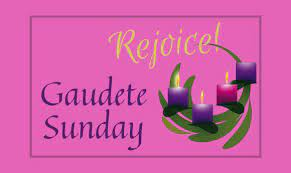
This this weekend we celebrate Gaudete Sunday. The term Gaudete refers to the first word of the Entrance Antiphon, “Rejoice”. Rose vestments are worn to emphasize our joy that Christmas is near, we also light the rose candle on the Advent wreath. In many places the Parishes celebrate Bambinelli Sunday when the Children are asked to bring the baby Jesus Crib Figure to get a special blessing and then they place the baby Jesus in a wee bag and place it under the Christmas tree until Christmas morning when the put the baby in the Crib. In these weeks before Christmas our reflection and prayer focus our minds on the various ways that the Lord is near to us: he is the One who is continually coming into our world with his good news of peace and joy.  The readings for this Sunday, express this theme of rejoicing at the imminent coming of the Lord.

When John the Baptist was in prison, he heard about the things Jesus was doing; so he sent his disciples to inquire: “Are you ‘the one who is to come,’ or do we look for another?” Jesus said to tell John “what you hear and see: ‘Look around you’, they are told. ‘The blind see, the lame walk, lepers are cleansed, the deaf hear, the Good News is proclaimed to the poor and happy are those who believe.’ We rejoice that through the coming of his Son Jesus we have been saved. We do our best to follow his Gospel as we wait.  We wait with hope in our hearts for the culmination of all things in Christ and the prayer that is on our lips is ‘thy kingdom come!’ We expect much from the Lord who gives us much. His gifts challenge us to pass them along to others. As Jesus has freed us from need, so we, too, must free others from need. Sometimes, however, all we can do is stand in awe as we see god working through the people around us. We remember all those organizations such as the Salvation Army and the St. Vincent DePaul who do so much good at this time of year for so many people.  

Many in our world live without this expectation, without hope. Some believe but live with dread and fear.  But at each mass, we are verbally reminded of the blessed hope of the coming of our savior.  The Church continually presents the hope of his coming and his work of redemption as we go through the liturgical year.  Advent is the season of expectation. It is a time when all of us young and old make lists of what we have to do or what we would like to find under the Christmas Tree. But Advent means more than that. We anticipate and hope for renewal and deepening of our faith during this time when we are looking forward to the coming of Jesus at Christmas to give us sight where we are blind-to open our ears to what we have not heard to cleanse us of the past that weighs us down in order to make us bearers of his good news to those who need us. The customs of the advent season are announcements of one single message: Christ is born for us, so let us rejoice and be glad. As Christmas approaches we pray that we will be strong in faith  and hope as we await the coming of the lord for he is near.

Post Navigation