Fullerton T

RELIGION LITURGY AND LIFE

26th Sunday in Ordinary Time
It is hard to believe that we are nearly at the end of September as the schools and everything else settle into the rhythm of the new academic year. This Sunday the gospel story tells us about two people, a rich man and a poor man it is a good reflection on the situation in the world at the present time where those who are rich are getting richer at the expense of the poor who are getting poorer. The rich man is wealthy in clothes and food; he is also rich in privilege and  freedom he is free from the worry that besets those who are poor even though he was poorer than the poorest man because of the way he lived his life. You can imagine Lazarus praying: “Give us this day our daily bread.” But he didn’t get  a crumb. You cannot imagine the rich man praying, “Give us this day our daily bread.” Because the privilege he has blinds him to Lazarus the man who lies at his own gate.

As we see both men eventually die.  Lazarus went straight to heaven to the joy  of endless happiness.  On the other hand the rich man fares very differently. He is now in Hades and he is told that he can expect no relief. He abused his time on earth he acted as though there would be no judgment day of course there was. He knows that he has no one to blame but himself which adds to his torment. It is also a cause of additional grief to him that his bad example will lead his fellowmen to a similar fate. All the parables of our Lord are based on everyday happenings and they can be applied to us in our daily living even now.  This rich man is in eternal torment because he let his wealth become his master and forgot God and his neighbor. There are people like the rich man in our world who completely ignore their real future. While they know that their stay on this earth is of very short duration and that they will have to leave it they still act and live as if they had a permanent home in this world.

There is a lovely scripture verse that tells us that when the tent of our earthly dwelling is folded up we will come to our true home in heaven and this is so true. For all of us today there is a simple question are we going to be like the rich man and ignore those around us who are the Lazarus’s of our own time and place. The homeless, the refugees or those who don’t have enough daily bread. Or will we follow Jesus who calls us in the story of Lazarus and the Rich Man to share our riches with those who need our help and the help of a caring sharing community of believers and not be like the rich man who ended up with nothing of lasting value.
25th Sunday in Ordinary Time

As we come to the funeral of Queen Elisabeth on Monday we also remember all those who have passed to their eternal rest in the days since her death.  In the parish where I live there have been 4 funerals this week and we pray that all of those who died recently wherever they are will rest in peace. Our gospel story for this Sunday tells us about the rich Man and his dishonest steward. The steward who looked after his master’s estates is accused of wasting his employer’s goods; he is dismissed, but before he goes he must submit the final account of his stewardship.  In this time of crisis the steward takes firm and immediate action to ensure his own future. He is praised not for his dishonesty, but for his resourcefulness in coping with an emergency with such speed.  If a dishonest man can use his employer’s money to ensure there will be people to welcome him when he’s out of a job.

How much more should honest people use their money in such a way that they will be welcomed into the kingdom of God when they arrive there. This parable invites us to examine our use of material possessions. Material things can divert our attention and in some cases they can take the place of what truly matters in life. These particular words of Jesus are a warning to us his followers that we shouldn’t be the slaves of earthly things and this is applicable to all of us. Most of us may feel that this warning is for millionaires and business magnates. Our Lord didn’t say who he was warning and his words are meant to be a challenge for all of us where we are. What Jesus warned against was not the just acquisition of things but their unjust acquisition, and the dishonest use of them when they were justly acquired. Christian life is a stewardship in which the wealth that one handles is wealth God wishes the whole world to share, not one’s personal possession.

The followers of Jesus must choose wisely and act decisively. When it comes to wealth, they must choose between the interests of God and their own self-interest. There are many people who follow the thrust of the parable and make good use of their time, their talents and their wealth. They use their possessions to serve Jesus through the people around them treating the  as sons and daughters of God.  Stirred by this gospel story  they decided to act quickly and decisively to help others. Jesus asks all of us to remember no matter what situations we might find ourselves in that we shouldn’t become slaves to the processions or wealth that we might have and that we shouldn’t be afraid to use whatever our we have for the good of everyone especially those in need and there are many people who are in need around us these days when we have the cost of living and the fuel price crisis. May we take this parable to heart as we help others and journey with them in their time of need.

24th Sunday in Ordinary Time

This weekend we pray for the happy repose of the soul of Queen Elisabeth the second who died on Thursday may she rest in peace. It is hard to believe that she was head of state for the UK and the commonwealth countries for 70 years and now we have King Charles the third and we wish him well in the task ahead. In our reading from the Gospel of Luke on this Sunday we hear the story of the Prodigal Son. This story is about the mercy of God  as well as us seeking the mercy of the father. Many people today become so entrenched in their opinion on many subjects that they see no other point of view apart from their own and find it impossible to come back or start to take the steps to return. At times the steps necessary for our walk back to the Father may seem too many and too arduous for us and we hesitate even to make the first move.

Perhaps it is only when we see, like the Prodigal Son, that we are then willing to rouse ourselves to say sorry  and to take the path of conversion that leads to the merciful embrace of our heavenly Father. When we make even the slightest effort in sorrow, with God’s grace, it is then we see the Father waiting with love to embrace us and welcome us home.  Rejection of the love and presence of his father, in the communion of life and love as a family, was a terrible choice for the prodigal son. He desired things over people, his share of the inheritance in preference to a life in communion with the father who gave him life and loved him. He wanted the father to be as if dead to him. Having said that let us remember that God celebrates every time  that we return to him.  Jesus said, “I tell you that there will be more celebration in heaven over one sinner who repents then over ninety-nine righteous people who have no need of repentance.” 

 The tax collectors and sinners did not come to hear the  Pharisees and scribes, because they knew that they would find only judgment. They came to hear Jesus, because he was happy that they wanted to change their lives.  God did not give up on them and he does not give up on us in the ever present difficulties of our daily existence. He will not give up on us, calling us to him personally Seeking us out. Nor does He give up on anyone, even those who have been far from the faith.  He calls us all to join Him in the joy of His Presence, the Joy of the Banquet of  the Lord. The return of those who have had been away is a time for celebration. The cause of their leaving no longer matters.  They have returned. The family is back together.  We need to celebrate. We remember that no matter who we are or what we have done  all of us need the loving mercy of God in the same way as the prodigal Son needed the mercy of his Father who welcomed him back with open arms.

23rd Sunday of Ordinary Time

This week the local schools went back and the parents breathed a big sigh of relief now  that the summer holidays are over for another year. Its hard to believe that we are beginning another school year but that’s the nature of life from one end of the year to the next we go round in the circle of life. In this Sundays first reading the author of the book of Wisdom reflects that it is hardly surprising that we have trouble figuring out the intentions of God when we have so much trouble figuring each other. He warns: “It is hard enough for us to work out what is on earth, laborious to know what lies within our reach.” There are times when those within our reach puzzle us. Even though God has revealed himself through his Holy Spirit, nobody can claim to fully understand the mystery that is God. In the Gospel there is plenty of figuring out to be done too. Jesus gives people notice that they have to work out for themselves if they are equal to the demands of discipleship. That means that first they have to figure out the cost of discipleship, then consider whether they have the resources to meet that cost.  

To drive the point home, Jesus uses twin parables Anyone intending to build a tower would “first sit down and work out the cost”. If he started without finishing, the sum of his achievement would be a monument to his own stupidity. Likewise, the king who discovers that his forces are outnumbered would “first sit down and consider”whether the opposing arithmetic is too heavy. If he wants to be a smart survivor he will practise his speeches on the wonders of peace! In both instances the advice is clear: take the time; sit down; look at the demands; figure out whether you can honestly meet them.  Much of our lives involve figuring out what is within our reach and what we ourselves can realistically achieve. So the moral for all of us in these days of uncertainty is that when we come to make life changing decisions we need to stop and do what this gospel tells us and that is to take the time; To look at the demands the decision to be made will make on us as individuals and communities; and figure out what is within our reach and what we can realistically achieve that will help us to go forward in faith and in hope rather than backwards in fear and despair.  As we look at the way we are with all that is going on in our world let us redouble our efforts to support one another so that we are able to see what needs to be done and get on and do it.

=

22nd Sunday of ordinary time

This Sunday we celebrate the 22ndrSunday of Ordinary Time. This is a time for new beginnings with the youngsters going back to school or college next week and their  parents breathing a big sigh of relief that the long holidays are now at an end. Many of us have the feeling that time is passing by so very quickly and it seems like a blink of an eye since the end of June when the schools and colleges closed.The  readings  for this Sunday are all about humility, a virtue that doesn’t seem to be valued that much in our world. These days, it’s all about how many “friends” we have on Facebook, how many followers we have on Twitter. But for all of today’s technology we can still pick up on someone whose humility is done for show, whose humbleness is not the real thing and there are people like that around and about. Humility is about: being real, being grounded. Accepting and sharing our gifts as well as acknowledging our  faults.

We thank God for all the things that he has given to us It is his grace that produces the right attitude within us to live in a humble way. This  involves the giving of one’s time, talent, and money for the common good without thought of personal gain.  In this Sundays  Gospel Jesus is at a meal in the house of one of the leading Pharisees. He has noticed an undignified scramble for the places of honour and is moved to comment on what he sees. When a guest arrives early at a feast to appoint himself a place of honour, his position is insecure because he runs the risk that a later guest will have more claim to his place. And when the host insists that he vacates the place, he will have to pass all the other places already occupied and take the lowest place.  Jesus advises that his listeners take the lowest place at table – then the only risk they run is that of being exalted! Since it is the host’s party, he should decide who sits where. When Jesus addresses his host he advocates a more radical style: learning humility not so much by playing musical chairs at banquets, but by associating with “the poor, the crippled, the lame, the blind”.

The guest list for Jesus’ feast is a parable of the kingdom: God is the host whose delight is to feast with those who are always overlooked in a society that scrambles for honour and the best places at the table.  St. Augustine once said, “Humility is the foundation of all the other virtues; hence, in the soul in which this virtue does not exist there cannot be any other virtue except in mere appearance.” Real humility takes awareness and acceptance of our real selves with all the aspects of our lives both good and bad that is why humility is so hard for us to achieve. May we be the Humble people that we are called to be accepting our real selves so that that we may use our  God given gifts wisely in the service of others.

21st Sunday in Ordinary Time

As we gather this weekend we remember all those who have received or will be getting  state exam results over these next few weeks here where I am. We offer a prayer for all those who have done well as well as those who have not done as well as they continue their education. In this Sundays  Gospel Luke tells us about the door policy of the kingdom of God and how there is no such thing as automatic membership. While Jesus is making his way to Jerusalem, someone asks him about the number of those who will be saved. Rather than speculate about the arithmetic of salvation, Jesus gives practical advice to all of them: “Try your best to enter by the narrow door, because, I tell you, many will try to enter and will not succeed.” The image changes from tight space to time up.  

Those who wait until the door is shut try knocking, but the householder regards them as strangers. The latecomers tell the householder about  the common ties that bind them together. They are distressed because they are being excluded, the people in the story try to prove they are part of the group when they say  “We ate and drank with you, and you taught in our streets.” Jesus like the house owner is not impressed with this type of superficial acquaintance: people who eat and drink in the same restaurants and bars, read the same papers, watch the same TV programmes, don’t always  share the same commitment to God and their faith. In the gospel stories Jesus has a habit of telling religious people not to be smug; in fact, the so-called “devout and religious” were the ones who rejected Jesus the most.  He was most critical of the judgmental religious leaders who were the very ones to condemn him in Jerusalem. Jesus is our example of the faithful person who goes through a period of trials trusting God no matter what happens. Through Jesus we come to know the faithfulness and love of God.

For Isaiah, a faithful band of witnesses will announce the news of God’s restoring love and they invite all of us  to see the manifestation of God’s power and faithfulness. For us, Jesus is the “sign” of God’s fidelity and love for us . The God who raised him from the dead offers us that same new life through him.  Saint Pope Paul VI said in his famous encyclical, “Evangelii Nuntiandi” that people listen more to witnesses than to teachers. Pope Paul was also right  when he said that the most convincing messengers of our faith are those who speak from their personal experience of God. We are called to be authentic witnesses to the Gospel message Passed down to us through the Scriptures as well as  many individual people. Our lives must be changed by our faith in Jesus. We are given the gift of faith; but a change of heart is expected as our response to that gift so let us not be afraid to change the things in our lives that need to be changed  remembering to give thanks for  the great gift of faith that is ours so we will be able to enter through the Narrow Door knowing that we have Jesus as a friend.

20th Sunday in Ordinary Time

In the gospel for this Sunday Jesus says, “I have come to set the world on fire and how I wish it were already blazing.” Jesus is ready and willing to face the hardships that lie ahead his words must have unsettled the people around him. It doesn’t sound like Jesus meant that the practice of our faith should make us comfortable, guarantee harmony or tranquility. Indeed, as he predicted, belief in him would cause the most severe conflict, even in the close-knit-family world of his Mediterranean followers and this interreligious conflict continues today in many places throughout the world especially in the Holy Land.

Jesus is zealous about his mission; He has a task to complete and will follow it through, despite the threats to his personal safety. Jesus refers to his fate as “a baptism with which I must be baptized.” He sees his passion as a baptism which he will accept and which will set a fire upon the earth. Remember when John the Baptist spoke of Jesus he linked baptism and fire, “He will baptize you with the Holy Spirit and fire”. When our lives get difficult, for any reason we are tempted to think that the Holy One is asleep behind a closed door. We feel very much on the outside. At these times it’s important to remember that Jesus the Son of God is with us throughout the turmoil we may have as a result of the hurts and hardship that life throws out to all of us on many occasions. Making decisions on the journey of life is a natural process for us; we make many of them each day. Our senses take in all kinds of information some of which we accept, some we discard and much, we are not aware of.

Our minds move us to a yes or no that is what the will does. So our imaginations can present data to our minds for a choice as well.  So a faith based decision to walk the ways of Jesus needs some information which Jesus gives his disciples, t and the same information  is given to us through the scriptures the word of God that we hear every Sunday when we come to Church. The faith that Jesus calls us  to is the  faith that leads us to live lives which reflect the life of a believer in Jesus and what he teaches. It is much easier to follow from a safe distance and not let our lives be challenged and changed by faith in the Son of God. It is very easy to let the bitterness of others take us over but at the end of it all Jesus went to the Cross to overcome all the hatred and bitterness that we see around  us. Remember that the words of Jesus are there to afflict the comfortable and comfort the afflicted. Faith was not easy at the beginning of the Church and isn’t easy now the martyrs throughout history right up to our present time bear witness to this.

 If we stop and look around us even now there are people who are prepared to give everything they have including their lives for the faith. Following  Jesus is not easy and we have to work at it for anything that is worth doing or being part off will never be easy.  Today we are called to follow were God leads us in faith and he will do the rest for nothing is impossible to the Father who journeys along with us in the good and bad times of our lives.  

17th Sunday of Orinary Time

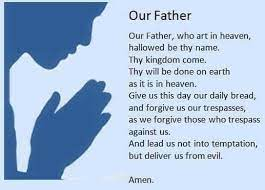
As we hear the apostles asking Jesus to teach the to pray we pray for all the intentions we bring to the Lord this weekend. There are so many things  that everyone is praying for but we continue our prayers for Peace in the world especially in Ukraine we also pray for peace and unity in the Church at this time as we remember that God is in charge. In The Gospel this Sunday we hear the disciples asking Jesus to teach them to pray. In response to this request Jesus teaches them how to pray in the words of the our Father. He also encourages them to be unwearied in their prayer because the Father who loves them will pay attention to their pleas.

Prayer is good, because it shows trust in God. As we pray, we are changed as the Our Father says thy kingdom come thy will be done and that is our hope and our prayer that the kingdom of God will come and gods will shall be done. Many people have told me that they have prayed for this or that intention but didn’t get that particular thing that they prayed for. My experience is that we often get the thing that we pray for not when we think we need it but when god knows  that we really need it.  There are so many different forms of prayer such as the Rosary and the Stations of the Cross etc. each of us will have a particular favorite. The greatest example of prayer that has been passed down to us through the generations is the Mass.  Each time we gather as a community of believers to take part in the Mass we reaffirm our belief in God made incarnate in Jesus his Son. We also bring all our intentions with us and we leave them for god to answer in his own time. Persistence in prayer is a worthwhile exercise because the God we believe in is not some sulky, withdrawn figure who is unmoved by what he hears and sees remember that our God is with us.

The message of Jesus in the our Father is that our God is one who cares for us as well as concerned about us and those who are close to us. So can we depend on God’s providence to feed us, to shelter us, to clothe us, to save us from violence? If we pray hard enough will God see to it that we have a new car, a better house, maybe win a lottery? God Doesn’t work for us in that way. When things don’t go the way they should, we benefit from our prayers. Think of Jesus in the Garden of Olives. He prayed what was coming his way would not happen. He also added he would abide by God’s will when he said Abba, Father let it be done as you not I would have it. If we stay in sync with the will of God and realize that he is in charge of everything  we will grow day by day, despite the good or bad things that come our way we will know that God is our refuge and our strength in all things.  These days when so many parts of the world are hurting for many reasons let us remember the power of prayer to help us to do the right thing in the situations we might find ourselves for God will direct us along the right road as we pray to him with a sincere heart.

16th Sunday in ordinary time

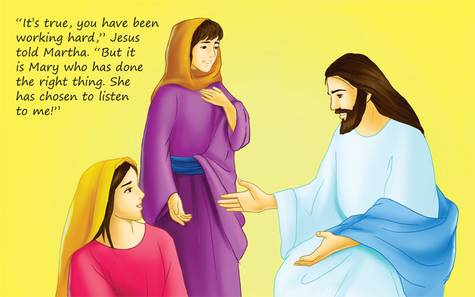
Wherever we are these day the summer holidays are in full swing with many people going to foreign destinations and many more staying at home.  All of us are sweltering in the hot weather that is in Europe at this time. We pray for all those in France, Portugal and Spain who are affected by the wildfires and we also continue of prayers for Ukraine and its people.  In our Gospel reading for this Sunday we hear all about Martha and Mary. On his way to Jerusalem, Jesus led his entourage into the village to call at  the home of Martha. As the good host, she served them but, her sister, Mary, sat listening to Jesus. Martha tried to shame Mary into helping with the work but Jesus would have none of it.

Instead, he praised Mary’s choice when he said leave her alone for she has chosen the better part. Martha loved Jesus as much as Mary did, and it is clear that he treasured them both. Her mistake was in not trying to find out how Jesus wanted to be entertained, while visiting her house. Her sister correctly senses that when Jesus comes on a visit the last thing he wants is to have people fussing over how to feed him.  So, while Martha makes the greater housekeeping effort, Mary understands better what is expected of her by Jesus. Her contemplative intuition grasps the real reason for Jesus’ visit.  He is there not to receive but to give, not to be served but to serve. He has something he needs to say and the one thing necessary is to listen to him when he speaks.  There is a whole theology of contemplation in this gospel reading, on how to receive the Lord’s visit. It starts off from the basis that, no matter who our visitors may be, there is always something to be learned from them. When Jesus comes to us he wants to talk to us in quietness of  our hearts and he wants to share with us the Word that brings us salvation. He comes not because he needs us but because we need him.

The one thing that is necessary for all of us, is to listen to the Word of God in the quiet moments of life and there like Mary in the Gospel  we will  find the better part. Martha’s roles of welcome and service are important works of the church as we welcome the Lord in the stranger and person in need especially these days when we have refugees coming to live in our midst from Ukraine and other places in the world.  There were many gifts among women in the early church, some like Mary  were quiet disciples attentive to the words of Christ; others like Martha were active in getting the work done. In their own ways, both Martha and Mary welcome Christ, each has apparently heard his teachings and shown love to God and service to neighbor. If we are to make people welcome in our community it will be by being attentive to who that person is and what they seek rather than giving them the impression that their presence is disrupting our well ordered lives.  let us not be afraid of being like Mary in the Gospel attentive to what Jesus is telling each of us today and then may we  take action to put it into our lives where we are.

15th Sunday of Ordinary Time

This weekend we celebrate the 15th Sunday in ordinary time and we pray for all the intentions that our families and the people around us in our communities have and we also continue our prayer for the peace of the world as well. In our Gospel reading for this Sunday Jesus is asked the question ‘who is my neighbor?”  When I was a youngster your neighbours were the people that lived next door to you or those who lived in your street or road they were the families you would go to when you ran out of milk or sugar to borrow some or to share the news about the people and happenings in the area.  The Gospel story also tells us about the Good Samaritan it is a story that all of us are familiar with. It was the Samaritan who stopped with the man who was lying on the side of the road it was the Samaritan who was moved with compassion to help him. The Priest and the Levite walked on and passed by on the other side of the road because they felt that it was beneath their dignity to help the man. What does our Gospel story tell us about love for one’s neighbor today?

First, it tells us that we must be willing to help even if others brought trouble on themselves for whatever reason. Second, our concern to help others must be practical, and lastly, our love for others must be as wide and as inclusive as God’s love for us.  We remember that God excludes no one from his care. So we must be ready to do good to others just as God is good to us. Jesus not only taught God’s way of love, he also showed how far God was willing to go to share in our suffering and to restore our wholeness in life and happiness. Jesus overcame sin, suffering, and death through his victory on the cross. True compassion not only identifies and empathizes with the one who is in pain, it also takes that pain on in order to bring freedom and restoration.  Our world is mor inclines to do  things that hurt more people You only have to look at the war in Ukraine to see that. We are members of the community of nations that make up our  world so we cannot pretend that it’s got nothing to do with us for it has everything to do with us as Christians.

In these days with a lot of turmoil and confusion in the world the  words of the first reading ring in our ears obey the voice of the Lord and what is the Lord asking us to do ? we are being asked  to reach out in order to show friendship to our neighbours and those who have come to be our neighbours from other places. At the end of the Gospel Jesus askes the Lawyer Which of these three, do you think, proved himself a neighbor to the man who fell into the brigands‘ hands?’ ‘The one who took pity on him’ the lawyer replied. Jesus said to him, ‘Go, and do the same yourself.’ There it is in the readings we as followers of Jesus today are asked to go and  do the same as the good Samaritan to show compassion and not to walk on by like the Levite and the priest.  

Post Navigation