Fullerton T

RELIGION LITURGY AND LIFE

11th Sunday in Ordinary Time
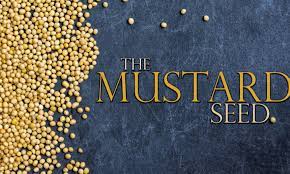
This weekend we celebrate the 11th Sunday of ordinary time as we continue to slowly get back to a sort of normality after COVID19.  Jesus seemed especially fond of using parables and we hear once again the parable  of the mustard seed the ancient Middle Eastern parable is an explicit comparison of one item or one person to another. Jesus’ parables tell his listeners what God is like by comparing God the father and what he might do to something familiar and known to the people from the culture of the time in this case the wee mustard seed. The faith that we have handed down to us through the generations is represented in this Sundays Gospel by the mustard seed and that faith is something that all of us need to nourish. When the seed that is the Word of God takes root within us the Kingdom grows. We are called upon hearing the Word to meditate upon it in prayer so that it may take root in us and bear fruit.  We are usually helped by books, and Christians do not want for them: the Sacred Scriptures, particularly the Gospels, holy icons, liturgical texts of the day or season, writings of the spiritual fathers, works of spirituality, and that of history the page on which the ‘today’ of God is written.

The parable of the seed shows us that there is an almighty power working for us through the smallest thing the mustard seed. Our part is simply to do a good job preparing the soil of our hearts and then when the seed is  planted within us we let God take over.  The word  of God calls for a lot of hard work, especially during these post-pandemic days when we are struggling to understand what has happened as we move forward. We are challenged to apply ourselves where we see the needs are, which might be as close as in our own homes and streets right where we live. As we work we will see the Church continues to grow; for the Lord, not people, gives the Church spiritual growth. The Church will adjust and flourish in the future just as it has in the past as it rises to the challenges of daily life.  When we are confronted with all kinds of things that run against what we believe in  we should not despair, the Church not only lives on through the muddle and the mire of the world, it actually grows.  We also grow like the mustard seed slowly and surely as long as we do everything possible to stay united in faith with Jesus and the Church. For in the face of turmoil, outside and within God is with us.

When we think of the small beginnings of Jesus’ ministry in Galilee to the spread of his message throughout the world, we appreciate the vast growth from the small mustard seed that has taken place over the years. We have reason to rejoice in God’s work, that the kingdom still attracts and welcomes so many different people. We are part of that kingdom so let us rejoice and be glad in it for the lord has done great things for us and holy is his name.


Corpus Christi

corpus christi - Clip Art Library

As we celebrate corpus Christi we pray for all those who are contemplating whether they should return to the Mass and Sacramental life of the Church we need to pray for them that they will return. In many places throughout the world the Feast of Corpus Christi would have been celebrated last Thursday but we in Ireland celebrate this feast on the weekend after Trinity Sunday. On Saturday 5th June we have 4 First communion ceremonies in our parish for our school kids. With the COVID19 regulations in force things are different but what we were celebrating is the same as the children receive Jesus in the blessed sacrament for the first time.  The readings for this feast mirror the readings of Holy Thursday evening when Jesus gave us an everlasting memorial of his body and blood. The Gospel Reading tells us as they were eating he took some bread, and when he had said the blessing he broke it and gave it to them. ‘Take it,’ he said ‘this is my body.’

Then he took a cup, and when he had returned thanks he gave it to them, and all drank from it, and he said to them, ‘This is my blood, the blood of the covenant, which is to be poured out for many. This is what we celebrate every time we come to Mass the new and everlasting covenant. In the action of the Mass we hold as sacred the memory of Jesus, we share the bread that is broken, we accept the cup that is held out to us. When we see the Eucharistic Bread, we believe that it is Jesus who is there before us:  such is our faith in the Eucharist.  The Church teaches that the Eucharist is “the source and summit of the Christian life.” (CCC 1324)  This means that, because Christ is really present in the Eucharist, we recognize that all the graces we enjoy as Catholics come from this great Sacrament, and all we aspire to, the fullness of the life of God, is contained in the bread of life. Gathered at Mass we bring ourselves and our prayers to God in the words of the response to the psalm we raise the cup of salvation and call on the Lord’s Name.  We have this hope because God is with us and continues to be with us in good and bad times through the sacramental life of the Church and through the Eucharist in particular.

 On the feast of Corpus Christi we celebrate the greatest gift our Lord has left us. By following in our Lord’s footsteps, Christians over the centuries have sacrificed greatly, in a labor of love, for their Christian way of life. Then as now, it begins with each individual person asking God to show the way and to provide the strength needed to follow in the footsteps of Jesus. This strength comes from the sacramental life of the church especially the Eucharist which is the body of Christ the Bread of Life.  When we celebrate the Eucharist we recall Jesus’ radical values the way he  talked  about God and the kingdom; his insistence on forgiveness; his opposition to the religious sham that he saw around him; his commitment to peace; his willingness to die to overcome sin all of these things put him in opposition to so many of his own people and all of this led to Calvary on good Friday. In receiving the body and blood of Christ we become his body in our world.  As St Paul says: “Though there are many of us, we form a single body because we all have a share in this one bread.”

 In communion we share with Christ and with one another; we become one with his memory. That way, his memory and the memory of the last supper never dies it is up to us to keep that memory alive in our lives and the lives of those around us as we go forward as one body united in Jesus  the bread of life.

Feast of the Holy Trinity

This Sunday we celebrate Trinity Sunday, which is the celebration of the Father, Son and Holy spirit. When I  was growing up  my Father had a small tin of oil which was called three in one  (Pictured above) and every Trinity Sunday it comes into my mind because it reminds me what the trinity is about  that is three divine persons in one. The Father is equal to the Son and the Son is equal to the Spirit three in one and one in three they are the oil that keeps the faith we profess going. The roots of this solemn feast can be traced back to the early Church.  The feast of Holy Trinity goes back to 12th century England and St Thomas a Becket, Archbishop of Canterbury. Historians say the great Thomas celebrated a Liturgy in honor of the Trinity in his cathedral. In the 14th century, the feast came to be observed by the universal Church. The feast of the Holy Trinity invites us to contemplate the mystery of God Father Son and Holy Spirit.  Paul in the Letter to the Romans reminds us that the Spirit of God makes us God’s children, destined to share in the life of God, as Christ does.

The gospel reading speaks of the power of presence and the power of the name. Ancient people placed great weight in presence; the way someone dressed and acted spoke of social power.  Ancient people also chose names carefully; they believed a person’s name defined their strength of character. Both outward presence and inward character are part of the disciples’ experience. When the followers of Jesus  saw the resurrected Lord and heard his command to evangelize the entire world, they saw for themselves the Trinity in action. When we live as followers of Christ, we invite others to join us not because they see nice people living good lives. No, they, too, see the Trinity in action as God works through us. How do we understand the Trinity? We don’t! God, by definition, is beyond imagination, and  language. The Christian belief that God is a trinity helps underscore how rich the mystery of God is and how our experience of God is always richer than our concepts and language about God. On Trinity Sunday we can take the words of St Patrick and make them our own as we say, “I arise today, through a mighty strength, the invocation of the Trinity, through belief in the Threeness, the three in one, through confession of the oneness of the Creator of Creation.”

Each Trinity Sunday, we only scratch the surface of this great mystery of our faith. In gratitude and faith, let us begin and end every prayer with greater faith and reverence as we invoke the Trinity as we say “In the name of the Father, and of the Son, and of the Holy Spirit.

PENTECOST

Did Jesus Need the Holy Spirit? — Center For Baptist Renewal

As we come to the end of the Easter Season we celebrate the feast of Pentecost. Last Sunday when we celebrated Ascension Jesus told us in the Gospel that he would send us the Holy Spirit to be our advocate  with the Father. This Sunday we celebrate the decent of the Holy Spirit upon the Apostles and the beginning of the apostolic mission to bring the message of Jesus to the world.  By the time John wrote his gospel, Jewish Christians had been excommunicated for their belief in the Messiah. Ostracized and socially persecuted, some Christians reacted in fear, while others boldly proclaimed the gospel. Early Christians needed a sense of stability, a sense of divine peace. Through the words of Jesus, “Peace” was John’s prayer for his readers as we listen to this gospel reading. With the sight of Jesus, fear turned into great joy. Anxiety turned into relief. Desperation turned into vindication. Most important, a lack of spiritual direction turned into a sense of deep spiritual grounding.

The divine presence stood close to them and with the divine presence came divine peace. We too have the divine presence in the Blessed Sacrament and it brings Joy and spiritual grounding to all those who come and Jesus says to each and every one you are welcome.

We can’t ignore the problems that are there and there are many in our own lives and the lives of those around us. Most of the time, the problems just don’t go away by themselves very often we need to stop and think things through.  But If we pray through the problems as well as thinking them through we will find that they are much easier to get through. Gathered at Mass we bring our prayers to God. Each of us have our own needs. Family and friends may be sick.  People we know need work. The Older person who has been central to our lives for so long has died.  We bring these and all our concerns in prayer to God our Father because they remind us of our need and they raise our hopes in the power of God made real to every generation through the Holy Spirit.  Through the Holy Spirit our relationship with God is fruitful, satisfies our longings, and brings us peace.  Because of God’s faithfulness, we give thanks, offer sacrifice, and once again present our needs this Pentecost Sunday as we remember the presence of God with us in all our lives.

ASCENSION

Reflection for the Solemnity of the Ascension

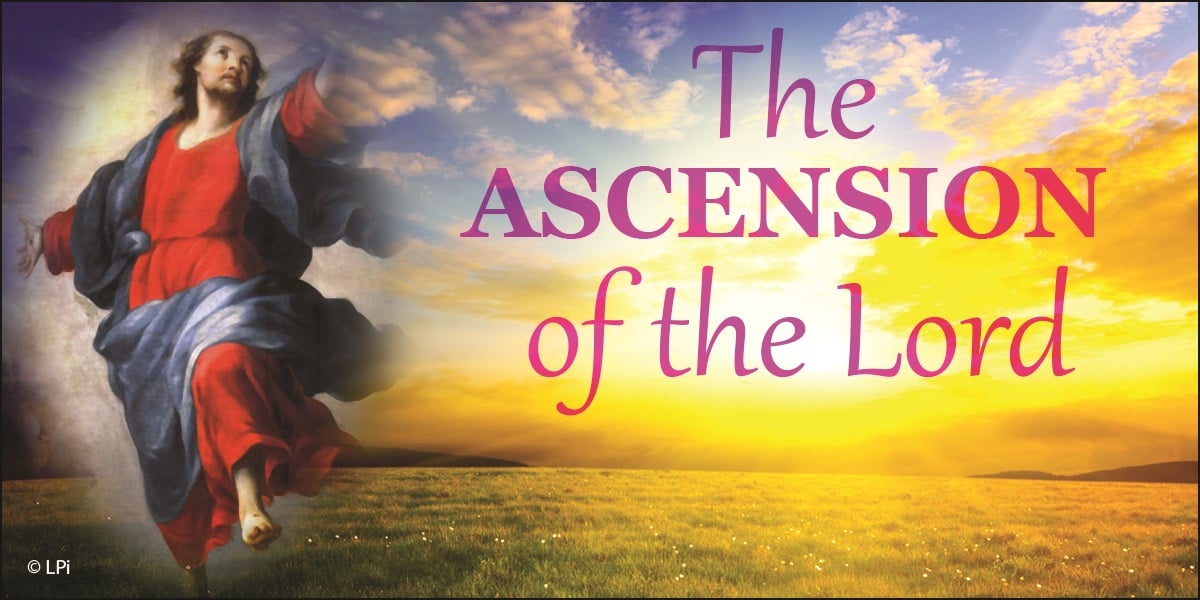
In our Gospel reading for the Ascension Jesus tells the disciples to “wait for the promise of the Father”. They cannot go off spreading the news of his resurrection on their own. They are a small, fearful community that has no power. As the Gospels showed, they had a tendency to get Jesus’ message wrong. What’s more, they flee when things get tough. At the Ascension, Jesus was taken up to heaven so that the apostles and everyone since  would receive “the promise of the Father”, the Holy Spirit. In the Gospel reading Jesus told the apostles to “go into the whole world and preach the gospel to ends of the earth.” The gospel writer also reported that the apostles did that “while the Lord worked through them and confirmed the word through accompanying signs. He tells them of several signs by which the world will know they are sent. All those signs have an individual and a corporate application In so many nations and affiliations to political parties or whatever  there is a rise in authoritarianism, popularism and nationalism. Those movements seek to suppress individual dignity and worth. It is noteworthy that Jesus tells his disciples that believers will drive out demons.

 If  we give this some thought, we come to realize there are many demons that inhabit our hearts and minds and the hearts and minds of so many people. There is the demon of racism. There is the demon of self-seeking power. There is the demon that reduces us to the pursuit of wealth as the ultimate value. There is the demon that insists we must be worshipped in order to have worth and dignity when we already have worth and dignity as a son or daughter of God. There is the demon that seeks to enslave by unjust wages there is the crushing demon of poverty. How do we get rid of  these demons? The answer lies in the way we live out the good news of Jesus in our daily lives that other people can see and take as an example of a better way of living. It also means that  a different set of values where we care for and share with one another.  This set of values springs from the revelation of God the Creator. That revelation comes to us in the living out of the Gospel, in the Good News. It is a difficult message to proclaim these days as it runs contrary to our world and our experience of living within it. The words are simple the living out requires much practice, must self-examination, and much changing of our hearts and minds.

In that effort and action, we experience the presence and the love of the God who is source of all life, happiness, meaning and purpose. The challenge  for us as followers of Jesus as we celebrate the Ascension is are we prepared to get rid of our demons  so that we will be an example of faith and love in all we do and say. As a result of being people of  faith and love the people out there will see how we live our lives and they will want to know where we are going as followers of Jesus and go with us to that place..

6th Sunday of Easter

6th Sunday of Easter (Year B)

We continue our journey out of the COVID restrictions and as we do that we remember all who are affected especially those in India and other affected countries.  Our Gospel for this Sunday is  a reading from the gospel of John in which Jesus tells us ‘As the Father has loved me, so I have loved you. Remain in my love. This is my commandment: love one another, as I have loved you. The love of God is easy for those who see God as a loving and faithful Father. St. Therese of Lisieux,  who was a master of the spiritual life tells us about the love which is its essence. She taught the “little way” of childlike simplicity and obedience to God as the way to grow in love.  “It seems to me St. Therese said that there will be no judgment for victims of love, or rather, the good God will hasten to reward, with eternal delights, His own love which He will see burning in their hearts.” Love of God is tied to the commandments, because the commandments are the love of God in action.

Those who love God long to be holy as he is holy and so live by the commandments.  But they do it out of love not because they have to. “In the heart of the Church I will be love,” St. Therese exclaimed upon discovering her true vocation. Though bound by the walls of her cloister, she knew unlimited freedom to reach the heights of holiness through courageous devotion to charity.  We too are students of the love of God. The commandments that Jesus gives are valuable  lessons by which we master the love of God our Father in thought, word and deed. Jesus chose his followers to carry out God’s plan of salvation. By allowing us to participate in his work of redemption, he gives us a personal stake in the Kingdom of God. “Love is the best way to become his “co-worker,” since it reveals the reason he came into  the world and affirms our friendship with the creator. Love changes everything it touches. It tells us to stop bragging about this or that. It enhances our reputation. It denies the power of position and wealth which we sometimes feel is ours by right, it raises us up as true leaders.

It might take away the advantage of our personal ideas on any topic. However, It connects us in unimaginable ways to God and to one another. Divine love transcends mere emotion. It becomes our lifeline to God. And it forms the basis of real community where everyone is valued and no one is left out. It is inexplicable in theory, yet easily seen in action. Wherever God loves, he acts. Wherever he acts, he is there with us. He is with us because he loves us and the love of God knows no bounds.  we remember the love that God has for each and every one of us each time we look at the Cross. We also remember that Jesus the son of God who gave up his life on the Cross out of love for us is our saviour who will show us the way to bring the love of God the Father into our lives so that we will pass it on to other people.

5TH SUNDAY OF EASTER

This weekend we celebrate the 5th Sunday of easter as we continue to come out of the COVID19 restrictions. As we get back to Normal we shouldn’t forget all the places in the world who are still battling the COVID pandemic. In particular we pray for the people of India who are being hit hard with the virus as well as many countries throughout the world. In our Gospel reading we hear the story of the vine and the vinedresser of course Jesus is the vine and the Father is the vine dresser and the fruit of the vine that we are hearing about is our faith. The noise that the pruning shears make do not sound very pleasant, in fact, it sounds quite stark, threatening and maybe  painful. I think that I would be saying keep the vinedresser from my door in case he cuts me down .  From the time of Moses, the Hebrew people thought of their nation as the vine that God had taken from Egypt and transplanted into Palestine. There in the fertile valleys and plateaus the nation thrived and grew, as does a vine that is well tended. When we believe in Jesus Christ, partake of his mysteries, and keep his commandments, the Saviour himself comes to live in us, his Father and his brethren, become our Father and our brethren. His person through the Spirit, becomes, the living and interior rule of all we do and say.

The branches exist to draw life from the vine so as to bear fruit. Failing to do so they are useless: cut down, thrown out, good only for fuelling the flames of a fire. So that we may live as fruitful branches in union with Christ, the true vine, he has given us the faith we profess as members of the Church, his true body in the world. Our Lord warns us, as he warned his first followers, to abide in him, that means that we should remain closely united with him, as the branch is joined to the vine. He promises us that if we remain closely united to him, by keeping his commandments he will be ever ready to answer our requests, and to listen our prayers. Let us take courage. Jesus also  tells us “Without me you can do nothing,”. But we know that with him we can do everything. If we remain with him, we can ask anything of the Father and it will be given to us. While we remain healthy branches of the vine, we will be on the road to heaven. Our daily tasks, our work as well as our prayer, our recreation as well as our rest, our joys as well as our sorrows, all of them will  give glory to God and prove that we are worthy to be called disciples of the Lord. So the main question for us today is are we going to remain close to Jesus?  

The story of the Vinedresser is our call to remain closely united with Jesus, as the branch is united to the vine. Or will we be cut down by the vinedresser and thrown on the fire or the  rubbish heap. I would hope that all of us will remain united to the vine so that we will bear much fruit so the world will know that we follow Jesus by all we say and do.

4TH Sunday of Easter

This weekend we celebrate the 4th Sunday of Easter which is also known as Good Shepherd Sunday. It is also the Sunday by tradition  when we pray in a special way for vocations to the priesthood, diaconate and religious life.

The idea of Jesus as the Shepherd of the flock is good thing because it is well-known fact that the shepherd never leaves his sheep outside the sheepfold. If any are outside the sheepfold the shepherd will seek the lost sheep at all costs until they are found. In the same way Jesus the Shepherd will seek us out and help us to find our way back into the sheepfold of faith. In the Old Testament, the shepherd was a metaphor for the leaders of the  people of God. Most often those leaders failed in their responsibilities and many were corrupt. God excoriates the incompetent and sinful leaders who were appointed to shepherd the people which they did not do.

With the failure of the leaders of the people, God decided to take on the shepherding role. “For thus says the Lord: I myself will look after and tend my sheep. (Ezekiel 34:11). In this Sundays  gospel Jesus likens Israel’s corrupt shepherds to the “hired man” who leaves the sheep to fend for themselves when danger approaches. The hired shepherd may leave the sheep behind but Jesus the Good shepherd who is the Son of the Father does not leave his sheep.  A good shepherd has to be willing to take risks to protect the sheep. A good shepherd has to care for the sheep entrusted to him. As our shepherd Jesus cares He values each of us. He goes the extra mile in order to bring us back into his flock. He died on the cross for each and every one of us. His care for us gives us value: we are important to the Eternal Son of God and his father in heaven. St. Damien of Molokai wrote about a leper who was given a blanket someone had sent in answer to one of Damien’s appeals for help. The man held the blanket close to himself and cried. He asked Fr. Damien if he could be buried with it. You see, to this man, this wasn’t just a blanket.

It was proof that there were people in the world who cared for him as God cares for all of us. One of the most comforting of the Psalms which is also a hymn begins with the line: “The Lord is my shepherd.” It ends with this line: “Goodness and mercy shall follow me all the days of my life.” Goodness and mercy, in the person of Jesus the good Shepherd are with us even now. The Gospel of the Good Shepherd teaches us how to embrace the gift of faith by listening to the voice of the Good Shepherd. There are so many voices calling us to believe and to practice things that might seem good and wholesome, but those voices are not of or from the Lord and what they are saying is not good. We need to tune ourselves into the voice of truth that comes from the Good Shepherd. We are his people the sheep of his flock and that means that we are people who are able to recognize the voice of the Lord and to faithfully follow what he is asking us to do in his name .

3rd Sunday of Easter

peace be with you 3rd sunday of easter (2) – St. Mary – St. Paul Parish

This weekend we celebrate the third Sunday of Easter. We continue our journey through the Easter Season as well as our journey out of the COVID19 restrictions as we remain mindful of all those who need our prayers at this time.

Our gospel reading for this Sunday tell us about the two disciples who were on the road. They were leaving Jerusalem, their hopes shattered after Jesus’ death or at least that’s what they felt. Then they met the risen Lord. They didn’t recognize him at first, but they did after he opened the Scriptures and broke bread with them. After their encounter they returned to the community in Jerusalem with the news of what had happened. While they were still speaking to the community, Jesus stood in their midst and said to them peace be with you. He is encouraging them and not to be afraid. It’s still not enough. Then he invites them to touch him. Still more, he asks for food and eats in their presence. The resurrected Christ is present, in the same way he was when they traveled and ate together. He is not just someone who somehow survived what was done to him and escaped. He didn’t experience a near death on the cross – he died and rose again as he said.

Jesus reminds all of us that he is the same, yet there is something very different about him. They knew that he was with them; Yet, the disciples need more in order to accept his new presence with them. What he did for the disciples on the road to Emmaus he does again and again for us in the person of our priests. He expounds what the Scriptures had said about him in the same way our priests do for us today. Do we see that? Can we understand what God can do and has done  for us – bring new life after death? Jesus doesn’t choose just certain Scriptures as proof texts. He tells us as he told the disciples “everything written about me in the law of Moses, and in the prophets and psalms must be fulfilled.” What would we be like if Jesus came and stood among us in real flesh and blood, I think that our reaction would be exactly the same as the apostles disbelief. But if we stop and think for a moment Jesus does come amongst us each time  we go to the Eucharistic liturgy, Jesus is there with us on the Altar in the elements of Bread and wine and in the person of the Priest offering these gifts to the Father on our behalf. We remember the last supper when Jesus gave us himself as an everlasting memorial and we remember that each time we hear the prayers of consecration at Mass that we do this in memory of him. 

let us place ourselves in the company of those who evangelize others by word and deed. Let us walk with those who serve the poor and needy in the name of Christ. Let us walk with the outsiders who seek Christ. In the process of being A witness, the context comes alive. For Christ walks with us  the Easter people may we not be afraid to get up and bring the light of Jesus into the world were we are .

SECOND SUNDAY OF EASTER DIVINE MERCY SUNDAY

This Sunday  we celebrate the feast of Divine Mercy and the mercy of God is very much alive in our world today over this past year we have certainly seen that as we have gone through the COVID19 pandemic. Now that we are beginning to come out the other side it might be a good time to reflect on the mercy of god in our lives during the Pandemic. The mercy and love of god has been shown through so many people especially through the doctors, nurses and caring staff in our health services where ever we are. Through our families and friends, through those who have journeyed with us in our time of need and there are many unsung heroes out there who quietly got on with what needed to be done. We remember the mercy of god shown to us through our clergy and our spiritual guides especially in our times of loss helping us to cope and generally get through what has been a tough time. There are so many people who have shown the mercy and love of god to others over this year and any list that I would make would not do justice to them as there are so many. We thank God this weekend for all of them and the mercy and love they have shown to people around them where they are.

Over the 40 days of Lent we prepared for the Holy Week celebration, now after Lent and Holy Week we celebrate the season of Easter for 50 days.  The Easter season takes us from the empty tomb of Easter Sunday all the way to the coming of the Holy Spirit at Pentecost. The gospel tells us that Apostles are huddled together in fear in the empty room. They weren’t so sure that the women’s report that Jesus had risen was believable. They weren’t singing for joy! Now, a whole week has gone by. They still felt “rocky” about their future as many feel rocky about their futures today as we face up to life after COVID. Thomas wasn’t the only one who had doubts about Jesus, I think so many were doubtful then as so many are doubtful right here and now. The Apostles were pondering the shocking experience of the week before when all seemed to be lost as Jesus hung on the Cross. But that was only the beginning here we are in 2021 talking about how they felt after the events of that first Holy Week and they must have been gutted. Jesus came to assure them that he was alive and then his message must have troubled them: “As the Father has sent me, so I send you.”  The disciples  were supposed  to go out to  teach, to preach, to heal by announcing the gospel. They were going  to open the eyes of those blind, those whose ears were closed, those whose hearts are hardened like concrete.

They were sent to bring the message of Jesus to others and in the same way we are sent out to bring his message to other people wherever we are by what we say and do. Our world is hurting so much because of the many things that are happening within it particularly the covid19 pandemic. The Apostles felt rocky about their future as many of us do today but god is with us as we go out into the world as his messengers. May all of us be witnesses to the Gospel bringing the mercy of God to the people of our time and place as we go forward into a rocky future where god is with us to help and guide us.

Post Navigation