Feast of the Exaltation of the Holy Cross
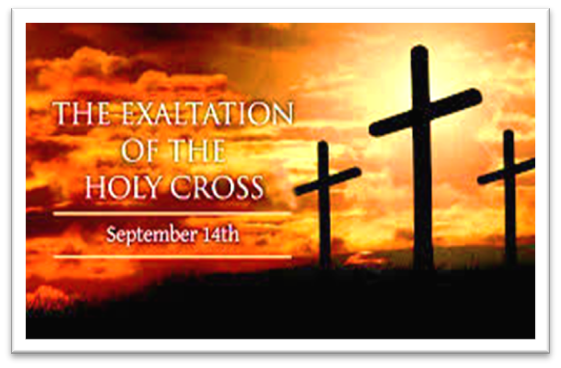
The Feast of the Exaltation of the Holy Cross that we celebrate this Sunday remembers the Cross of Jesus. It has been celebrated by the Church for centuries. The feast began in the 4th century, when the True Cross was found by St. Helena, the mother of Emperor Constantine. Tradition says she found the Cross in Jerusalem, where Jesus was crucified. This discovery made a deep impression on Christians and led to honouring the Cross in a special way.
The liturgy for this feast draws from several scriptural readings that reveal the depth of the Cross’s meaning. In the first reading, the Israelites, weary and frustrated, complain against God and Moses during their journey. In response, God allows venomous serpents to afflict them. After the people repent, God instructs Moses to craft a bronze serpent; those who look upon it are haled. This act foreshadows the healing and salvation brought through Christ’s crucifixion.The second reading presents the humility of Jesus. Though he was in the form of God, Jesus did not cling to equality with God but emptied himself, embracing humanity and obedience—even to the point of death on a cross. For this, God exalted him and gave him a name above all others. In the Gospel, Jesus speaks to Nicodemus, explaining that the Son of Man must be “lifted up” in the same way Moses lifted the serpent in the wilderness. Through this “lifting up” on the cross, Jesus brings eternal life, not condemnation, to the world. He is sent as a gift of salvation—a ransom for many. The cross as a sign of hope is a paradox. It is like the writing we can read on tombs in old graveyards: Ave crux, unica spes – Hail cross, our only hope. That is a good summary of the Christian faith: in the cross of Jesus, our hope has dawned. We say, “Where there’s life there’s hope.” As long as we live we’re able to hope and open ourselves to the future. Our hope gives direction to our lives; it gives us a reason to keep going. But we know that when we hope we become vulnerable. Hoping is always a risk because it looks to what is not here. To avoid the pain of disappointment some people give up hoping. Like the people of Israel in today’s first reading: they stop hoping in God because of the pain that goes with their new found freedom. They want freedom without wilderness; they want liberation without suffering. God sent the plague of serpents to bring the people to their senses. The God who sent the serpents later sends his beloved Son who died on the Cross for our salvation.
On the cross Jesus does what so many want to avoid: he suffers so that others might be free. To suffer and be rejected are the signs of the cross. In Jesus, God does not despise a broken humanity but takes it to himself. Jesus reveals God by making himself vulnerable. He takes on his back what we all want to avoid: responsibility for our sins. He is nailed to the cross. He does not die a natural death; he is put to death. In all this, he does not despise what is human. As Paul says, Jesus does not cling to his equality with God, he enters the deprivation of humanity becoming a servant then God raised him high and gave him the name that is above all names . In the Cross and then in the resurrection, hope is born again. Hope is born out of realism; it is born out of love and it leads us to great joy in our lives on earth and in heaven. That is why Paul was right for in the cross there is new life and there is triumph. As we honour the Holy Cross, we recognise it as the sign of hope especially in this Holy Year dedicated to the theme of Hope.

 Fullerton T