Fullerton T

RELIGION LITURGY AND LIFE

28th SUNDAY IN ORDINARY TIME
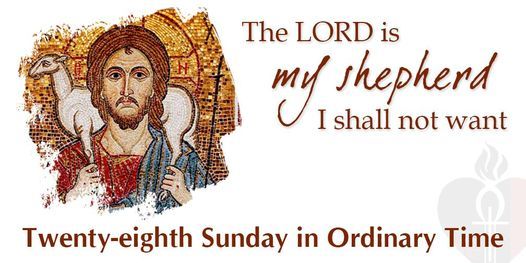
During last week two things happened and neither of them were COVID19 related. We had the launch last Saturday of the latest encyclical from Pope Francis Fratelli Tutti and on Wednesday of this week we had the feast of the Holy Rosary. The Letter from the Pope is about   fraternity and social friendship that focuses on the universal dimension of the notion of fraternal love and we will hear about the letter in the days ahead. Last Wednesday we celebrated the feast of the Holy Rosary Pope Francis calls the rosary a “simple contemplative prayer, accessible to all, great and small, the educated and those with little education. in the Rosary while we repeat the Hail Mary we meditate on the Mysteries, on the events of Christ’s life, so as to know and love him ever better. The Rosary is an effective means for opening ourselves to God.”Each time we pray the Rosary, he said, “we are taking a step forward, towards the great destination of life”—heaven. May we take the opportunities that are given to us to join together in saying the rosary of our lady during this month of October in our families as individuals and as Parish Communities where we live.

In the Gospel reading for this Sunday we hear about the king sending his servants out to call all those who were invited to come to his son’s wedding but none of the invited guests would come. So the king told his servants to go out and invite everyone on the road to come to the wedding feast. Jesus tells the parable because his ways were criticized by the “chief priests and elders of the people.” They rejected him so now he turns to  everyone else and he welcomes the poor, sinners, and outsiders. Matthew emphasizes, the urgent need we have to respond to God’s invitation to his feast. In the parable those who did respond to the invitation, “bad and good alike,” did so with enthusiasm. They knew a good thing when they heard it and so grasped it immediately, filling the banquet hall just as the king had wanted for his son. Today all of us who say we are Christians are also invited to the wedding feast and this is a pointer towards our participation in the life of the Church. We hold precious the image of God who calls the good and the bad to the banquet of life that leads to eternal life. The expectation is that we will prepare ourselves now by being dressed appropriately for the occasion. Perhaps the best description of the proper wardrobe for a Christian is given to us by the apostle Paul.

If we wear the clothes he describes the clothes of compassion, kindness humility, gentleness and patience we will never be thrown out of any banquet. In Colossians he tells us You are God’s chosen race, his saints; he loves you, and you should be clothed in sincere compassion, in kindness and humility, gentleness and patience… Over all these clothes, to keep them together and complete them, put on love. And may the peace of Christ reign in your hearts. (Colossians 3:12-15) This weekend’s parable reminds us that God’s invitation is his gift to us, and it is given to us so that we can freely accept or ignore it. Those who were gathered in from the highways and byways had no claim on God. We, too, have no claim on God, We do not merit God’s invitation on our own. It is a grace God lovingly offers to each and every one of us. Hopefully all of us will be able to accept the invitation to come to the feast.
27 TH SUNDAY IN ORDINARY TIME

I begin this week with a thought about the second reading from St Paul to the Philippians. It could have been written for us in our present situation with covid19 pandemic. St Paul tells us that we should not worry and that we should pray to god for our needs and as a result of our prayer the peace of God will come to us and guard our hearts and our thoughts in Christ Jesus. This is a very consoling reading we should not worry because god will come to us to guard us and give us his peace during these hard times. Also this week we heard the news that the president of the USA and his wife have COVID 19. I personally wouldn’t want myself or anyone else to get this virus and I hope that everyone who is stricken down by COVID19 at the present time including the trumps will get well soon.

In this Sundays Gospel reading  we learn a great deal about God, about our place in God’s plan for creation, about individual and collective meaning and purpose, and the outcomes of ill-chosen thoughts, efforts, and relationships that bring failure to our role in God’s plan. The master of the vineyard created an ideal vineyard and trusts us to maintain it and encourage its fruitfulness.

 Humanity is trusted and is talented enough to handle the work of maintenance and productivity. In his trust of humanity, God is patient. He sends messenger after messenger to collect what is due him. God repeatedly asks us to return to him what is his due. The workers in the vineyard are responsible for their denial of what is due to the landowner. They beat his messengers, stone one, kill another, and continually reject the landowner’s claims to the fruit of his vineyard. Finally, the landowner sends his own son, thinking the workers of the vineyard will respect the son. But even the son is abused and murdered because the workers think they will have the vineyard as their own with the death of the son. In the end God will provide judgment on all who work in his vineyard. Even so, there is a focus on those who work in the vineyard. They are trusted, they are privileged to work at maintenance and on production in whatever way suits them. They are free to make decisions in their work. God is no micro-manager. But in all this freedom, there is a responsibility to bear fruit. Humanity is accountable for what comes of the vineyard and giving it to the Creator. In the original context the tenants represent “the chief priests and elders of the people”. In the parable the “tenants” become angry when they are reminded that the vineyard has been leased to them and they must be accountable for what they have done or not done with it and they do not like this.

Their anger grows ever more violent as the story develops, the root of their anger is revealed – they want to own the vineyard rather than to work there. Through the parable of the vineyard Jesus reprimands the “chief priests and elders of the people” gathered around him.  He focused on the unfaithful people who, by their sin and failure to listen to the prophets, had brought God’s anger down on them. Jesus’ reference to the killing of the King’s only Son was not lost on the Pharisees. They had already decided to kill Jesus who claimed to be the Son of God. Jesus’ words enraged them, and their hearts were further hardened against Him and it all ended up as we know at the Cross of Calvary on Good Friday.  So this weekend  we are asked to reflect on our own faith and we are called to go out into the vineyard that is the world where we live and have our being. Were we  work to nourish the vines of other people’s faith by what we do and say so that as a result of our efforts all of us  will be able to give glory to God our father in heaven.

26TH SUNDAY IN ORDINARY TIME

Last Wednesday we came to a milestone it was 6 months since the lockdown and associated COVID19 measures began. It is hard to believe that it has been 6 months but it is. Over the last months we have had to change so many things in our daily lives and we have also said good bye to many of our much loved families and friends who have died as a result of this pandemic. It seems that with the recent government restrictions that this virus may well be with us for sometime to come. We pray for our continuing safety at this time as well as the safety of our families and friends along with the communities where we live.

In our Gospel reading for this weekend we hear the story of the two sons. The first son, who said no to his father but who went and did what his father wanted. And then the second  son, who says yes to the father but does not deliver . The first son “thought the better of it.” He was open to a change of heart.

The second son was set in his ways and closed to the change of heart that was necessary. The ability to change one’s mind is essential to all healthy relationships. A mind that is closed, whether from pride, stubbornness or stupidity, tends to destroy all relationships, e.g., when we refuse to admit a mistake, when we are unwilling to apologise and change our ways, when we persist in prejudice against a person or group, when we think we know it all when we don’t. Jesus surprises the people around him by responding favorably to the actions of the tax collectors and prostitutes who may have gotten it wrong at first but have since repented and come back.   Too many of us are down on ourselves for our past lives. Many of us can truthfully say, “I have made mistakes.” But we are here now. We are doing our best to follow the Lord. We try our best to receive the strength of Christ, the power of the Gospel, and integrate this into our daily lives. This Gospel passage points out something very important about faith and religion. Sometimes the terms faith and religion are taken to be the same. But they are not at all the same.

The difference between them be seen more clearly if we speak of religious practices rather than religion. There is a close relationship between religious practice and faith. Religious practices have to be based on and animated by faith.  The Lord calls us to a living faith whereby we enter into a living relationship with God. That involves something more than adherence to a system of ideas or obedience to a collection of rules or the practice of certain rites. It requires an authentic desire to follow Christ, whatever the costs to us material or otherwise.  Through this parable of “the second chance,” grace is given to enable us “to change our minds.” We can start anew. This parable is Good News indeed, for those who think it is too late to change, or can’t change. Jesus  who tells this parable to us today assures us we have his help to redirect our lives – to say “Yes” to the God who calls and enables us to change.

25TH SUNDAY OR ORDINARY TIME

Life goes on as we continue our journey with the covid19 restrictions and we pray  for the continuing safety of everyone out there. We also pray for all our youngsters who are receiving their first holy Communion during September and October.

In our Gospel reading this Sunday Matthew recounts the parable of the laborer’s in the vineyard who don’t see the generosity of their Master  because they are blinded by their own envy and selfishness.  Those who first heard this parable would have voiced their bewilderment. How could God not treat the hard, long-suffering workers in the vineyard better than those who had just arrived and didn’t seem to have done as much to gain their reward? The Day laborers in the vineyard objected to the amount of pay the owner gave them as the first was paid exactly the same as the last one denarius. This tense image rode against the popular view of the Kingdom as a peaceful plentiful feast for the faithful in paradise.

Jesus told this story to emphasize how the Kingdom differed from what people expected. What kind of God do we have? The parable tells us that our God is a generous and a just Father who doesn’t have any favourites, but continually invites us into the vineyard of faith and treats us  all equally.  God rewards us all “the same daily wage.” this is a pointer  towards the “eucharistic daily bread” God is constantly giving us to feed and strengthen us every day, as we strive to be God’s faithful people. In the pages of the gospels we meet many people who start out as losers but end up as winners. The parable of the  workers in the vineyard is the Lord’s call to all of us to share generously with all people  what we  have received and that means sharing our resources and our time. Sharing with those who are physically emotionally, spiritually or economically crippled. It means sharing with the prodigal sons and daughters, the outcasts, the overlooked, and the ones whom the powerful and respectable simply ignore or shun. The losers end up winners because Jesus makes a clear choice in their favour.

Why does he do so? Simply because Jesus knows and teaches that God’s ways are not our ways, that God does not work from the mathematics of a calculator but from the fullness of a full and loving heart the heart of the Father. All of us share equally in the task, whether called early in the morning or late in the day, we are called  to build up the kingdom of God in this  unjust and often times hard world. When we focus upon the needs of others, even if they encroach upon our rights, we give  ourselves for the Kingdom. Our work  becomes more honest and our leadership when we are called to lead will bring others to Christ for they see Christ working through us for everyone’s good. Ultimately, service means sacrifice. What are we willing to give up for the Kingdom of God as we proclaim the good news in word and deed during this time of COVID19 and the problems it brings to us.

24th SUNDAY OF ORDINARY TIME

As we continue our journey of faith we also  journey along with  the continuing COVID pandemic. We continue our prayers for all those who are affected by the covid19. We Also pray for all those who were affected  in the 9/11 attacks in the USA 19 years ago it is hard to believe all those years have passed but they have. We continue our prayers for peace for the world and those who live in it, peace of mind heart and soul.

Our Gospel reading for this Sunday is all about forgiveness as a matter of fact all our readings are about forgiveness.. The parable of the unforgiving official is told in order to underline our need for forgiveness. When the king calls his court officials to audit the accounts, one shows a deficiency of ten thousand talents, a colossal sum of money. The sum is deliberately extravagant, perhaps running into millions of pounds in our own money, to heighten the contrast with the few pounds owed to the official.  

When the king orders the sale of the debtor and his family into slavery, the official pleads for time. The king feels sorry for him and decides to remit the whole of the vast debt.  The official, however, learns nothing from his experience, for he refuses to give a colleague time to pay a trifling debt; instead, he has him thrown into prison. When this heartless behaviour is reported to the king, the grant of full forgiveness is withdrawn and the unforgiving official is thrown to the torturers. What do we learn from this parable about showing mercy the saying goes that the mercy we show to others will also be the mercy that  will be shown to us in our turn. We often forget that God shows us mercy In the same way that the king showed mercy to  the official!  If we think we do not need the mercy of God we need to stop and think about it  for all of  us need gods mercy in one way or another. Have you ever found yourself in a situation where it was difficult to forgive someone who offended you all of us have been in that situation at some time in our lives.

Forgiveness can be very hard in many situations, and for this reason it takes a long time before we bring ourselves to forgive those who sin against us  especially when they might be  people we trusted a lot. In Matthew’s Gospel Jesus seems to tell us that God’s forgiveness has necessary limits, but perhaps these are just the limits we set. The unforgiving slave brings judgment on himself by treating his own forgiveness as a license to bring judgment on others. He thus transforms a merciful king into a vengeful judge. The problem lies not with the king, or even by analogy with God, but with the world the slave insists on constructing for himself, under which terms his fate is now set. With whom, and to what systems, do we bind ourselves each day? Each day let us ask the Lord for forgiveness for all our sins Let us forgive all those who have sinned against us because that is what our father in heaven asks us to do. Remember our Father in heaven sent us Jesus his son to point the way and he encourages us to follow him.

23rd Sunday in Ordinary Time

We are now at the end of the summer and the schools and many other things  in our locality are trying to get back into  the new way of doing things. There is a great deal of change  and It seems to me that time waits for no one and this is true enough when you stop and think that it is now 5 months since the youngsters were in school and so many things that we take for granted closed as a result of COVID19. But we are returning slowly to what is good and we know that we will have to journey along the road with the COVID19 virus going into the future whatever it brings. We bring ourselves and all we are doing and going through to god knowing that he is with us through it all.

In our Gospel passage for this Sunday St Matthew recounts Jesus’ instructions to the disciples about how they should deal with a brother who does something wrong. This same instruction applies to us and our dealings with other people in the here and now of today. This passage is very different from those of the two previous Sundays. They were dramatic stories, marked by deep emotions and with deep implications for the characters involved.

This is a little gem of a passage but with little drama, a very practical, common-sense teaching on that most common and most prosaic of community problems – conflict. It is a great wisdom teaching which continues to be valid for us in our own time. Management has become a science today, and Jesus’ teaching stands up well as a model of how to “manage” conflict in any situation.  It is the duty of the disciple we are told  to point out the error and even if our correction might not be well received. St Matthew wants to let the Christians in his community know how to deal with those who drift away from the teaching of Christ or blatantly contravene the commandments. And he chooses those words of Jesus which most stress the authority and the competence of the Christian community, the Church, to deal with these cases: Whatever you bind on earth shall be considered bound in heaven; whatever you loose on earth shall be considered loosed in heaven.  However, there are some safeguards built into this teaching on reproving those who go astray. Jesus says that first of all you must have it out with him alone. This might lead to a speedy solution and the person’s good name is preserved. Yet it seems  from the gospel reading that the only sanction is that the person be excluded from the community of the Church. That is surely the meaning of the words: treat him like a pagan or a tax collector treat him as an outsider. 

But in considering such matters we must be very careful; for getting all worked up about the behavior of someone else  can frequently be a sign of something else, something much closer to home.  Belonging to a community implies that we are involved in the life of its members. This is not a charter for the legion of the curious, but a procedure for a caring community to follow. It is a way of handling wrongdoing and hurt. Encountering the truth about another person and ourselves is daunting  because it makes us face up to the other person and ourselves and the weaknesses that are part of us and all we are. We should not be afraid to encounter the truth about ourselves and others as we deal with the world around us these day’s knowing that Jesus is making the journey with us .

22nd Sunday in Ordinary Time

Well here we are at the last weekend of August and the youngsters are going back to school. Time is flying by for all of us both young and old as we move into the new school year. This year going back to school is very different with the COVID19 pandemic and all of the ongoing changes and concerns it has raised for all of us. From the Lockdown to the reopening from the abnormality of the last 5 months  to getting back to a sort of normal much has changed and a lot has remained the same. The question that I ask myself is how have I changed and how have we as a community changed these are not easy questions to answer. I get the sense that we are a more caring and sharing society as a result of this pandemic.

In our Gospel Reading this weekend we see Jesus starting to prepare his Apostles for the journey he must make to Jerusalem which ends up with Jesus on the Cross. In foretelling his sufferings and death, which took place some months later, Christ intended to prepare his disciples and other followers for  the severe crisis of faith that would hit them after the crucifixion. He also took the occasion to remind his disciples, and all the others of what their attitude to suffering and death should be. He told them, and us too, that we must be ever ready to accept sufferings in this life, and even an untimely death if that should be demanded of us, rather than deny our Christian faith. Peter is appalled at this prospect and tries to deflect Jesus from the path that lies ahead and yet it was peter who was crucified as well. After having declared Jesus to be the Christ, a title associated with victory and glory, Peter now denies that Jesus must suffer. Peter wants to banish suffering from the agenda; Jesus brings the subject to the forefront of the conversation. Jesus faced suffering which could only be conquered if it was accepted If the suffering was to pass, it had to be endured. He faced rejection which could be transformed only if he assented to it. He told them “For anyone who wants to save his life will lose it; but anyone who loses his life for my sake will find it”. The way of the cross which Jesus followed in Jerusalem was one which passed through streets and markets, by houses and palaces, by windows and doors.

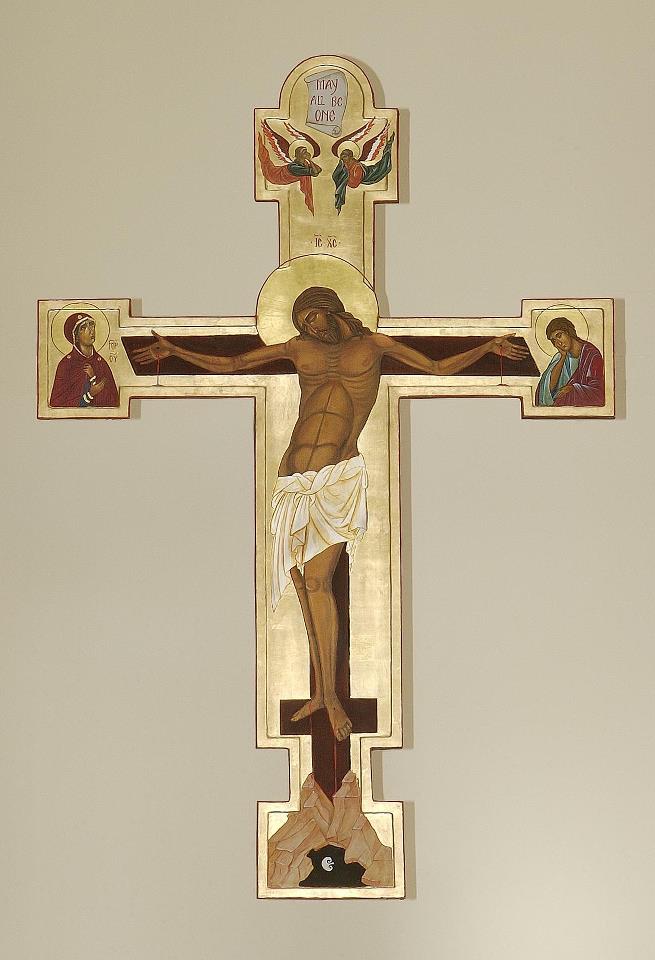
While it happened people went about their business not giving the procession to calvary a second thought. Suffering must run the course of the familiar as it does for us especially these days. As Christians we live in the assurance that our way of the cross does not go unnoticed. We are asked like Jesus to carry our crosses through streets and markets, by houses and palaces, by windows and open doors. Jesus notices what we are going through and he is our companion along the way he is our strength and our shield; his power is mighty in our weakness. If the cross we carry is the price to be paid for love, then carrying it is love in action. For Jesus, that was enough it is also enough for us to know that our sufferings large or small were nailed to the Cross on that first Good Friday through the love that God the Father had to send us his Son to be with us for all time.

21ST SUNDAY IN ORDINARY TIME

These days we are preparing for the re opening of the local schools and the return of the pupils. The children and parents out there are wondering what will happen and how things will go. I am sure  it is the same for the teachers returning into these new circumstances where much remains the same but so much more has changed. There is a lot of nervousness around this week as we prepare for the safe return to school. We keep our teachers and our school going members of our communities and their families in our prayers in the days ahead as we return to School.

This Sunday in our gospel reading Jesus asks the apostles “who do you say the Son of Man is?” Jesus was in Caesarea Philippi in the north eastern corner of Palestine. There no one would not look for Him. He had much to teach the twelve before He could leave them this was quality teaching time. So, He put the question to them that went to the heart of the matter, “Who do you say I am?” Peter acting as spokesman for the others told Him He was “the Son of the living God” Peter confesses the deep mystery of Jesus, who is the Christ and the Son of God.

In the light of this inspired confession, Peter is chosen to be the rock on which the Church is built. When Jesus told him “ you are Peter and on this rock I will build my Church” Peter received the gift of being the leader of the Church. Peter was first among the apostles, first among those who were called to proclaim the Kingdom of God on earth. Peter took the leadership of the Church at Pentecost. After he, the apostles and Mary, received the Holy Spirit, Peter led everyone out to the Temple and began preaching the good news to the people. After Saul became Paul, after the persecutor of the primitive Church accepted Jesus Christ, Paul spent three years in the desert reflecting on his experience of the Lord on the Road to Damascus. He then went to Jerusalem to receive Peter’s blessing and commission to bring the Good News of the Gospel to the world.  We do not know how Peter got to Rome. We know that he was there, though. We know that Peter died in Rome, crucified head down. The excavations under the Basilica of St. Peter revealed a tomb with the words, Here Lies Peter. We also know that when Peter died, the charism he was given to lead the Church remained active in Rome. The ones who took his place, St. Linus, and those who followed him, St. Cletus, St. Clement in the Apostolic succession right through the centuries up until Pope Francis in our present time.

.All of them are recognized as having received the  same charism that the Lord gave to Peter to lead the Church and this has passed down through the centuries. As time went on, these bishops of Rome would be given the title, Pope, Papa, Holy Father, leader of the Church. Through our baptism, all Christians have received a share in the power of the keys to heaven. With that power goes responsibility to witness to the Gospel. So who do you and I say Jesus is in light of this Sundays Gospel reading and what it teaches us today?

20TH SUNDAY OF ORDINARY TIME


20th-sunday-in-ordinary-time-updated-2-728


Well here we are at the middle of August, with just two weeks to go before the schools reopen after the long COVID 19 closure.  When you stop to think about it time just seems to be passing by as it doesn’t seem nearly 5 months since the lockdown began. We also spare a thought for all the teachers out there who will go back into the schools in the days ahead to prepare for the reopening of the schools.

Our Gospel reading for this Sunday is all about the  Canaanite woman whose daughter was being tormented by a devil, but when you read the story we realize it is really about  the great faith that she has and it was that faith in Jesus that cured her daughter even though she had to be persistent in dealing with the Lord. The woman in today’s Gospel story is not satisfied with just tears though.  Her daughter “is tormented by a demon.”   Parents among us know what that might feel like and how fiercely we would spring into action if a “cure” was before us for our own sick child.   She cries out and asks Jesus for help … and perseveres even when the disciples try to send her away and Jesus Himself rebuffs her!  Jesus relents because great is her faith.

In the same story we see much about ourselves and our own faith.  Over a number of years I have been involved with many people who have been praying for this or that or for or a member of their families and very often they have said to me that the prayers have not been heard let alone answered. I have always told them to hang in there to persist and not give up in the prayers because they are always heard and this has been the case with so many people throughout history. In the same way as the Canaanite woman  pestered Jesus  we should never give up though we mightn’t have our requests granted when WE want them they will be granted when we really need the things that we are praying for. A friend of mine is constantly praying for her son and thankfully her prayers are being answered but sometimes as happens in all families the road can be a bit rocky along the way but we have to keep on going. The message of today’s readings is all about FAITH life can be a bit of a pickle with good and bad things within it, but a life lived with faith will see all the various obstacles being removed. Would our faith be as persistent as the faith of the woman in this Sundays Gospel? Only you can answer that one and I hope that your faith is persistent like the Canaanite woman whose daughter Jesus Cured because faith moves mountains !!

19TH SUNDAY OF ORDINARY TIME

downloadd

This week we in Ireland and especially in Northern Ireland we said goodbye to John Hume who died at the beginning of the week. He was the man who took risks for peace when he began the Hume Adams dialogue in the 1980’s which in turn led to the IRA and their political wing Sein Fein leaving violence behind. This engagement eventually  led to the 1998 Good Friday agreement which gave us the imperfect peace that we have today that continues to be a work in progress. We thank god for John Hume and his life in which he was a man of peace who took risks that paid great dividends for all of us who live in Northern Ireland today as we live in a society that is more peaceful. We also pray for the people of Lebanon and Beirut in particular as they begin the recovery from the explosion at the docks.

The gospel reading this weekend is all about  Jesus  walking on water but if you look beyond the walking on water this story is really about trust in God. We have no problem identifying with Peter he is so like ourselves . He is confident one moment and then, when things get difficult and he has bitten off more than he can chew, he falls apart. By then it is too late and he needs help. Life is like that, we start at something like a new job, college, marriage, or a project to help others, but then it gets complex and beyond what we are capable of. We didn’t realize it was going to require so much time and effort! We are sinking, we are drowning. Not an uncommon experience in so many situations of life and in the way we deal with them. God doesn’t always give us an immediate cure or a fast solution when we bring ourselves in prayer for others as well as  the problems of the day to God. God, through Jesus, is not a distant God aloof from our problems. Jesus shows us that when he reaches out a hand to Peter and to us he is companion with us in the storms of life.  At times we may well be floundering, like Peter, but Jesus reaches out to help us, to rescue us. What better image of salvation could there be than Jesus reaching out to Peter to save him from drowning. What better analogy could there be of our own lives and relationship with Jesus. We live messy lives, we doubt and we lack faith but nevertheless we are still moving towards the Lord.

For us, too, there is a necessary lesson in this incident. It is that we must continue to trust in Christ and his loving Father, even when God seems to have deserted us. Most of the troubles and trials of our lives are caused by the injustice and lack of charity of our fellowmen. The remainder can be attributed to our own defects and sins or to some weakness in our mental and bodily make-up. But God foresees all these misfortunes, and can prevent them. Instead he lets them take their course, because they can and should be the means of educating us in our knowledge of life’s true meaning and they should draw us closer to him.

Christ foresaw the storm and the grave risk His Apostles would run when He sent them off across the lake. But that trial and the grave danger they ran was for their own good, because they learned to realise that Jesus was from God and they could always trust Him. Our trials and our earthly ailments are also foreseen by God and permitted by him so that they will draw us closer to Him and help us on the road to heaven.

When we find ourselves breaking into a cold sweat over the latest storm we find ourselves in we should remember when Christ comes, the storm becomes calm, the tumult becomes peace, and we pass the breaking point and we do not break this is what trust in Jesus really means it means that he will be with us through all the storms of life no matter how big they are.


Post Navigation