This Sunday we light the second purple candle on the Advent Wreath and we hear the gospel story of the voice in the wilderness that is John the Baptist. John was called to be the herald of the Lord calling the people of his time to repentance John the Baptist plays a prominent role in all the gospels, but particularly in Luke. John hears the word in the desert and preaches prepare the way for the Lord make straight his paths” throughout the whole region of the Jordan.” The Jordan was another important place in the faith life of the Jewish believers. After their desert wanderings the people crossed over the Jordan river into the promised land. They left behind slavery, came to know God in the desert and were finally prepared by God to cross into new life. All the readings share a marvellous insight: people begin to change when they are encouraged to see the best in themselves, not when they are asked to dwell with the worst in themselves.
Blessed John Henry Newman reminds us that “Advent is a time of waiting; it is a time of joy because the coming of Christ is not only a gift of grace and salvation but it is also a time of commitment because it motivates us to live the present as a time of responsibility and vigilance. We all need help and encouragement to leave behind all the things that have become destructive in our lives. We need help in thinking about ourselves differently, and imagining the good effect that will have on others. We have to take time during advent to reflect what kind of person God wants us to be, what God’s plan is for us as we prepare the way for the Lord. We need to have faith in the future, to see the power of God working in the change that Jesus brings to us and through us to others. In this Gospel passages John calls all of us to a better faith filled life. This means the necessity, of an industrious, living ‘wait’ as we prepare the way for the Lord pruning away all that hinders us from making him welcome when he comes at Christmas .
As we continue our advent journey we need to ask ourselves what are we waiting for. Are we waiting for the presents and razzmatazz that the secular part of Christmas bring or are we preparing spiritually for the greatest gift of God, his Son, Jesus the light in the darkness who John the Baptist foretold.
Well here we are at the start of another Church Year as we begin our preparation for Christmas. We go from the green of Ordinary time to the Purple which symbolizes the penitential season of Advent. last week, at the end of the Church’s year, we had the highpoint of the Feast of Christ the King. One week later we start all over again as we light the first purple candle on the advent wreath. Advent is the season that brings us back to the ancient longing of the human race for the coming of one who would bring to this world liberation from sadness and the fulfilment of perfect peace.
The gospel reading for this weekend gives us the last address of Jesus’ public ministry. And Jesus is clearly fretful about the future as he paints a bleak picture of the end of the world. There is talk of nations in agony, of bewilderment, of people dying of fear, of the power which menaces the world. It is a nightmare view of total disaster which “will come down on every living man on the face of the earth”.
Given that vision of ultimate collapse, it is hardly surprising that it might drive people to drink! Being sober and awake might not seem very attractive in the face of such catastrophe. Nightmares are bad experiences we usually wake up from, not experiences we stay awake for. Yet that is Jesus’ advice: “Stay awake, and be ready praying at all times for the strength to survive all that is going to happen”. This Sundays Gospel also encourages us to do two things which are difficult to hold together: to be honest about the way the world is going, and at the same time not to lose hope in the future. The danger is that we see the terror clearly, and don’t see our reason for hoping. And given the muddle we’re often in, Jesus has to convince us about a future that is really liberating. The way he does that best is through the example of his own life from birth to resurrection, from Christmas to Easter Sunday we see life through all of these times and events as people of faith.
Advent reminds us that we don’t have to sleepwalk blindly into the future. Every year we remember the story of Jesus life again, and that memory of the past becomes our hope for the future. That’s why we retell the story again and again, beginning on this first Sunday of Advent and ending on the feast of Christ the King. We all need to be reminded of God’s love from time to time. We need to check the record of the past to reassure ourselves as we go into the future. When we do, we see how far-reaching God’s love is for all of us. The Lord is coming may the heavens rejoice and earth be glad as we go forward together in hope and joy this advent season.
This Sunday we celebrate the feast of Christ the King the last Sunday of the Churches year. The Feast of Christ the King was established by Pope Pius XI in 1925 as an antidote to secularism, this is a way of life which leaves God out of a person’s thinking and has us living life as if God did not exist as we all know God does exist and we see this through so many people throughout history right down to ourselves. In this feast we profess our common belief: Christ is King. This is reflected when we pray the Lord’s Prayer together We pray, “Thy kingdom come”, i.e., we pray that our lives together will better reflect what Jesus has in mind for us as a community of God’s people.
Our Gospel reading for this Sunday has Jesus before Pilate. The authorities of the time did not like the truth that Jesus was speaking about on so many things as many within and outside the Church do not like the truth that the Church teaches. In the reading from John’s Gospel which is also part of the Good Friday Passion Narrative we see this conflict is described in terms of the “truth” that Jesus has brought from his Father: “It is because I speak the truth that you cannot believe me” (8:45).
Jesus urged the people of his time as he encourages you and me in our time to find again our true calling in the work of God, to be “a light to the nations,” showing the world the life and joy of a people living according to the ways they have learned from Jesus son of the Father. At the end of this church year , we are asked to embrace the cross and walk in the victory of the King of Kings and the Lord of Lords. What began as a humble event with the birth of Jesus in the stable has changed the world. As we prepare for Christmas during Advent are we with Jesus and his call to us to be merciful as the father? Are our lives an open sacrifice in a demonstration of the love of God? We can be sure that nobody there on Good Friday thought they were witnessing the death of a great King and that we would celebrating Christ as our King over 2000 years on in 2018.
This week end there are many things and people to pray for and we think about and pray for all those who are affected by the wildfires that are ongoing at the moment in California. We pray for the families of all those who perished as well as those who are missing.
In November as a Church we pray for the dead as we come to the end of the Liturgical Year we listen to Jesus’s words concerning the end times. The vision of the future in the Gospel Reading for this Sunday doesn’t look very appealing. The bad news is delivered first of all. Jesus imagines a time of terror and trouble and persecution. People will be betrayed and handed over to the authorities. There will be wars and earthquakes and famines. Jesus says, “These things must happen.” Then there will be cosmic upheavals: “the sun will be darkened, the moon will lose its brightness, the stars will come falling from heaven”. After this catalogue of disaster there is the good news. Jesus looks beyond the time of distress to the final time, when the Son of Man will gather the scattered people of God to himself. Jesus sees beyond suffering and persecution to a future of peace with God.
God does not call us to be anxious, but he calls us to confidence in the message we hear in the gospel and proclaim in our lives and he calls us to be vigilant that we remain in his light. Christ remains our high priest who has offered himself for the forgiveness of our sins. God knows what it is to be human. The Lord calls us to stayawake amidst the distractions of life, so that we will recognize him when he comes again. St. John of the Cross wrote, “When evening comes, you will be examined in love” (Sayings, 60). We prepare for the day of Christ’s coming by first recognizing him in our brothers and sisters and by knowing him in his word and his sacraments. False securities and shallow guarantees will not sustain us in times of strife and testing. God alone must be our hope. God’s ways must be our ways, so that when our securities and misplaced confidences fail us we can turn our eyes to God’s saving light. Let us keep vigilant — and not be anxious — for that day when God who is love calls us and looks at us with love.
This Sunday we commemorate the centenary of the ending of the First World War with the Armistice that took place on the 11th November 1918 at 11am. Over 200,000 people went to war from Ireland in the Irish and Ulster divisions and 36,000 of them did not return. the primary hope of that first Armistice Day in 1918, was that the first World War would have been “the war to end all wars Unfortunately, 100 years later that hope is still a distant dream. Today we thank god for all those who gave their tomorrows so that we have our todays. As we commemorate the centenary of the end of the first world war and remember all those who died in that war and in the various conflicts since 1918 let us redouble our efforts to Pray for peace and to be people of peace.
The dignitaries in This Sundays Gospel need more than a defence counsel, for Jesus is putting his case for the prosecution. The scribes were expert lawyers, who interpreted and applied the written Law through a complicated system of traditions. Jesus makes a series of charges against the scribes.
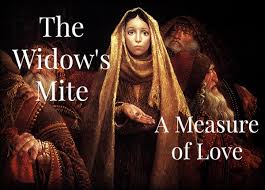
He criticises their habit of wearing distinctive dress, which marks them as different from others. He criticises their habit of taking the places of honour at religious and civil functions. He criticises their habit of long-winded prayers, made not to God but to their immediate audience. Finally, he denounces their practice of exploiting helpless widows by living off their savings. The story in the gospel goes on to tell us about the poor widow who went along to the treasury and puts in two of the smallest coins in circulation. In the arithmetic of the kingdom the widow’s offering is worth more than all the other contributions. Whereas the others give from their surplus, she gives everything she has. That is the key point in this gospel reading she gave everything she had the widow’s action follows immediately on his critique of the scribes who profit from their status . It is a warning to those leaders in ministry who bask in their own significance and live comfortably off the backs of those they serve. The Gospel story about the widows contribution to the treasury is a good lesson in having a proper perspective of oneself.
Her kind of humility is praised, as an honest thanks giving to God for all she has. This encourages us to try and stretch our resources rather than seeing the giving as an obligation or after thought, certainly giving from the heart rather than for show. And that is really what we should be about giving from the heart recognising that we need to be like the widow of the gospel who gave everything she had.
This weekend we celebrate the 31st Sunday of ordinary time and last Thursday we celebrated the feast of All Saints. Each of us are called to be saints and the feast of All saints honours all those unsung heroes of the faith who are saints even though the Church has not Canonised them. They are the men and women who “hung in there” despite all sorts of obstacles, to faithfully believing in God and His Son, Jesus. All of us have this “universal call to holiness.” What must we to do in order to join the company of the saints in heaven? We “must follow in Jesus footsteps and try to conform ourselves to his image as we seek to do the will of the Father in all things In this way, the holiness of the People of God will grow into an abundant harvest of good, as is admirably shown by the life of so many saints in Church history”.
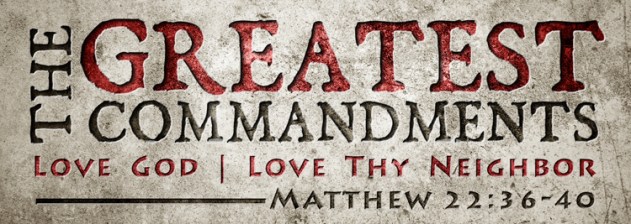
Our Gospel reading this weekend is all about the first and greatest commandments of the law. In his reply to the scribe Jesus makes it clear that you cannot compose summaries of the Law while forgetting love of neighbour.
The scribe is pleased with Jesus’ reply and adds his own point, that the love of God and neighbour is far more important than any ritual worship. In supporting the scribe’s addition, Jesus places the demands of liturgy far below the demands of active love.The transformation caused by God’s love is so profound that it flows from us towards God and is expressed in love of neighbour. Like Moses, Jesus calls us to love God with our entire being because his life and death are a manifestation of God’s love for each of us. The scribe in this Gospel states that the law of love of God and neighbour is greater than any of the religious observances and laws concerning sacrifices. Revered Temple worship and sacrifice must take second place to the observance and sacrifice that comes with loving God and neighbour. Jesus says that the scribe has answered wisely about the superiority of love over any sacrifice and then says to him, “You are not far from the kingdom of God. Our God is the God of history. Our God is the creator of all that is. We are God’s dream. Our living with God is not only in our places of worship and community. God is with us in the market place, on the factory floor, in the politics of life. Our God is with us on the streets, in homeless shelters, in the hospitals and mental institutions that seek to heal us.
As a matter of fact God is with us wherever we are and in whatever we are doing in his name. Our lives are not divisible into secular and religious though some might want it that way. We are called like the pharisee in this Gospel story to love the Lord our God and our neighbour as well and to bring that love out into the world where we are.
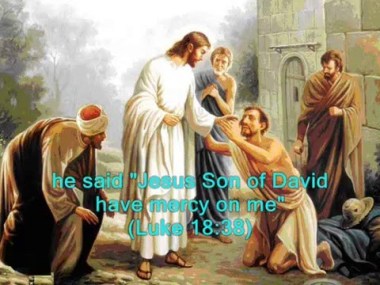
This Weekend our Gospel reading is all about Blindness or should I say spiritual blindness as all of us can be blind to the call that god gives us. In our Gospel story Christ walks along the streets of the ancient city of Jericho and even at the time of Jesus Jericho was a very old city. With his disciples and a great crowd following him, our Lord is leaving the city and Bartimaeus the blind beggar calls out to him in dire need: “Jesus, Son of David, have pity on me.” Bartimaeus, though blind, could see. His instincts were sharper than a fresh razor blade. The divinity of Jesus had come across to him in waves. But those around and about him, who enjoyed good vision, were blind to the Son of Man Helen Keller who was blind and deaf said, “The most beautiful things in the world can’t be seen or even touched. They must be felt with the heart.” It is possible for good people to spend their days searching but never finding their spiritual hearts. Spiritual blindness often prevents people from perceiving the correct way a follower of Jesus should live. Our following of Jesus is not compulsory but it has more value than I can say.
We are not compelled to love or to accept the mission of God to transform the world after the pattern that Jesus gave us that is our own free choice and it is a good choice to make for our lives. We must not accept the voices that would have us silenced and there are so many in our modern world and many of those voices are blind to the Spiritual heart of faith. The gift we seek is sight, that is the ability to capture the vision of a new creation brought about by a faith filled community of people both those around us and those who by their lives have shown us the road to take. Our reflection on the lives of those who have gone before us tell us that the way of discipleship can lead us into paths we may find difficult The disciples, on the road with Jesus, must have thought of themselves as part of the “in crowd,” the way James and John did when they asked Jesus to give them seats of power in his kingdom in last Sundays Gospel. While they were physically close to Jesus, they were a long way from understanding and taking his message on board. The blind beggar, with nothing but a cloak, was exactly the kind of person Jesus noticed and invited to come close while those with Jesus still didn’t get it and as a result they were not his true followers on “the way.”
God wants us to say in the silence of our hearts, “Lord that I may see.” Jesus wants our prayer like that of Bartimaeus to come from a sincere heart that asks not only for the gift of sight so that we can see the world around us, but also for the gift of seeing – of seeing the truth, or the lack of it in the depths of our being, and then taking the action necessary to reverse our blindness. Bartimaeus saw Christ with the eyes of faith and a faith filled heart. So we must look and see Jesus with the eyes of faith so that we may be able to see more clearly what we have to do as people of faith to lead others to Jesus.
This Sunday we celebrate Mission Sunday, that is the day when we celebrate the missionary outreach of the Church in the World. For many years the Irish Church has sent men and women to the mission fields bringing the faith to many people. As baptised members of the Church we are all called to be missionary people where we are bringing the message of Jesus to the people of our own time and place.
In today’s Gospel two brothers James and John the sons of Zebedee are asking Jesus for a big favour to ensure their privileged seating arrangements when they come to meet Jesus in glory. They want to sit, one at Jesus’ right hand and the other at his left. While they don’t specify which of them should sit at Jesus’ right no doubt that problem would have emerged later they imagine themselves in a cosy triumvirate of their own making. Of course Jesus blows this notion out of the water when he tells the two brothers that they don’t know what they are asking. Their request is to share Jesus’ power when he comes into glory, so timing their appointment to begin when the suffering is over but this was not the way of things. The two disciples mention nothing about the suffering of Good Friday but Jesus brings the conversation back to what happens before the glory which is suffering the glory comes as a result of the suffering. Jesus’ kingdom is not about who wears the crown, but who wears the crown of thorns and bears the cross .
So he asks the brothers as he asks us today: “Can you drink the cup that I must drink, or be baptised with the baptism with which I must be baptised?” They boast that they can. The message is clear: there is no short cut to God’s favour. Jesus does what he asks all of us to what we need to do: that is to serve, not to be served; to give love freely, not to exact everyone’s worship; to reach out to those in need. Christian discipleship and missionary endeavour which we celebrate this weekend are a vocation of service and there is much work out there for everyone to do. To be servants in the way that Jesus was servant means to live in complete trust that God will look after us. Jesus was not a servant out of fear of a tyrant Father, but as beloved Son, who in turn loved as he was loved by the Father. It is a free service of love, not of fear. Mission Sunday gives us the opportunity to thank god for the faith that we have as well as thanking god for and acknowledging all those faithful missionary men and women who left everything in order to bring the faith to the far corners of the world. We pray that the Lord of the harvest will continue to inspire many people to join the missionary orders and we also pray for vocations in general to the priesthood and religious life.
This Sunday we celebrate the dedication of our Cathedral St. Peters with the ordination of 9 men as Permanent Deacons with 2 of the deacons from our Parish here in north Belfast. Our parish has always been a place of vocations over my lifetime I can think of at least 7 priests who were ordained and at least 4 others who were known to me we have much to be thankful for. Through consecration by the laying on of hands and strengthened by the gift of the Holy Spirit invoked upon them, our deacons will show themselves to be servants of all and helpers of the bishop and the priests of the local presbyterate by serving as ministers of the altar, of the word, and of charity and we pray that their families friends and the communities where they will serve will be blessed through them.
This Sunday we hear the Gospel story of the Rich man and Jesus invitation for him to give everything to the poor and follow him. Jesus looks on the rich man with love; he wants this blameless enthusiast to become one of his disciples. So the challenge is made: “There is one thing you lack. Go and sell everything you own and give the money to the poor, and you will have treasure in heaven; then come, follow me.”
The cost of Christian discipleship is heavy for this prospective disciple as there has been a heavy cost for many throughout the history of the Church. The man in the gospel must renounce the security and the prestige his wealth brings him; when he sells everything he owns, he must not give the money to his family or friends, but to the poor. If he does this he will have treasure in heaven. That treasure will be his new security. The sorrowful departure of the would-be disciple that Jesus loved is one of the most touching scenes in the Gospel. He is too attached to what he has to become attached to what Jesus asks. When he goes, and we hear no more of him, Jesus turns round to tell his disciples how hard it is for those who have riches to enter the kingdom of God. For us today Jesus asks the same question do you want to follow me and many have done that but for others the call has been accepted but it was just too hard to follow the path of Jesus and they have left the faith behind. All of us have many riches that have been given to us by God Family, faith, friends are just a few example of gods goodness to all of us would we leave everything to follow Jesus that is another question.
Instead I think that we are called to follow Jesus in our world were we are by trying to be faithful to what Jesus teaches us as we pass his message on to others by the things we do and say that is a hard thing to do in the world especially when people put their own slant on the message of Jesus. This Gospel text is reassuring but challenging. Sacrifice for the sake of the Kingdom is an essential requirement of those who wish to truly follow Christ. The Christian follows a difficult path in life but it is a journey with a destination. And the destination is nothing other than the Kingdom of Heaven so let us take up the challenge to follow Jesus.
This Sunday our readings are all about marriage and I don’t mean our modern interpretation of what marriage means and it will mean something different to every person you ask. Our readings for this weekend set the ideal of God’s purpose and plan for creation and marriage. Let us stop and think about marriage In the Catholic Church, marriage is a sacrament. A sacrament is the real presence of God, the most powerful presence of the Lord possible in this world. In the sacrament of Baptism, God is present giving the Life of the Trinity to the baptized. In Penance God is present through his Son giving his forgiveness to the penitent. In the Eucharist, the Son is present nourishing the communicant and uniting him in an intimate way to the Divine Presence as Jesus is offered to the Father for us. In the sacrament of marriage, Jesus is present uniting his love to the love of the husband and wife. That said there are many good people who are in various forms of civil partnership and I am not going to knock them around for not following what marriage is all about in the sacramental sense.
What I will say is that the people involved in the various types of marriage have made a commitment to their partners and that shows that there is something good in all of this and we need to show them respect for the commitment that is there while being true to why we think so much of the Catholic idea of marriage and what it stands for. The “rit of divorce” in the Gospel Reading for this Sunday was there to protect the woman from being discarded arbitrarily without any possibility of survival in a society where she could not work or support herself. How does our society and our Church actually treat and protect those today who find themselves as “alleged” victims or those not in keeping with the “happily ever after” scenario or those whose interactive experiences with “authority” don’t match anything close to feeling accepted? Most people will agree that there is much room for improvement. Togetherness for life certainly remains the ideal both for Jesus and his followers. But our Church community has to face the fact that many marriages break down, and some of the victims of a broken marriage feel a deep longing for a new life partner and a brand new start. But this raises an acute question for the Church community: Can there be only point-blank black and white refusals there is much debate around all of this. I have been blessed in seeing so many people getting married and many others celebrating the 25th 50th and even the 60th anniversaries of their marriage commitments. But many people will tell you that their married lives were not always a bed of roses. So today we pray for a proper understanding of what marriage means in the catholic sense as we acknowledge the goodness that are there in other forms of marriage partnerships that are much more normal these days than in the past.



 Fullerton T