Fullerton T

RELIGION LITURGY AND LIFE

A REFLECTION ON FAMILY ON THE FAMILY
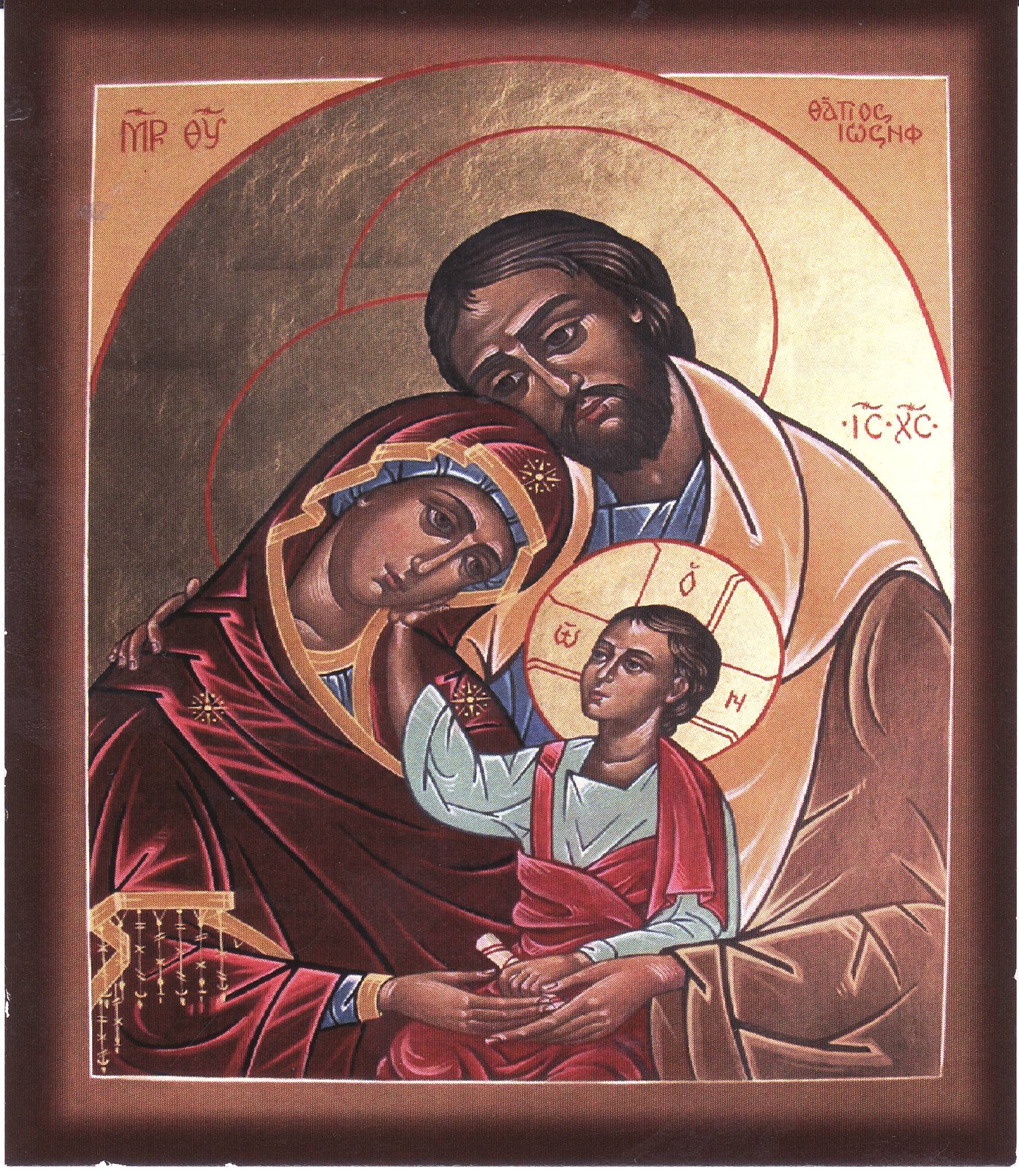
THE HOLY FAMILY

THE HOLY FAMILY

Over the last few days in Rome there has been a meeting of the synod of Bishops of the Catholic Church. This meeting has been called by Pope Francis to look at the all  aspects of Catholic Family Life.  All of us belong to a Family be it the family that we were born into, the family of Faith or the family which is the community where we live. All of us have ties to a family  of brothers and sisters with mum and dad at the head or at least that was the way it was when I was growing up. These days the idea of the family as a specific unit has changed beyond all recognition. In many cases the idea of having a Mother and a Father that is a  husband and wife committed to one another in the sacramental bond of marriage has given way to people living together and in recent times we have seen the whole idea of Civil partnerships taking root. But if we look to the Holy Family for our inspiration as Catholic people we won’t go far wrong. The Holy Family was a family with special grace but yet a family with trials. Every family has particular graces and blessings and every family also has  many difficulties and crosses. As a matter of fact many families have more than their fair share of crosses to bear and it is as a result of the family members supporting each other the crosses are much easier to bear.

On the day he left Ireland on October 1st 1979 Pope John Paul II much of his homily in Limerick was giving encouragement to families and in particular to parents and at this point in time with the Family unit being under continuing attack it is worth reminding ourselves about what he said  in October 1979.The Pope reminded us that the family is primary and has been our greatest resource and due to the particular  challenges of today the family unit is more important than ever  before.

The Holy Father said the following among many other things:

“To all I say, revere and protect your family and your family life, for the family is the primary field of Christian action for the Irish laity, the place where your ‘royal priesthood’ is chiefly exercised. The Christian family has been in the past Ireland’s greatest spiritual resource. Modern conditions and social changes have created new patterns and new difficulties for family life and for Christian marriage. I want to say to you: do not be discouraged, do not follow the trends where a close-knit family is seen as outdated; the Christian family is more important for the Church and for society today than ever before.”

 Ireland must choose. You the present generation of Irish people must decide; your choice must be clear and your decision firm. Let the voice of your forefathers, who suffered so much to maintain their faith in Christ and thus to preserve Ireland’s soul, resound today in your ears through the voice of the Pope when he repeats the words of Christ:

 “What will it profit a man, if he gains the whole world, and forfeits his life?” (Mt 16 :26). What would it profit Ireland to go the easy way of the world and suffer the loss of her own soul?

Your country seems in a sense to be living again the temptations of Christ: Ireland is being asked to prefer the “kingdoms of the world and their splendour” to the Kingdom of God (cf. Mt4 :8). Satan, the Tempter, the Adversary of Christ, will use all his might and all his deceptions to win Ireland for the way of the world. Above all, hold high the esteem for the wonderful dignity and grace of the Sacrament of marriage. Prepare earnestly for it. Believe in the spiritual power which this Sacrament of Jesus Christ gives to strengthen the marriage union, and to overcome all the crises and problems of life together. Married people must believe in the power of the Sacrament to make them holy ; they must believe in their vocation to witness through their marriage to the power of Christ’s love. True love and the grace of God can never let marriage become a self-centred relationship of two individuals, living side by side for their own interests.

(Homily of Pope John Paul II in Limerick, Monday October 1st, 1979)

Today the choice is so very clear for us as Catholics we need to re-establish Family life in its most honest and true  form with a father and mother at its head. The Christian family is the world’s greatest spiritual resource. Modern conditions and social changes have created new patterns of life and living  and as a result of this new difficulties for family life and for Christian marriage have arisen. All of these problems  have to be dealt with head on; the Christian family is more important for the Church and for society today than ever before.” The idea of a family without a mother and a father runs as opposite to what I and so many others believe in. But to believe in something means that you have to stand up and be counted and above all else we need to pray that Family life will be restored.
27 TH SUNDAY IN ORDINARY TIME

86D6C7E

This week saw the beginning of the month of October and there are two aspects to this month. It is the month of the rosary and the feast of the Holy Rosary is celebrated on Tuesday 7th  and it is also the month when we celebrate the missionary effort of the Church throughout the world with World Mission Sunday on the 19th .

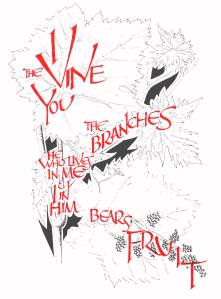
Well here we are again this weekend back in the vineyard and our first reading and the Gospel are all about the grapes and of course the wine that comes as we all know from the grapes. But of course it isn’t really about the grapes or the wine. The parable is also the story of the “tenants” and here again we are invited to feel with them. We must however understand their frame of mind correctly. In many cultures today “tenants” are poor people who are harshly treated by their landowners – the historical Jesus would have been on their side. The tenants in the parable are quite different. In the original context the tenants represent “the chief priests and elders of the people”.

In the parable the “tenants” become angry when they are reminded that the vineyard has been leased to them and they must be accountable for what they have done or not done with it. Their anger grows ever more violent as the story develops, the root of their anger is revealed – they want to own the vineyard rather than to work there and help the vines grow and produce grapes that aren’t sour but sweet.

Through the parable of the vineyard Jesus reprimands the “chief priests and elders of the people” gathered around him.  He focused on the unfaithful people who, by their sin and failure to listen to the prophets, had brought God’s anger down on them. Jesus’ reference to the killing of the King’s only Son was not lost on the Pharisees. They had already decided to kill this Jesus who claimed to be the Son of God. Jesus’ words enraged them, and their hearts were further hardened against Him and it all ended up at the Cross of Calvary on Good Friday. So today we too are called to go out into the vineyard to be the workers rather than the owners to nourish the vines of other people’s faith by our words and deeds so that as a result of our efforts they may produce much good sweet wine.


26TH SUNDAY OF ORDINARY TIME

images

Well here we are at the weekend once more and again we are at the end of the month of September as we look towards the month of the Rosary, October. During the past week the order of the Sisters of Mercy (RSM)  celebrated the 20th anniversary of the beginning of the Mercy International Centre at the foundation house in Baggot Street Dublin. In 1827, Catherine McCauley established a ‘House of Mercy’ in Baggot St and there she and her companions provided food, clothing, hospitality and education for many of Dublin’s poor. In 1831 she founded the Sisters of Mercy, and the first Mercy house of became her first convent. Today there are thousands of Mercy sisters working all over the world. Baggot St is now the International Centre of the Sisters of Mercy.  I  take this opportunity to pay a personal tribute to all the mercy sisters who have done so much for the people here in Northern Ireland and in particular here in north Belfast where I live. From education to healthcare they were at the forefront and  the backbone of so many apostolic works that may not have otherwise been undertaken particularly here in Belfast and so many other places.The  first pioneering sisters came to Belfast in 1854 and threw themselves into the educational and social work for which they would soon become renowned and I take this opportunity to thank God for them and all they have done and continue to do within the communities where they live.

Our readings this weekend are really all about the mercy of God. From the first reading which is about the sinner who decides to turn away from his sinful ways to choose life to the second reading where we are encouraged always to consider the other person to be better than yourself,  and then the gospel  Jesus is teaching his listeners through this parable.  He is telling the pompous and self-righteous to beware.  Jesus says they are out of line, off track, and in danger of not entering the kingdom of heaven. He says that it is risky for them to think they already know everything and ignore the fact that what they do is not pleasing to God.  Jesus surprises them by responding favorably to the actions of the tax collectors and prostitutes who may have gotten it wrong at first but have since repented and come back    Sometimes it takes awhile to figure out God’s perspective of the right thing to do.  How fortunate for us that Jesus advocates and even applauds repentance and the prodigal who comes to his senses comes back to God the Father!  

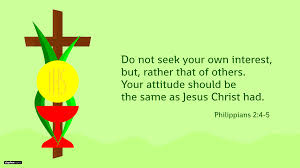
When we empty ourselves of our desire for status, position, respect, then we are like Christ, who humbled himself. For the Christian, empty means full. We empty ourselves of our concern for our self and find for ourselves that we become more Christ like. We often come upon the scripture passages where the Lord tells us to pick up our crosses and follow Him.  We know that this means accepting our suffering so the world can be filled with sacrificial love, and the Kingdom of God might grow. But we usually just relegate these passages to the way that we handle crises. Today’s second reading is more expansive. It tells us that to follow Christ we have to change our attitude in life to be like His.  We have to be like the One who humbled Himself. This is difficult. It is difficult because pride is so deeply rooted in each of us. But through the Grace of God we can conquer pride. And then we can be the people that God needs us to be for His Kingdom. Christ is the victor, even over our pride. And because He can conquer our pride, “He makes us an eternal offering to the Father.” 

images (3)

25th Sunday In Ordinary Time

wpea519203_05_06

In this weekend’s gospel story  we hear about the Labourers in the vineyard. As unskilled workers, they lived day to day at a subsistence level, just above the homeless and destitute. In areas where such workers can got employment, they got   together in a common area known to employers. (In the time of Jesus, the marketplace acted as their gathering area). The employers sought the workers out, hired them only for the day, and paid them the same night . Day laborers in the vineyard objected to the amount of pay the owner gave them as the first was paid exactly the same as the last one denarius. This tense image rode against the popular view of the Kingdom as a peaceful feast of the faithful in paradise. Jesus told this story to emphasize how the Kingdom differed from people’s  ideas and expectations what people expected and the actual kingdom of God were two very different things. According to Jesus, the faithful, even those who practiced faith all life long, did not earn the Kingdom. The Father gave his children the Kingdom as a gift. The pay issue scandalized Jesus’ followers the most, however. Imagine the most dedicated and hard working were paid the same as the others. And they were paid last! Beyond the question of money lie the question of social treatment. The owner treated those who worked for only an hour as he would treat his own family. Those hired at dawn were treated as mere workers. The owner gave greater honor to those who worked the least by paying them well and paying them first. The owner belittled those who worked all day long by paying them so little and paying them last. And, when the workers grumbled, the owner rebuked them in public. No wonder they gave him the “evil eye.” [20:11-15]

If our  ways of thinking and judging are truly far from the Lord’s way, then we have some adjusting to do! Perhaps we  need to work harder in the areas of forgiveness, mercy, and generosity, to mention a few To think as God thinks requires openness and a broad vision, free of self-pity and selfish brooding. It takes a habit of gratitude. It means sitting down and reflecting, “What does God want me to do in this  or that situation?” It takes courage and humility and grace to act this way. It helps if we just ask ourselves a simple question: What would Jesus do we will act in the right way.

The parable of the  workers in the vineyard is the Lord’s call to all of us  who have received Him in word and sacrament to share generously with all people  what we  have received and that means sharing our resources and our time. All of us share equally in the task, whether called early in the morning or late in the evening of the day, we are called  to build up the kingdom of God in this  unjust and often times hard world. When we focus upon the needs of others, even if they encroach upon our rights, we give  ourselves for the Kingdom. Our work  becomes more honest and our leadership will then lead others to Christ. Ultimately, service means sacrifice. What are we willing to give up for the Kingdom of God as we proclaim the good news in word and deed?

EXALTATION OF THE HOLY CROSS

221681_556803841019880_901297500_n

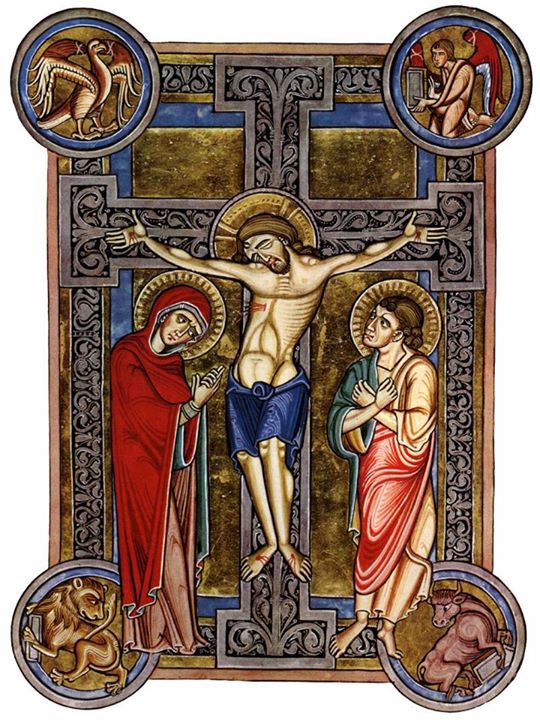
This weekend we celebrate the feast of the exaltation of the cross. The cross can be seen an instrument of torture and death as well as being a sign of great hope and joy. What does the cross of Christ say to you? For me it is a sign of contradiction because it is an implement of death and yet in the spiritual sense it gives life, Jesus went to the cross so that we would have life and have it in its fullness. There are so many people in our world who are asked to take up a cross of one sort or another perhaps ill health or whatever. I know a family that is having a wedding this Saturday without the mother of the house being with them. This particular lady died of Cancer a year or so ago and that is a cross the extended family circle will find particularly hard this weekend. We all have a cross that we are asked to carry with us at various times and we get the strength to carry on by prayer and the knowledge that we won’t be asked to carry a cross that we can’t handle.

The cross reminds us that God is in charge and has a plan for our ultimate well-being. We trust God who has made a promise to be faithful to us, and through the cross, he guarantees to see that promise come to completion. We sign ourselves with the cross as we enter and leave church and as we begin and end our prayers. Each time we do that we remember the God of the Promise the god who was who is and will be the one who will always be part of our journey. Signing ourselves with the cross also “reminds” God of God’s promise to be faithful to us.

Many people find the various crosses that they carry a very heavy weight. Over the years I have come across so many who have carried their cross which were very heavy burdens. Jesus carried all our crosses on his shoulders on that first Good Friday and no matter how hard life may seem we should remember this. In so doing, we will find healing, often a sense of joy, and a new ability to love ourselves and others and gain  greater strength to carry our crosses big and small.

23RD SUNDAY OF ORDINARY TIME

Art Ordinary 23A


Well we are now at the end of the summer holiday months of July and August  and all the schools in our locality are back in full swing and all the various clubs and societies that closed for the holidays are now gearing up for the new season. It seems to me that time waits for no one and this must be true enough when my nephew who is 22 years old was wondering why his life was passing by him so quickly. It is very true that life is passing by all of us both young and old along with all the other age groups in-between and the question to be asked of all of us is am I doing what god wants me to do with my life?  

In our Gospel passage for this Sunday St Matthew recounts Jesus’ instructions to the disciples about how they should deal with a brother who does something wrong. This same instruction applies to us and our dealings with other people in the here and now of today. This passage is very different from those of the two previous Sundays. They were dramatic stories, marked by deep emotions and with deep implications for the characters involved. This is a little gem of a passage but with little drama, a very practical, common-sense teaching on that most common and most prosaic of community problems – conflict.

It is a great wisdom teaching which continues to be valid for us in our own time. Management has become a science today, and Jesus’ teaching stands up well as a model of how to “manage” conflict in any situation.  It is the duty of the disciple we are told  to point out the error and even if our correction might not be well received. St Matthew wants to let the Christians in his community know how to deal with those who drift away from the teaching of Christ or blatantly contravene the commandments. And he chooses those words of Jesus which most stress the authority and the competence of the Christian community, the Church, to deal with these cases: Whatever you bind on earth shall be considered bound in heaven; whatever you loose on earth shall be considered loosed in heaven.  However, there are some safeguards built into this teaching on reproving those who go astray. Jesus says that first of all you must have it out with him alone. This might lead to a speedy solution and the person’s good name is preserved. Yet it seems  from the gospel reading that the only sanction is that the person be excluded from the community of the Church. That is surely the meaning of the words: treat him like a pagan or a tax collector treat him as an outsider. But in considering such matters we must be very careful; for getting all worked up about the behavior of someone else  can frequently be a sign of something else, something much closer to home.  Encountering the truth about another person and ourselves is daunting  because it makes us face up to the other person and ourselves and the weaknesses that are part of us and all we are.

We may try to make others a function of our egos, but it fails. Rather than enter the struggle, in many cases we ignore it. Our human relationships mirror our relationship with God sometimes good  often times not so good. Whenever we encounter each other—not only in prayer—Jesus is in our midst let us remember this as we go forward as people of faith.


22ND SUNDAY OF ORDINARY TME

221681_556803841019880_901297500_n

THE CROSS OF CHRIST

Well here we are at the last weekend of August and the youngsters are going back to school. Here in this part of Ireland the kids have been on holiday for the last 2 months and I think at this stage everyone will be happy to get back to the daily routine of school and home life. I met a friend of mine with her grandchild on Thursday and the youngster looked lovely in her new school uniform as she was changing to first year in a new school, how time flies. I remember that this particular girl had her legs in splints when she was born and the doctors thought that she mightn’t walk at all and here she was walking towards me with a big smile on her face.

In our gospel reading for this Sunday we see Jesus telling his disciples that ‘If anyone wants to be a follower of mine, let him renounce himself and take up his cross and follow me. He also says that to us in the here and now of today, also in the gospel Jesus began to make it clear to his disciples that he was destined to go to Jerusalem and suffer grievously at the hands of the elders and chief priests and scribes this was a pointer to all that happened on Good Friday.Peter knew that Jesus was the messiah awaited by God’s people, but he did not understand that Jesus would be a suffering messiah a suffering servant.  But it did happen to Jesus, and it happens to those who follow him: “If a man wishes to come after me, he must deny his very self (and) take up his cross.”In the first reading Jeremiah had foretold the suffering of those who work for the coming of the kingdom: “All the day I am an object of laughter; everyone mocks me … The word of the Lord has brought me derision and reproach all the day.”

Among all the religious symbols in the world none is more universal than the cross. You see crosses everywhere, on walls, on hillsides, in churches, in houses, in bedrooms, on chains around peoples’ necks, on rings, on ear-rings, on old people, on young people, on believers, and on people who aren’t sure in what they believe. Not everyone can explain what the cross means or why they choose to wear one, but most everyone has an the sense that it is a symbol, perhaps the ultimate symbol, for depth, love, fidelity, and faith. We are told  in our gospel reading to deny our very selves and follow Jesus by taking up the crosses that might come our way.  It is so easy to say this but with grace, we can do exactly what Jesus asks of us!

 With the goal of eternal life as our focus, the grace of god enables difficult things to become not only possible, but easier for us.   We can find the life God wants us to live.  We can embrace ways to proclaim the Good News in word and deed.  Nothing else makes much sense… if we keep our goal in mind.  What profit would there be for one to gain the whole world and forfeit eternal life? The sick the old the sad the young and the old they all have a special need of our prayer. Today we pray for all those who find the burden of the cross they carry too hard to bear and we hold them in prayer. That god will be with them as well as ourselves and help all of us along the road of faith.


21ST SUNDAY OF ORDINARY TIME

B3707985

At the end of next week the youngsters start to go back to school, I can just see my mother at the bottom of the stairs shouting up to us ‘Will you get up out of your beds its 8.00  and the bus will be away without you’!!! we didn’t want to get up. There was always something reassuring about another school year beginning because all the clubs etc that closed for the summer break would reopen and the area would get busier again. So much has changed since my mother stood at the bottom of the stairs trying to get us out of bed to get going again for September. It has been a long and eventful 30 years since I was at school but I don’t think I would want my life to be any other way that the way it is at the present time with god and my family as central points in the ever changing world.

In The Gospel reading we have this weekend we hear Jesus asking the question WHO DO YOU SAY I AM?  It is a powerful question to ask anyone. Jesus firstly asks the apostles who do the people say I am they told him that the people thought that he was John the Baptist, or Elijah or maybe even one of the prophets. But then Jesus asks the question of those closest to him his disciples as today he asks you and me WHO DO YOU SAY I AM? When Jesus puts his question to Peter, and to us, he isn’t asking about public opinion. He is asking Peters opinion in the same way he is asking us for our answer to his question WHO DO YOU SAY I AM?

Peter gave the right answer to Jesus’ question, when he said ‘You are the Christ,’ he said, ‘the Son of the living God. Peter got it right and went on to become the rock on which the church was founded Jesus gives the keys to the kingdom of heaven to Peter and through his successors right down to Pope Francis in our present time. Jesus is the one who had come to liberate not only those enslaved by Rome, but all who are poor and oppressed. He can liberate those diminished by sin, dominated by colonial powers, oppressive national debt, violence and enslavement of any kind. His liberating power was handed on to Peter and his companions. If Jesus was to ask us the question today who do you say I am what would we say in answer? Throughout history, people have attempted to answer this question. Today it is popular for people to simply make something up, to make of Jesus whatever occurs to them, is convenient or “believable.” I think C.S. Lewis put it best: “A man who was merely a man and said the sort of things Jesus said wouldn’t be a great moral teacher. He’d be either a lunatic- on a level with a man who says he’s a poached egg – or else he’d be the devil of hell. You must make your choice. Either this man was and is the Son of God, or else a madman or something worse. We often question God’s judgments or ways and sometimes rather negatively.  As we re-think the place of Jesus in our lives, may we come to know the security of being in God’s hands through the suffering of Jesus’s hands on the cross.  May we find comfort in the continual workings of the Holy Spirit in our lives.  May we rejoice in the abundant love of our Triune God  


20TH SUNDAY OF ORDINARY TIME

Faith

Well here we are at the middle of August, with just two weeks to go before the schools reopen after the long 8 week holidays of July and August. When you stop to think about it time just seems to be passing by. It is worrying when a 23 year tells you that his life is flashing by his eyes what must it be doing for those who are older?

Our Gospel reading for this Sunday is all about the faith of the Canaanite woman whose daughter was being tormented by a devil, but when you read the story we realize it is really about  the great faith that she has and it was that faith in Jesus that cured her daughter even though she had to be persistent in dealing with the Lord. The woman in today’s Gospel story is not satisfied with just tears though.  Her daughter “is tormented by a demon.”   Parents among us know what that might feel like and how fiercely we would spring into action if a “cure” was before us for our own sick child.   She cries out and asks Jesus for help … and perseveres even when the disciples try to send her away and Jesus Himself rebuffs her!  Jesus relents because great is her faith.

In the same story we see much about ourselves and our own faith.  Over a number of years I have been involved with many people who have been praying for this or that or for or a member of their families and very often they have said to me that the prayers have not been heard let alone answered. I have always told them to hang in there to persist and not give up in the prayers because they are always heard and this has been the case with so many people throughout history. In the same way as the Canaanite woman  pestered Jesus  we should never give up though we mightn’t have our requests granted when WE want them they will be granted when we really need the things that we are praying for. A friend of mine is constantly praying for her son and thankfully her prayers are being answered but sometimes as happens in all families the road can be a bit rocky along the way but we have to keep on going. The message of today’s readings is all about FAITH life can be a bit of a pickle with good and bad things within it, but a life lived with faith will see all the various obstacles being removed. Would our faith be as persistent as the faith of the woman in this Sundays Gospel? Only you can answer that one and I hope that your faith is persistent like the Canaanite woman whose daughter Jesus Cured because faith moves mountains !!

19TH SUNDAY OF ORDINARY TIME

GREEN CROSS1`


At the beginning of this week we had the centenary of the start of the First World War which was called the war to end all wars. As we know all too well the great war of 1914 did not  stop the world going to war many times after it ended in 1918. We only have to look at the modern world that we live in  to see so many places at war and Syria, Israel and Gaza, and the Ukraine all come to mind this weekend. We pray for those who have died or are being persecuted and we pray for peace.

The gospel reading this weekend is all about  Jesus  walking on water but if you look beyond the walking on water this story is really about trust and faith in God. We have no problem identifying with Peter he is so like ourselves . He is confident one moment and then, when things get difficult and he has bitten off more than he can chew, he falls apart. By then it is too late and he needs help. Life is like that, we start at something like a new job, college, marriage, or a project to help others, but then it gets complex and beyond what we are capable of. We didn’t realize it was going to require so much time and effort! We are sinking, we are drowning. Not an uncommon experience in so many situations of life and in the way we deal with them.

God doesn’t always give us an immediate cure or a fast solution when we bring ourselves in prayer  as well as  the problems of the day to God.  God, through Jesus, is not a distant Father aloof from our problems. Jesus shows us that when he reaches out a hand to Peter and to us he is companion with us in the storms of life.

At times we may well be floundering, like Peter, but Jesus reaches out to help us, to rescue us. What better image of salvation could there be than Jesus reaching out to Peter to save him from drowning. What better analogy could there be of our own lives and relationship with Jesus. We live messy lives, we doubt and we lack faith but nevertheless we are still moving towards the Lord. In the days ahead when we flounder and start to sink Jesus will be  there for us, reaching out with his saving hand ready to raise us up.

Post Navigation