Fullerton T

RELIGION LITURGY AND LIFE

6TH SUNDAY OF EASTER
 

images (55)


This weekend we celebrate the 6th Sunday of Easter. It seems no time since we began Holy Week on Palm Sunday and now we are heading into Ascension and then Pentecost Sundays and then we resume  the Sundays of Ordinary Time. The readings this Sunday contain many comparisons of those “in the world” and those who have life “in the Spirit”.  The truth is that we all live in the world and are constantly influenced by other people, places, and events good and bad.   In this Sundays  Gospel Jesus promises us that “I will not leave you orphaned; I will come back to you and you will have life.” Our faith, nurtured in this great paschal season, tells us that God-made-flesh is God-with-us, never abandoning us and always filling us with life.Today many live without belief in the existence of truth. Some use the word without understanding its authentic meaning, as if it can denote only a personal opinion, a thing that is “true” only for the individual who holds that idea. This widespread relativism, has crept with increasing power like an infection into the body of the Church.

The members of Christ’s Body are ever affected by the same forces and currents as is every human person. For the Catholic Christian, however, there can never be any confusion as to the existence of truth. There can be no Catholic faith without truth, for Christ founded the Church for the purpose of teaching the truth, endowing her with the gift of the Holy Spirit by which the truth is taught infallibly in matters of faith and morals in every age. Reverence the Lord in your hearts,” Peter tells us in today’s reading. If God is not revered as sacred nothing is sacred anymore. This is so true in many aspects of today’s culture Maybe this accounts for the growing break-down in families and many other things as well. And in a timely warning to those of us  engaged in religious debate, Peter urges them  and ultimately you and me to make our arguments “with courtesy and respect.” Peter makes deep moral demands on us. As a Christian how fitted am I to give an account of my faith? Is my understanding of the Christian message a few’ do’s and don’ts’ and some scraps of information remembered from school?

Do I appreciate there is a Christian manner of action? Am I conscious of how others are persecuted for their beliefs, or feel a sense of solidarity with Christians who suffer elsewhere? As a member of a body which was born in persecution and whose head suffered on the cross, am I sensitive to the pain of all who are oppressed, and seek to alleviate their persecution? Is a document such as the Universal Declaration of Human Rights something that I consider should interest me as a Christian? Do I support those who support human rights? Painful questions, but can we be true to our origin if we shy away from them? May we go forward in faith with one another and more importantly with God realising that god is with us through all that life throws at us.
 

5TH SUNDAY OF EASTER

imagess


In today’s world where news is reported instantly as a glimpse of the culture, being held accountable seems to be one of the most uncomfortable situations to find yourself in.  It is one to which people often respond with defensiveness rather than genuine self-evaluation.  Most people, it seems to me, just do not like being wrong or admitting having done something in error and I include myself in that. Unfortunately, we often stick to our own perspective and then voice strong denial even when evidence shows us (and everyone else) that the truth is something completely different to what we thought.  Politics is often an unpleasant testimony to that smugness and that arises when we think that our point of view is always right even when it’s wrong. On the other hand, sometimes we seem to know the truth “way down deep in the heart of our being” even though the current evidence does not bear it out and we act on that positive conviction that comes from the heart.  

We must also remember that the search for truth is not a search for you and me to become more important than the next person and certainly not more important than God:  only God is all powerful.  How do we genuinely and unwaveringly search for Truth and stay humble and accountable along the way?  How do we follow the voice of Jesus, the Good Shepherd,  and not the voices of the strangers or even our own selfish one, the “thieves and robbers” of whom Jesus speaks in our Gospel reading for this Sunday?

The Gospel reading for this Sunday is a story about Jesus and the disciples. He is helping them get ready for his suffering and death. For the apostles this was a huge reversal from the adulation of the entrance into Jerusalem on Palm Sunday to the despair of the Cross on Good Friday. Remember when he asked them whether they would leave him, along with the rest of the crowd? Now it is he who is leaving. They are stunned. Peter’s reply at that time might have been appropriate now. “Where will we go? You have the words of eternal life” (Jn 6:67-8) Jesus helps them. “Do not let your hearts be troubled. You have faith in God, have faith also in me.” The straightforward meaning of this directive is, you know how to trust, you do it with God. Use that same trust with me.

This fifth Sunday of Easter tells us that Jesus speaks to us not at us.  His presence is in the word proclaimed in the Assembly of the people of god gathered together in Church.  His word is proclaimed to us in the readings from scripture as well as in lived example of others in the community where we live.  We come to Church week in week out to hear the Word.  We come to share the joys and sufferings of all the community gathered together.  We receive the Body and the Blood of the anointed one, the Christ, risen from the Tomb.  We hear the word while we work in the world through those around us. We don’t stay in Church all the time as the hard pew might well become the soft bed.  We have duties and obligations to family, work and the communities where we live.  We take the Word and Work of the assembled people of God into that life with all its short comings.  

The Word of God stays with us because through the death and resurrection of Jesus we receive the Spirit of God  Jesus breathed on the disciples. This breath of the Risen One imparted the Spirit to them and to us.  We are released from sin that harms our spirits and blocks our ears. The Word of God is available to us: we should  open our ears and listen.As the Good Shepherd puts it in the gospel, we will no longer be at risk of either being lost or stolen away by thieves and bandits. On the contrary!  He is both our Good Shepherd and the gate that swings open to bring us to green pastures and a magnificent banquet. So, in fact, the light of the Risen Christ, the one whom Peter today calls ‘the shepherd and guardian of your souls’ will be shining on us and on all whom we love.

When we’re confused about decisions we should make, Jesus Himself will show us the Way. When we don’t know what is true and what is false, what is right and what is wrong, the Holy Spirit through the Church and its members will enlighten us. And when we are drawn into false pleasures that promise us life, Jesus will bring us back to real living and the joy of that life through the power of His love. As we walk along the roads of life let us take up the call of Jesus In the gospel to trust in him and he will not let us down.

3RD SUNDAY OF EASTER 2014

download (8)


We gather this weekend in the joy of the gospel after the solemn celebration of Easter and Divine Mercy Sundays, we also thank God for the canonization of Pope John XXIII and Pope John Paul II. we thank God for their leadership of the Church over the years. We also remember that the celebration of Easter continues until the coming of the Holy Spirit on Pentecost Sunday and then Easter Time ends and the paschal candle is placed near the baptismal font.

After his Resurrection, Jesus appeared to his disciples several times.  This Sunday’s gospel recounts the apparition of Jesus on the evening of Easter to two disciples who were going from Jerusalem to Emmaus.  Now, however, their life with Jesus has all come to an abrupt end.  For in these past few days Jesus, their beloved Leader and Teacher, has been arrested, tried, sentenced, tortured and killed. Now they are feeling that without his presence, his inspiration and guidance, his support and encouragement, they simply cannot go on. So disappointed and so disillusioned are they about Jesus in fact, that they have even decided to leave the Church, the community of his followers.  This is just what they are doing when we catch up with them today. Slowly but surely they are walking away from it all.

Slowly but surely they are putting Jerusalem and the other disciples behind them. They are heading for the village of Emmaus, some seven miles away, to start a new and different way of life. The Emmaus story is the story of the church it is the story of you and me the two disciples represent all of us who claim that we are Christians with all our doubts and disagreements.

We come together in our churches each Sunday in answer to a call, often a quiet murmur from the recesses of our hearts which calls out to us saying come to me you who are weary and overburdened and I will give you rest.  We’re searching just as the companions on the road to Emmaus  were and they were weary from all that had happened to them.  The people of God come together for a purpose and that is to seek God. We work together for God’s kingdom since the kingdom provides unending meaning and purpose: we worship together so we’ll not miss seeing God with us.  God comes to us in the Scriptures handed down throughout the ages.  The experiences of our faith ancestors in those scriptures give substance and meaning to our lives.  In these we find explanation and understanding of events and relationships which have shaped the faith of so many for many years. Our faith is lived out in the real world, the world of family, of work, of recreation, of politics and economics. We don’t live in two separate worlds one spiritual and the other secular.  

Those who would have us believe that we can separate our lives into two compartments are mistaken as history has shown.  The fellowship we share helps us ask the questions of faith.  It is the application of scriptures to the events of our own times that reveal that God is walking with us and maybe even working through us. But it is in the breaking of bread that we recognize the Christ who is already among us on our journey. It is in the sharing of the Bread and the Cup that we are made one with each other and with Christ.  Our faith grows and our relationship with God and his called-together-people unites us in bond of love.  We are formed into one Body, the Body of Christ.  The trip to Emmaus is the journey we make as faithful people of god.  We are on this journey in fellowship with one another  being led by Jesus who calls out to us to follow him from the Cross of Good Friday as well as from the empty tomb of Easter Sunday. 

 As we grow in faith, we are led to understand those past events as experienced yet again in our time and place.  It is in the breaking of bread, in the hospitality of Jesus, that we recognize Jesus as God’s Son.   The Risen Lord uses so much gentleness with us! He doesn’t oblige us to ‘believe’ but He offers us the instruments that enable us to judge based on the measure of our own hearts. As St Augustine extraordinarily wrote in the opening of his Confessions ‘our heart is restless until it rests in you

(St. Augustine, Conf. 1,1,1:PL32,659-661)

There is still one more detail that calls for our attention and raises many questions: why did the eyes of the disciples open to recognize Jesus whilst they were at table with Him? The Eucharistic context of the Emmaus story is undeniable. The disciples are at table, the Lord is with them; He took the bread and saying the prayer of benediction, broke it. It was during the last action of the breaking of the bread that the companions recognised Jesus. It was not only the action in itself but finally as his friends could see, with their own eyes, and we too see the breaking of the bread with our eyes and hear the word of god and yet so many are slow to believe in the great joy that so many people have in the present as so many had in the past.  Pope Francis tells us in the Joy of the Gospel his recent letter to the Church, let us go forth to offer everyone the life of Jesus Christ… If something should rightly disturb us and trouble our consciences, it is the fact that so many of our brothers and sisters are living without the strength, light and consolation born of friendship with Jesus Christ, without a community of faith to support them, without meaning and a goal in life… At our door people are starving and Jesus does not tire of saying to us: “Give them something to eat” (Mt 14,16; Mk 6:37; Lk 9,13). Pope Francis Apostolic Exhortation « The Joy of the Gospel »

As we recognize Jesus in the breaking of the bread may we be joyful agents of conversion of one another and to those who are around us. Bringing the joy of the Gospel and its message to everyone without exception and be the caring face of the Church those who need us wherever they may be.


DIVINE MERCY SUNDAY


HE HAS RISEN


Today we celebrate the Second Sunday of Easter more recently known as Divine Mercy Sunday. We also celebrate the canonization of Pope John the 23rd who was known as the pope of the second Vatican Council who opened the doors and windows of the Vatican to let the light of renewal into the Church and pope John Paul the 2nd who was known as the Pilgrim Pope as he travelled the world proclaiming the Gospel to the nations.

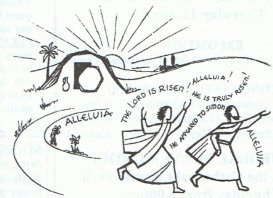
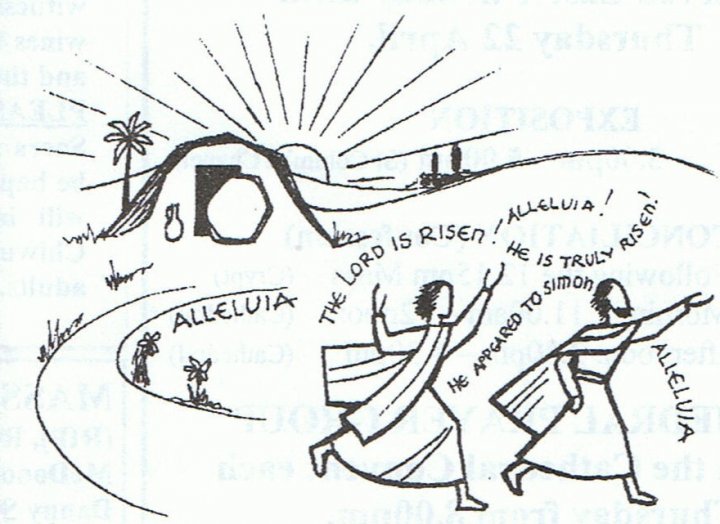
The Easter season has the most exciting Scripture readings of the year. They take us from the empty tomb of Easter Sunday all the way to the coming of the Holy Spirit at Pentecost. On Easter Sunday, the Apostles huddled in fear in the empty room. They weren’t so sure that the women’s report that Jesus had risen was believable. They weren’t singing for joy! Now, a whole week has gone by. They still felt “rocky” about their future.Thomas wasn’t the only one who had doubts about Jesus I think so many were doubtful then as so many are doubtful right here and now. The Apostles were still huddled behind locked doors, pondering the shocking experience of the week before when all seemed to be lost. Jesus had broken through those doors to assure them that He was alive. And His message must have troubled them: “As the Father has sent me, so I send you.” in the same way we  are sent out in the Joy of the Gospel to bring his message to other people wherever we are.
As Pope Francis directs us, we must courageously reach out in the joy of the Gospel to so many doubters among us, and assure them of the great mercy of Jesus, His great love for them. Our world is hurting as So much because of the many evil things that are happening within it. We pray this weekend  through the intercession of the Churches two new saints  John Paul II and Blessed John XXIII that we will be witnesses to the joy of the Gospel as evangelizers and witnesses to the Resurrection to the people of our time and place as Christians in our own communities.


John Paul II and Blessed John XXIII 

EASTER


HE HAS RISEN


The cross is empty now Jesus lies in the tomb and everything around us is still.’ The heavens and the earth cry out with longing for the sinless one who is not to be found, if we stop to think for a moment we remember that Jesus died and rose again on the third day. We wait, as mourners beside a grave, unsettled, ill at ease, almost not knowing what to do with ourselves. The Church has only one thing to do today: to pray through the emptiness of Holy Saturday. Holy Saturday then is the day when we experience watching and waiting at the tomb as we await the celebration of the Resurrection which we celebrate in the Easter Vigil and the season of Easter. The Jewish people have been celebrating Passover annually for thousands of years, commemorating the night in which God brought them out of slavery in Egypt to begin the journey to the promised land.

At the Last Supper, Jesus also celebrated the Passover but gave it a new meaning. No longer a remembrance of passing from slavery to freedom, but through his own passion, death and resurrection we too pass from death to life with him. Until the fourth century, Easter was the only feast of the Church’s year, and to this day it remains the most important. As the Catechism says: “Easter is not simply one feast among others, but the ‘Feast of feasts’, the ‘Solemnity of solemnities’.”

Every Sunday Eucharist echoes the Sunday of the Resurrection and Easter. It can seem that once Easter Sunday has passed Easter is finished, but the’ celebration continues for fifty days. The next Sunday of Easter day  is traditionally known as Low Sunday or Dominica in Albis (White Sunday) which refers to the white baptismal garment of the newly baptised. Divine Mercy Sunday is a new feast also celebrated on this day. This year it has the added significance because on this day Pope John 23rd and Pope John Paul the second will be canonized (made saints). Divine Mercy Sunday comes almost as an opportunity in which anyone who missed out on celebrating the mercy of Christ in Holy Week has another chance. After forty days we celebrate the feast of the Ascension of Christ who returns to the Father to send us the Holy Spirit.

We spend the nine days between the Ascension and Pentecost praying for the Spirit like Mary and the apostles in the Upper Room. On the fiftieth day (which is the literal meaning of the word “Pentecost”) Easter ends. On that day “Christ’s Passover is fulfilled in the outpouring of the Holy Spirit” (CCC 731). Our celebration of Easter resonates throughout the rest of the year: full of gratitude for Christ’s passion, joy in his resurrection and, strengthened by the Spirit, we continue our Christian journey in faith hope and Joy.

Copy of images (48)


PALM SUNDAY

images (46)


Today we begin what I think is the best week in the whole liturgical year. Centuries ago it was called the “Great Week”. Nowadays we call it “Holy Week” and we begin with Palm Sunday. This year we stop to think again about what Holy Week means to us as individual people as a community and we also stop and think about Pope Francis apostolic letter  The Joy of the Gospel and how it impacts the way we celebrate Palm Sunday and Holy Week and how we celebrate our liturgy and our lives in general. In many ways the two main themes of today are happiness and sorrow, and these themes  also come into play on Holy Thursday, Good Friday and Easter Sunday.
On ash Wednesday we placed the ashes on our foreheads as a sign of our humility as we began our Lenten Journey and now six weeks later on Palm Sunday we remember Jesus entrance into Jerusalem on a donkey as the people raised their voices in joyful acclamation as they sang hosanna to the Son of David, Blessed is he who comes in the name of the Lord.  The Passion narrative of Matthew emphasizes the great humility of Jesus, the King.

It’s the only Gospel to tell us in detail of what happened in Jerusalem at the hour Jesus gave up His Spirit — the sanctuary veil torn in two, the earth quaking, rocks split, dead saints rising from their graves and entering Jerusalem. It’s the fulfillment of all the prophecies of thousands of years before.  It also tells us more fully of the betrayal by Judas, the denial of Peter, the hearings before Caiaphas and Pilate — the awful scourging by the Roman soldiers, the thorny crown jammed upon His weary head, the whip cutting slashes into His flesh, the blood running down His shoulders and back, the cursing by the crowd, the nails tearing through His hands, the thud of the cross into the ground. As He hangs on the Cross, He cries, “I thirst!” How that cry echoes down the centuries as a reminder of His search for our love. But what does Palm Sunday really mean to you and me? What does it mean to us as Christians in the year 2014, a big question indeed with no small answers.

Lent Palm, Sunday and Holy week taken as a whole give us  the opportunity to look hard at ourselves and see exactly where we are going and perhaps were we should be going. We have always to remember that Jesus came to take away our sins and to point us in the right direction that is towards our father in heaven and all that is good.  We need to remember that Christ came to serve and give his life as a ransom for many as a result of this  he points us in the right direction.

Christ took our sinful ways on himself because of his love for us  It is important that we who say we are Christians accept the truth about ourselves that truth  may not always be good and then in our acceptance of the truth we will be able to look at the Cross and recognise the love of God our Father in the man on the cross.

Let us remember that  Pope Francis tells us that in his letter that The joy of the gospel fills the hearts and lives of all who encounter Jesus. Those who accept his offer of salvation are set free from sin, sorrow, inner emptiness and loneliness. With Christ joy is constantly born anew…  The great danger in today’s world, pervaded as it is by consumerism, is the desolation and anguish born of a complacent yet covetous heart, the feverish pursuit of frivolous pleasures, and a blunted conscience.

Now is the time to say to Jesus: “Lord, I have let myself be deceived; in a thousand ways I have shunned your love, yet here I am once more, to renew my covenant with you. I need you. Save me once again, Lord, take me once more into your redeeming embrace”. How good it feels to come back to him whenever we are lost!… God never tires of forgiving us; we are the ones who tire of seeking his mercy. Christ, who told us to forgive one another “seventy times seven” (Mt 18,2) has given us his example… Time and time again he bears us on his shoulders (Lk 15,5). No one can strip us of the dignity bestowed upon us by this boundless and unfailing love. With a tenderness which never disappoints, but is always capable of restoring our joy, he makes it possible for us to lift up our heads and to start anew. This week  and indeed throughout the whole of our Lenten Journey that will soon finish we have been given  the opportunity to renew ourselves in heart, mind, body and soul and see where we should be going.May the passion story that we hear on Palm Sunday and again on Good Friday inspire all of us to try to imitate in some small way the all loving all forgiving Jesus who went through betrayal to death and finally to resurrection for us so that we will have life and have it to the full. 

Over the next few days may we prepare with greater intensity for the Easter Triduum Holy Thursday, Good Friday and  Holy Saturday and then we will really be able to enjoy the Easter feast which we have been preparing for since Ash Wednesday.


HW

5th SUNDAY OF LENT

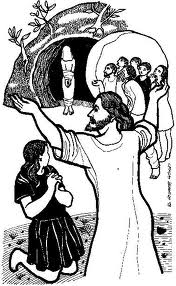
LAZARUS COMES OUT OF THE TOMB

LAZARUS COMES OUT OF THE TOMB


Well here we are at the 5th Sunday of lent as we look towards Palm Sunday and Holy Week. Just a couple of weeks left. And, as the drama intensifies in the tension between Jesus and the Pharisees, so too, our personal struggle to overcome the weak spots in our spiritual armor should also “heat up.” There’s so little time remaining before our well-deserved Easter joy! As usual time has just flown in it seems to me that it has been no time since we celebrated the feast of Christmas  and  that was three months ago!!  Time waits for no one is certainly a saying that is so true. I hope that Lent hasn’t served to mire us in guilt and shortcomings. Instead the Sundays of Lent give us the opportunity to look at where we have been, where we are and where we need to go  as we listen to the Word of God. If we were listening we would have heard what we hear again today through the prophet Ezekiel. God intends to “open your graves and have you rise from them.” And again, as John puts it: Jesus is “the resurrection and the life.” And we see this especially in the Gospel which is a pointer to the resurrection of Jesus on Easter Sunday. It seems a bit strange to have this gospel on the Fifth Sunday of Lent . It seems to be clearly about the resurrection and yet we are still plodding through Lent and have to get through Good Friday before we get to Easter and the joy that is there waiting for us.

Beneath the layers of theology in today’s Gospel reading, John tells us that Jesus had some very good friends.  Some people followed Jesus for what he could do for them. But Martha, Mary and Lazarus seem the type of people that “sit around the table with a glass of good wine and share the day and daily ins and outs of life” kind of friends. The kind of friends whose faces “light up” with arms open wide when you meet them. The kind of friends who will witness your execution and stay with you when others run away. They are the friends you are one in spirit and mind with.

This sort of friendship brings life and joy, to individuals and to communities. It seems to be another good image of Church – Jesus surrounded by people who love him and each other, working together to bring life to others. Martha and Mary both say the same thing when they meet Jesus, “Lord, if you had been here my brother would not have died.” When Jesus tells Martha, “Your brother will rise,” she professes faith that he will rise, “in the resurrection on the last day,” Then she professes her faith in Christ as “the Son of God, the one who is coming into the world.” But neither Martha nor Mary express faith that Jesus will resuscitate their dead brother. In fact, when Jesus orders the stone removed Martha says, “Lord, by now there will be a stench, he has been dead for four days.”

Jesus doesn’t work some miracle to remove the stone from Lazarus’ tomb? He asks others to do it for him. When that barrier is removed, Jesus calls Lazarus forth to life. The gripping drama of the rising of Lazarus points towards Jesus as the Lord of Life and prepares us for the celebration of our  coming out of the tomb and sharing in His Life at Easter. 

But this Gospel is about more than this friendship. It is also a call and a command for all of us  to stop and consider if we are in a tomb, and if so, it asks us to hear the voice of the Lord calling us to shore up our courage and to come out of the tomb. The Gospel calls us to walk to the Lord and then to walk with the Lord as he shows us the way.As we go forward on our journey to Calvary, we should not fear the power of evil that so clearly fuels the plotting of the Pharisees. All evil in this world will have a short life. We need fear only our own weakness and vulnerability, our own false selves. From the deadness of our sinfulness and fears, we need to open our ears and our hearts to hear Jesus calling us to come into a new life.

How loving and compassionate is our God in the person of Jesus! He wept over Lazarus, wept over Jerusalem, he weeps over those killed through terrorism and war, through famine and disease, through murders and rapes- and-weeps when we fail to forgive one another.In these days of continued wars, terrorism, and ethnic hatreds, may we reflect on the truth that Jesus had to give his own life that we might have life and have it to the full.

Lent may be winding down, but there is still time for us to receive the sacrament of penance. There is still time left for our Lenten Spiritual Spring cleaning. There is still time for us to be at peace with ourselves and with our Lord. May we appreciate more each day that we are privileged to share with Jesus as Christians in his continual work of bringing the world from darkness to light, from hatred to forgiveness, and from death to life.We ask God today for the courage to walk away from that which is killing us and to walk towards the Light. We ask the Lord for the courage to walk towards the voice that is saying, Lazarus, Come out which in turn is asking us to come away from all that entombs us to  the everlasting love and mercy of God. 

4th Sunday of Lent


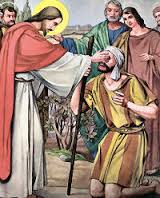
jesus heals the blind man

JESUS HEALS THE BLIND MAN

Well here we are at the midpoint of Lent, Hopefully the things that we have given up or perhaps taken up have not been as stressful as we thought. Many people young and old  have given up things such as sweets, a glass of wine or perhaps their favorite food or drink items whatever they are, they might then pass on the money saved as Lenten Alms. Or maybe people have taken up doing things such as going to the early Mass (7.30am in our parish) or the Lenten devotions and prayers or whatever spiritual retreats or events that are out there for everyone. All in all Lent is a time for giving things up that might not be as good as we think it is also a time for taking up other more meaningful things. Things that lead us out of the darkness into the light of Christ.

Two weeks ago in the readings we were told to ‘Listen up!’ This week, the readings tell us to get rid of the darkness, and to learn to see things good and bad as God sees them or at least to try and see things as God Sees them. There are so many dark places in our lives where we need to shine a light and there are many people who have turned out the light of faith in their lives permanently for many reasons.

Many people are blind just because they simply don’t want to open their eyes to look around them and see the many things that abound in our modern world that run against what we are meant to be as Christians that is followers of Christ. There are so many things that really destroy the light of faith in our lives such as abortion and euthanasia to name but two and there are so many other things besides these that extinguish the light of faith. The light of Christ  is about letting god work through us and as a result being the light in the darkness of life and living  for others.

If we are to really see clearly, we need to let Jesus heal us of our blindness  and open our eyes as He did the man born blind in this weekend’s Gospel. Even though Jesus was right in front of him, the blind man couldn’t see Him until Jesus removed the scales from his eyes, and restored his sight. Only later, after much harassing from the narrow-minded Pharisees, was he able to really see spiritually, and to see Jesus as the Son of God. It was all possible when he saw through the “lens” of the Holy Spirit. We can be like that in so many ways We are invited to celebrate this Sunday with joy, because through our baptism and confirmation we have been invited to live in the light and to act with the power of that light. We also pray for those adults who will take up the light of Christ for the first time when they are baptized at the Easter Vigil may they be a light to those around them as they come to the joy of baptism and confirmation.

3rd Sunday of Lent 2014

WATER

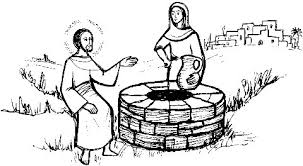
THE WOMAN AT THE WELL


As we continue our journey of prayer for lent we come to the 3rd Sunday and our gospel story for this weekend tells us about the Samaritan woman at the well. One of the responses for the Easter Vigil is with joy you will draw water from the wells of salvation and this sums up what the reading from johns gospel is about. It is about the great joy that comes from being a Christian a believer in the good news of the Gospel.

Jesus breaks the law to speak to a Samaritan woman who had come to Jacob’s well to draw water. What a surprise it must have been to her, when Jesus, tired, hungry and thirsty, asks her for a drink of water! He broke all the rules in speaking to her. Now, He keeps on talking, ignoring her hostility, aware that, in this unexpected encounter, the Father has provided Him with an opportunity for piercing the heart of this sinful woman with His love and also leaving an example for all those who thirst. Jesus suggests that He can give her living water that is far superior to anything she had ever tasted. Certainly her five husbands (plus her newest lover) haven’t brought her what she is really looking for. We know that she had tried cheap love, and i am sure she was no stranger to intoxication, power, and money! This isn’t a gentle lady who comes to draw water from the well, but a toughened cynic. Cynical with the world around her in her time as so many are cynical  in our modern world for many different reasons.

Jesus forgets His own needs, and offers this woman living water that is spiritual grace. Finding her heart curious and open to this miraculous water, He proceeds to raise her vision. He asks her to go back and bring her husband to the well with her. Of course, this is the turning point of the story. When He confronts her with the truth, she could have flounced off in righteous indignation and denial as many people do when confronted with the truth but she doesn’t. In true humility, she accepts the reality of her sordid life. Because of her humility, Jesus floods her soul with grace. Dropping her bucket, she runs back to spread the good news. “I’ve found the Messiah!” And she had!

Lent is a time for us to let Jesus satisfy our thirst for the truth. Like that woman, we too have tried the wrong kinds of water to quench our thirst for happiness, satisfaction, and peace of mind without really finding it. The psalm in the Easter Vigil tells us that with joy we will draw water from the wells of salvation and this  is the time for us to find real joy and satisfaction of letting the Lord fill us with the grace during  the season of Lent in order to fully enjoy the season of Easter. We will find that our joy from that comes from the well of salvation the living water is greatest when we share the gift of salvation with others by really listening to them, praying from the heart in a quiet place, reflecting on the Word privately or at daily Mass, and letting the Eucharist change us into the Body of Christ. The Samaritan woman reminds those who doubt, or struggle with faith and we are all like that as we all have doubts to stay in a conversation with Christ.

She came looking for physical water and found Jesus, the “living water,” who would quench her thirsty spirit. May we find joy at the wells of salvation which is Jesus Christ the light of the world. Today we also think of those  adults who will be baptized at the Easter Vigil as they continue their particular journey and we pray in a special for them, their families and all the people who are journeying with them at this time. They  are seeking  with joy the wells of salvation as they head towards their baptism at Easter.

2nd Sunday of Lent


Well here we are at the 2nd Sunday of Lent, as we continue our journey along the road that leads to Holy Week and Easter. In the Gospel, we get further advice for the journey. On the mountain, Peter, James, and John will catch a glimpse of the glory of God. As they approach the summit, the three suddenly notice a change in the garments Jesus is wearing. They become dazzlingly white. The disciples then see two famous figures appear. They recognize Moses the Lawgiver, and Elijah the Prophet. They are both discussing something with Jesus. Then their joy is turned to fear when suddenly a cloud comes between them and the sun, and a Voice thunders out, “This is My beloved Son, with whom I am well pleased; listen to Him!” As the disciples fall to the ground, Jesus calms them and tells them not to be afraid. The glory has faded and they proceed down the mountain. On their spiritual journey, they are to focus on listening.

 What does all this mean for us on our spiritual journey? If we’re really serious about Lent, we’ll take the Transfiguration experience as Jesus intended. As He taught a lesson in patience and hope to Peter, James, and John, so He teaches us to listen and wait, to listen intently to Jesus and His message. We have the advantage of knowing and believing in the Resurrection. In our Lenten journey this week, we remember Jesus transfigured on the mountain–and listen! Whether it’s daily Mass, a Holy Hour, private prayer or work, may we keep in mind that God and the community around us provide us with encouragement and strength to continue in faith

Post Navigation