Fullerton T

RELIGION LITURGY AND LIFE

Archive for the tag “ash-wednesday”

First Sunday of Lent 2026
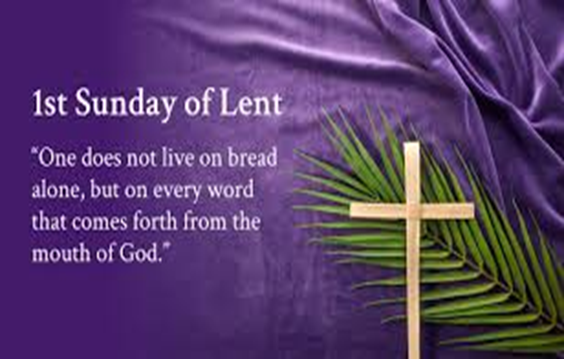
With the ashes of Ash Wednesday and the call to repent and believe the gospel ringing in our ears we now come to the 1st Sunday of Lent.  In the same way that Jesus went out into the dessert God asks us to go out into the dessert during the 40 days of Lent to undertake a time of renewal. So why Lent? Lent is the time for seeing and correcting our faults and raising our minds and hearts to God. Lent is a time for personal and community conversion of heart and renewal! A time for coming face-to-face with God – our origin, our purpose and our destiny it is also the time to be changed for the better by that encounter!  The main thing for all of us to do during Lent is that we should try to get to know God better by works of faith and charity so that those lines separating good and evil will become more apparent to all of us.

In the First Reading we hear that God formed man and placed him in the Garden of Eden. The serpent deceived the woman into eating the forbidden fruit. She and her husband ate it and realized they were naked.  in the Second Reading: St Paul in this extract from his letter to the Romans tells us that one man’s sin brought death to all, but God’s grace through Jesus brings life and righteousness to many. Christ’s obedience will make many righteous the gospel for this weekend was first addressed to the Church as it coped with divisions, weakening of faith and scandals. The image of the wilderness evoked many memories for them. In the time of Moses God had led his people out if Egypt to begin a long and trying wilderness experience. Our own experience of Church today is, in ways, very similar. God is leading us. We continue to be humbled and tested. What is crucial is the hope that we have from dealing with events through eyes of faith. The Church teaches that prayer, fasting, and almsgiving are significant ways to become closer to God.  The decision for each of us is to determine what form of those three things to make our own Lent. The temptations, to which our Lord submitted himself, are a source of encouragement and consolation for all of us. If our Lord and master underwent temptation, we cannot and must not expect to live a Christian life without experiencing temptations and trials.

Ash Wednesday 2026

We begin our annual observance of Lent with the Ashes of Ash Wednesday and once again we take up our annual campaign of spiritual renewal. The cry of today is repent and believe the Good News as we prepare for Holy Week and Easter.  As we place the ashes on our foreheads and listen to the words repent and believe in the good news, we remember that the Church teaches that prayer, fasting, and almsgiving are significant ways to become closer to God.  In the First Reading the Lord urges a heartfelt return with fasting and repentance, highlighting his gracious and compassionate nature. A communal fast is called, involving all, with priests pleading for mercy, leading to God’s compassionate response to His people. in the Responsorial Psalm acknowledging our sins, we implore God’s mercy and cleansing. We seek a renewed heart and spirit, and then we will find God’s presence and the restoration of the joy found in His salvation.

In the Second Reading St Paul tells us We implore you on Christ’s behalf to reconcile with God. Christ bore our sins to make us righteous. Embrace God’s grace, for now is the time of salvation. In the reading from Matthews Gospel Jesus emphasizes the importance of sincerity in faith practices. He advises against performing acts of charity, prayer, and fasting for public admiration, as such actions lack true spiritual value. Instead, he encourages discreet and private expressions of faith, assuring that God, who sees what we do in secret, will duly reward genuine devotion. The question for each of us on Ash Wednesday is how we will celebrate Lent this year as individuals and as members of the local community. Over the next six weeks there will be a packed programme of activities providing many opportunities for spiritual renewal coupled with fasting and alms giving and I encourage you wherever you are reading this to try and take up some of the opportunities provided in your area for Lent. May God give us the grace to make a good Lent as we begin our journey on the road to Holy Week and Easter.

2nd Sunday of Lent

ASH WEDNESDAY

We start our annual  journey of repentance and conversion for 2025 with the Ashes of Ash Wednesday. The readings and the ashes call on us to change our lives in the spirit of conversion and renewal. There is a big question for all of us as we begin lent will the ashes of today help us to realise that we should have a change of heart and mind as we seek spiritual renewal in Lent, each individual will have the answer to that question for themselves. All of us will have many opportunities to strengthen our spiritual lives during  the 6 weeks of lent as we ponder what our faith really means to us as individuals and as a community.  Ashes hold deep symbolism in the Church, representing both our mortality and the need for repentance. This powerful symbol finds its roots in the Scriptures, where ashes were used as a sign of mourning and repentance. In the Old Testament, ashes were often associated with expressions of grief and sorrow. Job, for example, sat in ashes as a sign of his deep mourning and repentance before God.

The prophet Daniel also fasted and covered himself in ashes as a way of seeking God’s mercy and forgiveness for the sins of his people. These practices served as a visible reminder of our need to turn away from sin and return to God. On Ash Wednesday, we receive ashes on our foreheads as a sign of our own personal need of conversion and renewal of heart  and spirit. As the priest or minister applies the ashes, they say the words, “Remember that you are dust, and to dust you shall return.” This solemn reminder prompts us to reflect on the brevity of life and the importance of living in accordance with God’s will. The ashes are a call to return to god and let go of the things that hinder our relationship with God and embrace a life of holiness.

In the First Reading –Joel 2:12-18: The Lord urges a heartfelt return to him with fasting and repentance, highlighting His gracious and compassionate nature, Slow to anger abounding in love. A communal fast is called, involving everyone, with priests pleading for mercy, leading to God’s compassionate response as he had mercy on the people. In The Responsorial Psalm – Psalm 51  we hear that each person in acknowledging their own sinfulness, implores God’s mercy. As all of us seek a renewed heart and spirit, with God’s presence in our lives and the restoration of the joy found in salvation. The Second Reading  tells us that we are called to be reconciled with God. Christ bore our sins to make us righteous as we  Embrace God’s grace, for now is the time of salvation. As ambassadors of Christ we are called to be reconciled to him and through this reconciliation we are called to be reconciled to one another.

In the Gospel reading from  Matthew  Jesus emphasizes the importance of sincerity in the practice of faith. He advised against performing acts of charity, prayer, and fasting for public admiration, as such actions lack true spiritual value.  Instead, he encouraged discreet and private expressions of faith, assuring that God, who sees everything that is done  in a quiet prayerful way, will duly reward genuine devotion. Lent is all about moving forward in a spirit of conversion and prayerful return to god that is the spirit of metanoia. So the Church asks us at the beginning of Lent to renew our own lives through the great spiritual works of prayer, fasting and almsgiving, and to listen to Jesus’ advice in today’s Gospel. On ash Wednesday the ashes are a call for us to change our lives and how we live them. We begin our journey for lent 2025 and we receive the ashes as a sign that we are willing to return to god who says return to me with all your heart and we do that in a special way during this holy  year of hope.

Post Navigation