Fullerton T

RELIGION LITURGY AND LIFE

Archive for the tag “bible”

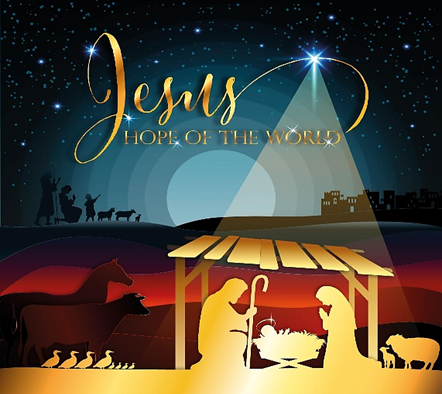
CHRISTMAS 2025

We have completed our advent observance with all its preparation and now we celebrate Christmas with joy and happiness. So now then let us rejoice in the Lord, that is, rejoice in faithfulness and not in iniquity; rejoice in the hope of eternity and not the brief flower of vanity that is part of our daily lives. At this time when we celebrate the birth of “a saviour who has been born for” us, the One who is “Wonder- Counsellor and  Prince of Peace,” the One who is “a great light” we welcome an opportunity to put aside our cares and worries, and bask in the joy and generosity of the season, as we sing with the angels “Glory to God in the highest as we celebrate the birth of Jesus Christ.  

But with all the tidings of great joy we need to remember those who may not be happy this Christmas. People have lost their faith, Faith in God and man. Many others sit in dark despair wondering where exactly the light will come from and who will bring it to them. And it simply is the baby in the manger the reason for the season that brings the light of God into the world.  At the mass during the night, we have a dramatic prophesy about a “child is born for us.” The Gospel is the most familiar about Mary and Joseph traveling to Bethlehem and finding no room in the inn, they settle for a stable. The Gospel for the mass at Dawn relates how the shepherds who had heard the message of the angels believe that they had heard something inviting and so they too go to the stable. The third Gospel for the Mass during the day is not about stables and angels, nor about stars and kings, but a well-worked summary of how believers much later than the writers of the early accounts, express “The Word became flesh and made his dwelling among us.”   The Word which was in the beginning, now has embraced time and space. God so loved the world that God did not send an idea or a feeling or a document.

Jesus Emanuell  has come to be heard, seen, received and lives among and with us all.  None of us will travel to Bethlehem to behold the newborn infant lying in the manger in the way the shepherds and the wise men did. But all of us travel the road of daily life, and we are called to see Jesus the newborn Infant in the youngster who needs companionship, the teenager who needs a listening ear, the parent who needs a helping hand, the older person who needs someone to care. We remember in a special way all those who have died since last Christmas and we keep their families in our thoughts and prayers. Some of our Christmas customs seem to turn away from Christ. Or do they? The giving of gifts expresses love of the other person. Festive decorations set this season apart from all others. Santa Claus was originally St. Nicholas of Myra, a bishop remembered for his generosity whose feast day is in December.  Every letter sent and received bears the stamp of this special season, tidings of goodwill, and a reminder that those who are far away are close to us in mind and heart. The customs of this season are veiled announcements of one message: Christ is born for us.

To remove the veil, to hear the good news, we gather in our churches. There the message of Christmas speaks loud and clear. The Letter to the Hebrews tells us, “In times past, God spoke in various ways to our ancestors through the prophets; in these last days, he speaks to us through his Son.” The customs of Christmas speak the message in partial ways, but God speaks the message clearly through his Son, who has come into our midst.  At Christmas the whole community of heaven joins with all believers of goodwill on earth in a jubilant song of praise for the good news proclaimed by the angels:  Behold, I bring you good news of a great joy which will come to all the people, for to you is born this day in the city of David a Saviour, who is Christ the Lord (Luke 2:10-11). So, why do we celebrate Christmas? It is more than the birth of Jesus. It is a celebration of God with us. It is the realization that God’s love and faithfulness dwell among us. It is a sign that we are to carry that love and faithfulness to others. Like the Baptist, we, too, are to witness to God’s living, breathing Word and we are called to be faithful.

So, with Mary and Joseph with the shepherds and Angels and the whole company of heaven let us adore the Christ Child the child in the manger who is the reason for the Season that we celebrate over the next few weeks.
4th Sunday of Advent

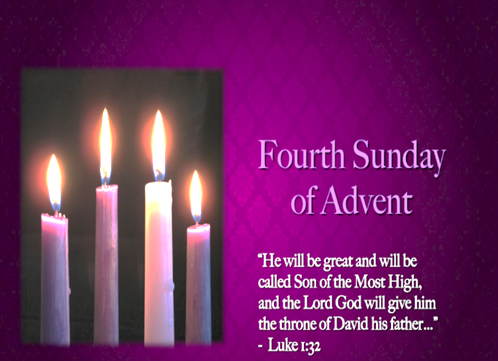
In the first reading Ahaz sounds like the great model of faith. We are taught not to tempt God by asking for signs to prove our faith. If we got those signs, we wouldn’t have faith! God, speaking through Isaiah, invites Ahaz to ask for a sign any sign from God: “Let it be deep as the nether world, or high as the sky!” Ahaz refuses saying, “I will not ask! I will not tempt the Lord.” Ahaz is showing great faith in God. He doesn’t want any proofs from God; he doesn’t want to test God or so it seems. He will not ask for the sign; he will not put his and the nation’s security in God’s hands. But God decides to give a sign anyway: “The virgin shall conceive and bear a son and shall name him Emmanuel.” The promise found in Scripture will be fulfilled.  By referring his readers to the scriptures, Isaiah reminds us that believers do well to put confidence in the word of God to sustain our hope and strengthen our faith in discouraging times such as we are in these days with so many people suffering in war and so many other avoidable crises. In the second reading Paul, a servant of Jesus, greets the believers in Rome. He emphasizes Jesus’ divine and human natures and wishes them grace and peace.

We meet Mary in the Gospel who had been prepared for the coming of the Messiah. She has received the angel’s greeting, and his strange news, and accepted her role in God’s plan Matthew is well planted in his Jewish tradition. He shows that from the very beginning of his gospel. Joseph was betrothed to Mary; Mary’s pregnancy turns Joseph’s world and his plans upside down.  Instead of exposing her, he “decided to divorce her quietly.” He was a “righteous man”, and he will protect Mary from being publicly dishonoured. He is not vengeful and, though wronged, displays mercy. After his dream when the angel told him do not be afraid Joseph took his wife into his home. The world God chose to enter was one of poverty, hard labour and political and military oppression. God took a big chance being born among us especially in those circumstances. Surely there must have been neater options for God, to make the saviour’s path and work a bit smoother. But none of us has a “smooth path” through life.  It’s good to know that Jesus, Emmanuel, “God with us,” chose to be with his people who live in the real and messy world. We began Advent with the cry, ‘Come, Lord Jesus’. We will end it with the joyful Christmas call, ‘God is with us!

Throughout our Advent journey we were told to stay awake for the coming of the Lord. As we go forward to the Christmas Celebration there is much to be thankful even in our messy world with all its problems. The message of Christmas is about God’s loving kindness, his compassion, his mercy, and his abiding, living love and presence with us in his Son Jesus the son of God Emmanuel who is God with us.

Second Sunday of Advent

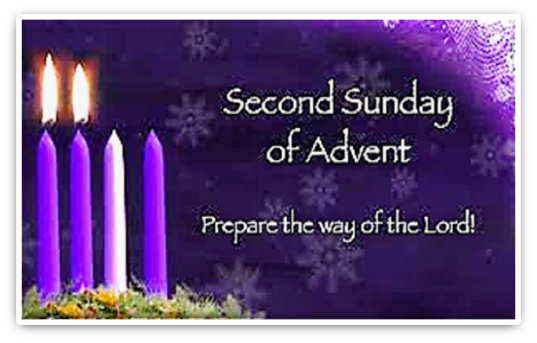
This year as we light the second purple candle on the Advent Wreath the 2nd Sunday of Advent points us to something new. Isaiah speaks of a branch growing from Jesse’s stump. It is a sign of hope. God is doing something fresh. The old ways are ending. A peaceful king will come. Justice and harmony will grow again. In the First Reading (Is 11:1-10). The reign of David was the high point in the history of Israel. But his successors failed wretchedly. Still, the hope remained that a future king would succeed where his predecessors failed. Here Isaiah foretells that even though the family tree of Jesse (David’s father) has been reduced to a mere stump, nevertheless from that stump a new shoot will spring. He goes on to sketch a portrait of the true king’. In the Second reading (Rom 15:4-9). Paul sees Jesus as the one through whom God fulfilled his promises. He highlights the value of hope.

The scriptures show that those who hope refuse to give up. By urging us to treat others in the same friendly way Christ has treated us, the reading continues the theme of peace and harmony of the First Reading. The Gospel for this Sunday brings the powerful prophetic voice of John the Baptist to centre stage with his urgent summons to conversion. His programme for reform seriously rattled the complacency of the Pharisees and Sadducees who ventured out into the desert to hear him preach. The God he proclaimed is a God who refuses to be controlled or tamed, a God whose presence is one that both consoles and makes radical demands of those who follow him. We hear about John the Baptist the lords herald who said that there is one who is to come after me and I am not worthy to take the sandals of his feet.  John’s task was to go before the lord announcing the coming of Jesus and to point to him when he came. John was called to reawaken a sense of expectation among the people who had grown tired and distant from God.   John was called to bring renewal to institutional expressions of religion which, at the time, had become fossilized into external ritual without meaning.   John attracted thousands to come out into the desert to see him.  Tradition sees the desert as the place where God speaks to the heart of his people.

It is from this solitary place of spiritual combat, the desert bordering the Jordan, that John appears “with the spirit and the power of Elijah” (Luke 7:17).  By his word and his baptism with water, john called the children of the covenant back to the Lord their God as he calls us to come back to the Lord our God today. The figure of John serves as a warning, to all Christians, of our need to draw our strength from Christ alone, rather than identifying with the cultural patterns or the Fads and fashions of the time, which come and go.   The Church is here in the present as it has been in past times to proclaim and live out the message of Jesus in every generation in season and out of season whether people like it or not. The Church is not there in any way to be inward looking.  The people of God, you and I included are called to constant renewal, looking outwards to tear ourselves away from conventional expectations, attitudes and superficial things and centre ourselves completely on God. In every age the church must become like John the Baptist, it must be the uncomfortable reminder of how we must allow the truth of Jesus to break into our lives to enlighten the darkness that can enter our lives or the life of the Church. As the journey of Advent continues, as we prepare to celebrate the nativity of Christ, John the Baptist’s call to conversion sounds out in our communities.

It is a great and pressing invitation to open our hearts and souls to welcome the Son of God who comes among us to make the kingdom of God real to all of us. Johns call for repentance and renewal challenge us to move beyond mere words or fleeting emotions, urging us instead to seek genuine transformation in our lives. His example serves as an enduring reminder that true faith requires courage, humility, and the willingness to put God’s purpose above personal ambition. John’s life highlights the importance of integrity and moral conviction, even when such values come at a great personal cost.  His steadfastness in the face of adversity and his readiness to speak truth to power continue to inspire believers to stand firm in their faith and to act with justice and compassion. In a world often marked by power and self-interest, the witness of John the Baptist remains a beacon, calling each of us to prepare a way for the Lord in our own hearts and communities. Let listen with renewed faith and hope to John the Baptists  call this Advent.

1st Sunday of Advent

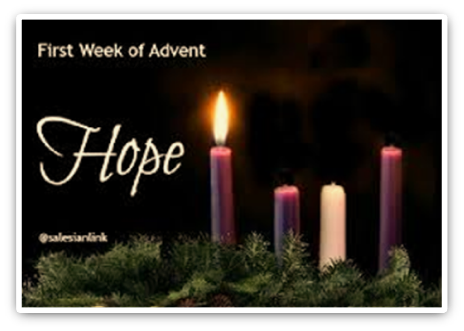
This weekend we celebrate the first Sunday of Advent. As we light the first purple candle on the advent wreath we recall the faith of the people who looked out for Jesus and prepared the way for him, and said he was coming to us. We look to the writings of the Old Testament to see what they say about the promise of God to visit his people and during these coming weeks we will read much from the prophet Isaiah; we also think about all those who prepared the way for his coming and we think about the work of John the Baptist who was the lords herald. As we reflect, we also think about Mary whose faith and acceptance of the invitation of God brought about the whole Christian era.

The readings for this Sunday speak about peace, joy, and staying awake. In the first reading Isaiah gives a picture of all nations coming to God’s mountain to learn his ways. In the future, the Lord’s mountain will be the highest. All nations will come to learn His ways, and there will be peace. In the Second Reading Paul tells us to wake up for our sleep as our salvation is near. We are called to live properly, putting aside darkness and putting on the light of Jesus Christ. This week’s Gospel we are told to “Stay awake”, to be vigilant and attentive to the signs of the times so that we do not miss the moment when God breaks into human history once again. The God who came among us is still among us. In Advent we try to see the reign of God more clearly so that we may be totally caught up in God’s action in the world as we wait for the final manifestation of God’s glory. We continually work for a peaceful and just world, so that Christ may have room in that world, our homes and our hearts. Moreover, we must change our conduct abandoning the works of darkness and put on the ‘armor of light’. (cf. Rm 13:12-14). Jesus, through the story in the parable this weekend outlines the Christian lifestyle that must not be distracted and indifferent but must be vigilant and recognize even the smallest sign of the Lord’s coming because we don’t know the hour in which He will arrive. (cf. Mt 24:39-44)  Saint John Henry Newman reminded us in a homily for the Advent Season: “Advent is a time of waiting; it is a time of joy because the coming of Christ is not only a gift of grace and salvation It is also a time of commitment because it motivates us to live in the present as a time of responsibility and vigilance.  This ‘vigilance’ means the urgency of an industrious, living ‘wait’ We need to take Advent seriously, for the coming of the Lord is not just about Christmas, but the actual day of judgment.

The real tragedy of this season of preparation is that we have been programmed to believe it’s all about buying things, about gift giving, and frenetic activity that leaves us exhausted and happy, it’s all over the time Christmas arrives. So then because of all the hustle and bustle we forget the 12 days of Christmas. So, what are we really waiting for this Advent? May we be vigilant, hopeful, and ready to welcome Christ our king at Christmas making room for Him not only in the celebrations, but in our hearts, our homes, and our world. In doing that, we embrace the true spirit of Advent the season of waiting, in joyful and hope filled anticipation as we live as people of the light.

Christ the King

This weekend we celebrate the last Sunday of ordinary time which is also called the feast of Christ the King. The Feast of Christ the King was established by Pope Pius XI in 1925 as an antidote to secularism, that is a way of life which leaves God out of man’s thinking and living life as if God did not exist. In the First Reading The tribes of Israel came to David in Hebron, recognizing his leadership. They made an agreement before the Lord, and David was anointed king of Israel. In the Second Reading we hear Let us thank the Father for rescuing us and bringing us into the kingdom of his Son, Jesus, who is the image of God and the head of the church.

In Our Gospel reading for this Sunday Rulers and soldiers mocked Jesus on the cross, challenging him to save himself. One criminal joined in, but the other defended Jesus and asked to be remembered in his kingdom. Jesus promised him a place in Paradise. The Gospel reading reminds us that Jesus rules with love, even from the cross. The Good Thief didn’t have fancy words, just honest prayer. Jesus answered with a promise of heaven. it’s never too late to choose faith, and Jesus is always ready to listen. How do we work to make Jesus and the kingdom of God known is the question to ask ourselves today. The way to serve Christ our King is to work for the coming of his kingdom. We do this through working for the relief of the deprived, the oppressed and the outcast. By doing that we are serving Christ in person, because he fully identifies himself with all those in need. The disciple of Christ the King cannot afford the luxury of saying “I keep myself to myself” or “I do nobody any harm.” To be deaf to the cries of the oppressed is to be deaf to Christ. To be blind to the agony of those around us is to be blind to Christ. To take Christ as our King involves becoming a shepherd to others making Christ present to others and reaching out showing the faith to them and leading them into the paths of faith.

The kingdom of Christ, a reign of charity and peace, is for all. The Lord sends us out as his disciples so that all mankind may be brought under his reign in the world. We remember that The Kingdom of God exists in every home where parents and children love each other. It exists in every region and country that cares for its weak and vulnerable. It exists in every parish that reaches out to the needy. The Kingdom of God happens whenever someone feeds a hungry person, or shelters a homeless person, or shows care to a neglected person. It happens whenever we overturn an unjust law, or correct an injustice, or avert a war.

We the baptized are the agents through whom the kingship of Christ will be realized. Our baptism is our commission and our grace for the apostolate. As we conclude the liturgical year, are you with Christ and what he teaches us? Is your life an open sacrifice in a demonstration of love?  As we begin Advent next week lets not forget the beautiful truths that we have learned, but let’s continue to learn more about them, celebrate them, live them, and pass them on. The Solemnity of Christ the King reminds us that Jesus is the true King. His rule is not about power or wealth. It is about love, mercy, and peace. He leads us by giving His life for us. This feast helps us see what kingship means in God’s eyes.  As we remember that Jesus is the servant King who came to serve and gave his life on the Cross as a ransom for many. Everything belongs to Him. Yet He chooses to care for us as a shepherd cares for his sheep. 

This Sunday we are invited to deeper discipleship, marked by generous service and unwavering hope. As we move into Advent with its spiritual preparation for Christmas let us respond with open hearts and generous spirits with a renewed commitment to serve others, as we walk with Christ our King, making His kingdom present wherever we are.

33rd Sunday in Ordinary Time

This weekend we celebrate the 33rd Sunday in Ordinary Time and the readings remind us that God is always at work, even when times are hard and for many people these days they certainly are. The readings also speak of judgment, they give us a  warning about what we need to do  and also give us hope. They call us above everything else to stay faithful and trust that God will care for those who honor Him. In the First Reading  A fierce day will come in which a fire  will consume the arrogant and wicked, says the Lord. But those who honour him will see the healing sun of righteousness rise. The promise of the “sun of righteousness” reflects Malachi’s theme of God restoring His people. For those who honor Him, healing and renewal are certain. 

In the Second Reading  St Paul tells the Thessalonians we worked hard among you as an example to follow. We taught that one must work to eat and advised against idleness and meddling. Living in hope of Christ’s coming does not excuse laziness but calls for service and steady work. The vision of the future in the Gospel Reading for this Sunday doesn’t look very appealing. The bad news is delivered first of all. Jesus imagines a time of terror and trouble and persecution ‘Nation will fight against nation, and kingdom against kingdom. There will be great earthquakes and plagues and famines and there; there will be fearful sights and great signs from heaven. Jesus says, “These things must happen.” Then there will be cosmic upheavals: “the sun will be darkened, the moon will lose its brightness, the stars will come falling from heaven”. After this catalogue of disaster there is the good news. Jesus looks beyond the time of distress to the final time, when the Son of Man will gather the nations the scattered people of God to himself.  Jesus sees beyond suffering and persecution to a future of peace with God and one another. God does not want us to be anxious, but he calls us to confidence in the message we hear in the gospel and asks us to live  it in our lives so  that we will remain in his light. Let us encourage one another to remain steadfast in faith, to live with vigilance, and to look forward to Christ’s coming with joy and trust.

The Lord calls us to stay awake amidst the many distractions of life, so that we will recognize him when he comes again. St. John of the Cross wrote, “When evening comes, you will be examined in love” (Sayings, 60).  We prepare for the day of Christ’s coming by recognizing him in the people around us our families and friends as well as  those in the communities where we live and by knowing him through  his word and the sacramental life of faith.  As we see in the world these days false securities and shallow guarantees will not sustain us in times of real strife and testing and we see this in many places in the world.   By rejecting the false securities that are offered to us and placing our trust in God, we find true confidence, strength and peace. In our trials God alone must be our hope our salvation and our shield for  God’s ways must be our ways, so that when our misplaced confidences fail us we can turn our eyes to the Fathers  saving light. We are called this weekend to be living signs of God’s promise a people prepared for the glory that awaits all who honour the Lord. Let us be vigilant and not anxious for that day when God calls us and looks at us with love and says Your endurance has won you your life.’

THE DEDICATION OF THE LATERAN BASILICA

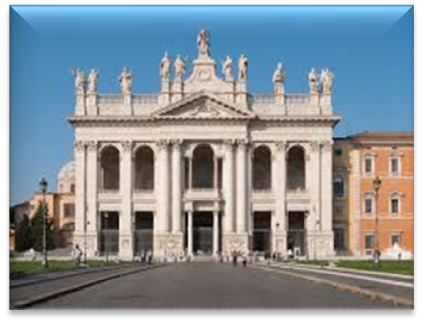
Each year, on 9 November, the Catholic Church celebrates the Dedication of the Basilica of St John Lateran. This event commemorates the consecration of the cathedral church of  the Bishop of Rome. Known as “Mother and Head of all the Churches of the City and the World”, St John Lateran holds a unique place in the history and liturgy of the Church. Although the basilica of St. John Lateran is the cathedral of the Holy Father as Bishop of Rome, today’s liturgy focuses not on the Petrine ministry but on the place of God’s house, the temple. In the First Reading – Ezekiel tells us From the temple, water flows eastward, bringing life and freshness to everything it touches, with fruit trees along its banks providing food and healing. In the Second Reading we are told that  we are God’s building, with Jesus as the foundation. Each must build carefully, for we are temples of the Holy Spirit, sacred and protected by God. 

The Gospel  from John tells us that Near Passover, Jesus visits the in Jerusalem, expelling merchants and overturning money-changers’ tables, condemning the commercialization of the sacred space. Challenged by the Jews for a sign to justify his actions, he mentions rebuilding the temple in three days, a reference to his resurrection understood later by his disciples. The feast of the Dedication of St John Lateran symbolises the unity of the universal Church and the spiritual leadership of the Pope. This celebration calls all of us to reflect on our own role as “living stones” in the spiritual temple of God. We no longer look upon stone edifices to see God’s presence on earth, but we look on the broken body of Jesus on the cross. He is both the high priest and the offering acceptable to God. Paul’s message continues this truth. We are living stones forming a building.  God’s presence according to Paul is through us. We are built on the foundation of Jesus’ message but we must be careful in the way we build. As we live out our lives we grow individually energized either by the Spirit of God or by the spirit of the world.  The Spirit of God unites, forms us into a single building. The spirit of the world destroys unity and forms warring factions where each side competes with the vother for power, wealth, influence and pleasure.  So we must be careful how we build our life. We are the presence of God to one another through the Spirit that dwells in us and energizes and directs us. So, why do we celebrate the dedication of a Church building in Rome?

St. John Lateran basilica becomes a sign and a symbol for us.  It is a sign of God’s presence in the world. It is high on a hill that is visible for all to see and for all to take hope from its strength.   It is a symbol of those who believe and work to grow in faith hope, love and concern for God’s creation, and all those who are within it. It rejects no one, opening its arms to embrace not only the privileged but also the ordinary people.  Even the ones ignored and forgotten are welcomed and find a place where they might be healed and find life. The Dedication of the Lateran Basilica inspires us to embrace the call to be a living temple of God. Just as the Basilica in Rome is a physical representation of the Church, we are called to be living stones, united in faith and working together to build up the Kingdom of God through his Church. Each person has a unique role to play in the Church and that their contributions, no matter how small, are essential to the overall mission of spreading the Gospel in the world today. May the feast we celebrate this weekend inspire us to cherish our heritage, embrace our mission, and strive to make the Church a true sign of God’s presence, hope, and unity for all the  people wherever we are in the world.

30th Sunday in Ordinary Time

It is hard to believe that we are almost at the end of October with the schools having the midterm break for Halloween next week. It is also hard to believe that next Saturday we celebrate the feast of All Saints closely followed by all souls the next day. The readings in our Liturgy for this weekend are all about the HUMBLE person of faith. The readings for this Sunday also remind us that God sees the heart. He listens to those who are humble and cries out for justice. He does not turn away from the poor or the weak. Instead, He cares for those who trust Him. In the First Reading  God, who is no respecter of personages who is just and impartial, listens to the cries of the oppressed the poor and the humble, ensuring their prayers are answered and justice is swiftly delivered.

In the second reading Paul speaks about his struggles. He has stayed faithful to his mission even when others abandoned him. He knows that God is with him and will bring him safely into His kingdom. Paul’s words show that faith does not mean life will be easy. He faced many hardships, yet he never gave up. He trusted that God would give him strength. Even when people turned away from him, he knew he was not alone. The Gospel reading teaches that humility is necessary to be with God. Jesus tells a parable about a Pharisee and a tax collector. The Pharisee stands confidently, thanking God that he is better than others. He lists his good deeds, believing they make him righteous of course they don’t. The tax collector, however, stands at a distance, unwilling to lift his eyes. He simply prays for mercy. Jesus says it is the tax collector who goes home justified. What does the Gospel Reading about the tax collector and the Pharisee say to us today ? Also and more importantly what about the words of the Tax Collector who said in a simple humble way  God be merciful to me a sinner what do these humble words  say to us? I think that the Tax Collector despised by the people because of the job he does  is saying to us that we need to have the humility to be humble before God who knows that we are sinners even before we say it and we also have to be humble with other people dealing with them with real humility.

 Real humility is about facing  the truth  about the truth about ourselves we are and often times we don’t like to hear the truth about ourselves or any situations we might be in.  The person who is truly humble will always see pride in him or herself as a bad thing.  The person who is humble believes him/herself to have nothing, when in fact he has God, who is all and everything for him!   The person who knows  how to be dependent on God humbles himself so much,  putting himself in his proper place before his Creator, and  the Lord lifts him up to his own Glory in order to make him his adopted child.  In a word, he who humbles himself, God justifies! The more someone makes himself small in the eyes of god, the more the Lord is pleased to come and live in him and to make him shine with his divine light before other people.  In our modern world, Pride which was very strong in the words the Pharisee spoke dominates the world, and it is this pride which often leads many people the world over down a long lonely path.  The old saying rings true that pride comes before a fall and we see this  in so many places and situations we might find ourselves or perhaps we have seen other people in. Today, We shall approach the altar of the Lord with humble hearts and minds. This approach testifies at once to our humility and to our grandeur.  It testifies to our humility, for we humble in believing that what we see as bread is not bread but rather the Body of Christ. 

It testifies to our grandeur, for, in communion, we truly become the Body of Christ, adoptive sons and daughters in the only Son of God!  May this approach be our justification, for the salvation of the world! I finish with these words from Micah which really sum up the gospel reading for this Sunday and what does the Lord require of us? He requires us To do justice, and to love kindness, and to walk humbly with our God. So let us go into the world with true humility in our hearts and minds so we are able to serve those who need us most where we are.

29th SUNDAY OF ORDINARY TIME MISSION SUNDAY

This Weekend  we celebrate the international missionary effort of the Church throughout the world. Here in Ireland for many centuries there have been so many great Irishmen and women  who have gone to foreign lands to bring the faith of our fathers to those who might not have got the faith otherwise. Today as we celebrate Mission we ask ourselves what is our mission where we are today what are we doing to promote the kingdom of god?  Mission Sunday gives us the opportunity to thank god for the faith that we have as well as acknowledging and thanking god for all those faithful missionary men and women who left everything in order to bring the faith and the light of Christ to the far corners of the world.

The readings for this Sunday speak about prayer, faith, and trusting God’s help. They show that God listens to His people and gives them strength. Even when life is hard, God does not leave us alone to bear the burden. In the First Reading – Amalek attacked Israel. While Joshua fought, Moses stood on a hill with God’s staff. As long as Moses’ hands were raised, Israel prevailed. Aaron and Hur supported Moses’ hands, and Joshua defeated Amalek. In the Second Reading  we are told to Stay faithful to the Scriptures, which provide wisdom for salvation. All Scripture is inspired by God. We are called to proclaim the word persistently, with patience and encouragement. In our Gospel for this Sunday Jesus tells us about our need to pray and not to lose heart when we don’t get what we pray for straight away. Over a long period of time many people have prayed for various things for example family concerns for healing of body mind or spirit or whatever. Some people ask me why god is not answering their prayers straight away in the here and now of the present moment and I tell them that their prayers will be answered when God sees that they really need whatever they have been praying for. My own experience is that we often pray for things and don’t get them straight away but we get the things we prayed for when we really need them.

Remember that No great work can ever be achieved without long and patient effort and this is the same for us in our prayer lives. The work of patient persistent prayer will yield results as God helps us to get through all our problems big and small. Remember the saying that nothing is impossible for those who have faith and even if our faith is the size of mustard seed it can move mountains.  The prayer in today’s gospel is the prayer of petition. If our prayers are always prayers of petition, we run the risk of being selfish and self-centered; except, of course, when the prayers of petition are for others. Like one of the ten lepers in last weeks gospel, we ask, and then when our prayers are answered, we return to give thanks to God. When we meet the judge and the widow in this Sundays Gospel passage we meet them at a crisis point. We have no case history for the widow but we do for the judge. He is a hard man who isn’t influenced by religious principle or by public opinion. Both justice and compassion are absent from his dealings with the widow. She has no influential friends to bring pressure on the judge and she has no money to bribe him: all she has is the justice of her cause and her own persistence. Jesus encourages us to be persistent in our prayer and never lose heart.

We live In an age where we have become accustomed to instant results all the time and we are impatient with what appear to be endless delays in god’s response to us. The danger is that we give up too quickly, that we rest our case too easily and then move on to something else. We have to be persistent; we have to invest time in our faith and prayer will help us to do this. Through this parable, Jesus teaches us the need for perseverance in prayer. This perseverance develops our trust and confidence in God. It helps us to  to realize how weak we are when left to ourselves. It keeps us close to God, as we learn how dependent we are on His generous love. If we would realize that God is perhaps closer to us than we realise when we think He is forgetting us for he never forgets us! As we continue the Holy Year of Hope let us continue to be people of faith grounded in patient persistent prayer.

28th Sunday in Ordinary Time

This Sunday we are reminded to remember God’s blessings as we give thanks for the great things he has done for us. The readings tell us about healing, mercy, and the gift of faith. They help us see that faith grows stronger when we trust God . In the First Reading from the second book of kings Naaman was healed of leprosy after obeying Elisha’s instruction to wash in the Jordan. He acknowledged the God of Israel and vowed to worship only Him and he said as the lord lives I will serve him. In the Second Reading – from St Pauls letter to Timothy we are told to remember Jesus Christ, raised from the dead. Paul tells us that I suffer for the gospel, but God’s word is free. Endure for salvation in Christ. If we are unfaithful, he always remains faithful.

in our Gospel Reading we hear the story of the ten Lepers and their lack of gratitude for their healing. This is one of many such examples of ingratitude that occurred during Christ’s public ministry, most of those he cured forget to thank him. In today’s incident there was one who had the decency to return and thank his benefactor, and he was the one least expected to do so. This pleased our Lord and led Him to remark on the ingratitude of the others.  This Gospel story is not only about the Lepers it’s also about our lack of gratitude for the many good  things that we have in our lives given to us by God. When we were youngsters growing up we were taught to say, “Thank you” by our parents when they gave us a sweet or whatever, when we didn’t we would be dutifully reminded, “What do you say?” and of course we said the magic words ‘Thank You.’ All the lepers showed great faith and confidence in Jesus’ power to heal but only one of them said thanks. They had not heard Him preach nor had they seen any of His miracles. They lived in isolation camps because of the leprosy, yet they believed the reports they had heard.  The nine lepers were appreciative of what Jesus had done; we don’t know, why they didn’t bother to show their gratitude to Jesus. We can only look to ourselves to ask why we are often reluctant to say thank you for all the good things we have.

There seems to be great deal of awkwardness surrounding the attitude of gratitude and saying thank you. Personally I find that to be thanked means more to me than being given a gift for a task just done. Whatever the reason for our own ingratitude, we know that it diminishes us and those who help us.  All of us have reasons to give thanks for so many things yet very few turn to the Lord with words and hearts expressing our thanks for all the wonders he has done for us in our lives.  Do we have the attitude of gratitude which thanks god and those around and us for their goodness to us.When we gather each Sunday we come to join God in the midst of the assembly with gratitude in our hearts. We give praise and thanks to God and we thank him for all those who have given us their help. May all of us have the attitude of gratitude which means that we are thankful for all that we are and all that we have especially in these times when so many have little or nothing at all. Let us pray for hearts that notice blessings, voices that give thanks, and lives that reflect God’s mercy and generosity. May gratitude draw us ever closer to God and to one another especially during this Holy Year of hope.

Post Navigation