Fullerton T

RELIGION LITURGY AND LIFE

Archive for the tag “christmas”

Feast of the Holy Family
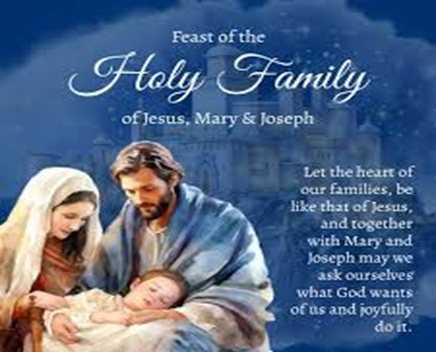
This weekend we celebrate the feast of the Holy Family. We are reminded that Jesus lived in a real family. He had a mother and a father who cared for Him and protected him. Mary and Joseph did not have easy lives, but they trusted God and followed His plan. Their home was simple, but it was full of love. This feast helps us think about our own families. Every home has struggles. like the Holy Family, we are called to  care for each other with patience. Love grows in quiet moments, hard choices, and daily kindness.

The readings show how God works through family life. They speak about honouring parents, caring for others, and choosing peace. These small acts shape a strong and faithful home life. In the first Reading God values honouring one’s parents. Respecting them brings many blessings, including answered prayers, long life, and comfort for mothers. Caring for aging parents kindly and patiently. In the Second Reading we are called to embrace the virtues of compassion and kindness, forgiving each other, and allowing Christ’s peace and message guide us as we act in all things in the name of Jesus with gratitude in our hearts. The Gospel Reading tells us that Joseph, following angelic directions in dreams, fled with Mary and Jesus to Egypt to escape Herod’s threat, returned to Israel after Herod’s death, and settled in Nazareth as foretold by prophets.

Tradition says that after three years in exile, another angel informs Joseph that Herod the Great is dead. The Holy Family returns to their homeland, not to Bethlehem, since the new king who reigns in his father’s place is also a cruel and barbaric ruler. Joseph brings Mary and Jesus to his native town of Nazareth in Galilee. There, they lived a simple ordinary life, Joseph as a carpenter, and Mary as his wife and mother of Jesus. Jesus grew in holiness and in knowledge of God’s will in the same ordinary ways that families do in our day.  We also remember the care that Mary and Joseph gave to Jesus.  We recognize the sacrifice they made for Jesus, in the same way as we recognize the sacrifices our parents made for us and many more parents are making for their children today. The feast of the Holy Family represents what Family means for us as people of faith, in the guidance protection, the goodness and kindness, and the love and support of our parents! 

In the friendship of other family members. And in things that have happened to us good and not so good!  Every parent wonders about their children. Every parent is full of hope for their children. Over a period, this might turn into fear and anxiety, but the fundamental feeling of hope is still there. We hope that everything will turn out well for them; we hope that they will be successful in life; we hope that they will be safe and keep out of trouble; we hope that they will be happy.  As we honour the Holy Family, let us ask God to bless all our families with unity, peace, and faith. May we look to Mary, Joseph, and Jesus as historical figures, but as guides for our own journeys. Lord, help us to live with love, patience, and trust, so that our homes and our families  may shine with the light of Christ this Christmas time.
CHRISTMAS 2025

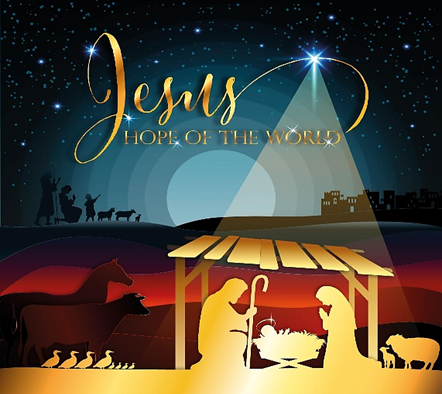
We have completed our advent observance with all its preparation and now we celebrate Christmas with joy and happiness. So now then let us rejoice in the Lord, that is, rejoice in faithfulness and not in iniquity; rejoice in the hope of eternity and not the brief flower of vanity that is part of our daily lives. At this time when we celebrate the birth of “a saviour who has been born for” us, the One who is “Wonder- Counsellor and  Prince of Peace,” the One who is “a great light” we welcome an opportunity to put aside our cares and worries, and bask in the joy and generosity of the season, as we sing with the angels “Glory to God in the highest as we celebrate the birth of Jesus Christ.  

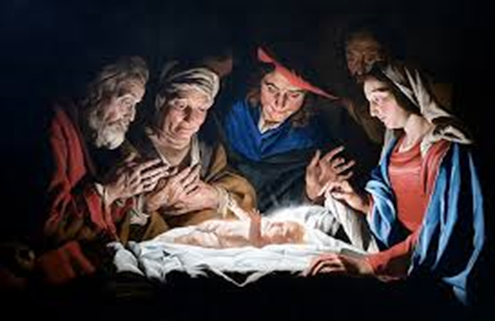
But with all the tidings of great joy we need to remember those who may not be happy this Christmas. People have lost their faith, Faith in God and man. Many others sit in dark despair wondering where exactly the light will come from and who will bring it to them. And it simply is the baby in the manger the reason for the season that brings the light of God into the world.  At the mass during the night, we have a dramatic prophesy about a “child is born for us.” The Gospel is the most familiar about Mary and Joseph traveling to Bethlehem and finding no room in the inn, they settle for a stable. The Gospel for the mass at Dawn relates how the shepherds who had heard the message of the angels believe that they had heard something inviting and so they too go to the stable. The third Gospel for the Mass during the day is not about stables and angels, nor about stars and kings, but a well-worked summary of how believers much later than the writers of the early accounts, express “The Word became flesh and made his dwelling among us.”   The Word which was in the beginning, now has embraced time and space. God so loved the world that God did not send an idea or a feeling or a document.

Jesus Emanuell  has come to be heard, seen, received and lives among and with us all.  None of us will travel to Bethlehem to behold the newborn infant lying in the manger in the way the shepherds and the wise men did. But all of us travel the road of daily life, and we are called to see Jesus the newborn Infant in the youngster who needs companionship, the teenager who needs a listening ear, the parent who needs a helping hand, the older person who needs someone to care. We remember in a special way all those who have died since last Christmas and we keep their families in our thoughts and prayers. Some of our Christmas customs seem to turn away from Christ. Or do they? The giving of gifts expresses love of the other person. Festive decorations set this season apart from all others. Santa Claus was originally St. Nicholas of Myra, a bishop remembered for his generosity whose feast day is in December.  Every letter sent and received bears the stamp of this special season, tidings of goodwill, and a reminder that those who are far away are close to us in mind and heart. The customs of this season are veiled announcements of one message: Christ is born for us.

To remove the veil, to hear the good news, we gather in our churches. There the message of Christmas speaks loud and clear. The Letter to the Hebrews tells us, “In times past, God spoke in various ways to our ancestors through the prophets; in these last days, he speaks to us through his Son.” The customs of Christmas speak the message in partial ways, but God speaks the message clearly through his Son, who has come into our midst.  At Christmas the whole community of heaven joins with all believers of goodwill on earth in a jubilant song of praise for the good news proclaimed by the angels:  Behold, I bring you good news of a great joy which will come to all the people, for to you is born this day in the city of David a Saviour, who is Christ the Lord (Luke 2:10-11). So, why do we celebrate Christmas? It is more than the birth of Jesus. It is a celebration of God with us. It is the realization that God’s love and faithfulness dwell among us. It is a sign that we are to carry that love and faithfulness to others. Like the Baptist, we, too, are to witness to God’s living, breathing Word and we are called to be faithful.

So, with Mary and Joseph with the shepherds and Angels and the whole company of heaven let us adore the Christ Child the child in the manger who is the reason for the Season that we celebrate over the next few weeks.

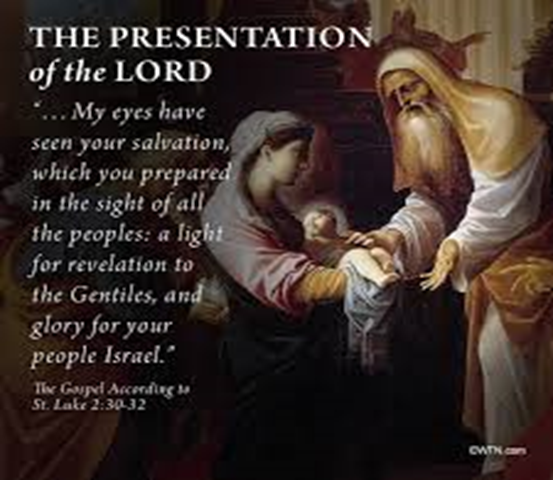
The Presentation of the Lord

The Feast of the Presentation of the Lord is an ancient celebration in the Church. It is also called Candlemas because, on this day, candles are blessed in many parishes. The feast is celebrated on February 2nd  forty days after Christmas. It recalls the day when Mary and Joseph brought Jesus to the Temple in Jerusalem to present Him to God. This event is rooted in Jewish tradition. According to the Law of Moses, every firstborn son belonged to God. Jewish parents were to bring their son to the Temple and offer a small sacrifice in thanksgiving. By bringing Jesus to the Temple, Mary and Joseph followed God’s law faithfully. This act shows their humility and obedience to God.

The Church has celebrated the Presentation of the Lord for many centuries. In the early Church, people gathered in the evening for a candlelit procession, honouring Christ as the Light. February 2, exactly 40 days after Christmas, was chosen because of this tradition in Jewish law. It also marks the end of the Christmas season for some Catholic communities.   In the First Reading the text, taken from the Prophet Malachi tells us, “I am sending my messenger to prepare the way before me; and suddenly there will come to the temple the Lord who you seek” (Mal 3:1). From the Gospels, we know  that the precursor was John the Baptist who was born 6 months before Jesus, we also know that God sent John to prepare His way. So, soon after the Baptist’s birth, God entered His temple. Jesus’ presentation signifies God’s entrance to His temple. God made man entered the temple, presenting Himself to those who were really searching for Him. In the Gospel reading  from Luke we are introduced to different people and events that in themselves provide numerous pointers  for  reflection. First of all, Mary and Joseph respect the Mosaic Law by offering the sacrifice prescribed for the poor: a pair of turtledoves or two young pigeons. Simeon and Anna were two venerable elderly people dedicated to prayer and fasting their strong religious spirit rendered them able to recognize the Messiah when they saw him.

  Simeon blessed God and said “Now, Master, you may let your servant go in peace, according to your word, for my eyes have seen your salvation, which you prepared in the sight of all the peoples: a light to the Gentiles, and glory for your people Israel.” We are familiar with the beautiful symbolism associated with light. Light in the spiritual sense means Christ and the supernatural life of grace. The Presentation of the Lord connects the Old Covenant with the New. In the Old Covenant, people followed the law to be close to God. But Jesus brings the New Covenant, where people are saved by faith in Him as the Son of God and what he teaches. By being presented in the Temple, Jesus shows respect for the Old Covenant while also opening a new way for the people to follow.  In the Presentation of the Lord, we see that Jesus came to bring light, hope, and salvation to the world. Through Mary and Joseph’s faithfulness, Jesus’ mission begins humbly but with great purpose. This feast invites us to embrace the light of Jesus and to trust in His saving plan for us and for the world. It also prompts us to ask ourselves how can we, as the Body of Christ be Light and Hope for others especially in the darkness of our current times.  

We are also invited to present ourselves to God, offering our lives in joyful hope filled service and love. We remember the call to live as “children of the light,” walking in hope, faith and trust lighting the path for those around us to follow the god of hope and joy.

CHRISTMAS 2024

This Christmas we begin the Holy Year of 2025 with the opening of the Holy Door is St Peters in Rome. The theme of the year is Pilgrims of Hope and Christmas is all about Hope and Joy. At Christmas the Christian Churches throughout the world celebrate the Birth of Jesus Christ,  as we remember “The Word was made flesh and dwelt among us.” The Son of God became man to give us a share in that divine life which is eternally His in the Blessed Trinity. Throughout the Advent season we have waited for the coming of our Savior. Now on the 25th of December we celebrate His birth with unrestrained joy.

The readings for the Nativity of the Lord emphasize the joyous celebration of the incarnation of Jesus Christ, God becoming one of us. Christmas is all about  the saving grace of Jesus, and the light and salvation brought by the birth of our Savior. During the Christmas season there is an extensive exchange of greetings, gifts and good wishes among friends. These greetings are a reminder of those “good tidings of great joy that shall be to all the people, for this day is born to you a Savior Who is Christ the Lord” (Lk. 2:11). They are a reminder, too, that all blessings and graces come to us from Christ. With the exchange of gifts comes the responsibility to remember those who have little or nothing at all in terms of a roof over their heads and food in the cupboard. During Christmas we are reminded  of the mystery of Mary as Mother of God, mother of the Incarnate Word, and mother of His mystical body, the Church. Christmas encourages us to contemplate Jesus together with Mary and Joseph reflecting on Jesus with ‘His mother’, as recounted many times in the Gospels.

Our faith cannot neglect a profound devotion to the Mother of God, as she shows us the easiest way to reach Jesus. Christmas reminds us of the great mystery of God’s people, the Church animated by the life giving Spirit. So, why do we celebrate Christmas? It is more than the birth of Jesus. It is a celebration of God with us. It is the realization that God’s love for us and faithfulness to us dwells among us. It is a sign that we are to carry that love and faithfulness to other people. Like the Baptist, we, too, are to witness to God’s living, breathing Word and we are called to be faithful so let us adore the Lord Jesus in the manger the reason for the season and bring his love and joy to those we meet in the days ahead as we begin the Holy Year as Pilgrims of Hope.

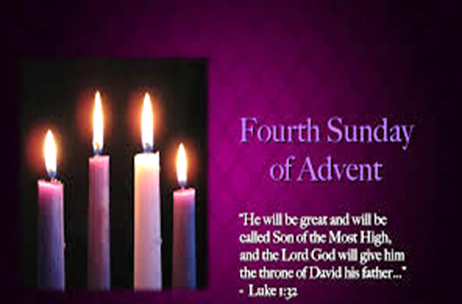
4th Sunday of Advent

This weekend we light the third purple candle on the Advent wreath as the anticipation grows to a crescendo as we  draw closer to the celebration of the Christmas mysteries. Christmas is almost upon us: yet are we ready in the true sense of the word remembering that Jesus is the reason for the season? Christmas we are told is a time for so many things  yet for many it is a time of stress and pressure with all the extra work to sort out every­thing that needs to be done.  For many it is a time when we are fearful that the children won’t be disappointed or that there will be tension in relationships or there will be a breakdown in the ceasefire with the in-laws.  

In the first reading from Micah Jerusalem was under siege and Davids dynasty was in peril. The prophet said that salvation would come from an insignificant place and that was Bethlehem from there a new leader would gather the nations together into one people.  In the second reading from Hebrews the sacrifices mosaic law were unable to purify the people from sin. Only Christ himself was able to bring the reconciliation between  god and his people. We  meet Mary and her cousin Elisabeth in our Gospel reading. Mary, who herself had been prepared for the coming of the Messiah. She has heard the angel’s greeting, and his strange news, and has accepted her role in God’s plan.  Now she hurries to her kinswoman, Elizabeth, who herself bears John the Baptist in her womb. John, alerts us to the presence of the Lord, as he leaps for joy in his mother’s womb. His joy is that God has kept his promise, and is with his people.  That two women were chosen to play such a role in the story of salvation is remarkable, as women were often marginalized in the society of their time.

In all these events we see the great mission that Mary undertook as a privileged instrument in the hands of God. Mary is not only the mother of the source of grace; she is the very model of what a Christian heart should look like. We look to Mary to see our fullest Christian dig­nity. In Lumen Gentium 68, Vatican II describes our contem­plation of Mary as an act of entering our own deepest mystery, catching a glimpse of what we shall he at the end of our faith journey. Over the next few days the journey to Christmas will have many pressures for everyone especially those who are worried about so many things family and otherwise.  Mary in her calm gentle way encourages us to trust in God’s word and to believe in God’s promises as she did. The great Christmas feast is almost here. As always in Advent, what is promised in the first reading is brought to fulfilment in the Gospel reading. We began Advent with the cry, ‘Come, Lord Jesus’. We will end it at Christmas with the joyful shout, ‘God is with us!’

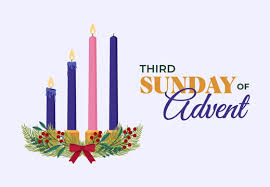
3rd Sunday of Advent

On this the 3rd Sunday of advent we light the rose coloured candle on the advent wreath and the vestments at mass may be Rose as well. This Sunday is also known as Gaudete Sunday as we rejoice that the Lord is near.  Last week we heard about John’s ministry of preaching repentance and baptism for the forgiveness of sins. The idea of repentance is about turning around and facing in a new direction. John’s call to the people was to turn away from the old ways of life and to turn towards God. The Gospel opens with the people, the tax collectors and some soldiers, having heard the call to change their lives, all asking John, ‘What must we do?” We should also be asking ourselves what must we do?

 Both John the Baptist and Paul share one belief: that the Lord is very near. God’s nearness didn’t act as a threat to them, but gave them a infectious  source of joy that no one could take away  from them. Their joy in the closeness of God gave an edge to their preaching and teaching. It gave them a vision to see the far side of disaster; it moved them to draw others into that sense of joy.  None of them was closed in his own joy they moved out going round in the hope their  inner joy would be caught by the people of their time and place and many people were caught by the joy they had to pass on to them. The picture of John the Baptist as a man of joy is not one you hear about very often. John is usually portrayed as a lonesome figure, with a weird wardrobe and weirder diet, who rants and raves at anyone with ears  to hear. But John was a character who intrigued people and as a result they would seek him out and follow him. People don’t journey into the wilderness just to get insulted; you don’t become disciples for the wardrobe and diet.Here was a man who cared nothing at all for comfort, money or fame, who could not be bought, and who would speak the truth without fear. In John people could see something of God.

John spoke in words they could grasp when he told them exactly what they should be doing.  He made such a deep impression on the crowd that word goes around that he might be the Christ. That expectant feeling is a measure of John’s effect on people around him. John did not  claim to know who the Messiah was going to be instead he tells the people that he is not that person. That role is for someone else, someone greater and more powerful than he was.  And as we know that person was Jesus the Son of the Father. We are called to be joyful witnesses to Jesus but as we know with all that is going on around us these days that is not easy. There are many things that continue to block the presence of the Lord within us. It’s time for us to answer the question what must we do and that is to  prepare the way so that we will be able to welcome Jesus  into our lives our hearts and our homes at Christmas. Let us  Rejoice in the lord always because the Lord is near.

Post Navigation