Fullerton T

RELIGION LITURGY AND LIFE

Archive for the tag “god”

Saints Peter and Paul
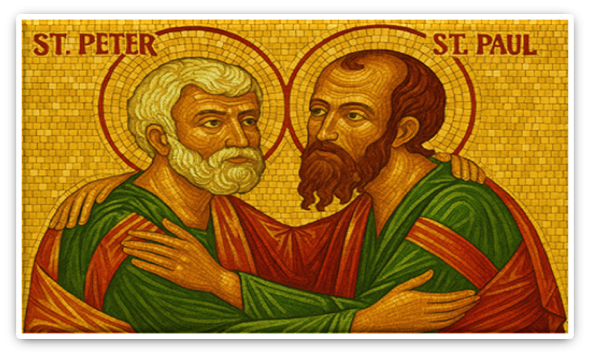
This Sunday June 29 is the feast day of Saints Peter and Paul. These were the two men that  God used to spread the gospel and lead the early Church despite terrible persecution. In the Gospels Peter stands our as apostle who most frequently took  the initiative when they were with Jesus. The Acts of the Apostles portray him as the undisputed leader of the early Church, undergoing enormous hardships and fearlessly facing persecution for the sake of Christ. He was a man of action. He spent his last years in Rome, where tradition tells us he was martyred during the persecution of Nero, in 64 0r 65 AD. St Paul who was well versed in rabbinical learning, at first persecuted the Christians, he has a vision of Christ on the road to Damascus which changed his life. After three years in solitary retirement in the dessert of Arabia , he plunged into a life of intense missionary activity, Tradition says that the was martyred in Rome around the year 67.

The Jews of Jesus’ time were not a free people. They lived under harsh Roman occupation. Yet they held fast to the belief that God would send a king to liberate them a Messiah who would overthrow their oppressors and bring justice and peace to the world. They had waited a long time, trusting in God’s promise. But no one knew exactly who the Messiah would be, what he would be like, or when he would come. Many expected a warrior-king who would lead a revolt against the Romans. Others hoped for a religious reformer who would purify the Temple and restore true worship. Some even claimed to be the Messiah, but the Romans quickly eliminated them, and their followers scattered. In the First Reading  from the acts of the apostles  we are told that Herod imprisoned Peter to appease the Jews. With the Church praying fervently for Peter, an angel appeared, shining light into his cell. Unchained, Peter followed the angel past guards, through self-opening gates, to freedom. In the Second Reading we hear that Paul, seeing his end was near, tells us  I’ve run the race, I have kept the faith. A crown of righteousness awaits me. The Lord gave me strength, protection, and he will guide me to His heavenly Kingdom.

In the reading from Matthews gospel  Jesus asks His disciples about the people’s opinions regarding His identity. Simon Peter declares that Jesus is the Christ, the Son of the living God. Jesus acknowledges Peter’s revelation, affirming that upon him, whom He calls Peter, to be the rock that he will build His Church on, and the powers of death will not overcome it. Jesus entrusts Peter with the keys of the Kingdom, granting him authority to bind and loose matters on earth and in heaven. Jesus then asks the disciples, “But, who do you say I am?” It is Peter who adds to the title ‘Son of Man’ by recognising Jesus as ‘the Christ, the Son of the living God’. Jesus names Peter as a happy man. This same Peter whose faith faltered when he was buffeted by the wind and waves of change now shows his openness to God and recognises Jesus for who he is. But this is not the end of Peter’s story. There are ups and downs in his response, as we see that in Matthew 16:21-23 when this ‘rock’ of faith becomes a ‘stumbling block’ to God’s purpose.  In spite of that, Jesus names Peter as the ‘rock’ on which he will build the church. Throughout the centuries Peter is our Holy Father the Pope , Peter the fisherman was the first pope and pope Leo is his successor as the living embodiment of Peter the  rock of faith who is called to build up the church in 2025.

Peter and Paul so different in background and temperament each met Jesus and responded in faith to what they heard and saw. Both Peter and Paul show us how to be courageous in sharing our faith. They faced prison, hardship, and death because they loved Jesus and wanted others to know Him. Their courage encourages us to think about how we live our faith. Do we share it with others? Do we trust God when things get hard?  Peter’s job at the beginning of the church is the same  as it  is today for Pope Leo that is to use the ‘keys of the kingdom’ to unlock the reign of God’s grace and send it out into the world. Are we prepared to be his coworkers where we are right now ? This Holy Year is all about hope often times we feel hopeless and helpless when we see all that is going on in the world around us. Our Prayer and support for one another and our faith leaders is always important.  Our hope filled prayer is that we will be courageous like Peter and Paul as we live and share our faith as they did at the beginning of the Church.
TRINITY SUNDAY

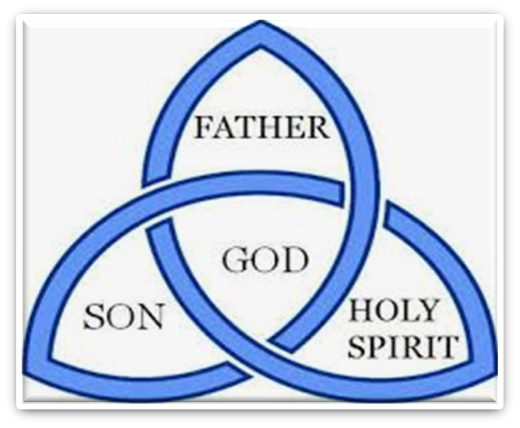
One week after the end of the Easter season on the feast of Pentecost we celebrate the feast of the Most Holy Trinity. The reality of the Holy Trinity is, of course a mystery. But mysteries can be talked about. Mysteries have clues that our minds can grasp. But a mystery remains a mystery unless and until we look at it in its totality. However when it comes to God we simply cannot comprehend the total reality of God, Father, Son and Holy Spirit. Mysteries of one sort or another make up a good portion of our lives. Science has its mysteries, as does philosophy, as does psychology, as do other intellectual disciplines. They all have much within them to challenge our minds and our intellectual capacities. All of them contain unknown things that move us to seek out the answers within the mystery.

The Feast of the Trinity is unique in that the focus of our celebration is not an aspect of the history of salvation, but reflection on the nature of God as it has been revealed to us as Christians. This weekend  we celebrate and reflect on our relationship with God and what our Creator and Redeemer has done for us. The scriptures remind us of our God’s graciousness and we rejoice in the God who has acted so mightily and lovingly on our behalf.  The feast of Holy Trinity goes back to 12th century England and St Thomas a Becket, Archbishop of Canterbury. Historians say the great Thomas celebrated a Liturgy in honor of the Trinity in his cathedral. In the 14th century, the feast came to be observed by the universal Church. The first reading this Sunday is from the book of proverbs. Its description of the creation of the world is evidence of Wisdom. God’s wisdom declares it was created first, before the earth and oceans. Present during creation, it rejoiced beside God, delighting in the formation of the world and mankind. This writer sees creation as well put together in a functional manner only a Creator with great wisdom could have done such an intricate, complex, complicated job that creation was. In the second reading from Romans we are told that we are Justified by faith, we are at peace with God through Jesus, and rejoice in hope. Our sufferings produce endurance, character and hope that is  filled with God’s love through the Holy Spirit.

The gospel presents Jesus speaking to the disciples. He spent three years teaching them, demonstrating how to grow in love with one another in their small but ever-expanding community.  The reading  also speaks of the power of presence and the power of the name. Ancient people placed great weight in presence; the way someone dressed and acted spoke of social power. Ancient people also chose names carefully; they believed a person’s name defined their strength of character. Both outward presence and inward character are part of the disciples’ experience. When the followers of Jesus  saw the resurrected Lord and heard his command to go out to  the whole world, they saw for themselves the Trinity in action. The feast of the Holy Trinity invites us to contemplate the mystery of the trinity God the Father Son and Holy Spirit 3 divine persons united as one.  In faith hope and gratitude, let us pray with greater faith and reverence  when we say “In the name of the Father, and of the Son, and of the Holy Spirit.

5th Sunday of Easter

This weekend we pray for Pope Leo as he begins his ministry as our Holy Father with mass on Sunday morning to inaugurate his ministry as the successor of Peter. We pray the Holy Spirit will guide him in his leadership of the Church as our shepherd and Father in faith. We also stop and say a prayer for all those who are doing exams over the next few weeks. Our world puts great store on education and often forgets the pressure that this puts on our young people especially at exam time. We pray that they may be inspired to do their best and know that there are people out there family, friends, teachers and lecturers who value them no matter how good or bad  the exam results might be.

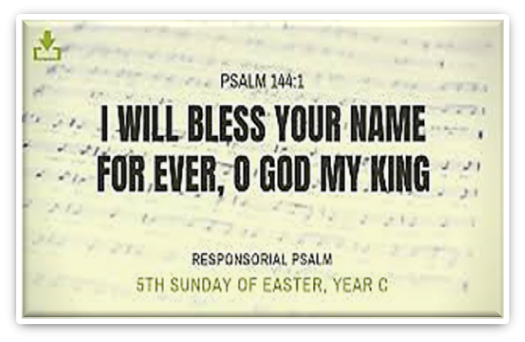
On this fifth Sunday of Easter, the scripture readings continue to describe the growth of discipleship and the conditions for the Kingdom of God. Membership in the Kingdom comes about by becoming members of the Church. The term church comes from the Hebrew word Qahal. It comes from a verb meaning called together. So, the Church is a group of people who gather together in faith, hope and Joy. In the First Reading from the acts of the apostles we hear that Paul and Barnabas revisited cities, encouraging disciples and explaining hardships they would endure for the  kingdom of God. They appointed church leaders, entrusted them to the Lord, and shared their mission success in Antioch, emphasizing God’s outreach to non-Jews. In the Second Reading John describes a new heaven and earth, with the old gone. He sees a splendid New Jerusalem and hears God proclaim His eternal dwelling with people, erasing all pain and making everything new. In this Sundays Gospel Jesus calls us to a new way of living when he tells us to love one another as I have loved you.  At one level this is a simple call to love, at another it is a big challenge for us with all that we see going on in our world. This means that we should love as Jesus loves, in order show the face and heart of Christ to a war torn hurting world.

 The love Jesus speaks of seems to be narrow and restrictive. He is addressing his disciples when he says, “love one another.” This love may seem insular and applicable just to an inner circle of his followers. But this is not the case as Jesus wants us to be united with him and one another in love today right where we are. Jesus’ command to love one another is central to Christian life. He taught this lesson at a time when He knew He would be betrayed. Instead of focusing on His own troubles, Jesus emphasized the importance of loving others as he loved them. This teaches us that love should be the foundation of our relationships, even when life gets difficult. Helping and supporting one another in our faith and life journeys means being there for each other through both good and bad times. It means offering a listening ear, a helping hand, and a kind word. By doing this we follow Jesus’ example and build a community rooted in love and care. By loving and supporting one another, we live out the true essence of our faith and strengthen the bonds of faith within our communities. We are called as pilgrims of hope to build and  become that community of love showing the love of God to those around us especially during this Holy Year and at all other times as well.

GOOD FRIDAY

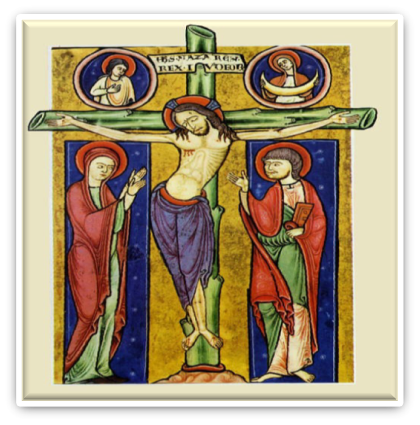
The origin of this day is traced back to Jerusalem and the veneration of the relic of the true cross.  This act of veneration stressed the cross as a symbol of victory.  In our good Friday Liturgy it is not the veneration of a crucifix, which would narrow it down to the historical moment of Jesus’ suffering and death.  Instead we venerate the Cross it is the sign of Jesus death on Good Friday.  On this day in the liturgy we read St. Johns account of the passion, we pray for the needs of the Church and the world, we venerate the Cross and we receive the blessed Eucharist.  When we think of the death of Jesus on the cross we realise that his death was a result of the courage of his convictions. He lived his life with a message of compassion and love, Jesus was often critical of those who lorded it over those who were less well off or who had little or even nothing at all.

The cross of Good Friday is a sign that all of us recognise, it is a sign of the completeness of the love that God has for each one of us faults and failings included.  It is not accidental that the Passion according to John is always read on this day.  This account shows that Jesus is always in charge, in total command of his situation.  John’s Passion is an extended commentary on an earlier statement of Jesus found in John 10:17-18:  “I lay down my life that I may take it up again.  No one takes it from me, but I lay it down of my own accord.”    The focus of the liturgy of Good Friday, is not primarily a meditation on Jesus’ pain, nor on our sinfulness, or our imitation of Jesus’ humility.  Instead  the focus on the cross as a reminder that we are beneficiaries of this event here and now in our own time. The final words of Jesus from the cross say it all for us, “It is accomplished!”  Jesus was not overcome. On the contrary!  He has overcome and the fact that we are celebrating Good Friday in 2025 bears witness to this.  When we go up to venerate the cross we should allow the cross to move us to be better people. Consoling, comforting and challenging the people we meet with the hope filled values of Jesus and the Cross.

5th Sunday of Lent

4th Sunday of Lent

8Th Sunday of ordinary time

Next week we begin the season of Lent with the Ashes on Ash Wednesday and we begin our annual  journey of repentance and conversion for 2025 as pilgrims of hope. All of us will have many opportunities to strengthen our spiritual lives over the 6 weeks of lent as we ponder what our faith really means to us as individuals and as a community. We also continue our prayers for the health and wellbeing of Pope Francis.

In the First Reading  this Sunday we are told that a persons  speech reveals their faults and true character. Do not praise someone before hearing them speak as this is the test of men. The Responsorial Psalm is  Psalm 91 and we hear that  It is good to thank and praise the Lord, whose kindness and faithfulness are constant. We are also told that the righteous flourish and bear fruit, proclaiming God’s justice and reliability to those around them. In our Second Reading  we are told that Through Jesus, we have victory over death. Again we are called to be steadfast and devoted to the Lord’s work, knowing all we do is not in vain even though sometimes it might look that way for in the Lord we do not labour in vain.

This Sunday in our Gospel Reading Jesus is coming to the end of what, in Luke, is called the “Sermon on the Plain”. He has instructed his disciples to love their enemies, turn the other cheek, treat others as they would want to be treated, not judge them, etc. Jesus is the wise person teaching the disciples a practical wisdom on how to live their lives as his disciples. Jesus says, in summary, a person’s words and actions will reveal their character. The Gospel tells us There is no sound tree that produces rotten fruit, nor again a rotten tree that produces sound fruit. For every tree can be told by its own fruit: people do not pick figs from thorns, nor gather grapes from brambles. A good man draws what is good from the store of goodness in his heart; a bad man draws what is bad from the store of badness. For a man’s words flow out of what fills his heart.’ God’s love is effective, it produces good fruit for the benefit of others. The good we do is the  way to spread the faith to others. Jesus sends us to be witnesses to the faith we profess to practice what we preach in all we do and say. Jesus words to us in this weekend’s gospel  show his concern for the integrity and quality of our lives. We cannot, he says, teach others if we ourselves are not witnesses to what we teach. There are many people out there who were witnesses to the truth of the gospel who have turned away and betrayed the truth and become rotten fruit.  Lent is the time to renew our  selves in terms of faith so that we are able to move forward in the certain knowledge and hope of being true witnesses to the faith. Lent is all about moving forward in a spirit of conversion and prayerful return the spirit of metanoia.

 During Lent we are provided with many opportunities for spiritual renewal but that will be for the weeks ahead. But for now let us stop and reflect on the good we do for others and how that becomes a way of  bringing the faith to the people where they are. As we continue our journey as pilgrims of hope we remember  that  God’s love is effective, and it produces good fruit for the benefit of others and we are called to show gods love through all we do and say for one another.

7th Sunday ir Ordinary Time

We pray this weekend for the well being of our Holy Father Pope Francis as he remains in hospital.  The readings for this Sunday teach us about mercy, forgiveness, and love. These themes show us how to live like Jesus in our everyday lives. The readings call us to live a hope filled life of mercy, just like David showed mercy to Saul in the first reading. Mercy means choosing kindness over revenge. It means forgiving others, even when it is hard.  The First Reading from the first book of  Samuel tells us that David, finding Saul asleep, refuses to harm him, saying it’s wrong to strike the lord’s anointed. He takes Saul’s spear and jug, proving his mercy and faithfulness from afar. The Second Reading 1 Corinthians tells us that The first Adam was earthly, the last Adam (Christ) is a life-giving spirit. We, once earthly, will transform to bear the likeness of the heavenly man.

This weekend we think about the things the Lord asks us to do in following Him, nothing is more difficult that the teaching  “Love your enemies, do good to those who hate you, bless those who curse you, pray for those who mistreat you. To the person who strikes you on one cheek, offer the other one as well, and from the person who takes your cloak, do not withhold even your tunic. Give to everyone who asks of you, and from the one who takes what is yours do not demand it back. Do to others as you would have them do to you It is much easier to sacrifice our wants for the needs of others, then it is to avoid lashing out at someone but that is what Jesus is calling us to do.  The point of this kind of prophetic speech by Jesus is to stimulate his audience (and us) to reflect on the whole pattern of behaviour in human relationships. Jesus is not really suggesting rules to be followed literally in certain circumstances. Rather, we are being invited to reflect on how we can respond to unreasonable demands and personal injuries with nothing but generosity and abandoning all claims to retribution and restitution.  What we are talking about in this Gospel is not some ethical system for the good of society or for our own self-interest but something way beyond this.

What Jesus gives us is the very principle behind the creation of the universe: God’s infinite love for us all. This is the extraordinary challenge that he lays before us: To love the people around us just as he loves us, just as he loves them.  It is not easy and we won’t achieve it often but we know that this is what God wants from us and it is something that deep in our hearts we are glad to do. The way God treats us should be the guideline for our life as Christians. God is infinitely compassionate and merciful, he is extraordinarily patient with our many shortcomings and he puts up with all sorts of foolishness on our part.  What Jesus is suggesting are responses to insults and injuries which break cycles of violent retaliation and provide pathways to peace and reconciliation. By doing this, Jesus says, we can allow the utter generosity of God to shine through us. Doing good only to those who do good to us is not enough to convey the generosity and welcome of God. Only acting with overwhelming generosity and compassion allows the mercy, generosity and compassion with which God meets each of us to be clearly seen in concrete actions It is our task as a true disciple to imitate our master, to imitate the behaviour of God himself. In the words of Micah this is what God asks of us: only this, to act justly, to love tenderly and to walk humbly with our God.

5th Sunday in Ordinary Time

This Sunday we celebrate the 5th Sunday in Ordinary time and we remember and pray for all those who are sick as we celebrate the world day for the Sick on 11th February. We ask God through the intercession of Our Lady of Lourdes to bless our sick and all those who look after them. The 5th Sunday in Ordinary Time readings highlight important themes. These themes help us understand our faith and God’s call in our lives. In the  First Reading from Isaiah  Isaiah saw the Lord on His throne, felt unworthy, but was cleansed by a seraphim. When God asked for a messenger, Isaiah offered to go. In the Responsorial Psalm I will thank and praise God for His kindness and truth. He answers me and gives me strength. All will praise Him for His great glory and enduring kindness.

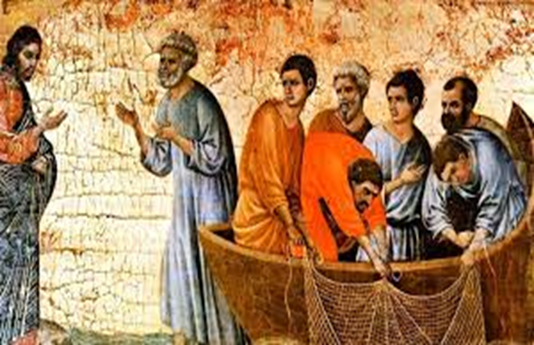
The Second Reading from Corinthians tells us that Christ died for our sins, was buried, and rose on the third day. Saint Paul says He appeared to many, including me. By God’s grace, I preach, and you believed. Our Gospel story for this Sunday recounts the story of the of Peter’s calling to be a fisher of men. After a fruitless night’s fishing, Peter obeys the word of Jesus and catches a huge number of fish. He feels unworthy before Jesus; but he is now called to be a fisher of men. Peter recognises the hand of God in what has happened and at the same time realises his own sinfulness but Jesus comes to show us the mercy of his Father. Jesus did not come to be a hermit with an unreachable address in the desert; rather, his whole mission moves in the opposite direction, for he has come “to seek out and save the lost” (Luke 19:10). So Jesus travels into our lives not away from them.  He entertains sinners he enters their homes, meets their families, eats at their table, listens to their stories, and calls all of us to a new way of life when he says follow me. Throughout his life Jesus is never far from sinners he is not far from all of us as well for are sinners too. Jesus doesn’t write us off because we are sinners; Jesus has other plans because he knows that we sinners have a future, not just a past. Simon Peter received his call while he was doing his work. He said, “Yes,” and responded by changing his life.

Every day, in the midst of our routines, at work, home, school there are opportunities to respond to Jesus’ call to follow him. In innumerable ways our Christian vocation must guide what we say and what we do. In all  our decisions big and small, we are asked to live what we profess as Jesus’ followers; to be attentive to what God may be asking of us at that moment of our lives. This may entail being faithful to the commitments we already have; responding to a need we see, or taking the opportunity to witness to what we believe. Our responses may seem small and insignificant. They may be small, but they are never insignificant! In addition, who knows where the next “Yes” we say to Christ may lead us?  Our call as disciples is not only to personal holiness but also to partnership with Christ in transforming the world with words and actions of  justice, peace, integrity, forgiveness, mercy, tolerance, hope and love. We must allow ourselves to be caught and taught by Jesus. The response that is asked for, is to be prepared to give up everything in our quest to know Jesus. In spite of our sense of sinfulness, unworthiness and lack of faith in ourselves, we are called to trust in God’s choice of us and in God’s faith in us who are his beloved daughters and sons.

3rd Sunday of Ordinary Time

This Sunday we celebrate the 3rd Sunday of ordinary time as well as Word of God Sunday. Today’s readings make an unmistakable directive that we are to seek joy that comes from faith.  They provide insight  to how we are to go about instilling joy into our the core of our being.  In our first reading from Nehemiah,  we find ourselves at the Feast of Tabernacles at a time of true revival.  God had intervened and had brought the Israelites back to Jerusalem.  Not only had they returned home from captivity in Babylon, but God had miraculously provided all the resources needed to rebuild the temple and the walls of the inner city. In the Psalm we are reminded again of the power of God’s Word as it “refreshes the soul”.  His Words bring “Spirit and Life.”  They provide “rejoicing to the heart,” “enlightenment”, a “fear of the Lord which is pure, enduring forever”. 

All of these reminders point us to God’s Holy Word, which is the ultimate source of the overflowing joy we need to not only rejoice, but to effectively point others to our Lord and Savior the reason for the hope and joy that is within us. In our Second Reading from 1 Corinthians, we see how our joy is to be lived out.  We are reminded that our church the  body of Christ is made up of many  unique individuals, all with unique talents & purposes.  We are instructed that there can be no divisions, but rather shared concern for one another.  True joy is found only when we focus upon others, allowing our joy  to flow into their lives both in their good times and their challenges. In the Gospels for this Sunday and next, Luke tells the story of Jesus’ visit to his hometown of Nazareth. Luke wants to make very clear to his readers what drives Jesus the Prophet from Galilee and what is the goal of his action. We as Christians need to know in what direction the Spirit pushes Jesus, since following him means that we are walking down the same path as he did and often times it will be in opposition to what is going on in the world.  With the Spirit poured upon him at his baptism, Jesus would proclaim freedom for captives, sight for the  blind, and help for those who are oppressed.  When Jesus spoke, hearts and minds turned to God and health of mind, body and spirit were restored.

There is an immediate life implication in this gospel passage  that is easy to overlook and that is the Spirit of the Lord came upon Jesus and the Church in order to bring the good news of hope and joy to us and we are called to bring it to the people of our time and place. The “today” of Jesus that the Gospel speaks about is not only the day he was speaking. It is our “today” as well here  right where we are in 2025. As pilgrims of hope in this Holy Year we are called to bring the joy of Christ that we have as people of faith into the lives of others. Wherever we are that is our challenge it is the challenge of hope filled joyful people who proclaim freedom for captives, sight for the  blind, and help for those who are oppressed.   

Post Navigation