Fullerton T

RELIGION LITURGY AND LIFE

Archive for the tag “holy-spirit”

TRINITY SUNDAY

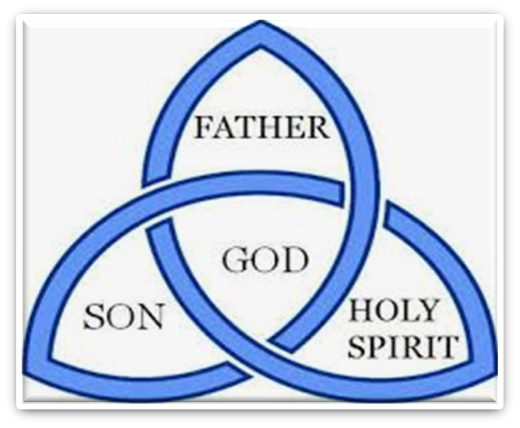
One week after the end of the Easter season on the feast of Pentecost we celebrate the feast of the Most Holy Trinity. The reality of the Holy Trinity is, of course a mystery. But mysteries can be talked about. Mysteries have clues that our minds can grasp. But a mystery remains a mystery unless and until we look at it in its totality. However when it comes to God we simply cannot comprehend the total reality of God, Father, Son and Holy Spirit. Mysteries of one sort or another make up a good portion of our lives. Science has its mysteries, as does philosophy, as does psychology, as do other intellectual disciplines. They all have much within them to challenge our minds and our intellectual capacities. All of them contain unknown things that move us to seek out the answers within the mystery.

The Feast of the Trinity is unique in that the focus of our celebration is not an aspect of the history of salvation, but reflection on the nature of God as it has been revealed to us as Christians. This weekend  we celebrate and reflect on our relationship with God and what our Creator and Redeemer has done for us. The scriptures remind us of our God’s graciousness and we rejoice in the God who has acted so mightily and lovingly on our behalf.  The feast of Holy Trinity goes back to 12th century England and St Thomas a Becket, Archbishop of Canterbury. Historians say the great Thomas celebrated a Liturgy in honor of the Trinity in his cathedral. In the 14th century, the feast came to be observed by the universal Church. The first reading this Sunday is from the book of proverbs. Its description of the creation of the world is evidence of Wisdom. God’s wisdom declares it was created first, before the earth and oceans. Present during creation, it rejoiced beside God, delighting in the formation of the world and mankind. This writer sees creation as well put together in a functional manner only a Creator with great wisdom could have done such an intricate, complex, complicated job that creation was. In the second reading from Romans we are told that we are Justified by faith, we are at peace with God through Jesus, and rejoice in hope. Our sufferings produce endurance, character and hope that is  filled with God’s love through the Holy Spirit.

The gospel presents Jesus speaking to the disciples. He spent three years teaching them, demonstrating how to grow in love with one another in their small but ever-expanding community.  The reading  also speaks of the power of presence and the power of the name. Ancient people placed great weight in presence; the way someone dressed and acted spoke of social power. Ancient people also chose names carefully; they believed a person’s name defined their strength of character. Both outward presence and inward character are part of the disciples’ experience. When the followers of Jesus  saw the resurrected Lord and heard his command to go out to  the whole world, they saw for themselves the Trinity in action. The feast of the Holy Trinity invites us to contemplate the mystery of the trinity God the Father Son and Holy Spirit 3 divine persons united as one.  In faith hope and gratitude, let us pray with greater faith and reverence  when we say “In the name of the Father, and of the Son, and of the Holy Spirit.
PENTECOST SUNDAY

6th Sunday of Easter

This weekend we celebrate the 6th Sunday of Easter and soon we will celebrate Ascension and Pentecost Sunday. At the council of Jerusalem Paul and Barnabas receive endorsement of their policy of admitting Greeks and other pagans to the Church without requiring them to observe the law of Moses. Paul sees clearly that Christs coming means freedom for us. We are no longer bound by restrictions and laws if we observe the commandment of Jesus to love, Love God and others. The love of Christ will be the light illuminating our whole lives.  

In the First Reading from Acts the Apostles decided not to burden Gentile believers with the Jewish law and what it required from them instead they asked them to avoid certain things.  In the Second Reading  from the book of Revelation we are told that the angel showed John Jerusalem, shining with the glory of god. It had twelve gates and foundations named after the tribes of Israel.  In the Gospel we continue to read the Farewell Discourse as Jesus makes a number of promises to the disciples. Throughout John’s Gospel Jesus speaks about his boundless affection for the Father and the disciples. Another favourite theme of John is that, just as the Father and Jesus abide together in love, they will also come to abide in the heart of the disciple. Jesus does not speak these words in the sense of foretelling the future, but rather to prepare the disciples for their daily ‘remembering’ of, and making his words and actions present, in their own lives. Jesus promises to send the Holy Spirit to the apostles as the advocate.  

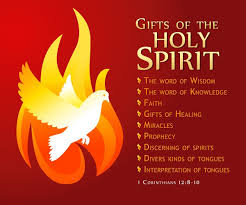
Although Jesus had spoken to the Apostles and told them many different things, he knew them well and realized that they wouldn’t remember everything he said Jesus also knew that they would have to endure many struggles, difference and disagreement.  The Apostles would not see eye to eye on everything; they would have different memories of Jesus; they would emphasise different things. In the conflicts that would arise they would have to put their faith to work.  That is why he told them that the Advocate, the Holy Spirit, whom the Father will send in his name, will teach you everything and remind you of all I have said to you. These words are a direct pointer towards Pentecost and the gifts that the Holy Spirit would bring to them as well as us.  We don’t have the physical presence of Jesus with us the way his first disciples did when he talked with them around the table at the Last Supper, washed their feet, and gave them his reassuring promises. His farewell to them was a real farewell he was going, he would no longer be with them. But he assured them and us that he is present in a different way, through his gift of the Holy Spirit.

Jesus also promised the Apostles Peace  ‘A peace that the world cannot give.’ Sometimes we mistake this peace for our idea of quietness or tranquility, but the peace the Jesus gives is a peace that can be found even in the midst of turmoil. This peace is not something we can manufacture ourselves by our own power. It’s a gift that comes from Jesus, who doesn’t want to lose touch with us. Jesus chose his followers to carry out God’s plan of salvation. He chooses us today to do the same, he gives us a personal stake in the Kingdom of God.  We remember the great gift that the Holy spirit is it is the breath of God that unites us. If we keep on trusting in the presence of the Spirit of God in our lives we will have peace in the midst of any personal, family, or community turmoil that comes our way as well as someone who will keep us going along the right Road !

Pentecost Sunday

Today we celebrate the decent of the Holy Spirit upon the Apostles and the beginning of the apostolic mission to bring the Church to the world. The readings for the Pentecost clearly tell us that we need to be willing to receive the Holy Spirit and then use the gifts we receive. In the first reading we hear how the Holy Spirit came to the disciples and empowered them to share the gospel with people from different nations as a result of this we are able to hear the word of God spoken in our own language. The second reading tells us that it is the Holy Spirit who enables us to proclaim the gospel in unity. By the time John wrote his gospel, Jewish Christians had been excommunicated for their belief in the Messiah. Ostracized and socially persecuted, some Christians reacted in fear, while others boldly proclaimed the gospel. Early Christians needed a sense of stability, a sense of divine peace.

Through the words of Jesus, “Peace” was John’s prayer for his readers as we listen to this gospel reading. With the sight of Jesus, fear turned into great joy. Anxiety turned into relief.  Desperation turned into vindication. And the lack of spiritual direction turned into a real sense of deep spiritual grounding. The divine presence stood close to them and with the divine presence came divine peace. We too have the divine presence in the Blessed Sacrament and it brings Joy and spiritual grounding to all those who come and Jesus says to each and every one of us you are welcome. We can’t ignore the problems that are there and there are many in our own lives and the lives of those around us church and otherwise.  If we pray through the problems as well as thinking them through we will find that they are much easier to get through the tough times.   Gathered at Mass week in week out we bring our prayers to God. We each have our own needs. Family and friends may be sick.  People we know need work. The person who has been central to our lives for so long has passed on.   

We bring all our concerns in prayer to church because they remind us of our need and they raise our hopes in the power of God made real to every generation through the Holy Spirit.  Through the Holy Spirit our relationship with God is fruitful, satisfies our longings, and brings us peace.  Because of God’s faithfulness to all of us, we give thanks and once again present our needs as we remember the presence of God and the Holy Spirit who are with us. The feast of Pentecost is a day of thanksgiving for the beginning of the Church, in which are contained all the treasures of spiritual grace. Pentecost is also the day of thanksgiving for the coming of the Holy Spirit firstly to  the Apostles as well as all of us. It is a day on which we renew our trust in the working  of the Holy Spirit within us and the Church in the world and  we thank Him for His inspiration and guidance in all the good and bad times and things that are part of our lives.

Post Navigation