Fullerton T

RELIGION LITURGY AND LIFE

Archive for the tag “jesus”

CHRISTMAS 2024

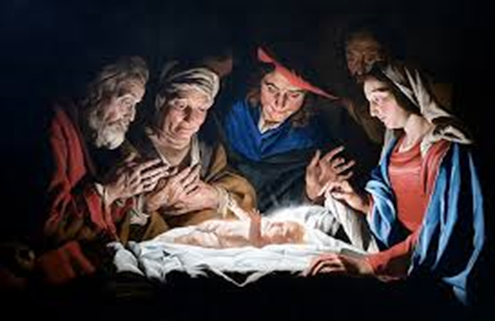
This Christmas we begin the Holy Year of 2025 with the opening of the Holy Door is St Peters in Rome. The theme of the year is Pilgrims of Hope and Christmas is all about Hope and Joy. At Christmas the Christian Churches throughout the world celebrate the Birth of Jesus Christ,  as we remember “The Word was made flesh and dwelt among us.” The Son of God became man to give us a share in that divine life which is eternally His in the Blessed Trinity. Throughout the Advent season we have waited for the coming of our Savior. Now on the 25th of December we celebrate His birth with unrestrained joy.

The readings for the Nativity of the Lord emphasize the joyous celebration of the incarnation of Jesus Christ, God becoming one of us. Christmas is all about  the saving grace of Jesus, and the light and salvation brought by the birth of our Savior. During the Christmas season there is an extensive exchange of greetings, gifts and good wishes among friends. These greetings are a reminder of those “good tidings of great joy that shall be to all the people, for this day is born to you a Savior Who is Christ the Lord” (Lk. 2:11). They are a reminder, too, that all blessings and graces come to us from Christ. With the exchange of gifts comes the responsibility to remember those who have little or nothing at all in terms of a roof over their heads and food in the cupboard. During Christmas we are reminded  of the mystery of Mary as Mother of God, mother of the Incarnate Word, and mother of His mystical body, the Church. Christmas encourages us to contemplate Jesus together with Mary and Joseph reflecting on Jesus with ‘His mother’, as recounted many times in the Gospels.

Our faith cannot neglect a profound devotion to the Mother of God, as she shows us the easiest way to reach Jesus. Christmas reminds us of the great mystery of God’s people, the Church animated by the life giving Spirit. So, why do we celebrate Christmas? It is more than the birth of Jesus. It is a celebration of God with us. It is the realization that God’s love for us and faithfulness to us dwells among us. It is a sign that we are to carry that love and faithfulness to other people. Like the Baptist, we, too, are to witness to God’s living, breathing Word and we are called to be faithful so let us adore the Lord Jesus in the manger the reason for the season and bring his love and joy to those we meet in the days ahead as we begin the Holy Year as Pilgrims of Hope.

4th Sunday of Advent

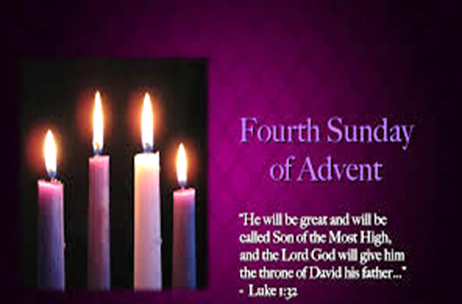
This weekend we light the third purple candle on the Advent wreath as the anticipation grows to a crescendo as we  draw closer to the celebration of the Christmas mysteries. Christmas is almost upon us: yet are we ready in the true sense of the word remembering that Jesus is the reason for the season? Christmas we are told is a time for so many things  yet for many it is a time of stress and pressure with all the extra work to sort out every­thing that needs to be done.  For many it is a time when we are fearful that the children won’t be disappointed or that there will be tension in relationships or there will be a breakdown in the ceasefire with the in-laws.  

In the first reading from Micah Jerusalem was under siege and Davids dynasty was in peril. The prophet said that salvation would come from an insignificant place and that was Bethlehem from there a new leader would gather the nations together into one people.  In the second reading from Hebrews the sacrifices mosaic law were unable to purify the people from sin. Only Christ himself was able to bring the reconciliation between  god and his people. We  meet Mary and her cousin Elisabeth in our Gospel reading. Mary, who herself had been prepared for the coming of the Messiah. She has heard the angel’s greeting, and his strange news, and has accepted her role in God’s plan.  Now she hurries to her kinswoman, Elizabeth, who herself bears John the Baptist in her womb. John, alerts us to the presence of the Lord, as he leaps for joy in his mother’s womb. His joy is that God has kept his promise, and is with his people.  That two women were chosen to play such a role in the story of salvation is remarkable, as women were often marginalized in the society of their time.

In all these events we see the great mission that Mary undertook as a privileged instrument in the hands of God. Mary is not only the mother of the source of grace; she is the very model of what a Christian heart should look like. We look to Mary to see our fullest Christian dig­nity. In Lumen Gentium 68, Vatican II describes our contem­plation of Mary as an act of entering our own deepest mystery, catching a glimpse of what we shall he at the end of our faith journey. Over the next few days the journey to Christmas will have many pressures for everyone especially those who are worried about so many things family and otherwise.  Mary in her calm gentle way encourages us to trust in God’s word and to believe in God’s promises as she did. The great Christmas feast is almost here. As always in Advent, what is promised in the first reading is brought to fulfilment in the Gospel reading. We began Advent with the cry, ‘Come, Lord Jesus’. We will end it at Christmas with the joyful shout, ‘God is with us!’

3rd Sunday of Advent

On this the 3rd Sunday of advent we light the rose coloured candle on the advent wreath and the vestments at mass may be Rose as well. This Sunday is also known as Gaudete Sunday as we rejoice that the Lord is near.  Last week we heard about John’s ministry of preaching repentance and baptism for the forgiveness of sins. The idea of repentance is about turning around and facing in a new direction. John’s call to the people was to turn away from the old ways of life and to turn towards God. The Gospel opens with the people, the tax collectors and some soldiers, having heard the call to change their lives, all asking John, ‘What must we do?” We should also be asking ourselves what must we do?

 Both John the Baptist and Paul share one belief: that the Lord is very near. God’s nearness didn’t act as a threat to them, but gave them a infectious  source of joy that no one could take away  from them. Their joy in the closeness of God gave an edge to their preaching and teaching. It gave them a vision to see the far side of disaster; it moved them to draw others into that sense of joy.  None of them was closed in his own joy they moved out going round in the hope their  inner joy would be caught by the people of their time and place and many people were caught by the joy they had to pass on to them. The picture of John the Baptist as a man of joy is not one you hear about very often. John is usually portrayed as a lonesome figure, with a weird wardrobe and weirder diet, who rants and raves at anyone with ears  to hear. But John was a character who intrigued people and as a result they would seek him out and follow him. People don’t journey into the wilderness just to get insulted; you don’t become disciples for the wardrobe and diet.Here was a man who cared nothing at all for comfort, money or fame, who could not be bought, and who would speak the truth without fear. In John people could see something of God.

John spoke in words they could grasp when he told them exactly what they should be doing.  He made such a deep impression on the crowd that word goes around that he might be the Christ. That expectant feeling is a measure of John’s effect on people around him. John did not  claim to know who the Messiah was going to be instead he tells the people that he is not that person. That role is for someone else, someone greater and more powerful than he was.  And as we know that person was Jesus the Son of the Father. We are called to be joyful witnesses to Jesus but as we know with all that is going on around us these days that is not easy. There are many things that continue to block the presence of the Lord within us. It’s time for us to answer the question what must we do and that is to  prepare the way so that we will be able to welcome Jesus  into our lives our hearts and our homes at Christmas. Let us  Rejoice in the lord always because the Lord is near.

2Nd Sunday of Advent

This Sunday we light the second purple candle on the Advent Wreath The sense of preparing is very strong in our readings this weekend. The Gospel highlights the role of John the Baptist as the one who prepares the way for Jesus. The first reading from the prophet Baruch is a call to do the same. It talks about taking off the dress of sorrow and distress and putting on the beauty and glory of God. It’s a call for the people to become God’s people.  In the Responsorial Psalm we hear about the  marvels the Lord worked for us! When the Lord restored Zion, they were overjoyed. Nations acknowledged God’s great deeds as they rejoiced, knowing that their sorrow would turn into joy.  

In the Second Reading  from St Pauls letter to the Philippians Paul says I joyfully pray for you, confident that God will complete His work in you. He goes on to say I pray your love grows in knowledge, so you can discern what is best and be righteous in Christ. John was  the herald of the Lord calling the people of his time and ours to  repentance John the Baptist plays a prominent role in all the gospels, but particularly in Luke. John hears the word in the desert and preaches throughout the whole region of the Jordan prepare the way for the Lord make straight his paths. The Jordan was another important place in the faith life of the Jewish believers. After their desert wanderings the people crossed over the Jordan river into the promised land. They left behind slavery, came to know God in the desert and were finally prepared by God to cross into new life.  Blessed John Henry Newman reminds us that “Advent is a time of waiting; it is a time of joy because the coming of Christ is not only a gift of grace and salvation it is also a time for commitment because it motivates us to live the present as a time of responsibility and vigilance.  

We all need help and encouragement to leave behind all the things that have become destructive in our lives. We need help in thinking about ourselves differently. We have to take time to reflect on the kind of person God wants us to be and what God’s plan is for us as we prepare the way for the Lord in 2024. This  means as we prepare the way for the Lord we prune away all that hinders us from making Jesus welcome when he comes at Christmas .  Our Advent journey is showing us how to prepare our hearts for a fresh discovery of God’s presence in our lives; how to recognise the presence of Jesus among and around us; showing us how to turn around and face towards God with faith, hope and love; and how to be the living presence of Jesus in our moment of history. As we continue our  advent  journey we ask ourselves what are we waiting for. Are we waiting for the presents and razzmatazz that the secular part of Christmas bring or are  we preparing spiritually for the greatest gift of God, his Son, Jesus the light in the darkness who John the Baptist foretold.

1St Sunday of Advent

This weekend we begin our advent journey for 2024, everything goes from hopeful green of ordinary time to the penitential purple of Advent. Last Sunday we celebrated the end of the Church’s year with the Feast of Christ the King. Now one week later we start all over again as we bless the advent wreath and light the first purple candle. Advent is the season that brings us back to the ancient longing of the human race for the coming of one who would bring to this world liberation from sadness and the fulfillment of perfect peace. As we know in our world there is so much sadness and very little peace as a result of this we continue our prayers for peace in the world.

In the first reading this Sunday Jeremiah looks forward to the coming of one who will save God’s people, one who acts with honesty and integrity Jesus was the one he was talking about . In the second reading St Paul encourages the people of Thessalonica in their following of Christ. He prays that their love will grow and that their hearts will be ‘confirmed in holiness’  so that they would be blameless in the sight of God. In the gospel reading   Jesus is clearly fretful about the future as he paints a bleak picture of the end of the world. There is talk of nations in agony, of bewilderment, of people dying of fear, of the power which menaces the world.   It is a nightmare view of total disaster that “will come down on every living man on the face of the earth”.  Given that vision of ultimate collapse, it is hardly surprising that it might drive people to drink! Being sober and awake might not seem very attractive in the face of such catastrophe.  Yet that is Jesus advice to us: “Stay awake, and be ready praying at all times for the strength to survive all that is going to happen” so that we will have  confidence before the Son of Man.   

This Gospel is for our time as much as any other when we have so many countries at war as well as all the crazy things that are going on in world politics. The Gospel also encourages us to do two things which are difficult to hold together: to be honest with ourselves about the way things are going, and at the same time not to lose hope in the future. The danger is that we see the terror clearly, and don’t see the reason for the hope that is within us at all. Given the muddle we’re often in, Jesus has to convince us as he tells us about the future that is really liberating. The way he does that best is through the example of his own life. Advent reminds us that we don’t walk alone into the future whatever it holds for us. We look to the past to reassure ourselves here and now as we go forward. When we look we see how far-reaching God’s love is for all of us no matter who we are.  The Advent readings are a rich tapestry of images cantered on the truth that God has come among us and will come again. Our Advent invitation is to prepare the way for  the lord so we can welcome him as Emmanuel – God with us at Christmas.

Feast of Christ the King

This weekend we celebrate the feast of Christ the King on the last Sunday of the Churches year. The Feast of Christ the King was established by Pope Pius XI in 1925 as an antidote to secularism, that is a way of life which leaves God out of a person’s thinking and has us living life as if God did not exist as we all know God does exist and we see this throughout history. In this feast  we profess our common belief: Christ is King to the glory of god the Father.. Our Gospel reading for this Sunday has Jesus before Pilate. Jesus turns his interrogation into a meeting of souls. It is an encounter that impresses Pilate deeply; encounters with Christ are bound to change us in some way.  Jesus refuses to answer Pilate’s charge of kingship directly. He states that his kingdom is “not from here” (John 18:36), which Pilate interprets to be an affirmation that Jesus is a king.

Jesus also puts the question aside as something Pilate claims, and instead offers the idea that he is a witness to the truth (18:37).In the reading from John’s Gospel  which is also part of the Good Friday Passion Narrative we see  this conflict is described in terms of the “truth” that Jesus  has brought from his Father: “It is because I speak the truth that you cannot believe me”.  Jesus urged the people of his time as he encourages all of us in our time to find the truth of our calling to be “a light to the nations,” showing the world the life and joy of people who are living according to all they have learned from Jesus.  The kingdom of Christ, is  a kingdom of charity and peace. We remember that the Kingdom of God exists in every home where parents and children love each other. It exists in every region and country that cares for its weak and vulnerable people. It exists in every parish that reaches out to the people of the parish without looking at who they are or what they can contribute .  The King we celebrate this weekend is the Son of God who walks the dusty roads of our daily lives finding the weak, the ill, the oppressed, the ones whose hearts are wounded, the ones whose minds are confused by the things that they see going on around them.

Jesus finds all kinds of people as he journeys with us along the dusty roads of life, he finds ordinary folk as well as the elite, the powerful as well as the weak and he invites all of us to walk in his ways as we prepare to start again as we begin the churches new year next Sunday. We remember that the kind of kingship that Jesus talks about places a different emphasis on all earthly kingdoms and empires, from Imperial Rome right to today. It topples the world’s values and overturns the concepts of power and majesty and replaces them with a kingship of service of god and one another. Sometimes we fall short, but Jesus always calls us back with forgiveness. He asks us to recommit ourselves to service wholeheartedly as we prepare spiritually  in  Advent for Christmas .

19th Sunday in Ordinary Time

The readings for the 19th Sunday in Ordinary Time demonstrate that God sustains us despite everything that is going on. In the First Reading Elijah, overwhelmed, sought death in the wilderness but was sustained by an angel with food and water, enabling his journey to Horeb the mountain of God.  The Second Reading  tells us to a avoid behaviour that grieves the Holy Spirit. Instead, we should be kind, compassionate, and forgiving, just as God forgave us. We  are called to lead lives of love as we follow Christ’s example. The Gospel reading deals with a doubting audience, and at times we  are also members of that doubting audience.

The people who heard Jesus were shocked and critical of his claim to have come down from heaven as the Bread of Life. Despite the miracles they had witnessed, and the words of wisdom they heard preached with such convincing authority, they could not go the extra step to accept his words and deeds. We, on the other hand  are able to take that extra step because our Christian faith has come to us from Jesus, passed down through the generations of those who went before us. We know where he came from, we know where we are going and we know how to reach that destination our heavenly homeland. The personal faith that we have means that “God out of the abundance of his love, speaks to us as a friend and lives among us as  the living bread which came down from heaven.  All of us have doubts when it comes to our faith and we search for answers to our questions.  When we search we find Jesus who is the answer to our doubts.

Through the teachings of the church and through our communion with him through the eucharist we understand who Jesus is and we also understand his message.  When we gather at the Eucharist we bring ourselves and our needs in prayer to God. We bring ourselves to God because God is with us and continues to be with us in good and bad times through the sacramental life of the Church. When we see the Eucharistic Bread, we believe that it is Jesus who is there before us:  such is the faith we have in the Eucharist.    So  today we give thanks for all our blessings, families, friends and all that we have and hold dear. We also give thanks to God for the presence of Jesus in our lives as we remember that Jesus is the bread of life. The food for our journey that comes from the God who sustains us and loves us and is there for us as a friend, a  helper and a guide.  

We pray for peace as there are many communities and countries at war with one another. From Ukraine to the Holy Land and even on our local streets where racism has reared its ugly head. And so we pray: God of peace, you are peace itself; a divided heart cannot find you, a violent mind cannot welcome you. Grant that we who are one in heart may hold fast to the gift of peace and that those who are divided may forget their strife and come to know your gift of peace. Through Christ our Lord

15th Sunday in Ordinary Time

On the 15th Sunday of Ordinary Time our  readings focus on God’s call and mission. We see how God chooses ordinary people to carry out His work. In the First ReadingAmaziah orders Amos to leave Bethel and prophesy elsewhere. Amos responds he was called by God from his life as a shepherd to prophesy to Israel and that was were he stayed. In the Second Reading from  Ephesians we are told that we are blessed in Christ with spiritual riches, chosen to be holy, redeemed by his sacrifice, and sealed with the Holy Spirit, fulfilling God’s plan in the church for unity and glory.

The Gospel reading is all about Mission. Jesus summons the twelve apostles and sends them out on a missionary tour.  The chosen followers of Jesus have to carry the word of God as a challenge to others. In that mission the apostles have the authority and the power of Jesus. They have to travel on that.  They are not to rely on their own resources but on the authority that has been given to them and the hospitality that will be offered them. With no bread and no money, they have to depend on the kindness of others: that vulnerability makes their message their real resource. If they have bread to eat, it also means that people are not only hospitable they are also listening to the word they preach. If they are not accepted, they have no option but to move on. And when a town rejects their message, the apostles are to shake the dust from their feet – a symbolic act performed by Jews returning to Palestine after journeying abroad. The Twelve went out and preached that God would adopt humanity, making its members which include you and me “sons” and “daughters” of the Father. This was Good News then just as it is now!  I think we need to be like the twelve who were sent out with the message of Jesus but with one difference we need to seek out those who do not want to hear the message instead of shaking the dust off our feet we really need to let our feet get dirty.  We have to have carry the word of God and see it as a challenge to ourselves and to others. In telling us about the beginning of the church in so dramatic a fashion, Mark, wants to be certain that disciples in his church and in the church  of our time will be mindful of some important implications. We, like the first disciples, are inadequate for the task; yet Christ’s mission for God’s kingdom is given to us.  If we labor under the illusion that we can bring about God’s reign on our own, we will be advancing something other than God’s kingdom on earth. Paul refers to his experience of preaching the gospel as foolishness. He relishes saying “we are fools for Christ’s sake?   Because he understands that it is because of his weakness that the power of Christ can dwell in him .       

The message of hope from today’s Gospel is that we don’t have to spend years of study before we can explain what Christ means; we can do it quite easily using actions and words we all understand. The crucial point in the Gospel is that by doing things Jesus’ way the Apostles get close to the people, they understand their concerns and they share their life. We are called to do the same today as we try to do things Jesus way by helping the people to get close to Jesus and what he teaches all of us.

14th Sunday in Ordinary Time

The readings for the 14th Sunday in Ordinary Time are a call to listen to God and follow Him even when those around us do not. These readings make us think of how we can persist as disciples in times of adversity and how to handle rejection. In the First Reading God empowers Ezekiel to speak to rebellious Israel, ensuring that whether or not they listen, they will recognize the presence of a prophet among them. In the Second Reading Paul embraces his weaknesses and hardships, seeing them as opportunities for Christ’s power to shine, affirming that divine strength is perfected through human weakness. This Sundays  Gospel sees Jesus going back home to Nazareth. This is not a social visit like everyone else in the other towns in Galilee, Nazareth and its people have to hear the Good News of the kingdom. When Jesus teaches in the local synagogue, many of the townspeople are astonished at the things he is saying. They wonder at the origin of Jesus’ teaching and the nature of his wisdom, as well as the miracles that are done through him.

From the unanswered questions about Jesus’ wisdom, the neighbours move to more familiar territory and focus on what they do know about Jesus. Whatever their wonder, they are not going to allow the wisdom of Jesus  to interfere with their memories of him as the son of Joesph the carpenter. Prior to this section in Mark’s gospel, Jesus has been doing some extraordinary things. His baptism by John in the river Jordan was accompanied by an affirming voice of the Father from the heavens, “You are my beloved Son. On you my favor rests.” After his desert testing Jesus called his first disciples, cured the man in the synagogue with the unclean spirit and the paralytic in Capernaum; expelled the legion of devils from the Gerasene man, you may remember last week Jesus raised the daughter of Jairus and then cured the woman with hemorrhage, Jesus is doing wonderful things in what he says and what he does as he proclaims the coming of the reign of God. Though he did all the wonderful things the people still had little faith which also seems to be the case these days for so many in our own time.

The people wanted the powerful signs of God’s final coming with a strong right arm to rescue them. But when Jesus spoke about the signs of the kingdom’s presence, he spoke of scattered seeds and, to emphasize the kingdoms small beginnings, he compared it to a mustard seed, “the smallest of all of the seeds of the earth” Where was God’s show of power and mighty arm in a tiny mustard seed? Mark sums up their reaction, “And they took offense at him. And so it is today as many take offense at the values of Christianity and the good it makes for all of us in our world. A world which in many respects is so faithless with many  people taking offense at Jesus and his teaching. Jesus revealed God’s presence to the people of Nazareth as a different kind of power: the power used only to help others, not ourselves; a gentle power that does not force or coerce people to do our will; the power of compassion and gentleness, when others are expecting force. All of us know from our own experience that when we admit our failures and limitations, that honesty can mark the beginning of a new understanding. If our Lord and God can take failure in his stride, we might even end up boasting about God’s fantastic message!

What is the fantastic message of the wisdom of Jesus? Jesus message is really about using whatever power that we might have in a positive way to help others and the greater our weakness the more powerful we will be that is powerful with the power of compassion and gentleness that we are called to show to everyone around us as we go forward at this time.

13th Sunday in Ordinary Time

The readings for the 13th Sunday in Ordinary Time show us that God wants nothing but life and goodness for us. The first reading explains that God desires life not death for us, God created life and intended it to be eternal. The second reading tells us that God wants an abundance of good things for all of his children.  We should strive to excel in generosity, following Christ’s example. We are called to  Share all we have in order to create equality ensuring everyone’s needs are met.  

In the Gospel reading we hear about the woman who had the hemorrhage and we also hear about the official’s daughter. Whilst the stories are about the faith of the people involved they are also about the mercy of Jesus towards  them both. Jairus, the synagogue official and loving father of a ‘desperately sick’ daughter, is convinced that if  Jesus would place his hands on her ‘to make her better and save her life’ she will surely recover. The unnamed woman, suffering for twelve years from a condition for which she has gone from one doctor to another, has one last hope. She is convinced that ‘if she can touch even the hem of his clothes’, she will ‘be well again’ and then she was able to get near to Jesus and touched his garments. The poor woman and Jesus know that healing power has gone forth. Jesus turns around, inquiring who is the one who had touched him. Fearfully, the woman admits that she is the one. Jesus immediately calms her fear, telling her to go home in peace, for she is healed.

Then, He proceeds to the house of Jairus, where He learns that the little girl has died. Quieting all the commotion going on He goes in with the child’s parents as well as Peter, James, and John Taking the hand of the girl, He brings her from death to life, ordering that some food be brought to her. This gospel reading speaks of two things the faith and mercy. So, the story of the woman and Jairus daughter is also our story. When we are afraid; when we face death, we can feel Jesus’ touch, as the girl felt Jesus’ hand in hers we feel his hand in ours.  Jesus has shown that, in his hands, we are imperishable. Jesus responds to desperate need with love, empathy and compassion. He shares our pain and our burdens. He boldly shatters prejudice and breaks conventions. He is not afraid to enter the place where death seems to have its way and breaks in open with his light. Over the last few Sundays Mark has been showing us how God’s grace is at work through the person of Jesus.

Last Sunday In the calming of the storm Mark insisted that it is necessary to have faith in Jesus in order to enter into the Kingdom. As we navigate the challenges of our daily lives, we are asked to reflect on Jairus’s response. How will we choose to act? Will we, like Jairus, turn to Jesus in faith, trusting in the wisdom and faith we have received from God? Remember, faith and wisdom are not meant to be hoarded but shared. Just as wisdom aids others in finding answers for their present lives, faith offers the promise of eternal life. Therefore, we are called to embrace the wisdom and faith we have received and, in turn, generously share them with those around us as we go forward.

Post Navigation