Fullerton T

RELIGION LITURGY AND LIFE

Archive for the tag “love”

15th Sunday in Ordinary Time
This Sunday we celebrate the 15th Sunday of Ordinary Time. In our First Reading  Moses told the people that God’s commandments are not beyond their reach; they are close and in their hearts, ready to be followed with all their heart and soul. In the Second Reading Christ shows us God, created everything, holds everything together, leads the church, and reconciles all things through his death on the cross. In our Gospel reading Jesus is asked the question ‘who is my neighbor” and this is a good question to ask ourselves in the current situation of Immigration with the resulting opportunities and problems that arise . 

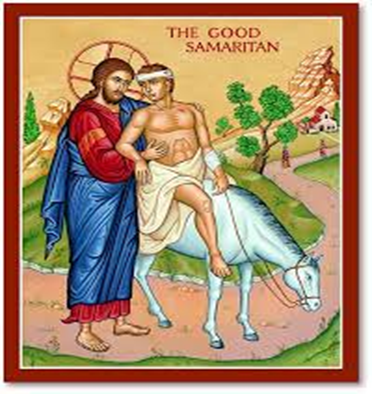
When I was a youngster your neighbors were the people that lived next door to you or those who lived in your street or road they were the families you would go to when you ran out of milk or sugar to borrow some or to share the news about the people and happenings in the area. Sadly this is not the case today as we live in a world where you might not know your neighbour or who they are.  The Gospel story tells us about the Good Samaritan it is a story that all of us are familiar with.  It was the Samaritan who stopped with the man who was lying on the side of the road it was the Samaritan who was moved with compassion to help him. The Priest and the Levite walked on and passed by on the other side of the road because they felt that it was beneath their dignity to help the man when they should have been doing exactly that. Our Gospel story tells us what we should be doing in 2025 to show our love for our neighbors. First, it tells us that we must be willing to help even if others brought trouble on themselves for whatever reason. Second, our concern to help others must be practical. And lastly, our love for others must be as wide and as inclusive as God’s all encompassing love for us.  

We remember that God excludes no one from his love and care. At all times we must be ready to do good to others just as God is good to us we must be good to others. Jesus not only taught God’s way of love, he also showed how far God was willing to go to share in our suffering and to restore our wholeness in life and happiness. Jesus overcame sin, suffering, and death through his victory on the cross on Good Friday. True compassion not only identifies and empathizes with the one who is in pain, it also takes that pain on in order to bring freedom and restoration.  Our world is moving towards ways of doing things that hurt more and more people time after time instead of restoring them. We are in this world so we cannot pretend that it’s got nothing to do with us for it has everything to do with us as we are Christians. In these days with a lot of turmoil and confusion going on around us the words  of the first reading ring in our ears obey the voice of the Lord and we ask ourselves what is the Lord asking us to do? We are being asked to reach out in order to show friendship to our neighbors and those who have come to be our neighbors as migrants from other countries.

At the end of the Gospel Jesus askes the Lawyer Which of these three, do you think, proved himself a neighbor to the man who fell into the brigands‘ hands?’ ‘The one who took pity on him’ the lawyer replied. Jesus said to him, ‘Go, and do the same yourself.’ And he says exactly the same to us today here and now in 2025, so let us go now and do the same.
7th Sunday ir Ordinary Time

We pray this weekend for the well being of our Holy Father Pope Francis as he remains in hospital.  The readings for this Sunday teach us about mercy, forgiveness, and love. These themes show us how to live like Jesus in our everyday lives. The readings call us to live a hope filled life of mercy, just like David showed mercy to Saul in the first reading. Mercy means choosing kindness over revenge. It means forgiving others, even when it is hard.  The First Reading from the first book of  Samuel tells us that David, finding Saul asleep, refuses to harm him, saying it’s wrong to strike the lord’s anointed. He takes Saul’s spear and jug, proving his mercy and faithfulness from afar. The Second Reading 1 Corinthians tells us that The first Adam was earthly, the last Adam (Christ) is a life-giving spirit. We, once earthly, will transform to bear the likeness of the heavenly man.

This weekend we think about the things the Lord asks us to do in following Him, nothing is more difficult that the teaching  “Love your enemies, do good to those who hate you, bless those who curse you, pray for those who mistreat you. To the person who strikes you on one cheek, offer the other one as well, and from the person who takes your cloak, do not withhold even your tunic. Give to everyone who asks of you, and from the one who takes what is yours do not demand it back. Do to others as you would have them do to you It is much easier to sacrifice our wants for the needs of others, then it is to avoid lashing out at someone but that is what Jesus is calling us to do.  The point of this kind of prophetic speech by Jesus is to stimulate his audience (and us) to reflect on the whole pattern of behaviour in human relationships. Jesus is not really suggesting rules to be followed literally in certain circumstances. Rather, we are being invited to reflect on how we can respond to unreasonable demands and personal injuries with nothing but generosity and abandoning all claims to retribution and restitution.  What we are talking about in this Gospel is not some ethical system for the good of society or for our own self-interest but something way beyond this.

What Jesus gives us is the very principle behind the creation of the universe: God’s infinite love for us all. This is the extraordinary challenge that he lays before us: To love the people around us just as he loves us, just as he loves them.  It is not easy and we won’t achieve it often but we know that this is what God wants from us and it is something that deep in our hearts we are glad to do. The way God treats us should be the guideline for our life as Christians. God is infinitely compassionate and merciful, he is extraordinarily patient with our many shortcomings and he puts up with all sorts of foolishness on our part.  What Jesus is suggesting are responses to insults and injuries which break cycles of violent retaliation and provide pathways to peace and reconciliation. By doing this, Jesus says, we can allow the utter generosity of God to shine through us. Doing good only to those who do good to us is not enough to convey the generosity and welcome of God. Only acting with overwhelming generosity and compassion allows the mercy, generosity and compassion with which God meets each of us to be clearly seen in concrete actions It is our task as a true disciple to imitate our master, to imitate the behaviour of God himself. In the words of Micah this is what God asks of us: only this, to act justly, to love tenderly and to walk humbly with our God.

Feast of the Holy Family

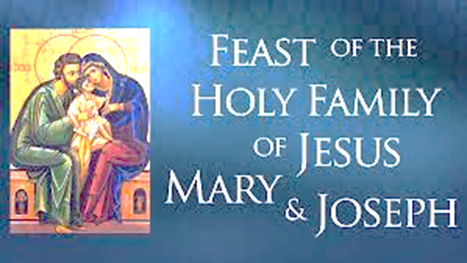
This weekend we celebrate the feast of the Holy Family our parish feast day as we begin the Holy Year of Hope in our diocese. I struggle with the disparity between the holiness of the Holy Family as reflected in many pictures and religious art compared to the reality of family life in the present day. In the First Reading we are told that respect and care for our parents brings great benefits, including answered prayers and a long life. In the Second Reading we are called to Embrace the virtues of compassion and kindness, and forgiveness so that Christ’s peace will rule our hearts.  In Luke’s gospel we listen to the story of boy Jesus stepping outside the family circle to engage elders in the temple. That had to be more exciting for Jesus than helping in the workshop or bringing in water from the well.

When Mary and Joseph find him in the temple 3 days later  they discover him talking with the teachers of the law busy with his Fathers work. The challenges for families today are as insistent and more intense than ever before in human history.  The drumbeat of consumerism focuses us on things you possess  instead of relationships with other people. Technology focuses us on how many “likes” we can collect as if those “likes” amounted to being truly loved and cared for which they really are not about.  Mobile phone technology removes the need to “listen” to one another in face to face conversations as Individuals control their contacts. We quickly learn how to “unfriend” people who annoy us. Even though voices from the past are loud and insistent, some parts of our world seems to be  moving towards authoritarian leadership fuelled by divisive rhetoric. On this day when we celebrate the Holy Family  we can only hope to find in the good news a way to transform our families. In Luke’s gospel, the return of Jesus to  his parents and in his listening to them is a model for not only children but also parents. In his rule Saint Benedict put it well when he said you should listen with the ear of your heart.

We need to listen to our children, to our spouses, to our extended families. If we listen with the ear of our hearts we learn from them, share with them, help them in their personal struggles as we share in their accomplishments hopes and dreams. Then when they look they will see that the road we are taking is the better road and join us along the way. As we think about the Holy Family we recognize the sacrifice that Joseph and Mary  made for Jesus, in the same way as we recognize the many sacrifices our own parents made for us  and many more  are making for their children today in our I want I get world.   Our families would find the disagreements, stressful relationships, and resentments that spoil the joy of family harmony so much easier to solve by trying to imitate the faith, love and trust of the Holy Family. So now as pilgrims of hope we pray for our families “Lord Jesus, you came to restore us to unity with the Father in heaven. May all our families find peace, wholeness, and unity in you, the Prince of Peace during this Holy Year of Hope.

6th Sunday of Easter

This Sunday is the 6th Sunday of Easter. it is also the beginning of the month of May. May is the month in  which we venerate the Mother of Jesus in a special way and in our parish we are hosting the annual Novena to our Lady of Perpetual Help.

In the first reading from the Acts of the Apostles, we see a remarkable event where Peter, a Jew, realizes that God does not favour one group of people over another. As Peter spoke to a gathering that included both Jews and Gentiles, the Holy Spirit came upon everyone present. This was a clear sign that God’s love and salvation were available to all, not just a select few. Moved by this understanding, Peter baptized the Gentiles, officially welcoming them into the Christian community. This passage teaches us that God’s love knows no boundaries and that we, too, are called to transcend our prejudices and share God’s love with all.

The second reading, from the first letter of John, tells us straightforwardly: “God is love.” This profound truth is at the heart of Christian life. It means that loving others is not just a command from God, but a reflection of God Himself. When we love one another, we are participating in God’s own life.John goes on to explain that God showed this love most clearly by sending His Son, Jesus, to save us from our sins. This act of sending His only Son as a sacrifice is the ultimate example of love. Every act of love we show to others is a reflection of God’s love for us and an encounter with Him. In the Gospel for this Sunday Jesus tells us ‘As the Father has loved me, so I have loved you. Remain in my love. This is my commandment: love one another, as I have loved you.  The teaching about love is not a recent innovation, or a new-age trend as many people seem to think. Jesus does lay down a commandment for us today, but he does so, not as the master talking to servants, but as a friend speaking intimately  to other friends. Servants follow rules, their lives are dictated by the one who holds authority over them. Jesus’ religion isn’t based on such a model though many in the church today seem to think otherwise. Instead, love is the foundation of our faith. Jesus is asking us to live out of the realization of that love. We are his friends, he tells us, so now we are asked to go out and live like friends with one another. “Friends,” in this context, means “beloved ones.” We need to live out of that description for we are the beloved disciples. The instructions that Jesus gives are valuable  lessons by which we will master the love of God our Father in what we say and what we do. Jesus chose his followers to carry out God’s plan of salvation in every age he chooses us today in our turn to do the same.  

Love is the best way to become his “co-worker,” since it reveals the reason he made the world and affirms our friendship with the creator. Love changes everything it touches. It tells us to stop bragging about this or that. It enhances our reputation. It denies the power of position and wealth which we sometimes feel is ours by right, it raises us up as true leaders. It connects us to God and to one another. Divine love transcends mere emotion. It becomes our lifeline to God. And it forms the basis of real community where everyone is valued and none are left out. It is inexplicable in theory, yet easily seen in action. Wherever God loves, he acts. Wherever he acts, he is there with us. HE IS WITH US simply because he loves us and the love of God knows no bounds; we remember the love that God has for each and every one of us each time we look at the Cross. There was no greater love than the Cross of Good Friday. We are called to bring the love of God into our own lives as well as the lives of those around us remembering that the Love of God lasts forever.Jesus assures us that whatever we ask the Father in His name will be granted, emphasizing the power of living in accordance with His command to love. We experience God’s presence through the love we give and receive in our everyday interactions. Through His words and example, Jesus has equipped us to bring this divine love into the world.

As followers of Christ, we are called to live out the love of God in a real way, showing love to everyone we meet without partiality. When we show love genuinely, we make the truth that “God is love” visible and active in the world. Let us strive to embody this love in all that we do, bringing the light of Christ into every corner of our lives and our world.

Post Navigation