Fullerton T

RELIGION LITURGY AND LIFE

Archive for the tag “spirituality”

12th Sunday in Ordinary Time
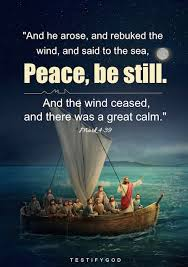
The readings for the 12th Sunday show us God’s power and our need to trust Him. In the first reading, God reminds Job of His control over the sea. He set boundaries for the waters and commands the waves. This shows God’s authority over creation. Even the mighty sea, which can be so powerful and frightening, obeys God’s commands.  Our gospel reading for this week is all about being Calm amid the storms of life that sometimes come our way. The context of this passage is the calming of the storm when Jesus rebuked the wind and said to the sea, ‘Quiet now! Be calm!’ And he says the same to us now in all our trials ‘Quiet now! Be calm!  Jesus understood that all would be well even if he and the disciples perished or if the storm subsided. Mark’s original audience was a community undergoing persecution. Their leaders had been martyred and, they questioned what was happening to them. The church was undergoing internal strife as they struggled to bring Jews and Gentiles into their new Christian community.  Mark’s church was hardly sailing on calm waters not unlike our church today.

Jesus’ previous parables of sowing, growth and harvest showed God’s control over the land. This passage also shows that God is in charge and has control over the chaos we often see and hear about exemplified for us today by the calming of the storm.  Jesus asks the disciples in the midst of the storm, why are you so frightened and why do you have so little faith. He could be saying the same thing to us today as many lack faith in God and mankind.  Amongst all the hurt and devastation in our lives Jesus changes the darkness that is in our daily lives into the sunshine of everlasting life, and replaces our distress with comfort and peace. When we don’t know the best way forward or the best way out Jesus gives us peace of mind and heart to make the right decision. At such a crossroads of life, we can ask him, ‘Lord, what road should I take what way should I Go?’ The best way will become so much clearer, and bring us calmness and peace as well as the knowledge of a decision well made.  We have so many things to occupy our minds these days with all the things that are going on in  our world.  If we stop and look around us we see the signs of Jesus in people trying their best to look after others, to provide meals and shelter, to keep themselves and their loved ones safe, to work for peace in the midst of conflict to bring comfort and to pray.  The disciples’ fear during the storm teaches us about our own fears and who we should trust. We often feel overwhelmed by life’s challenges and there are many. But Jesus shows us that He is greater than any storm. We remember that Jesus is with us in the good times and bad as a gentle calming presence as we go through the storms of life that affect all of us from time to time and we should trust him to be our helper and guide as we go forward.
CHRISTMAS 2023

23rd Sunday of Ordinary Time

This week the local schools went back and the parents breathed a big sigh of relief now  that the summer holidays are over for another year. Its hard to believe that we are beginning another school year but that’s the nature of life from one end of the year to the next we go round in the circle of life. In this Sundays first reading the author of the book of Wisdom reflects that it is hardly surprising that we have trouble figuring out the intentions of God when we have so much trouble figuring each other. He warns: “It is hard enough for us to work out what is on earth, laborious to know what lies within our reach.” There are times when those within our reach puzzle us. Even though God has revealed himself through his Holy Spirit, nobody can claim to fully understand the mystery that is God. In the Gospel there is plenty of figuring out to be done too. Jesus gives people notice that they have to work out for themselves if they are equal to the demands of discipleship. That means that first they have to figure out the cost of discipleship, then consider whether they have the resources to meet that cost.  

To drive the point home, Jesus uses twin parables Anyone intending to build a tower would “first sit down and work out the cost”. If he started without finishing, the sum of his achievement would be a monument to his own stupidity. Likewise, the king who discovers that his forces are outnumbered would “first sit down and consider”whether the opposing arithmetic is too heavy. If he wants to be a smart survivor he will practise his speeches on the wonders of peace! In both instances the advice is clear: take the time; sit down; look at the demands; figure out whether you can honestly meet them.  Much of our lives involve figuring out what is within our reach and what we ourselves can realistically achieve. So the moral for all of us in these days of uncertainty is that when we come to make life changing decisions we need to stop and do what this gospel tells us and that is to take the time; To look at the demands the decision to be made will make on us as individuals and communities; and figure out what is within our reach and what we can realistically achieve that will help us to go forward in faith and in hope rather than backwards in fear and despair.  As we look at the way we are with all that is going on in our world let us redouble our efforts to support one another so that we are able to see what needs to be done and get on and do it.

=

14th Sunday of Ordinary Time

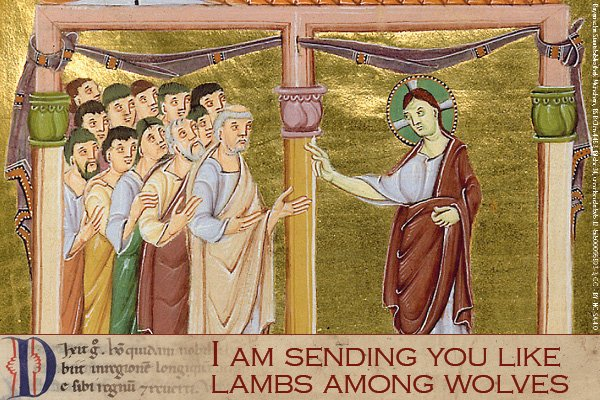
gather this  weekend  the schools have closed for the summer break and the holidays have begun. We remember those who are going through tough times as the cost of living continues to rise and we pray for the peace of the world especially for peace in Ukraine. This Sunday’s Gospel reading tells us about Jesus appointing the 72 others and then sending them out in pairs to the towns he was going to visit. As he gives his missionary instruction Jesus seems under no illusion about the territory compared to the wolves roaming around, his own crowds are like lambs. He tells the 72 to lead the radical lifestyle of the wandering preacher who must face homelessness and renunciation of family and property. When they enter a house they should bless it with peace. The Gospel also tells us about the practical things to direct the people  as they proclaim the Good News of the Kingdom and in rebuilding community life. Jesus told them to carry no purse, no haversack, and no sandals. Proclaiming the Good News of the Kingdom and community life are two sides of the same coin. One does not exist and cannot make sense without the other.

 There is a clear urgency about the task in hand Jesus says, “Start off now” with urgency in his voice. On their return the disciples were delighted that their mission has actually worked! Their joy demonstrates that people do welcome the word of God and that the word of God is their real resource for mission. Jesus counsels them to rejoice not because their mission has worked but because their names are written in heaven. There is a line in this gospel reading that struck me when  Jesus tells us that the Harvest is rich and the labourers are few. This is so very true today when we have a shortage of men  coming forward to enter the vocation of service that is the priesthood and religious life. But that said we need to keep on Praying for vocations and encouraging people young and not so young to become priests and religious.  There will be a time of crisis and for some we are living in a time of crisis with so many things that are wrong in our world. There will be times, as we know, when the scorpions will bite us, and when the wolves will have their day.  Jesus speaks to us today in order to reassure us and he tells us to hold on to all that is good. May our hearts our minds be open to his words! May our hearts direct our minds! And may our minds direct our hands in the work of the Lord.  

It is our responsibility as people of faith to exercise our mission as the people of God the Body of Christ. The fullness of life is the message and the mission of Jesus  who empowers us in our time and place  to do his work, and to work in his name.  Jesus assures us that we have a passport, visa, and “green card” for heaven. Our names are already registered there and our mission is to proclaim the good news of salvation to others by our words and our deeds so that the world will believe.

33rd SUNDAY IN ORDINARY TIME

download (1)

We pray today for all those who perished in Paris on Friday night this atrocity serves no one. This Sunday in our Gospel story we hear about the End times and I am sure that the people who died didn’t  think that they were approaching their end times may all of them through the mercy of God rest in peace.

For the past two millennia, Christians have looked to the future and asked, “When, Lord, when is all this going to kick off?” Jesus saw the end of time event as the visit of the divine King. God would prepare the visit with cosmic signs and events as a means of announcement. The King would arrive in a way that reflected his power and reputation (on the clouds); his messengers (“angels”) would go throughout the known world to gather all the faithful. Remember that the Jewish people had been displaced throughout the known world because of economic opportunity or oppression. Jesus implied that the injustice of Jews living on foreign soil would be corrected during his lifetime  How did his disciples know Jesus spoke the truth? Jesus gave a farming analogy of the fig tree to support his belief in God’s immanent judgement.

Every spring we observe the twigs on a bare tree start to grow and go green then Leaves appear and we know that summer is on the horizon. As Spring is a prelude to Summer, and Autumn warns of Winter so we must not be complacent, imagining that life can be held in suspension because life keeps marching on.

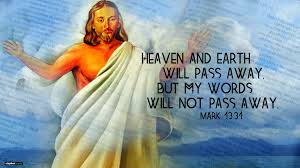
After the cosmic fireworks, Jesus imagines a peace beyond suffering. This vision of peace is important for Mark’s persecuted community: they need more than a firework display to see them through their own historical apocalypse. If their hope is not to be exhausted by force of circumstances, they need help to imagine a far side to pain and suffering. Mark gives their hope help in sharing Jesus’ vision. For that is the purpose of all apocalyptic writing: to fund the hope of those who suffer in the present. We live in an age of uncertainty: the future never looks wholly secure. But Jesus holds out a vision that takes us beyond our worst imaginings. There is a place beyond the mountains of arms and weapons, beyond environmental damage and terrorism. This vision doesn’t free us from the duty to strive for peace and right living, but it does free us from the blasphemy of believing that a nuclear holocaust will be the last word in the human story. In the meantime, we have to depend on the promise of Jesus: “Heaven and earth will pass away, but my words will not pass away.” No one, not even the Son, knows when all this will take place. The only sure thing we can hold on to is the word of Jesus and all we are asked to do is hold fast to what we know to be good and in these times when we look at all that is happening around us this is good advice.

THE FEAST OF ALL SAINTS

images (3)

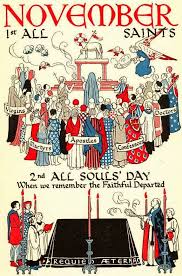
This Sunday we celebrate the Feast of All Saints, the Church’s “Hall of Fame.” They are the men and women who “hung in there” despite all sorts of obstacles, to faithfully believing in God and His Son, Jesus. They are the ones who were truly lovers and followers despite their own sinfulness and weaknesses. During the early centuries the Saints venerated by the Church were all martyrs. Later the  1st  November was set  as the day for commemorating all the Saints.  All of us have this “universal call to holiness.” What must we to do in order to join the company of the saints in heaven? We “must follow in Jesus footsteps and try to conform ourselves to his image as we seek  to do  the will of the Father in all things In this way, the holiness of the People of God will grow into an abundant harvest of good, as is admirably shown by the life of so many saints in Church history” (Lumen Gentium)

In today’s Gospel  which is the beatitudes we have Jesus’ charter for his kingdom,. When we listen to the beatitudes we can all put faces to the virtues. We remember these people and we know them. The people whose simplicity and littleness shine like a light in a world of darkness. The gentle folk whose energetic non-violence will never win medals. Those who cry and mourn their loss because they have tasted the presence of love.  The ones who hunger for what is right and who stay hungry until what is right becomes a reality. Those who scandalise us with their mercy because they exclude no one from its embrace. The people who have an undivided heart, whose loyalty to God is never in question. Those who not only look for peace but do everything in their power to make peace and build a kingdom among the ruins.This summary of Jesus’ teaching gives expression to the heart and spirit of the life to which Jesus calls us. True happiness, Jesus declares, will be found by those for whom their relationship with God means more to them than earthly goods – a “poverty of spirit, ” a “meekness” and “gentleness” after the example of Jesus, a “hunger for justice” that shapes what we do according to the values of the Kingdom, in sum “a pure (i.e. undivided) heart.” These are the ideals that have inspired the saints honoured by the Church, and those countless others known only to God.  

The Beatitudes are a sign of contradiction to the world’s understanding of happiness and joy.  How can one possibly find happiness in poverty, hunger, mourning, and persecution?  Poverty of spirit finds ample room and joy in possessing God as the greatest treasure possible.  Hunger of the spirit seeks nourishment and strength in God’s word and Spirit.  Sorrow and mourning over wasted life and sin leads to joyful freedom from the burden of guilt and spiritual oppression.  God reveals to the humble of heart the true source of abundant life and happiness.  Jesus promises his disciples that the joys of heaven will more than compensate for the troubles and hardships they can expect in this world.  Thomas Aquinas said: No one can live without joy.  That is why a person deprived of spiritual joy goes after carnal pleasures.  Do you know the happiness of hungering and thirsting for God alone? So the question to ask ourselves today is are we prepared to take up the attitudes of the Beatitudes and make them our way of life?

30TH SUNDAY IN ORDINARY TIME

b55

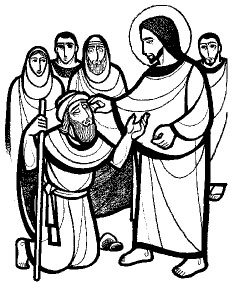
In our Gospel for this Sunday Christ walks along the streets of the ancient city of Jericho even in Jesus time the city of Jericho was already thousands of years old. With his disciples and a great crowd following him, our Lord is leaving the city and Bartimaeus the blind beggar calls out to him in dire need: “Jesus, Son of David, have pity on me.” Bartimaeus, though blind, could see. His instincts were sharper than a fresh razor blade. The divinity of Jesus had come across to him in waves. But those  around and about him, who enjoyed good vision, were blind to the Son of Man. The blind and deaf Helen Keller said, “The most beautiful things in the world can’t be seen or even touched. They must be felt with the heart.” It is possible for good people to spend their days searching but never finding their spiritual hearts.

I often feel that I am going around in circles looking for this or that way of curing my own spiritual blindness. But I always come to the same conclusion that faith in God is what it is all about. Spiritual blindness often prevents people from perceiving the correct way a follower of Jesus should live. Our following of Jesus is not compulsory.

We cannot be compelled to love or to accept the mission of God to transform the world after the pattern that Jesus gave us that is our own free choice. We must not accept the voices that would have us silenced and there are so many in our modern world and many of those voices are blind to the Spiritual heart of faith. The gift we seek is sight, that is the ability to capture the vision of a new creation brought about by a faith filled community of people. Of course we will be afraid. Our reflection on the lives of those who have gone before us tell us that the way of discipleship can lead us into paths we may find difficult  The Gospel stories we have heard over these past weeks reveal how blind the disciples and the people around them really were. The bewildered confusion of the twelve; the cruel reaction of the crowd, who “scolded Bartimaeus and told him to keep quiet’”; the blindness of those in Jerusalem determined to destroy him. Through this miracle, Jesus makes Bartimaeus a living sign of what he is doing in the name of his Father – healing the world’s blindness, leading the human family to see in him the truth of God’s ways and not the way of the world. Discipleship is not about having possessions. Bartimaeus had no possessions except his cloak. But he even casts that aside to get up and come to Jesus.

He is a powerful symbol for us: what little he has he puts aside to get closer to Jesus. The last line of the story captures the gospel message. Jesus immediately gives the man his sight to his eyes and his heart. With the gift Jesus has given him he can see where he is to go he gets up and follows Jesus. The gift was swift in coming and Bartimaeus responds just as quickly. “Immediately he received his sight and followed him on the way.” “The way” is symbolic language for those who follow Jesus. The disciples, on the road with Jesus, must have thought of themselves as part of the “in crowd,” the way James and John did when they asked Jesus to give them seats of power in his kingdom  in last Sundays Gospel (Mark 10:35-45). While they were physically close to Jesus, they were a long way from understanding and taking his message on board. The blind beggar, with nothing but a cloak, was exactly the kind of person Jesus noticed and invited to come close while those with Jesus still didn’t get it  and as a result they were not his true followers on “the way.” God wants us to say truthfully in the silence of our hearts, “Lord that I may see.” Jesus wants our prayer like that of Bartimaeus to come from a sincere heart that asks not only for the gift of sight so that we can see the world around us, but also for the gift of seeing – of seeing the truth, or the lack of it in the depths of our being, and then taking the action necessary to reverse our blindness.

Bartimaeus the clever man that he was saw Christ with the eyes of faith and  a faith filled heart. So you and I must also look and see Jesus with the eyes of faith so that we may be able to see more clearly what we have to do as people of faith to lead others to Christ.

20 TH SUNDAY OF ORDINARY TIME

ce08ccee9da85f2bcefcf92cf8b96767

 We are now at the midpoint of August and summer has flown by and the thoughts of the children and their parents turn towards going back to school at the start of September. Over the next few weeks the preparations will get going and hit fever pitch with the buying of school uniforms and all the other things required for the school going population. This indicates an unending circle from one September to the next, each year being the same with the people involved getting a bit older as time goes by. Also this week the exam results are is for those doing the A levels and next week we have the results for those doing the GCSE exams. 

 Our Gospel Reading for this Sunday suggests when we take Communion we really are taking real Food and real Drink.   The receiving of this gift becomes the acceptance and acknowledgment of the Lord’s care for us and thus, ultimately, the nourishment we need to continue the journey. Sometimes it is not easy to put one foot in front of the other, let alone continue on the journey of faith.

In His book To Live Is to Love, Ernesto Cardenal says, “If in everything you fulfil God’s will rather than your own, every encounter in the street, every telephone call, every letter you receive, will be full of meaning, and you will find that everything has its good reason and obeys a providential design. To “live in love” requires us to be connected to the Love of God.     There is one concrete way that the Lord helps us to make this connection that is by providing the Eucharist the bread of Life.   In the bread and wine offered at the Eucharist, the risen Lord makes himself present.

While the priest invokes the words of blessing (thus acting as the instrument of Christ or “in persona Christi”), the conversion of the bread and wine into the blood into the Body and Blood of Christ remains the initiative of God (specifically, the Holy Spirit). The offer to partake in the “living bread” is God’s offer of unity with Christ and his followers (his “body,” the Church). The attraction of the Eucharist or Blessed Sacrament is dynamic. Jesus is dynamic.

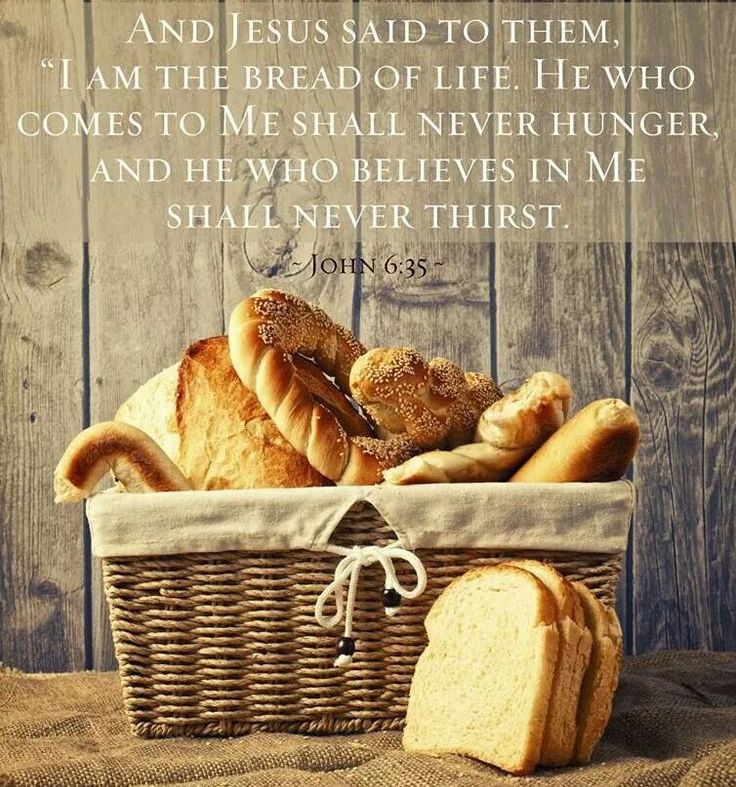
When we receive communion or when we come to pray before the Blessed Sacrament, we don’t receive an inanimate object.  We don’t kneel before a static entity. This is not a crucifix or a statue that reminds us of something. This is Jesus. The One Who Is who was and will be in the future. When we receive communion or come to adoration, we take within ourselves or we come before the dynamic, powerful Presence who speaks to us through the life He has given us. How great is our God. He has found a way for each of us to have continual, intimate encounters with Him. Let us pray, for those whose access to the Gift of the Eucharist or Blessed Sacrament is not so easy whether they have left the faith or perhaps they might be struggling with it or for many they may not yet found it as we remember that Jesus has said ‘I am the Bread of life he who comes to me will never be hungry.’

15TH SUNDAY OF ORDINARY TIME

images

This Sunday our Gospel reading is all about Mission. Jesus summons the twelve apostles and sends them out on a missionary tour.  The chosen followers of Jesus have to carry the word of God as a challenge to others. In that mission the apostles have the authority and the power of Jesus. They have to travel on that. They are not to rely on their own resources but on the authority that has been given to them and the hospitality that will be offered them. With no bread and no money, they have to depend on the kindness of others: that vulnerability makes their message their real resource. If they have bread to eat, it means that people are not only hospitable to them but to the word they preach. If they are not accepted, they have no option but to move on. And when a town rejects their message, the apostles are to shake the dust from their feet – a symbolic act performed by strict Jews returning to Palestine after journeying abroad. The Twelve went out and preached. Jesus and his Twelve preached that God would adopt humanity, making its members which include you and me “sons” and “daughters” of the Father This was Good News then just as it is now!  In recent times we have seen the decline in people attending Church in our parishes for many reasons and I think we need to be like the twelve who were sent out with the message of Jesus but with one difference we need to seek out those who do not want to hear the message instead of shaking the dust off our feet we really need to let our feet get dirty. We have to have carry the word of God as a challenge to others and it should also be a challenge to ourselves in our time and place. There is much within the Church that needs to be challenged but there is so much more that is of value even now. In telling us about the beginning of the church in so dramatic a fashion, Mark, wants to be certain that disciples in his church and in the church  of our time will be mindful of some important implications. We, like the first disciples, are inadequate for the task; yet Christ’s mission for God’s kingdom is given to us. If we labor under the illusion that we can bring about God’s reign on our own, we will be advancing something other than God’s kingdom on earth. Paul refers to his experience of preaching the gospel as foolishness (1 Corinthians 1: 1831). He relishes saying “we are fools for Christ’s sake? Because he understands that it is because of his weakness that the power of Christ can dwell in him (1 Corinthians 4: 10 and 2 Corinthians 12: 9). Of course, we know that is a task not confined to the clergy or to religious sisters and brothers. It is the job of every single member of the Church. The message of hope from today’s Gospel is that we don’t have to communicate the Gospel in highfaluting or overly technical language. We will be far more effective if we just use ordinary words and simple concepts. We don’t have to have spent years of study before we can explain what Christ means; we can do it quite easily using concepts we already understand as well as examples from our own lives.

The crucial point in the Gospel  is that by doing things Jesus’ way the Apostles get close to the people, they understand their concerns and they share their life. There is no better way of communicating the love of God to the people around us than sharing the concerns of others and getting close to the people of God. Let us be fools for Christ like St. Paul as we remember that it is through our weakness that the power of Christ can dwell in us and work through us for other people.

LOURDES PILGRIMAGE

9D074B40

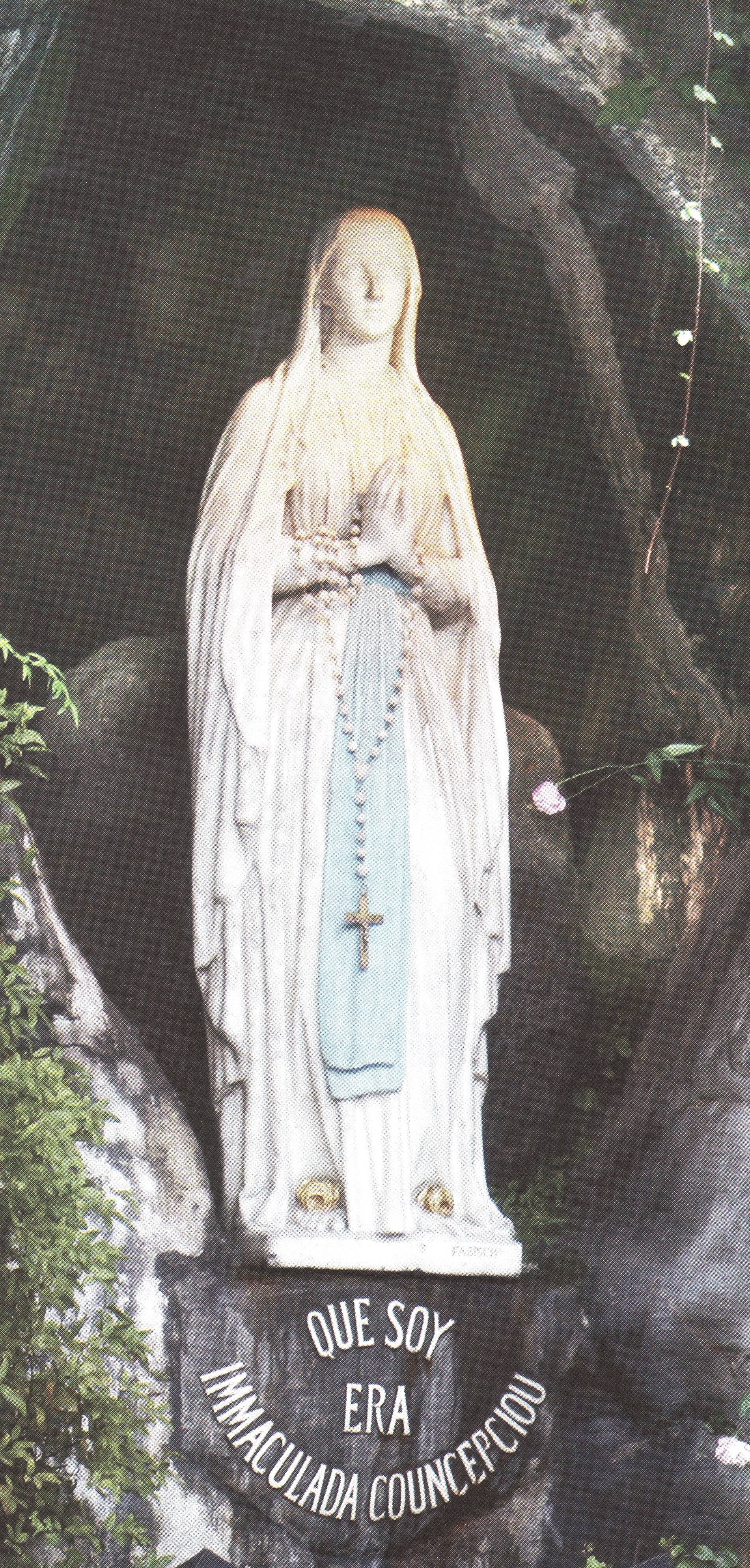
 Over the next few weeks a number of friends of mine will be travelling to Lourdes here are a few thoughts on what the place and the people mean to me 34 years on from my 1st pilgrimage as a 14 year old in 1981.

When I think about Lourdes so many things like the cold water of the baths and people such as Fr. Leahy and Mrs. Smye and CLM all come to mind. After all the  years of coming and going so much has changed and so many people have gone to God both young and old and all the ages in between. There have been So many happy and sad times together with those who began to mean a lot to me way back at the start in August 1981 and many of those people mean so much more to me now they all know who they are and hopefully they might even be reading this !!!. Lourdes is the one thing that I have in common with all of my friends. The experiences that I have had over the years have changed me So much for the better I hope that I am more thoughtful and a less annoying person than before other people will have to tell me whether that is true or not. Lourdes has many meanings for everyone who visits the place but for me it means love, joy happiness and yes even sadness but above all else it is about the presence of Mary our mother in my life.

It is about Mary bringing all of us to Jesus who in turn brings us to the Father and the father’s house. Lourdes is not about me as an individual instead Lourdes is about giving yourself away in service for others the pilgrims of all nationalities who need your help physical, medical, spiritual or for many including myself it is simply about just sitting listening to what is important to someone which often times is a load of rubbish or at least it seems that way to you but to them it is the most important thing in their lives at that moment. One friend recently stated that Lourdes was the annual dose of steroids for her faith she said this in an interview on the radio and that is a great description of the Lourdes experience it certainly is a boost for those whose faith is strong to keep on going and a kick up the 90’s for those whose faith is not so strong to a start walking along on the road of faith.

In our pilgrimage to Lourdes all of us come with the sick, the fragile, those who long for many different kinds of healing perhaps body, mind or spirit. We place them at the heart of our pilgrimage week as a visible sign of our faith in God’s love for the weak and those in our modern world who count for little or nothing at all when in truth they are of great value more valuable than Gold and Silver.  Those of us, who are sick or weak or powerless, like Bernadette, teach the rest of the able bodied world something of great and vital importance. They teach us that God is with the weak and the powerless and through them he points us along the right road.  We may, at least for part of our lives, enjoy comfort, good health, various kinds of success; they are not what life is about. Life is about the journey we make to God, not about what we think of as our achievements or our plans. Remember the old saying that man proposes and god disposes, this means god does what he sees is good for all of us both as individuals and community. 

When I went overland to Lourdes for the 1st time August in 1981 I didn’t think that I would go back and yet here I am talking about the one thing that is so much of what I have become over the intervening years. There is a line of Patrick Kavanagh that says “Only they who fly home to God have flown at all” I certainly have flown high above the clouds and so many others have been in the flight with me and given me so much in relation to Lourdes and the life I have back as a result back home. I only hope that I have been able to give them something back.  So much good has come into my life as a result of Lourdes and all the experiences that I have had there and I will always be grateful for the people and the place that mean so much to me.

Post Navigation