On Monday 24th June we celebrate the feast day of Saint John the Baptist and it is a good opportunity to stop for a moment or two and reflect on our Order and what we do within it.
John the Baptist is of special importance for followers of Christ. He was chosen before birth to prepare the way for the Lord’s coming. A desert prophet, he was outstanding for vigour, discipline and humility. In the Gospels the Baptist plays a unique roll He is the first witness who leads other people to Jesus. The same Jesus who he identifies as the messiah, the Son of God. The readings of this feast alert us to the wonder of humanity as God’s created work. The selection from Isaiah captures two unique aspects of John’s birth: from my mother’s womb he gave me my name” and “formed me as his servant.” At a most unexpected time and in a most unexpected way God brought mercy to Elizabeth and Zechariah. Although these two cooperated with God’s plan of salvation and gave John the name they were asked to by the angel, little could they have known that his destiny was so much more than bringing vindication to an elderly couple who were childless.
John’s destiny was to herald the Messiah of Israel who would bring salvation. It is impossible to speak of John’s birth without noting his fidelity to his mission and his relationship to the Messiah. John the Baptist’s birth and mission remind us that God is always there amongst us especially in the poor and the sick. Being a caring and sharing individual within society means that we should give ourselves selflessly without hesitation to people who need us without counting the cost this is what true service means. Service of others should be taken as a privilege compassion and gentleness are valuable strengths which should be willingly and freely given to others and that is exactly what our service as members of the Order of Malta should be. Being a member of the Order of Malta is so much more than wearing the Church robes or the uniform put simply it is a way of life that is rooted in the faith that we profess as Catholics. Our vocation then, is to challenge the injustice of our times in our service to the Poor and the sick, to embrace the Catholic faith to which we are called and defend it when necessary and point people towards Jesus Christ the only source of true life who will be with us to guide us along the road that leads to salvation.
This Sunday we celebrate Trinity Sunday, which is the celebration of the Father, Son and Holy spirit the three equal persons that make up the Holy Trinity. When we make the sign of the cross we say In the name of the Father, and of the Son, and of the Holy Spirit which is the invocation of the Holy Trinity. The feast of Holy Trinity goes back to 12th century England and St Thomas a Becket, Archbishop of Canterbury. Historians say the great Thomas celebrated a Liturgy in honor of the Trinity in his cathedral. In the 14th century, the feast came to be observed by the universal Church. One week after the end of the Easter season, in which we gave thanks for the death and resurrection of Jesus, and the celebration of the gift of the Holy Spirit on Pentecost Sunday.
The feast of the Holy Trinity invites us to contemplate the mystery of God Father Son and Holy Spirit. Paul in the Letter to the Romans reminds us that the Spirit of God makes us God’s children, destined to share in the life of God, as Christ does. The gospel reading speaks of the power of presence and the power of the name. Ancient people placed great weight in presence; the way someone dressed and acted spoke of social power. Ancient people also chose names carefully; they believed a person’s name defined their strength of character.
Both outward presence and inward character are part of the disciples’ experience. When the followers of Jesus saw the resurrected Lord and heard his command to evangelize the entire world, they saw for themselves the Trinity in action. When we live as followers of Christ, we invite others to join us not because they see nice people living good lives. No, they, too, see the Trinity in action as God works through us. Each Trinity Sunday, we only scratch the surface of this great mystery of our faith. In gratitude and faith, let us begin and end every prayer with greater faith and reverence “In the name of the Father, and of the Son, and of the Holy Spirit.
This Sunday we celebrate the decent of the Holy Spirit upon the Apostles at Pentecost which heralded the beginning of the apostolic mission to bring the Christian faith to the world. It is the birthday of the church so maybe we should sing happy birthday instead of Veni Creator Spiritus and blow out the candles on a birthday cake instead of blowing out the paschal candle because it’s the end of the Easter season!! With the feast of Pentecost the seven weeks that is the Easter season have come to an end with the outpouring of the Holy Spirit, manifested, given, and communicated as a divine person. “Peace” was John’s prayer for his readers as it is for us as we listen to this gospel reading. With the sight of Jesus their fear turned into great joy, and their Anxiety turned into relief. The lack of spiritual direction turned into a sense of deep spiritual grounding.
The divine presence stood close to them and with the divine presence came a great sense of peace of spirit mind and soul. We too have the divine presence of Jesus in the Blessed Sacrament and it brings Joy and spiritual grounding to all those who come to meet him in the Eucharist. We can’t ignore our own or the problems other people have. Most of the time the problems in our lives just don’t go away by themselves very often we need to stop and think and pray things through. If we pray through the problems as well as thinking them through we will find that they are much easier to get through. Simply put Prayer Moves Mountains. Gathered at Mass we bring our prayers of intercession to God all of us have our own needs, Family and friends, someone we know may be sick, people need work. Perhaps the person who has been in our lives for so long has died.
We bring these and all our concerns in prayer to church because they remind us of our need and they raise our hope in the power of God made real to every generation through the Holy Spirit. Through the Holy Spirit our relationship with God has satisfied our longings, and brings us the peace of God which is beyond all understanding. Because of God’s faithfulness, we give thanks, offer sacrifice, and once again present our needs this Pentecost Sunday as we remember the presence of God with us in all our lives through the good bad happy and sad times and we thank God for his enduring presence among us.
Come, Holy Spirit fill the hearts of your faithful, and enkindle in us the fire of your love. Send forth your Spirit and we shall be created, and you shall renew the face of the earth.
Over our lives we have seen or we will see the departure of so many people, Perhaps it is a son or daughter leaving for university or maybe it was someone leaving to go to another country on the other side of the world or the hardest departure of all someone close to us dying. Our lives are made up of so many different times and places of leave-taking and that is what Ascension is really about Jesus leaving the Apostles to return to the Father. The Apostles must have felt awful as Jesus told them and us go therefore make disciples of all the nations and know that I am with you yes to the end of time. This Gospel reading is all about the past the present and the future. It is about ourselves in the here and now of today, and what we are doing to make disciples of all the nations in 2019 or at least making disciples of those around us perhaps our families and friends.
In this gospel reading Jesus has little to say, but he is definite about what he has to say when he speaks. This is in sharp contrast to the fact that, even at this last minute, some of his disciples still doubted. The disciples did what he told them to do. He asked them to meet him on the mountain, and they did that. Like any gathering of people, their feelings were varied. Some of them worshipped him, while some of them still doubted. Jesus didn’t seem to have any great problem with that, because he knew that, when the Spirit came, all of those doubts would be ended. It would seem, indeed, that he was in a hurry to take his leave of them, so that the second part of his plan of salvation could get underway. The mission of the apostles was simple to understand; difficult to carry out. It was to teach others all that Jesus had taught them. Just as he asked his disciples to follow him, they were to ask that others should follow him which was so hard then and especially hard in the world of today.The programme of redemption and salvation was to begin at Pentecost and continue from generation to generation, until the end of time.
So many things have changed in the Church and society over the years especially in more recent times. However two things that have not changed are Jesus himself and every word of his message as they are ever old and always new in each generation. The message of Jesus is ignored by many people inside and outside the Church for their own reasons. The essential message of God and Jesus his Son have never changed up to now and I don’t think that the message will ever change. Again and again we need to ask ourselves what we are doing to make disciples of all the nations realizing that Jesus and his message are always new for each generation. May we be heralds of the message of Jesus this Ascension as we go forward with faith.
This weekend we celebrate the 6th Sunday and soon we will be at Ascension and then Pentecost Sunday which is often called the birthday of the Church. In this Sunday Gospel Jesus promises to send the Holy Spirit to the apostles as the advocate. Although Jesus had spoken to the Apostles and told them many different things, he knew them well and realized that they wouldn’t remember everything he said Jesus also knew that they would have to endure many struggles, that they would have to face ambiguity and confusion, difference and disagreement. We see all of this in the Church today with many people agreeing with Pope Francis and many others disagreeing with him on issues of faith. The Apostles would not see eye to eye on everything; they would have different memories of Jesus; they would emphasise different things. In the conflicts that would arise they would have to put their faith to work. That is why he told them and he tells us that the Advocate, the Holy Spirit, whom the Father will send in his name, will teach you everything and remind you of all I have said to you.
These words are a direct pointer towards Pentecost and the gifts that the Holy Spirit would bring to them as well as us. We don’t have the physical presence of Jesus with us the way his first disciples did when he talked with them around the table at the Last Supper, washed their feet, and gave them his reassuring promises. His farewell to them was a real farewell he was going, he would no longer be with them as he had been. But he assured them and us that he is present in a different way, in his gift of the Holy Spirit. In the Gospel Reading Jesus also promised the Apostles Peace ‘A peace that the world cannot give.’ Sometimes we mistake this peace for our idea of quietness or tranquility, but the peace the Jesus gives is a peace that can be found even in the midst of turmoil. This peace is not something we can manufacture ourselves by our own power. It’s a gift that comes from Jesus, who doesn’t want to lose touch with us. Jesus chose his followers to carry out God’s plan of salvation. He chooses us today to do the same. By allowing us to participate in his work of redemption, he gives us a personal stake in the Kingdom of God.
With all the confusion ambiguity and disagreement that we see as people of faith we remember the great gift that is the Holy spirit is something that unites us. If we keep on trusting in the presence of the Spirit of God we will have peace in the midst of any personal, family, or community turmoil that comes our way as well as someone who will keep us going along the right Road!
This weekend we stop and say a prayer for all those who are doing exams at the moment A levels GCSE’S or University exams, Our world puts great store on education and sometimes it forgets the pressure that this puts on our young people especially at exam time and not all of them are able to deal with that pressure. During this exam season we remember all those who are finding the exams hard to get through and we pray for all those who are doing exams in the days ahead that they may be inspired to do their best and know that there are people out there family, friends teachers and lecturers who value them no matter about the exam results.
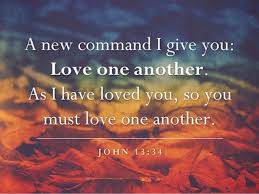
In this Sundays Gospel Jesus calls us to a new way of living when he tells us to love one another as I have loved you. At one level this is a simple call to love, at another it is a big challenge for us to be Christ like to others in this sometimes horrible world. This means that we should love as Jesus loves, in order to be the face and heart of Christ to a wounded and hurting world.
It seems to me that our faith should constantly challenge us to live lives of love, love of God and love of one another and this ideal is so very hard to achieve. The love Jesus speaks of seems to be narrow and restrictive. He is addressing his disciples when he says, “love one another.” This love may seem insular and applicable just to an inner circle of his followers. Is he telling us that the sacrificial love he calls us to applies only to those around us in the Church? No, of course he is not saying that because we know from other parts of John’s gospel that Jesus’ mission of love includes an outreach to the world That outreach in our modern times must include all those who have left the Church for many reasons we should not leave them behind as many people might want to do. Jesus wants us to be united with him and one another in A loving and caring community. A loving and caring community that has a great effect on others bringing those who might be doubtful with it. What more articulate proclamation of the gospel can there be than a group of diverse people drawn together, not by similarities in education, economic status, neighborhood, citizenship, race, etc., but by the love that God has for them and their bringing that love for one another to other people? A community such as this couldn’t help but draw others into it and to one who is the source of their universal love. We are called to be that community showing the love of God to those around us and this is not easy to do but we should try and not be afraid to do that as we go forward.
This weekend we stop and say a prayer for all those who are doing exams at the moment A levels GCSE’S or University exams, Our world puts great store on education and sometimes it forgets the pressure that this puts on our young people especially at exam time and not all of them are able to deal with that pressure. During this exam season we remember all those who are finding the exams hard to get through and we pray for all those who are doing exams in the days ahead that they may be inspired to do their best and know that there are people out there family, friends teachers and lecturers who value them no matter about the exam results.
In this Sundays Gospel Jesus calls us to a new way of living when he tells us to love one another as I have loved you. At one level this is a simple call to love, at another it is a big challenge for us to be Christ like to others in this sometimes horrible world. This means that we should love as Jesus loves, in order to be the face and heart of Christ to a wounded and hurting world.
It seems to me that our faith should constantly challenge us to live lives of love, love of God and love of one another and this ideal is so very hard to achieve. The love Jesus speaks of seems to be narrow and restrictive. He is addressing his disciples when he says, “love one another.” This love may seem insular and applicable just to an inner circle of his followers. Is he telling us that the sacrificial love he calls us to applies only to those around us in the Church? No, of course he is not saying that because we know from other parts of John’s gospel that Jesus’ mission of love includes an outreach to the world That outreach in our modern times must include all those who have left the Church for many reasons we should not leave them behind as many people might want to do. Jesus wants us to be united with him and one another in A loving and caring community. A loving and caring community that has a great effect on others bringing those who might be doubtful with it. What more articulate proclamation of the gospel can there be than a group of diverse people drawn together, not by similarities in education, economic status, neighborhood, citizenship, race, etc., but by the love that God has for them and their bringing that love for one another to other people? A community such as this couldn’t help but draw others into it and to one who is the source of their universal love. We are called to be that community showing the love of God to those around us and this is not easy to do but we should try and not be afraid to do that as we go forward.
This Sunday we celebrate the 4th Sunday of Easter also known as Good Shepherd Sunday. In our diocese we are concluding a nine day novena of prayer for Vocations to the priesthood and religious life. There are so many different forms of vocation but this weekend we think about the vocation to priesthood religious and diocesan. I would like to take this opportunity to ask anyone who reads this to pray for and encourage priestly vocations as we are nothing without our priests and we pray that God will send us Good Shepherds. The idea of Jesus as the Good Shepherd is a lovely thought because it is a well-known fact that the shepherd never leaves his sheep outside the sheepfold. If any are outside the shepherd will seek the lost sheep at all costs until they are found. The wandering figure of the shepherd, anxiously tending his sheep to the point where he is willing to surrender his life for them, is the image Jesus uses about himself in this Gospel Reading.
That mixture of tenderness and toughness, care and self-sacrifice, is one that summarises his own practice of leadership. It is not a leadership of detachment and defensiveness; rather, it is a leadership of involvement and self-sacrificial love. In the good shepherd’s foolish extravagant love, his own life matters less than that of his sheep as we know Jesus gave up his life for us on the cross Good Friday and left us an everlasting memorial in the Eucharist. The good shepherd is not an image of religious authority that is involved with its own importance, blind to the useless pain it causes in those it leads. The authority of the shepherd costs the shepherd, not the sheep. The image of the shepherd cannot be separated from the way that the shepherd actually cares for his own sheep. When we see how Jesus actually behaves as a leader, we see his tenderness in caring for the people and his courage which led him to the cross. The parable of the Good Shepherd has many consoling truths and promises for people of every century, including ourselves in the twenty first.
The good shepherd challenges us not to leave the lost sheep behind: Jesus said “I have come to seek out and save the lost.” All of us know people who have wandered away from the Church, who have lost their sense of belonging, who feel they have no community to belong to. How will they know they are welcome back if no one tells them? How will they be helped back if no one offers to make the journey with them? It is up to us to help everyone to feel that they are welcome though sometimes that can be hard. The Gospel of the Good shepherd is a call to us to help those out there who have lost their way to come back to the loving shepherd who seeks out the lost sheep and rejoices when they are found. It is also a particular call for us to pray that the lord of the harvest will send labourers into the harvest so that the world will believe.
This Weekend we celebrate the third Sunday of Easter it seems strange that we have come so far from the ashes of Ash Wednesday right through to Jesus resurrection at Easter. In the resurrection We celebrate the one who affirms for us that God has walked on our streets, confronted the evil we confront and suffered died and rose again for us. Jesus resurrection assures us that life can come out of death and good can overcome evil and it does. It doesn’t always seem that way these days when we see the suffering of the people around the world but for people who have faith in God nothing is impossible. After a tragedy like Sri Lanka or whatever there is a strong response of self-sacrifice and compassion from everyone to help the victims and those affected by the violence. Then with the passage of time we go back to where we were before the crisis, preoccupied by our concerns and yet through all of this bad stuff God is with us.
After the earth shattering events of Good Friday and Easter Sunday Peter and the others were ready to put the events of those days behind them and return home to what they did before they came across Jesus. But Jesus won’t let them go and by association he won’t let us go either. In our Gospel Story for this Sunday he comes to the shore looking for them. He gets their attention, as he did when he first called them, with a large catch of fish. He prepares breakfast for them and invites them to eat, “Come, and have breakfast.” After the meal Jesus asks Peter three times about the reality of his love. Insisting on love is something of a mark with Jesus. Three times Peter affirms his love, as three times Jesus insists on it. And when Peter professes his love Jesus commissions him to care for his flock when he says feed my sheep. And that is what Peter does – as we hear in Sunday’s first reading. In his ministry of preaching and healing Peter gets through to many people, and the authorities become nervous at the ability of Peter and the apostles to work in the name of Jesus.
In spite of the opposition Peter will continue insisting on his love for Jesus and this insistence will take him to martyrdom in Rome. No matter whether the believer is new or old, a pew sitter or a leader of people, the call of Christ is the same: “Follow me.” Following Christ means life in the community of faith where we are. Are we, like Peter, spreading the net for new believers and professing a true love for our Savior? Or are we on the sidelines watching others doing the work when we should really be out there doing the work with them? At the end of the day whatever happens we remember that God is with us and wants us to be with him now and in the future, He is with us in good and bad times so let us take courage this Eastertime to go forward in faith.
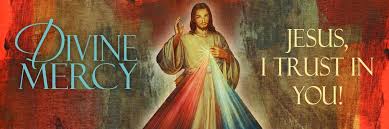
This Sunday we celebrate the great Mercy of God on the second Sunday of Easter that has come to be known as Divine Mercy Sunday. We celebrate the mercy of God made known to us in a particular way by Saint Faustina the polish nun.
I was sitting here a few days ago thinking that the season of Lent, Holy Week and Easter Sunday have come and gone so quickly this year and are now a distant memory. Many people think that Easter begins and ends on Easter Sunday but it doesn’t end there, the celebration of the season of Easter goes on for 50 days and ends on Pentecost Sunday. I wonder what the Apostles would think if they were to come down to us these days and find that we are celebrating the Death and Resurrection of Jesus that took place over 2000 years ago, they would be amazed especially as they thought everything was over with the Crucifixion on Good Friday.
In this Sundays Gospel reading the Apostles were still huddled together behind locked doors, pondering the shocking experience from the week before when all seemed to be lost. Then we are told that Jesus appeared to them and to assure them that He was alive. His message must have troubled them as well when he told them: “As the Father has sent me, so I am sending you.” In the same way as the apostles were sent out we are sent out to bring his message of god’s mercy and love to other people wherever we are. Then of course there is doubting Thomas who heard the witness of the those who saw Jesus but, like so many of us today he wanted more proof. Jesus says to Thomas, “Have you come to believe because you have seen me? Blessed are those who have not seen and have believed.” That is a favorite quote for many of us, who have not “seen” the risen Christ in person as the disciples did. We have come to believe though we have not seen him in the flesh but he is with us in the midst of our communities through so many different people. When Jesus says to the Apostles Peace be with you the Peace he is talking about is much more than the lack of conflict.
True peace, gives us happiness, since it is built on trust in God and one another. The gospel tells us how Jesus gave his followers peace because they trusted him. In spite of the skepticism of Thomas and so many others, Jesus offers us the same peace of heart mind and soul. As we celebrate Divine Mercy Sunday we remember the joy, the hope, the grief and the anxieties of the people in our time those we know and those unknown to us and we bring them to the merciful Lord. Our world is hurting so much because of the things that are happening within it with so many people at each other’s throats for so many reasons. May all of us be witnesses to the love and mercy of the Gospel as we bring the caring face of God’s mercy to the people in our own communities wherever we are called to be.




 Fullerton T