Fullerton T

RELIGION LITURGY AND LIFE

Archive for the category “LITURGY”

31ST SUNDAY OF ORDINARY TIME

 

greatest-commandment.jpg


This weekend we celebrate the 31st Sunday of ordinary time and last Thursday we celebrated the feast of All Saints. Each of us are called to be saints and the feast of All saints  honours all those unsung heroes of the faith who are saints even though the Church has not Canonised them. They are the men and women who “hung in there” despite all sorts of obstacles, to faithfully believing in God and His Son, Jesus.   All of us have this “universal call to holiness.” What must we to do in order to join the company of the saints in heaven? We “must follow in Jesus footsteps and try to conform ourselves to his image as we seek  to do  the will of the Father in all things In this way, the holiness of the People of God will grow into an abundant harvest of good, as is admirably shown by the life of so many saints in Church history”.

Our Gospel reading this weekend is all about the first and greatest commandments of the law. In his reply to the scribe Jesus makes it clear that you cannot compose summaries of the Law while forgetting love of neighbour.

The scribe is pleased with Jesus’ reply and adds his own point, that the love of God and neighbour is far more important than any ritual worship. In supporting the scribe’s addition, Jesus places the demands of liturgy far below the demands of active love.The transformation caused by God’s love is so profound that it flows from us towards God and is expressed in love of neighbour. Like Moses, Jesus calls us to love God with our entire being because his life and death are a manifestation of God’s love for each of us. The scribe in this Gospel states that the law of love of God and neighbour is greater than any of the religious observances and laws concerning sacrifices. Revered Temple worship and sacrifice must take second place to the observance and sacrifice that comes with loving God and neighbour. Jesus says that the scribe has answered wisely about the superiority of love over any sacrifice and then says to him, “You are not far from the kingdom of God. Our God is the God of history. Our God is the creator of all that is. We are God’s dream. Our living with God is not only in our places of worship and community. God is with us in the market place, on the factory floor, in the politics of life. Our God is with us on the streets, in homeless shelters, in the hospitals and mental institutions that seek to heal us.

As a matter of fact God is with us wherever we are and in whatever we are doing in his name. Our lives are not divisible into secular and religious though some might want it that way. We are called like the pharisee in this Gospel story to love the Lord our God and  our neighbour as well and to bring that love out into the world where we are.
 

30th SUNDAY IN ORDINARY TIME

hqdefault


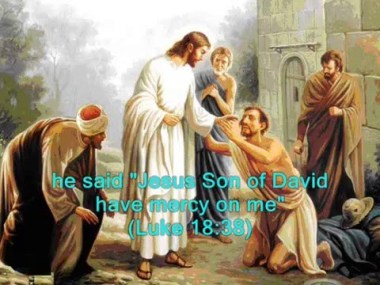
This Weekend our Gospel reading is all about Blindness or should I say spiritual blindness as all of us can be blind to the call that god gives us. In our Gospel story Christ walks along the streets of the ancient city of Jericho and even at the time of Jesus Jericho was a very old city. With his disciples and a great crowd following him, our Lord is leaving the city and Bartimaeus the blind beggar calls out to him in dire need: “Jesus, Son of David, have pity on me.” Bartimaeus, though blind, could see. His instincts were sharper than a fresh razor blade. The divinity of Jesus had come across to him in waves. But those  around and about him, who enjoyed good vision, were blind to the Son of Man Helen Keller who was blind and deaf said, “The most beautiful things in the world can’t be seen or even touched. They must be felt with the heart.” It is possible for good people to spend their days searching but never finding their spiritual hearts. Spiritual blindness often prevents people from perceiving the correct way a follower of Jesus should live. Our following of Jesus is not compulsory but it has more value than I can say.

We are not compelled to love or to accept the mission of God to transform the world after the pattern that Jesus gave us that is our own free choice and it is a good choice to make for our lives. We must not accept the voices that would have us silenced and there are so many in our modern world and many of those voices are blind to the Spiritual heart of faith. The gift we seek is sight, that is the ability to capture the vision of a new creation brought about by a faith filled community of people both those around us and those who by their lives have shown us the road to take. Our reflection on the lives of those who have gone before us tell us that the way of discipleship can lead us into paths we may find difficult  The disciples, on the road with Jesus, must have thought of themselves as part of the “in crowd,” the way James and John did when they asked Jesus to give them seats of power in his kingdom  in last Sundays Gospel. While they were physically close to Jesus, they were a long way from understanding and taking his message on board. The blind beggar, with nothing but a cloak, was exactly the kind of person Jesus noticed and invited to come close while those with Jesus still didn’t get it  and as a result they were not his true followers on “the way.”

God wants us to say in the silence of our hearts, “Lord that I may see.” Jesus wants our prayer like that of Bartimaeus to come from a sincere heart that asks not only for the gift of sight so that we can see the world around us, but also for the gift of seeing – of seeing the truth, or the lack of it in the depths of our being, and then taking the action necessary to reverse our blindness. Bartimaeus saw Christ with the eyes of faith and  a faith filled heart. So we must look and see Jesus with the eyes of faith so that we may be able to see more clearly what we have to do as people of faith to lead others to Jesus.

29th SUNDAY IN ORDINARY TIME MISSION SUNDAY

download-7

This Sunday we celebrate Mission Sunday, that is the day when we celebrate the missionary outreach of the Church in the World.  For many years the Irish Church has sent men and women to the mission fields bringing the faith to many people. As baptised members of the Church we are all called to be missionary people where we are bringing the message of Jesus to the people of our own time and place.

In today’s Gospel two brothers James and John the sons of Zebedee are asking Jesus for a big favour to ensure their privileged seating arrangements when they come to meet Jesus in glory. They want to sit, one at Jesus’ right hand and the other at his left. While they don’t specify which of them should sit at Jesus’ right  no doubt that problem would have emerged later  they imagine themselves in a cosy triumvirate of their own making. Of course Jesus blows this notion out of the water when he tells the two brothers that they don’t know what they are asking. Their request is to share Jesus’ power when he comes into glory, so timing their appointment to begin when the suffering is over but this was not the way of things. The two disciples mention nothing about the suffering of Good Friday but Jesus brings the conversation back to what happens before the glory which is suffering the glory comes as a result of the suffering. Jesus’ kingdom is not about who wears the crown, but who wears the crown of thorns and bears the cross .

So he asks the brothers as he asks us today: “Can you drink the cup that I must drink, or be baptised with the baptism with which I must be baptised?” They boast that they can. The message is clear: there is no short cut to God’s favour. Jesus does what he asks all of us to what we need to do: that is to serve, not to be served; to give love freely, not to exact everyone’s worship; to reach out to those in need. Christian discipleship and missionary endeavour which we celebrate this weekend  are a vocation of service and there is much work out there for everyone to do. To be servants in the way that Jesus was servant means to live in complete trust that God will look after us. Jesus was not  a servant out of fear of a tyrant Father, but as beloved Son, who in turn loved as he was loved by the Father. It is a free service of love, not of fear. Mission Sunday  gives us the opportunity to thank god for the faith that we have as well as thanking god for and acknowledging all those faithful missionary men and women who left everything in order to bring the faith to the far corners of the world. We pray that the Lord of the harvest will continue to inspire many people to join the missionary orders and we also pray for vocations in general to the priesthood and religious life.


28th SUNDAY OF ORDINARY TIME


follow-me

This Sunday we celebrate the dedication of our Cathedral St. Peters with the ordination of 9 men  as Permanent Deacons  with 2 of the deacons from our Parish here in north Belfast.  Our parish has always been a place of vocations  over my lifetime I can think of at least 7 priests who were ordained and at least 4 others who were known to me we have much to be thankful for. Through consecration by the laying on of hands and strengthened by the gift of the Holy Spirit invoked upon them, our deacons will show themselves to be servants of all and helpers of the bishop and the priests of the local presbyterate by serving as ministers of the altar, of the word, and of charity and we pray that their families friends and the communities where they will serve will be blessed through them.

This Sunday we hear the Gospel story of the Rich man and Jesus invitation for him to give everything to the poor and  follow him. Jesus looks on the rich man with love; he wants this blameless enthusiast to become one of his disciples. So the challenge is made: “There is one thing you lack. Go and sell everything you own and give the money to the poor, and you will have treasure in heaven; then come, follow me.”

The cost of Christian discipleship is heavy for this prospective disciple as there has been a heavy cost for many throughout the history of the Church. The man in the gospel must renounce the security and the prestige his wealth brings him; when he sells everything he owns, he must not give the money to his family or friends, but to the poor. If he does this he will have treasure in heaven. That treasure will be his new security.  The sorrowful departure of the would-be disciple that Jesus loved is one of the most touching scenes in the Gospel. He is too attached to what he has to become attached to what Jesus asks. When he goes, and we hear no more of him, Jesus turns round to tell his disciples how hard it is for those who have riches to enter the kingdom of God. For us today Jesus asks the same question do you want to follow me and many have done that but for others the call has been accepted but it was just too hard to follow the path of Jesus and they have left the faith behind. All of us have many riches that have been given to us by God Family, faith, friends are just a few example of gods goodness to all of us would we leave everything to follow Jesus that is another question.

Instead I think that we are called to follow Jesus in our world were we are by trying to be faithful to what Jesus teaches us as we pass his message on to others by the things we do and say that is a hard thing to do in the world especially when people put their own slant on the message of Jesus. This Gospel text is reassuring but challenging. Sacrifice for the sake of the Kingdom is an essential requirement of those who wish to truly follow Christ. The Christian follows a difficult path in life but it is a journey with a destination. And the destination is nothing other than the Kingdom of Heaven so let us take up the challenge to follow Jesus.


27TH SUNDAY OF ORDINARY TIME

images


This Sunday our readings are all about marriage and I don’t mean our modern  interpretation of what marriage means and it will mean something different to every person you ask. Our readings for this weekend  set the ideal of God’s purpose and plan for creation and marriage.  Let us stop and think about marriage In the Catholic Church, marriage is a sacrament. A sacrament is the real presence of God, the most powerful presence of the Lord possible in this world. In the sacrament of Baptism, God is present giving the Life of the Trinity to the baptized. In Penance God is present through his Son giving his forgiveness to the penitent. In the Eucharist, the Son is present nourishing the communicant and uniting him in an intimate way to the Divine Presence as Jesus is offered to the Father for us. In the sacrament of marriage, Jesus is present uniting his love to the love of the husband and wife. That said there are many good people who are in various forms of civil partnership and I am not going to knock them around for not following what marriage is all about in the sacramental sense.

What I will say is that the people involved in the various types of marriage have made a commitment to their partners and that shows that there is something good in all of this and we need to show them respect for the commitment that is there while being true to why we think so much of the Catholic idea of marriage and what it stands for.  The “rit of divorce” in the Gospel Reading for this Sunday was there to protect the woman from being discarded arbitrarily without any possibility of survival in a society where she could not work or support herself.  How does our society and our Church actually treat and protect those today who find themselves as “alleged” victims or those not in keeping with the “happily ever after” scenario or those whose interactive experiences with “authority” don’t match anything close to feeling accepted? Most people will agree that there is much room for improvement. Togetherness for life certainly remains the ideal both for Jesus and his followers. But our Church community has to face the fact that many marriages break down, and some of the victims of a broken marriage feel a deep longing for a new life partner and a brand new start. But this raises an acute question for the Church community: Can there be only point-blank black and white refusals there is much debate around all of this.  I have been blessed in seeing so many people getting married and many others celebrating the 25th 50th and even the 60th anniversaries of their marriage commitments. But many people will tell you that their married lives were not always a bed of roses. So today we pray for a proper understanding of what marriage means in the catholic sense as we acknowledge the goodness that are there in other forms of marriage partnerships that are much more normal these days than in the past.

25TH SUNDAY OF ORDINARY TIME

il_570xN.1099510354_9w01


 This weekend our Gospel story is all about being small as the little child in the Gospel story. This is a great gospel reading for the times we live. Towards the end of this Gospel Jesus brings the child to centre stage and instructs his disciples: “Anyone who welcomes one of these little children in my name welcomes me; and anyone who welcomes me welcomes the one who sent me.” In this instance Jesus doesn’t ask his disciples to become like children; he asks his disciples to welcome them. The disciples have a problem about welcoming littleness because they think that they are at the top of the tree and are above this. This basic Christian teaching, common to all the Gospels, is one that has not always been honoured. “To be first in the group is to occupy the last place and to be a servant to the group.”  That means to be the greatest you must make yourself the least in service of other people especially those around you. Look around you see the likes of Saint Vincent de Paul and other charitable services helping those who are in need.

Jesus taught his followers the true meaning of leadership. Leadership does not mean power but service. Power often strangles life and brings a slow death. But, service brings life, even from death itself. An attitude of serving others should not be a triumphal attitude lording it over everyone else, yet much of our history has been about individuals seeing themselves as better than everyone else. In this passage we listen to the words of Jesus about the child he tells us “Whoever receives a child like this in my name receives me. Whoever receives me receives God”. In the first part, the disciples are told that a measure of their discipleship is their attitude to power. In the second part, discipleship can be judged on the disciple’s attitude to children who are powerless in many ways. Jesus offers us a permanent challenge to welcome the powerless, to take to heart the weakest members of the community. He places himself in their company. Their vulnerability is something that Jesus not only shares but values. May we understand that to be be first in the group is to occupy the last place and to be a servant to the group.”

May we take up the challenge that Jesus places before us in this gospel reading and that challenge is to become humble servants of those who need us whoever they are wherever they may be in our troubled world.

  23RD SUNDAY IN ORDINARY TIME

i

This Sunday everyone is back in the swing of things with the schools, colleges and various clubs and societies back in full swing with the summer holidays a now distant memory. Many people are asking themselves where did the summer go it seems like a blink of an eye since the end of June and many things have happened all over the world since then. For us here in Ireland the highlight was the visit of the pope to the world meeting of families in Dublin and it was a grace filled time for everybody whether you went to Dublin or not.

In this Sunday’s Gospel Jesus comes face to face with a deaf man who has a speech impediment. The man is doubly afflicted: he is a Gentile, regarded by the Jews as unclean, and is also physically disabled. Jesus takes him aside, away from the crowd, and cures his deafness and his stutter. Mark emphasises the response of the crowd, who publish their judgement that Jesus has done all things well.  Thus the messianic prophecy of Isaiah heard in the first reading is seen to be fulfilled: “the ears of the deaf [are] unsealed… and the eyes of the blind are opened”.

Jesus’s love is available to everyone, without any conditions attached. He is not disconcerted by the disabled; neither is he prejudiced against those weren’t members of his own race or religion as we see with this man. The uniqueness of Jesus was not employed to lord it over others, but to be of service to them. In his presence there is no need to hide one’s disability, no one has to remain isolated in a godless world, and no one has to be rejected. Jesus’ acceptance and love open up new possibilities; for him, nothing is settled. Prejudice, on the other hand, tries to settle everything and in reality settles nothing and causes so much hurt and anxiety. We are people of faith, but our spiritual focus is often based on what we want. Many times we struggle between our “real needs” where god works through us and what we think we need. These shortcomings can lead us to discouragement many say that the “church does not fulfill my needs anymore”. On the other hand those same shortcomings can be turned around into a challenge for us to grow.  Through growth in faith, we begin to listen and understand. Then, we can speak clearly.  Our ears are no longer blocked. Our tongue is no longer held bound. Despite our shortcomings and weaknesses and all of us have many shortcomings, Jesus will touch our lives and call out to us.

Are we prepared to open our ears to the call of Jesus and open our eyes to see the needs of all those around us as we are asked to do, so that people around us may say that united to Jesus in faith we have done all things well.

21st Sunday in Ordinary Time


AWMF2018


Pope Francis has Landed. I am in shock as I write this I didn’t think that nearly 40 years after the visit of Pope John Paul to Ireland I would be writing about another pope visiting Ireland with the visit of Pope Francis to Ireland for the world meeting of families. I remember as a 12 year old the anticipation of the visit and even now the excitement is there as the pope comes to Ireland. So much has changed in terms of faith and people and it would be easy to be critical and many are with good reason but we need to stop for a while and bask in spiritual sunshine that the world meeting of families and the pope’s visit bring to us and the world. There is much that has changed in my lifetime in relation to the faith that we profess and family life and I am sure that much will change if the future. But the words of Oscar Romero  who will be made a saint in October sum up what we are about we are workers, not master builders, ministers, not messiahs. We are prophets of a future that is not our own.  So as we go forward we thank God that we are at this point and we acknowledge that we are not perfect as the Church is not perfect as we look to the future that is gods not ours to own.

In this Sundays Gospel, Jesus puts the choice to His apostles of following Him, or of leaving Him. Many of the Lord’s followers had left Him because of His teaching that He Himself is the Bread of Life. After hearing Jesus’ teaching on the bread of life, many of the people find Jesus’ language intolerable. As a result of this intolerable language some  of them choose to leave him. Today in a similar way so many people find the words of Jesus to be intolerable language as many Christians have got up and left their faith behind them and some may never return again. When Simon Peter answered Christ’s challenge—”will you too go away?”—he spoke not only for his fellow-Apostles that day with: “Lord to whom shall we go? You have the words of eternal life.” but for all of us in our own time and place as well, people who really believe that Christ was the incarnate Son of God.

Peter made his act of faith before he was fully convinced of the divinity of Christ, but he was already convinced that Christ was close to God and spoke nothing but the truth. We have the proofs of Christ’s divinity which Peter and the Apostles later got. We have also the faith of two thousand years of Christian people whose belief in the bread of life as a sacrifice and sacrament was at the very center of their Christian lives. This belief was passed down to us through each generation. We have also the noble example of many martyrs who gladly gave their lives in defense of this truth. “Lord to whom shall we go? You have the words of eternal life.” Lord we will go to you for you have the message of eternal life now as in the past and will lead us into the future by your grace and hope.


20 TH SUNDAY OF ORDINARY TIME


maxresdefault


It is now just a week to the visit of Pope Francis to the World Meeting of families here in Ireland. It is against the backdrop of the recent abuse allegations against the retired archbishop of Washington and the grand jury report into the dioceses of Pennsylvania that the Holy Father will visit us. The sense of betrayal that I feel is awful each time I hear about these events is nothing compared to how the victims must feel. We pray in a special way for all the victims of those priests and bishops who have let the people of god down in doing such horrible deeds.

Our Gospel Reading for this Sunday suggests when we take Communion we really are taking real Food and real Drink.   The receiving of this gift becomes the acceptance and acknowledgment of the Lord’s care for us and thus, ultimately, the nourishment we need to continue the journey. Sometimes it is not easy to put one foot in front of the other, let alone continue on the journey of faith.

In His book To Live Is to Love, Ernesto Cardenal says, “If in everything you fulfil God’s will rather than your own, every encounter in the street, every telephone call, every letter you receive, will be full of meaning, and you will find that everything has its good reason and obeys a providential design. To “live in love” requires us to be connected to the Love of God.     There is one concrete way that the Lord helps us to make this connection that is by providing the Eucharist the bread of Life.   In the bread and wine offered at the Eucharist, the risen Lord makes himself present. While the priest invokes the words of blessing (thus acting as the instrument of Christ or “in persona Christi”), the conversion of the bread and wine into the blood into the Body and Blood of Christ remains the initiative of God (specifically, the Holy Spirit). The offer to partake in the “living bread” is God’s offer of unity with Christ and his followers (his “body,” the Church). The attraction of the Eucharist or Blessed Sacrament is dynamic. Jesus is dynamic.

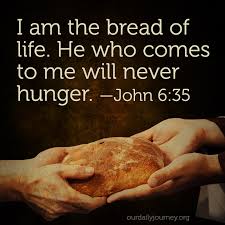
When we receive communion or when we come to pray before the Blessed Sacrament, we don’t receive an inanimate object.  We don’t kneel before a static entity. This is not a crucifix or a statue that reminds us of something. This is Jesus. The One Who Is who was and will be in the future. When we receive communion or come to adoration, we take within ourselves or we come before the dynamic, powerful Presence who speaks to us through the life He has given us. How great is our God. He has found a way for each of us to have continual, intimate encounters with Him. Let us pray, for those whose access to the Gift of the Eucharist or Blessed Sacrament is not so easy whether they have left the faith or perhaps they might be struggling with it or for many they may not yet found it as we remember that Jesus has said ‘I am the Bread of life he who comes to me will never be hungry.’

19 TH SUNDAY OF ORDINARY TIME

d1


We are now in the final countdown for the world meeting of Families and the visit of Pope Francis to Ireland. There are many voices out there saying many things with the southern politicians giving it the full measure of political cheap shots instead of trying to work with one of the world’s great leaders. However we have to get on with preparing ourselves for the great event and its hard to believe that it is nearly here.

The Gospel reading for this Sunday deals with a doubting audience, they were shocked and critical of Jesus’ claim to have come down from heaven as the Bread of Life. Despite the miracles they had witnessed, and the words of wisdom they have heard preached with such convincing authority, they could not take the extra step to accept His claim. We are able to take that extra step because our Christian faith has come to us from Jesus passed down through the apostles and many others who accepted the message for what it was and is God’s message.

we know where he came from, we know where we are going and we know how to reach that destination. Of all the knowledge a human being can acquire on this earth, the above facts are the most essential and important that through Jesus we hear god’s message of salvation.  Our Christian faith and its message gives us certainty about eternity and our journey toward it. The personal faith that we have has passed down to us through each generation and this means that God out of the abundance of his love, speaks to us as friends and lives among us as  the living bread which came down from heaven.  The Gospel lesson for today tells us that we can’t do it by ourselves.  We need Jesus.  And we find Jesus through the teachings and Word of God.  It is through our communion with him, in him, and through him in the eating of the bread of life that his flesh becomes the life of the world.  It is in our relationships of love with each other and our listening to God and learning from God that we experience Jesus among us.  In living simple lives of being kind to one another, compassionate, and forgiving one another, we are empowered to be imitators of God.

So, at the end of each day, when we give thanks for all of our blessings, most of all, we should give thanks to God for the presence of Jesus in our lives.

Post Navigation