Fullerton T

RELIGION LITURGY AND LIFE

Archive for the category “LITURGY”

6TH SUNDAY IN ORDINARY TIME

conquerers_cross_wegast

Last Wednesday  on the feast of Our Lady of Lourdes we as the universal Church celebrated the world day of prayer for the sick this year  the theme chosen by pope Francis was “I was eyes to the blind, and feet to the lame” (Job 29:15). On that day we prayed in a special way for the sick and those who care for them. This Sunday in our parish we celebrate the anointing of the Sick and the reading from the Gospel is the healing of the leper. Our Gospel story tells us  about the Leper going to Jesus who healed him but it is about much more than just the healing, it is about the faith that the leper had in Jesus. It is also about the faith we have in Jesus.  After he heals him Jesus tells the man to be silent. He wants the miracle to be personal and quiet for a purpose. The man is to go first to the priests and go through the ritual cleansing prescribed in Leviticus (14:1ff.) Maybe the priests would ask the man how he was cured and then they would hear about Jesus. Who better to give witness to Jesus than someone whose life has been changed by him? Who better to witness to the strength, joy, encouragement, hope and direction that Jesus gives us than one who has been transformed by him?  The man’s life was changed not by any observance of religious codes or rituals, but by Jesus’ compassion, touch and words. We have to ask ourselves are our own lives changed by the words and compassion of Jesus?

Do we  show the same confidence in Jesus that the leper did?  Do we allow ourselves to be transformed by the compassion and words of Jesus in order to show the compassion of Jesus to others? Each one of us know what needs to be put right in our own situation, where we are and as we begin Lent next Wednesday we stop and thank God for the faith we have. May we share the healed man’s enthusiasm to make known the goodness of God. As we begin the season of Lent  with the Ashes next Wednesday with all the opportunities it provides for renewal of our spiritual lives Let us pray for a spirit of compassion and understanding as we journey through Lent to the great celebration of Holy Week and Easter.

4TH SUNDAY OF ADVENT 2014


This weekend we celebrate the 4th Sunday of Advent and we hear the story of the Angel Gabriel coming to tell Mary that she would be the mother of Jesus. But as we hear this story we should stop and step aside from all the ongoing activities of this time of year to think about how Mary felt when she got this news that she was to have a child. Luke tells , ” she was greatly troubled at what was said and pondered what sort of greeting this might be.” The angel has to reassure her, “Do not fear Mary.” – she must have been afraid. In that uneasy world of Galilee, a place of conflict and struggle, Mary’s personal response showed confusion and doubt. Still, Mary did not get a roadmap of the future – neither do we. All her questions weren’t answered – nor are ours. Gabriel announced the conception and birth of royalty. Mary’s child would be “great” (as unique and history changing, like Alexander the “Great”). He would be Son of the “Most High” (a title for the greatest God, the highest concept of divinity one could have. As we discussed last week, the title “Son of” indicated a unique, intimate relationship with this highest God and a sharing in this God’s power). He would have the Davidic throne of Israel forever. [1:32]


Mary made room for God in her life. She and the saints are more like us than the arts or literature about them show. They are amazingly human that is like you and me and it is among them, in all their human limitations, that God wants to dwell – among people who despite struggle and doubt, can say “Yes” to God. Scripture suggests God wants to enter more fully into our lives; our not-so-neat and orderly lives but our messy lives with all the good and bad and all the happy and sad times that are part and parcel of our lives. Mary accepted, even proclaimed, God’s will in her life. She placed her future in the hands of the Father so should we. Her example should inspire us to stand firm as Christians in today’s ever-changing fads and fancies and especially as we face up to the secular razzmatazz in the run up to Christmas. Remember, the words of others may sting, but the Spirit of God burns within. The divine fire can withstand the darts others fling toward us.


3RD SUNDAY OF ADVENT GAUDETE SUNDAY

AD3

This weekend we celebrate the 3rd Sunday of advent also known as Gaudete Sunday or Rejoicing Sunday. The term Gaudete refers to the first word of the Entrance Antiphon, “Rejoice”. Rose vestments are worn in many churches to emphasize our joy that Christmas the birthday of Christ is near, and we also light the rose candle on the Advent wreath. Again we hear John the Baptist in the Gospel Reading for this Sunday where he calls us to renewal and repentance in our lives and the lives of others when he calls all of us to make way for the lord

The question for us this “Gaudete” Sunday is how do we measure our lives and how do we make straight the ways of the Lord? By what standard do we live, work, and relate to the world and with those around us ? How do we encounter and relate to God? Advent the same as Lent has at its heart the message and the call to repentance, to what the Greeks called “metanoia ”which means to come back. In Advent we look towards a different measure for life and this is hard as we continue our preparations for the razzmatazz of Christmas

The secular world’s way to peace and happiness is always a focus on individual achievement to the exclusion of others. The way of God does not focus on the achievements of  the individual at the exclusion  of the other. We as people of god should realize that The Messiah’s message, revealed in his words and his deeds, provide us with a different standard  to live by a standard where all are valued and none are left out. A standard where all people are valued Sons or daughters of God and known as such .

I stated at the beginning that we are celebrating the joy of Gaudete Sunday which is about the happiness and rejoicing of Jesus the son of god being near. As Christmas draws near, the Church emphasizes the joy which should be in our hearts over all that the birth of our Savior means for us or all that it should mean for us especially in our world where so many have little or nothing at all. The joy of Christmas will come to us if we set about actively trying to create it for others. If I go about my life demanding that others carry me rather than seeking to carry them; feeding off others rather than feeding them; demanding that others meet my needs rather than trying to meet theirs, joy will never find me no matter how hard I party or try to crank up the Razzmatazz and the good cheer.

The Joy we have at Christmas is not really about Partying or the Secular Razzmatazz of the ongoing parties etc instead it is really about Jesus Christ the Son of God who is for us the light in the darkness. It is about really reaching out to others family members, friends and relations those who we might not value as much as we should. Indeed those who the secular world really count for nothing.

We joyfully praise God on this Gaudete Sunday. We thank him for all he has done for us in our own lives and in the lives of all those who are dear to us, families and friends whoever. We rejoice that through the coming of his Son Jesus we have come to know the Father. We do what we can to imitate Jesus life, to follow his Gospel of love in a spirit of joy. As we continue our Advent journeys  along the roads that lead to salvation let us prepare the way for the Lord in our own lives remembering that in  the words of the Antiphon  we should rejoice, that is Rejoice in the Lord always; again I say, rejoice. the Lord is near. 

26TH SUNDAY OF ORDINARY TIME

images

Well here we are at the weekend once more and again we are at the end of the month of September as we look towards the month of the Rosary, October. During the past week the order of the Sisters of Mercy (RSM)  celebrated the 20th anniversary of the beginning of the Mercy International Centre at the foundation house in Baggot Street Dublin. In 1827, Catherine McCauley established a ‘House of Mercy’ in Baggot St and there she and her companions provided food, clothing, hospitality and education for many of Dublin’s poor. In 1831 she founded the Sisters of Mercy, and the first Mercy house of became her first convent. Today there are thousands of Mercy sisters working all over the world. Baggot St is now the International Centre of the Sisters of Mercy.  I  take this opportunity to pay a personal tribute to all the mercy sisters who have done so much for the people here in Northern Ireland and in particular here in north Belfast where I live. From education to healthcare they were at the forefront and  the backbone of so many apostolic works that may not have otherwise been undertaken particularly here in Belfast and so many other places.The  first pioneering sisters came to Belfast in 1854 and threw themselves into the educational and social work for which they would soon become renowned and I take this opportunity to thank God for them and all they have done and continue to do within the communities where they live.

Our readings this weekend are really all about the mercy of God. From the first reading which is about the sinner who decides to turn away from his sinful ways to choose life to the second reading where we are encouraged always to consider the other person to be better than yourself,  and then the gospel  Jesus is teaching his listeners through this parable.  He is telling the pompous and self-righteous to beware.  Jesus says they are out of line, off track, and in danger of not entering the kingdom of heaven. He says that it is risky for them to think they already know everything and ignore the fact that what they do is not pleasing to God.  Jesus surprises them by responding favorably to the actions of the tax collectors and prostitutes who may have gotten it wrong at first but have since repented and come back    Sometimes it takes awhile to figure out God’s perspective of the right thing to do.  How fortunate for us that Jesus advocates and even applauds repentance and the prodigal who comes to his senses comes back to God the Father!  

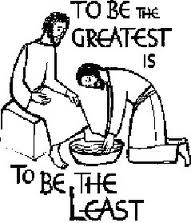
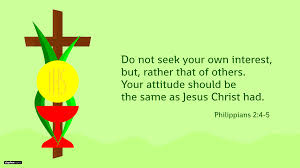
When we empty ourselves of our desire for status, position, respect, then we are like Christ, who humbled himself. For the Christian, empty means full. We empty ourselves of our concern for our self and find for ourselves that we become more Christ like. We often come upon the scripture passages where the Lord tells us to pick up our crosses and follow Him.  We know that this means accepting our suffering so the world can be filled with sacrificial love, and the Kingdom of God might grow. But we usually just relegate these passages to the way that we handle crises. Today’s second reading is more expansive. It tells us that to follow Christ we have to change our attitude in life to be like His.  We have to be like the One who humbled Himself. This is difficult. It is difficult because pride is so deeply rooted in each of us. But through the Grace of God we can conquer pride. And then we can be the people that God needs us to be for His Kingdom. Christ is the victor, even over our pride. And because He can conquer our pride, “He makes us an eternal offering to the Father.” 

images (3)

23RD SUNDAY OF ORDINARY TIME

Art Ordinary 23A


Well we are now at the end of the summer holiday months of July and August  and all the schools in our locality are back in full swing and all the various clubs and societies that closed for the holidays are now gearing up for the new season. It seems to me that time waits for no one and this must be true enough when my nephew who is 22 years old was wondering why his life was passing by him so quickly. It is very true that life is passing by all of us both young and old along with all the other age groups in-between and the question to be asked of all of us is am I doing what god wants me to do with my life?  

In our Gospel passage for this Sunday St Matthew recounts Jesus’ instructions to the disciples about how they should deal with a brother who does something wrong. This same instruction applies to us and our dealings with other people in the here and now of today. This passage is very different from those of the two previous Sundays. They were dramatic stories, marked by deep emotions and with deep implications for the characters involved. This is a little gem of a passage but with little drama, a very practical, common-sense teaching on that most common and most prosaic of community problems – conflict.

It is a great wisdom teaching which continues to be valid for us in our own time. Management has become a science today, and Jesus’ teaching stands up well as a model of how to “manage” conflict in any situation.  It is the duty of the disciple we are told  to point out the error and even if our correction might not be well received. St Matthew wants to let the Christians in his community know how to deal with those who drift away from the teaching of Christ or blatantly contravene the commandments. And he chooses those words of Jesus which most stress the authority and the competence of the Christian community, the Church, to deal with these cases: Whatever you bind on earth shall be considered bound in heaven; whatever you loose on earth shall be considered loosed in heaven.  However, there are some safeguards built into this teaching on reproving those who go astray. Jesus says that first of all you must have it out with him alone. This might lead to a speedy solution and the person’s good name is preserved. Yet it seems  from the gospel reading that the only sanction is that the person be excluded from the community of the Church. That is surely the meaning of the words: treat him like a pagan or a tax collector treat him as an outsider. But in considering such matters we must be very careful; for getting all worked up about the behavior of someone else  can frequently be a sign of something else, something much closer to home.  Encountering the truth about another person and ourselves is daunting  because it makes us face up to the other person and ourselves and the weaknesses that are part of us and all we are.

We may try to make others a function of our egos, but it fails. Rather than enter the struggle, in many cases we ignore it. Our human relationships mirror our relationship with God sometimes good  often times not so good. Whenever we encounter each other—not only in prayer—Jesus is in our midst let us remember this as we go forward as people of faith.


19TH SUNDAY OF ORDINARY TIME

GREEN CROSS1`


At the beginning of this week we had the centenary of the start of the First World War which was called the war to end all wars. As we know all too well the great war of 1914 did not  stop the world going to war many times after it ended in 1918. We only have to look at the modern world that we live in  to see so many places at war and Syria, Israel and Gaza, and the Ukraine all come to mind this weekend. We pray for those who have died or are being persecuted and we pray for peace.

The gospel reading this weekend is all about  Jesus  walking on water but if you look beyond the walking on water this story is really about trust and faith in God. We have no problem identifying with Peter he is so like ourselves . He is confident one moment and then, when things get difficult and he has bitten off more than he can chew, he falls apart. By then it is too late and he needs help. Life is like that, we start at something like a new job, college, marriage, or a project to help others, but then it gets complex and beyond what we are capable of. We didn’t realize it was going to require so much time and effort! We are sinking, we are drowning. Not an uncommon experience in so many situations of life and in the way we deal with them.

God doesn’t always give us an immediate cure or a fast solution when we bring ourselves in prayer  as well as  the problems of the day to God.  God, through Jesus, is not a distant Father aloof from our problems. Jesus shows us that when he reaches out a hand to Peter and to us he is companion with us in the storms of life.

At times we may well be floundering, like Peter, but Jesus reaches out to help us, to rescue us. What better image of salvation could there be than Jesus reaching out to Peter to save him from drowning. What better analogy could there be of our own lives and relationship with Jesus. We live messy lives, we doubt and we lack faith but nevertheless we are still moving towards the Lord. In the days ahead when we flounder and start to sink Jesus will be  there for us, reaching out with his saving hand ready to raise us up.

18TH SUNDAY OF ORDINARY TIME

eu06

Well here we are at the beginning of August its seems no time since the schools closed for the long summer break at the end of June and yet here we are halfway through the holidays!! It will be no time until the new uniforms etc will have to be bought and the schools will reopen at the beginning of September and the summer holidays for 2014 will be a distant but hopefully a  good memory.

In our Gospel story for this Sunday we hear about the feeding of the five thousand. The gestures and words of Jesus in the Gospel bring to mind the Last Supper The Gospel writer is making clear references in this miracle story to the Eucharist.

The people in this story are a crowd that realize Jesus had something to offer them in their “deserted places.” Jesus wasn’t just filling their stomachs. They were not the rich, the famous, the educated or the powerful; they were the afflicted and the marginalized people that Jesus went out of his way to seek out.  Life may have passed them by, but Jesus didn’t.  He took note of them, and they in turn saw in him a place to be nourished, a place where deep hungers and longings would be fulfilled.

The physical bread of the miracle story was of temporary value. It could not satisfy deeper spiritual hungers, but it was a sign that Jesus can and that his heart is moved with pity for us. Notice how he handled the food with reverence, the same reverence he felt for the crowd whom he knew were the beloved of God. The sign for us today  is that we too are the beloved of God and we will not be left hungry or alone for God is with us in the good and bad and happy and sad things that are part and parcel  of our daily life.


17TH SUNDAY OF ORDINARY TIME

1240649_10151794295986112_1848925939_n

Well here we are at the last weekend of July and the summer holidays are now at the half way stage for our local children. I’m sure there are many parents out there wondering when will the long holidays end but that said it will be no time until the beginning of the new school term in September. Despite all of our own worries and preoccupations we see the ongoing war with the Israelis and the Palestinians and the war between Russia and Ukraine. Not forgetting the ongoing Syrian conflict. Whilst many people will debate the rights and the wrongs of what is going on we have to remember that we have to constantly pray for peace. last Sunday 20th July, Pope Francis called on all the faithful to pray for Christians fleeing the Iraqi city of Mosul, and to “persevere in prayer for those situations of tension and conflict that continue in different parts of the world, especially in the Middle East and in the Ukraine” The only way that anything positive will happen in all of this will be when the opposing sides of the conflicts sit down face to face and talk. Our experience of the past 20 years in Northern Ireland certainly bears this out. We have an imperfect peace process but after a long time we have seen opposing sides talking with a view of trying to sort the problems out and it continues to be a work in progress.

This week we also stop to pray for all those who perished in the downing of the plane over Ukraine. We pray  in a special way for the families of those who died from so many different countries that they may find peace of heart and mind and that their loved ones will rest in peace.

In this Sundays Gospel we hear the story of the treasure hidden in the field. The kingdom of heaven is like a treasure buried in a field or a pearl of great price. When its great value is recognized, one gladly does all that is necessary to obtain it. The kingdom of heaven is also like a net that collects all sorts of fish. Just as the useless fish are eventually thrown away, at the end of the age the wicked will be rejected. To possess the Kingdom means to share our knowledge of it with others. To truly believe in Christ means leading other people to the same knowledge; for secret faith is no faith at all. We need to be like the householder, mentioned at the end of our Gospel reading for this Sunday, who brings out of his house things both new and old. We should be happy to bring out of the house that is our life all kinds of treasures to share with our neighbours.

But these treasures are not physical things like clocks and pearls but attitudes spiritual and otherwise that is virtues like love and justice and truth and hope and so on. What we bring out from our treasure store are the values of the Kingdom, the attitudes of Jesus and the knowledge of the one true God. God loves us just the way we are, but He refuses to leave us that way. He wants us to become just like Him. He wants us to become treasure for other people so that they can discover the faith which is the pearl of great price the treasure hidden in the fields of our hearts.


16th Sunday of Ordinary Time


This weekend  we hear the reading  from the first section from Chapter 23 of St. Matthews gospel, the story is the parable of the darnel in the field the seed and the weeds.  In the parable of the wheat and weeds, Jesus recognized good’s co-existence with evil. He also held out the hope that the Kingdom would right all wrongs. I think that there is the potential in each of us to be either wheat or darnel that is good and bad.

Looking back over the  notable events of the Twentieth Century we are reminded  that evil takes root even in the greatest good. National powers have fought two World Wars and several regional conflicts to protect the innocent. Yet, the death and destruction those struggles have produced staggers the imagination. Fighting evil seems, in a perverse way, to promote evil. It is difficult to listen to the daily stories about Syria, Israel and Gaza these days where so many innocent people are losing their lives. We are tempted to become very angry with one side or the other, or to turn away in despair. Seeing others argue and struggle can tire our hearts  and minds so that we might become cynical or unkind to those around us but if we are true to ourfaith we shouldn’t hurt the people around us even though we might be tired and want to be cynical.

We  often say ‘wouldn’t life be easier if everything were black and white’ as if there are ‘totally good people’ and ‘totally evil people’.  Of course life is never that simple.  If we are really honest nothing is ever that straightforward to be black and white. We need to ask ourselves Who are we called to be in a world where weeds and seeds grow side by side and we often find it hard to distinguish the difference between them.  We are called to be the body of Christ the Church which is a church of Saints and sinners a Church of Seeds and Weeds a church in which very little is black and white but that is the life we live as faith filled people of God. As people of faith  we have to constantly ask ourselves  3 questions :  Should we hide from the messiness and make religion a privatized personal relationship with God?   Should we insulate ourselves – sharing with those  we think are worthy of our love, deciding who is worthy? Where is God in all this concern, worry and judgment?  If we pray about  these three questions and our problems and those of others we will see god is there in the middle of everything and his hand will guide us and as a result we will be the seeds that flourish and not the weeds.

Jesus used parables to challenge his audience to think and he uses the parables in our world of today to  challenge you and me and make us think as well. The images and symbols in the stories allowed for various interpretations, depending upon the audience and their circumstances. Interpreting symbolic stories in this way is called allegory. To help relieve anxiety among his persecuted followers, Jesus told this parable as an allegory of good and evil. Obviously, Jesus recognized good and evil lived together in his time as we recognize the same today. But, when Jesus made that co-existence part of God’s Kingdom, he must have shocked his own followers. How could God allow such evil in the world? Shouldn’t God act to save his people? Why did he delay? These are questions that were asked in the time of Jesus and we still ask ourselves even in these days of rational so called clear minded thinking.

In authentic truth and charity we must speak to others and teach them about the great responsibility they have to choose either Life or Death to be weeds or seeds to be good or bad.God ‘s perfect love for us shows itself in the gift of our free will. We have the power to freely choose Him or to reject Him. Choose the Lord and His law that you may have life and live it to the full. Earlier I mentioned briefly the two world wars, in the next few weeks we remember the beginning of the First World War 100 years ago, it was known as the war to end all wars even though it was one of many and these days we think of the ongoing conflicts in many parts of the world. May we redouble of efforts to promote and pray for peace in our world, our hearts and in our minds.

May we see the seeds of the Kingdom of Heaven grow and flourish in our midst. Let us notice too that which is not fruitful or good.  But with and in all Let us bring everything and everyone to God, in prayer and reflective action – trusting that God who is good will care for us and for all he  has created.  Our calling then  is to participate as best we can in building up a world where God is King! God will decide on its membership, not us and he will guide us along the roads that lead to Salvation and he will help us to be the seeds that flourish.


15th Sunday of ordinary Time


THE SOWER IN THE FIELD

This weekend we arrive at the fifteenth Sunday of ordinary time. Lent and Easter are but a distant memory and we are now gearing up for the July holidays. This Sunday we hear the Gospel story of the sower who went out to sow the seed. For me the story  is really about the seed of faith with Jesus the sower and you and me as the soil on which the seed that is the word of God lands.

The context of today’s parable provides some insight into its interpretation and application The parable is located between stories of confrontation and rejection. As the early church faced opposition and a seeming lack of success, the parable must have given encouragement to the first preachers and members of the early church a promise of fruit not yet visible to them. Jesus is speaking to a large crowd. They may be listening to what he says, but as it is today some will follow him  and others will leave it all behind and go their own way.

He is realistic as he seems to randomly cast his words out upon the crowd. What he says will not seem to bear fruit – not straight away. Often that wee seed of faith may take root many years after it has been planted and today we see many people returning to the faith or coming to the faith for the first time after someone or some event in their lives planted that first seed with others helping nourishing the seed and helping it to grow.

What is striking about the parable is the amount of waste I’m sure those who are reading this who are recyclers will be horrified. The bulk of the details are about wasted effort and lost seed. Why wasn’t the sower more careful, after all farmers were poor and the seed was precious? Sometimes, we wonder if all our efforts and words are worth it when things are falling down around us. But if we stop for a moment and think about it anything done for God in faith is never lost.  

Very often things that are happening  in our lives don’t seem to be the way we might want  them to be but when we look at the problems with eyes of faith we see that things around us are the way they are meant to be for the good of all. We also  get the strength to  deal with the problems that go on through and in faith. Nobody really knows what’s beneath the surface of the soil we cast the seed of the word of god upon. Who knows the potential of the good soil? Do good and poor soil both exist in the same person I think that it most probably does much in the same way that a person can do good or be bad. Is there something we might say that will land on the interior good soil in a person and bear the “hundredfold, or sixty or thirtyfold” Jesus promises? who knows only God knows.

While the gospel parable begins with and spends time on hardships and failure it ends in surprise and abundance. What was the source of this abundance? We look to what Isaiah told us today in the reading about the fertile, life-giving nature of God’s Word. Our God is a God of surprises and our faith is also filled with so many surprises as well.

Despite any discouragement we might feel because our efforts on God’s behalf in many things seem futile and draining, we put our trust in the one who speaks to us a living word who sows the seed. The message of Jesus may not always be welcome especially in our modern world were faith and religion are constantly under assault by those who oppose the Christian faith based outlook on life. That said we still have to sow the seed of faith by what we do and say and then we leave the rest up to God our efforts are never futile and we don’t always see the fruit of the seed that s sown. Let us remember that tall oaks from little acorns grow.  and Our God is a God of surprises and our faith is also has many surprises as well. 


Post Navigation